
Stainless Steel Tennis Chains Manufacturer for Global Jewelry Brands
Develop OEM, ODM, wholesale, and private-label tennis chains through one specification-led manufacturing team in Dongguan, China, from concept through replenishment.
Chicolink Jewelry develops and manufactures stainless steel tennis chains for established brands, wholesalers, distributors, and retail programs. We review the chain structure, articulation, material, stone specification, setting method, dimensions, clasp, finish, testing, packaging, and replenishment plan before bulk production. Our team can start from a controlled drawing, CAD file, reference image, physical sample, or commercial brief and identify the engineering decisions required for a workable quotation and sample route. This separates style approval from the controls required for repeat production.
- Stainless steel jewelry manufacturer established in 2012
- 5,500+ m2 Dongguan factory with 400+ employees
- 6 jewelry designers and 3 jewelry engineers
- 200,000+ pieces of monthly factory-wide capacity
- In-house plating workshop with 6 PVD vacuum coating machines
- OEM/ODM, quality control, private-label packaging, and export coordination
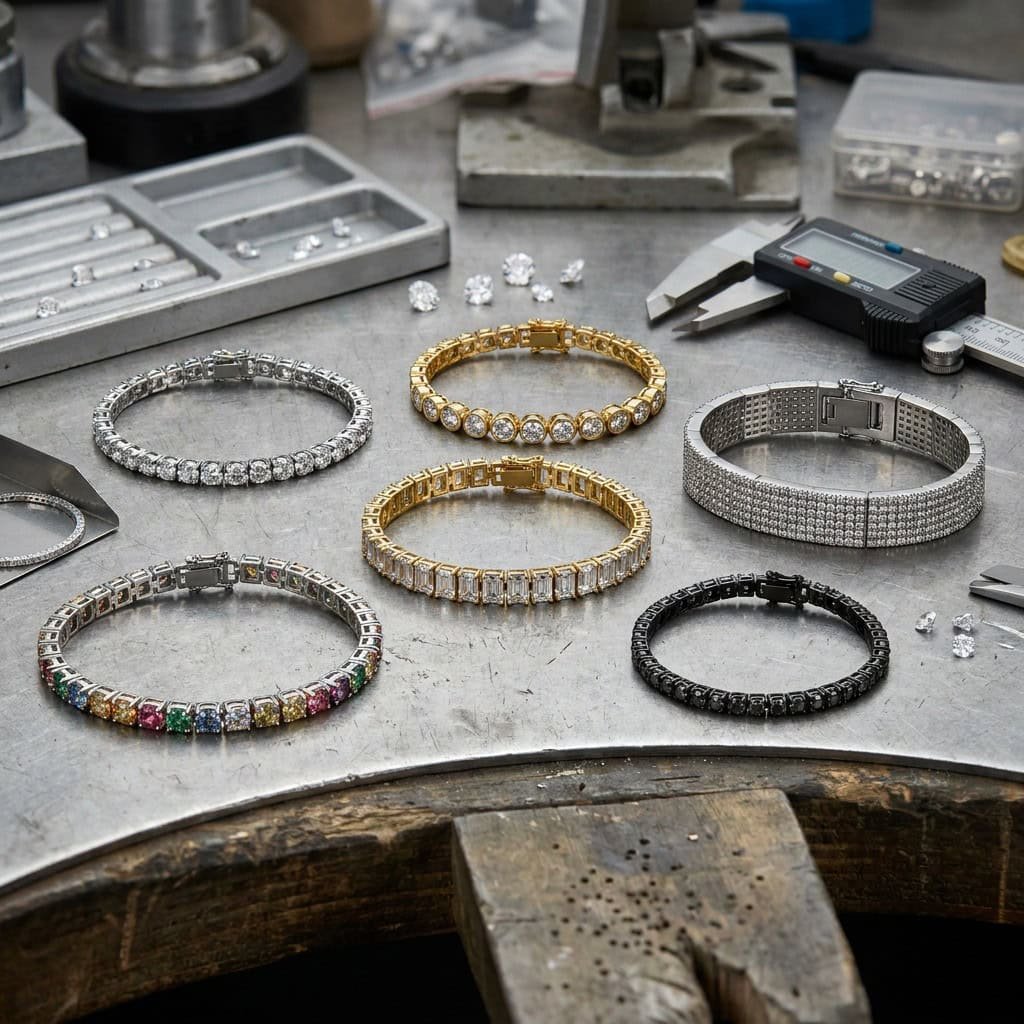
Set the Controls for a Repeat Tennis Chain Program
For repeat tennis chain programs, we establish the product version, sample reference, production route, inspection points, packaging version, and replenishment records before bulk release. We use the matrix below to connect each project requirement with a Chicolink process and a record your team can review. Final standards follow the signed-off drawing, Golden Sample, quotation, quality agreement, packaging file, purchase order, and target-market requirements. The same framework supports pilot orders, retail launches, inspections, and scheduled replenishment.
| Project Requirement | Chicolink Process | Available Project Record |
|---|---|---|
| Product specialization | Tennis chain specifications cover stone layout, linked movement, rolling risk, clasp, length, finish, and packing | Drawings, annotated sample photos, BOM, and approved specification |
| OEM/ODM execution | Engineering review separates confirmed inputs, factory recommendations, customer decisions, and open items | DFM notes, revision records, quotation, and sample plan |
| Sample-to-bulk consistency | The approved drawing, color reference, Golden Sample, first piece, and inspection plan are linked to the SKU | Approval records, first-piece record, and inspection checklist |
| Batch color control | PVD color, layer requirement, approved sample, equipment batch, and inspection result are recorded | Color reference, plating batch record, and inspection data |
| Stone and structure reliability | Setting method, articulation, clasp, connections, and applicable tests are defined by design | Test matrix, inspection photos, and internal or third-party reports |
| Replenishment management | Material, stone, PVD, packaging, and production revisions are retained by order and batch | Order, material, plating, packaging, and shipment records |
| Retail-ready delivery | Product, card, box, label, barcode, quantity, and carton versions are approved together | Packaging sample, packing list, barcode file, and carton record |
| Inspection access | We can coordinate internal, customer-appointed, or agreed third-party inspection | QC report, pre-shipment photos, and third-party inspection report |
Build Tennis Chain Collections Around Distinct Product Structures
We organize a tennis chain collection by stone layout, visible width, articulation, wearing position, target customer, and retail price architecture. Each structure needs its own dimensions, setting, clasp, finish, tests, and packaging. The following categories describe development directions, not automatic stock availability. Before quoting, we check the selected design, tooling, stone sourcing, MOQ, and timing. We then keep the technical decisions attached to the correct SKU and variant throughout sampling and production.
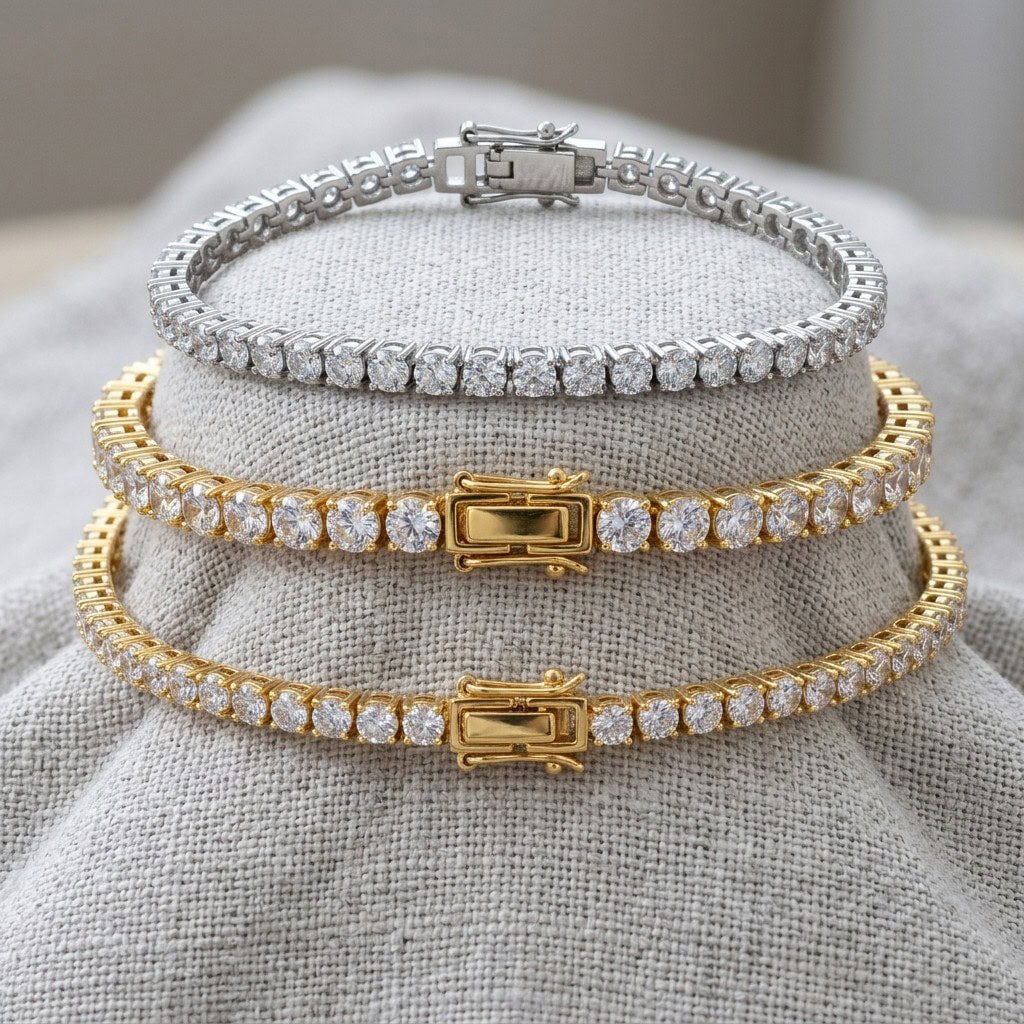
Classic Single Row
A continuous single row of round stones creates the core commercial tennis necklace. Development begins with stone diameter, visible chain width, cup or setting geometry, link pitch, total length, articulation, and clasp. Fine differences in pitch or stone height affect visual continuity, flexibility, weight, and cost. We confirm whether the chain should sit close to the neck, follow a longer necklace profile, or support several approved lengths.
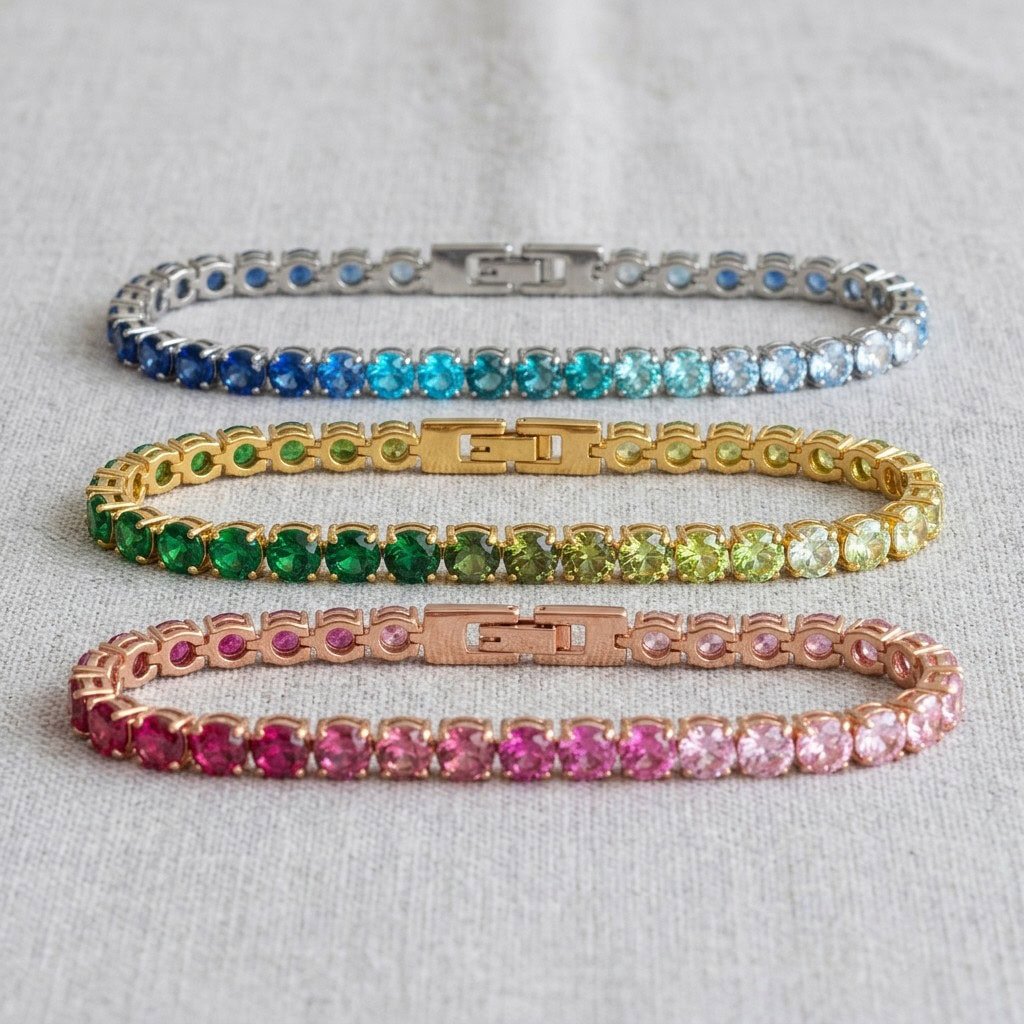
Graduated Stone Layouts
Graduated tennis chains transition from smaller side stones to a larger center area. Chicolink reviews the stone-size sequence, number of stones, center alignment, left-right symmetry, accumulated length, local weight, and transition between settings. The approved specification identifies every stone position or controlled size group. A visual concept alone is insufficient because an incorrect transition can cause uneven drape, twisting, or a visibly displaced center.
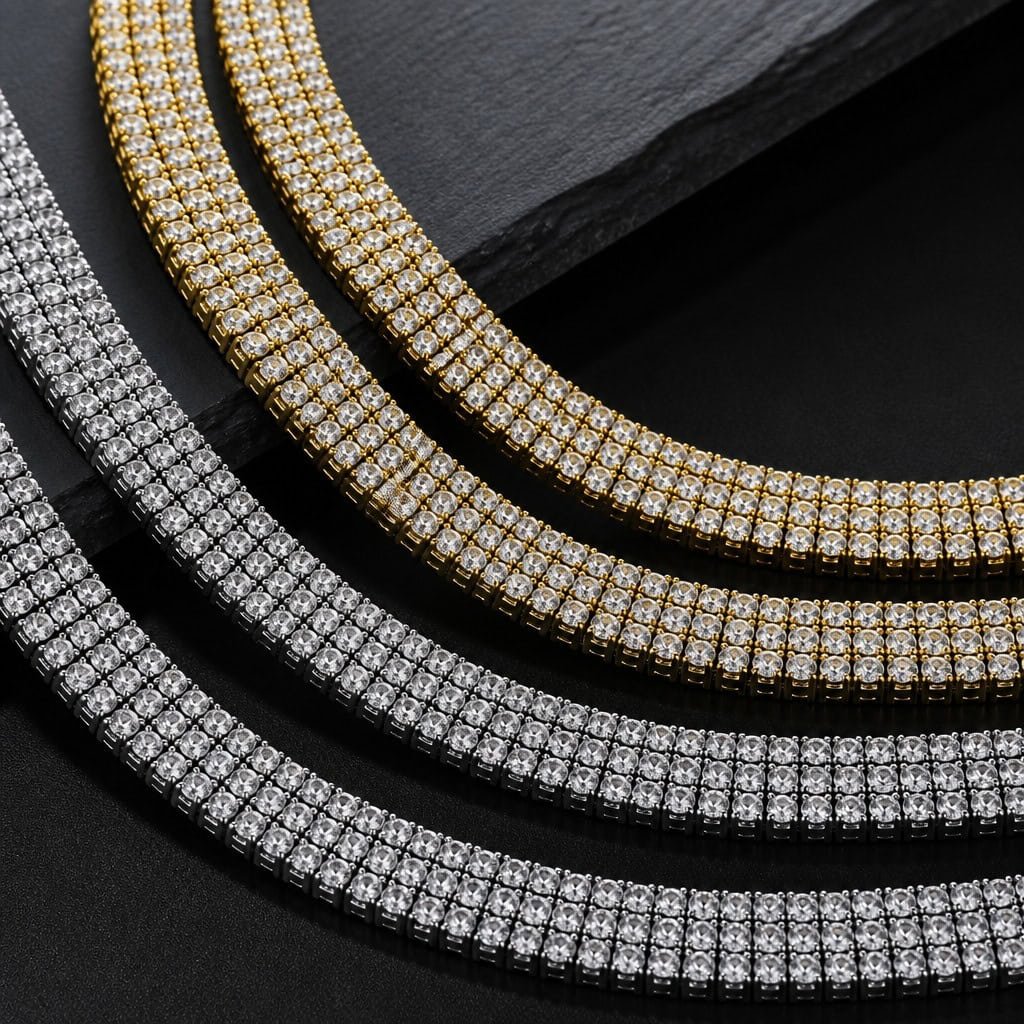
Multi Row Statements
Two-row and multi-row structures increase surface coverage but also add weight, stiffness, plating shadow areas, stone-count risk, and packaging pressure. We assess whether rows are integrated, linked, or supported by a shared structure and define bending direction, spacing, edge treatment, clasp width, and allowable movement. Wider products may require a dedicated clasp and additional anti-scratch protection rather than a scaled-up single-row specification.
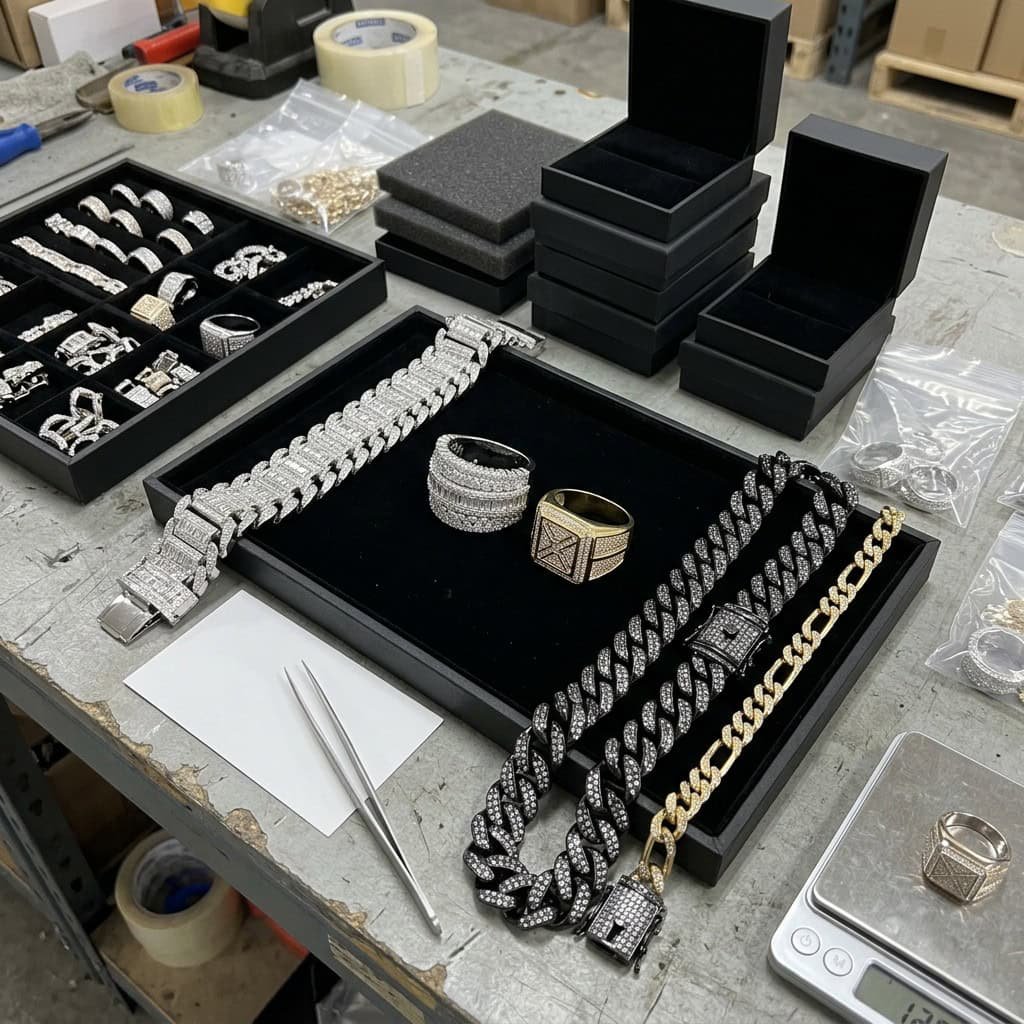
Men's Wide Chains
Men's tennis chains often use greater visible width, stronger visual contrast, longer lengths, darker finishes, or larger stones. Engineering focuses on total weight, link freedom, clasp capacity, connection geometry, skin-contact edges, and how the product hangs over clothing. Gold, black, gun-metal, or steel-color options are evaluated with the approved substrate, preparation, PVD structure, stone color, and target-market testing requirements.
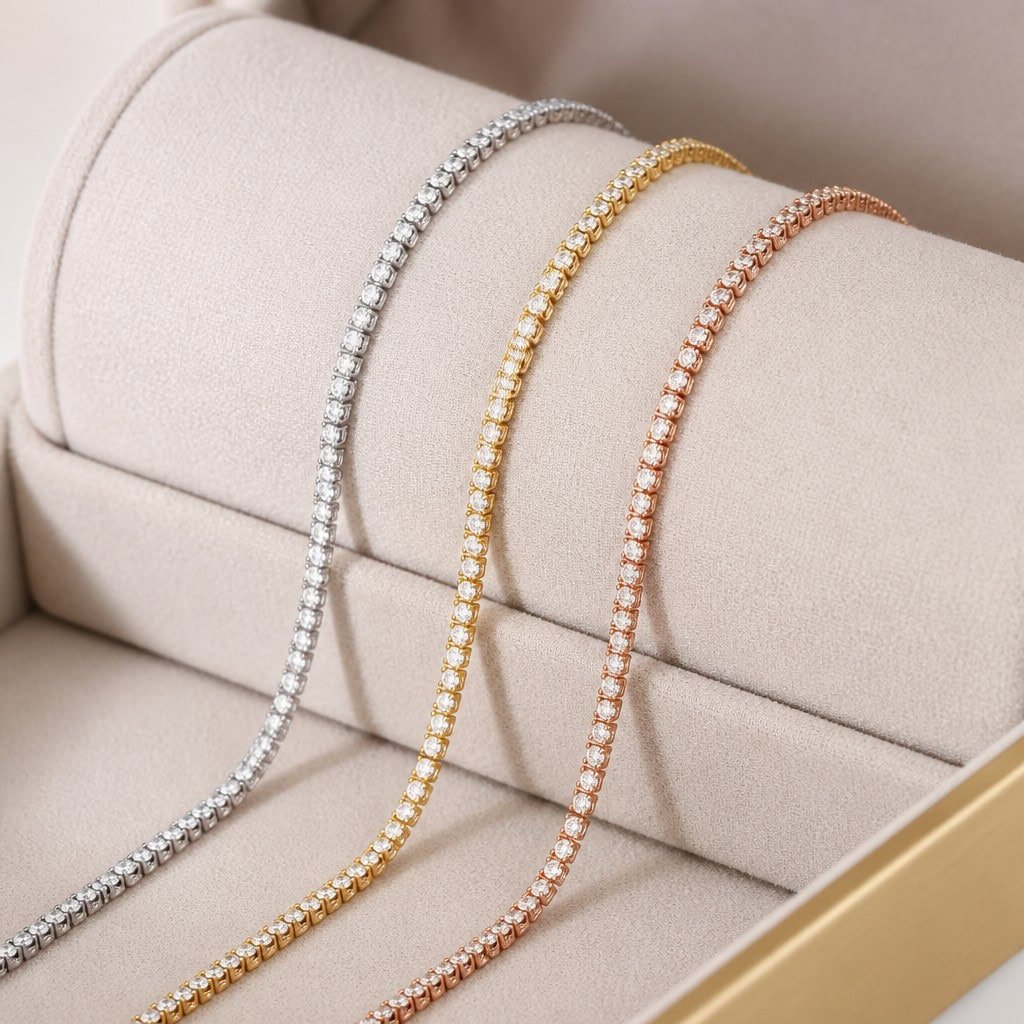
Fine Women's Chains
Fine tennis chains rely on controlled proportions rather than heavy metal volume. Small settings, narrow links, and fine connections leave less room for dimensional variation, burrs, excess adhesive, or plating buildup. We review minimum workable geometry, polishing access, stone alignment, clasp scale, total weight, and packaging support. The final sample must confirm both visual delicacy and repeatable handling during assembly, inspection, packing, and wear.
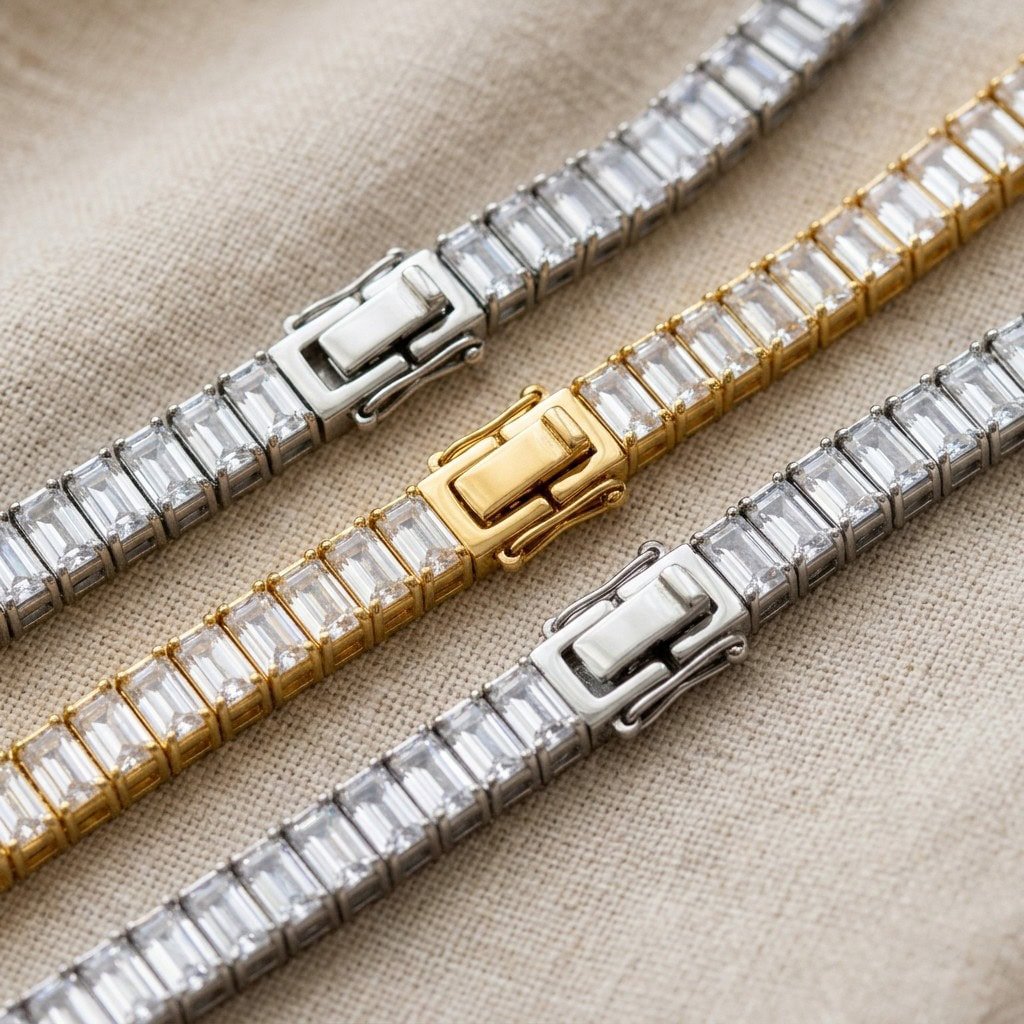
Alternative Stone Cuts
Baguette, emerald, marquise, oval, mixed-cut, colored, or alternating stones can create a distinctive collection, subject to sourcing and setting feasibility. The stone specification should define shape, calibrated dimensions, color range, orientation, quantity, replacement allowance, and acceptable variation. Non-round stones make alignment and transition errors more visible, so Chicolink establishes orientation references, position checks, and an approved stone board or sample where required.
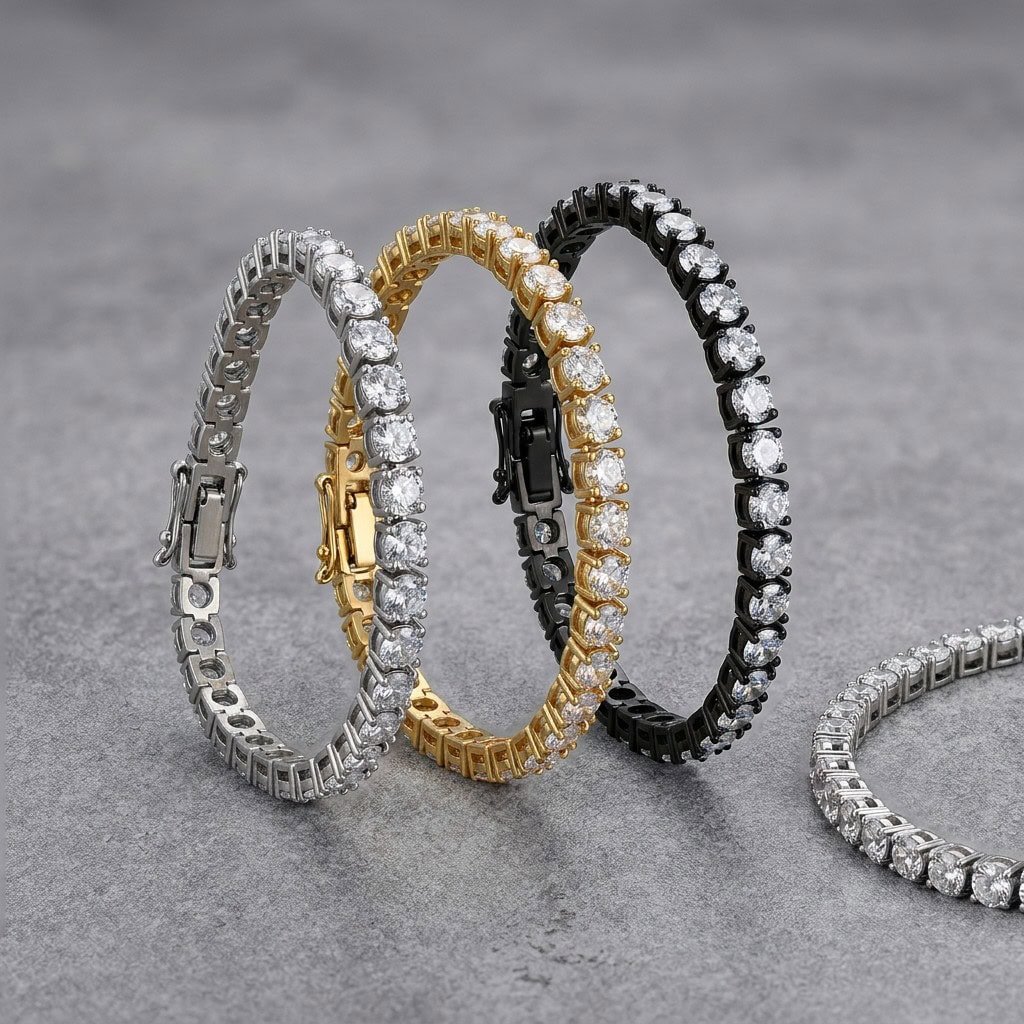
Matching Tennis Bracelets
A matching bracelet can extend a necklace program while retaining the same stone family, setting language, finish, and brand presentation. However, it requires a separate specification for wrist length, articulation, clasp, safety features, opening direction, connection strength, and packaging. We do not treat a bracelet as a shortened necklace, wrist movement, impact, clasp use, curvature, and fit are reviewed independently against their own engineering and inspection requirements.
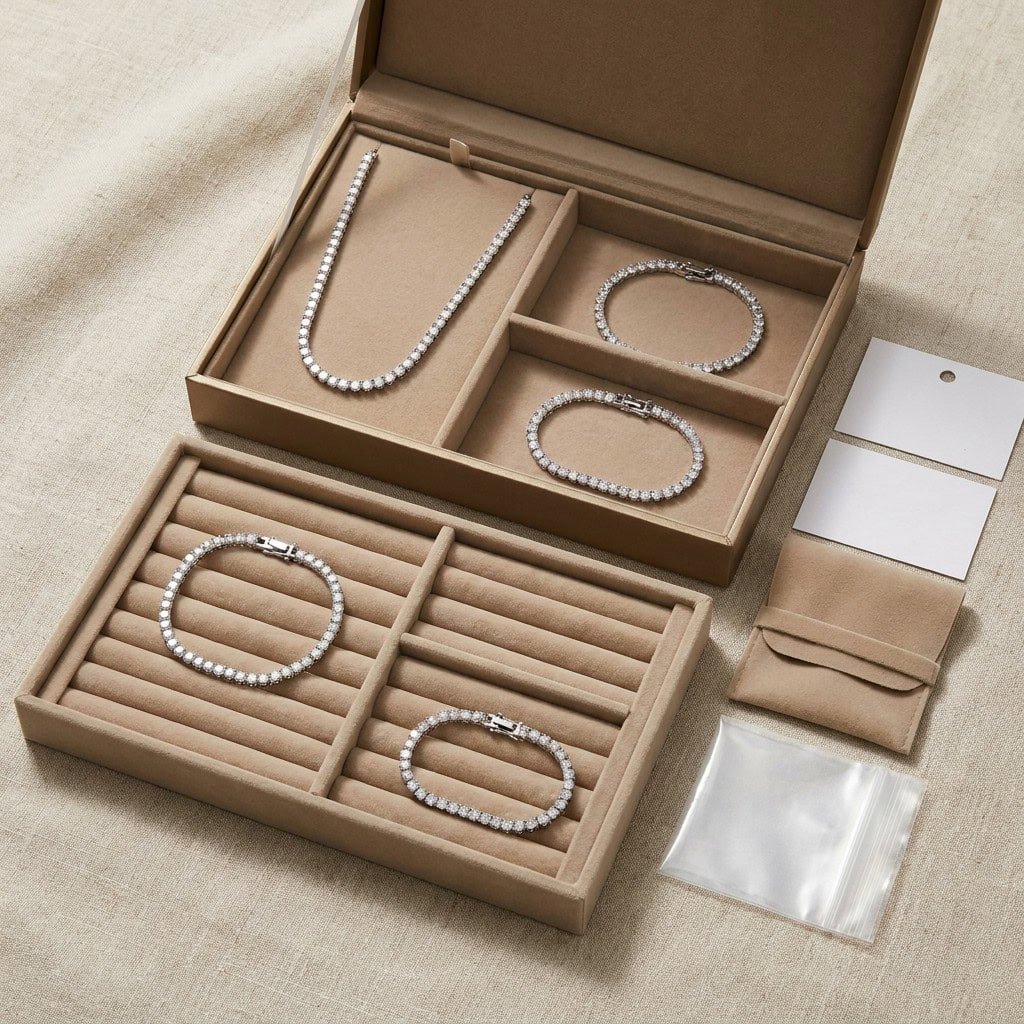
Private Label Sets
Retail sets may combine a tennis necklace and bracelet with coordinated cards, pouches, trays, gift boxes, care instructions, and labels. Chicolink records each component, color, size, orientation, protective layer, barcode, and packing quantity under the saleable set SKU. The insert must prevent chain overlap, stone pressure, clasp impact, and surface friction during international transport while maintaining the approved unboxing presentation.
Define the Tennis Chain Before We Prepare a Quotation
We prepare a usable quotation from one defined specification. A photograph alone does not identify the substrate, stone count, link construction, setting, length, clasp, plating, tolerance, inspection, or packaging. We use the fields below to find missing information and distinguish products that look similar but require different materials or processes. Written customer requirements take priority over our internal references. The completed matrix gives your purchasing, design, and quality teams one shared record for internal approval.
| Specification Field | Information to Confirm | Why It Changes the Project |
|---|---|---|
| Product format | Necklace, choker, long chain, bracelet, anklet, or set | Changes length, movement, load, fit, clasp, and packing |
| Metal specification | 304, 316L, or another confirmed grade; solid, formed, cast, or assembled parts | Affects process route, cost, weight, corrosion positioning, and testing |
| Component BOM | Main settings, links, pins, jump rings, clasp, springs, logo tag, stones, and adhesive | Not every internal clasp or spring component is automatically the same alloy |
| Stone specification | Type, cut, dimensions, color, grade, quantity, orientation, and allowed variation | Controls sourcing, setting geometry, visual match, replacement, and price |
| Visible dimensions | Stone diameter, chain width, setting height, back profile, and overall thickness | Determines appearance, weight, flexibility, skin contact, and packaging |
| Length definition | Main stone-set length, clasp length, extension, and stated total length | Prevents cumulative length and product-listing discrepancies |
| Linked movement | Link pitch, bending direction, side play, permitted rotation, and recovery | Controls drape, kinking, rolling, and comfort |
| Setting method | Prong, bezel, adhesive-assisted, or another approved method | Changes sequence, stone-retention controls, repair options, and inspection |
| Clasp system | Box, lobster, spring, fold-over, safety latch, or approved custom structure | Affects opening cycles, load, appearance, and user operation |
| Surface finish | Steel, high polish, mirror, brushed, or other confirmed texture | Changes preparation, appearance criteria, handling, and color measurement |
| Plating system | PVD/IP or approved electroplating; color, layer structure, target thickness, and tolerance | Affects cost, process sequence, test scope, and replenishment consistency |
| Branding | Logo tag, engraving, clasp mark, card, pouch, box, and label | Adds artwork, approval, MOQ, positioning, and version controls |
| Quality standard | Dimensions, color tolerance, stone position, surface limits, pull, function, and AQL | Creates objective sample and bulk acceptance criteria |
| Target market | Country, sales channel, wearer, use scenario, and required reports | Determines material, testing, labeling, documentation, and packaging review |
Engineer Continuous Stone Alignment Without Sacrificing Flexible Movement
The defining challenge of a tennis chain is not simply placing stones in a row. The finished product must preserve visual continuity while hundreds of linked dimensions work together during drape, movement, clasping, packing, and wear. Chicolink reviews each design for cumulative tolerance, controlled articulation, stone security, surface access, connection strength, and measurable bulk acceptance before approving the sample route. The goal is a chain that looks continuous in display photography and remains controlled through industrial production.
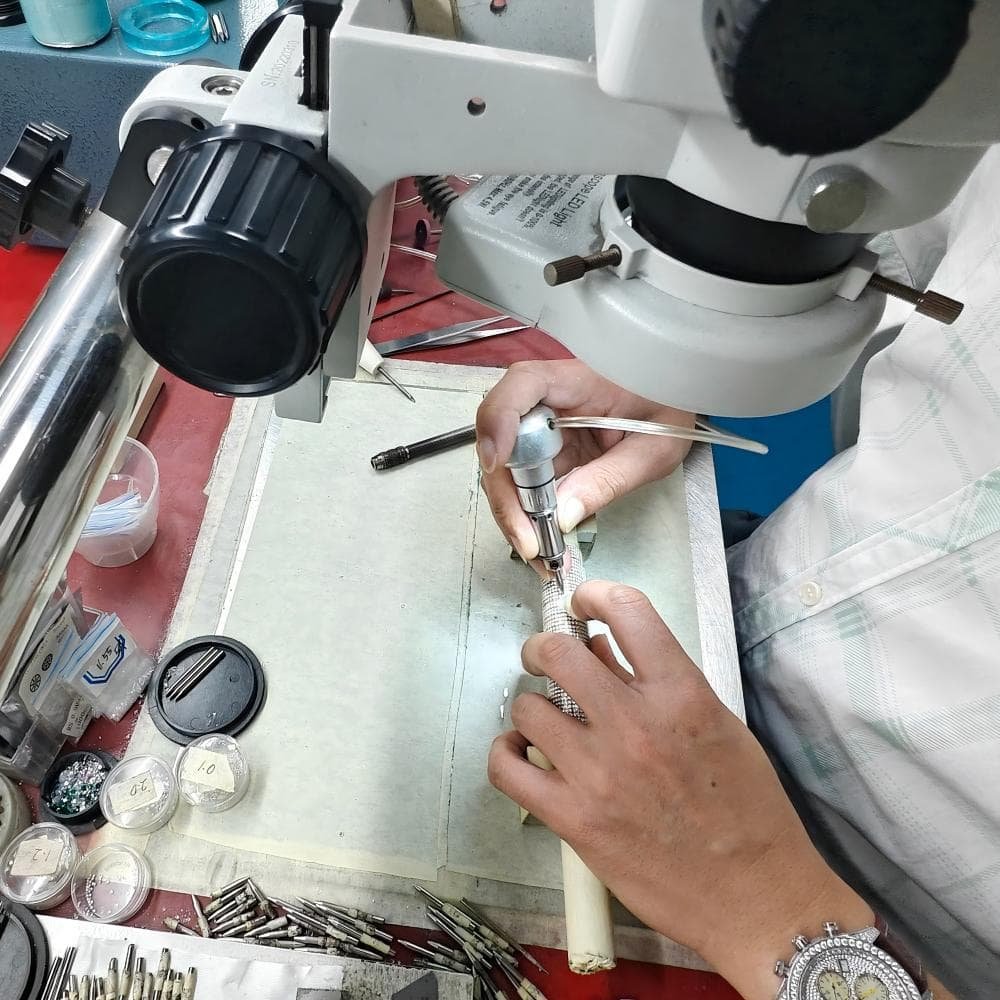
DFM Checks for Stable Drape, Alignment, and Repeat Production
- Cumulative length: Stone size, setting width, link pitch, connector clearance, and clasp length accumulate across the chain. We define how finished length is measured in a naturally straight condition and record actual values instead of relying only on stone count.
- Articulation: Each link needs enough freedom to follow the neck or wrist without uncontrolled side play. We review the intended bending direction, rotation, stiffness, recovery, and risk of a local locked or inverted link.
- Rolling and center stability: Setting height, back geometry, total width, center of gravity, clasp weight, and body curvature can cause the stone face to turn away from the wearer. Physical samples confirm drape and orientation; a front-view rendering cannot prove this behavior.
- Stone-line continuity: We control stone dimensions, spacing, height, orientation, transition points, and visible gaps. Graduated or non-round layouts require position references and left-right symmetry checks.
- Setting and plating sequence: Setting geometry, adhesive, stone sensitivity, polishing access, cleaning, and PVD exposure determine the workable sequence. Wax setting is not treated as a default stainless steel route. The approved process must protect the stone, metal, coating, and adhesive system.
- Connections and clasp: Jump rings, end links, pins, welds, safety latches, and clasp interfaces are evaluated in the actual loading direction. The clasp must match product width, weight, appearance, and intended operation.
- Skin-contact and packing surfaces: Back edges, prongs, burrs, weld marks, exposed corners, and local projections receive defined inspection points. Packaging must prevent folding beyond the approved radius, chain overlap, stone pressure, and surface abrasion.
- DFM output: Chicolink records proposed dimensions, process route, open risks, customer decisions, sample-dependent items, inspection points, and tests. A factory assumption does not become a production specification without approval.
Select Materials and Finishes as One Manufacturing System
Material, stone, setting, preparation, and finish cannot be selected independently. A narrow stainless steel setting may need a different production route from a larger cast structure. Stone sensitivity can change cleaning or plating sequence. PVD color can make alignment, scratches, adhesive residue, or surface defects more visible. Chicolink reviews the complete system against the target appearance, wear scenario, price position, tests, quantity, and replenishment plan. Our recommendation identifies the visual result and the manufacturing conditions needed to support it.
| Decision | Chicolink Evaluation | Required Confirmation |
|---|---|---|
| 304 stainless steel | Suitable for many commercial jewelry programs when the grade, structure, surface, and target tests are defined | Component-level material specification and target-market requirements |
| 316L stainless steel | Available for projects requiring a specified grade, positioning, or test plan, subject to structure and sourcing | Which components must be 316L and how the grade will be verified |
| Mixed component materials | Clasps, springs, pins, stones, adhesives, and packaging may require materials different from the main visible chain | A controlled BOM; never assume the entire saleable item is one material |
| Round calibrated CZ | Supports classic continuous rows and controlled size families | Diameter, tolerance, color, cut, grade, quantity, and replacement allowance |
| Non-round or graduated stones | Creates stronger differentiation but increases orientation and sequence controls | Position map, left-right symmetry, transition, and acceptable stone variation |
| Prong or bezel setting | Provides mechanical retention when geometry and stainless steel process feasibility are confirmed | Prong condition, stone movement, setting height, and inspection method |
| Adhesive-assisted setting | May suit approved structures but requires adhesive, dispensing, curing, residue, and compatibility controls | Adhesive specification, cure conditions, push/pull or auxiliary check, and aging risks |
| Steel color and polish | Avoids colored topcoat but still requires controlled preparation, burr removal, and appearance limits | High polish, mirror, brushed, or other approved reference |
| Gold, rose gold, black, or gun-metal PVD | Produced in our in-house workshop for suitable approved products | Color reference, layer structure, target thickness, measurement, testing, and packing |
| Surface protection | High-polish, stone-set, and colored products can scratch during handling or transit | Tray, sleeve, OPP bag, pouch, insert, and carton protection by SKU |
Decision Notes
- The material grade stated on a product page must match the approved BOM and verification scope.
- “Hypoallergenic,” “waterproof,” “tarnish-free,” or “never fades” is not used as an unconditional manufacturing promise.
- Color and wear performance depend on substrate, preparation, coating structure, thickness, exposure, use, cleaning, storage, and packaging.
- A report applies only to the identified sample, material, color, structure, method, and test conditions.
Move from Commercial Brief to an Approved Golden Sample
Chicolink separates development into controlled decisions so appearance, function, cost, and timing are not approved by assumption. OEM projects begin with customer-controlled specifications. ODM projects may begin with a target customer, retail price position, visual direction, product architecture, or reference. Both routes converge at an approved drawing, material system, physical sample, quality criteria, packaging definition, and production release. This creates one auditable path from commercial intent to the exact version authorized for factory execution.
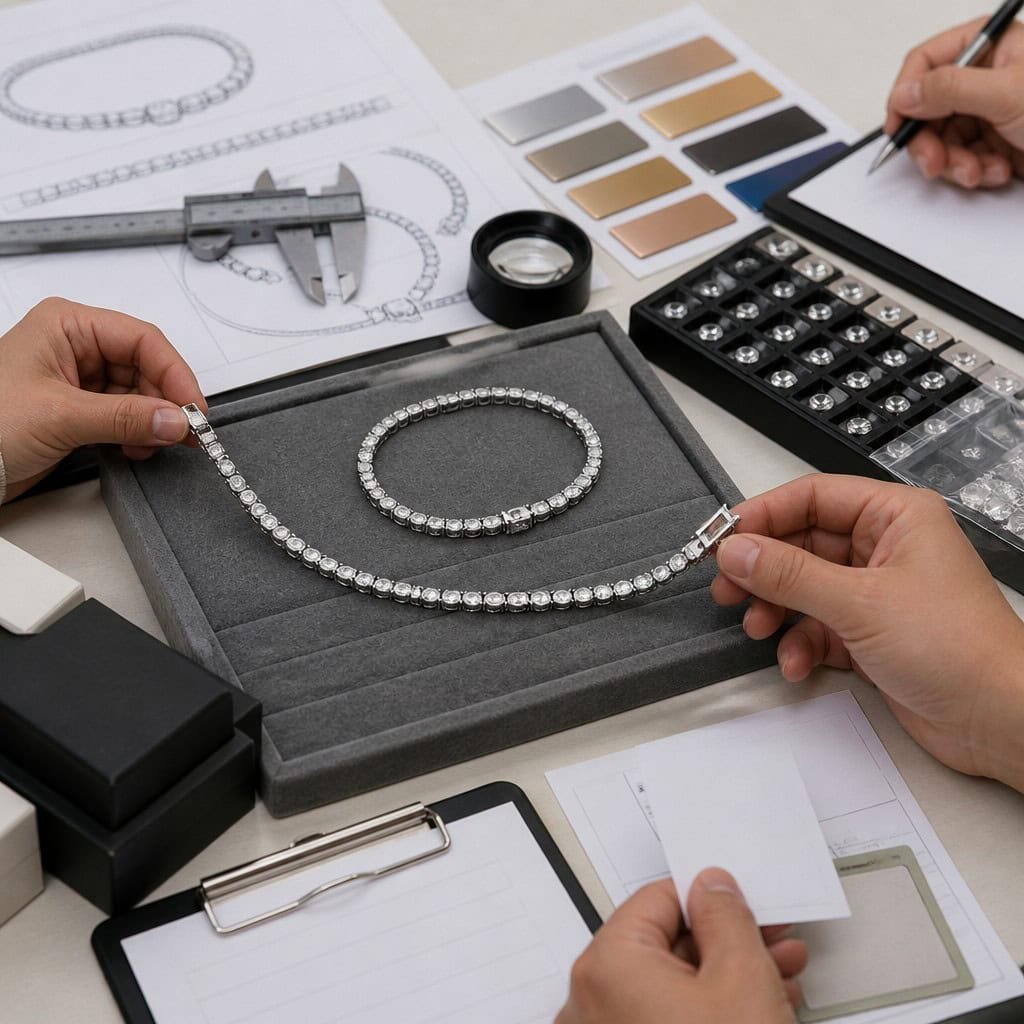
Seven Approval Gates Before Tennis Chain Bulk Production
1. Input review: Submit a drawing, CAD file, reference image, physical sample, target quantity, market, price position, finish, testing, packaging, and launch date. We list confirmed inputs and missing decisions.
2. Structure review: Our engineers assess stone layout, dimensions, articulation, rolling, cumulative length, setting, clasp, connections, surface access, and manufacturability. Proposed changes return for customer approval.
3. Quotation route: We identify tooling, materials, stones, setting, PVD, assembly, inspection, packaging, sample charges, and commercial conditions. Complex pricing follows engineering and cost review.
4. Drawing and BOM approval: The controlled drawing defines measurable geometry; the BOM defines every metal component, stone, clasp, spring, pin, adhesive, logo part, and packaging item.
5. Sample production: The sample verifies appearance, drape, flexibility, stone alignment, clasp operation, finish, dimensions, weight, packing, and selected tests. Sample-dependent risks remain open until physical review.
6. Revision and Golden Sample: Each change receives a revision. After approval, the drawing, BOM, color reference, sample, quality points, test plan, and packaging file form the Golden Sample package.
7. Production release: Purchasing, tooling, production, PVD, setting, inspection, labeling, and packing use the released version. Changes after release require impact review for cost, material, timing, and existing work.
Keep Critical Tennis Chain Processes Under One Factory System
Repeat tennis chain supply depends on connected controls from engineering through packing. Chicolink operates a 5,500+ m2 Dongguan factory with 400+ employees, 6 jewelry designers, 3 jewelry engineers, and factory-wide monthly capacity above 200,000 pieces. Our 58 listed production machines include 6 PVD vacuum coating machines. Actual capacity allocation, equipment route, and production timing are confirmed by design, order volume, process load, and approval status. Repeat-order planning remains subject to material, stone, finish, and packaging availability.
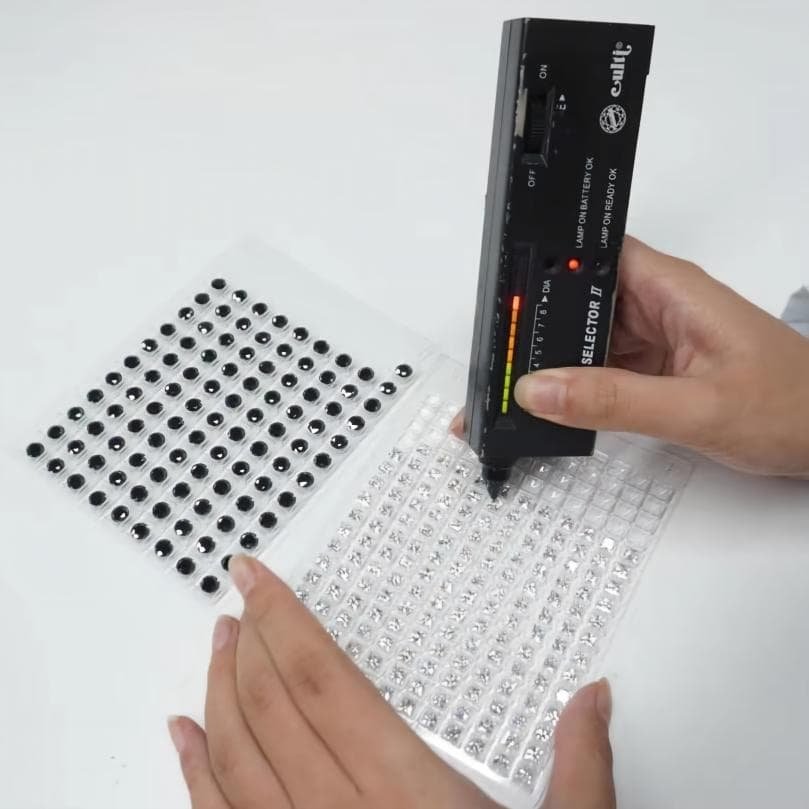
Production Stages Linked to the Approved Product Version
- Engineering release: The drawing, BOM, stone map, color reference, Golden Sample, quality points, test matrix, and packaging file define the version that production may use.
- Material and component control: IQC checks specified metal materials, settings, links, clasps, pins, springs, stones, adhesives, logo parts, and packaging against the purchasing and product records.
- Metal processing: Depending on the approved structure, production can involve CNC, casting, stamping, laser cutting, drilling, forming, laser welding, or combined processes. Chicolink has 5 CNC machines, 4 casting machines, 3 laser cutting machines, 5 laser welding machines, 6 stamping machines, and related equipment within its listed factory resources.
- Surface preparation: Burr removal, polishing, cleaning, and handling controls prepare visible, skin-contact, setting, welding, and plating surfaces. The route is adjusted for narrow links, recesses, stones, adhesives, and articulated structures.
- In-house plating: Our plating workshop manages approved PVD/IP, water plating, and other confirmed electroplating processes through preparation, color and sample confirmation, process monitoring, inspection, exception handling, and batch traceability.
- Setting and assembly: The approved sequence governs stone setting or adhesive work, link assembly, clasp connection, safety components, logo tags, and final length. Stone position, link movement, left-right balance, and clasp direction are checked during the process.
- Inspection and release: IQC, IPQC, FQC, applicable testing, packaging inspection, AQL or agreed full inspection, and pre-shipment review are linked to the order and SKU.
- Traceability: Records can connect the finished batch to material, production order, key processes, plating equipment and batch, inspection, rework, packaging, carton, and shipment information. This supports complaint analysis and controlled replenishment rather than relying on product photographs alone.
Control Tennis Chain Failures Before They Reach Retail
Tennis chain quality failures are connected. A dimensional change may reduce articulation; poor articulation may create rolling or local load; local load may loosen a stone or stress a connection. Chicolink therefore defines controls by failure mode rather than relying on a final visual check alone. The exact inspection method, sample size, frequency, tolerance, and acceptance rule are confirmed through the drawing, sample, quality agreement, test matrix, or order. Controls are assigned where each defect can be prevented, detected, and recorded.
| Failure Mode | Likely Sources | Chicolink Control Points | Project Evidence |
|---|---|---|---|
| Loose or missing stones | Incorrect setting geometry, damaged prongs, unsuitable adhesive, incomplete cure, impact, or transport pressure | Setting-method approval, stone-position checks, looseness/probe or defined load checks, auxiliary tape check where suitable, and protective packing | Stone map, inspection record, test photos, and nonconformity record |
| Uneven stone line | Stone-size variation, incorrect sequence, setting-height variation, or accumulated alignment error | Calibrated stone specification, position map, first-piece confirmation, symmetry and height checks | Approved sample, stone board, first-piece record, and measured results |
| Stiff, locked, or kinked links | Insufficient clearance, deformation, plating buildup, assembly error, or local contamination | DFM clearance, movement direction, process checks, natural-drape inspection, and recovery check | Annotated drawing, movement video, and inspection checklist |
| Chain rolling or flipping | Back profile, setting height, width, clasp weight, asymmetry, or uncontrolled side play | Physical drape review, center-of-gravity assessment, clasp matching, and wearing-orientation confirmation | Sample video, approved sample, and engineering notes |
| Clasp or connection failure | Open jump ring, weak weld, undersized pin, incorrect loading direction, or clasp mismatch | Component BOM, weld/closure inspection, opening-function check, agreed pull or cycle test | Pull record, function record, and close-up photographs |
| Incorrect finished length | Uncontrolled link pitch, stone sequence, clasp calculation, or inconsistent measurement state | Defined length formula, natural-straight measurement condition, recorded actual values, and approved tolerance | Drawing, measurement sheet, and final inspection record |
| PVD shade variation | Surface preparation, load arrangement, process parameters, layer variation, or different approved references | Color sample approval, plating batch records, fixed measurement conditions, and replenishment review | Color reference, Delta E data where specified, and batch record |
| Scratches or plating damage | Metal-to-metal contact, hard work surfaces, overlapping chains, clasp impact, or unsuitable inserts | Protected work transfer, surface inspection, separated packing, trays or sleeves, and carton protection | Packing standard, surface checklist, and pre-shipment photos |
| Wrong SKU or packaging | Similar lengths, colors, stone sizes, labels, or set configurations | Version-controlled product and packaging files, barcode/SKU checks, count verification, and carton records | Packing list, barcode file, packaging approval, and carton mark |
Match Tennis Chain Tests to Structure and Target Market
We select tests from the product structure, use scenario, finish, target market, customer standard, and identified risk. One test package does not fit every tennis chain. Contract requirements, quality agreements, final drawings, signed-off samples, and customer methods take priority over our internal defaults. Each result applies only to the recorded sample, material, stone, color, layer structure, batch, method, and conditions. Before sampling, we separate mandatory compliance work from optional reliability checks and confirm the related cost and timing.
| Requirement | Chicolink Support | Important Boundary |
|---|---|---|
| Nickel release | EN 1811 and EN 12472-related testing can be coordinated where applicable | Method and wear simulation depend on product, surface, and target market |
| Lead and cadmium | Testing can be arranged to the confirmed market or customer requirement | Limits and sample scope must be identified before submission |
| REACH | Material and product testing/report support can be reviewed for EU programs | No single report proves every SKU, color, material, batch, or future order compliant |
| California Proposition 65 | Test scope can be reviewed for products intended for California | Substance scope and warning decisions require product-specific and legal review |
| RoHS | We review support only when the product falls within the relevant scope | We do not automatically present ordinary non-electronic jewelry as RoHS applicable |
| SGS, HKPC, or other laboratory | Chicolink can coordinate specified samples, test methods, reports, and retesting | Laboratory quotation, sample consumption, lead time, report holder, and responsibility require approval |
| Customer or third-party inspection | Internal, customer-appointed, or agreed third-party inspection can be scheduled | Booking, standard, sample plan, reinspection, corrective work, and shipment timing must be agreed in advance |
| Test or Inspection | Chicolink Internal Reference When No Other Standard Is Agreed | Application and Limits |
|---|---|---|
| Main necklace pull | 5 pieces per style; 30 N, approximately 3 kgf; hold 10 seconds | Load in the main use direction; no breakage, detachment, open weld/ring, or obvious permanent deformation |
| Clasp and connection pull | 5 pieces per style; 40 N for pendant rings, connecting rings, and clasps; hold 10 seconds | Final value can change for special chains, safety structures, or customer requirements |
| Stone retention | Small rhinestones: tape plus pick inspection; glued large stones: defined push/pull; prongs: looseness, probe, or defined load | 3M tape is only an auxiliary method for suitable small-stone products, not a universal stone-retention test |
| Bare-product drop | 5 pieces; 1 m; front, back, and side once each | No breakage, stone loss, open weld, detached part, severe deformation, sharp edge, or functional failure |
| PVD salt spray | 48 hours for plated/PVD products; 72 hours for higher corrosion requirements or customer specification | Method, solution, pH, temperature, angle, cleaning, sample state, and acceptance must be recorded |
| Artificial perspiration | 40+/-2 C for 24 hours; pH 4.7+/-0.2 | Internal acceptance includes no unacceptable darkening, corrosion, blistering, peeling, exposure, loss of gloss, or clasp/weld abnormality; color difference <=2.0 |
| Color difference | Delta E00 <=1.5 for standard gloss/mirror; <=2.0 for brushed, sandblasted, or antique surfaces | Approved sample or standard plate, instrument setup, light, background, location, and visual review must be controlled |
| Length tolerance | Necklace and bracelet length: internal reference +/-5 mm unless the drawing states otherwise | Flexible products are measured in the defined natural or lightly tensioned state |
| Plating thickness | Batch average within nominal +/-10%; single point within nominal +/-20%; primary appearance surface not below 80% of nominal | Target layer, measurement method, equipment, points, and multilayer interpretation must be confirmed |
Deliver Tennis Chains as Controlled Retail-Ready Brand SKUs
Private-label delivery begins after the product specification is stable. Chicolink then connects the product version, logo application, card or box, protection, label, barcode, set content, and carton data to the saleable SKU. This prevents a correct chain from being paired with the wrong length label, color card, stone description, or packaging insert. Packaging decisions are also reviewed for stone pressure, chain overlap, clasp impact, scratching, and international transport. Each approved pack must protect the product and preserve accurate retail identification.
Product Brand Details
Brand identity can be applied through an approved logo tag, clasp mark, laser engraving, metal label, or other confirmed position. We record the editable logo file, dimensions, depth, direction, appearance surface, color, attachment, and readability standard. A logo change creates a new controlled version. Trademark and artwork authorization remain the customer's responsibility, while Chicolink controls reproduction against the approved production file and sample.
Protective Presentation
Tennis chains need support that prevents excessive bending, overlapping stone rows, clasp impact, and rubbing between plated surfaces. Options can include separated OPP bags, soft sleeves, pouches, cards, fitted trays, gift boxes, or set inserts. We confirm the product orientation, fastening points, minimum bend radius, protective layers, opening experience, package dimensions, carton loading, and acceptable movement after the packed sample is reviewed.
SKU and Retail Data
Chicolink can coordinate approved style numbers, length and color variants, stone information, material descriptions, barcodes, UPC/EAN or customer codes, SKU labels, care cards, package dimensions, package weight, carton quantity, and carton marks. Customer-supplied platform or retailer specifications control the final data. Product images and data remain linked to the correct material, length, stone, finish, and packaging version for every approved shipment.
Replenishment Version Control
Repeat orders refer to the approved product and packaging revisions rather than a generic name such as “gold tennis chain.” Chicolink can retain order, material, stone, PVD color, Golden Sample, packaging, barcode, production, inspection, and shipment references by SKU and batch. If a stone source, color, clasp, insert, label, or regulation changes, the impact is reviewed before the replenishment version is released.
Plan Tennis Chain Cost, Timing, and Repeat Supply Early
Tennis chain cost and timing are driven by the controlled specification, not only by length or total quantity. Stone count, calibration, setting geometry, clasp, tooling, PVD structure, inspection, testing, packaging, and variant allocation can change the production route. The references below support initial planning. Chicolink confirms final MOQ, sample charge, price, payment, capacity, lead time, overage or shortage treatment, and shipping terms in the quotation and order documents. Early allocation decisions support assessment of first delivery and repeat-order feasibility.
| Project Type | Typical MOQ | Typical Timing | Conditions |
|---|---|---|---|
| Stock or regular style | 120 pieces per style | Sample: 3-7 working days; bulk: 20-30 working days | SKU, stone, length, color, stock, packaging, and inspection availability require confirmation |
| OEM/ODM custom style | 500 pieces per style | Sample: 25-30 working days; bulk: 25-45 working days | Tooling, stone sourcing, setting, PVD, sample approval, packaging, testing, and production difficulty affect final conditions |
| Multiple lengths or colors | Project-specific | Allocation review may add time | MOQ may apply by style, length, color, plating batch, stone version, or packaging version |
| Custom packaging | Quoted by material and printing route | Artwork, sample, printing, and inbound time are scheduled separately | Packaging MOQ may differ from jewelry MOQ; remaining printed material treatment requires agreement |
| Third-party testing or inspection | Quoted by scope | Laboratory or inspector timing is added to the production plan | Standard, samples, booking, report, corrective work, and reinspection must be planned before shipment |
| Quantity tolerance | Common internal reference approximately +/-5% | Confirmed before order | Treatment of overage, shortage, remaining stones/materials, packaging, and freight is agreed in writing |
| Reference payment | Common reference: 50% deposit and 50% before shipment | Subject to credit, value, contract, and payment method | T/T, L/C, PayPal, and other confirmed methods are reviewed by order |
Model a Multi-SKU Tennis Chain Program Before Production
This representative project scope shows how we organize a multi-SKU tennis chain program. It uses planning data instead of a disclosed customer case. The example covers the files, decisions, samples, tests, and records needed to keep stone sequences, lengths, colors, clasps, packaging, and revisions connected to the right SKU. We can replace it with a documented production case after the customer authorizes publication and we verify the data.

Representative Project Controls and Outputs
Use Scenario
A multi-channel brand plans four stainless steel tennis chain styles: a fine single-row necklace, a graduated necklace, a wider men’s necklace, and a matching bracelet. Each style needs steel-color and gold-PVD versions, private-label packaging, replenishment records, and target-market test review.
Key Challenge
- Maintain one collection look across different widths, lengths, weights, and wearing behavior.
- Prevent length error, rolling, stiff links, incorrect stone sequences, and clasp mismatch.
- Control two finishes without extending one test result to both colors.
- Link product, barcode, insert, care card, and carton data to the correct SKU.
Chicolink Solution
- Create a specification and BOM for every product, length, color, clasp, and package version.
- Review articulation, stone map, setting geometry, length calculation, drape, connections, and protection through DFM and samples.
- Sign off the drawing, stone reference, PVD color, Golden Sample, quality points, test matrix, packaging, and barcode data before release.
- Link IQC, IPQC, FQC, plating, setting, function, packaging, and shipment records to the production version.
Result
The output would be four production-ready SKU families with separate variant records, signed-off samples, measurable inspection criteria, defined test responsibilities, and retail-ready packaging files. We would release bulk production after closing the open engineering and customer decisions. Commercial results, defect rates, timing, and test outcomes would come from the real project records, not from estimates on this page.
Stainless Steel Tennis Chains FAQ
These answers cover the product, engineering, material, stone, finish, quality, testing, MOQ, timing, and quotation questions we receive during tennis chain sourcing. Final requirements are controlled by the approved quotation, drawing, BOM, Golden Sample, quality agreement, packaging file, and order. Send the design when the answer depends on a specific structure.
Is every component made from stainless steel?
Not automatically. The main settings and links can use the approved stainless steel grade, while clasp springs, pins, stones, adhesives, logo parts, or other functional components may require different materials. We define every component in the BOM and state material claims according to that approved scope.
Should I specify 304 or 316L stainless steel?
Specify the grade by product structure, skin contact, market, test plan, price position, and brand requirement. Chicolink can review 304 and 316L options, but the grade must be confirmed by component because not every internal clasp or spring part is automatically identical to the visible chain.
Can you customize chain width, length, and stones?
Yes, subject to engineering and sourcing review. Send the finished length definition, visible width, stone type, cut, dimensions, color, sequence, setting height, clasp, and target weight. New dimensions or stone layouts can affect tooling, articulation, MOQ, price, testing, and sample timing.
How do you reduce rolling and kinking?
We review link pitch, setting height, back geometry, side play, bending direction, clasp weight, center of gravity, and local clearance. Physical samples are checked for natural drape, orientation, locked links, inversion, and recovery because front-view artwork cannot prove how a chain moves on the body.
How do you control loose or missing stones?
The method depends on prong, bezel, adhesive-assisted, or another approved structure. Controls can include setting-geometry review, stone-position inspection, looseness or probe checks, defined push/pull tests, and auxiliary tape checks for suitable small stones. Packing must also prevent stone pressure and impact.
Can you produce PVD gold tennis chains?
Yes, for suitable approved structures. Our in-house workshop manages PVD/IP preparation, color approval, layer requirements, process control, inspection, and batch records. Final performance depends on the substrate, preparation, layer system, thickness, use, cleaning, storage, testing, and packaging; we do not promise that any coating can never fade.
What is the custom tennis chain MOQ?
Our typical OEM/ODM reference is 500 pieces per style. MOQ may apply separately by length, stone version, color, plating batch, clasp, or packaging version. Stock or regular styles commonly start at 120 pieces per style, subject to actual SKU availability.
How long do samples and bulk production take?
Existing samples typically require 3-7 working days. Custom samples typically require 25-30 working days. Existing bulk orders typically require 20-30 working days, while custom bulk production typically requires 25-45 working days. Tooling, stones, PVD, approvals, tests, packaging, quantity, and production load affect final timing.
Which tests can you arrange for target markets?
We can review pull, clasp, stone-retention, drop, salt-spray, perspiration, plating-thickness, color, nickel-release, lead, cadmium, REACH-related, and customer-specified tests. Each method and report applies only to the recorded sample, material, color, structure, batch, and test conditions.
What should I send for an accurate quotation?
Send drawings or references, product format, metal grade, stone specification, setting, dimensions, length, clasp, finish, color, quantity by variant, logo, packaging, target market, required tests, destination, and launch date. Clearly identify confirmed requirements and items where you need our recommendation.