
Japanese Sakura Jewelry Manufacturer for Global Brands
Develop Japanese sakura-inspired stainless steel jewelry through controlled design, sampling, in-house plating, private labeling, and repeatable production.
Chicolink Jewelry is a stainless steel jewelry manufacturer in Dongguan, China. We convert buyer-approved sakura concepts, artwork, CAD files, or reference samples into production-ready jewelry for global brands, importers, distributors, wholesalers, and retail programs.
- Sakura necklaces, earrings, rings, bracelets, charms, brooches, hair accessories, and coordinated sets
- OEM, ODM, custom mold, PVD/IP plating, logo, packaging, inspection, and export coordination
- Typical custom MOQ: 500 pieces per style, subject to design and production conditions
- 5,500+ m2 factory, 400+ staff, and 200,000+ pieces monthly capacity
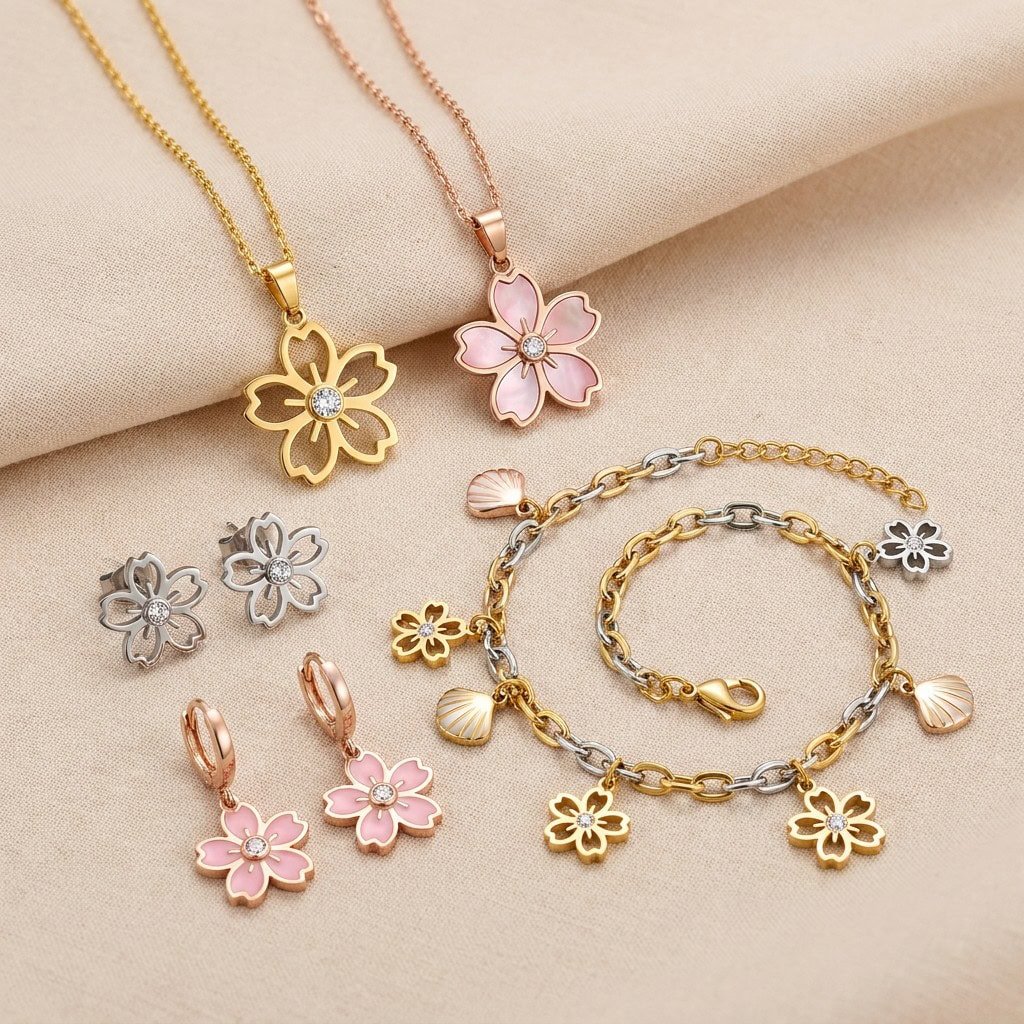
Extend One Sakura Language Across a Complete Jewelry Collection
Chicolink extends one approved sakura motif across multiple product categories while adapting scale, thickness, relief, attachment, weight, finish, and packaging to each wearing position. Every released SKU receives its own dimensions, components, process route, quality points, and sample record. This keeps the motif recognizable and wearable when it moves from a pendant to earrings, rings, or small charms.
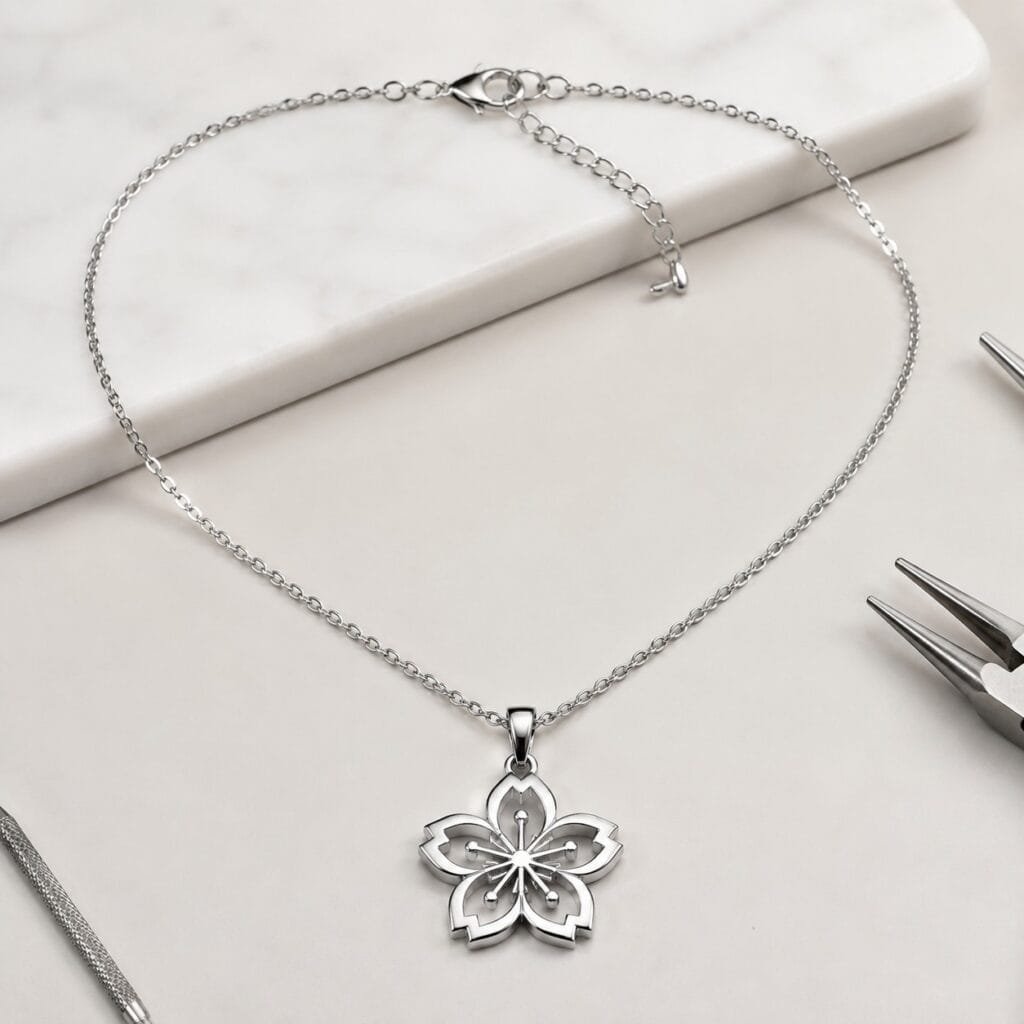
Sakura Pendant Necklaces
We develop single blossoms, blossom clusters, falling petals, openwork medallions, or layered relief pendants. Specifications cover pendant dimensions, thickness, target weight, front orientation, bail or jump-ring opening, chain type, finished chain length, extension chain, clasp, logo position, and packaging protection. We also check whether the pendant hangs upright, flips during wear, or catches on clothing. The chain and pendant are approved as one retail-ready assembly.
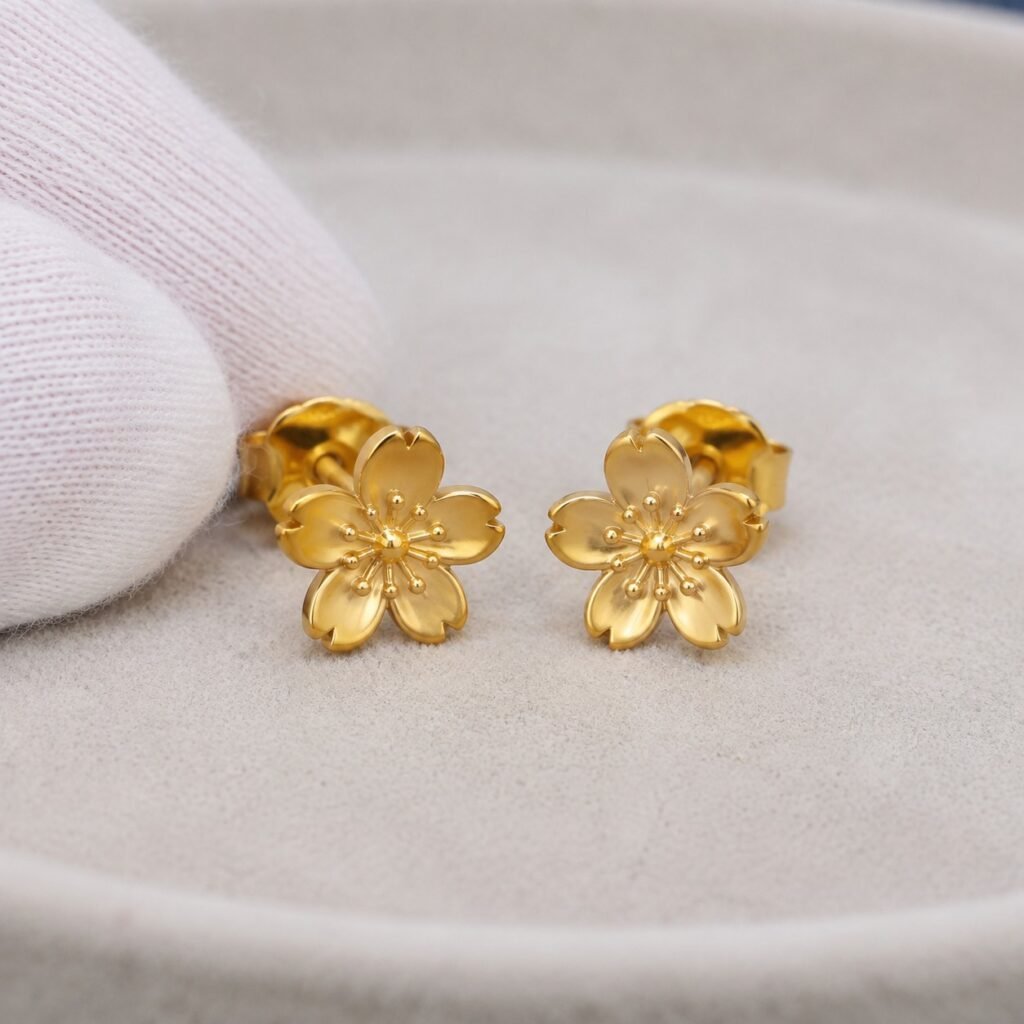
Sakura Earrings
Stud, drop, hoop, and huggie formats require different motif simplification and balance. Chicolink confirms left-right direction, single-ear and pair weight, ear-post material, diameter, effective length, alignment, weld position, closure, moving connections, backing type, and card presentation. Small petals are reviewed for smooth edges and readable form after polishing, filling, stone setting, and plating. Pairing and closure are approved at actual finished size.
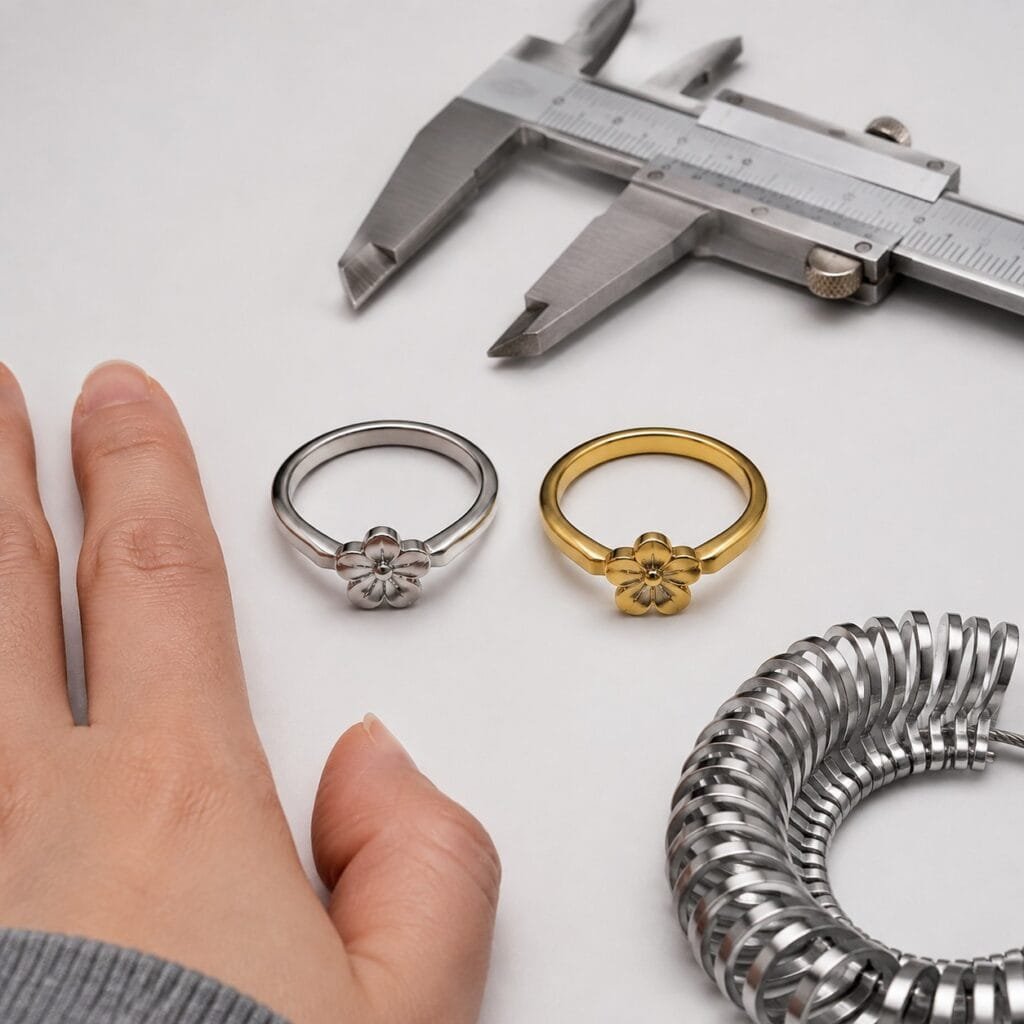
Sakura Rings
Sakura rings may use a raised blossom, recessed petal engraving, openwork top, wraparound branch, enamel accent, or stone-set flower center. We record the ring-size system, actual inner dimensions, face width, band thickness, target weight, open-ring range, edge comfort, and finish. Wide, irregular, or adjustable structures require physical fit and deformation review before size grading. Size grading follows the approved ring reference, not a name alone.
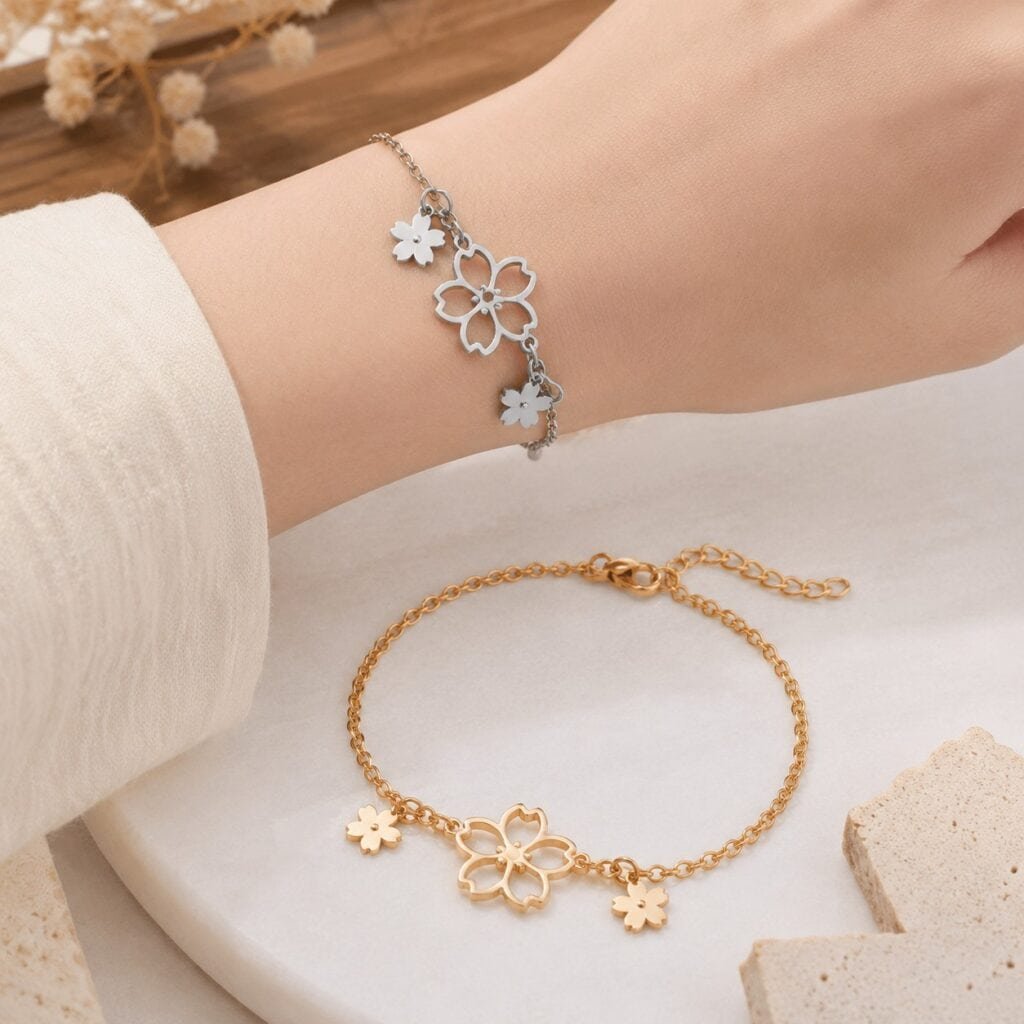
Bracelets and Charms
Bracelets can use a central blossom, repeating petals, branch links, or detachable sakura charms. Chicolink evaluates finished length, extension allowance, clasp, jump-ring size, charm direction, movement, connection strength, skin contact, tangling risk, and surface contact between components. Every charm and bracelet combination is checked as an assembled product rather than approved only as separate metal parts. The assembled product is checked before bulk release.
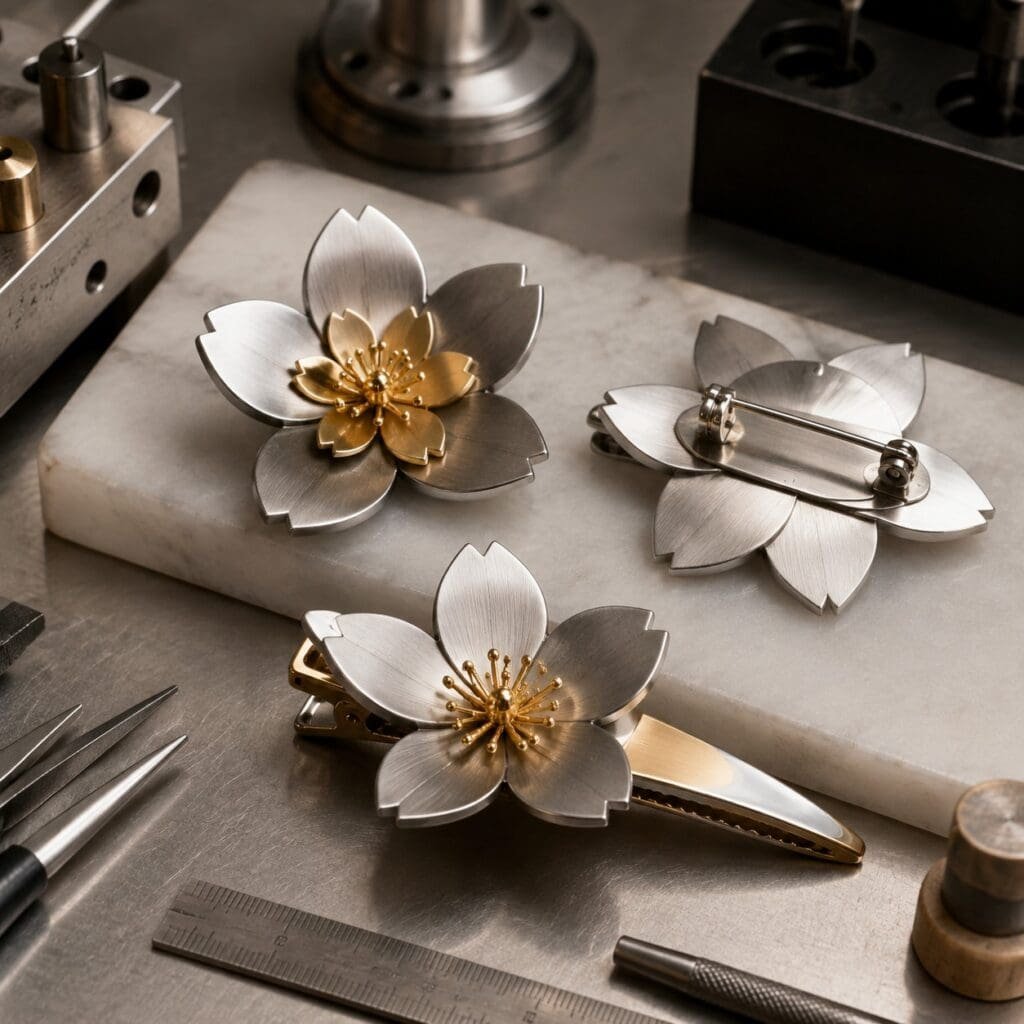
Brooches and Hair Pieces
The larger surface of a brooch, pin, or hair accessory can preserve layered petals, branch composition, color zones, and dimensional flower centers. We confirm backing structure, pin or clip direction, point protection, weight distribution, wearing position, joining method, surface protection, and retail fixing. Hair accessories receive separate structure and use-condition review instead of inheriting ordinary pendant specifications. Final fixtures are confirmed for the target garment or hair use.
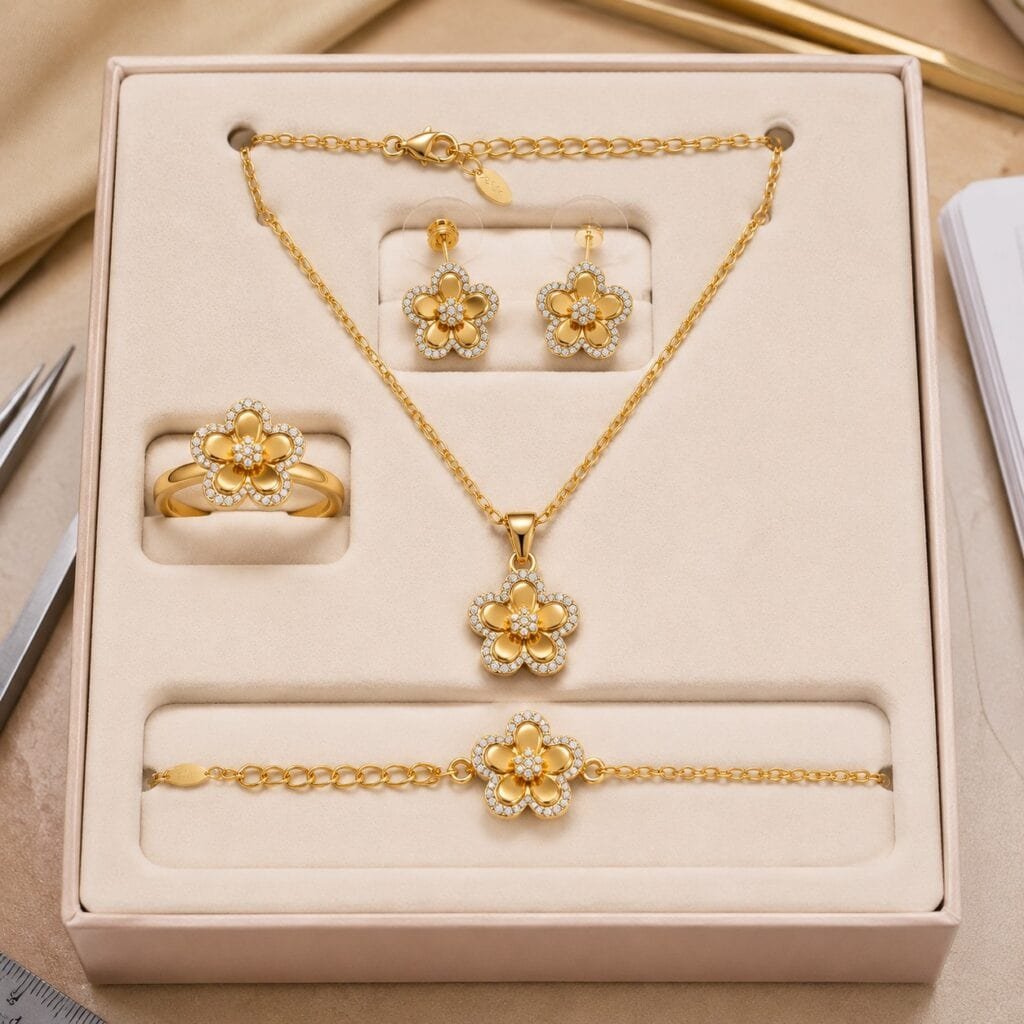
Coordinated Sakura Sets
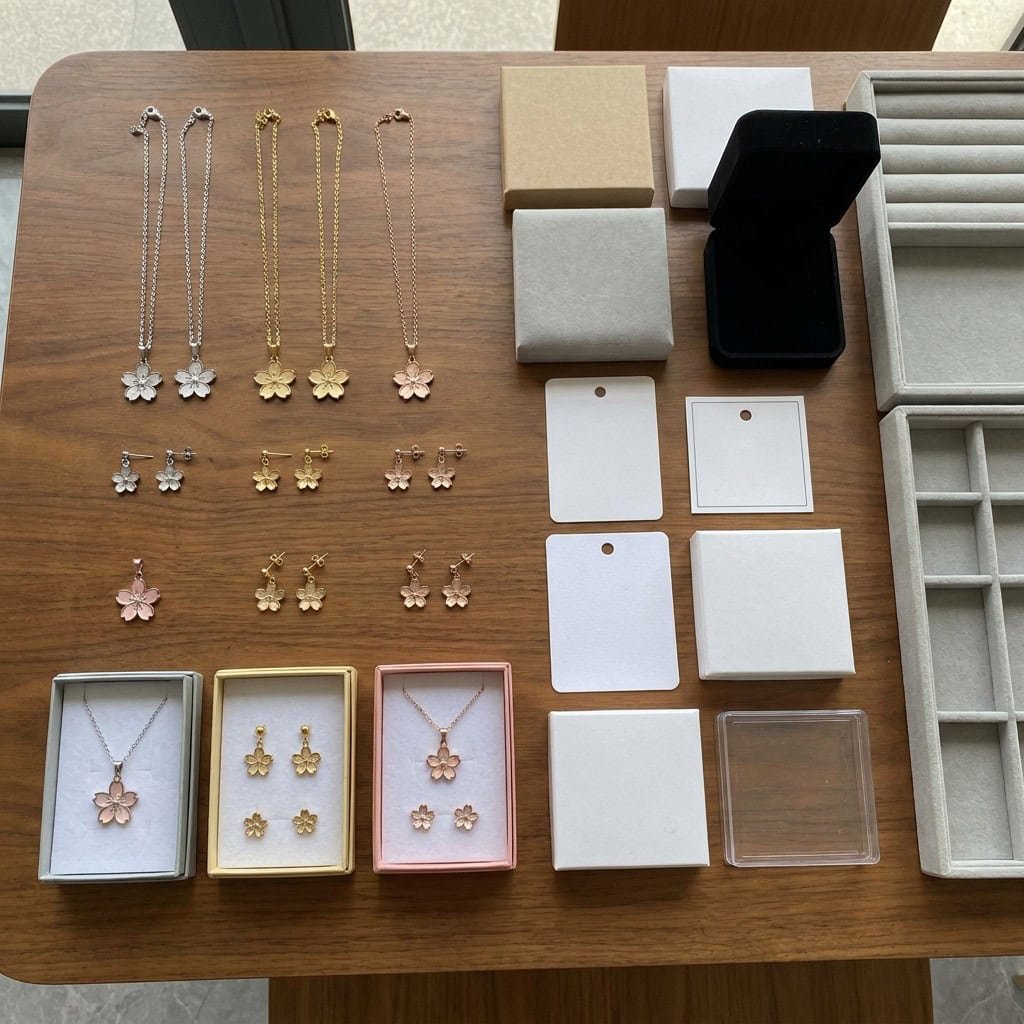
We coordinate necklaces, earrings, rings, bracelets, or accessories through one master motif, controlled proportions, finish, color, logo, and packaging system. Each product still keeps an independent drawing and BOM. Set-level planning also covers pairing, presentation order, missing-part prevention, gift-box fixing, barcode structure, replacement rules, and inspection before each approved set configuration is packed. Set packaging is inspected as a complete commercial unit.
Structure Sakura Development Around the Buyer’s Commercial Program
Chicolink structures each sakura project around its sales channel and supply requirements. A global brand capsule, importer assortment, distributor replenishment program, and private-label launch require different SKU roles, finishes, approval records, packaging, testing, quantities, and delivery planning. The following representative scopes show how we organize a project; final details depend on the confirmed brief.
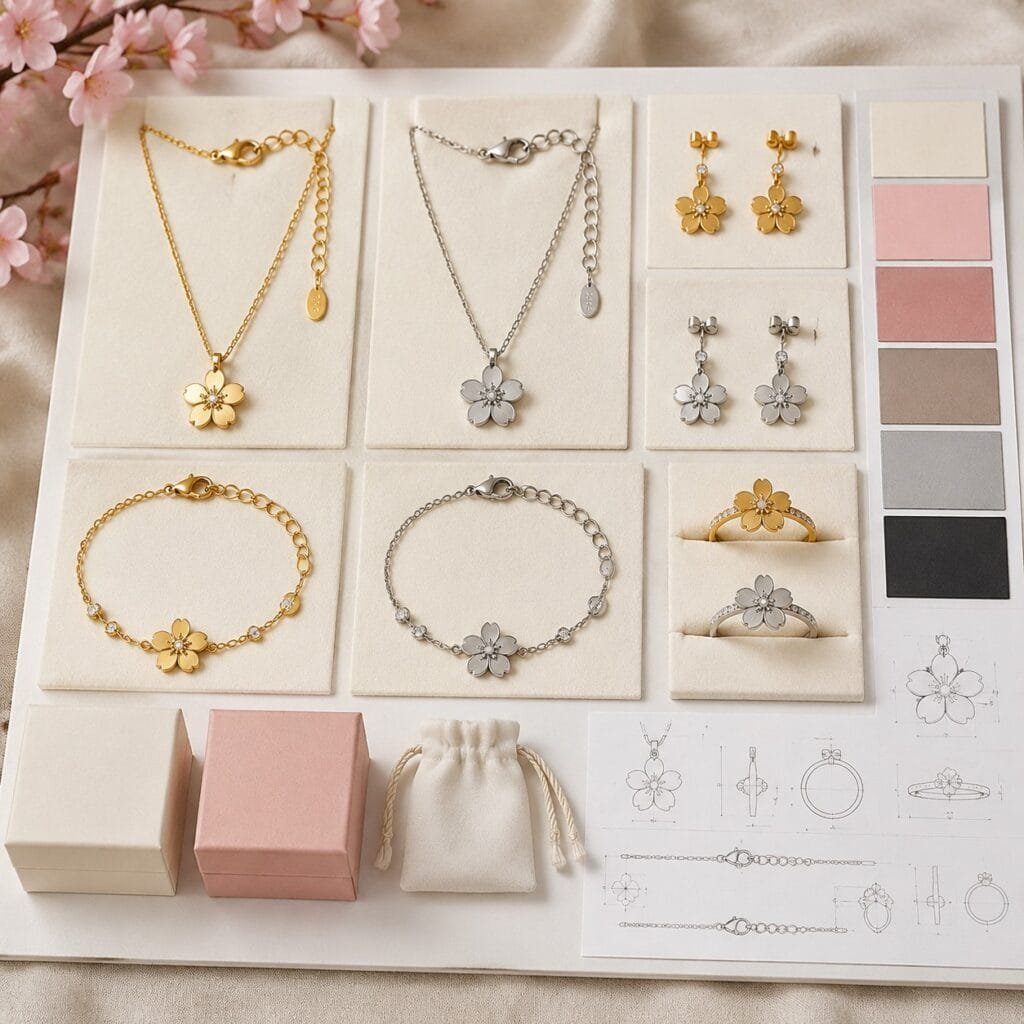
Global Brand Capsule
Use Scenario: A mature brand plans a seasonal sakura capsule for several markets.
Key Challenge: One motif must remain recognizable across different product sizes, colors, and packaging versions.
chicolink Solution: We define the master artwork, SKU-specific engineering, approval samples, finish standards, packaging files, and inspection points.
Result: Chicolink prepares a controlled release package for approval before bulk production.
Project Data: Representative project scope: hero necklace, supporting earrings, ring, bracelet, two finishes, and coordinated packaging; final scope requires written confirmation.
Importer Assortment
Use Scenario: An importer needs a commercially balanced sakura assortment for wholesale accounts.
Key Challenge: Product variety must be balanced against MOQ, color batches, packaging versions, and reorder practicality.
chicolink Solution: We separate suitable regular styles, adapted designs, and original custom development, then confirm quantities by style, color, size, and pack.
Result: Chicolink prepares a sourcing structure for quotation and sampling.
Project Data: Representative project scope: necklaces, earrings, charms, and gift sets with mixed sales roles; availability and combinations remain SKU-specific.
Distributor Replenishment
Use Scenario: A distributor requires repeat orders after the first sakura collection launch.
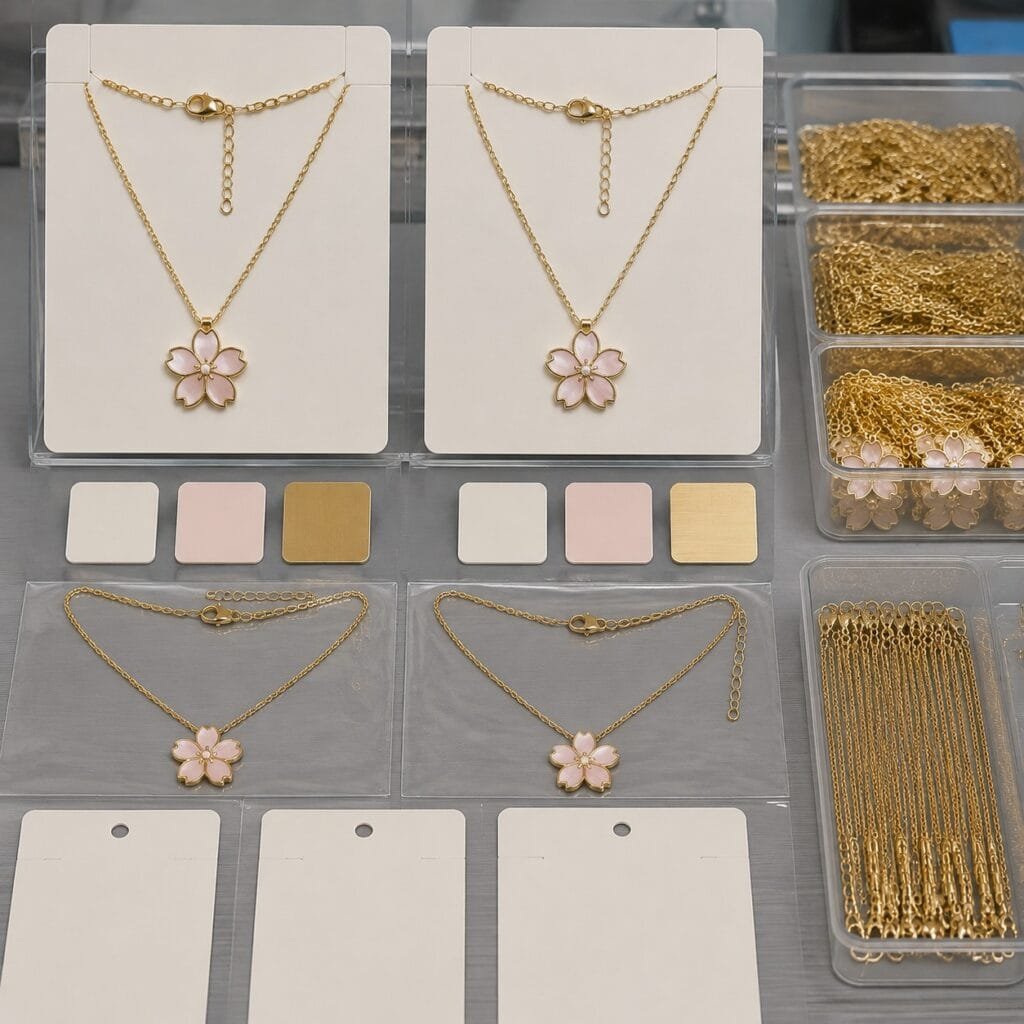
Key Challenge: Color, dimensions, components, labels, and carton allocation must remain traceable between batches.
chicolink Solution: We link approved samples, drawings, BOM versions, PVD color references, packaging files, production batches, and inspection records to each SKU.
Result: Chicolink reviews reorders against released records rather than informal photos.
Project Data: Representative project scope: repeated core SKUs with controlled variants and replenishment records; timing depends on material, plating, packaging, and order quantity.
Private-Label Retail Launch
Use Scenario: A retail or DTC buyer wants a branded sakura gift collection ready for sale.
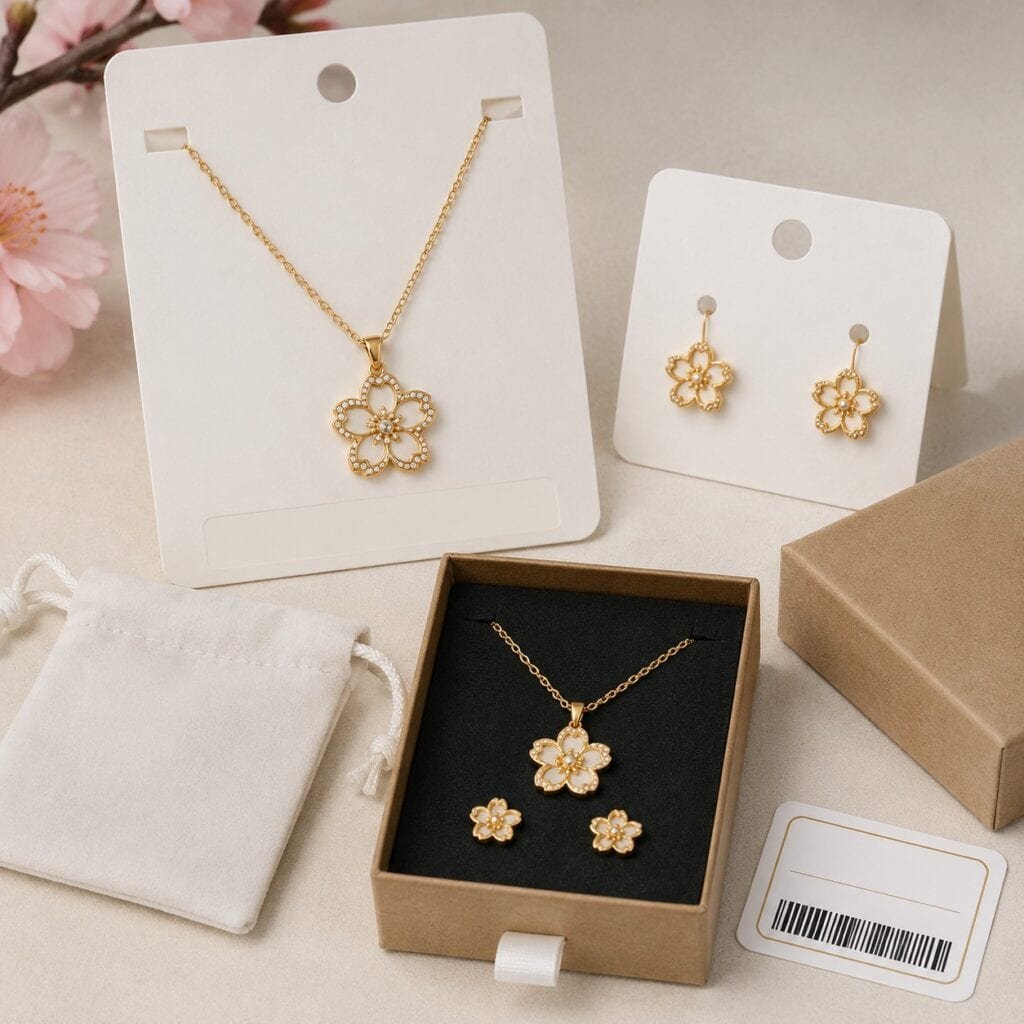
Key Challenge: Product, logo, card, box, barcode, set configuration, and online product data must match.
chicolink Solution: We develop the product and packaging approval paths together, with separate files for each SKU and packaging version.
Result: Chicolink moves the approved collection into controlled packing and shipment preparation.
Project Data: Representative project scope: product logo, jewelry card, pouch or gift box, care card, barcode, and shipping labels; all specifications require buyer approval.
Create a Distinct Sakura Design Language
Sakura recognition can come from a notched five-petal outline, a flower center, branch rhythm, falling petals, open negative space, or layered relief. Chicolink records the selected visual elements before engineering each product. We work from buyer-authorized artwork, original briefs, CAD files, sketches, or properly authorized references and do not present China-manufactured products as Japanese-made or officially licensed without documented authorization.
Single Blossom Icon
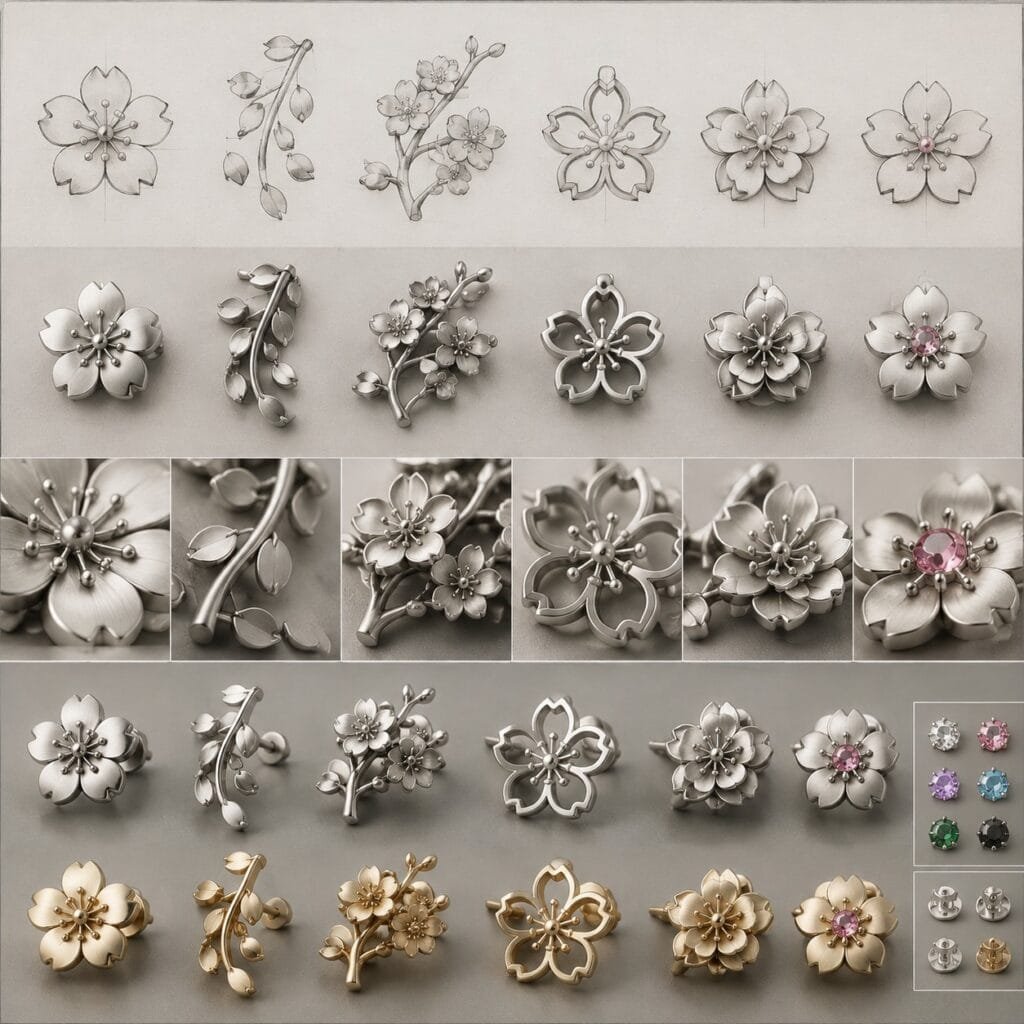
A compact single blossom is suitable for pendants, studs, ring faces, small charms, and repeat patterns. We define petal count, tip notch, center size, symmetry or intentional asymmetry, outline weight, and viewing direction. The form may need controlled simplification at small scale so polishing, color filling, stone setting, or PVD does not erase the features that make it recognizable as sakura. The approved master artwork controls later size variants.
Falling Petal Motion
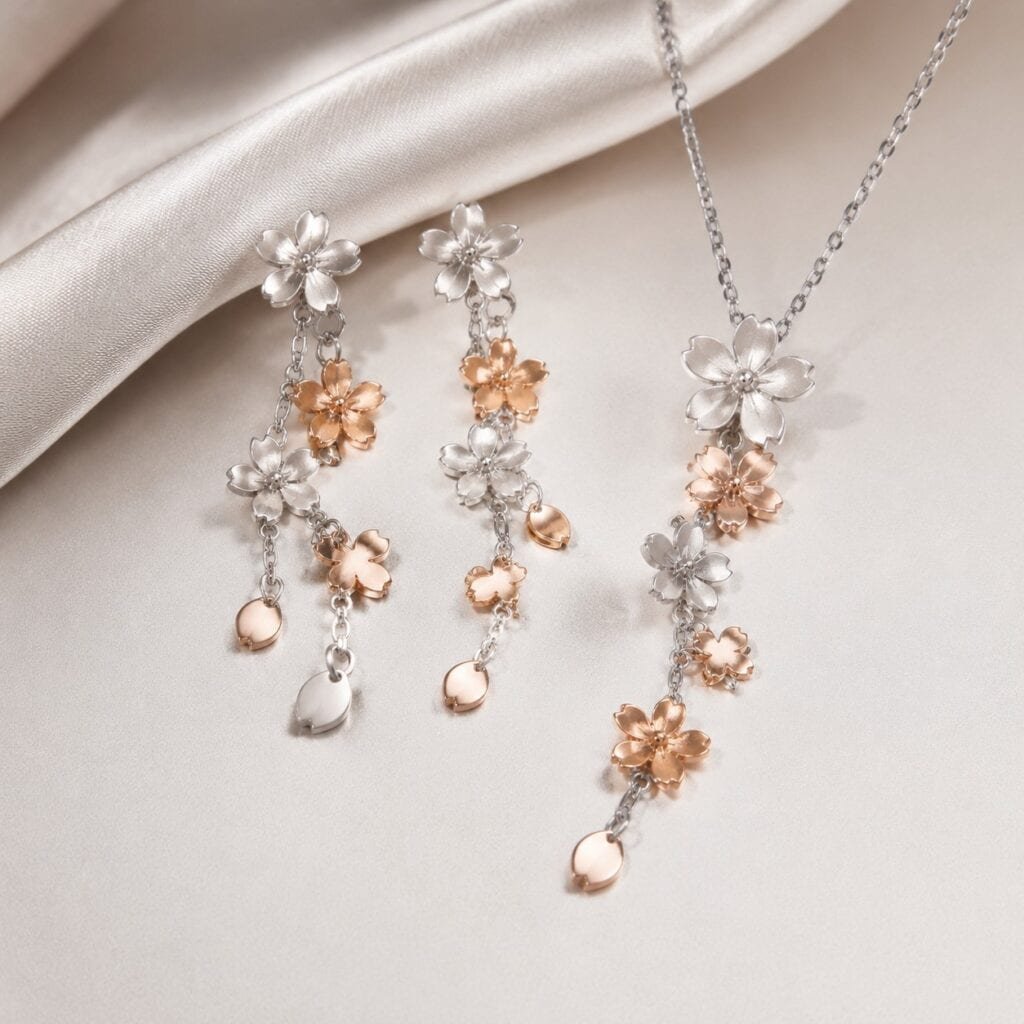
Falling-petal designs can create asymmetrical earrings, layered necklaces, moving charms, and delicate branch compositions. Chicolink confirms the direction of each petal, connection point, articulation, spacing, movement range, left-right pairing, and center of gravity. We avoid uncontrolled rotation, tangled connections, sharp petal tips, and a composition that appears correctly oriented only in a rendering but not when worn. These checks are completed before sampling.
Branch and Cluster
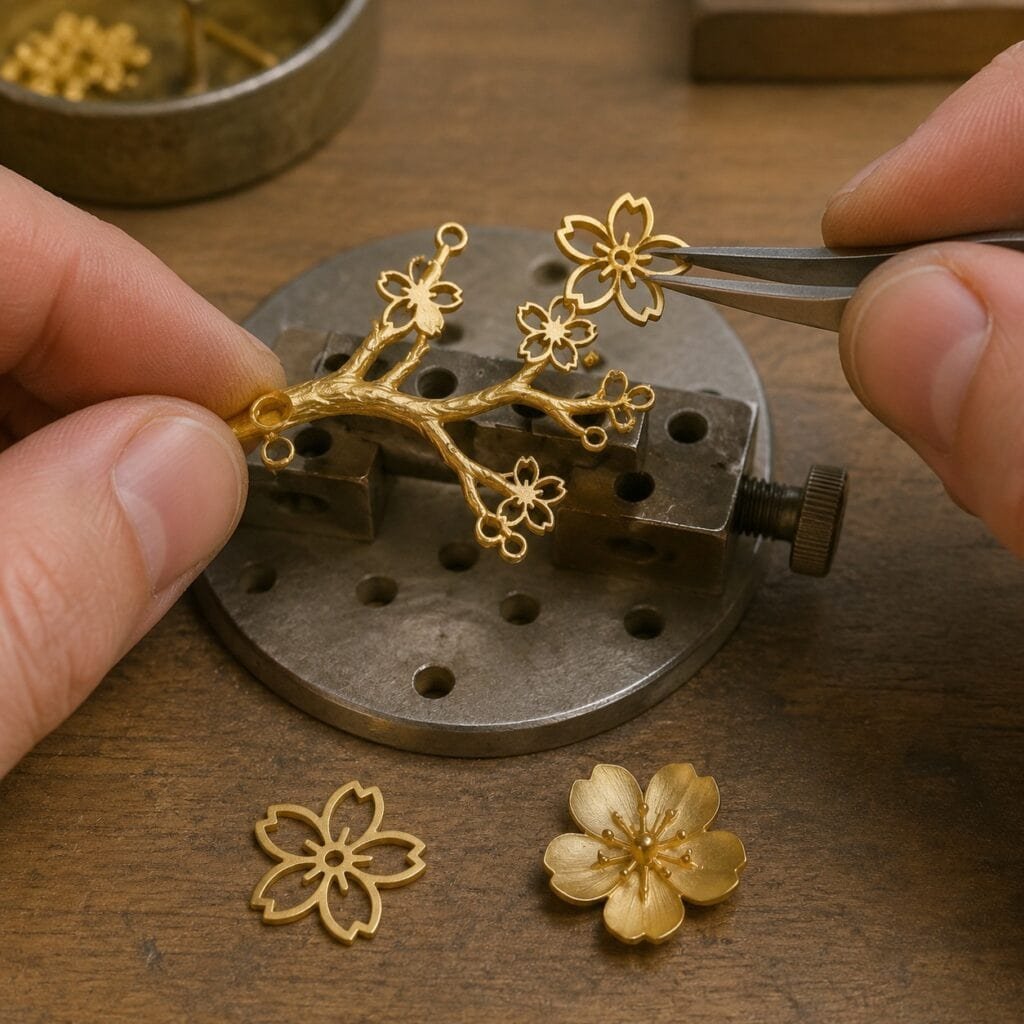
A branch or blossom cluster provides a stronger narrative for statement pendants, brooches, hair pieces, cuffs, and gift products. We define which branch lines carry structural load and which are purely visual. Blossom spacing, joining points, hidden support, open areas, relief, and reverse-side finish must remain manufacturable, cleanable, plateable, inspectable, and comfortable at the approved size. The approved branch file controls later product extensions.
Openwork Sakura Outline
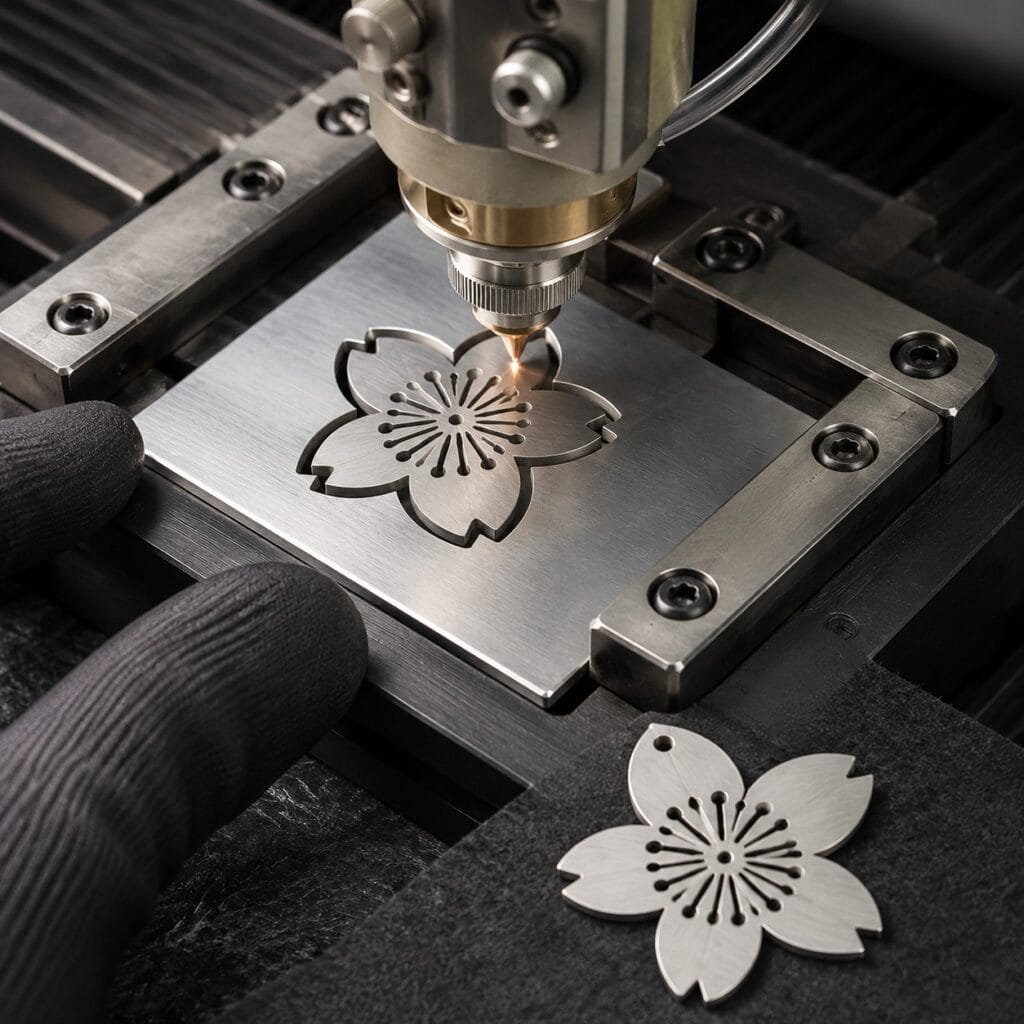
Openwork can create a light, modern sakura silhouette with polished steel or PVD color. The key decisions are plate thickness, minimum bridges, internal corners, negative-space width, edge rounding, hanging direction, and polishing allowance. Chicolink evaluates laser cutting, stamping, casting, or another confirmed route according to size, quantity, required detail, tooling, target weight, and finish. Finished samples confirm the openwork before release.
Layered Blossom Relief
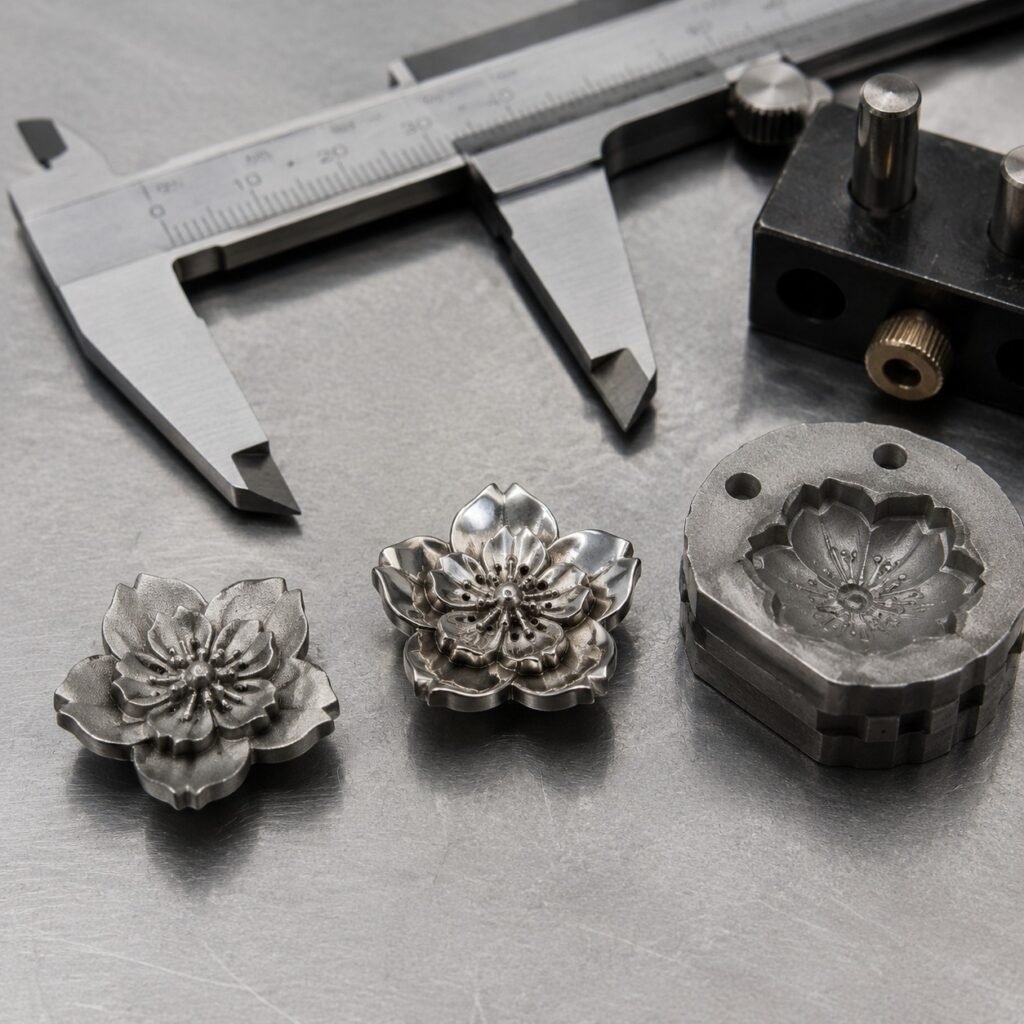
Layered petals and raised centers add depth to pendants, rings, earrings, brooches, and premium gift pieces. We control the transition between levels, polishing access, recess cleaning, plating coverage, stone or pearl position, reverse profile, and target weight. We verify that deep geometries remain accessible for finishing, free of trapped residue, even in surface, balanced in weight, and repeatable in bulk production. The approved relief serves as the production reference.
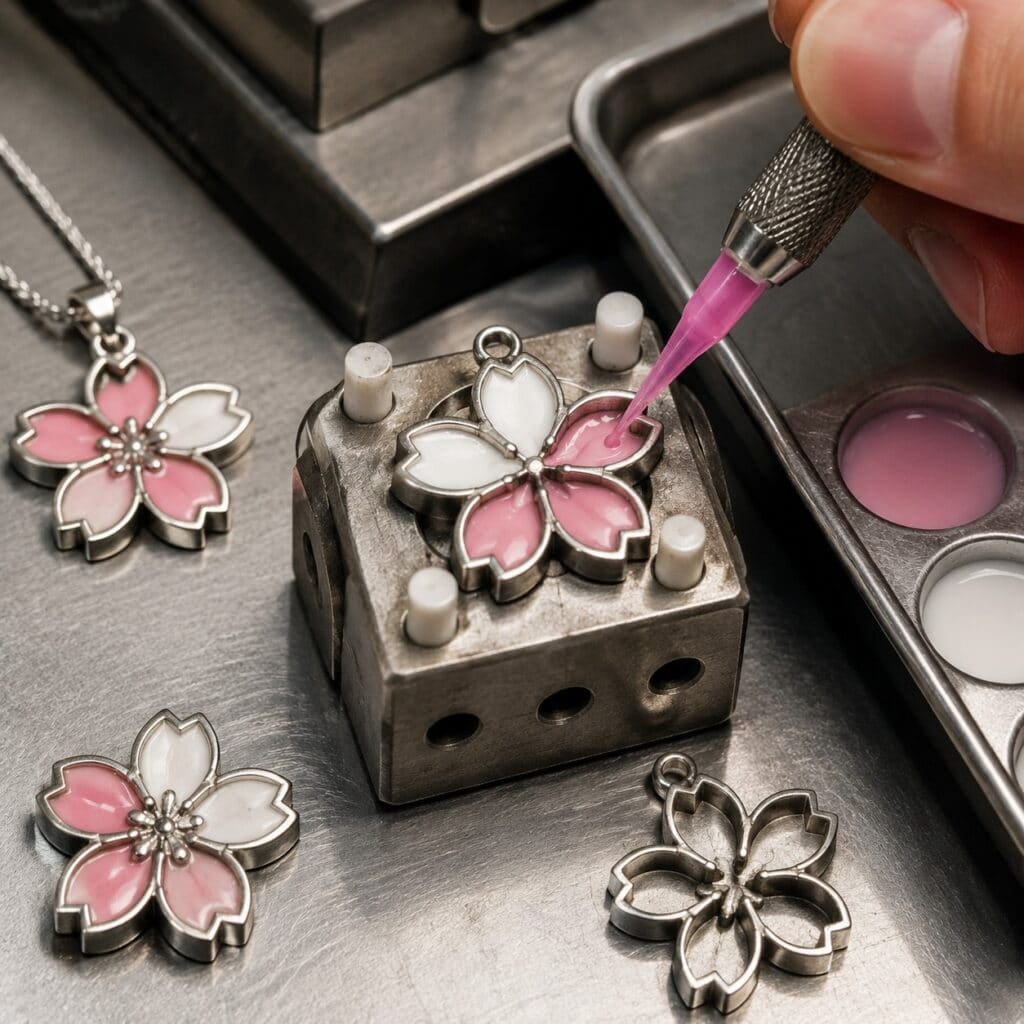
Color and Stone Accent
Cold enamel, epoxy, paint, resin filling, CZ, glass, crystal, pearl, or other confirmed components can emphasize petals and flower centers. Chicolink records the material, color reference, cavity, filling height, stone size, setting method, surface effect, and compatibility with cleaning and plating. High-temperature fired enamel is treated as a separate process requiring engineering review, sample validation, and supply confirmation. The selected route is confirmed on the actual sample.
Prevent Sakura Design Failures Before Sampling Begins
A sakura drawing can look complete on screen but fail after cutting, forming, polishing, plating, filling, assembly, or wear. Chicolink performs a design-for-manufacturability review before quotation or sampling. We record open questions, approved dimensions, structure, material, finish, and validation requirements before release.
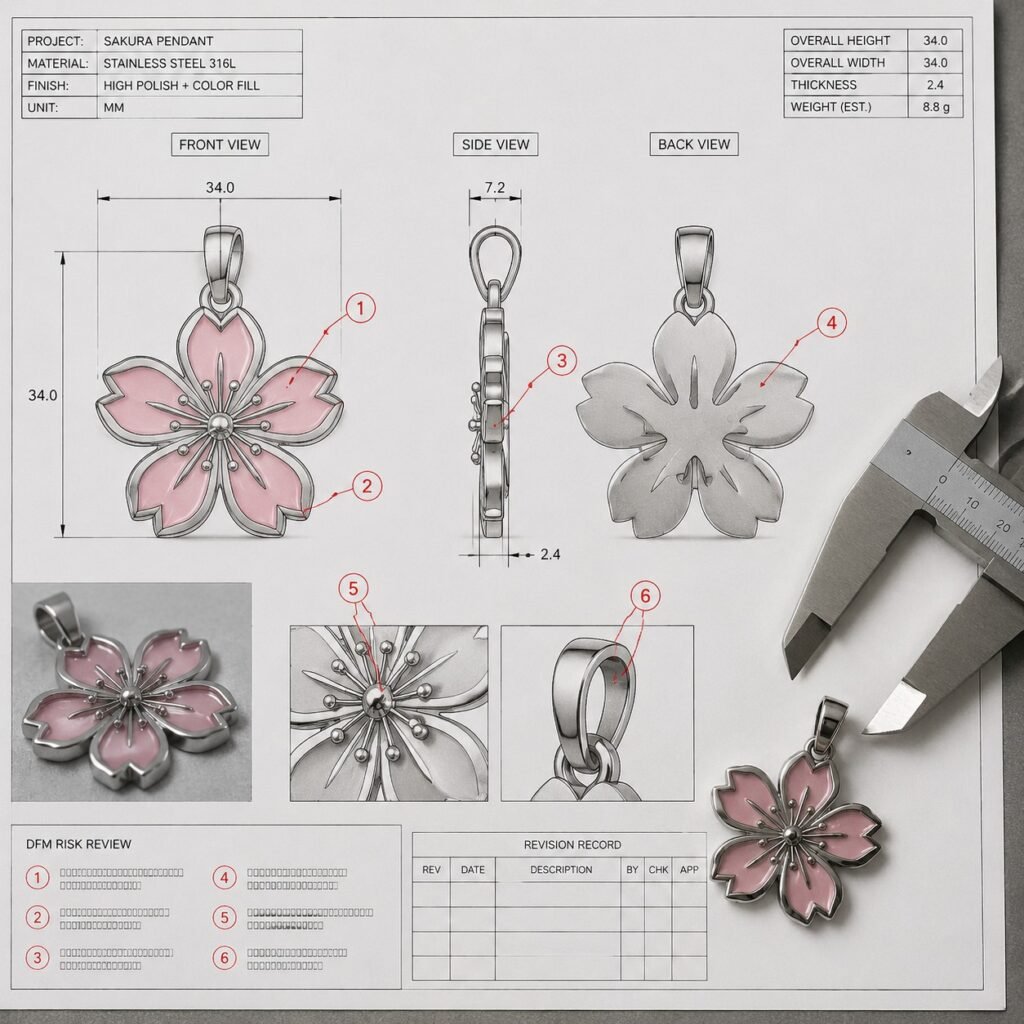
Six Sakura-Specific Risks We Review Before Release
- Petal tips and skin contact: Notched or pointed petals may become uncomfortable after scale reduction. We review edge radius, burr removal, polishing allowance, orientation, and the surfaces that contact skin or clothing.
- Thin bridges and open spaces: Narrow branch lines, petal connections, and internal cutouts may deform, crack, close during polishing, or provide insufficient strength. Width and thickness are approved against the selected process and finished size.
- Relief and vein visibility: Fine petal veins can disappear after polishing or become uneven inside deep recesses. We separate essential motif details from decorative details and confirm them on an actual-size sample.
- Color-fill boundaries: Recess depth, divider width, filling height, curing, surface level, and later finishing affect color clarity. Cold enamel, epoxy, paint, resin, and fired enamel are not treated as one interchangeable process.
- Flower-center attachment: Stones, pearls, beads, or layered centers change weight and require an appropriate setting, glue area, pin, weld, or mechanical connection. The inspection method follows the actual attachment structure.
- Hanging and wearing balance: Bail position, jump rings, moving petals, chain weight, ear-post position, and asymmetric clusters affect orientation. We check whether the product flips, twists, pulls forward, or presents differently from the approved drawing.
Match Each Sakura Effect to a Production Route
The manufacturing route depends on the artwork, dimensions, thickness, relief, quantity, target weight, finish, tolerance, tooling plan, and price position. Chicolink can combine CNC, stamping, laser cutting, casting, welding, polishing, engraving, setting, filling, plating, and assembly where appropriate. Engineering review and, when required, sample validation precede final route release.
The process table connects each visual effect with its main engineering checks and cost drivers. Use it to select a route before sample pricing and reduce late construction changes.
| Desired Sakura Effect | Possible Chicolink Route | Sakura-Specific Control Points | Commercial Impact to Confirm |
|---|---|---|---|
| Clean flat silhouette | Laser cutting or stamping, followed by deburring and polishing | Petal-tip radius, internal openings, bridge width, flatness, edge finish, hanging hole | Tooling need, quantity, plate thickness, cycle time, polishing labor |
| Raised or sculpted blossom | Casting, CNC, tooling, or a confirmed combination | Relief height, shrinkage, undercuts, recess access, reverse profile, target weight | Mold route, sample iterations, metal use, finishing time |
| Openwork branch cluster | Laser cutting, stamping, casting, or layered assembly | Structural branch lines, unsupported petals, distortion, joining points, plating access | Yield risk, fixtures, assembly labor, batch quantity |
| Fine veins or inscription | Laser engraving, etching, stamping, or recessed tooling | Minimum line width, depth, readability after polishing and plating, text accuracy | Artwork quality, setup, inspection method, revision control |
| Colored petals | Cold enamel, epoxy, resin filling, paint, or separately assessed fired enamel | Cavity depth, divider width, Pantone or approved color sample, bubbles, overflow, curing | Number of colors, fill labor, compatibility tests, sample time |
| Stone or pearl center | Prong, bezel, glue, inlay, pearl pin, or another approved setting | Stone size, seat, height, alignment, overflow, attachment test, transport protection | Component supply, setting labor, replacement allowance, inspection level |
| Layered or moving petals | Laser welding, jump-ring assembly, pins, or engineered connections | Movement range, weld location, ring closure, pair direction, pull strength, tangling | Part count, assembly fixtures, inspection time, packaging protection |
Select Materials and Finishes for the Sakura Program
Material and finish choices affect forming, cutting, welding, polishing, color, corrosion behavior, target weight, cost, and testing. Chicolink selects a route from the product use, structure, wearing environment, target market, buyer specification, and approved sample. A material name or color label alone is not a complete production standard; each SKU requires its own material, surface, thickness, color, and inspection definition.
This matrix starts the project discussion. Chicolink confirms the final material, coating structure, decorative component, test plan, and color standard after reviewing the actual sakura design.
| Option | Appropriate Sakura Application | What Chicolink Confirms | Important Boundary |
|---|---|---|---|
| 304 stainless steel | Many sheet, wire, bar, tube, chain, and confirmed cast structures | Material form, thickness, structure, surface, target market, and required tests | Use is project-specific; it is not selected only because it may be easier to source |
| 316L stainless steel | Products requiring a buyer-specified grade or greater pitting-corrosion consideration | Structure complexity, forming, machining, welding, polishing, dimensions, and verification | Higher hardness may increase processing difficulty; 316L is not automatically required for every sakura SKU |
| Polished or textured steel | Monochrome blossoms, openwork outlines, engraved petals, modern collections | Mirror, high polish, brushed, satin, matte, or sandblasted reference; A/B/C surfaces | Texture can change perceived color and may reduce visibility of fine petal detail |
| PVD/IP gold or rose gold | Warm-tone necklaces, earrings, rings, bracelets, and coordinated sets | Base material, polish, standard color sample, layer structure, target thickness, tolerance, test plan | E1/E2 are reference structures only; final layers and thickness are confirmed per project |
| Black and other PVD colors | Graphic outlines, unisex designs, contrast details, statement collections | Color reference, surface texture, batch plan, plating route, sample approval, packaging protection | Color names are insufficient without an approved physical or measurable reference |
| Rhodium or silver color | White-tone programs and selected water-plated structures | Base material, electroplating structure, target thickness, color, handling, and test requirements | Actual process and thickness are confirmed by product; water plating is not interchangeable with every PVD route |
| Cold enamel, epoxy, paint, or resin | Pink petals, white accents, transparent fills, pearl or glitter effects | Material type, color code, cavity, fill height, curing, surface effect, compatibility, adhesion checks | These are separate materials and processes; high-temperature fired enamel requires separate validation |
| CZ, glass, crystal, pearl, or stone | Flower centers, dew-drop effects, premium accents, dimensional clusters | Material, shape, size, color, setting, quantity, orientation, attachment, and replacement rules | Natural materials may vary; attachment testing follows the actual setting or joining structure |
Choose the Sakura Development Route That Fits Your Inputs
Chicolink can begin from a confirmed regular style, buyer-owned artwork, a physical sample, CAD files, or a commercial collection brief. The starting point determines the engineering work, approvals, tooling, cost basis, and sampling schedule. ODM development is based on a defined market, assortment, quantity, price position, and project objective.
The comparison shows the information and release documents required for each route. It separates quick market testing, original product development, and exclusive tooling.
| Development Route | Buyer Starts With | Chicolink Work Scope | Main Approval Outputs |
|---|---|---|---|
| Confirmed regular style | Selected available SKU, target quantity, color, logo, and packaging request | Verify availability, material, finish, modification feasibility, packaging, price, and delivery conditions | Confirmed SKU, variant, color, pack version, quotation, and sample where required |
| OEM sakura development | Buyer-owned artwork, CAD, technical drawing, authorized reference sample, or complete specification | DFM review, process planning, costing, drawing confirmation, sampling, plating, QC, packaging, and bulk execution | Released drawing, BOM, color standard, approved sample, packaging file, and inspection requirements |
| ODM sakura collection | Target market, audience, channel, price band, sakura direction, quantity, and launch timing | Collection architecture, motif proposals, structure and material recommendations, sample planning, and private-label coordination | Approved direction, selected SKUs, engineering files, samples, variant plan, and production release package |
| Exclusive custom mold | Original design requiring proprietary geometry, relief, stamping, casting, or dedicated fixtures | Evaluate tooling type, ownership terms, cost, trial, modification, maintenance, and production suitability | Approved tool route, written commercial terms, trial sample, released design, and bulk-production conditions |
Planning Factors
- Product category and intended wearing position
- Original artwork, sketch, CAD, physical sample, or lawful reference
- Finished dimensions, size range, target weight, and important tolerances
- Material, PVD or plating color, surface texture, stone, pearl, or filling requirements
- Quantity by style, color, size, and packaging version
- Target market, testing, inspection, delivery, logo, and packaging requirements
Approve Sakura Samples Through Documented Decision Gates
Sampling verifies more than appearance. It confirms whether the sakura motif remains readable, comfortable, structurally secure, finishable, inspectable, packageable, and suitable for repeat production. Chicolink separates concept, structure, metal, color, function, packaging, pre-production, and golden samples when required. The sample type, fee, timing, approval purpose, and open items are defined before work begins.
The stages below define a decision point before each additional development cost or production commitment.
| Stage | Buyer and Chicolink Decision | Controlled Output |
|---|---|---|
| 1. Brief received | Confirm product, artwork rights, dimensions, material, finish, quantity, market, packaging, tests, and target date | Project brief and missing-information list |
| 2. Engineering review | Check petal geometry, bridges, edges, weight, connections, setting, filling, plating access, and manufacturability | DFM comments, proposed route, risks, and buyer-confirmation items |
| 3. Quotation released | Calculate product, tooling, sample, plating, decoration, packaging, testing, and quantity conditions | Written quotation with included version and commercial assumptions |
| 4. Drawing approved | Confirm front, side, back, dimensions, logo, color zones, stone positions, chain, clasp, and packaging interfaces | Approved drawing or CAD revision and preliminary BOM |
| 5. Sample produced | Manufacture the agreed sample type under the released route | Identified sample linked to project, SKU, drawing, BOM, and process version |
| 6. Factory review | Inspect appearance, dimensions, edge condition, orientation, function, finish, assembly, and agreed tests | Inspection notes, photos or video, and open-issue list before shipment |
| 7. Buyer feedback | Provide marked photos and comments by size, color, surface, logo, weight, fit, connection, and packaging | Consolidated revision record; cost and timing reassessed when changes affect the route |
| 8. Golden sample | Approve the production reference and close unresolved release conditions | Golden sample, approval record, released files, quality points, and bulk-production basis |
Commercial Reference Table
| Item | Chicolink Reference Policy |
|---|---|
| First response | Regular inquiries target an initial response within 6 hours; this may acknowledge receipt or request missing information and is not automatically a formal quotation |
| Complex-project review | Chicolink targets preliminary assessment feedback within 24 hours; final quotation follows engineering and cost review |
| Existing-style sample | Usually 3-7 working days after the sample conditions are confirmed |
| OEM/ODM custom sample | Usually 25-30 working days; complex tooling, special finishes, packaging, or testing may require separate confirmation |
| Sample and mold fees | Sample fees usually apply; whether sample or mold fees are credited is confirmed by order value and written agreement |
| Sample revisions | No universal free-revision count is assumed; changes affecting material, structure, tooling, process, cost, or timing require reassessment |
Manufacture Sakura Collections Under One Controlled Production System
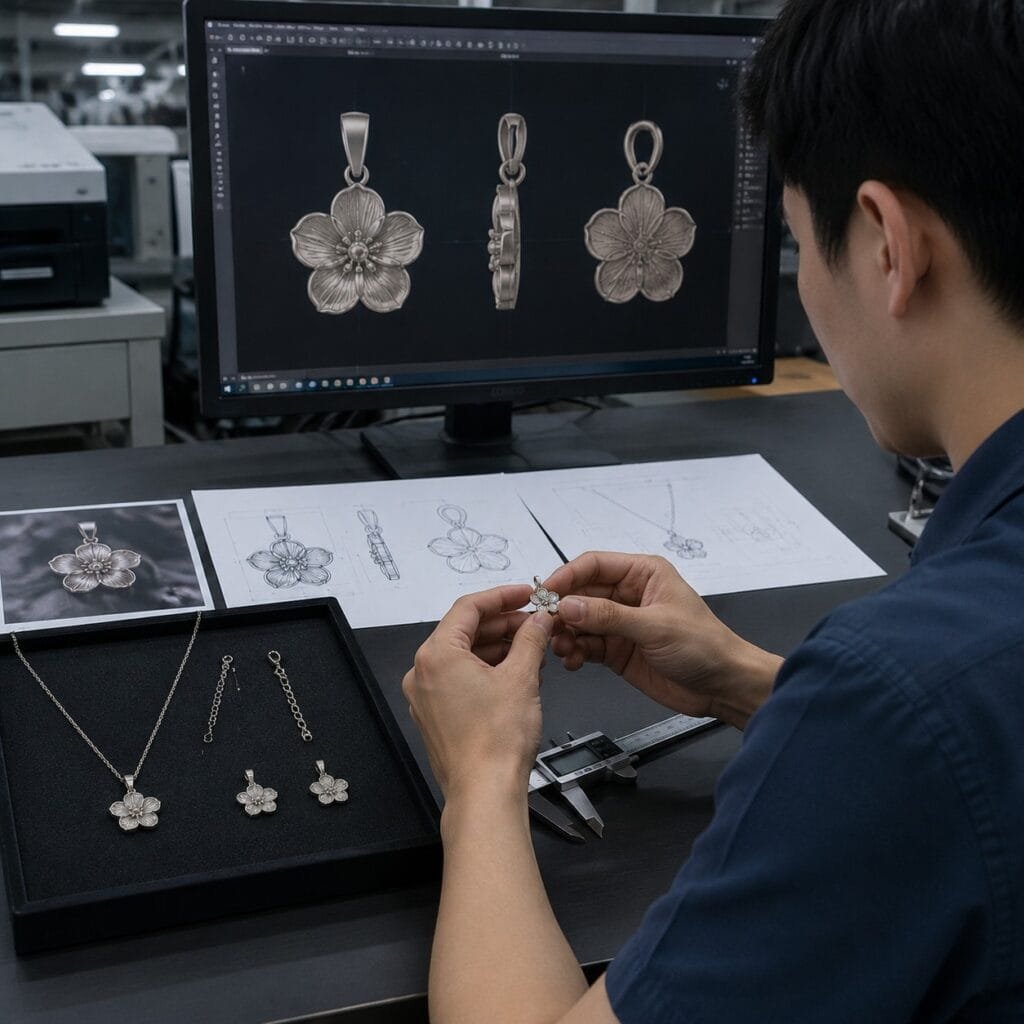
Chicolink Jewelry has manufactured stainless steel jewelry in Dongguan since 2012. Our 5,500+ m2 factory, 400+ staff, six jewelry designers, three jewelry engineers, 58 production machines, and monthly capacity of 200,000+ pieces support B2B development and bulk production. Actual capacity depends on product complexity, process route, order mix, materials, plating, packaging, quality requirements, and the confirmed schedule.
For a sakura program, these resources connect design review, forming, finishing, plating, assembly, quality control, packaging, and export coordination within one project structure.
Connect Sakura Engineering, Plating, QC, and Delivery
- Manufacturing resources: Chicolink can use CNC, stamping, laser cutting, casting, laser welding, polishing, engraving, setting, assembly, and packaging according to the released design and process route.
- In-house plating: Our plating workshop operates six PVD vacuum-coating machines for PVD/IP coating. We also support water plating and other electroplating processes through our plating workshop, with each process managed against confirmed specifications.The workshop manages pretreatment connection, color and sample approval, process monitoring, inspection, exception handling, and batch traceability.
- Project coordination: PMC coordinates materials, process scheduling, plating, assembly, packaging, and delivery status. Engineering, QC, purchasing, production, plating, and packaging work against approved project records rather than a reference image alone.
- Production sequence: Inquiry and specification review lead to quotation, drawing or style selection, sampling, sample inspection, buyer approval, production release, incoming inspection, forming and finishing, in-house plating where required, assembly, final inspection, packing, shipment, and after-sales follow-up.
- Project visibility: Chicolink can manage sample progress, production scheduling, plating progress, packaging confirmation, third-party inspection coordination, shipping documents, and logistics tracking according to the confirmed project scope.
Control Sakura Quality from Approved Sample to Repeat Orders
Sakura jewelry quality depends on more than the flower shape. Chicolink links approved artwork, dimensions, materials, components, relief, color, finish, assembly, logo, packaging, and inspection points to each released SKU. These records support first-article approval, bulk inspection, shipment decisions, complaint review, and replenishment.
The six controls below show what is released, checked, recorded, and compared when a collection moves from sample to repeat order.
Released Artwork and BOM
Each production SKU should link to its approved front, side, and back views; dimensions; material; components; stone or fill list; chain and clasp; surface specification; logo; packaging; and quality points. When artwork, BOM, color, logo, or packaging changes, Chicolink updates the version and prevents an unapproved older file from remaining in production use.
Golden Sample Control
The golden sample is the physical reference for the approved sakura profile, petal definition, relief, edge condition, dimensions, color, finish, attachment, function, logo, and packaging. Chicolink records its project, SKU, purpose, date, linked drawing and BOM, approval status, unresolved issues, photographs, and retention information before it becomes a bulk-production reference.
Material and First Article
Incoming inspection reviews the specified material grade, dimensions, surface condition, components, stones, and packaging materials. During production, the first article is checked against the released design before the full batch proceeds. Sakura-specific points include petal openings, branch alignment, edge finish, flower-center position, earring direction, pendant orientation, and moving connections.
Plating Color Control
Chicolink confirms the base material, polishing level, approved color sample, plating method, layer structure, target thickness, allowable color difference, and required durability tests. In-process and final checks review color, thickness where specified, missed areas, spots, burning, pinholes, scratches, peeling, and visible variation across petals, recesses, connections, and matched sets.
Inspection and Packing
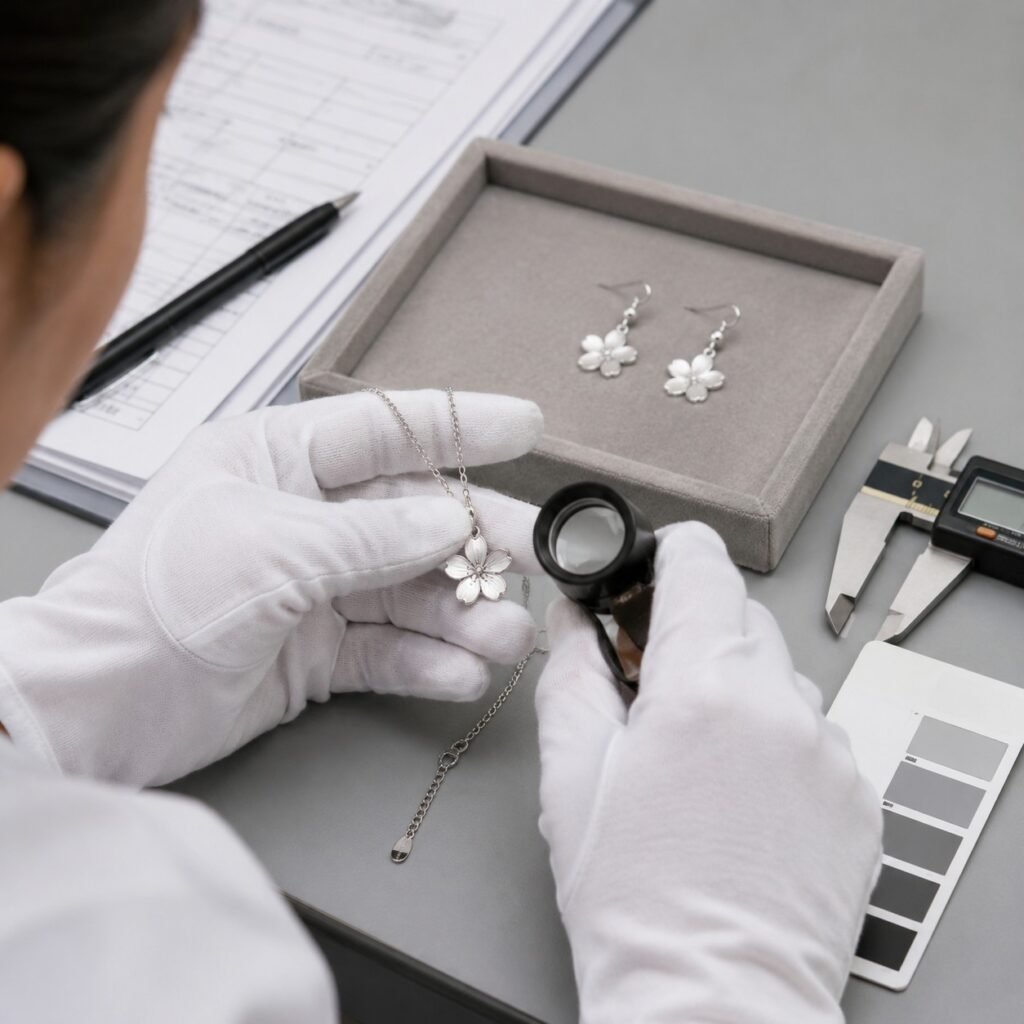
Final inspection covers appearance, dimensions, function, structural security, surface defects, logo, accessories, and packaging. Depending on the agreed plan, packing-stage inspection may use 100% inspection or AQL sampling. Earrings are checked as pairs, sets are checked for missing parts, and high-polish or raised sakura details receive suitable scratch and pressure protection.
Batch Traceability
Chicolink uses order number, SKU, and production batch as basic traceability identifiers. Records can connect the buyer-approved version with incoming material, production orders, key processes, in-house plating batch, inspection, rework, packaging batch, carton information, shipment, and after-sales feedback. Reorders are reviewed against these released records rather than relying only on previous sales photographs.
Define Sakura Testing and Inspection Before Bulk Production
Testing must match the product, structure, material, color, plating system, wearing position, target market, sales channel, and buyer requirements. Chicolink can support internal checks, third-party testing, factory audits, and pre-shipment inspection. A report applies only to the sample, material, color, plating structure, and conditions stated in that report; it does not cover every sakura SKU or future order automatically.
The table separates internal reference values from requirements that must be agreed with the buyer, laboratory, or target market before production.
| Control Area | Chicolink Default or Available Support | Project Decision Required |
|---|---|---|
| Incoming and process QC | IQC, IPQC, and FQC can cover material, components, dimensions, structure, welding, burrs, polishing, plating, setting, assembly, logo, and packaging | Approved specification, defect definitions, frequency, records, and buyer inspection plan |
| Dimensional tolerance | Internal default where no buyer requirement applies: up to 20 mm, +/-0.15 mm; 20-50 mm, +/-0.20 mm; above 50 mm, +/-0.30 mm | Critical dimensions, measuring points, product state, tools, and any tighter or functional tolerances |
| Color difference | Internal reference: Delta E00 no more than 1.5 for standard glossy or mirror finishes; no more than 2.0 for brushed, sandblasted, or antique finishes | Standard sample, instrument conditions, viewing rules, acceptable visual variation, and surface texture |
| Plating thickness | Batch-average reference tolerance: nominal +/-10%; single-point reference: nominal +/-20%; main appearance surfaces not below 80% of nominal | Layer structure, nominal thickness, method, instrument, measurement positions, and customer standard |
| Salt spray | Internal default reference: 24 hours for bare stainless steel, 48 hours for plated or PVD products, 72 hours or buyer requirement for higher-corrosion programs | Standard, solution, pH, temperature, sample position, duration, acceptance, and laboratory |
| Artificial perspiration | Internal default reference: 40 +/- 2°C for 24 hours, solution pH 4.7 +/- 0.2, with defined appearance and color-change criteria | Formula, sample preparation, contact method, inspection points, acceptance, and buyer or laboratory standard |
| Pull strength | Five samples per style under the internal default: 30 N for small decorative or ear-post connections; 40 N for pendant rings, connecting rings, and clasps; 30 N for main necklace structures; 60 N for main bracelet structures; hold 10 seconds | Actual load direction, fixture, product structure, special chain requirements, buyer standard, and disposition after testing |
| AQL inspection | If the order does not specify otherwise: normal inspection, General Inspection Level II; Critical Ac 0/Re 1, Major AQL 1.0, Minor AQL 2.5 | Lot size, sampling table, defect classification, Ac/Re values, inspection timing, and third-party instructions |
| Market compliance | Support can be evaluated for REACH, California Proposition 65, EN 1811, EN 12472, nickel-related, lead, and cadmium testing; RoHS only where applicable | Target country, product use, current standard version, tested sample, material, color, laboratory, cost, lead time, and report scope |
| Independent verification | SGS, HKPC, buyer-appointed testing, third-party inspection, and factory-audit coordination can be supported | Institution, booking date, samples, checklist, fees, report recipient, corrective-action timing, and shipment impact |
Responsibility Notice
Buyer contracts, quality agreements, approved drawings, approved samples, and buyer test standards take priority over Chicolink's internal defaults. Testing costs, timing, destructive sample quantities, report wording, and validity must be confirmed before production scheduling. Chicolink does not claim automatic compliance for every product, material, finish, color, or batch.
Turn Sakura Jewelry into a Controlled Private-Label Collection
Private labeling must connect the product, brand identity, packaging, SKU data, inspection, and replenishment records. Chicolink can coordinate product logos, logo tags, jewelry cards, pouches, gift boxes, care or story cards, barcodes, FBA labels, set presentation, and carton information according to the approved project. Every version is linked to the correct product, color, size, sales channel, and packaging configuration.
The cards below show how a sakura collection moves from branded product design to retail-ready and reorder-ready files.
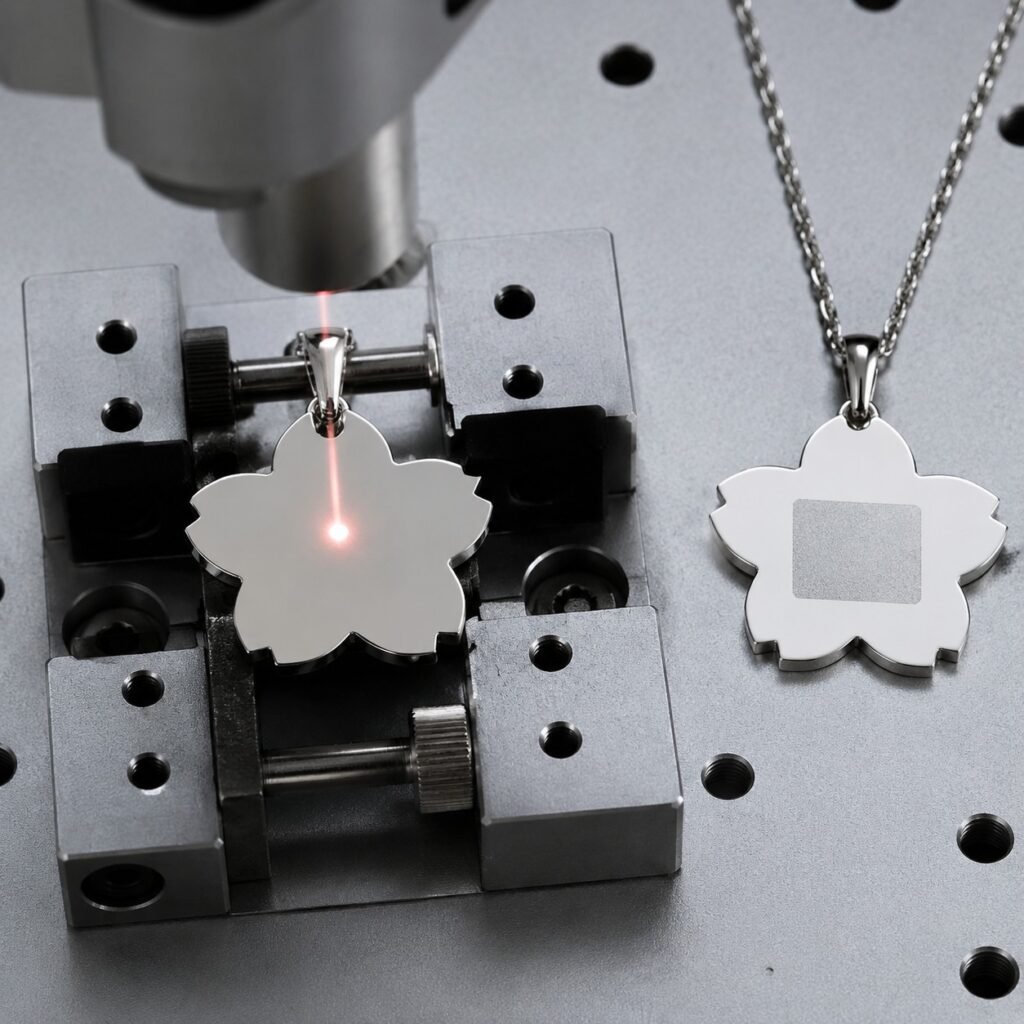
Product Logo System
Logo options may include laser marking, engraving, etching, stamping, raised detail, or a separate logo tag after engineering review. We confirm the editable artwork, converted fonts, position, direction, dimensions, safe margins, depth, visibility after polishing or plating, and the correct logo version for each SKU. The buyer confirms ownership and authorization for all supplied marks. The approved logo file is linked to the product and packaging versions.
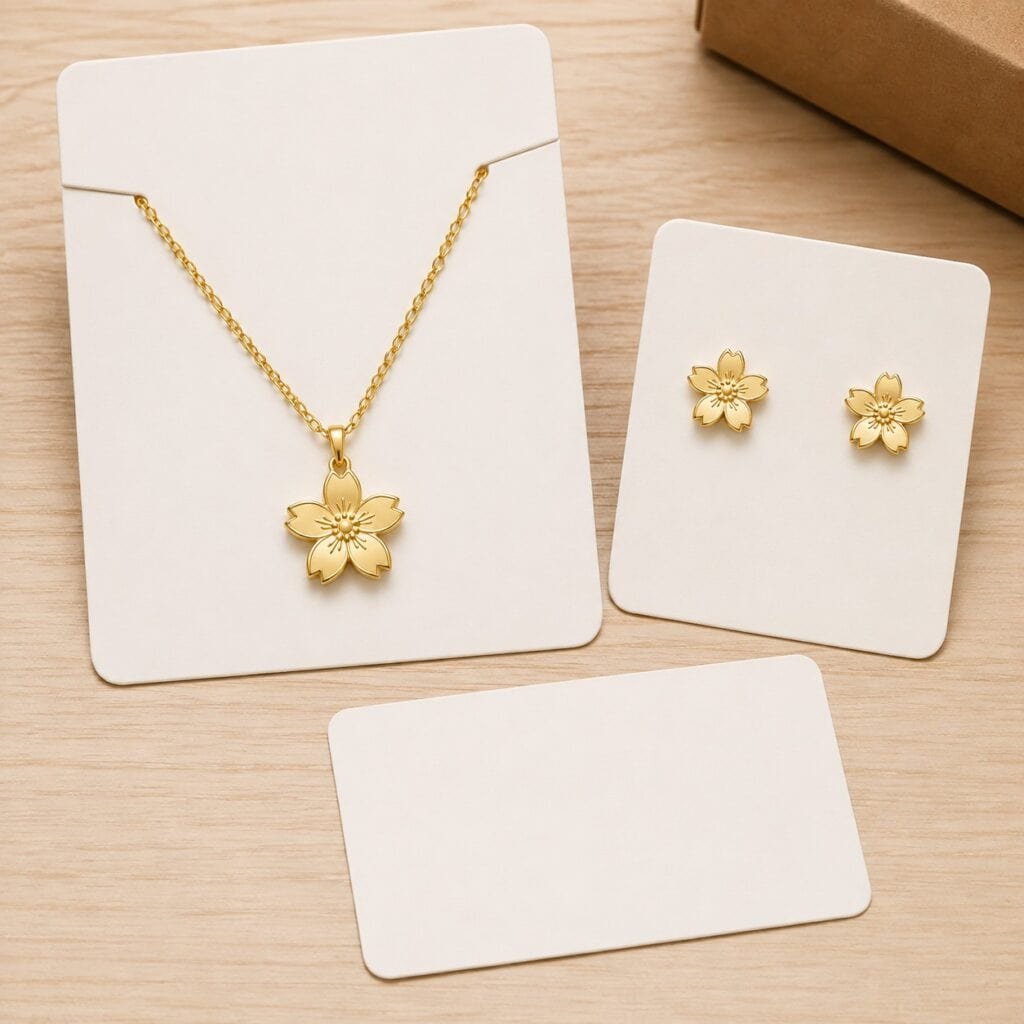
Cards and Story Inserts
Jewelry cards, collection cards, care instructions, and story inserts can carry the approved sakura collection identity. Chicolink confirms card dimensions, material, color reference, print files, holes or slots, product fixing, logo, language, SKU relationship, and packing order. Cultural statements, translations, origin wording, sustainability wording, and legal text remain subject to buyer review and documented approval. The final card file is released with the matching SKU.
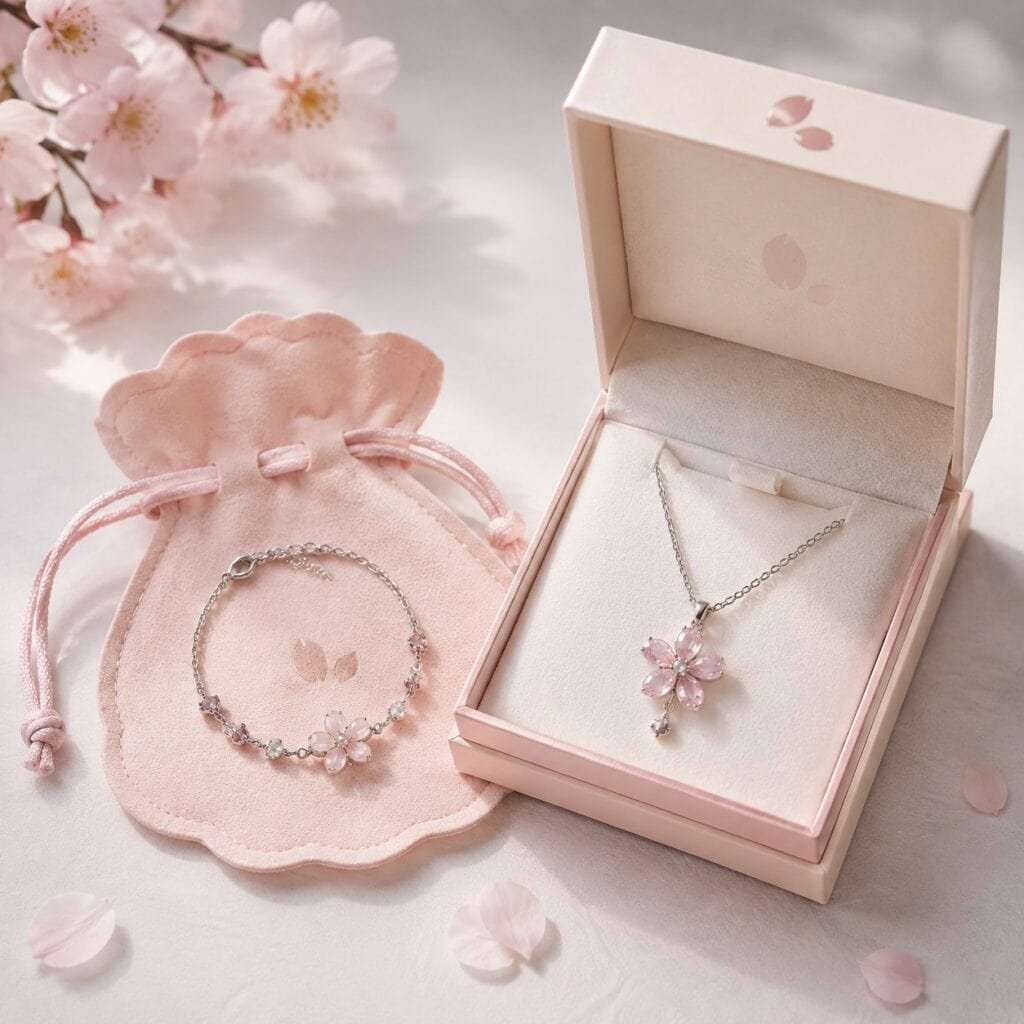
Pouches and Gift Boxes
Velvet pouches, paper boxes, and gift packaging are specified by dimensions, material, thickness, color, surface, logo method, insert, product orientation, and protection. Sakura petals, stones, ear posts, chains, and high-polish finishes may require separate fixing, anti-tangle handling, dividers, or surface protection. A packaging sample can be approved before the bulk packing version is released. The approved pack protects the product and presents the collection consistently.
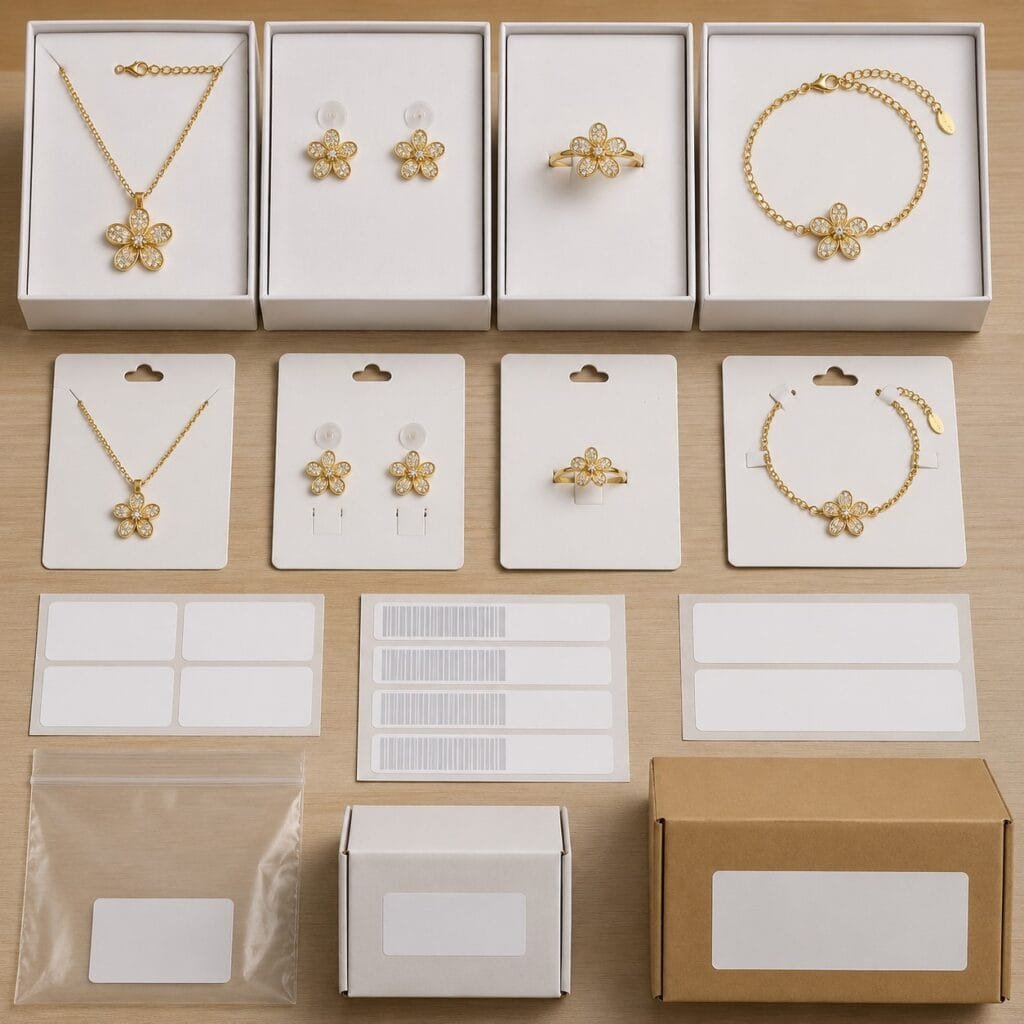
Barcode and Channel Labels
Chicolink can support barcode labels, SKU labels, FNSKU or buyer codes, carton labels, and Amazon FBA packaging according to the buyer's current platform files. Each label must match the correct sakura SKU, color, size, set, and packaging version. Placement, readability, duplicate prevention, parent-child variant relationships, carton allocation, and scan verification are confirmed before packing. The label plan is updated when a released variant changes.
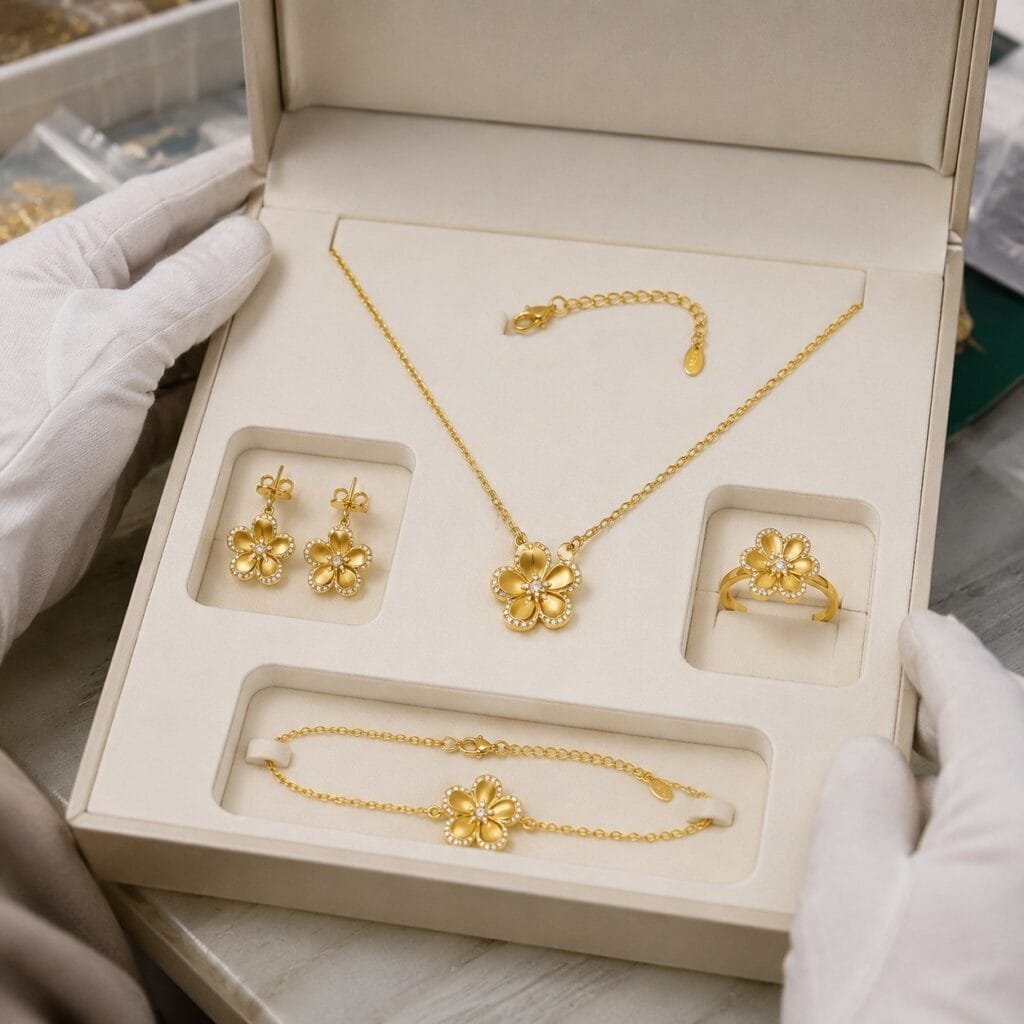
Sakura Set Assembly
For necklace-and-earring sets, mixed charms, gift assortments, or seasonal boxes, we define the included products, quantity, color, size, pairing, presentation order, spare parts, instructions, and missing-part controls. Product and packaging approvals are linked so a correct sakura item is not packed with the wrong card, box, barcode, story insert, or channel-specific label. Set completeness is checked before cartons are closed.
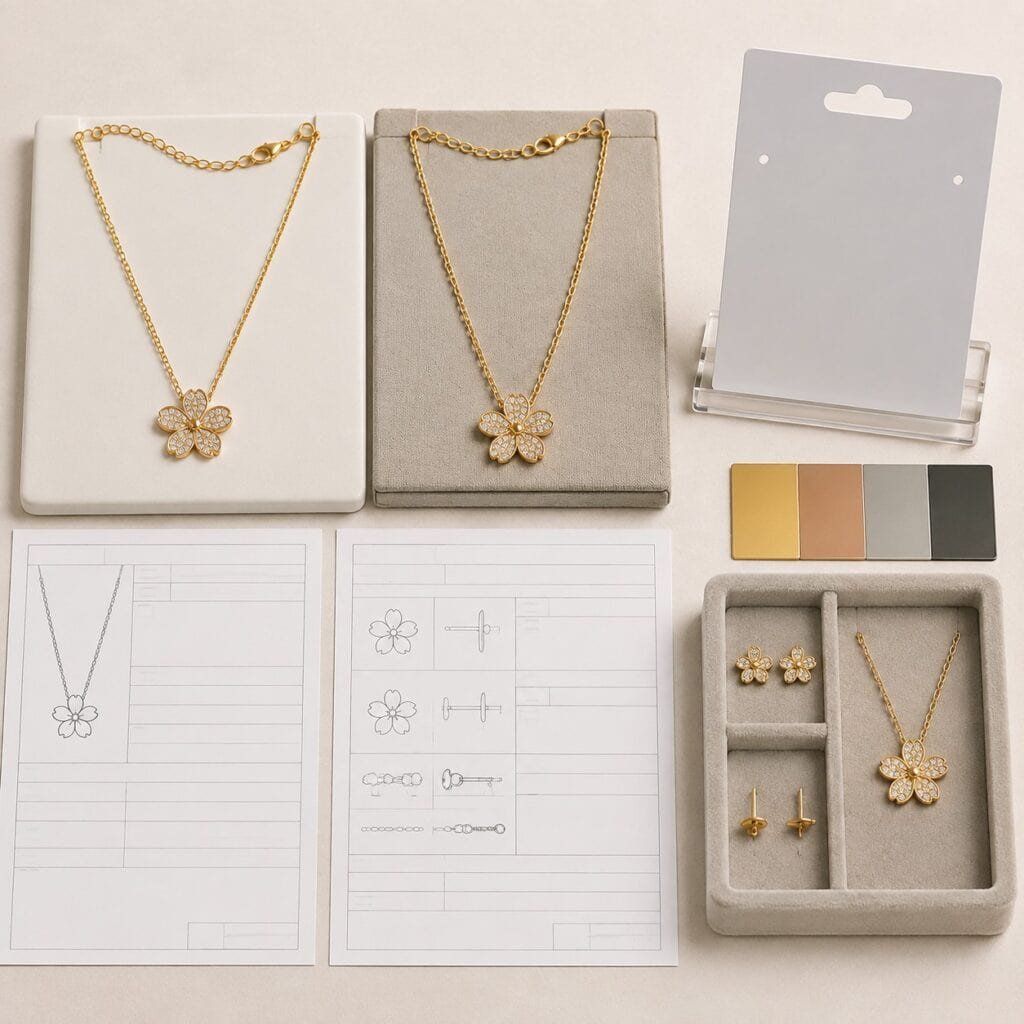
Launch and Reorder Files
Chicolink can organize product names, SKU and variant relationships, material, color, finish, dimensions, weight, packaging data, set contents, barcodes, basic images, videos, care information, and carton details by project. When a sakura design, plating color, size, or packaging version changes, the related data and approval files must also be updated before repeat production or replenishment. This keeps later orders aligned with the released collection.
Japanese Sakura Jewelry Manufacturing FAQ
These answers cover the key questions before a sakura quotation or sample request. Final material, construction, cost, MOQ, timing, testing, packaging, and delivery conditions are confirmed against the actual design, quantity, target market, and written project requirements.
Where is Chicolink sakura jewelry manufactured?
Chicolink Jewelry manufactures in Dongguan, Guangdong, China. Here, “Japanese Sakura Jewelry Manufacturer” means that we develop Japanese-inspired sakura jewelry; it does not mean that the company or products are Japanese-made. Origin wording, labels, and customs documents follow the actual manufacturing arrangement.
Can Chicolink create original sakura designs?
Yes. We can develop from buyer-owned artwork, a sketch, CAD, a physical sample, or a defined collection brief. We can adjust petal geometry, relief, open spaces, color zones, stone positions, connections, dimensions, and product proportions. Buyers must confirm rights to supplied logos, copyrighted artwork, branded references, fonts, and licensed cultural content.
Which sakura jewelry products can you develop?
Our confirmed core categories include stainless steel necklaces, earrings, rings, bracelets, bangles, anklets, hair accessories, charms, pendants, and jewelry sets. Brooches, pins, gift products, and other extensions are enabled after engineering review, sample validation, or stable supply confirmation. Each wearing position receives its own structure, size, weight, quality, and packaging specification.
Should sakura jewelry use 304 or 316L?
The choice depends on product use, structure, wearing environment, processing difficulty, target market, buyer requirement, and test plan. 316L contains molybdenum and generally offers better pitting-corrosion resistance, but its higher hardness can make complex forming, machining, welding, polishing, and reshaping more difficult. We confirm the grade for each approved SKU rather than applying one material universally.
What is the MOQ for custom sakura jewelry?
The typical OEM/ODM MOQ is 500 pieces per style. Confirmed regular or stock styles typically start from 120 pieces per style, subject to availability. MOQ may be calculated by style, color, size, plating batch, packaging version, or component requirement and can change with tooling, material, finish, stones, packaging, and production difficulty.
How long does a sakura sample take?
An existing-style sample usually takes 3-7 working days after conditions are confirmed. An OEM/ODM custom sample usually takes 25-30 working days. Complex tooling, several color fills, special plating, stones, packaging samples, testing, or major revisions may require a separate schedule. Chicolink confirms the sample type, purpose, fee, and timeline before work begins.
Can we revise the sakura sample?
Yes. Feedback should identify the required change by dimensions, petal shape, color, finish, logo, weight, wearing balance, connection, stone, chain, or packaging. Chicolink updates the relevant drawing, BOM, color reference, or packaging version. Changes affecting material, structure, tooling, process, cost, or timing require reassessment; no universal free-revision count is assumed.
How do you match samples and bulk orders?
We use approved drawings, BOMs, color references, finish standards, packaging files, inspection points, and a golden sample as the production basis. Incoming, in-process, and final checks review the released requirements. Order number, SKU, production batch, plating batch, inspection, packaging, and shipment records support traceability and later reorder comparison.
Can you support EU or US testing?
Chicolink can evaluate support for REACH, California Proposition 65, EN 1811, EN 12472, nickel-related, lead, cadmium, salt-spray, perspiration, and other project-specific requirements. SGS, HKPC, buyer-appointed testing, and third-party inspection can be coordinated. Applicability, standard version, samples, colors, fees, timing, and report scope must be confirmed before production.
Can you provide private-label sakura packaging?
Yes. Available project options include product logos, logo tags, jewelry cards, pouches, gift boxes, care or story cards, barcode and SKU labels, Amazon FBA packaging support, set assembly, and carton labels. Packaging dimensions, materials, print files, product fixing, protection, language, label placement, quantity, and delivery timing are approved for the specific project.