
Stainless Steel Bracelets Manufacturer
Factory-direct stainless steel bracelet development and production for global jewelry brands, importers, wholesalers, and distributors.
Chicolink Jewelry is a stainless steel jewelry manufacturer in Dongguan, China. We develop and produce chain, tennis, ID, cuff, bangle, and custom bracelet collections for B2B buyers. Our 5,500+ sqm factory, 400+ employees, engineering team, in-house plating workshop, quality-control process, private-label packaging, and export support take a project from design brief to approved sample and bulk delivery. We confirm material, dimensions, structure, color, logo, testing, packing, quantity, and schedule for each order.
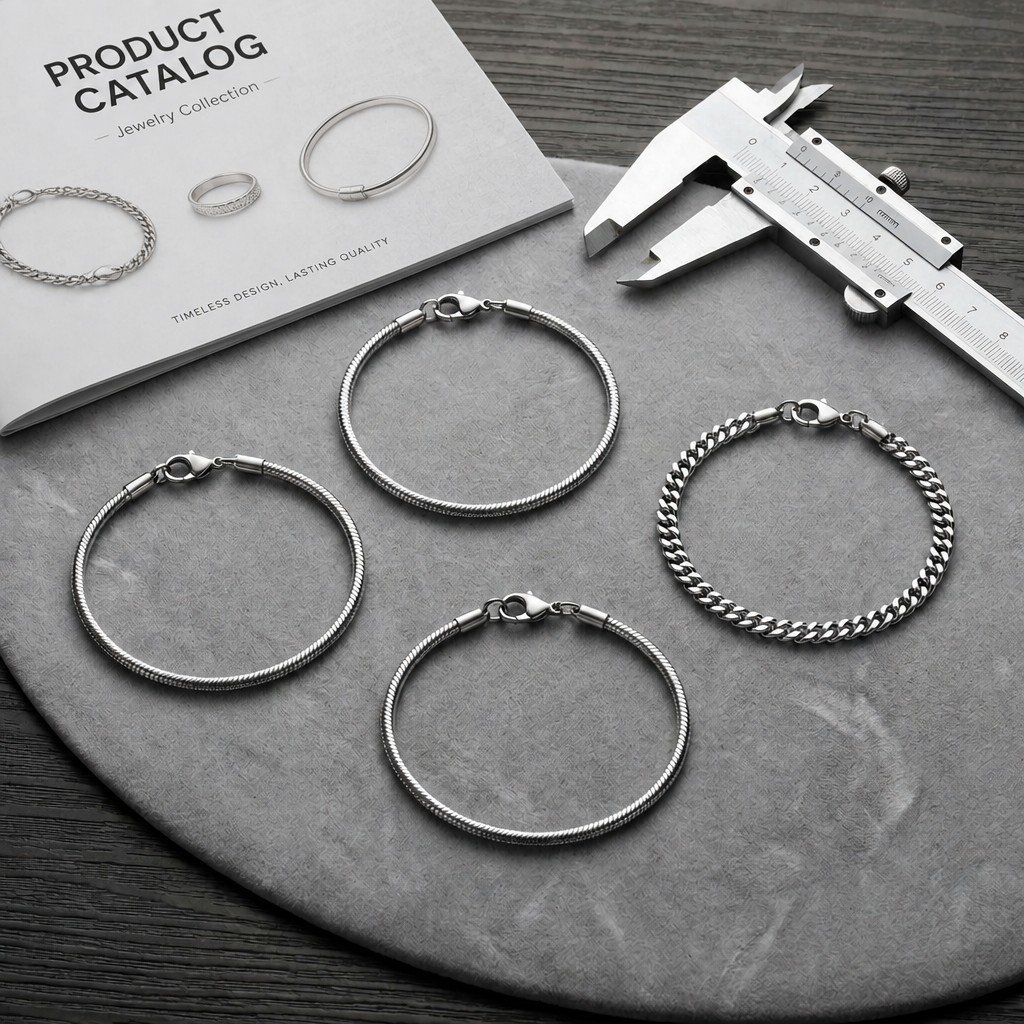
Bracelet Supply Built Around Your Buying Model
Different buyers need different bracelet programs. A global brand may need controlled development and repeat-order consistency. An importer may need a broad assortment with predictable cartons and documents. A distributor may need market-specific collections and replenishment support. Chicolink aligns product engineering, quantity, packaging, inspection, and delivery details with the way your business buys and sells stainless steel bracelets. Each program begins with the target market, sales channel, assortment, specification, commercial scope, and approval responsibilities.
Global Jewelry Brands
For a global jewelry brand, a bracelet belongs to a collection rather than an isolated SKU. We coordinate design files, material grades, dimensions, plating colors, logos, packaging versions, sample approval, production, and batch records. Product, quality, testing, packing, and delivery criteria are agreed under one scope before the order is released. This keeps technical and commercial approvals connected throughout development.
Importers and Buying Offices
Importers need clear product data before committing warehouse space and freight budgets. We define style, material, dimensions, weight, color, quantity, packaging, cartons, trade terms, and tests before quotation. Existing styles and custom developments are assessed separately, allowing your team to compare cost and lead time on the correct basis. Packing lists, marks, inspection, and destination data are reviewed before shipment.
Regional Distributors
Distributors often need one practical assortment for several local channels. We combine basic chains, trend-led designs, men’s styles, gift-ready packaging, and private-label elements around the agreed product mix. Your team defines sizes, colors, packing rules, and replenishment needs before the program order. We link each approved style to its SKU, BOM, sample, color reference, packaging file, and batch records.
Wholesalers and Retail Groups
Wholesalers and retail groups need repeatable quality across many styles and pieces. We coordinate production planning, in-process checks, finished inspection, packing checks, and pre-shipment review. Approved drawings, samples, quality criteria, and packaging files guide production and replenishment. Quantity by style, color, and size, label versions, carton assortments, defect limits, and inspection methods are agreed before the production order is released.
Reduce the Risks Behind Large Bracelet Orders
The visible product is only one part of a bracelet purchase. Material accuracy, structure, plating, packaging, documents, and timing all affect your margin and customer experience. Chicolink organizes these risk points into defined confirmation and inspection steps, so your team can make decisions from approved specifications instead of informal promises.
Sample to Bulk
The approved sample, drawing, BOM, color reference, and packaging file define the bulk order. We record sample and file versions to limit avoidable differences between development and production. Customer approval and our retained sample provide a shared reference for bulk inspection and replenishment.
Color Consistency
PVD and water-plated colors depend on the base finish, layer structure, target thickness, color reference, and inspection conditions. We define these variables before production, then check color, thickness, visible defects, and agreed durability. Batch, equipment, date, input quantity, and completed quantity can be recorded for traceability.
Structure Reliability
Bracelet complaints often involve clasps, jump rings, links, hinges, open ends, and attachment points. We inspect each structure against its drawing, sample, intended use, and test plan. Relevant checks cover dimensions, movement, alignment, smooth edges, opening and closing, and connection strength.
Delivery Control
Sample approval, materials, plating, packaging, tests, inspection, quantity, and holidays can affect delivery. We separate existing-style and custom-development timelines, then follow manufacturing, plating, packing, inspection, and shipment milestones. Missing information or delayed approvals are raised when they affect the agreed schedule.
Commercial Clarity
MOQ and unit price depend on material, weight, structure, tooling, plating, logo, packaging, testing, quantity, and delivery. We evaluate these factors before quotation so the price has a defined scope. Style, color, size, plating batch, packaging version, and permitted mixing rules are also stated.
Market Requirements
EU, US, and other markets may require different materials, tests, labels, packaging, and inspection documents. We identify the destination and applicable standard before arranging laboratory work or third-party inspection. Every report is checked for product, material, color, plating structure, standard version, date, and scope.
One Factory Team for Bracelet Development and Delivery
Chicolink Jewelry operates from Dongguan, Guangdong, with a 5,500+ sqm factory, 400+ employees, six jewelry designers, and three jewelry engineers. Company-wide capacity is 200,000+ jewelry pieces per month. Manufacturing, engineering, PMC, purchasing, plating, quality control, assembly, packaging, and export teams work from the agreed order scope. Our 58 production machines cover CNC, casting, laser cutting, laser welding, stamping, bending, drilling, polishing, wax injection, turning, laser logo, and PVD processes; we select the route by structure and specification.
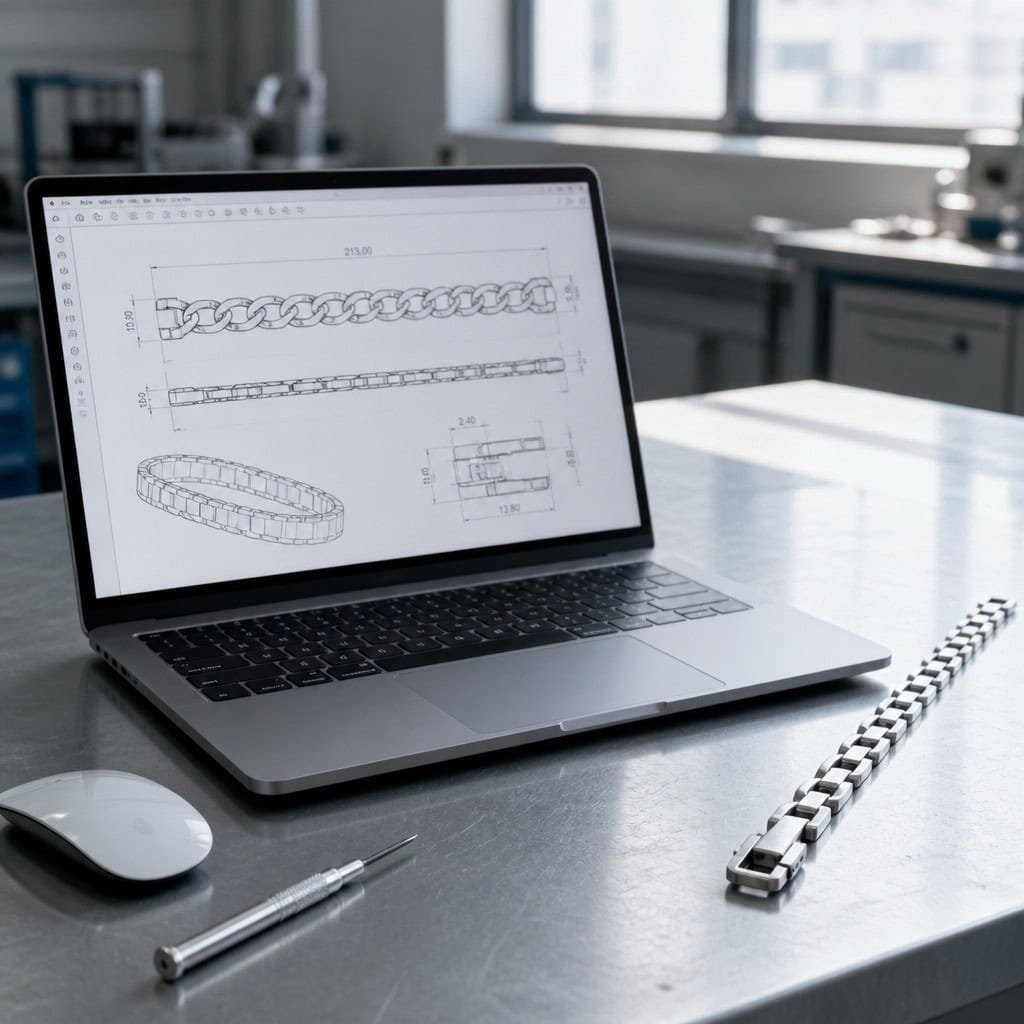
Engineering and R&D
Our six jewelry designers and three jewelry engineers support bracelet development from reference images, drawings, samples, or design files. The team reviews dimensions, thickness, connection points, clasp placement, decoration, logo position, and production feasibility before sampling. When required, the review also covers target weight, wearing clearance, hinge movement, stone position, process route, cost drivers, packaging protection, and the information needed for a controlled BOM.
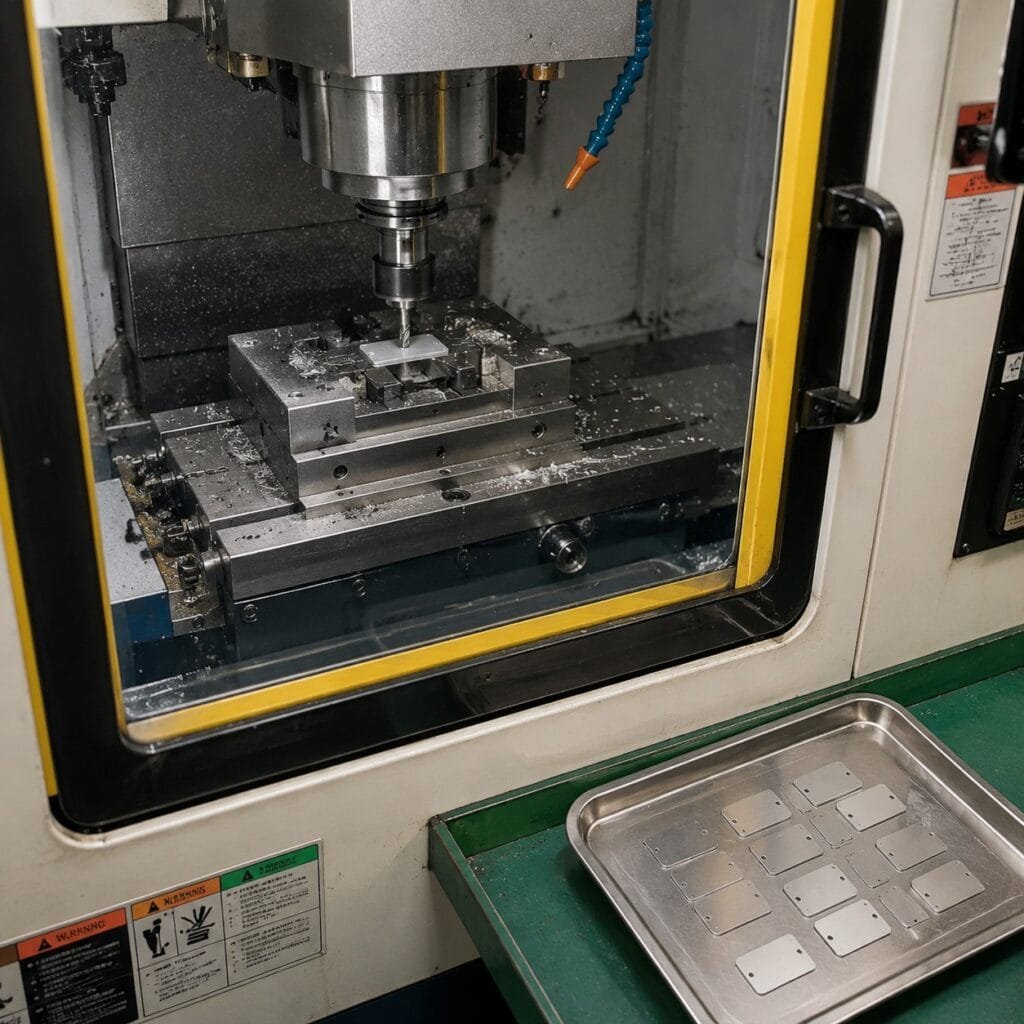
Metal Processing
Chicolink coordinates CNC, casting, stamping, turning, wire cutting, laser cutting, bending, drilling, polishing, laser welding, and assembly according to the bracelet structure. The selected route depends on the material form, geometry, tolerance, surface requirement, and expected order quantity. First-piece confirmation and in-process inspection help verify critical dimensions, welds, edges, burrs, movement, and appearance before the bracelet advances to later production stages.
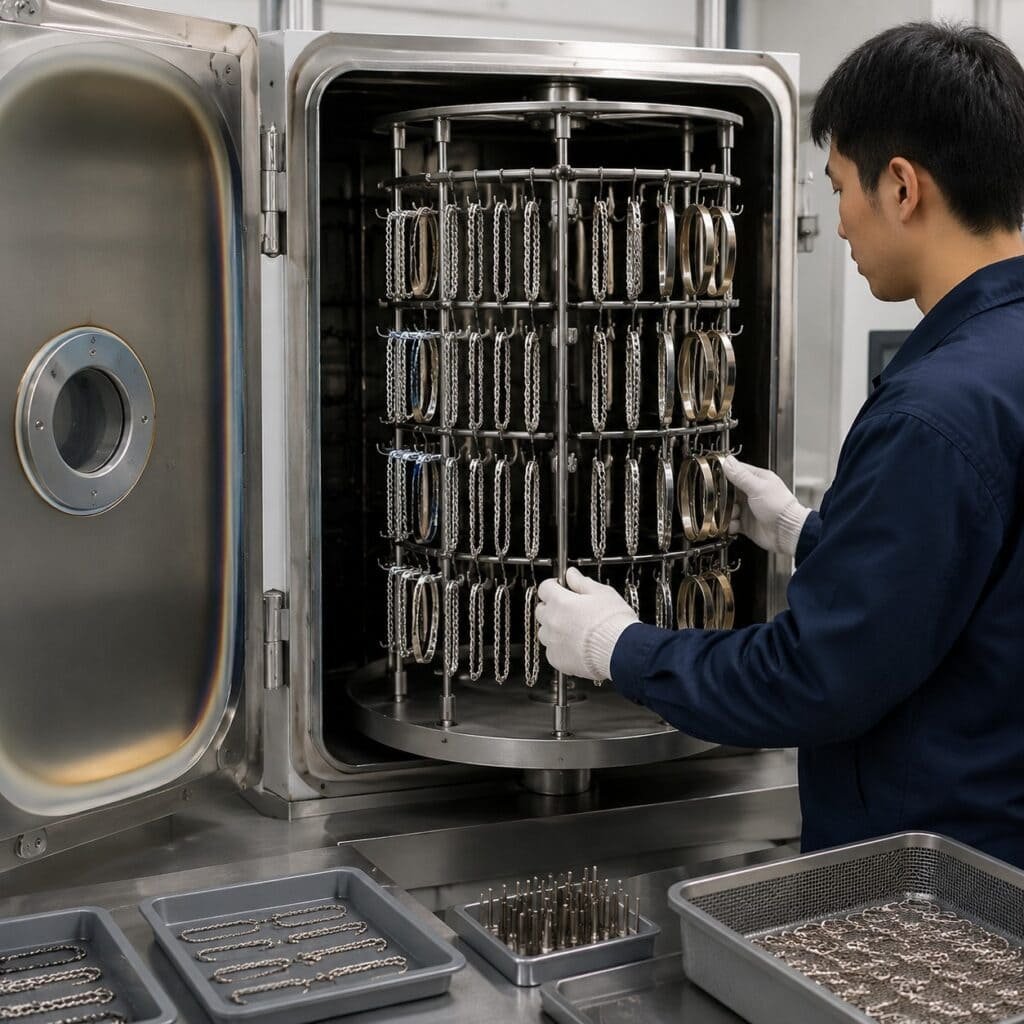
In-house Plating
Our plating workshop includes six PVD vacuum-coating machines. We manage PVD/IP, water plating, and other confirmed processes within the production system. Color reference, base preparation, plating structure, thickness, inspection, abnormal handling, and batch records are confirmed for each order. The workshop connects polishing, cleaning, pretreatment, approved color samples, process monitoring, finished inspection, and traceability across the bracelet order.
Production Planning
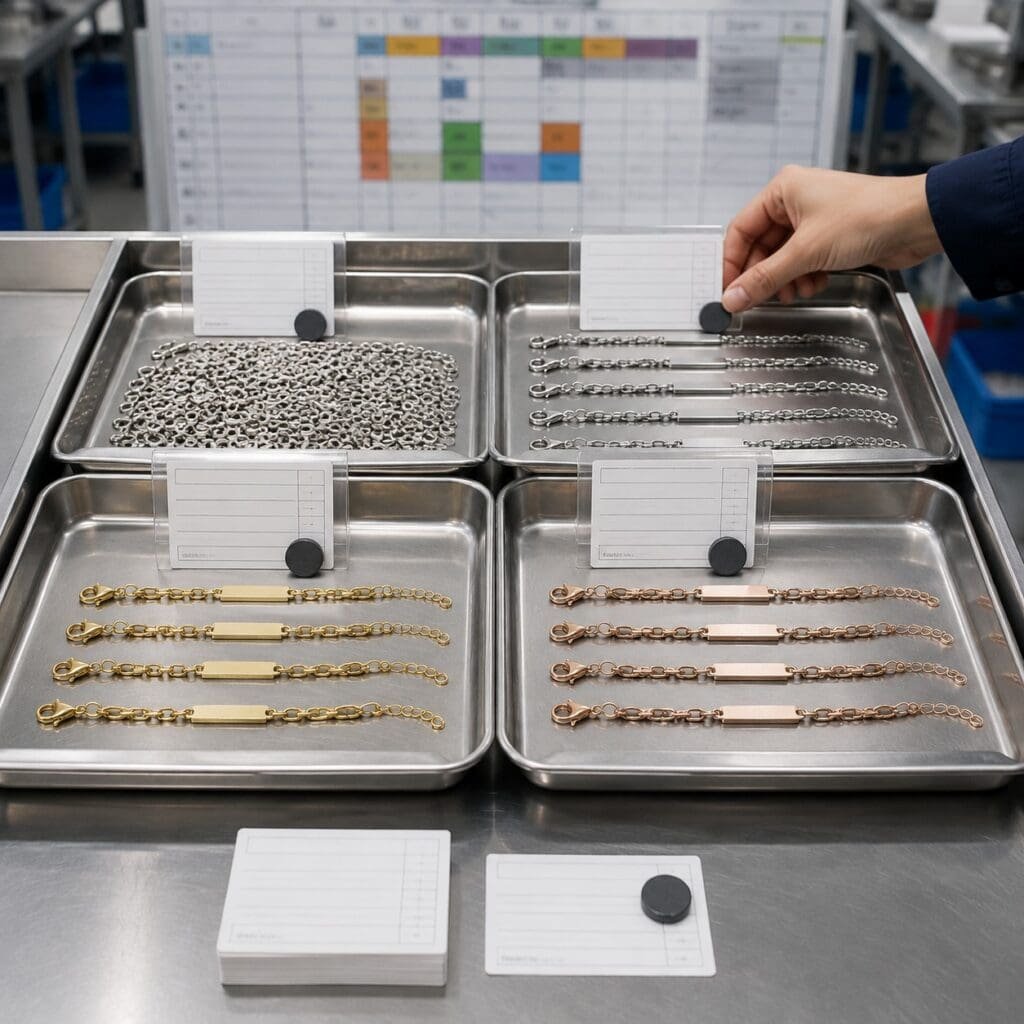
PMC manages production planning, material coordination, process scheduling, plating progress, packaging confirmation, inspection coordination, and shipment readiness. This gives the project team defined checkpoints instead of relying on one final delivery date. Sample approval, material readiness, mold or tooling work, production quantity, customer testing, third-party inspection, packaging arrival, and holidays are reviewed as documented schedule dependencies for each bracelet order.
Quality Functions
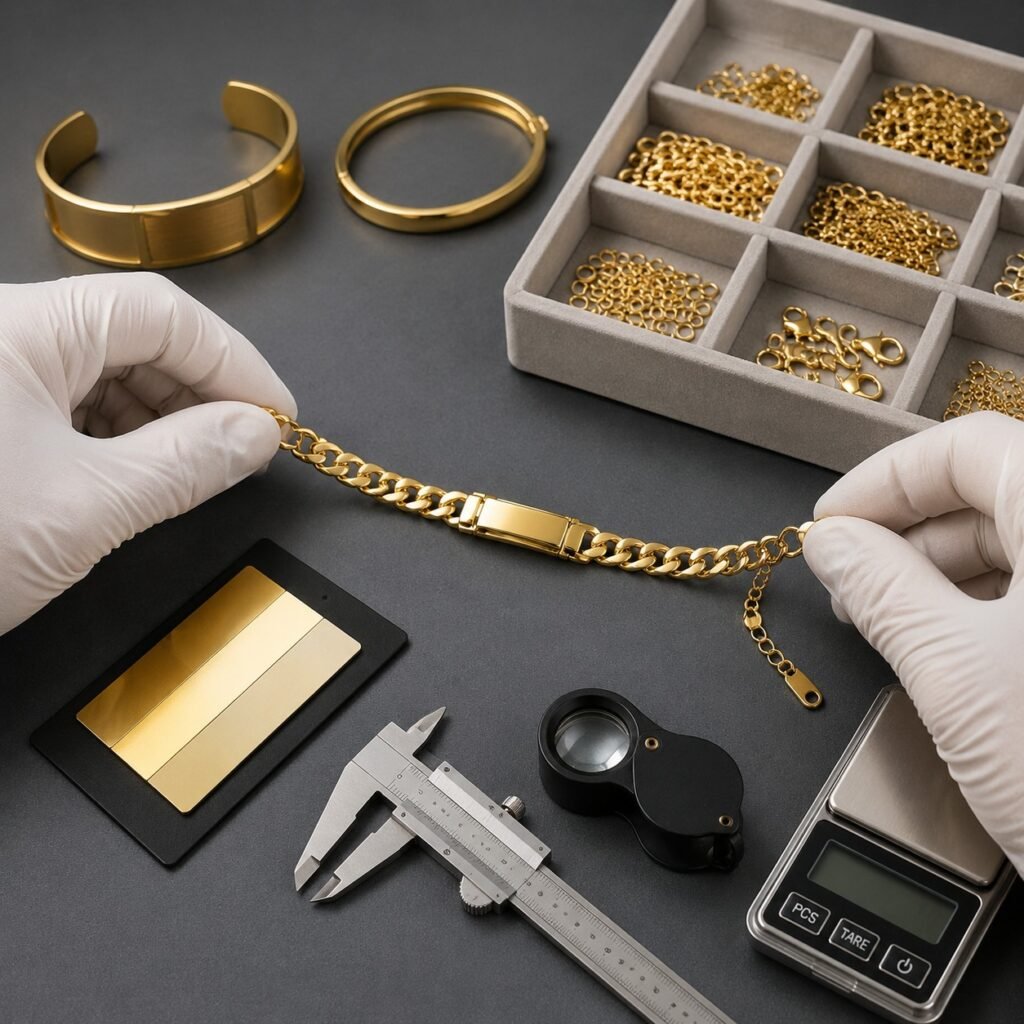
IQC, IPQC, FQC, plating inspection, packaging inspection, and pre-shipment checks cover different stages of a bracelet order. Records include material, dimensions, surface, color, thickness, structure, logo, quantity, packaging, and carton requirements. Bracelet-specific checks may cover link closure, flexibility, clasp return, jump-ring connection, hinge movement, stone security, bangle opening, inner edges, label accuracy, and protection against scratching or tangling.
Packaging and Export
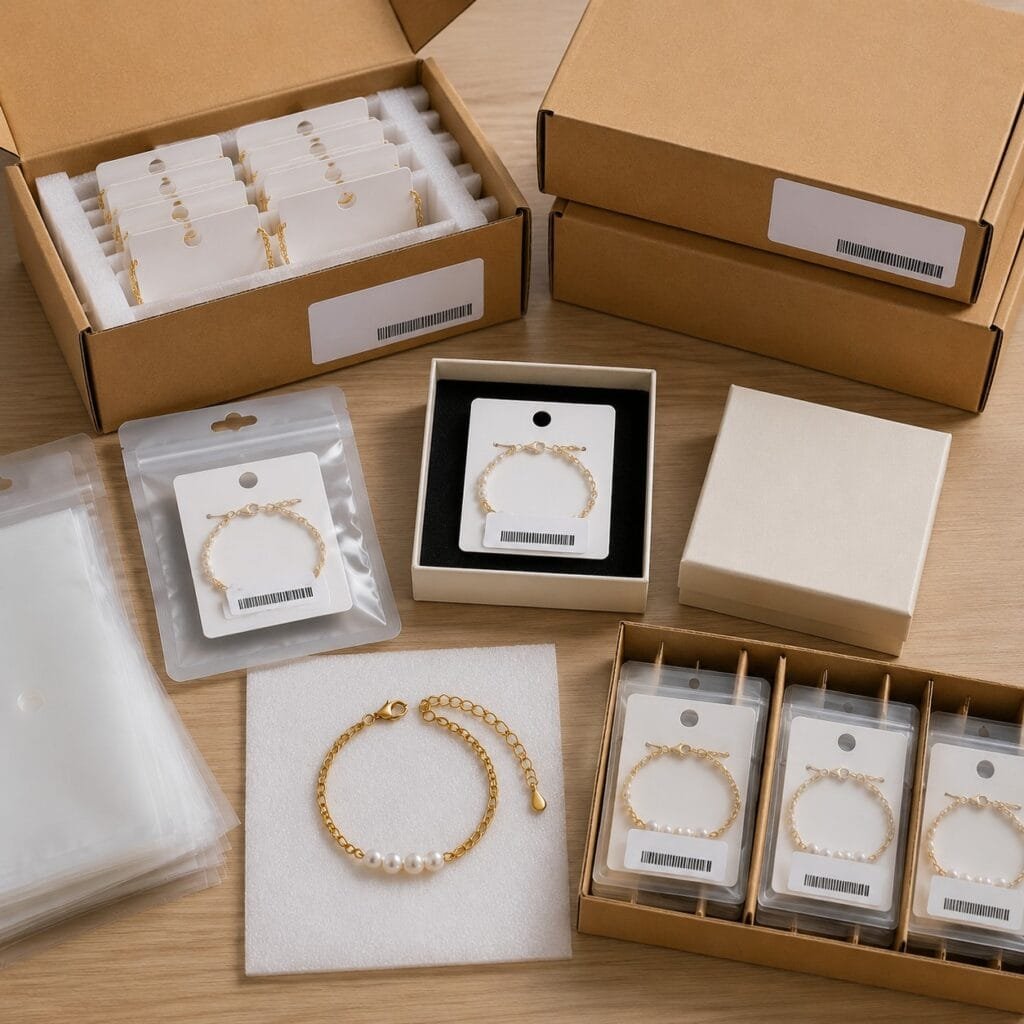
We coordinate OPP bags, jewelry cards, velvet pouches, gift boxes, logo packaging, barcode labels, SKU labels, carton marks, packing lists, and shipping for the confirmed order and destination. We support EXW, FOB, CIF, DAP, and DDP. Packaging dimensions, bracelet fixing method, product direction, anti-scratch or anti-tangling protection, inner-pack quantity, mixed-carton rules, gross weight, net weight, and destination labels are confirmed before shipment.
Bracelet Structures for Different Collections and Channels
Chicolink develops stainless steel bracelets as individual products and coordinated collections. Each structure affects dimensions, weight, clasp selection, finishing, packaging protection, testing, and production route. Share the target customer, reference style, size range, and quantity; we will define the suitable structure and development path. The matrix below identifies the main controls for chains, tennis bracelets, ID plates, charms, cuffs, bangles, hinged bangles, and men’s styles.
Chain Bracelets
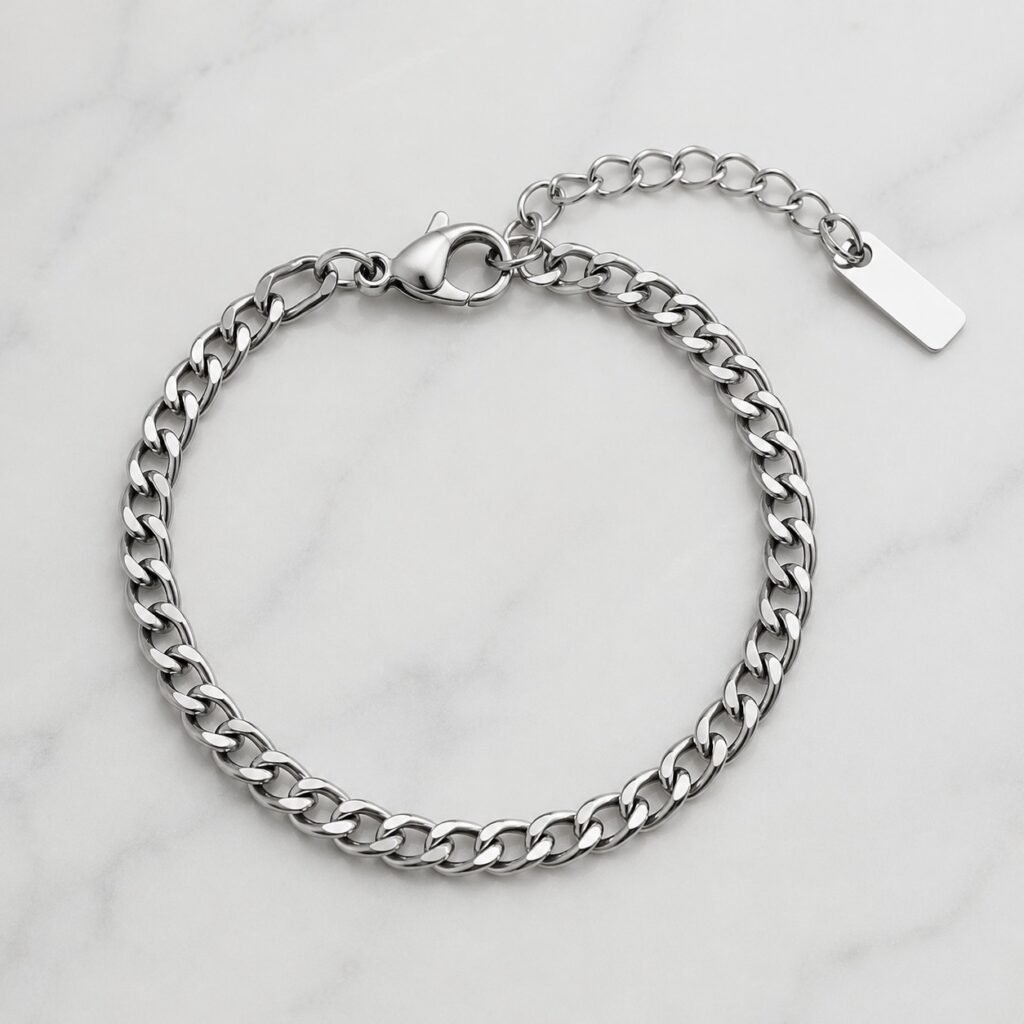
Chain bracelets can use different link shapes, widths, thicknesses, rings, clasps, extension chains, and logo tags. We check link closure, flexibility, length, finish, clasp function, and connection strength. The specification also defines target weight, wearing clearance, link and logo direction, color, packing protection, and quantity by style, size, and finish.
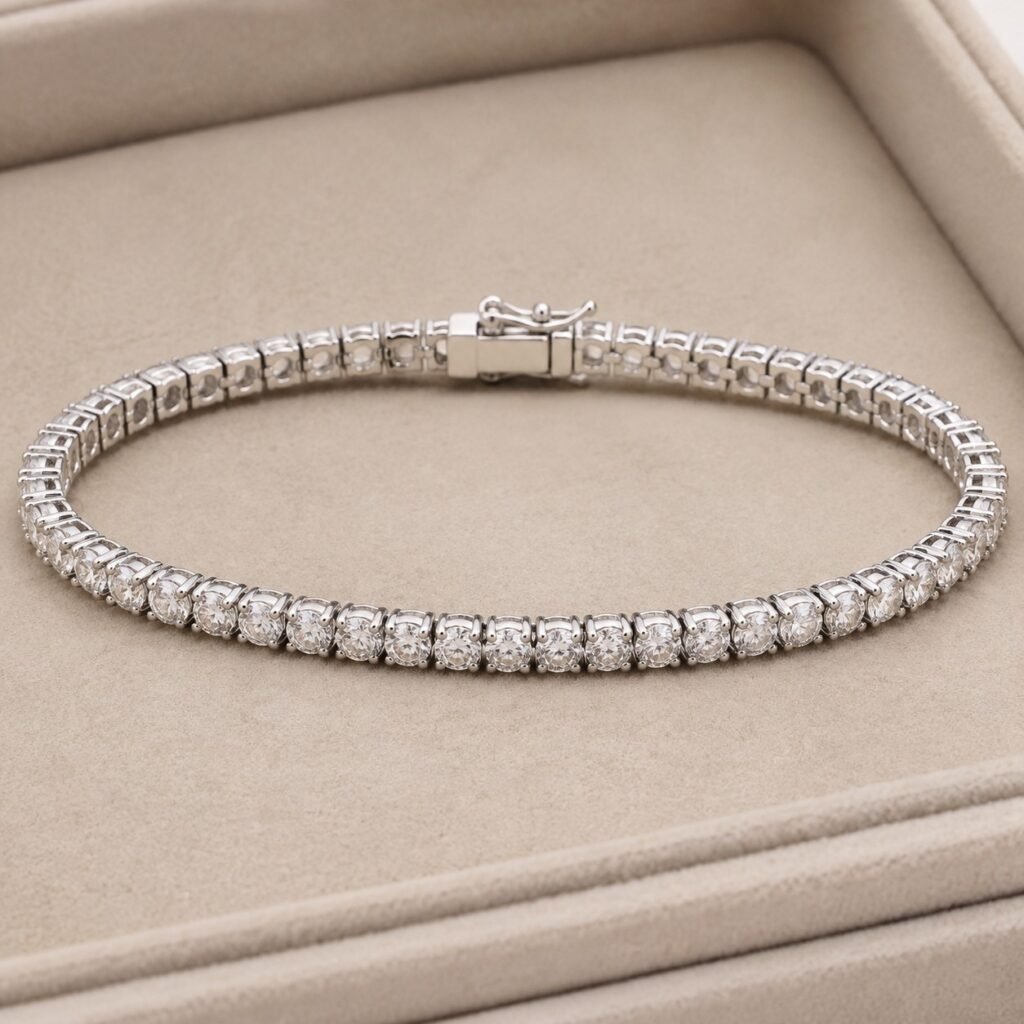
Tennis Bracelets
Tennis bracelets require controlled stone position, setting, link movement, clasp security, and alignment. The brief defines stone type, size, count, setting method, length, finish, color, clasp, and packing protection. We select attachment and movement checks by structure, while the BOM records every stone, component, and approved replacement rule for production control.
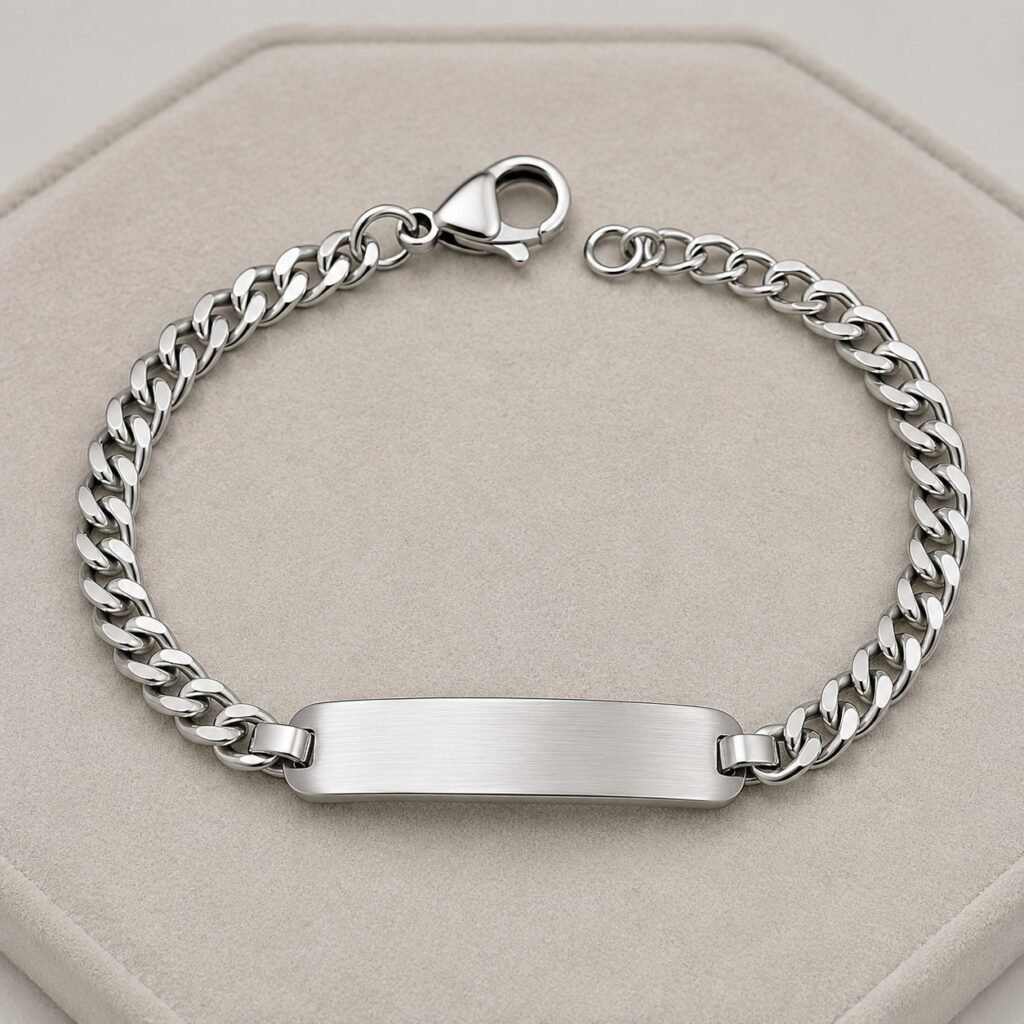
ID Bracelets
ID bracelets combine a metal plate, chain or links, connection points, and optional engraving. We review plate size, thickness, edges, logo position, readability, wrist length, clasp, and packing. Artwork version, orientation, engraving depth or contrast, ring strength, finish, target weight, and the approved sample are recorded before production and inspection.
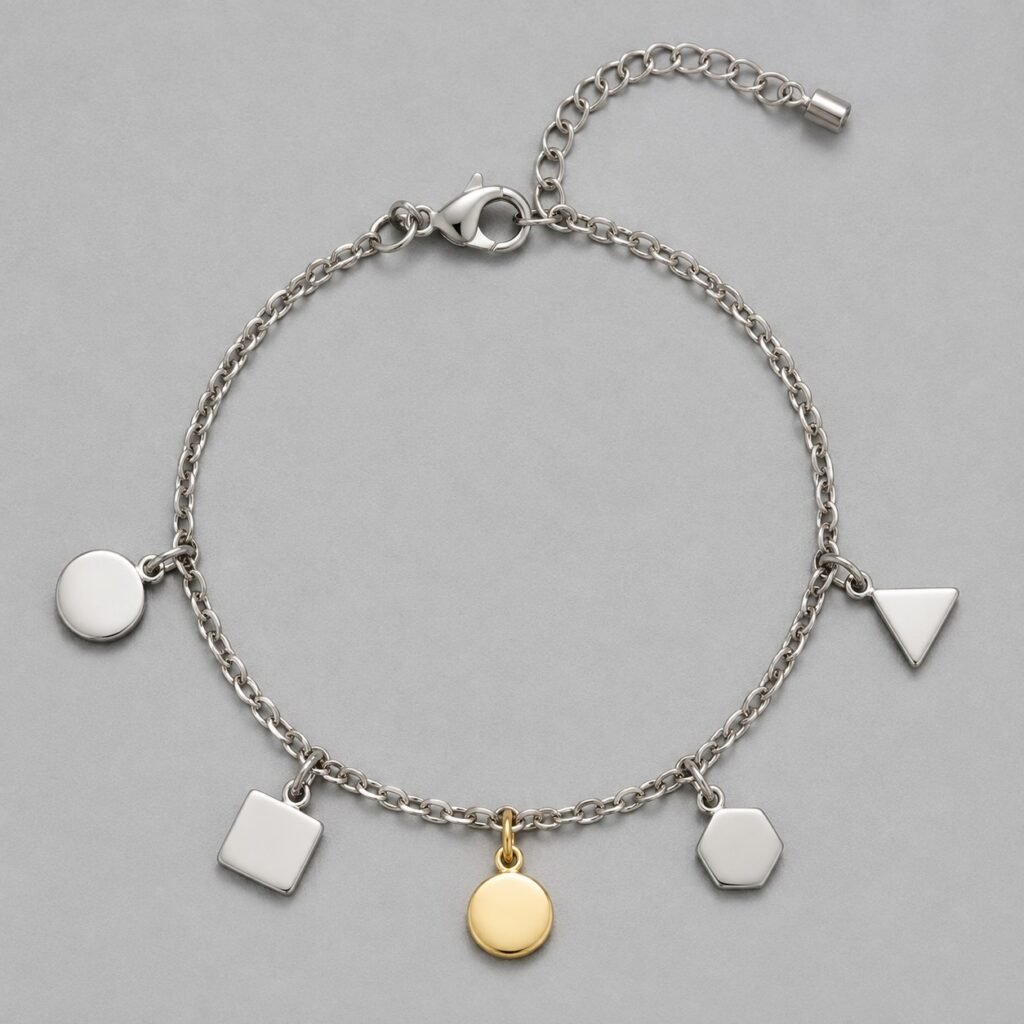
Charm Bracelets
Charm bracelets require control of charm count, spacing, direction, ring connection, movement, and total weight. We coordinate charms, enamel, resin, stones, pearls, tags, and chain components through the BOM and approved sample. Each decoration has a material, size, color, position, quantity, attachment method, and replacement rule for assembly and inspection.
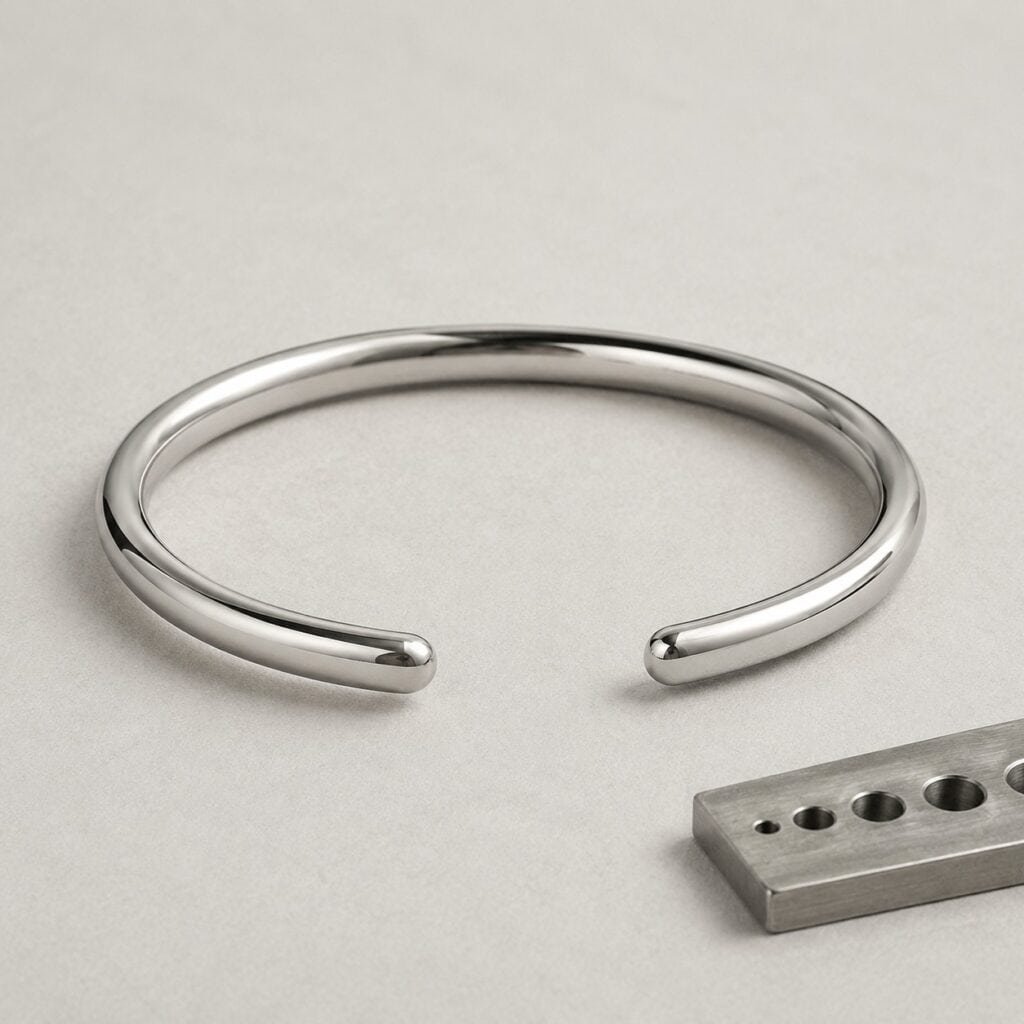
Cuff Bangles
Cuff bangles must balance wrist comfort, opening size, smooth edges, spring-back, and deformation control. Before sampling, we define inner length and width, cross-section, opening, material, finish, and size. We also review end shape, symmetry, inner polish, engraving, intended adjustment, key load areas, and protective packing for shipment and retail handling.
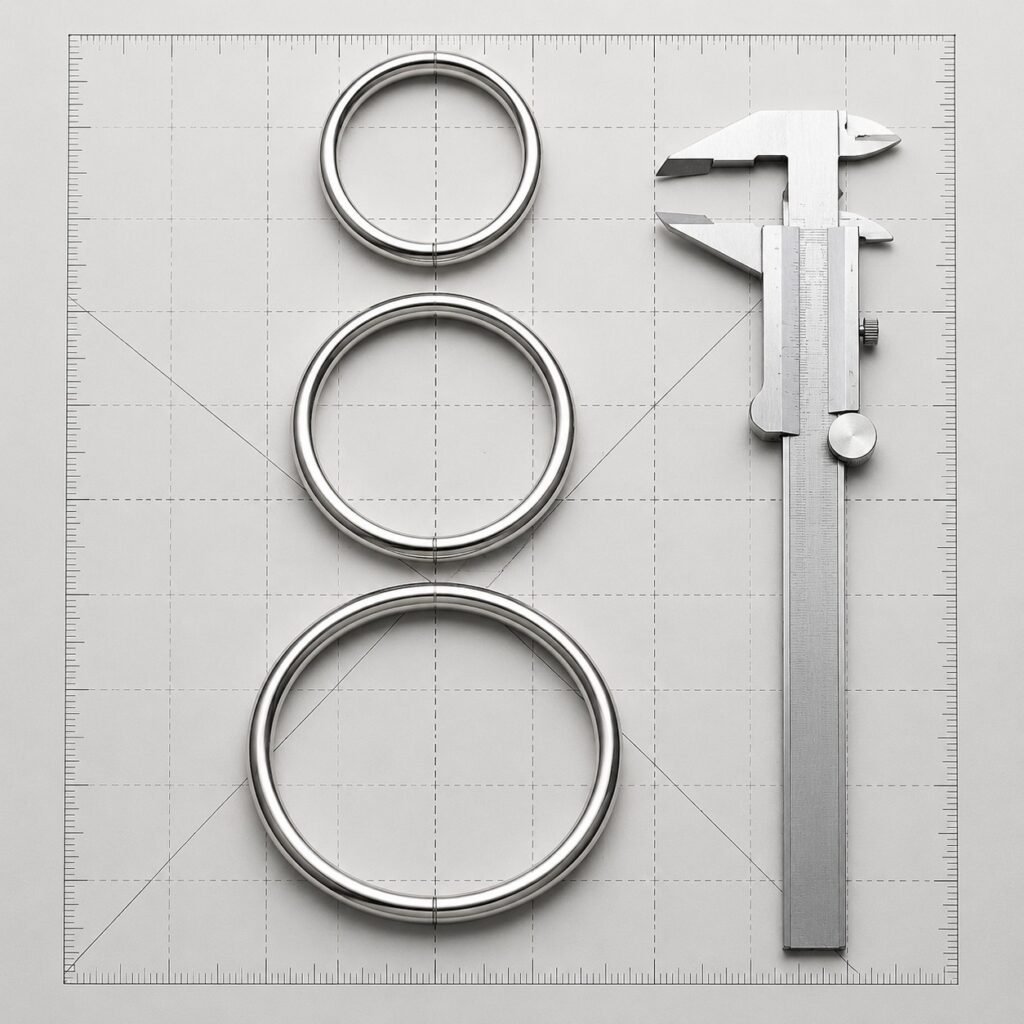
Closed Bangles
Closed bangles are defined by inner diameter or circumference, roundness, section size, and wearing clearance. We develop XS to XL reference sizes when required; final dimensions follow the target market and approved size guide. Oval products record both axes. Weight, finish, edges, logo direction, size marking, assortment ratio, and packing are version-controlled.
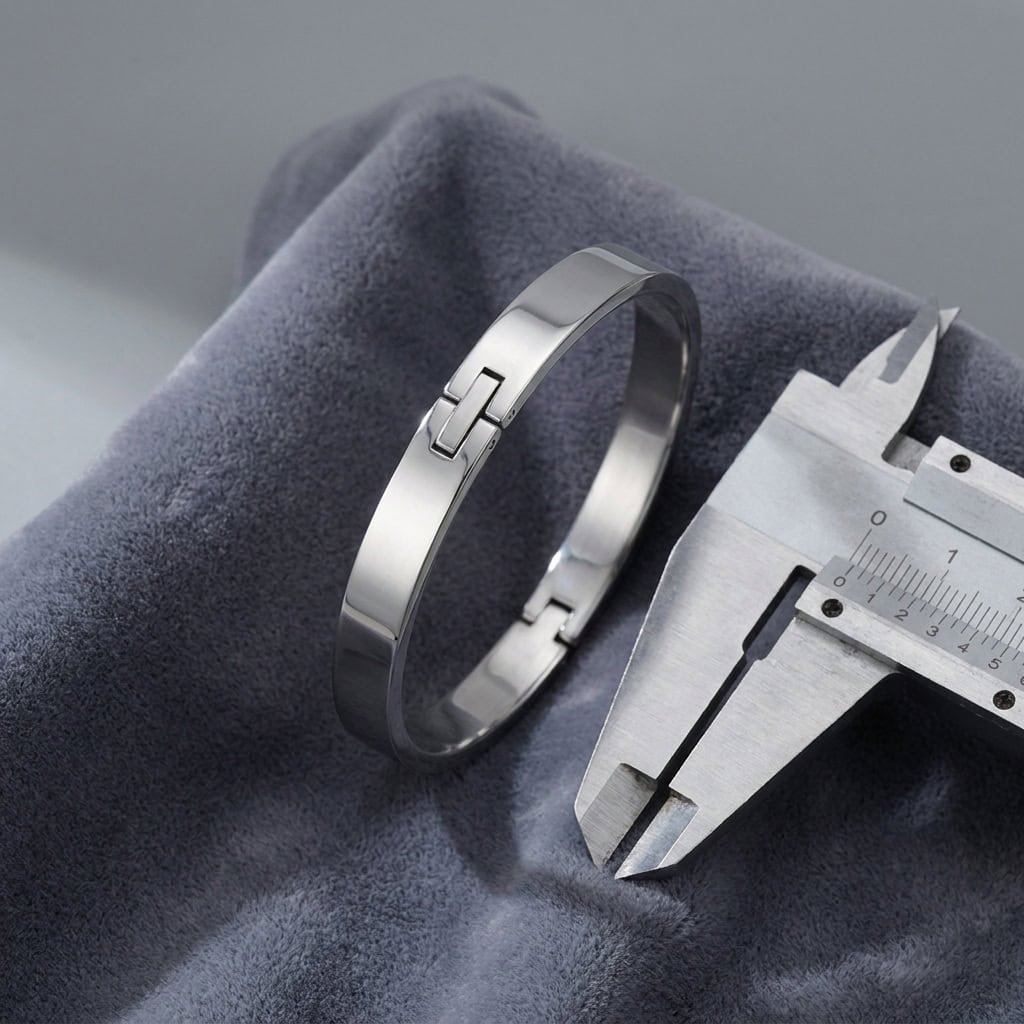
Hinged Bangles
Hinged bangles require alignment of the hinge, spring, clasp, opening gap, and return movement. We inspect function, inner edges, surface, deformation, and key load positions. The quality plan may also cover hinge cycles, clasp security, axis position, closing alignment, plating around moving areas, size, weight, and transport protection during shipment.
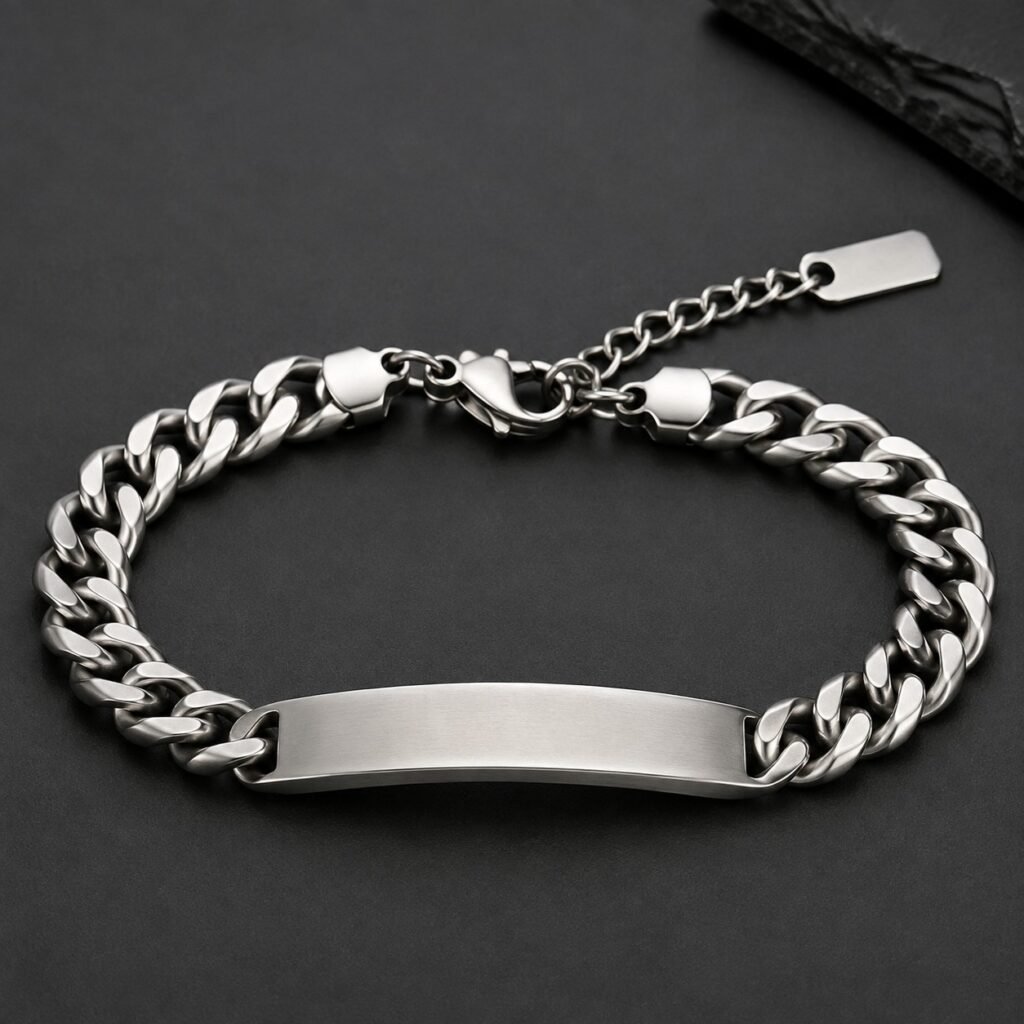
Men’s Bracelet Collections
Men’s bracelets may use wider links, heavier profiles, Cuban or Figaro structures, ID plates, dark finishes, and stronger clasps. We define weight, wrist size, finish, connection strength, and protective packing. Inspection may cover link flexibility, clasp opening, magnetic force where applicable, engraving, edge comfort, plating coverage, chain flatness, and size options.
Choose the Steel Grade for Your Bracelet Project
Material selection should match the bracelet structure, wearing condition, target price, target market, surface treatment, and testing requirement. We develop 304 and 316L stainless steel bracelets and confirm the material, components, plating structure, and applicable tests before quotation and sampling. The approved grade is recorded in the product specification and BOM for the bracelet body, clasps, jump rings, charms, plates, hinges, and other metal components.
| Decision Field | 304 Stainless Steel | 316L Stainless Steel |
|---|---|---|
| Selection rationale | Suitable for many standard fashion-bracelet programs | Selected when the specification calls for 316L or places greater emphasis on corrosion resistance |
| Commercial effect | Often supports a more cost-controlled position | Material cost may be higher and should be assessed with weight, structure, and quantity |
| What not to assume | The grade does not replace plating, structure, or finished-product testing | The grade does not by itself prove nickel-release compliance or skin compatibility |
| Required records | Grade and material form for the body and relevant components | Grade and material form for the body and relevant components |
| Testing decision | Based on finish, color, batch, market, channel, and customer criteria | Based on finish, color, batch, market, channel, and customer criteria |
We do not select materials by product name alone. We record the metal grade and component specifications in the project BOM, while stone type and other non-metal details are recorded separately. Testing or reports are arranged according to the product, batch, color, plating structure, target market, and customer requirement.
Engineer Bracelet Dimensions for Comfortable, Repeatable Fit
Bracelet sizing affects comfort, returns, packaging, and repeat orders. We confirm wrist measurement, wearing clearance, chain length, clasp position, extension-chain length, bangle dimensions, opening size, cross-section, and tolerance before sampling. Drawings record the measuring condition, reference points, oval-bangle axes, hinge or clasp position, and size-variant rules so development, inspection, and replenishment use the same definition.
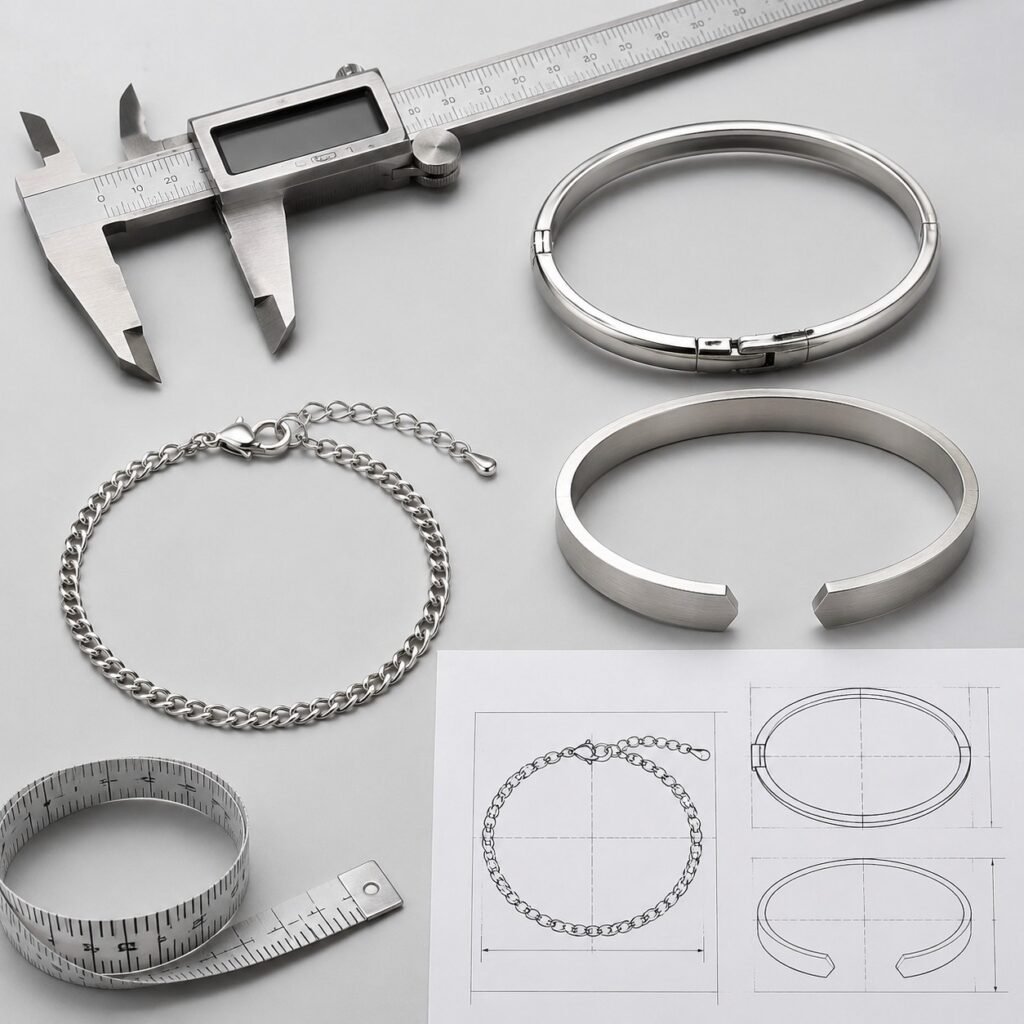
Wrist and Length Confirmation
- Close fit: wrist circumference plus approximately 0.5–1.0 cm
- Standard comfort fit: wrist circumference plus approximately 1.0–1.5 cm
- Loose fit: wrist circumference plus approximately 1.5–2.5 cm
- Larger links, wide bracelets, rigid structures, and heavy charms require additional structural allowance
- Chain and bracelet length reference: typically ±5 mm unless the drawing or customer standard specifies otherwise
Cuff and Bangle Dimensions
For closed and hinged bangles, Chicolink records inner diameter, inner circumference, inner length, inner width, cross-section, opening size, hinge position, and clasp structure. A bangle with an oval shape should not be described by one diameter only; the long axis and short axis must both be confirmed.
Control Bracelet Color, Surface and Brand Details
Chicolink has an in-house plating workshop with six PVD vacuum-coating machines. We manage PVD/IP, water plating, and other confirmed processes after reviewing the base material, polishing level, color standard, plating structure, target thickness, color tolerance, testing requirement, and packaging protection. The approved color sample guides production inspection. Batch records connect the process, equipment, color, date, quantities, inspection, abnormal handling, and finished bracelet order.
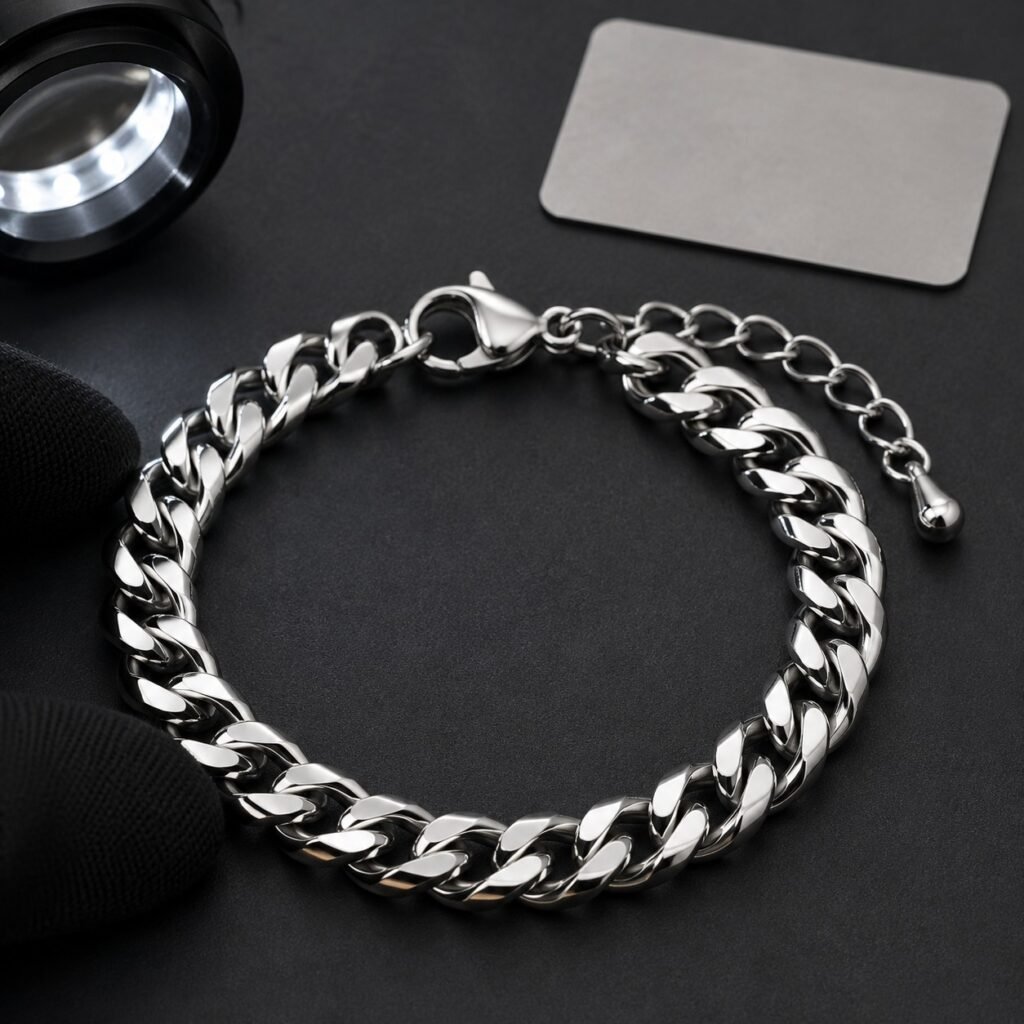
Mirror Polish
Mirror polish makes scratches, pinholes, burn marks, color variation, and uneven plating more visible. We define the polishing level, key appearance areas, inspection lighting, color reference, and packing protection. The quality plan may also state minor-mark limits, measurement points, weld finish, edge smoothness, handling method, and the visual sample used for production.
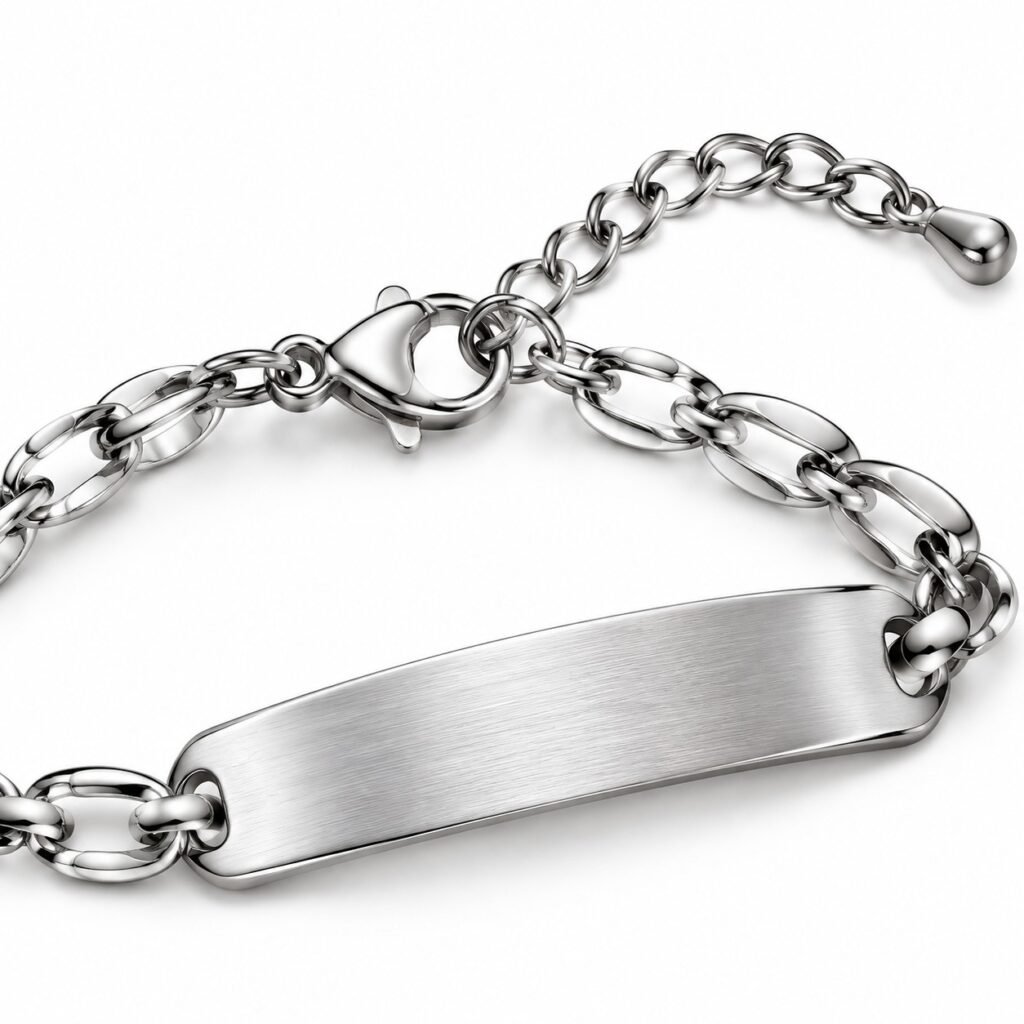
Brushed Texture
Brushed surfaces need a consistent texture direction and clean transitions around links, edges, plates, and curves. We check surface uniformity, color, plating coverage, and handling marks. The drawing or approved sample identifies texture direction, transition zones, logo contrast, key appearance areas, color tolerance, cleaning method, and protective packing during shipment.
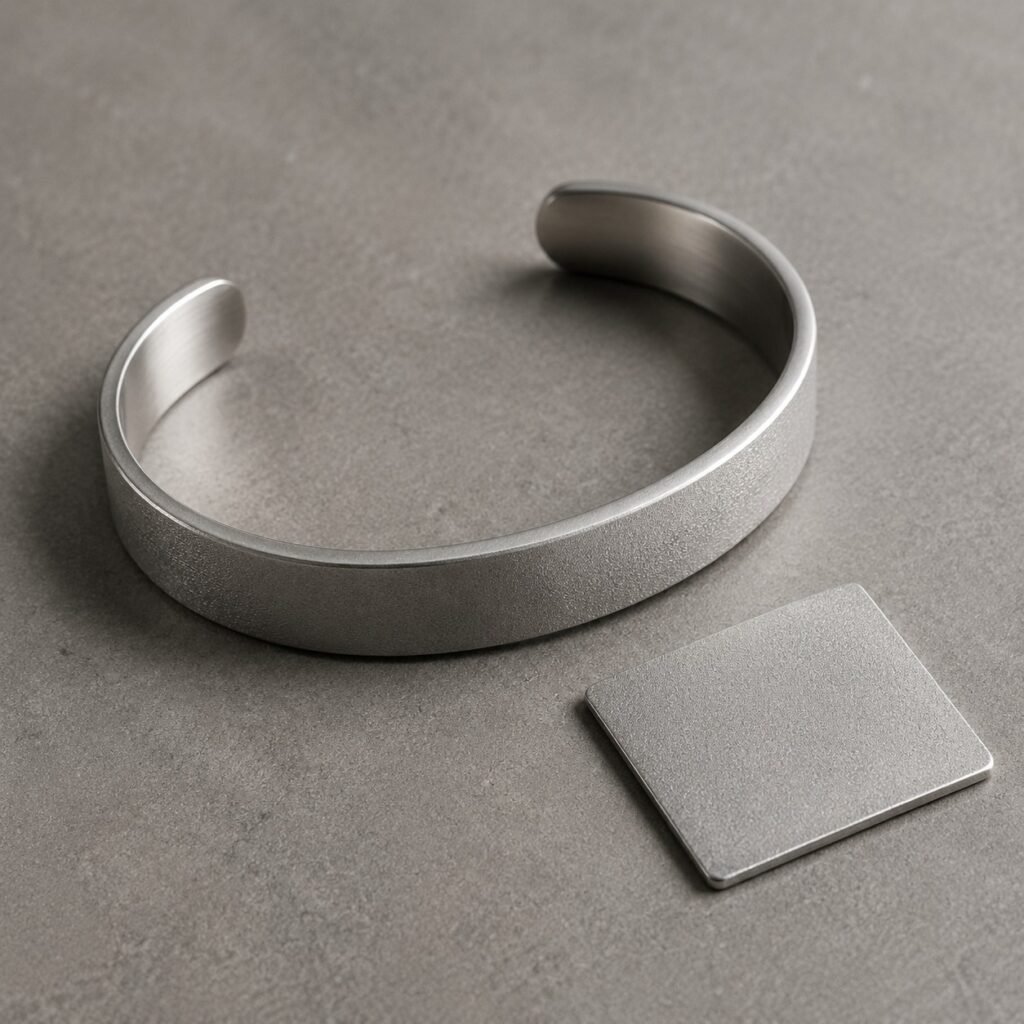
Matte and Sandblasted
Matte and sandblasted finishes use a different visual standard from mirror polish. We agree the target texture, color reference, cleaning method, packing protection, and acceptable appearance range together. Inspection carefully covers grain consistency, touch points, edge transitions, plating coverage, logo readability, color-measurement conditions, handling marks, and friction between packed surfaces.
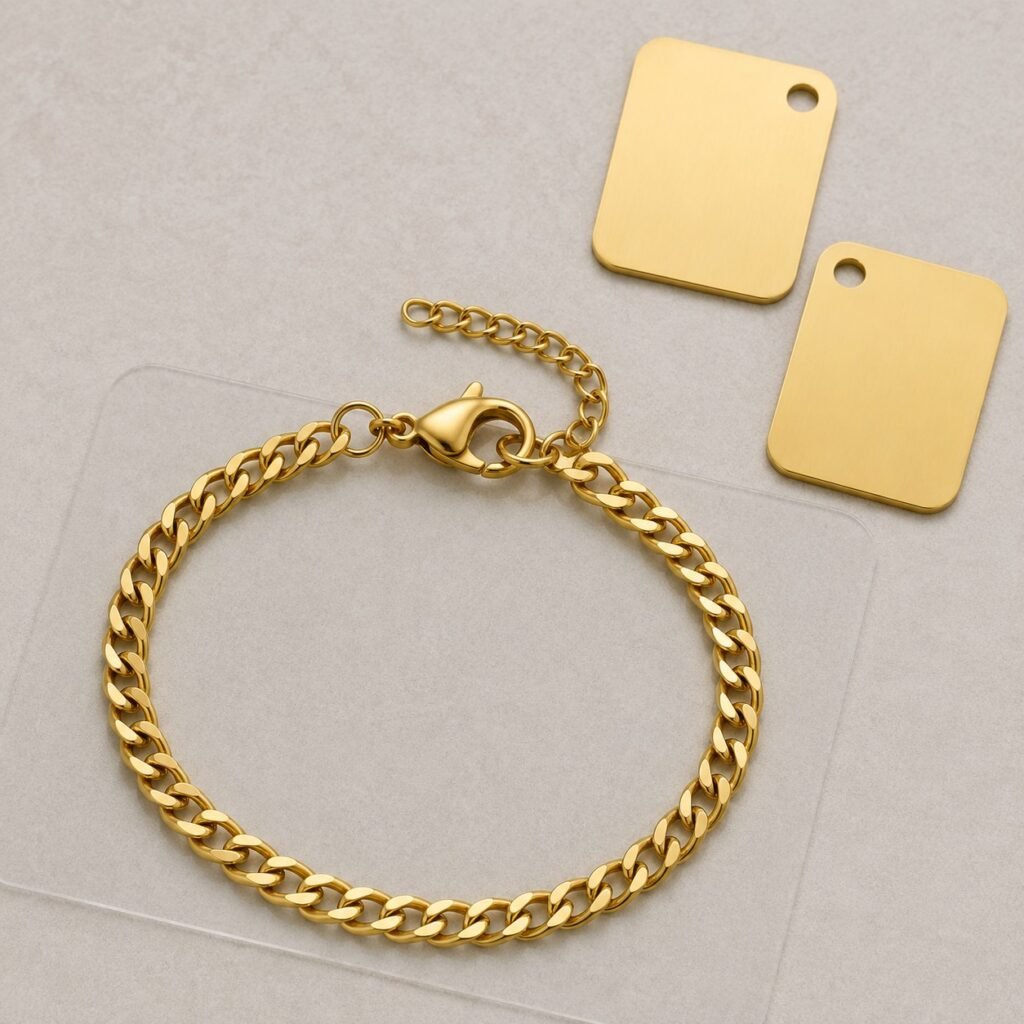
PVD Gold
PVD gold bracelets require defined base preparation, layer structure, target thickness, color sample, key appearance areas, and durability tests. We record polishing level, color standard, measurement points, allowed color difference, sweat or salt-spray conditions, packing protection, and production batch for each order. The final layer specification is approved before production.
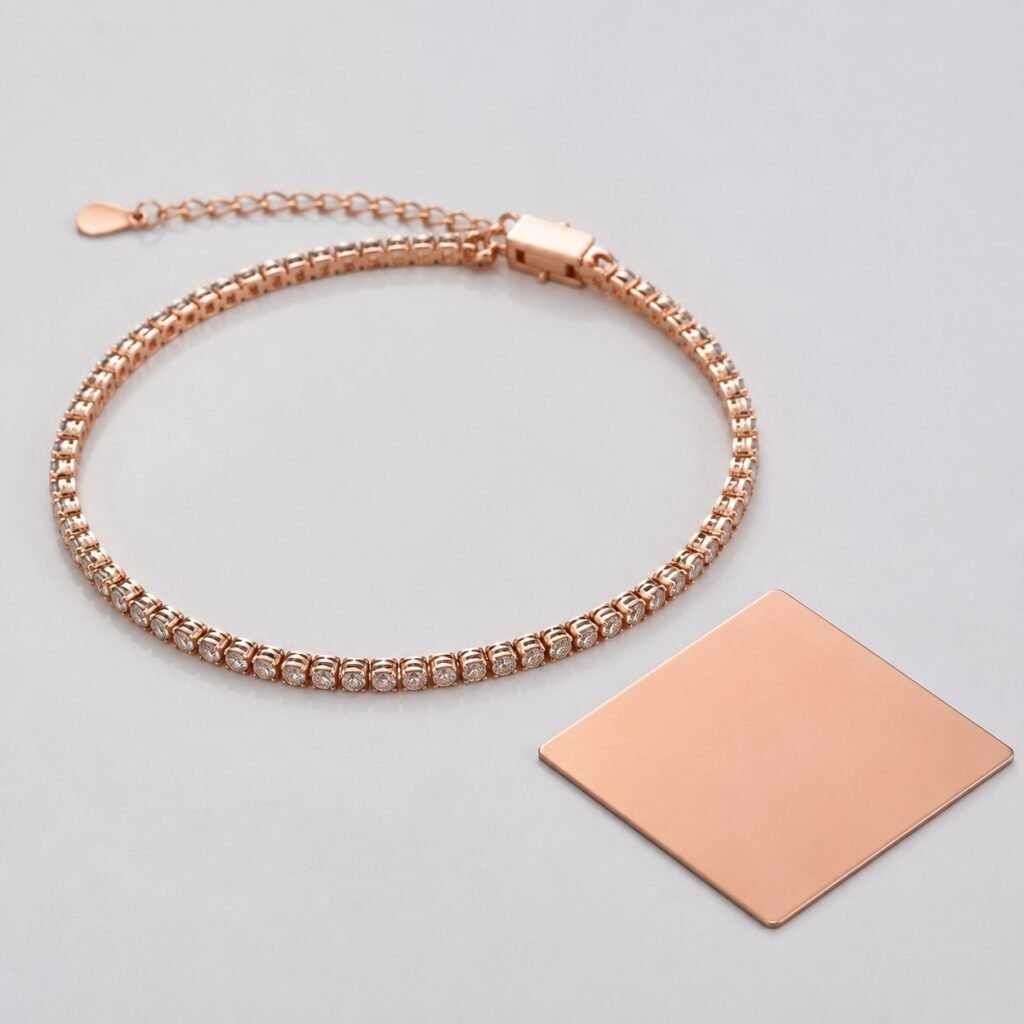
Rose Gold
Rose gold is defined by an approved color standard, not the color name alone. We record the process, base finish, target thickness, allowed color difference, tests, and batch reference. Standard lighting, measurement conditions, key appearance areas, logo method, stone or resin compatibility, sample number, and anti-scratch packing are added where relevant.
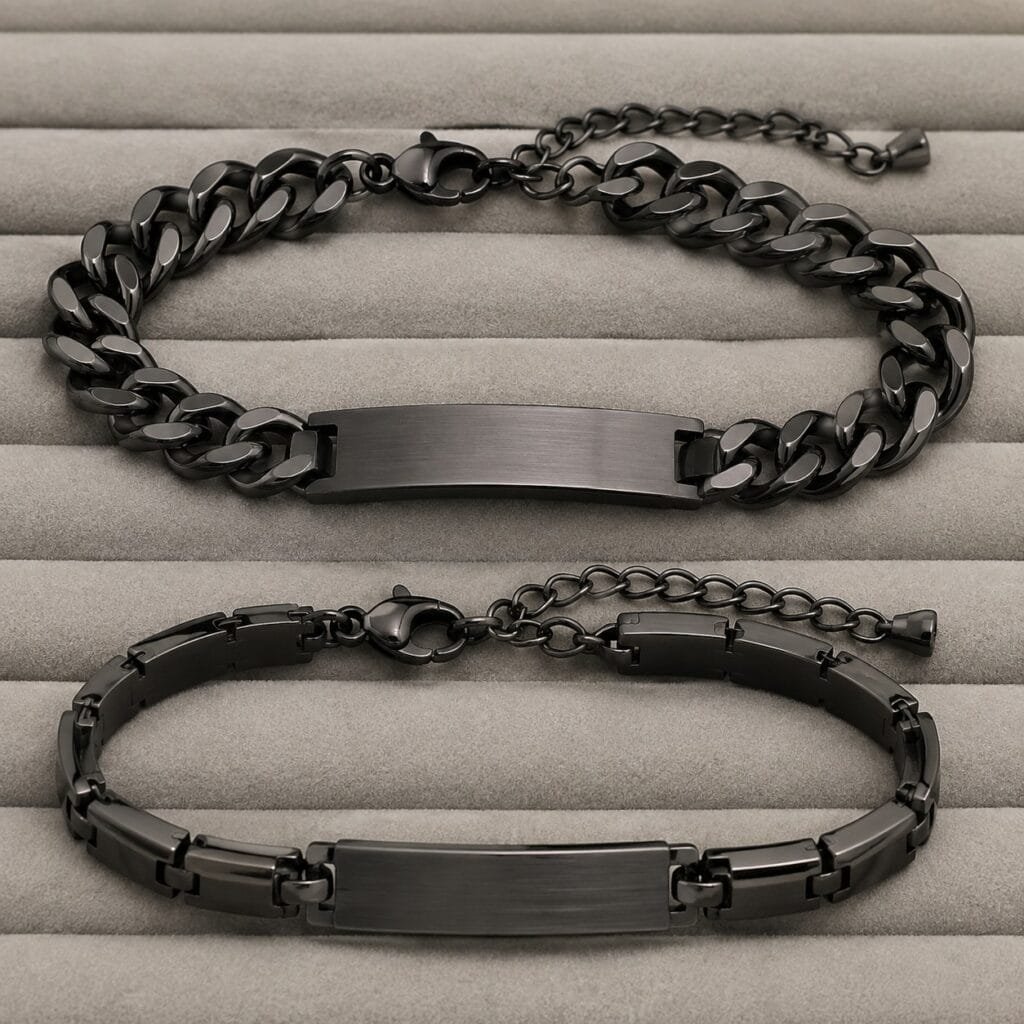
Black and Gunmetal
Black, gunmetal, and hematite finishes require clean surfaces, even color, edge coverage, and controlled visible defects. We assess each shade under agreed inspection conditions. The specification includes base finish, layer structure, thickness, color tolerance, measurement points, moving parts, logo contrast, tests, approved sample, and packing protection for every color version.
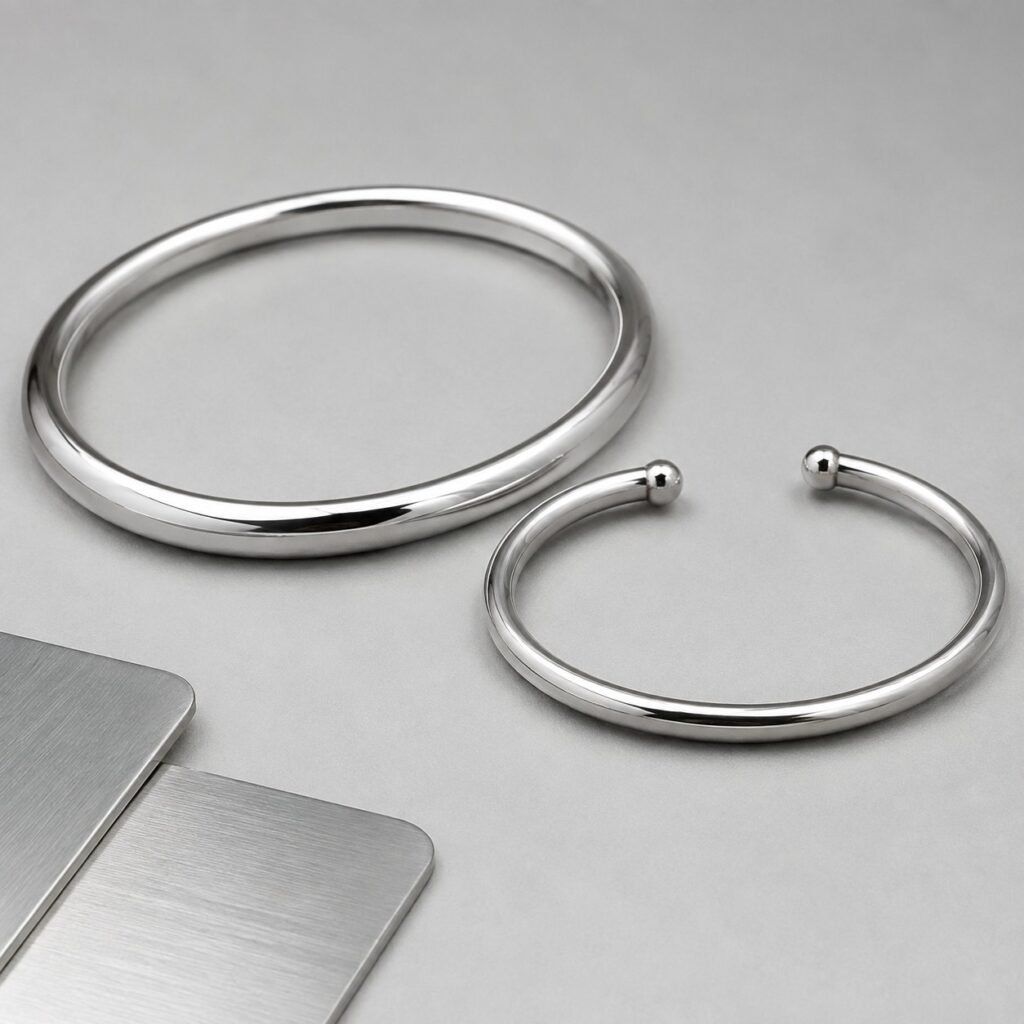
Plating
We use electroplating (PVD) for rhodium, silver color, and other agreed finishes. Reference thickness may be 3–5 μm or higher when specified. We define the actual layers, thickness, test plan, base material, pretreatment, finish, key appearance areas, color reference, defect limits, measurement method, approved sample, and friction protection.
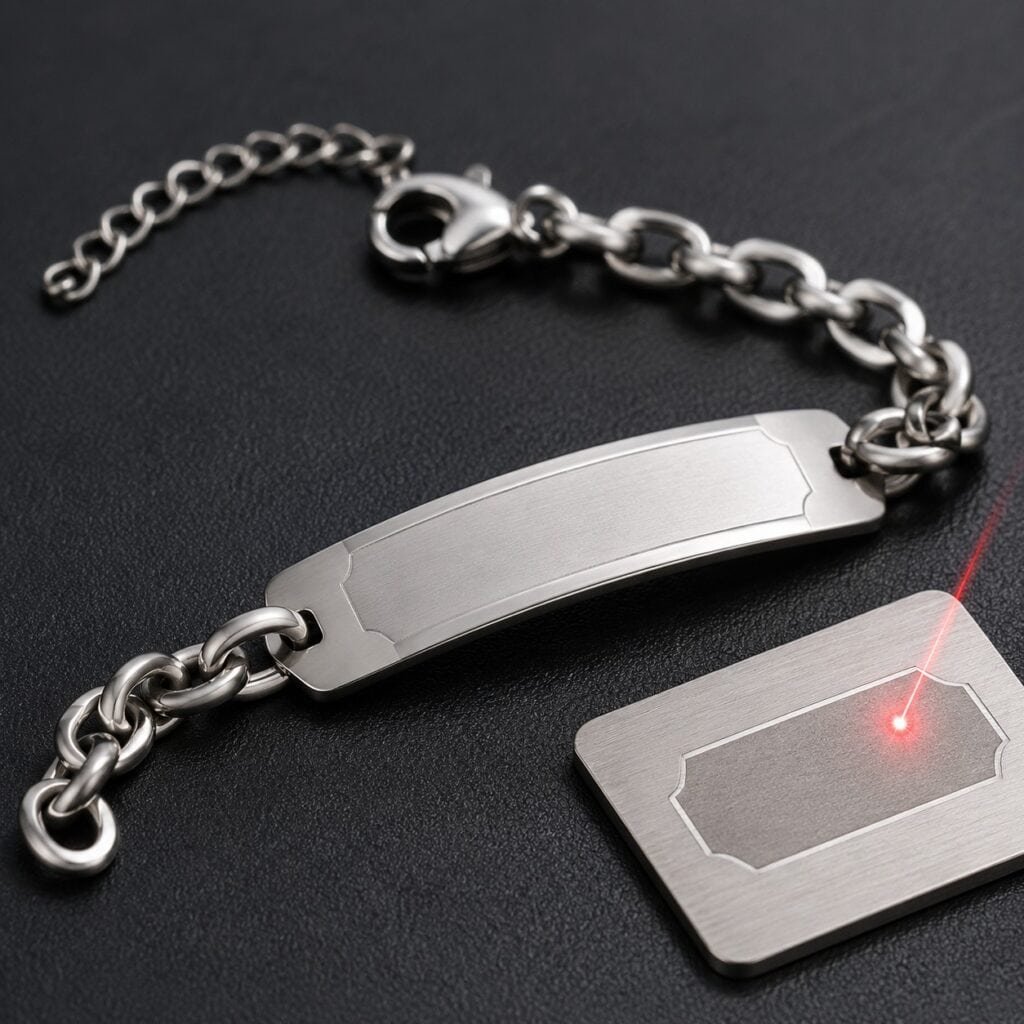
Laser Logo and Engraving
We apply laser logos, inner engraving, etching, embossing, and other agreed methods. Before production, the artwork defines position, size, depth or contrast, direction, and readability. We also review file format, minimum line width, distortion on curves, plating sequence, size variants, left or right orientation, inspection method, and packaging visibility for the finished bracelet.
Choose the Right Bracelet Development Model
We support different cooperation models for stainless steel bracelet projects. Commercial scope, design responsibility, approval stages, MOQ, sampling, packaging, and production schedule depend on whether you provide a finished design, need development support, or require a branded collection. We define the responsibility boundary before quotation, including files, fees, timing, and approvals.
OEM Production
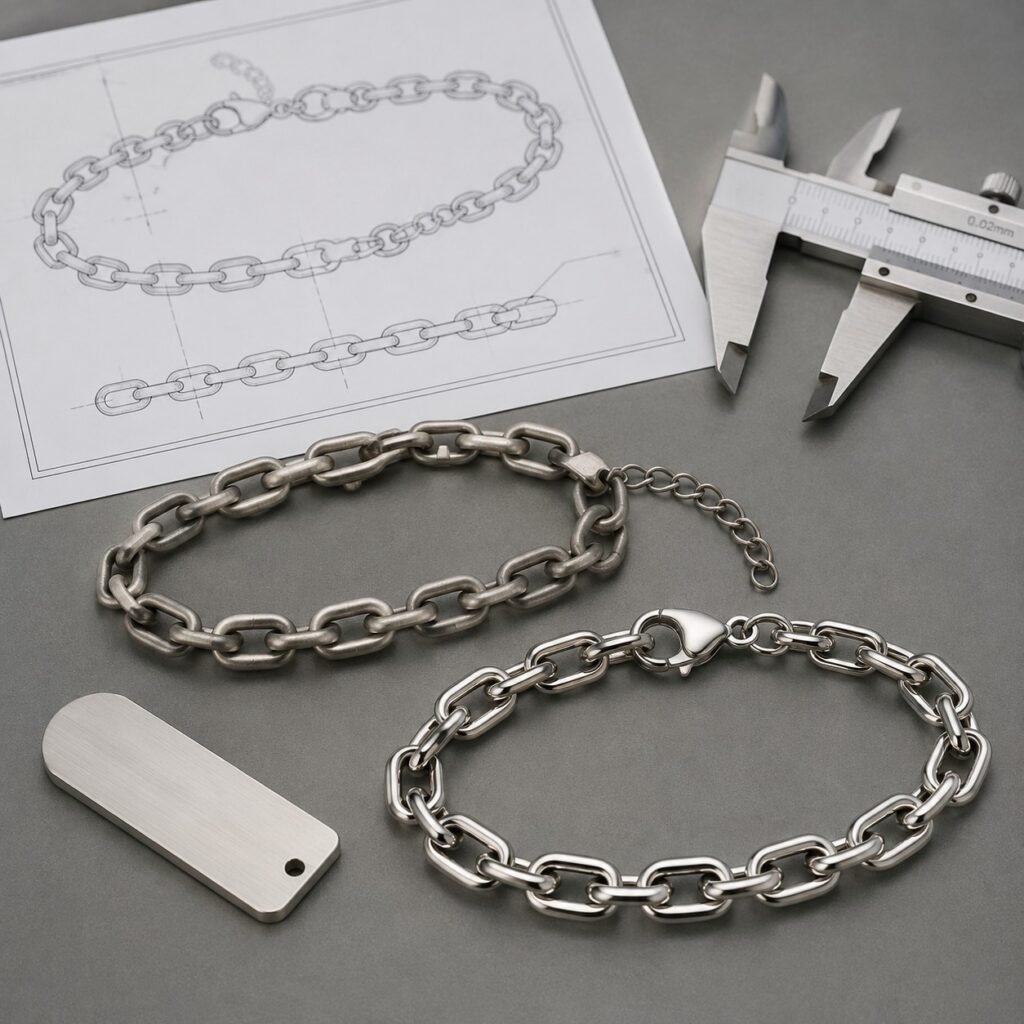
In an OEM project, you provide a drawing, reference sample, CAD file, logo, or detailed specification. We review manufacturability, confirm material and process, prepare the sample, record revisions, and begin bulk production after approval. The drawing, BOM, sample, and written requirements control quantity, color, size ratio, packaging, testing, inspection, delivery, and customer-supplied files. This route keeps your design authority clear.
ODM Development
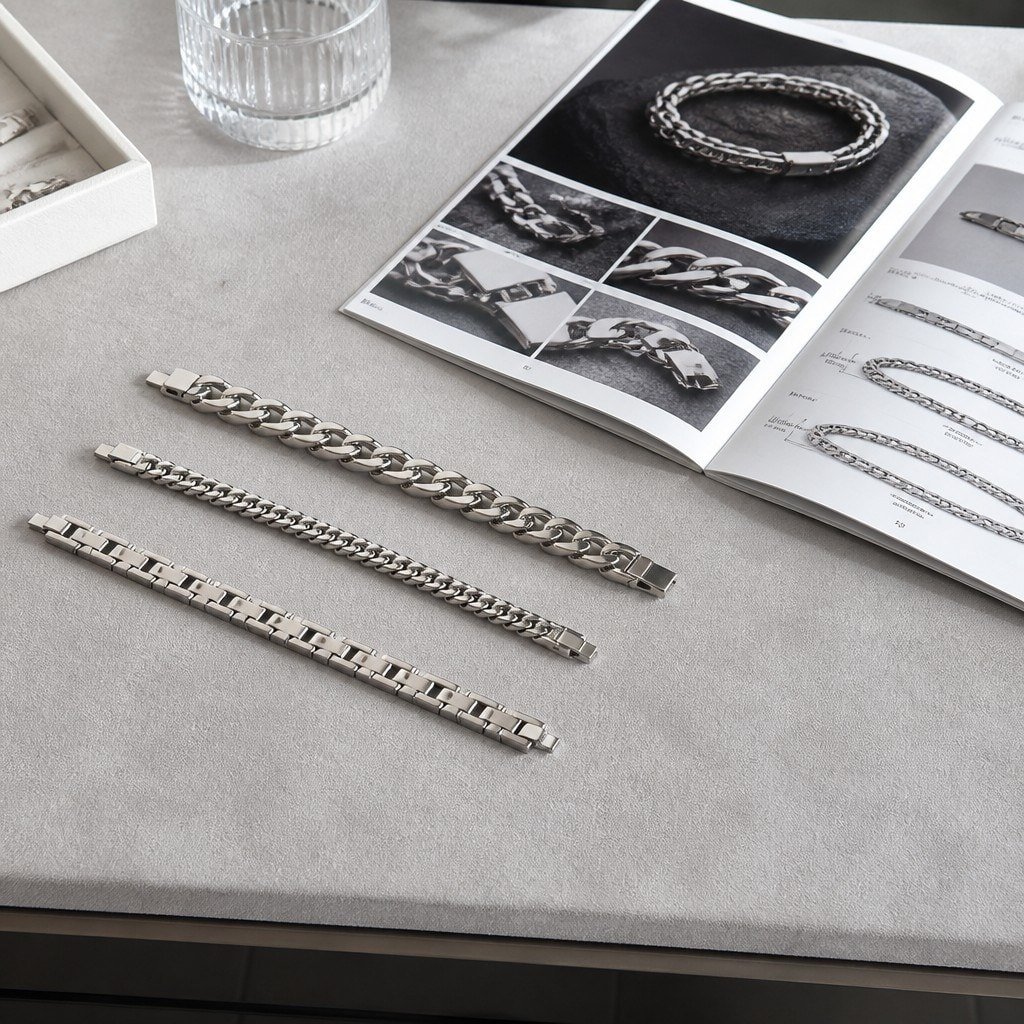
In an ODM project, we participate in design, structure, material, process, sample, and collection development. We convert a market direction, reference image, or product idea into a production-ready bracelet while considering dimensions, weight, cost, finishing, packaging, and repeat-order needs. The route may include 2D or 3D files, structure review, process selection, sample revisions, Golden Sample approval, and transfer to bulk production.
Private Label
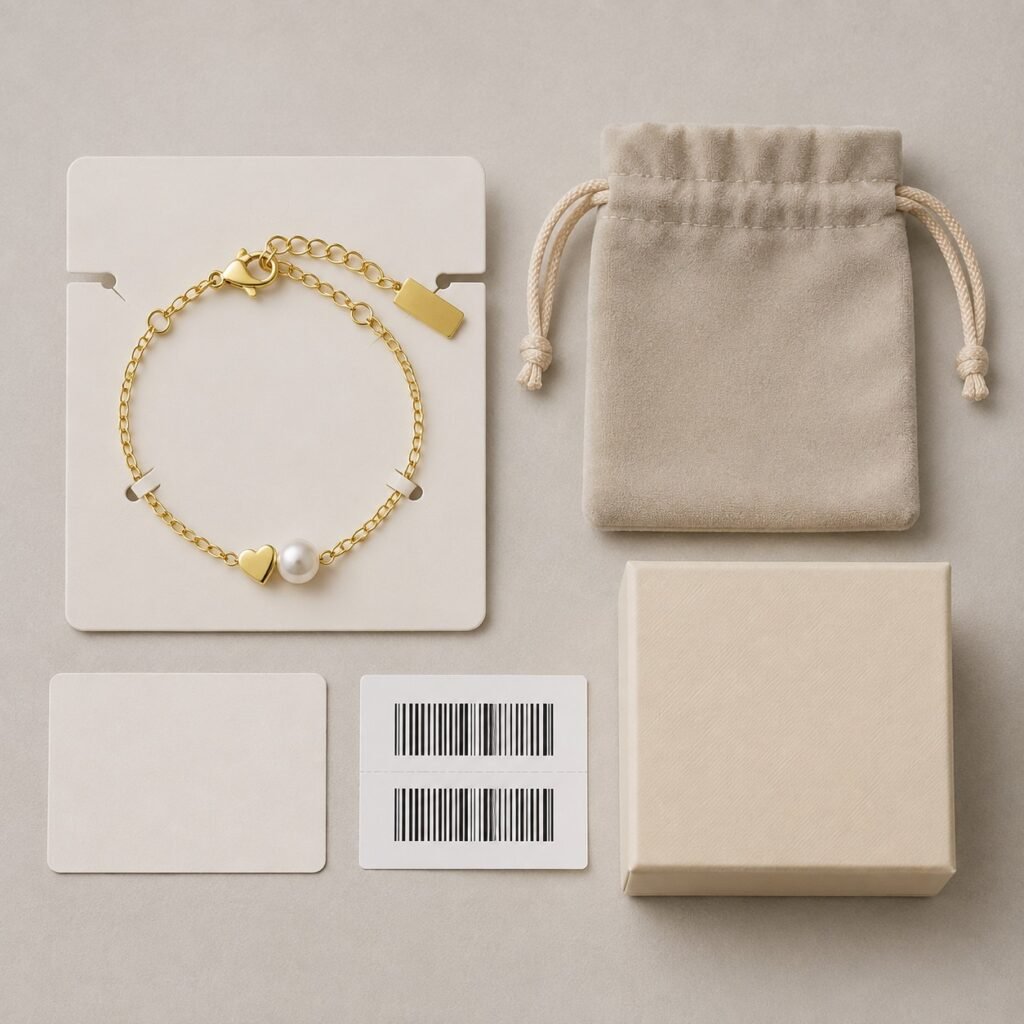
Private-label projects include bracelet logos, jewelry cards, velvet pouches, gift boxes, custom logo boxes, care information, barcodes, SKU labels, and collection packaging. We confirm artwork, label position, packing sequence, quantity per carton, bracelet direction, fixing method, anti-scratch or anti-tangling protection, product variant, file version, inner-pack rule, carton assortment, and approval of branded components. Your files remain the packaging reference.
Collection Development
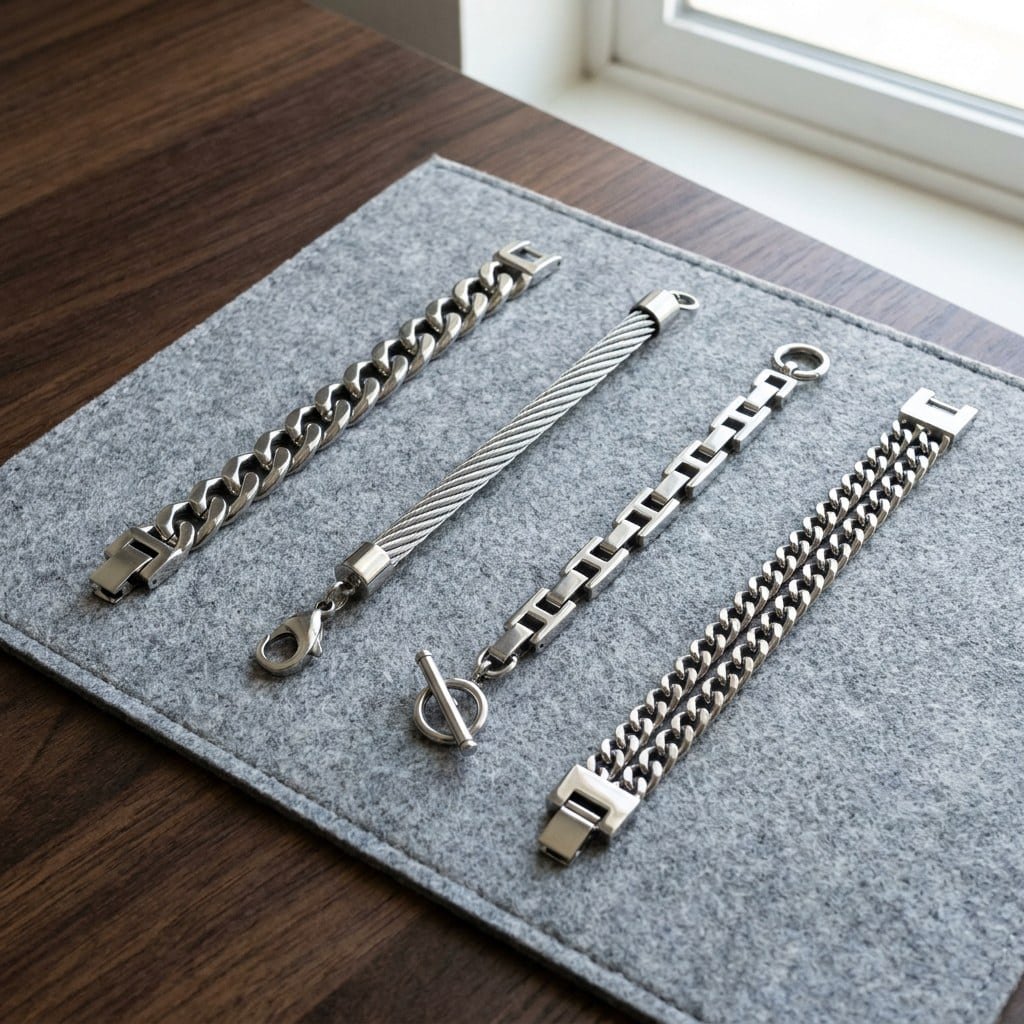
We coordinate bracelet collections with different structures, widths, colors, sizes, charms, stones, and packaging levels. Shared style codes, BOM versions, color references, sample approvals, and production requirements keep the range consistent. A collection plan can define target customer, price position, launch date, assortment ratio, test requirements, replacement components, packaging hierarchy, and replenishment priority. The same system supports later collection additions.
Understand the Commercial Scope Before You Order
MOQ, price, and lead time are connected. Custom tooling, several sizes, separate plating batches, branded packaging, and market-specific tests require a different scope from a stocked style. Before formal quotation, we review the included specifications, services, and assumptions. The quotation identifies style and version, material, dimensions, target weight, quantities, components, tooling, sample, plating, logo, packaging, testing, delivery, and separate charges.
| Commercial Item | Typical Reference | What Must Be Confirmed |
|---|---|---|
| Stock or regular-style MOQ | Usually 120 pcs/style | SKU, stock, color, size, packaging, and whether mixing is permitted |
| OEM/ODM MOQ | Usually 500 pcs/style | Style, color, size ratio, plating batch, components, mold, packaging, and production difficulty |
| Existing-style bulk lead time | Usually 20–30 working days | Stock status, quantity, color, packaging, inspection, and shipment plan |
| OEM/ODM bulk lead time | Usually 25–45 working days after approval | Sample approval, material, tooling, plating, packaging, testing, inspection, quantity, and schedule |
What Changes the Bracelet Price?
- Steel grade and raw-material form
- Bracelet dimensions, thickness, and target weight
- Chain, clasp, jump ring, hinge, stone, charm, and other components
- Mold, fixture, CAD, sample, or special tooling requirements
- Polishing level, texture, plating color, layer structure, and target thickness
- Logo method and branded packaging
- Testing, reports, inspection, and target-market requirements
- Quantity per style, color, size, and packaging version
- Delivery schedule and shipping terms
Trial orders, small orders, and bulk orders may use different unit prices. Quantity tolerance, excess or shortage handling, mold ownership, sample-cost deduction, and packaging surplus must be confirmed in writing for custom orders.
Approve the Bracelet Before Bulk Production Begins
Sampling is a decision stage, not just a request for one physical piece. We use drawings, specifications, sample IDs, revision records, color references, packaging files, and approval notes to define what bulk production should reproduce. The sample type depends on the design risk and the decisions your team needs to make. Appearance, structure, metal blank, plating color, function, packaging, pre-production, and Golden Sample reviews answer different questions, so we confirm the route before approving development cost and timing.
| Sample Type | Main Decision | Typical Timing or Condition |
|---|---|---|
| Existing-style sample | Product, size, finish, and basic quality review | Usually 3–7 working days, subject to SKU and stock |
| Appearance concept sample | Shape, proportion, and visual direction | Defined in the sampling plan |
| 3D-printed or structural prototype | Fit, scale, movement, or assembly logic | Used when physical structure needs review |
| Metal blank sample | Metal structure before final color | Used when metalwork needs separate approval |
| Plating color sample | Color, base finish, and plating appearance | Based on the selected color and process |
| Functional sample | Clasp, hinge, chain, adjustment, or connection function | Based on the structure and test plan |
| OEM/ODM custom sample | Complete custom design evaluation | Usually 25–30 working days after required information is confirmed |
| Pre-production sample | Final production setup before bulk | Used when required by the order or quality plan |
| Golden Sample | Approved physical reference for bulk inspection | Customer and factory approval required |
How Chicolink Controls Revisions
- Receive the reference image, drawing, CAD file, sample, or design brief.
- Confirm material, dimensions, structure, target weight, finish, logo, quantity, packaging, market, and tests.
- Complete process and manufacturability assessment.
- Prepare or confirm 2D/3D files when required.
- Produce the agreed sample type and complete applicable inspection.
- Record customer comments by sample number and file version.
- Revise the drawing, BOM, process, or sample as confirmed.
- Approve the final sample, quality points, and packaging reference before bulk production.
Sample fees normally apply. Mold, tooling, drawing, testing, packaging, and shipping fees may also apply according to the project. Whether sample or mold costs can be deducted from a later order depends on the order value and written agreement. Chicolink confirms the chargeable scope before sampling begins.
Control the Bracelet Beyond the First Approved Order
Repeat supply requires more than one approved sample. We link customer approval, production planning, material records, plating batches, inspection data, packaging files, and shipment records to the order number, SKU, and production batch. PMC follows material, tooling, manufacturing, polishing, plating, assembly, packing, testing, inspection, and shipment checkpoints. For a reorder, we compare the current written order with the approved product, color, quality, and packaging references.
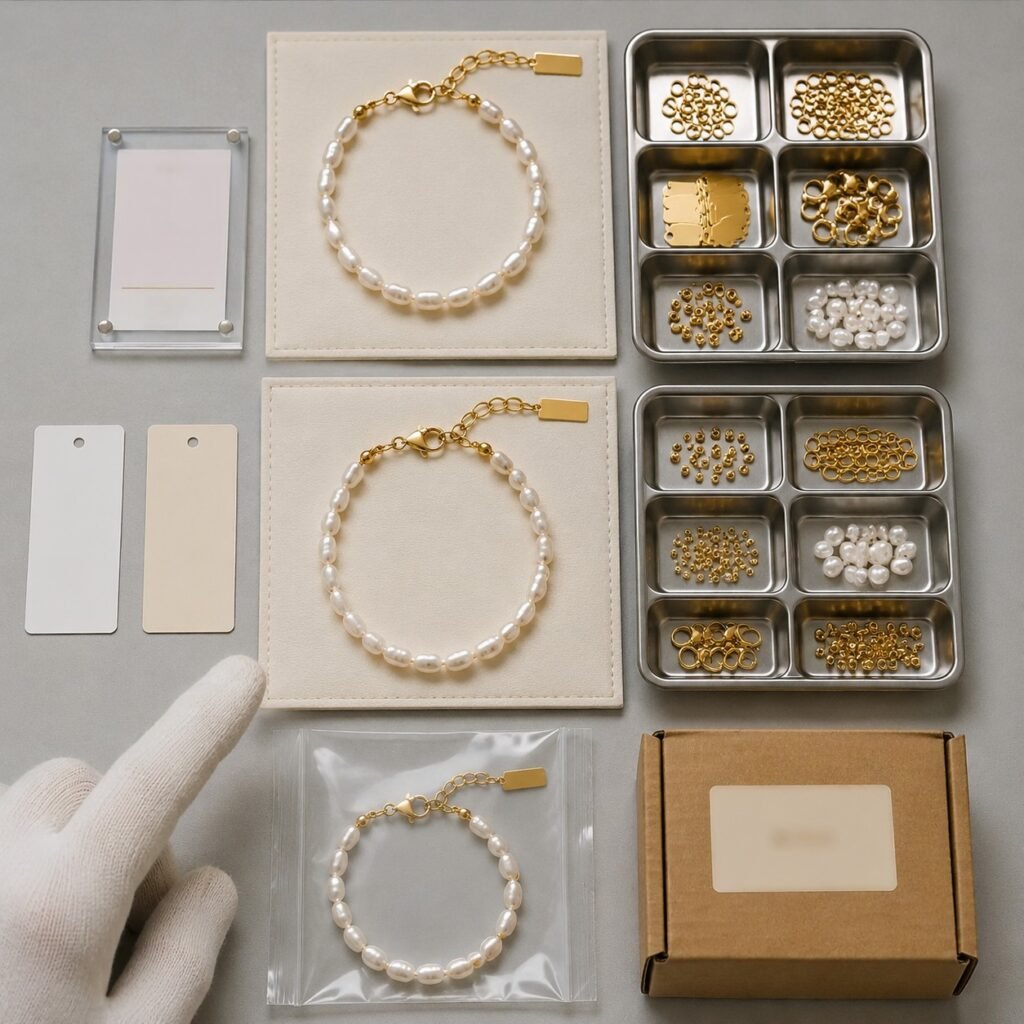
Production Control Sequence
Inquiry → Requirement Confirmation → Process Assessment → Quotation → Drawing or Style Selection → Sampling → Sample Inspection → Customer Approval → Material Preparation → Bulk Production → In-process Inspection → Plating Control → Finished Inspection → Packaging → Pre-shipment Confirmation → Shipment → After-sales Follow-up
What Supports Repeat Orders
- Approved drawing, BOM, dimensions, weight, material grade, and tolerances
- Sample number, Golden Sample, customer approval, and factory-retained sample
- Chain, clasp, jump ring, stone, charm, and accessory specifications
- Polishing, texture, plating color, layer structure, and target thickness
- Plating equipment, production date, color batch, input quantity, and output quantity
- IQC, IPQC, FQC, AQL, or 100% inspection records
- Logo artwork, jewelry card, box, barcode, SKU, and packing-file versions
- Carton number, packing list, shipment date, and logistics documents
If a complaint occurs, we collect the order number, SKU, batch, affected quantity, photos or videos, packaging condition, receipt date, usage or storage information, and the requested resolution. The approved sample and written inspection criteria guide our review of dimensional, color, surface, structural, stone, and plating issues.
Inspect Bracelet Quality at Multiple Production Stages
We inspect bracelet quality at incoming, process, plating, finished-product, packaging, and pre-shipment stages. Customer contracts, quality agreements, confirmed drawings, approved samples, and customer test standards take priority over our internal default references. The inspection plan follows the bracelet structure, including flexible links, clasps, jump rings, hinges, cuffs, bangle openings, stones, charms, engraving, moving parts, high-polish surfaces, labels, and retail packaging.
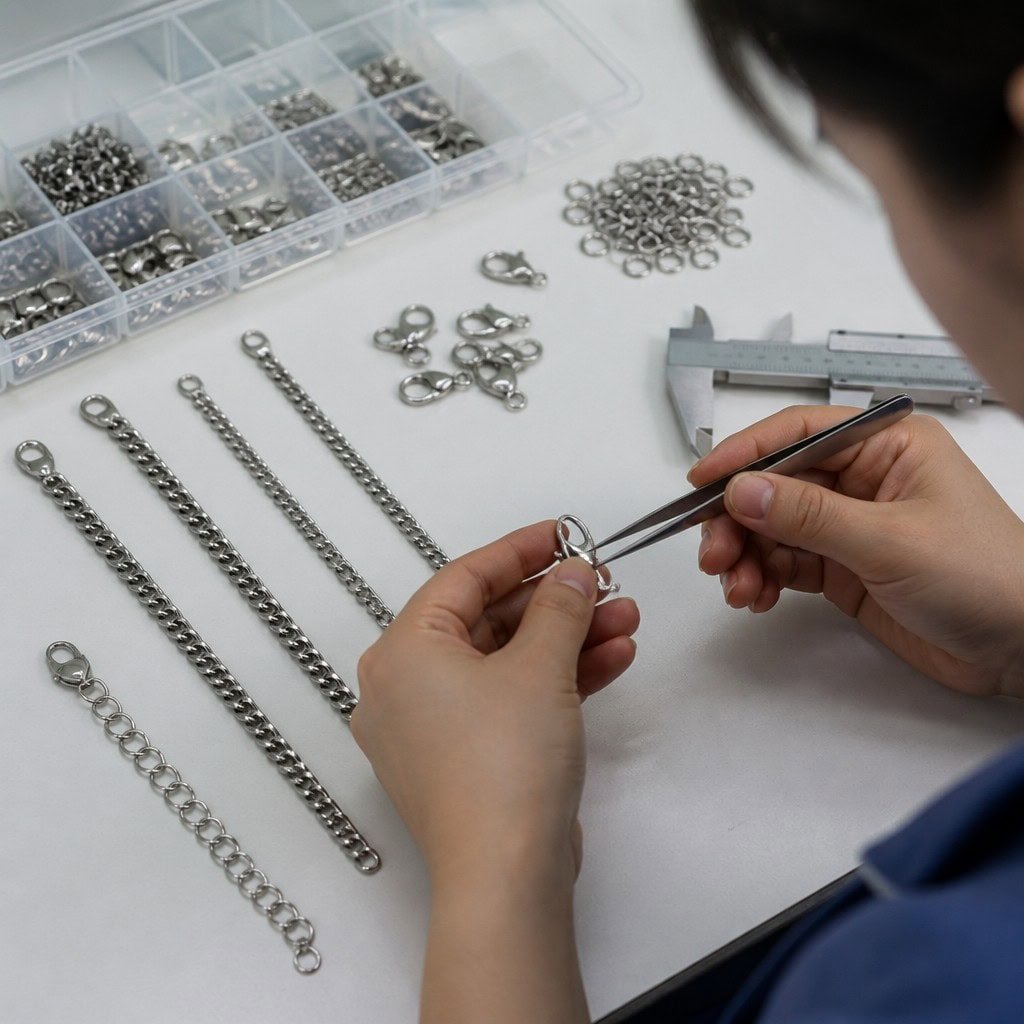
QC Flow
- IQC: Material grade, raw-material appearance and specification, clasps, jump rings, stones, charms, and packaging materials.
- IPQC: First piece, dimensions, structure, welds, casting sprues, burrs, polishing, texture, setting, bonding, and assembly.
- Plating Inspection: Color reference, thickness, color difference, missed areas, spots, burn marks, pinholes, scratches, peeling, and approved durability requirements.
- FQC: Appearance, color, dimensions, clasp function, link movement, connection strength, logo, accessories, and finished structure.
- Pre-packing Inspection: Cleanliness, product direction, card, pouch, box, barcode, SKU, quantity, and protection against scratching or tangling.
- Pre-shipment Inspection: Product quantity, cartons, labels, packing list, reports, and customer or third-party inspection requirements.
Bracelet Inspection References
| Inspection Item | Chicolink Default Reference When the Order Does Not Specify Otherwise |
|---|---|
| Bracelet length | ±5 mm; the approved drawing or customer standard takes priority |
| Main bracelet structure pull test | 60 N, five samples per style, held for 10 seconds |
| Connection ring or clasp pull test | 40 N, subject to structure and approved standard |
| Mirror or standard gloss color difference | ΔE00 ≤ 1.5 under defined measurement conditions |
| Brushed, sandblasted, or antique color difference | ΔE00 ≤ 2.0 under defined measurement conditions |
| Average plating-thickness tolerance | Nominal value ±10% |
| Main appearance surface | Measured thickness at least 80% of nominal plating thickness |
| Default AQL | Normal inspection, General Level II; Critical Ac 0/Re 1, Major AQL 1.0, Minor AQL 2.5 |
The pull direction must reflect the bracelet’s normal load direction, and fixtures must not damage the sample before testing. A tested sample must not break, detach, open at a weld or ring, or show unacceptable permanent deformation. Special chains and customer-defined products follow the drawing, order, quality agreement, or customer standard.
Define Testing by Product, Color, Batch and Market
We support applicable testing and third-party inspection according to the bracelet, material, plating color, layer structure, production batch, target market, channel, and customer requirement. A report for one sample or color does not automatically cover every SKU, finish, order, or market. We review existing reports for legal name, sample scope, standard version, issue date, and validity. Laboratory, pretreatment, sample count, test method, acceptance criteria, cost, timing, and report format are confirmed before submission.
| Test or Requirement | Chicolink Support and Default Reference |
|---|---|
| Salt spray | Bare stainless steel: 24 hours; plated or PVD products: 48 hours; high-corrosion-resistance projects: 72 hours or as agreed |
| Artificial sweat | 40±2°C for 24 hours, pH 4.7±0.2; agreed formula and test method must be recorded |
| Nickel release | EN 1811, EN 12472, or another confirmed standard; we coordinate SGS, HKPC, or a customer-appointed laboratory |
| Lead and cadmium | We arrange testing according to product, material, color, batch, market, and customer requirement |
| REACH | We assess testing or report support for the applicable product and EU market requirement |
| California Proposition 65 | Requirements are evaluated according to the product, material, market, and customer specification |
| RoHS | Assessed only when the product or customer channel falls within the applicable scope |
| Third-party inspection | We support customer-appointed or pre-shipment inspection with advance scheduling |
Reference Testing Costs
- Artificial sweat test: approximately USD 100
- Salt-spray test: approximately USD 2 per hour
- Abrasion-resistance test: approximately USD 120
- SGS nickel-release test: approximately USD 500 per color
- HKPC nickel-release test: approximately USD 120 per color
Costs are references only. The laboratory, standard, standard version, sample quantity, pretreatment, color count, report format, delivery time, and shipping requirement must be confirmed before testing. Destructive or appearance-affecting test samples are not shipped as saleable goods.
Prepare Bracelets for Retail, Wholesale and Export
Bracelet packaging must protect polished surfaces, chains, clasps, stones, open cuffs, and hinged structures while meeting your sales-channel requirements. We coordinate basic packing, branded presentation, e-commerce labels, carton data, export documents, and shipping terms after artwork, dimensions, quantities, and packing rules are approved. The specification covers single-item or set packing, product direction, fixing method, anti-scratch or anti-tangling protection, label versions, inner-pack quantities, mixed-carton rules, and destination marks.
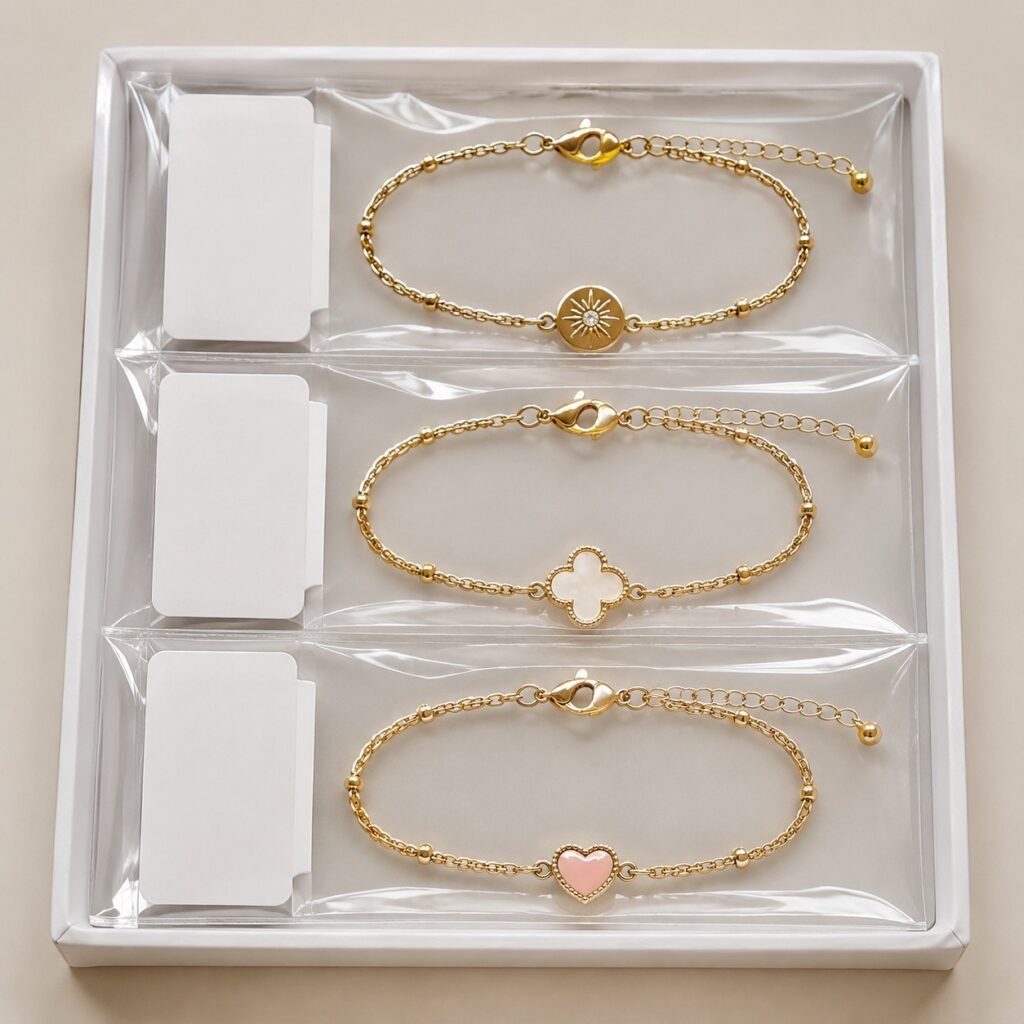
Protective Bags
OPP bags, films, and separators reduce scratching and friction. Chain bracelets also need anti-tangling placement for clasps, extension chains, and charms. We define single-piece or set packing, bag dimensions, thickness, sealing, SKU separation, inner-pack quantity, and outer-carton rules before packing. The approved packing sample guides the line.
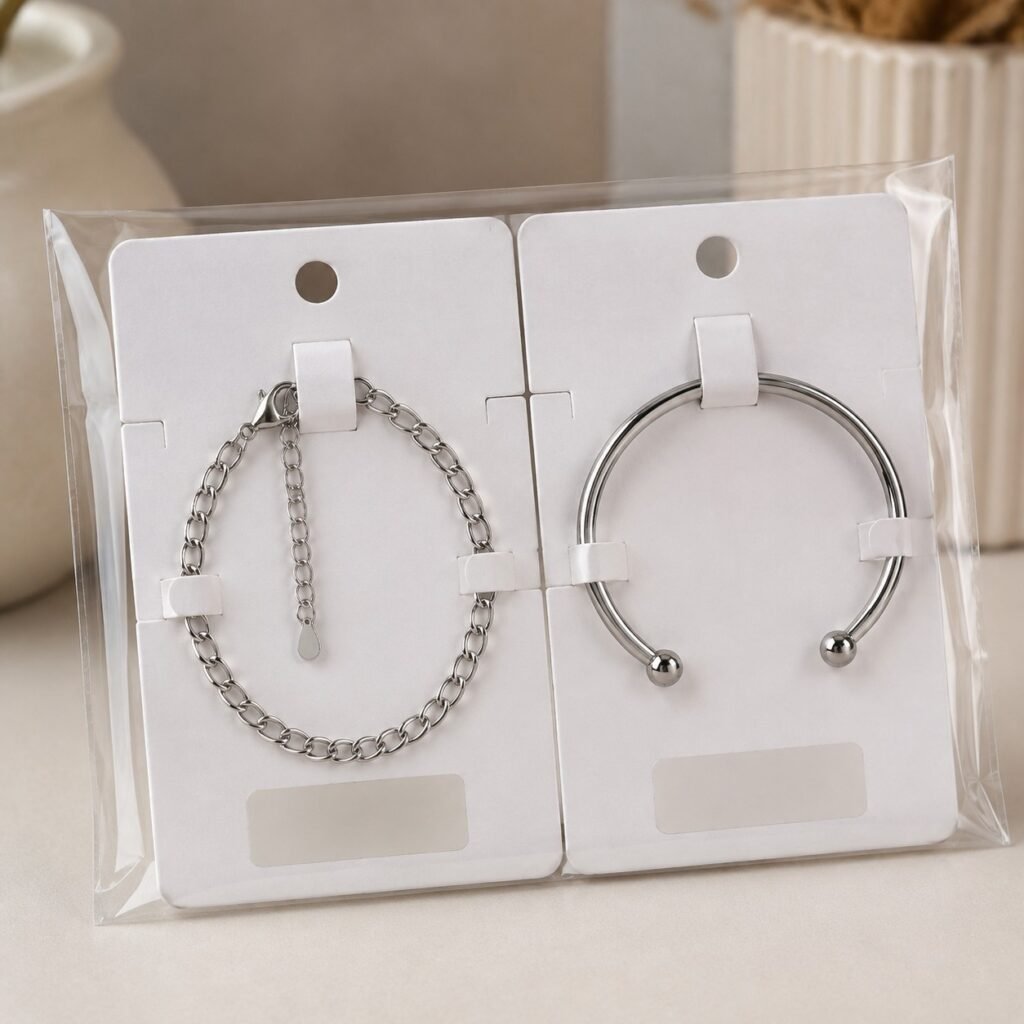
Jewelry Cards
We use jewelry cards for the bracelet, brand identity, care information, and retail display details. We define card size, material, printing, holes or slots, bracelet direction, fastening, barcode location, and packing sequence. Artwork, logo color, finish, product weight, hanging strength, care text, label version, and movement protection are checked against the approved packaging sample.
Velvet Pouches
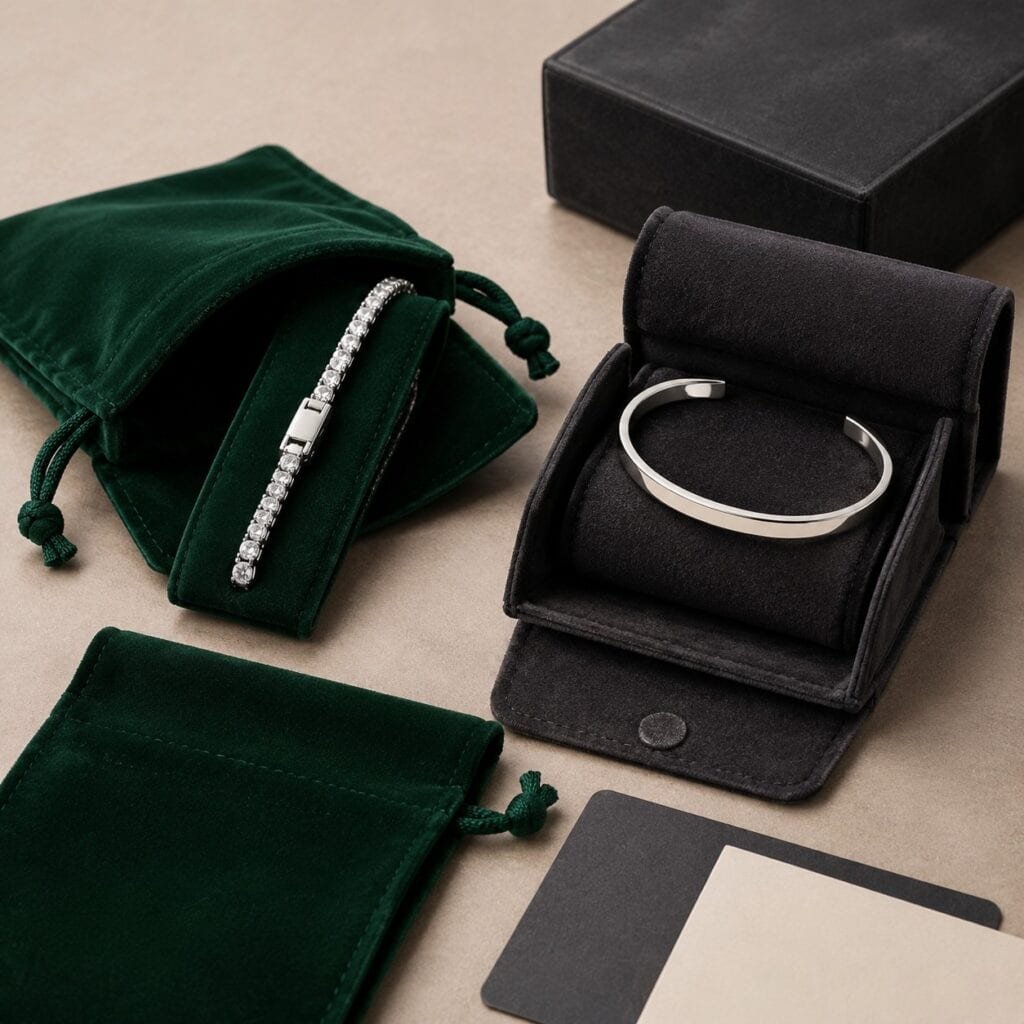
Velvet pouches suit private-label and gift-ready programs when size, color, logo method, drawstring, bracelet structure, and protection match. High-polish, stone-set, or open cuffs may need internal separation. We define artwork, material, dimensions, product direction, quantity per pouch, outer placement, cleanliness, and any required care card, barcode, or protective inner bag.
Gift Boxes
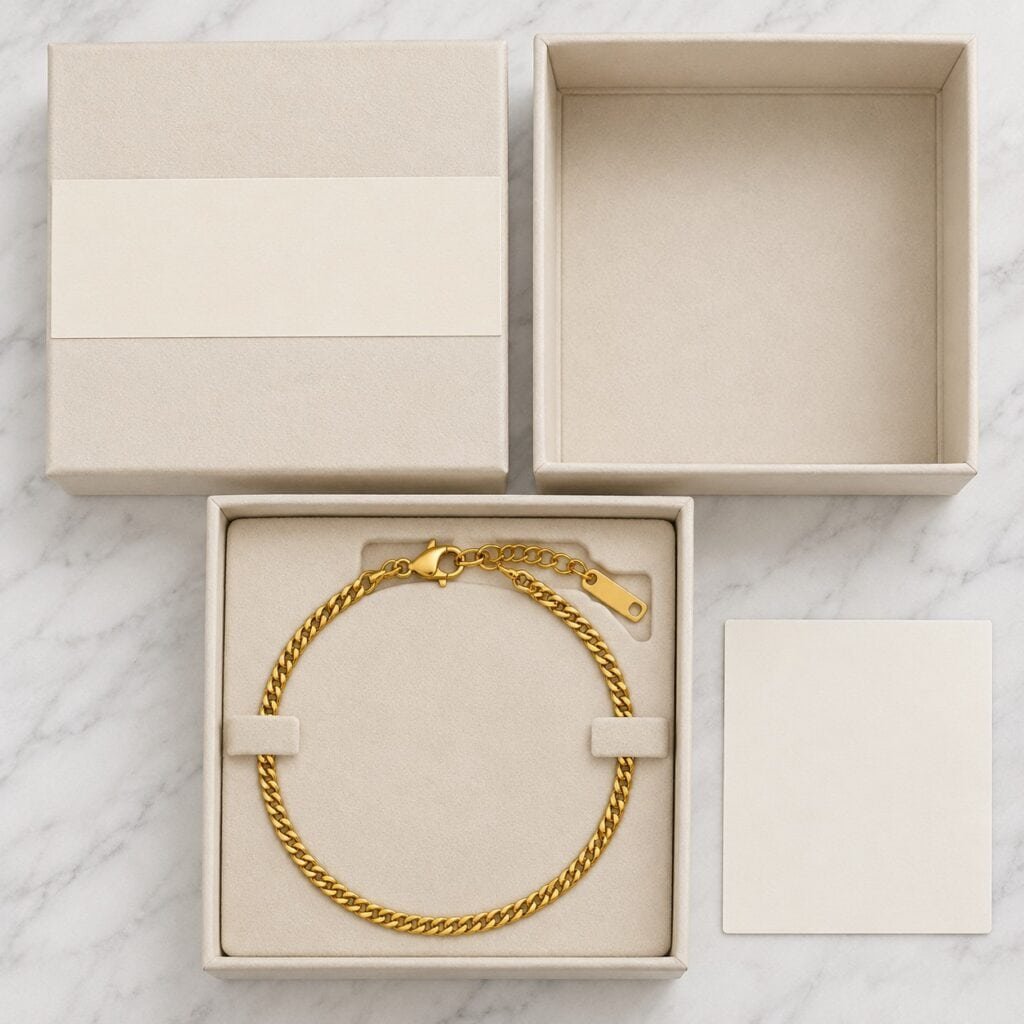
Gift boxes may include a logo, insert, care card, set layout, and external label. We review bracelet dimensions, fixing position, opening direction, surface protection, box size, packing quantity, and transport resistance. The packaging specification records insert material, logo method, finish, color, spare parts, booklet and barcode positions, inner-carton quantity, and mixed-SKU rules.
SKU and Barcode
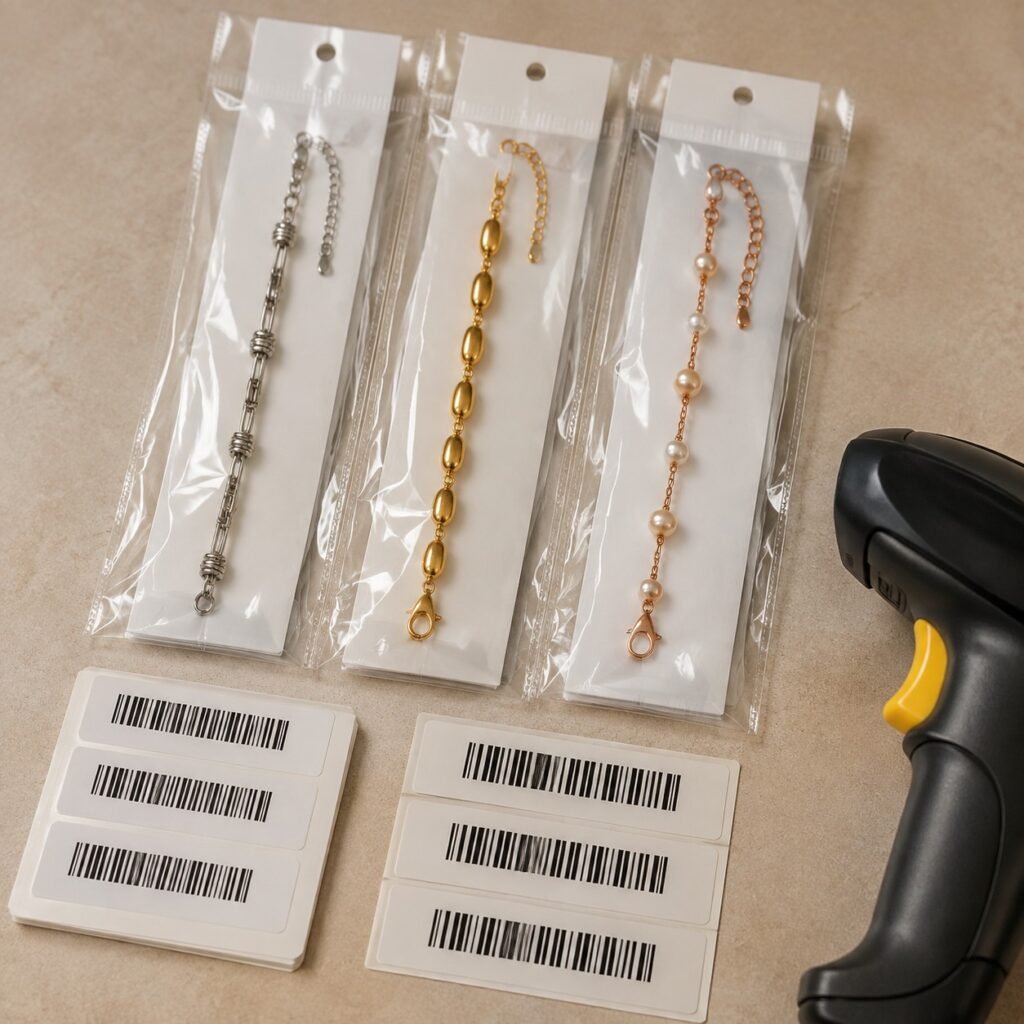
SKU, UPC, EAN, barcode, FNSKU, customer code, and other labels use customer-approved data. We check the file, version, size, position, reading direction, product variant, inner-box rule, and carton relationship. Product, color, size, set quantity, country information, and carton marks are then carefully cross-checked against the final order and packing list.
FBA Support
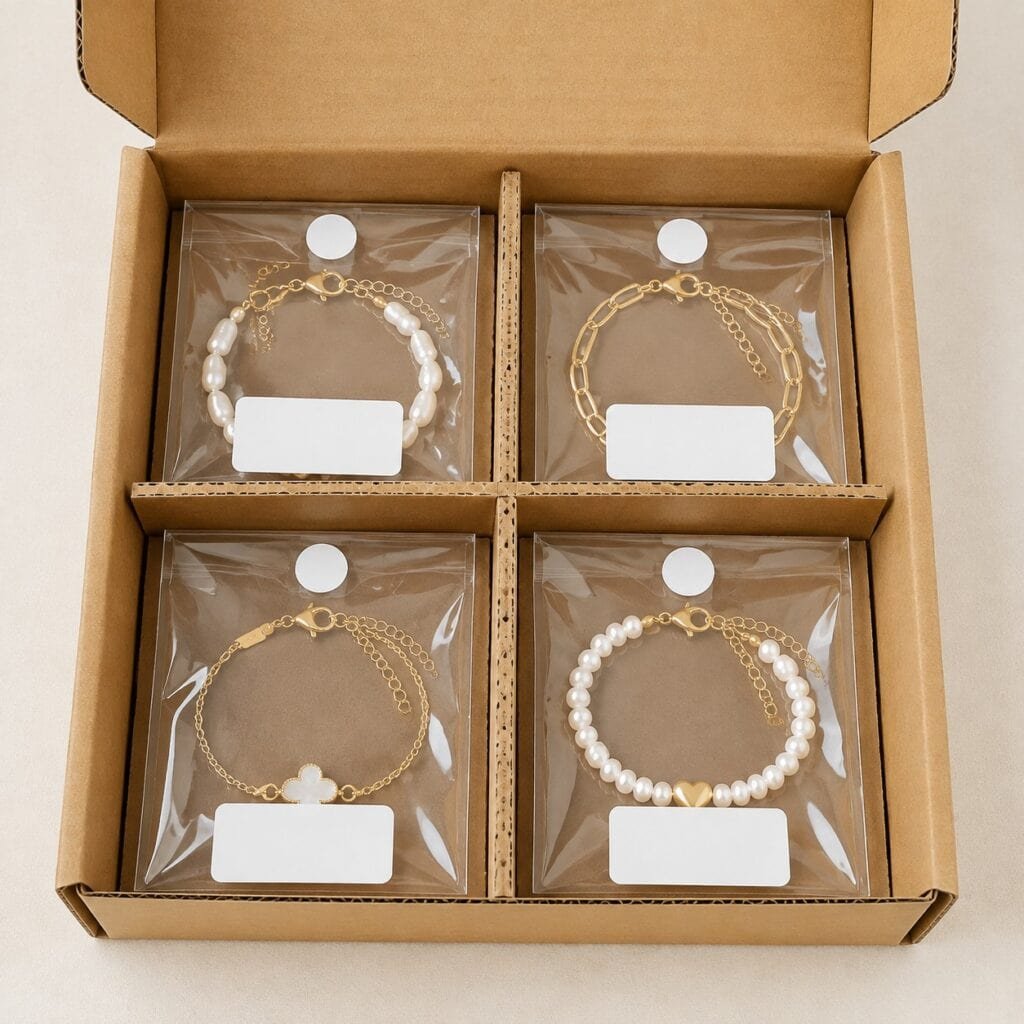
Amazon FBA packaging follows the customer’s current platform documents. The order needs approved FNSKU data, warnings, bag rules, set details, carton labels, packing quantities, and shipment-plan information. We do not reuse an old FBA rule automatically. The customer supplies the current files, destination, carton restrictions, and inspection points before packing.
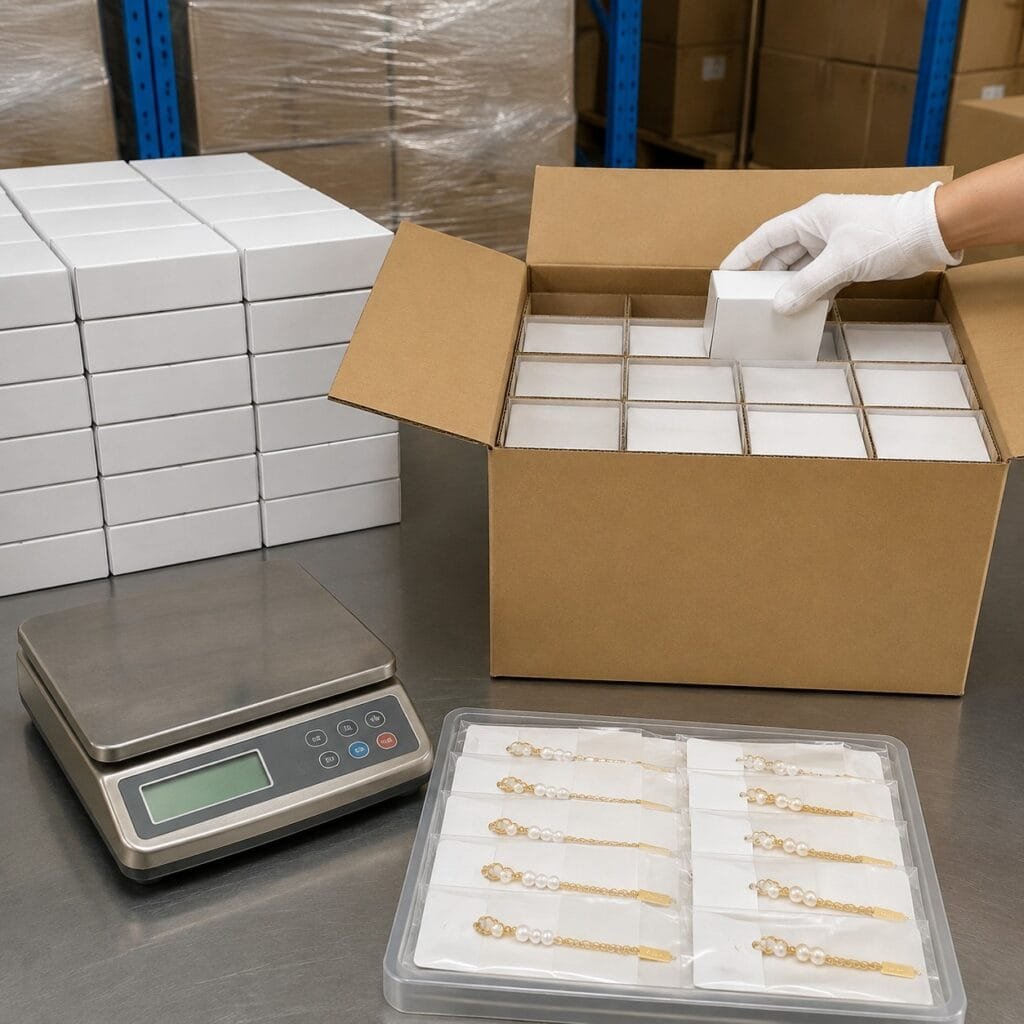
Carton Control
Carton records include dimensions, material, quantity, gross and net weight, mixed SKU and size details, carton number, shipping mark, order number, destination label, and handling marks. The 15 kg reference maximum is reviewed against product and carrier needs. We also check inner boxes, packing sequence, handling marks, declaration data, carton count, packing list, and warehouse rules.
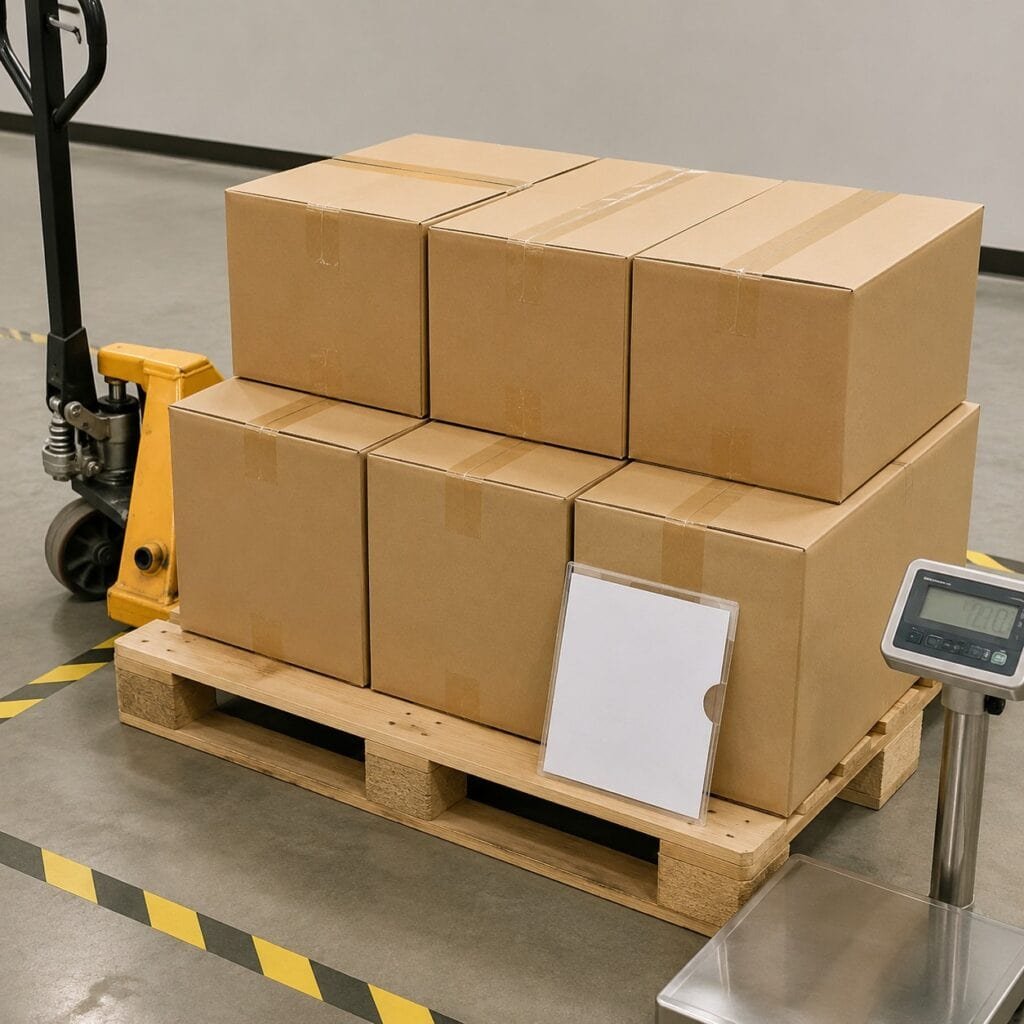
Shipping Terms
We offer EXW, FOB, CIF, DAP, and DDP for agreed orders. Shipping may use DHL, FedEx, UPS, air, sea, or an appointed forwarder. Freight assessment needs destination, postcode, cartons, weight, declaration data, tax, insurance, and arrival target. The quotation identifies duties, responsible party, route, chargeable weight, customs documents, and forwarder instructions where applicable.
How Chicolink Structures Different Bracelet Projects
These representative scopes show how we organize common stainless steel bracelet projects. We set material, quantity, cost, timing, inspection, testing, packaging, and delivery for each order. Each scenario identifies the operating context, manufacturing risk, control method, decision point, and data required before sampling or production.
Brand Collection Launch
Use Scenario
A global jewelry brand plans a coordinated stainless steel bracelet launch with chain bracelets, ID bracelets, cuffs, and hinged bangles in several finishes.
Key Challenge
The collection must share a consistent visual direction while each structure requires different dimensions, components, finishing, functional checks, and packaging protection.
Chicolink Solution
We organize the styles under separate SKUs and BOMs, set shared color and logo rules, review manufacturability, produce the required sample types, record revisions, and use approved samples and files for production.
Result
The documented development and approval route is complete before bulk production is authorized.
Project Data
Representative project scope: multiple bracelet structures, 304 or 316L material options, PVD/IP finishes, custom logo, private-label packaging, sample approval, and bulk QC.
Importer Bulk Program
Use Scenario
An importer needs a commercially balanced assortment of standard and custom bracelets for wholesale customers in several regions.
Key Challenge
Your team compares MOQ, price, lead time, carton data, tests, and shipping terms without mixing stocked-style assumptions with custom-production requirements.
Chicolink Solution
We separate existing styles from OEM/ODM developments, define quantities by style, color, and size, review packing and market needs, then quote each supply route on its own basis.
Result
Each assortment group has its own cost, MOQ, lead-time, packing, and delivery scope for approval.
Project Data
Representative project scope: stock MOQ usually 120 pcs/style, OEM/ODM MOQ usually 500 pcs/style, packaging variants, pre-shipment requirements, and export coordination.
Distributor Replenishment
Use Scenario
A regional distributor needs recurring supplies of approved chain bracelets and men’s bracelets with stable color, labels, and packing rules.
Key Challenge
Repeated orders can drift when files, components, plating references, label versions, or carton rules are not connected to the original approval.
Chicolink Solution
We link the order, SKU, drawing, BOM, Golden Sample, plating batch, packaging file, inspection records, and shipment data through our batch-traceability process.
Result
The replenishment order is checked against recorded product, plating, quality, and packaging references.
Project Data
Representative project scope: repeat styles, retained samples, color reference, production-batch records, SKU labels, carton control, and replenishment planning.
Retail Packaging Program
Use Scenario
A retail group requires stainless steel bracelets packed by SKU with jewelry cards, barcodes, gift boxes, and defined carton assortments.
Key Challenge
A correct bracelet with an incorrect label, box, variant, or carton mix can still fail the retailer’s receiving process.
Chicolink Solution
We define the packaging BOM, artwork version, product direction, label position, inner-pack quantity, mixed-carton rule, carton marks, inspection method, and pre-shipment checklist before delivery.
Result
Product and packaging requirements form one order specification before shipment confirmation.
Project Data
Representative project scope: bracelet SKU matrix, jewelry cards, barcode labels, gift boxes, packing list, carton marks, AQL or agreed inspection, and third-party inspection support.
Stainless Steel Bracelet FAQ
These answers summarize Chicolink’s typical stainless steel bracelet policies and processes. MOQ, cost, timing, plating, testing, inspection, packaging, and delivery depend on the style and written project requirements. Send your design, quantity, market, and target date for a project assessment.
What is your bracelet MOQ?
Stock or regular styles usually start at 120 pieces per style. OEM and ODM projects usually start at 500 pieces per style. MOQ may be calculated by style, color, size, plating batch, or packaging version. Tooling, material, stones, components, testing, and production difficulty may change it. We state any permitted color or size mixing before quotation.
Do you manufacture 316L bracelets?
Yes. We manufacture 304 and 316L stainless steel bracelets. The appropriate grade depends on structure, wearing conditions, target price, market, finish, and testing criteria. We record the approved grade for the bracelet body and relevant components in the product specification and BOM.
Can you make bracelets from my design?
Yes. Send a drawing, reference image, physical sample, CAD file, specification sheet, BOM, or hand sketch. We review dimensions, material, structure, weight, process, logo, packing, quantity, target market, and manufacturability before setting the sampling route.
How long does sampling take?
Existing-style samples usually take 3–7 working days, subject to SKU and stock. OEM or ODM custom samples usually take 25–30 working days after the required project information is confirmed. Tooling, complex structures, plating, stones, packaging, revisions, tests, holidays, and shipping may affect timing.
Are sample fees refundable?
Not automatically. Sample fees normally apply, and tooling, drawing, testing, packaging, or shipping may add cost. Whether sample or mold fees can be deducted from a later order depends on order value and written agreement. We state the chargeable scope before development starts.
What PVD colors can you produce?
Our in-house plating workshop handles gold, rose gold, black, gunmetal, blue, multicolor, steel, silver, rhodium, and other agreed finishes. A color name alone is not a production standard. We define the reference, base finish, process, layer structure, target thickness, tolerance, testing, and packing protection.
How do you control bulk quality?
We use IQC, IPQC, plating inspection, FQC, packing inspection, and pre-shipment checks. Bracelet-specific points include material grade, length, bangle dimensions, surface, color, thickness, links, clasps, rings, hinges, stones, logo, labels, and cartons. Customer-approved criteria take priority over our internal defaults.
Can you support REACH testing?
We assess REACH, nickel-release, lead, cadmium, and other applicable testing by product, material, color, plating structure, batch, and target market. One sample report does not automatically cover every SKU or order. We coordinate testing with SGS, HKPC, or a customer-appointed laboratory.
Can you provide private-label packaging?
Yes. Options include OPP bags, individual bags, jewelry cards, velvet pouches, gift boxes, custom logo boxes, care cards, barcodes, SKU labels, and Amazon FBA packaging support. Artwork, dimensions, product positioning, protection, packing quantity, label version, and carton rules must be approved before production.
Which shipping terms do you support?
We support EXW, FOB, CIF, DAP, and DDP for agreed orders. Shipping may use DHL, FedEx, UPS, air freight, sea freight, or an appointed forwarder. Freight assessment requires the destination, postcode, cartons, dimensions, weight, declaration, tax, insurance, and target arrival date.