
Indian Mandala Jewelry Manufacturer
Custom stainless steel mandala collections developed in Dongguan, China for global brands, importers, wholesalers, and long-term distribution programs.
Chicolink converts Indian-inspired mandala artwork, CAD files, reference products, and collection concepts into stainless steel jewelry. We support DFM, sampling, laser cutting, casting, CNC, polishing, in-house PVD plating, private-label packaging, QC, and bulk production. Before quoting, we confirm the structure, material, finish, quantity, target market, testing, and delivery plan.
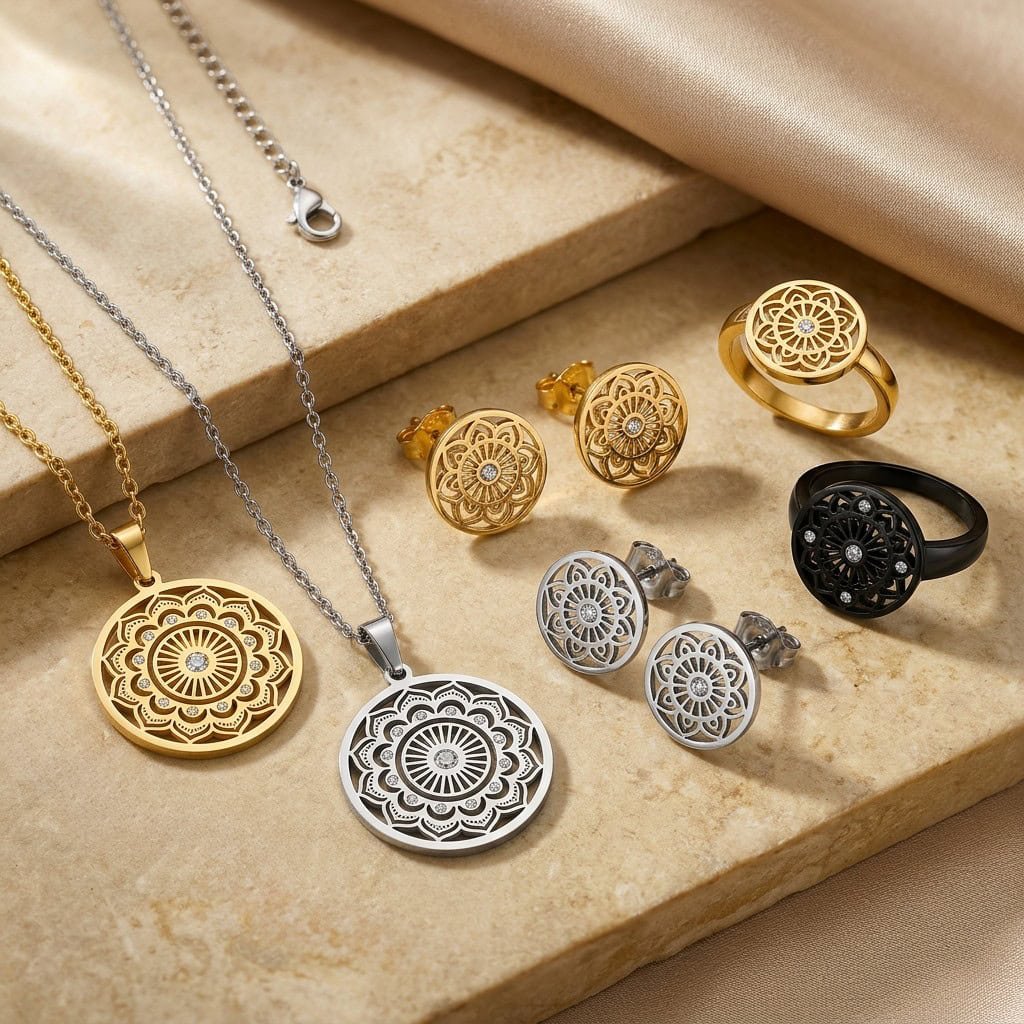
Built Around Your Mandala Jewelry Program
Chicolink sets the project controls according to your sales channel, assortment, approval process, packaging, inspection plan, and replenishment schedule.
Global Jewelry Brands
Chicolink converts approved brand artwork into controlled specifications, samples, finishes, packaging, and bulk production. We confirm dimensions, materials, color standards, testing, and delivery milestones before production, then retain the approved versions for repeat orders and collection extensions and future production planning.
Importers and Buyers
For import programs, Chicolink confirms the SKU list, material grade, finish, packing method, inspection requirements, quantity, target market, and shipping documents before sampling or bulk production. This gives the quotation and delivery plan a defined scope before the project quote is issued.
Jewelry Distributors
Chicolink can develop entry, core, and statement mandala styles for different retail accounts. We coordinate dimensions, finish families, packaging levels, SKU identification, and replenishment records for the approved range, allowing each channel to use a clear product and price position.
Wholesale Programs
Chicolink can combine evaluated existing designs with custom developments, subject to SKU availability and project confirmation. MOQ is confirmed by style, color, size, plating batch, and packaging version, so stock and custom requirements are quoted separately for each approved configuration.
Retail Chains
Chicolink links the approved sample, production specification, SKU data, packaging artwork, quality plan, and shipment records. This controls product versions, matched pairs, barcodes, carton identification, and inspection requirements for chain retail programs from approval through shipment across all planned delivery batches.
Lifestyle and Gift Brands
Wellness, cultural gift, and lifestyle brands need a clear relationship between motif, product form, finish, packaging, and collection direction. Chicolink connects these elements. You confirm cultural positioning, intellectual-property rights, and final market claims; we handle manufacturability, production execution, and project documentation.
Control the Risks Behind Intricate Mandala Jewelry
Fine mandala details can affect cutting, polishing, plating, assembly, wearability, and inspection. Chicolink reviews these points before bulk production and records the approval standard.
Broken Fine Details
Narrow bridges, small holes, and isolated details may deform or disappear after cutting, casting, deburring, and polishing. We compare them with material thickness, product size, process route, handling, and sample results before confirming production dimensions. Any required change is recorded before sampling.
Distorted Symmetry
We control the center, ring spacing, petal count, repeated angles, border continuity, and left-right orientation in the drawing and inspection method. A rendering alone does not define critical geometry; the approved drawing, sample, and inspection method set the reference for final approval.
Rough Inner Edges
For openwork, we check skin-contact areas, A surfaces, narrow gaps, sharp corners, and tool access. The design may require larger openings, rounded transitions, another process, or sample validation before the finish and edge standard are confirmed for the specified product surface.
Uneven Surface Finish
Deep recesses and enclosed areas can retain polishing compound or process liquid. We check hanging points, contact points, drainage, masking, cleaning, plating coverage, and inspection access before approving the surface specification and production route for controlled bulk manufacture and inspection.
Poor Wearing Balance
We check pendant hole position, chain clearance, earring weight, connection-ring orientation, ring profile, center of gravity, and finished weight. A physical sample confirms wearability where required, including rotation, balance, and contact with skin or clothing before bulk approval and packaging.
Sample Bulk Gaps
Chicolink links drawings, BOM information, color references, sample photos, approval records, production instructions, inspection records, and batch data to one confirmed project version. This gives the production and QC teams the same reference for every approved SKU and production batch.
Choose the Right Mandala Design Architecture
The visual structure determines the manufacturing route. Chicolink classifies the design, then confirms the product form, material shape, thickness, process sequence, finishing access, sample plan, and order volume before quoting.
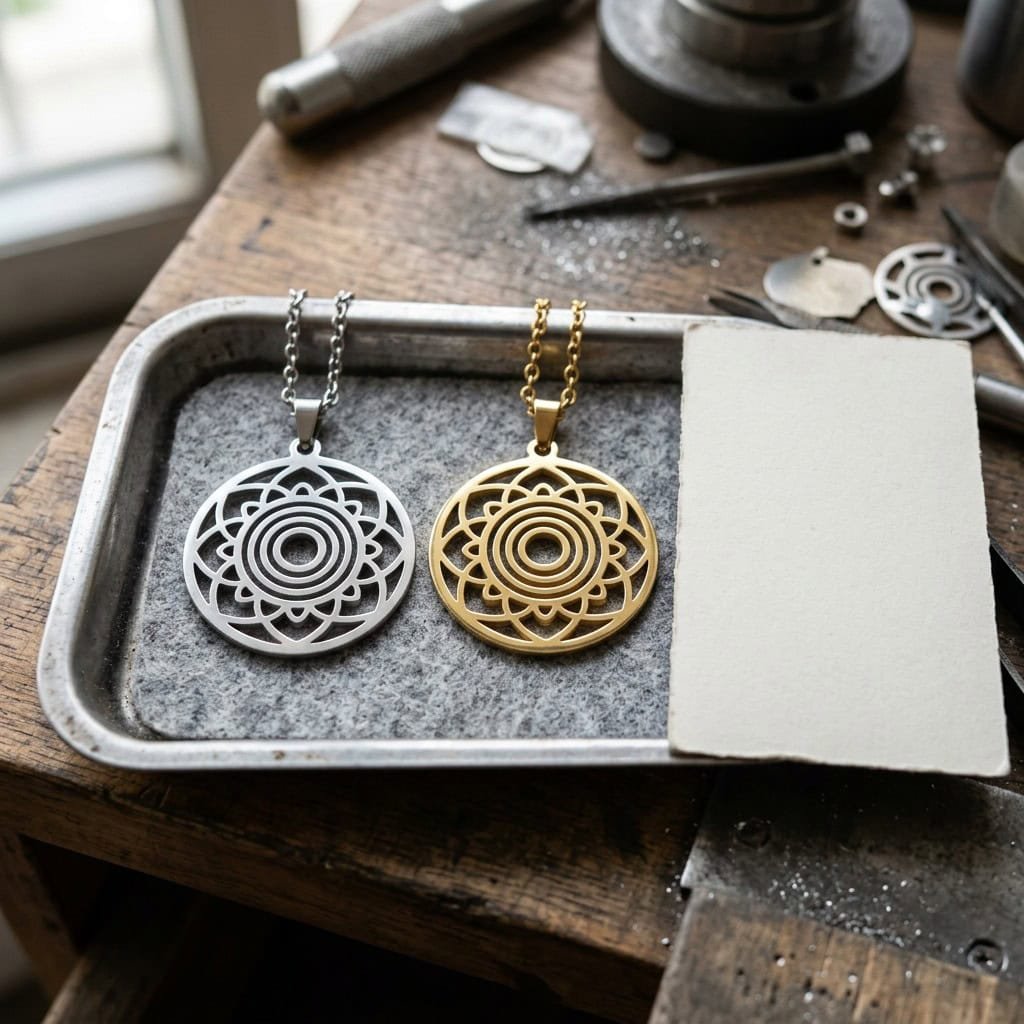
Flat Openwork Mandala
Flat openwork uses positive and negative space for a light graphic effect. We evaluate sheet thickness, bridge width, opening size, edge finishing, distortion, hanging orientation, and polishing loss for pendants, earrings, charms, and bracelet elements. We also check whether the bail, clasp, or connecting ring can be assembled without covering the approved openwork. The sample confirms the finished balance and final product weight.
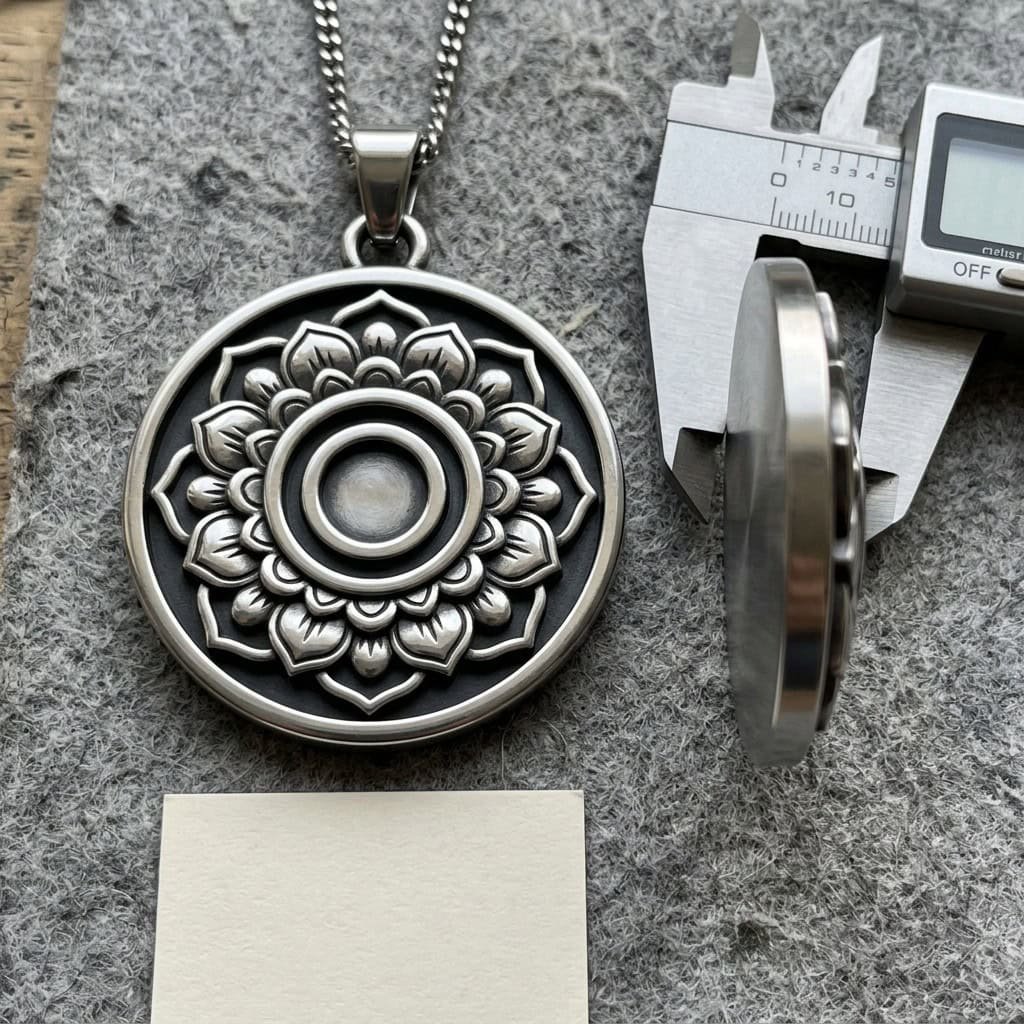
Layered Relief Mandala
Layered or raised designs use stepped surfaces, sculpted petals, recessed rings, or assembled parts. We evaluate casting, stamping, CNC, welding, or a combined route, together with wall thickness, relief depth, undercuts, polishing access, drainage, weight, and attachment points. The review also checks how the relief affects light, shadow, edge comfort, plating coverage, and final retail appearance before tooling and sample approval.
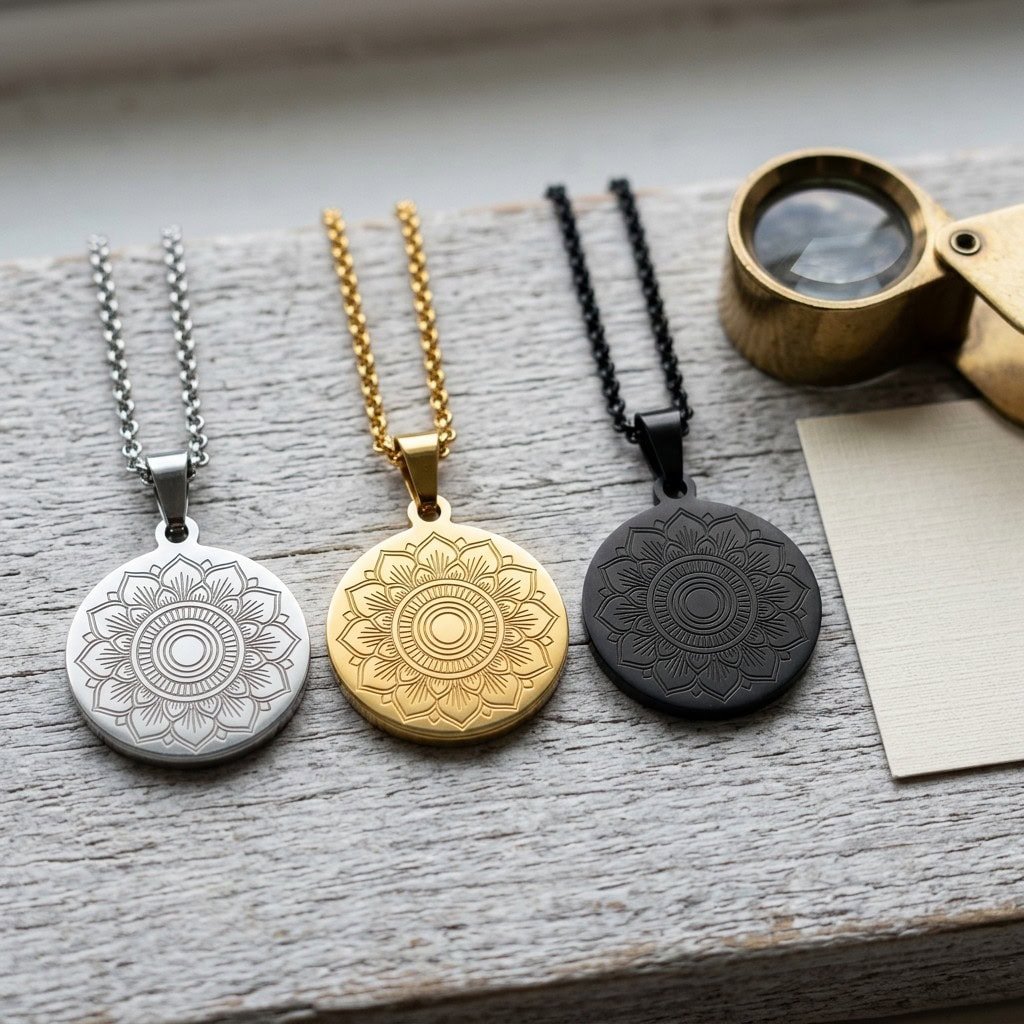
Engraved Mandala Disc
An engraved disc keeps the structure simple while carrying radial artwork. Laser engraving, etching, CNC engraving, or stamping may be evaluated according to line depth, quantity, material, and finish. The approved sample confirms readability after polishing and plating. It also confirms contrast, line continuity, orientation, and the relationship between the artwork and any product Logo at the intended retail viewing distance.
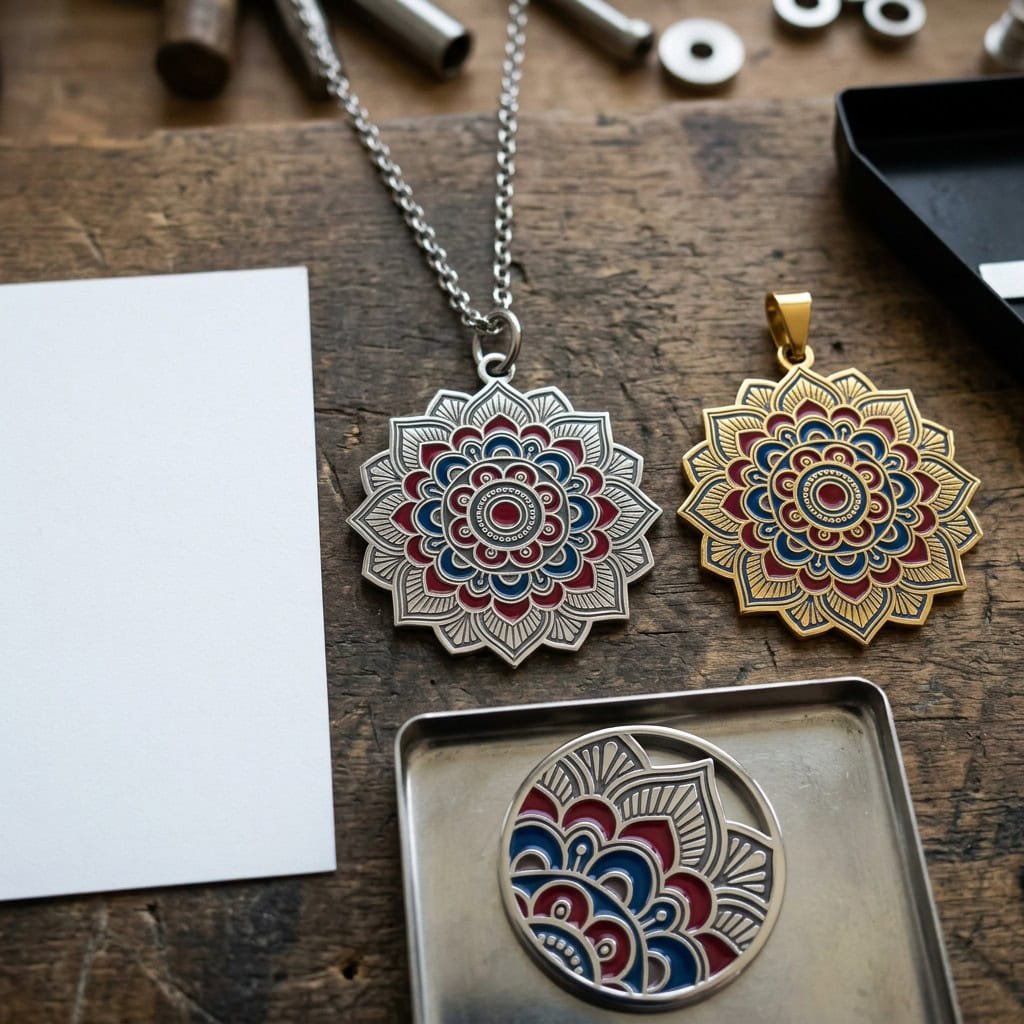
Color-Filled Mandala
Color can separate petals, rings, or symbolic sections. Cold enamel, resin, paint, lacquer, and other effects require different preparation and curing. We confirm vector boundaries, color references, fill depth, overflow, adhesion, surface compatibility, and sample approval. Color-filled areas are also checked for cleaning, edge definition, surface protection, and packaging contact before production.
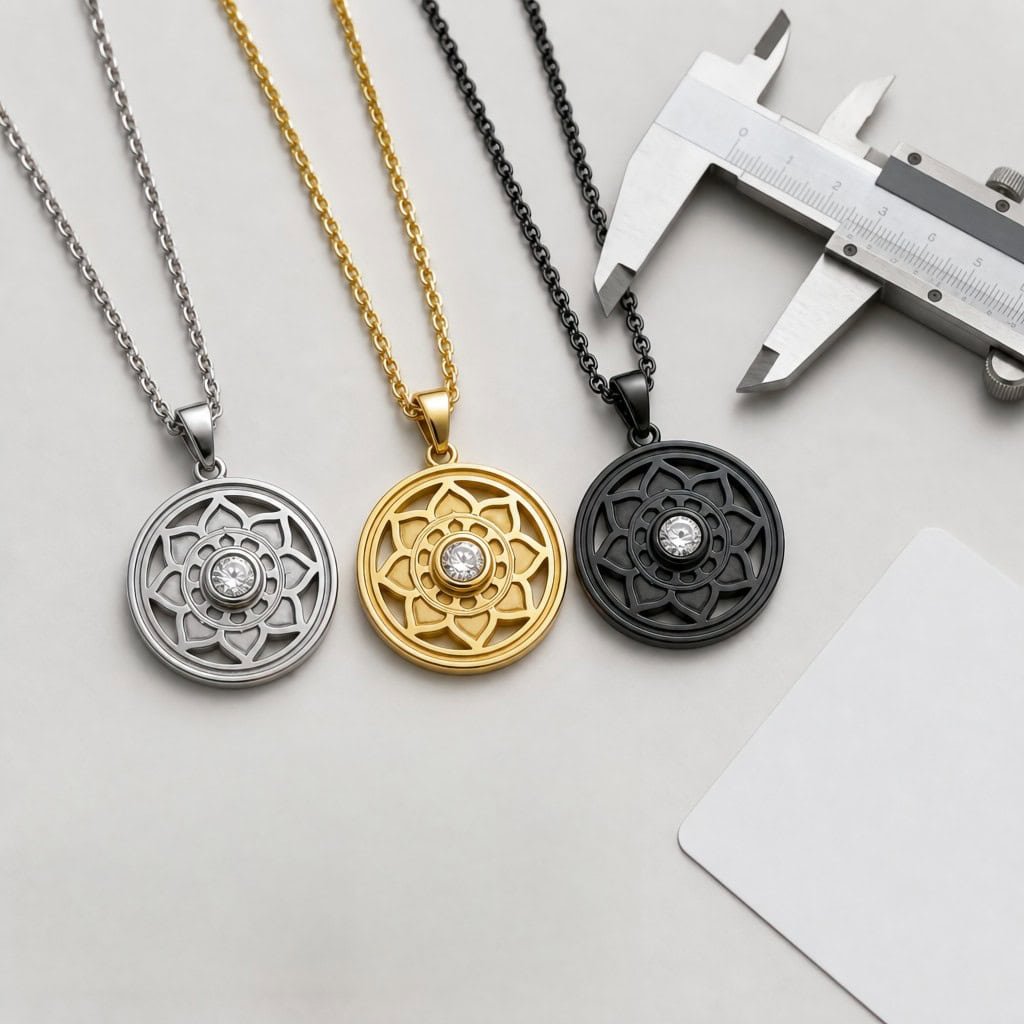
Stone-Centered Mandala
A central stone, shell, pearl, or insert changes the structure and assembly plan. Chicolink reviews size, setting method, seat geometry, tool space, finished height, symmetry, weight, cleaning, and surface-treatment compatibility. The sample confirms alignment, attachment, acceptable material variation, and the relationship between the insert and radial pattern for each required color and finish before bulk release.
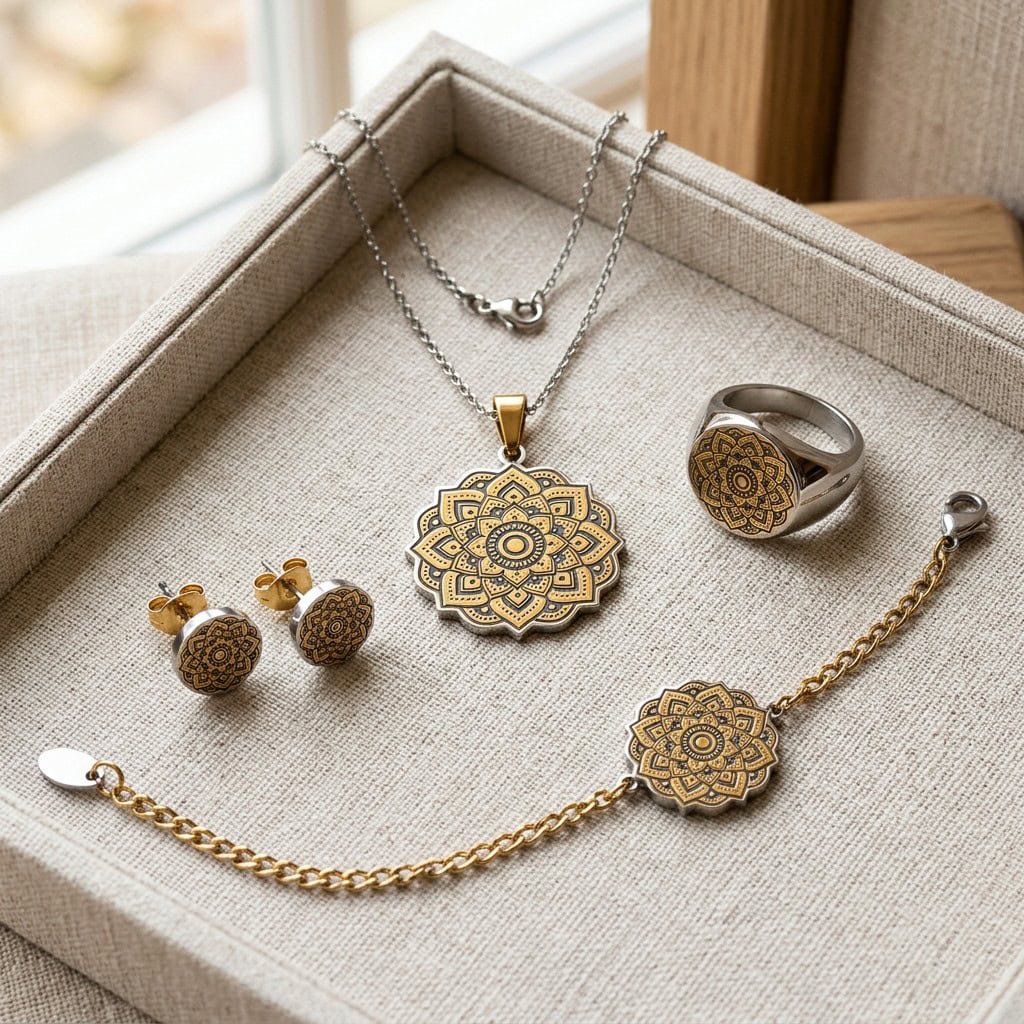
Coordinated Mandala Sets
A coordinated set adapts one visual system across pendants, earrings, rings, bracelets, and packaging. Each category receives its own thickness, weight, attachment, size, comfort, and inspection criteria while preserving the approved center, rhythm, border, and finish family. Chicolink also records pair matching, set contents, packing order, SKU identity, and color consistency across the collection for coordinated multi-SKU production and replenishment.
Translate Mandala Meaning Into a Manufacturable Design
Mandala, lotus, chakra, yantra, and sacred-geometry references are different design directions. Chicolink records the approved artwork, intended meaning, product category, target customer, and market position, then converts that direction into measurable geometry while preserving the approved design intent.
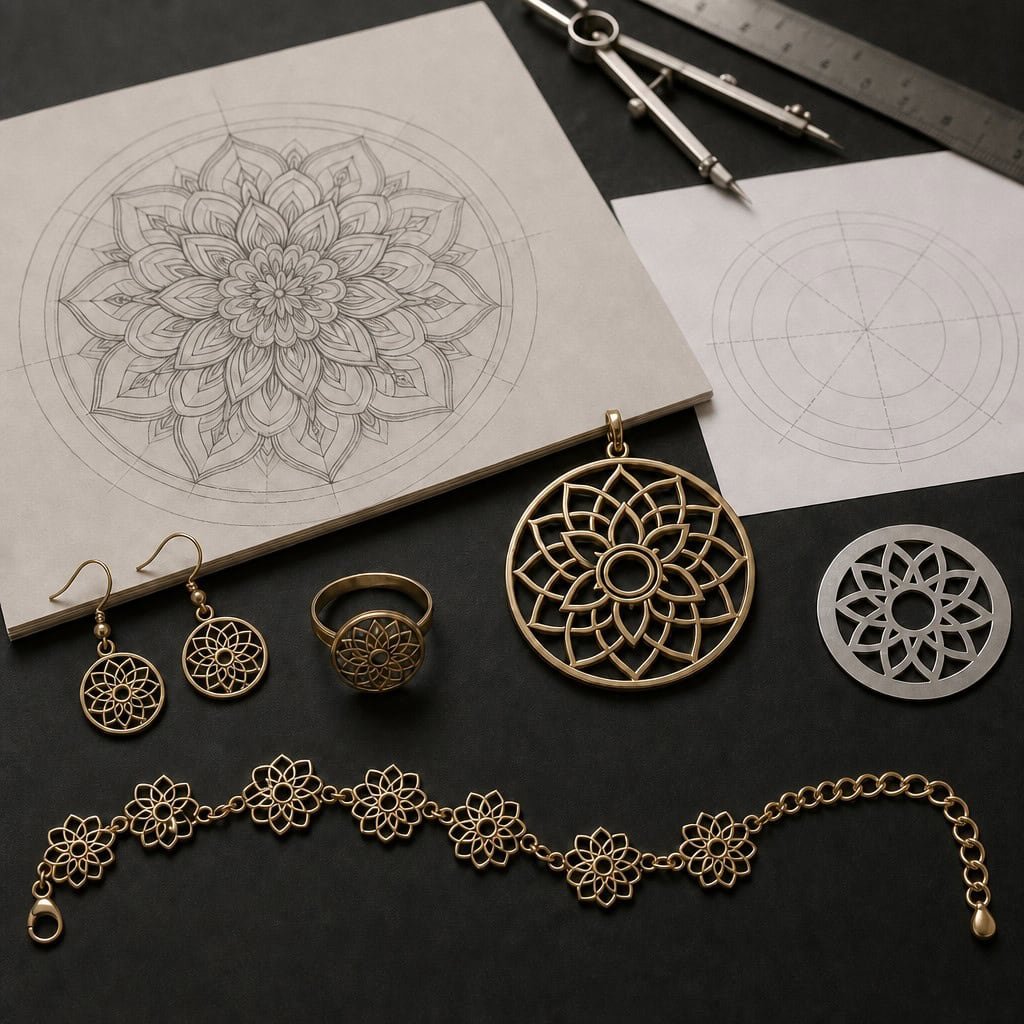
Define the Visual Rules Before Engineering Starts
Motif classification: We record whether the project uses a radial mandala, lotus-petal structure, chakra-related symbol, yantra-inspired geometry, or broader sacred geometry.
Design grammar: We identify the center axis, ring count, repeated angle, petal count, positive and negative space, border continuity, focal element, front direction, and protected design elements. These become measurable approval points.
Product translation: A pendant may keep the complete radial form. Earrings may need reduced weight, a ring may use a partial motif, and a bracelet may use repeated links. Chicolink adjusts the structure by category while preserving the approved visual language.
Market and rights confirmation: You confirm the intended meaning, target market, design ownership, trademark rights, and authorization to use supplied symbols or references. Chicolink handles manufacturability and production execution; you remain responsible for cultural positioning and rights.
Required inputs: We accept design files in AI, EPS, SVG, editable PDF, DWG, DXF, STEP, IGES, STL, or 3DM. We also recommend including target cost range, finish family, audience, packaging direction, quantity, and launch timing in the moodboard, so we can assess manufacturability and cost alignment from the start.
Engineering Fine Mandala Details Before Sampling
Chicolink reviews structural, process, quality, cost, and lead-time risks before custom sampling. The DFM record lists critical dimensions, required changes, approval conditions, and sample-validation points. It shows which details must remain unchanged before sampling.
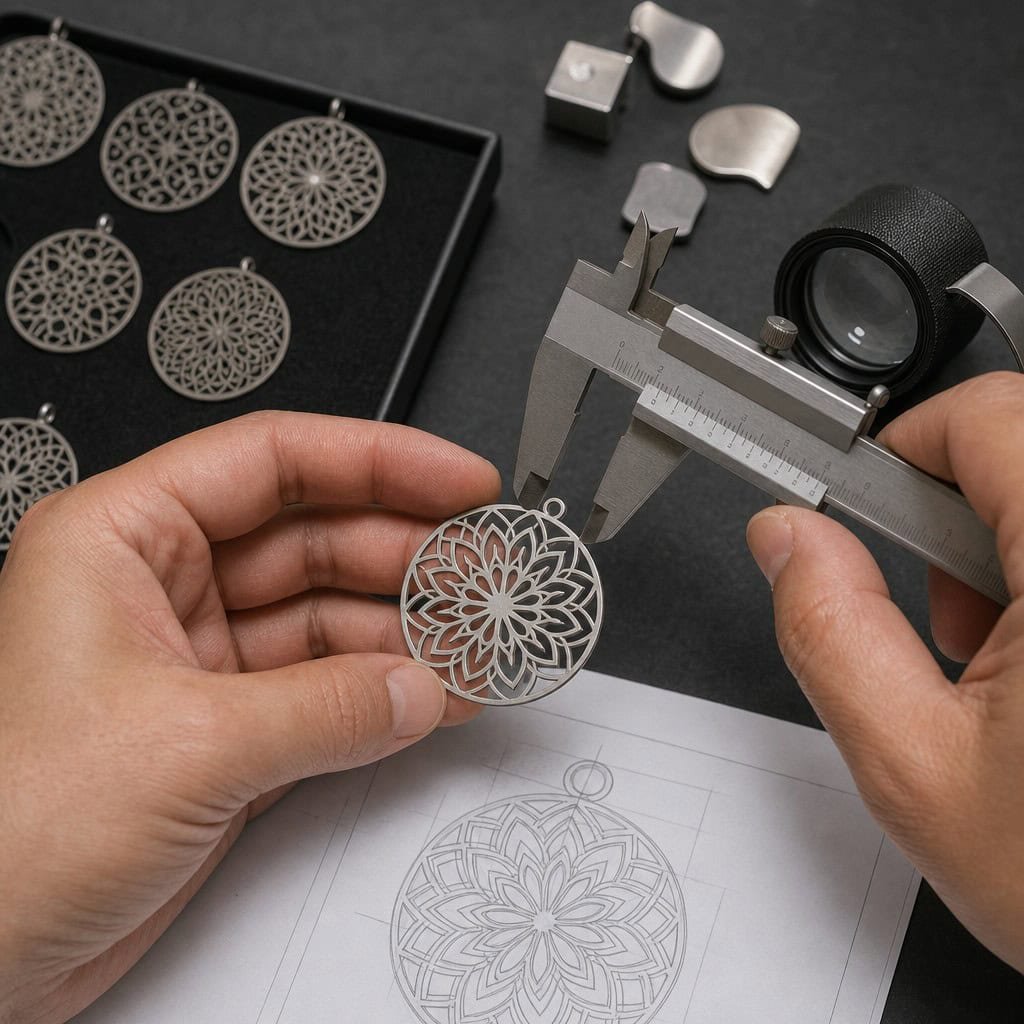
What We Check Before Quoting a Mandala Design
Geometry: We review wall thickness, narrow bridges, hole and slot sizes, spacing, edge distance, corner radii, relief depth, local thickness changes, and center-to-border alignment.
Process access: We check internal corners, deep grooves, blind areas, and cavities for cutting, deburring, polishing, cleaning, plating, filling, and inspection access. Drain holes, process holes, hanging points, and contact areas are adjusted when required.
Initial references: We evaluate cast solid parts starting from 0.8–1.2 mm wall thickness. For stamped or laser-cut sheet designs, we verify that hole diameter and narrow bridge width are at least material thickness — or require separate validation if smaller. We check fine lines and negative spaces against finished size, surface treatment, and readability. These are starting references, not fixed limits; each design is reviewed against its specific structure and requirements.
Product function: We check pendant bails against chain clearance, earrings for weight, direction, post position, and balance, and rings for size, inner profile, comfort, and polishing allowance. Skin-contact areas receive additional burr and sharp-edge review.
DFM output: The record states whether the design is manufacturable, requires modification, needs sample validation, or is not currently manufacturable. It lists the route, critical dimensions, tooling, risks, customer confirmations, sample tests, file version, and approval status.
Select the Right Mandala Manufacturing Route
Chicolink selects the route after reviewing geometry, depth, material form, finish, quantity, tooling, quality risks, and repeat-order plans. Processes may be combined to control front detail, edge comfort, assembly, and plated or decorated surfaces.
| Mandala Structure | Route to Evaluate | Best Fit | Main Engineering Controls | Typical Process Flow |
|---|---|---|---|---|
| Flat openwork | Laser cutting or wire cutting | Two-dimensional pendants, earrings, charms, and bracelet elements | Sheet thickness, narrow bridges, holes, distortion, burrs, edge access, hanging direction | 2D file → sheet preparation → cutting → deburring → polishing → in-house plating → inspection |
| Shallow repeated relief | Stamping or hydraulic forming | Repeat designs with defined front and back geometry | Tooling, material hardness, relief depth, springback, edge condition, volume | Tool development → sheet preparation → forming → drilling or bending → polishing → plating → inspection |
| Sculpted three-dimensional form | Casting | Raised petals, sculpted centers, complex curves, stone-ready forms | Wall thickness, shrinkage, undercuts, porosity, sprue location, polishing loss | Master → mold → wax → casting → sprue removal → polishing → plating → assembly |
| Precision grooves and geometry | CNC or lathe-assisted machining | Deep lines, controlled recesses, precision components, round structures | Tool radius, access, groove ratio, machining marks, cycle time, burr removal | Engineering file → machining → deburring → drilling or welding → polishing → surface treatment |
| Surface line artwork | Laser engraving or etching | Disc pendants, flat plates, reverse-side detail, private-label elements | Minimum line width, spacing, depth, contrast, readability after finishing | Artwork preparation → test marking → surface processing → engraving or etching → inspection |
| Color-separated artwork | Approved enamel, resin, paint, or lacquer route | Colored petals, rings, symbols, and gift-focused collections | Vector boundaries, Pantone reference, fill depth, bubbles, overflow, curing, adhesion | Base manufacture → surface preparation → color filling → curing → cleanup → inspection |
| Stone-centered design | Casting or CNC plus setting or bonding | Central CZ, glass, shell, pearl, or approved decorative insert | Stone dimensions, seat geometry, setting space, height, alignment, adhesion | Body manufacture → finishing → plating as approved → setting or bonding → attachment check |
| High-volume repeat project | Stamping, dedicated tooling, or MIM evaluation | Stable designs with sustained repeat-order demand | Tooling cost, forecast, quantity, tolerance, yield, replenishment plan | Engineering validation → tooling → trial → approval → controlled repeated production |
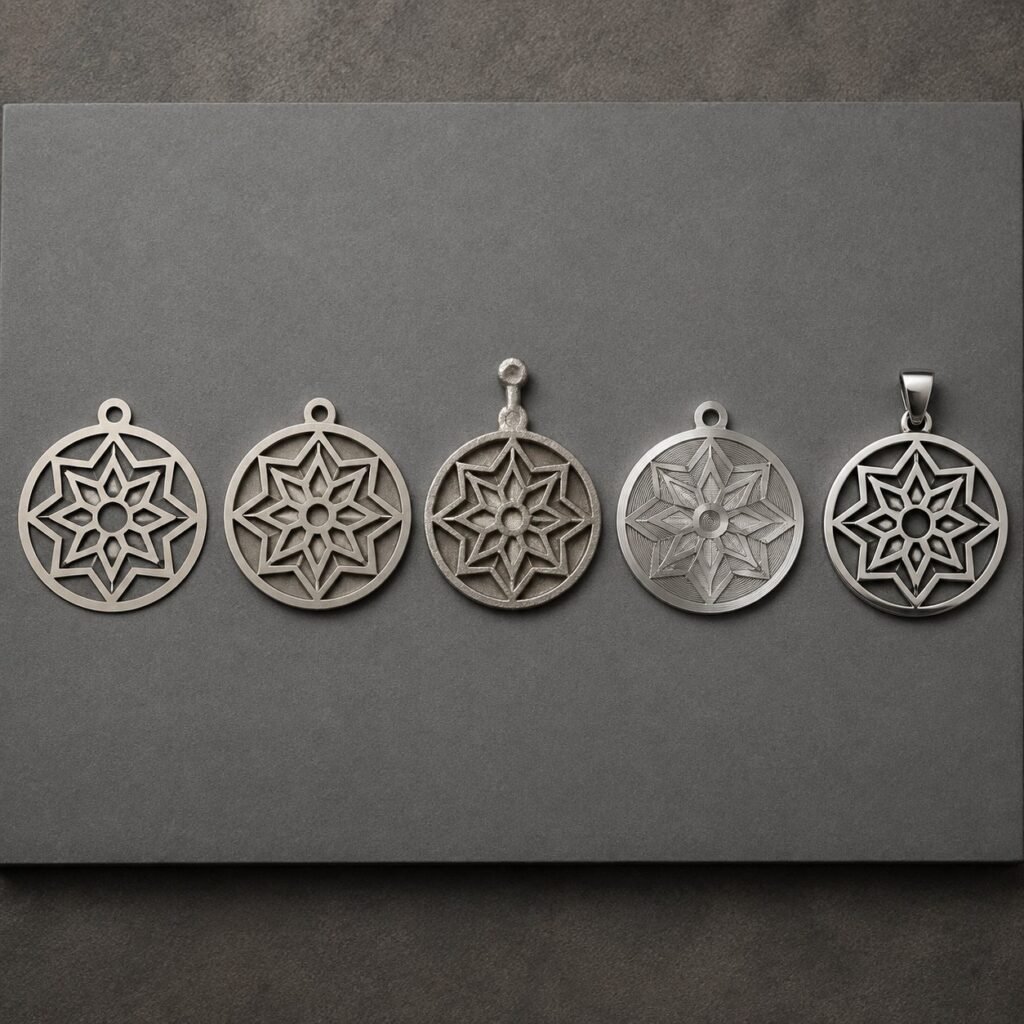
Match Stainless Steel, Color, and Surface Finish
Material and finish affect detail retention, forming, polishing, color, weight, cost, lead time, and test planning. Chicolink confirms the base material, material form, surface preparation, plating structure, color reference, decoration, target market, and test conditions in one specification.
| Option | Mandala Application | Procurement Considerations | Confirmation Required |
|---|---|---|---|
| 304 stainless steel | Flat sheet designs, formed components, chains, and evaluated cast or assembled products | Supply and delivery can be relatively flexible, but suitability depends on structure, use environment, finish, target market, and customer standard | Grade, material form, thickness, finished dimensions, surface, tests |
| 316L stainless steel | Projects prioritizing improved pitting-corrosion resistance or a specified 316L material position | Its higher hardness may increase forming, cutting, welding, polishing, and correction difficulty for intricate structures | Structure feasibility, processing route, sample result, target market requirements |
| Natural steel color | Polished, brushed, matte, or other approved unplated appearance | Makes geometry and polishing quality visible; finish terminology alone is insufficient without a signed reference | Gloss level, texture direction, A/B/C surfaces, scratch standard |
| PVD gold or rose gold | Premium-looking mandala pendants, earrings, rings, bracelets, and coordinated sets | Fine recesses, hanging points, cleaning, base preparation, color reference, and repeat-order control affect the result | Approved color sample, layer structure, target thickness, color tolerance, durability test |
| PVD black or gun metal | Graphic, gender-neutral, contemporary, or contrast-led mandala collections | Dark finishes can reveal particles, scratches, and uneven preparation; packaging protection should be planned together | Color standard, texture, plating route, inspection lighting, packaging protection |
| Engraved or etched contrast | Disc pendants, reverse details, symbolic lines, and brand identification | Line depth and spacing must remain readable after polishing and surface treatment | Vector artwork, minimum feature size, depth, orientation, approved sample |
| Color filling | Lotus petals, segmented rings, cultural gift designs, and youth-oriented collections | Cold enamel, resin, paint, lacquer, and high-temperature enamel are different processes and are not interchangeable | Material compatibility, Pantone reference, fill method, curing, adhesion, test plan |
| Stones and inserts | Central focal stones, pearl details, shell, CZ, glass, or approved natural-material accents | Natural materials may vary; setting height, color range, texture, assembly, cleaning, and plating compatibility must be defined | Material, dimensions, acceptable variation, setting method, replacement criteria |
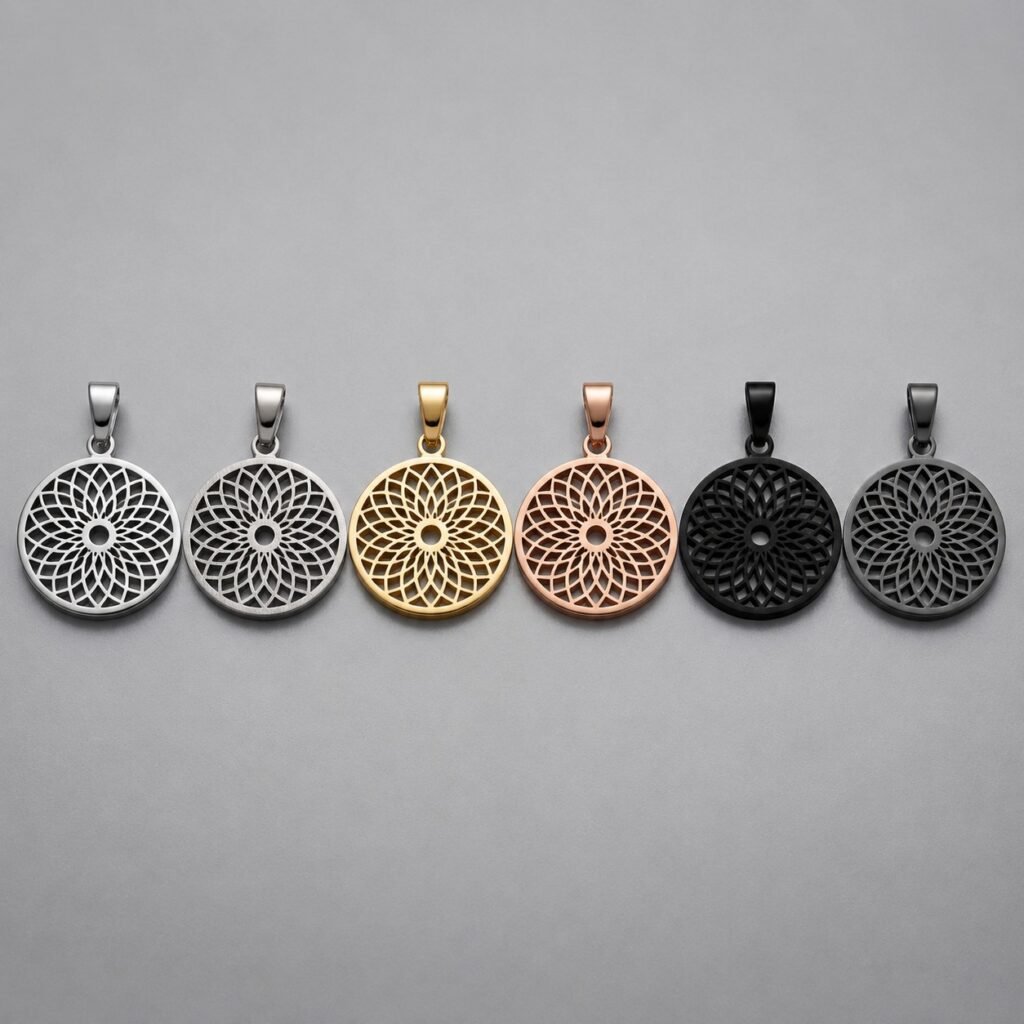
Build a Collection From One Mandala Motif
We do not scale one drawing across all sizes without reviewing each category’s specific requirements. We maintain the approved motif elements, then adapt each product category for size, weight, wearing position, attachment, comfort, finish, packaging, and cost alignment.
Hero Pendant
The hero pendant can preserve the complete radial composition. We confirm diameter, thickness, center alignment, bail position, chain clearance, weight, edge comfort, and whether the design is flat, raised, colored, or stone-centered. This style can define the collection’s visual scale, finish family, packaging direction, and primary retail reference for later category adaptations and replenishment.
Lightweight Earrings
Earrings need a lighter interpretation than the pendant. Chicolink checks pair symmetry, direction, finished weight, post or hook position, connection-ring orientation, balance, skin-contact edges, movement, and packaging protection. The final pair must retain the approved motif without creating an uncomfortable or visually unbalanced product, and the pair standard must be recorded for bulk inspection.
Signature Ring
A ring may use the center symbol, a radial segment, an engraved top, or reduced relief. We adjust for ring size, inner profile, band strength, top height, side contact, polishing access, stone position, and measurement method. Wide or irregular rings require fit evaluation before the size range and bulk specification are approved for the target market.
Repeat Bracelet Element
Bracelets can use a central plate, repeated links, a charm, or an engraved component. We confirm wrist fit, link compatibility, connection-ring strength, orientation, clasp, extension chain, weight, movement, and alignment during wearing and packing. The chosen structure must remain consistent with the pendant and other collection pieces across approved sizes, colors, and packaging versions.
Coordinated Jewelry Set
Sets combine selected products under one finish and packaging system. Chicolink records the combination, size and color versions, pair matching, spare parts, packing order, insert layout, SKU identity, and inspection method. Each item keeps its own specification, while the set must arrive complete, correctly oriented, and visually consistent for retail presentation and repeat orders.
Private Label Delivery
The collection can include product Logos, tags, jewelry cards, pouches, gift boxes, care cards, barcodes, SKU labels, and Amazon FBA packaging support. We confirm artwork, placement, protection, pack quantity, labels, carton requirements, packaging MOQ, and timing so the product and brand identity remain aligned at delivery and ready for the intended sales channel.
Approve the Sample Before Bulk Production
Sampling turns the artwork, engineering decisions, finish, and commercial requirements into a physical standard. Chicolink records the inputs, sample purpose, changes, approval, and conditions for bulk production.
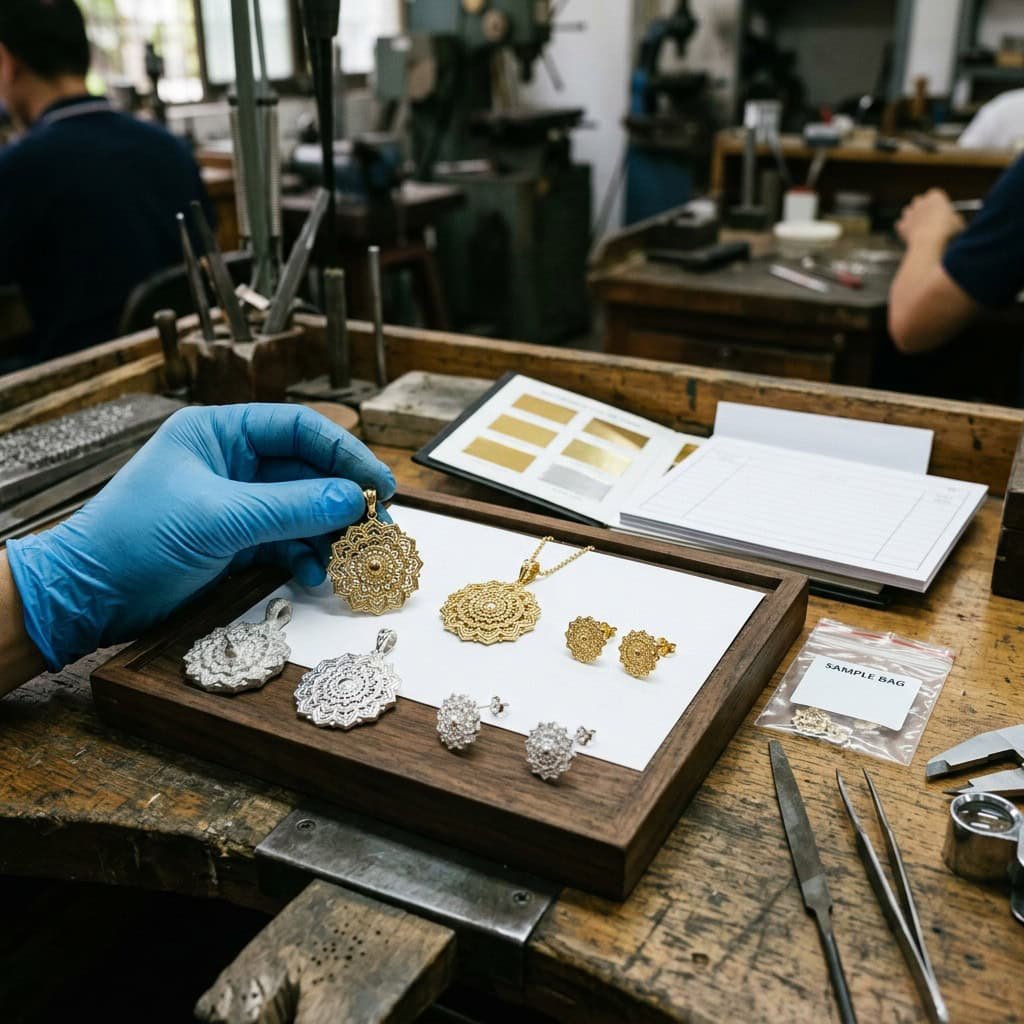
A Controlled Path From Artwork to Golden Sample
1. Requirement intake: You provide the design, category, dimensions, material, quantity, market, finish, packaging, tests, and timing. Missing information is recorded as pending confirmation.
2. Engineering and quotation review: Chicolink evaluates the process, tooling, material, surface treatment, decoration, packaging, and quantity. Formal pricing follows engineering and cost review.
3. File and version confirmation: Approved files, dimensions, material, finish, Logo, stone, packaging, and test requirements receive a controlled version. Changes affecting structure, tooling, process, cost, or timing require reassessment.
4. Sample planning: Samples may include an appearance concept, structural prototype, metal blank, plating color sample, functional sample, packaging sample, pre-production sample, or Golden Sample. Each sample has a defined purpose.
5. Sample production and inspection: We follow the planned route and check the sample against its purpose. Photographs or video can be provided before shipment, with issues and pending decisions recorded.
6. Feedback: Identify the location, expected result, reference, and priority. Updated drawings, BOM data, colors, Logo files, or packaging artwork receive a new version where required.
7. Approval and sealing: Written approval, photographs, file version, color reference, packaging version, and retained samples establish the production reference. An unapproved concept sample is not a Golden Sample.
8. Bulk readiness: Engineering, quality, testing, packaging, and commercial conditions must be closed before bulk production.
Confirm MOQ, Cost, and Lead Time Early
MOQ, price, and delivery depend on the geometry, material, weight, process, tooling, PVD batch, decoration, packaging, inspection, testing, and quantity. The references below support budgeting; the confirmed quotation and schedule follow project review.
| Project Item | Typical Reference | What Must Be Confirmed |
|---|---|---|
| Existing or regular design MOQ | Usually 120 pieces per style | SKU availability, color, size, packaging, plating batch, and whether mixing is accepted |
| OEM/ODM custom MOQ | Usually 500 pieces per style | Tooling, material, geometry, color, stone, packaging, process difficulty, and order structure |
| Existing design sample | Usually 3–7 working days | Stock status, selected SKU, finish, packaging, sample quantity, and courier arrangement |
| OEM/ODM custom sample | Usually 25–30 working days | Approved file, tooling, material, process, PVD color, decoration, packaging, and validation needs |
| Existing design bulk production | Usually 20–30 working days | Stock and material status, quantity, plating, packing, inspection, and production schedule |
| OEM/ODM custom bulk production | Usually 25–45 working days | Sample approval, quantity, tooling, materials, packaging, tests, inspection, holidays, and schedule |
| Initial inquiry response | Target within 6 hours | Receipt confirmation or information request; this is not automatically a formal quotation |
| Complex project assessment | Target within 24 hours | Initial feasibility, missing inputs, major risks, and next review steps; formal quotation follows cost calculation |
| Sample and tooling charges | Normally apply as required | Amount and whether any charge can be credited are confirmed by order value and written agreement |
| Quantity tolerance | Common internal reference around ±5% | Accepted overage or shortage, remaining goods, additional freight, and contract terms |
Testing Budget Table
| Test or Service | Internal Budget Reference | Important Condition |
|---|---|---|
| Artificial perspiration test | About USD 100 | Method, sample, color, duration, and acceptance criteria require confirmation |
| Salt spray test | About USD 2 per hour | Duration, sample preparation, evaluation method, and laboratory arrangement require confirmation |
| Abrasion test | About USD 120 | Test method, load, cycles, surface, and acceptance criteria require confirmation |
| SGS nickel release | About USD 500 per color | Applies only to the tested sample, material, plating structure, color, and report scope |
| HKPC nickel release | About USD 120 per color | Applies only to the tested sample and confirmed test scope |
Manufacturing Capacity Relevant to Mandala Jewelry
Chicolink Jewelry (Dongguan) Co., Ltd. was established in June 2012 in Dongguan, China. Our B2B system connects design, engineering, metal processing, polishing, in-house plating, assembly, QC, packaging, and export coordination for mandala development and bulk delivery.
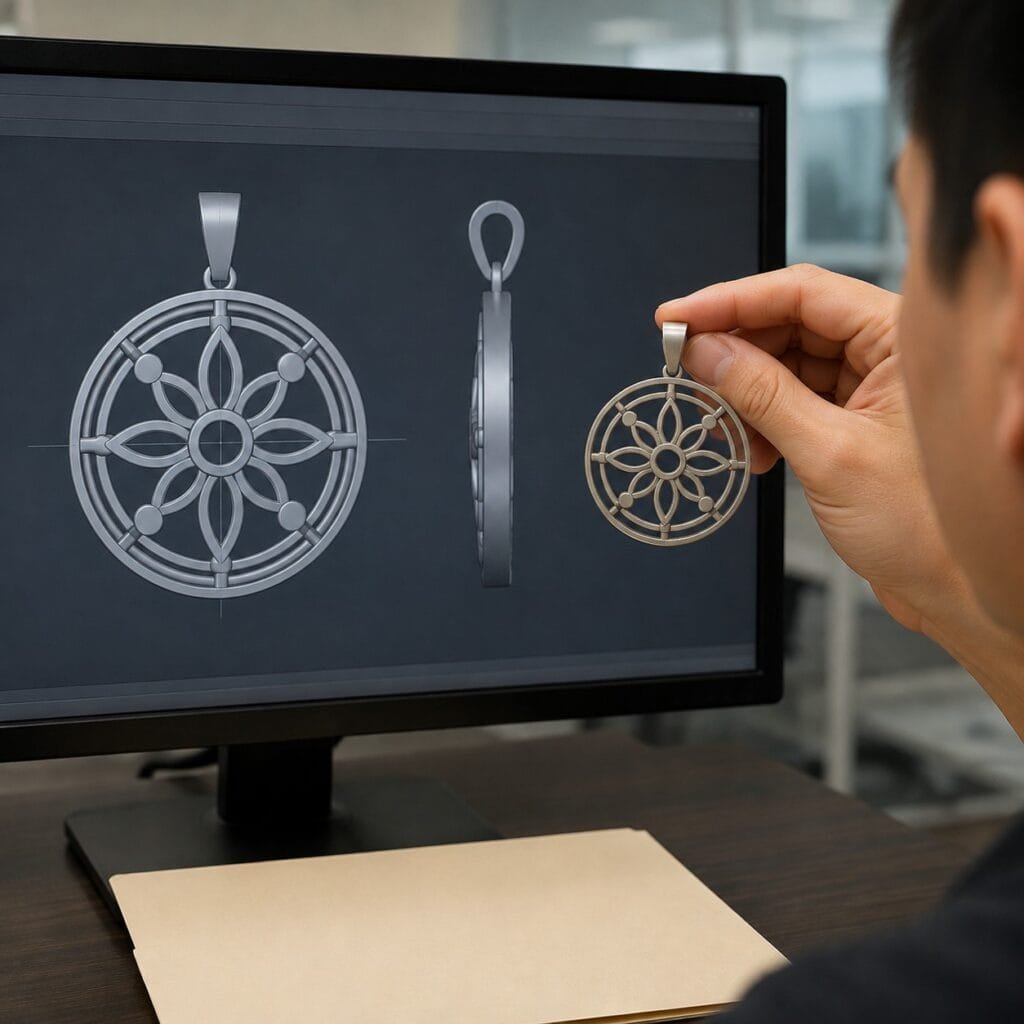
Design and Engineering
Six jewelry designers and three jewelry engineers support concept review, drawing, structure evaluation, process planning, sampling, and collection development. They convert approved mandala rules into dimensions, feature controls, category adjustments, tooling needs, sample tests, and production files. The same controlled information then guides quotation, sampling, inspection, and repeat development across the approved collection.
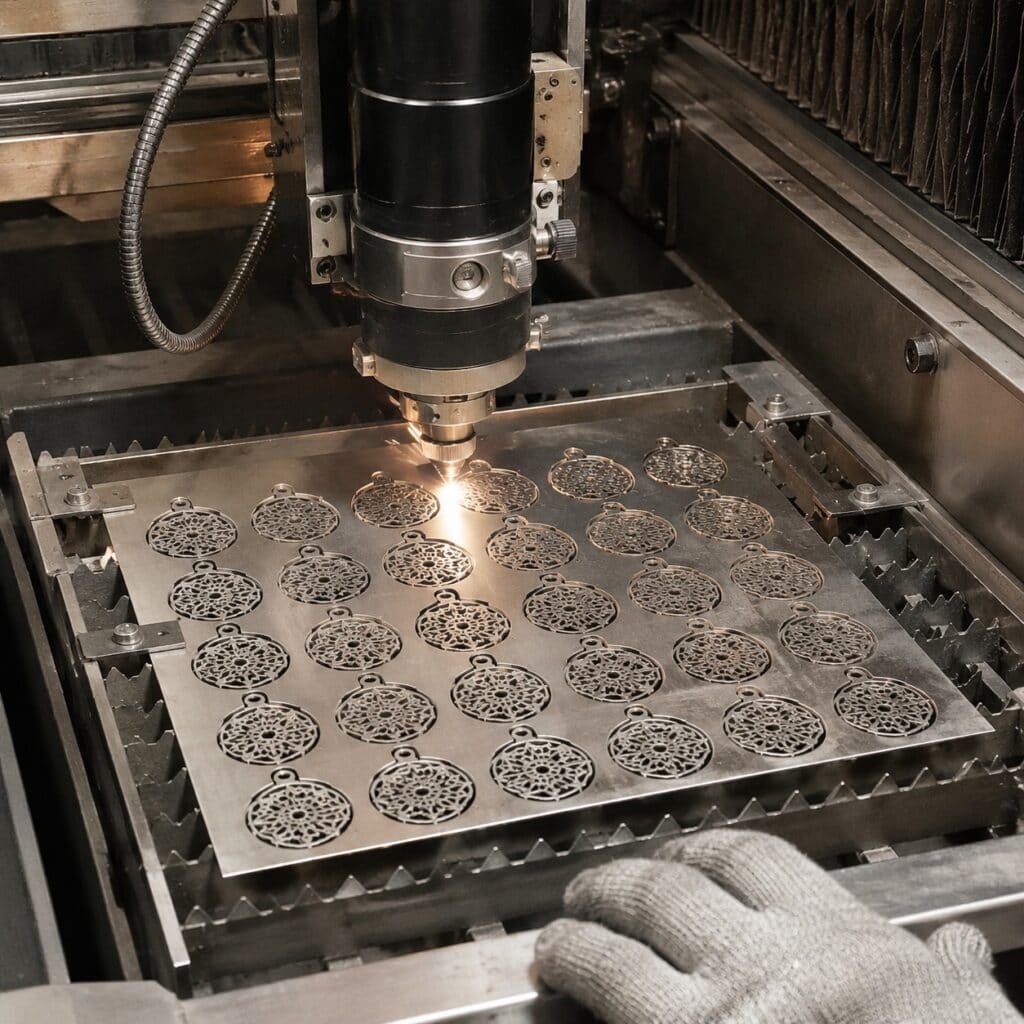
Precision Cutting Capacity
Three laser-cutting machines support evaluated two-dimensional sheet and openwork routes. Before assignment, we review material thickness, bridge width, hole size, distortion, edge condition, output volume, and finishing access. The resulting sample confirms whether the fine geometry survives deburring, polishing, plating, assembly, and handling before the route is released for bulk production.
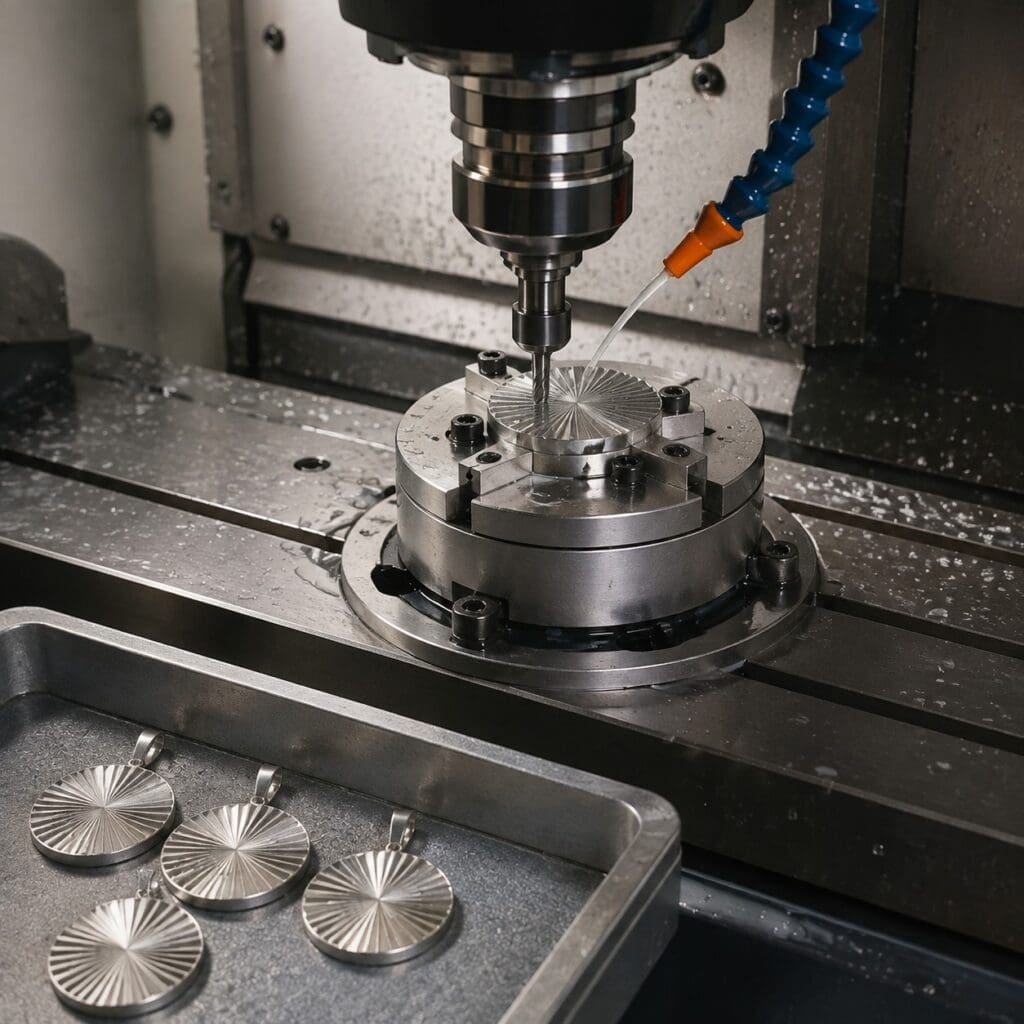
CNC and Tooling Support
Five CNC machines support precision grooves, relief geometry, connection features, and related structures. Chicolink also evaluates casting, stamping, drilling, bending, lathe, mold, and assembly routes by drawing, tool access, cycle time, process sequence, and sample result. This keeps the chosen route connected to the motif, quantity, cost, and repeat-order plan for a controlled production decision.
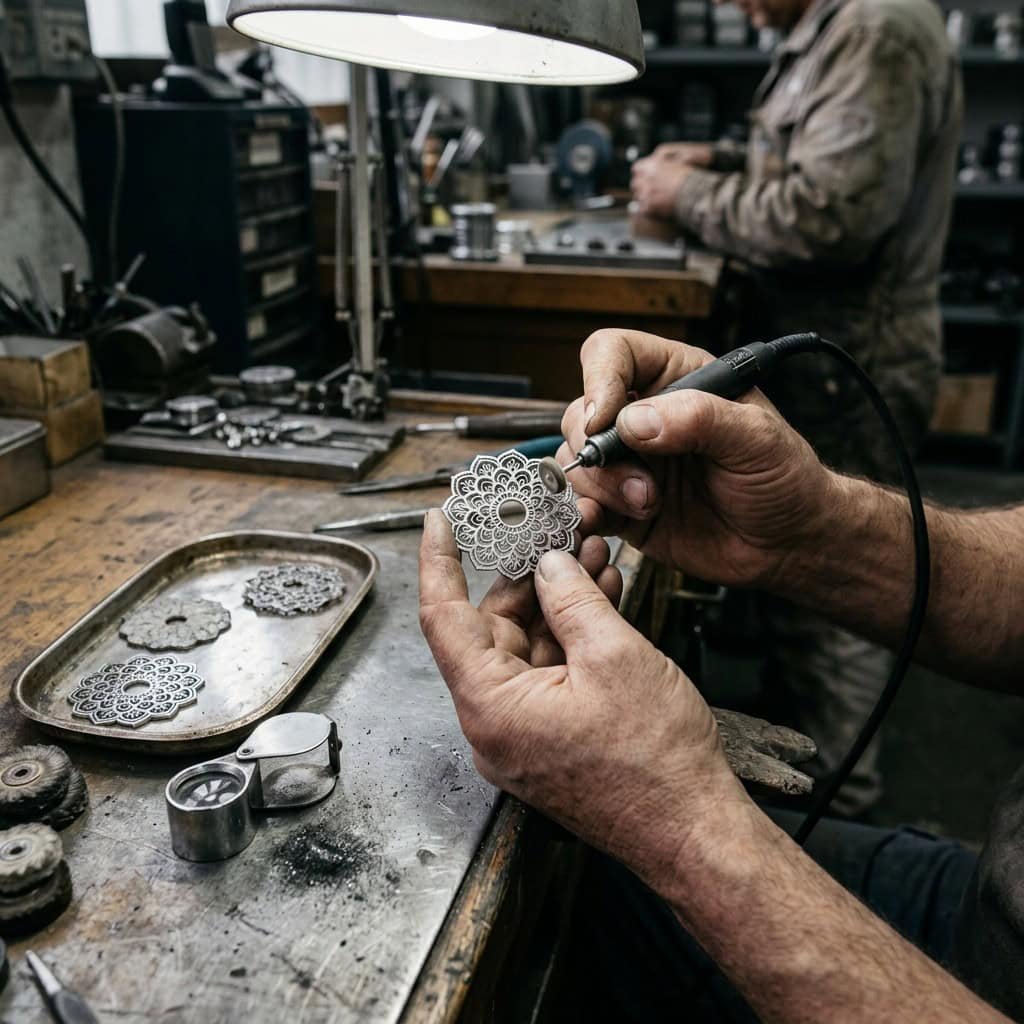
Polishing and Edge Control
Eight polishing machines support surface preparation after cutting, casting, machining, welding, and assembly. We check internal edges, narrow openings, recesses, A surfaces, skin-contact points, and polishing loss. The approved sample sets the appearance and defect criteria before PVD, other surface treatment, packing, and final inspection for each approved finish.
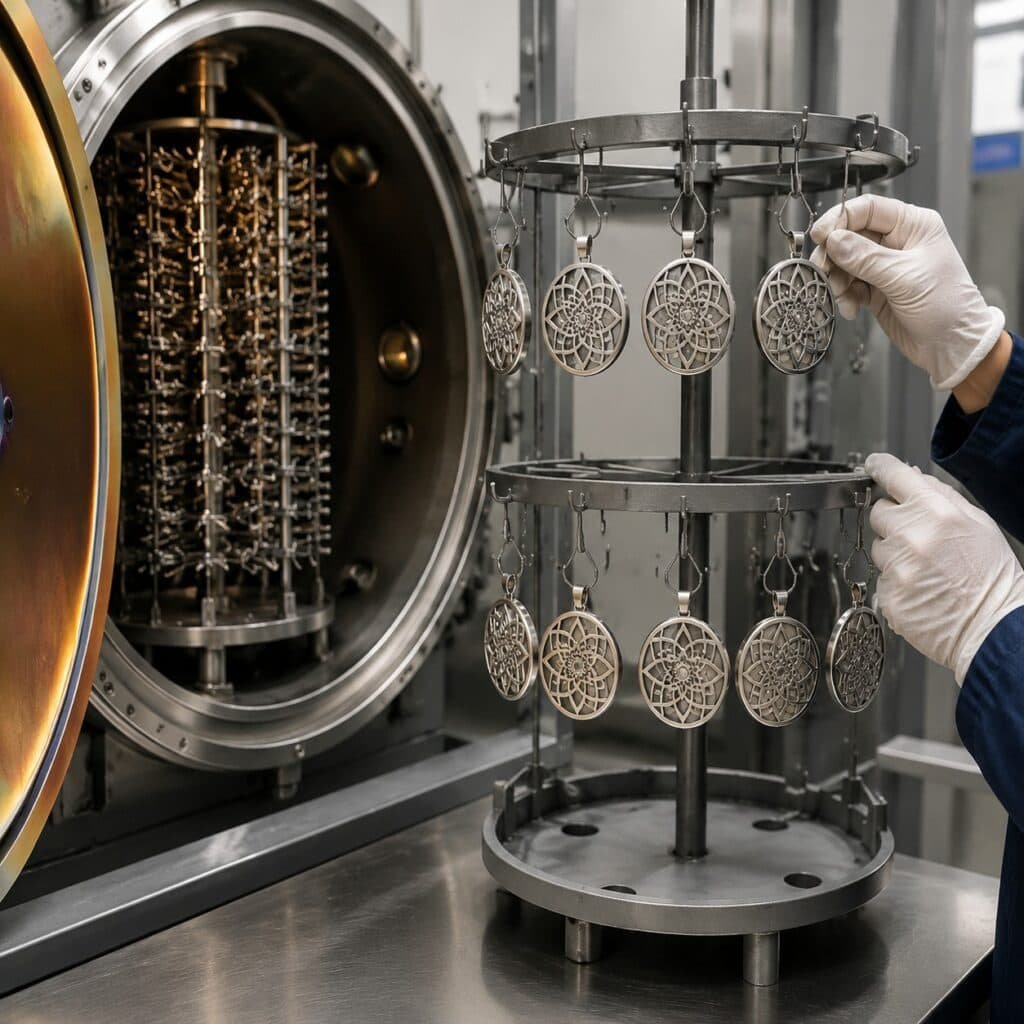
In-House PVD Workshop
Six PVD vacuum-coating machines support in-house control of approved PVD/IP, water-plating, and other confirmed electroplating routes. The workshop manages parameters, pretreatment, color confirmation, production monitoring, inspection, abnormal handling, and batch traceability. Color, thickness, hanging points, coverage, packaging protection, and test conditions remain project-specific for every confirmed SKU and plating batch.
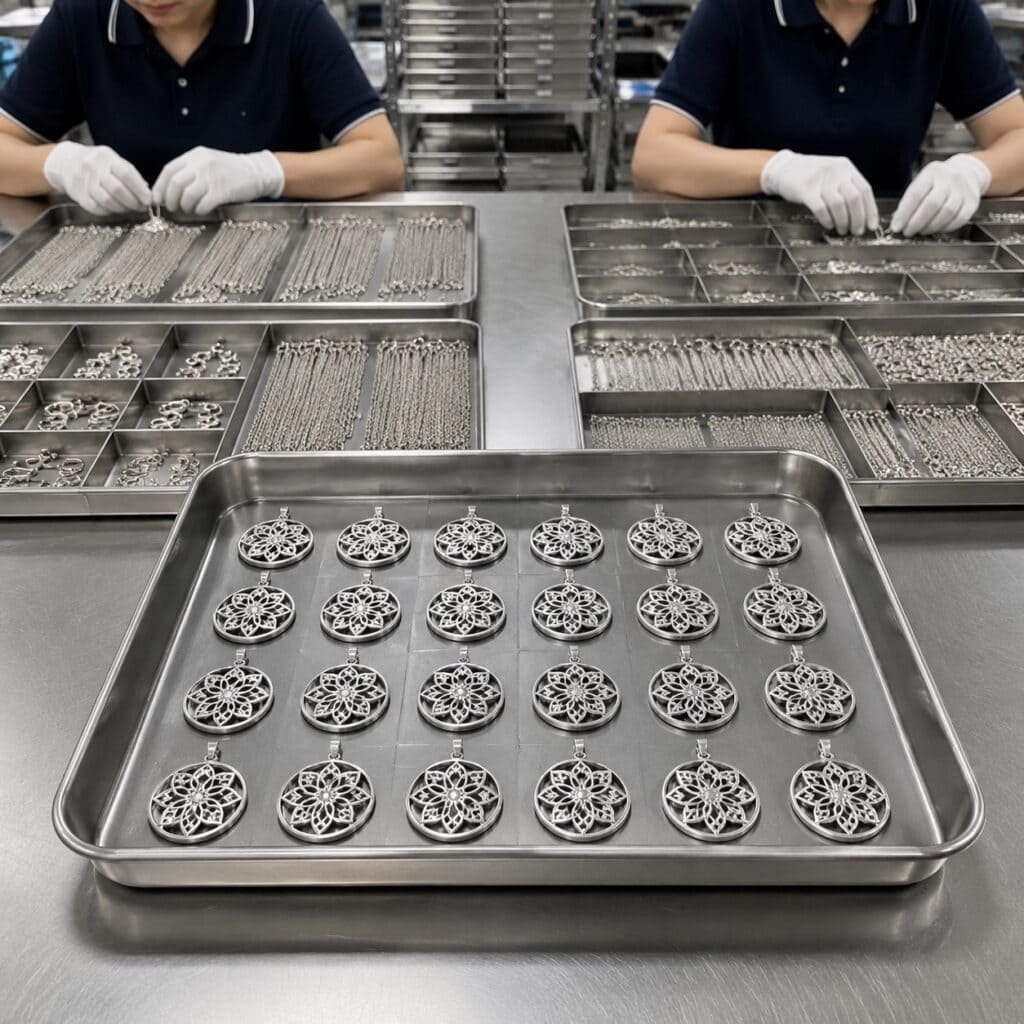
Scalable Bulk Production
Chicolink operates a factory of more than 5,500 square meters with over 400 employees and monthly capacity above 200,000 pieces across its product range. Mandala capacity and delivery are scheduled by SKU, process, plating batch, packaging, inspection, quantity, and confirmed production plan. The confirmed schedule, not the general capacity figure, controls each order commitment and customer milestone.
Keep Approved Samples and Bulk Production Aligned
Chicolink links the approved drawing, BOM, color reference, Golden Sample, production instructions, inspection plan, and batch records. Geometry, finish, assembly, packaging, and product identity are checked at defined stages. Customer specifications and written quality agreements take priority.
| Control Stage | Mandala-Specific Checks | Evidence or Record |
|---|---|---|
| Approved specification | Motif version, center and radial geometry, dimensions, material, finish, chain or fitting, stone, Logo, packaging, and test plan | Controlled drawing, BOM, color sample, approval email, Golden Sample record |
| IQC incoming inspection | Material grade and form, sheet thickness, chain, clasps, stones, inserts, packaging materials, and specified components | Incoming lot, supplier information, specification, inspection result |
| First article confirmation | Pattern orientation, critical geometry, holes, bridge condition, relief, welding, product balance, assembly direction, and process route | First-piece record, measurements, photographs, approval status |
| IPQC process inspection | Burrs, sharp edges, casting or cut defects, welding, polishing, surface texture, plating color and thickness, setting, filling, and assembly | Work order, process parameters, inspection and rework records |
| PVD and color control | Approved color reference, hanging areas, coverage, stains, pinholes, scratches, peeling, local darkness, and specified thickness | Plating batch, equipment number, color and thickness record |
| FQC finished inspection | Appearance, dimensions, function, pair matching, pendant movement, chain and clasp operation, stone or fill condition, Logo, and packaging | Finished inspection report and nonconformity disposition |
| Packing inspection | Correct SKU, pair and set quantity, jewelry card or box version, barcode, product direction, anti-scratch and anti-tangle protection | Packing version, carton number, packing list, shipment record |
| Batch traceability | Order, SKU, drawing version, material lot, production date, plating batch, inspection, packaging, and shipment | Traceability record linked to the order and batch |
Mandala Jewelry Manufacturing FAQ
These answers cover location, files, materials, manufacturing routes, MOQ, sampling, quality, testing, and private-label requirements for a custom Indian-inspired mandala project with Chicolink.
Is Chicolink an India-based jewelry manufacturer?
No. Chicolink Jewelry (Dongguan) Co., Ltd. is based in Dongguan, Guangdong, China. We manufacture Indian-inspired mandala jewelry for global B2B buyers. Submit the required motif, meaning, target market, and design ownership with your project.
Can you develop jewelry from my mandala artwork?
Yes, subject to design ownership and engineering review. Provide vector artwork, CAD files, technical drawings, photographs, or an authorized physical sample. We review geometry, material, category, process, finish, quantity, tooling, packaging, tests, and sample requirements before confirming the route.
Which design files should I upload?
Preferred formats include AI, EPS, SVG, editable PDF, DWG, DXF, STEP, IGES, STL, and 3DM. JPG or PNG files support visual review but may not define critical dimensions. Include size, thickness, material, finish, quantity, market, packaging, and timing where available.
What is the MOQ for custom mandala jewelry?
Typical OEM/ODM MOQ is 500 pieces per style. Existing or regular designs typically start at 120 pieces per style. Material, tooling, color, size, plating batch, stones, packaging, and difficulty can change the MOQ. We confirm the counting method by project.
How long does custom sampling take?
Existing design samples typically require 3–7 working days. OEM/ODM custom samples typically require 25–30 working days. Tooling, special color, decoration, testing, or packaging may require additional time. Timing starts after inputs, payment arrangements, and the development plan are confirmed.
Which process is best for fine mandala details?
The route depends on whether the design is flat openwork, relief, engraved, color-filled, stone-centered, or assembled. We may evaluate laser cutting, wire cutting, stamping, casting, CNC, engraving, etching, or a combined route. DFM, cost, quantity, and sample validation determine the final route.
Do you offer 304 and 316L stainless steel?
Chicolink can evaluate 304 and 316L according to structure, material form, use environment, process, target market, and customer requirements. 316L may offer improved pitting-corrosion resistance but can be more difficult to process in intricate designs. The approved specification and BOM record the grade.
How do you control sample-to-bulk consistency?
We connect the approved drawing, BOM, color reference, Logo and packaging files, Golden Sample, first-piece confirmation, IQC, IPQC, FQC, packing inspection, and batch records. Changes receive a controlled version. Customer specifications take priority over internal defaults.
Can you support testing for European and US markets?
Support can include nickel-related, lead, cadmium, REACH-related, salt spray, artificial perspiration, abrasion, SGS, HKPC, or customer-specified testing where applicable. Confirm the SKU, material, plating, color, market, method, and acceptance criteria. One report does not cover every product or batch automatically.
Can you provide private-label packaging?
Yes. Options include product Logos, tags, jewelry cards, pouches, gift boxes, care cards, barcode and SKU labels, set packaging, outer-carton labels, and Amazon FBA packaging support. We confirm artwork, material, dimensions, placement, protection, packaging MOQ, timing, and platform requirements.