
Italian Roman-Inspired Jewelry Manufacturer for Global Brands
Develop Roman-inspired stainless steel collections through design engineering, OEM/ODM, in-house PVD, controlled production, and private-label execution.
- Manufactured by Chicolink Jewelry in Dongguan, China for global B2B buyers.
- Roman coin medallions, numeral jewelry, laurel motifs, signet rings, pendants, earrings, bracelets, charms, and coordinated sets.
- 5,500+ m2 factory, 400+ employees, and monthly production capacity above 200,000 pieces.
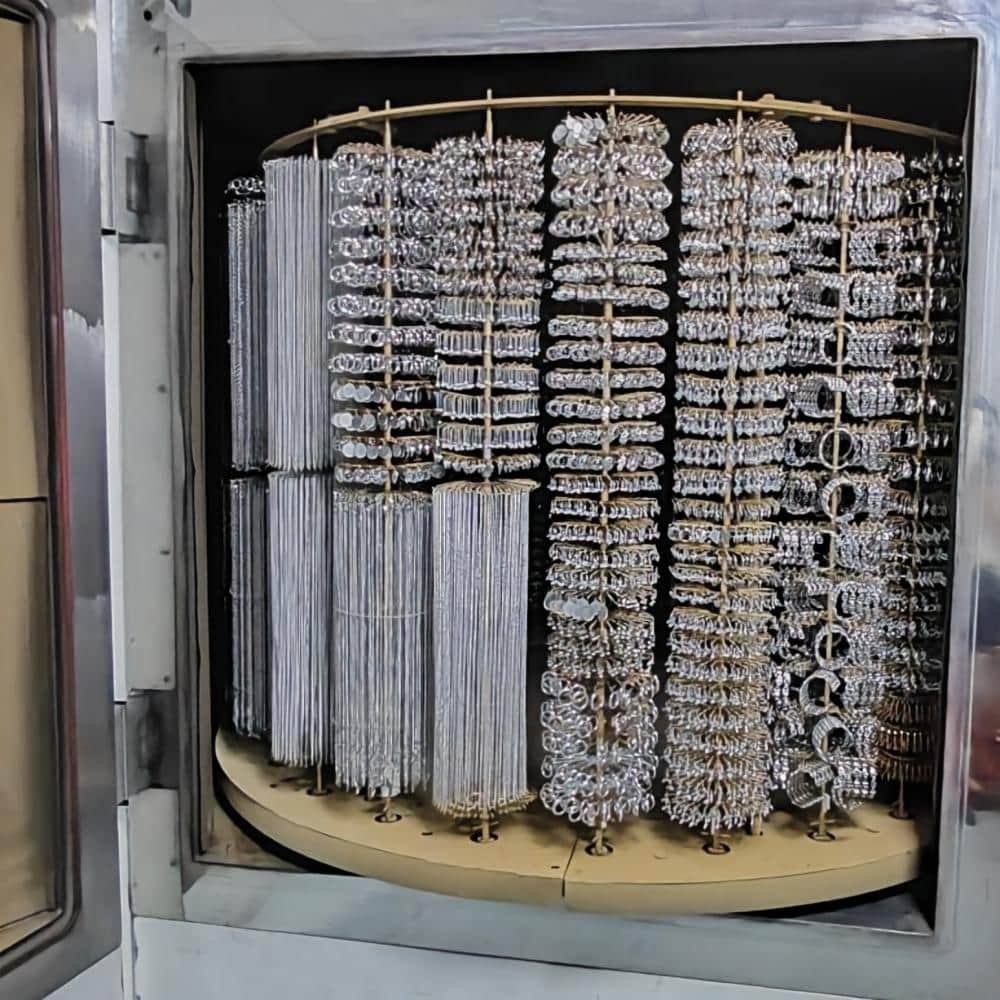
- Six in-house PVD vacuum coating machines support approved colors, process control, inspection, and batch records.
- OEM, ODM, custom mold, private-label packaging, market-specific testing support, and third-party inspection coordination.
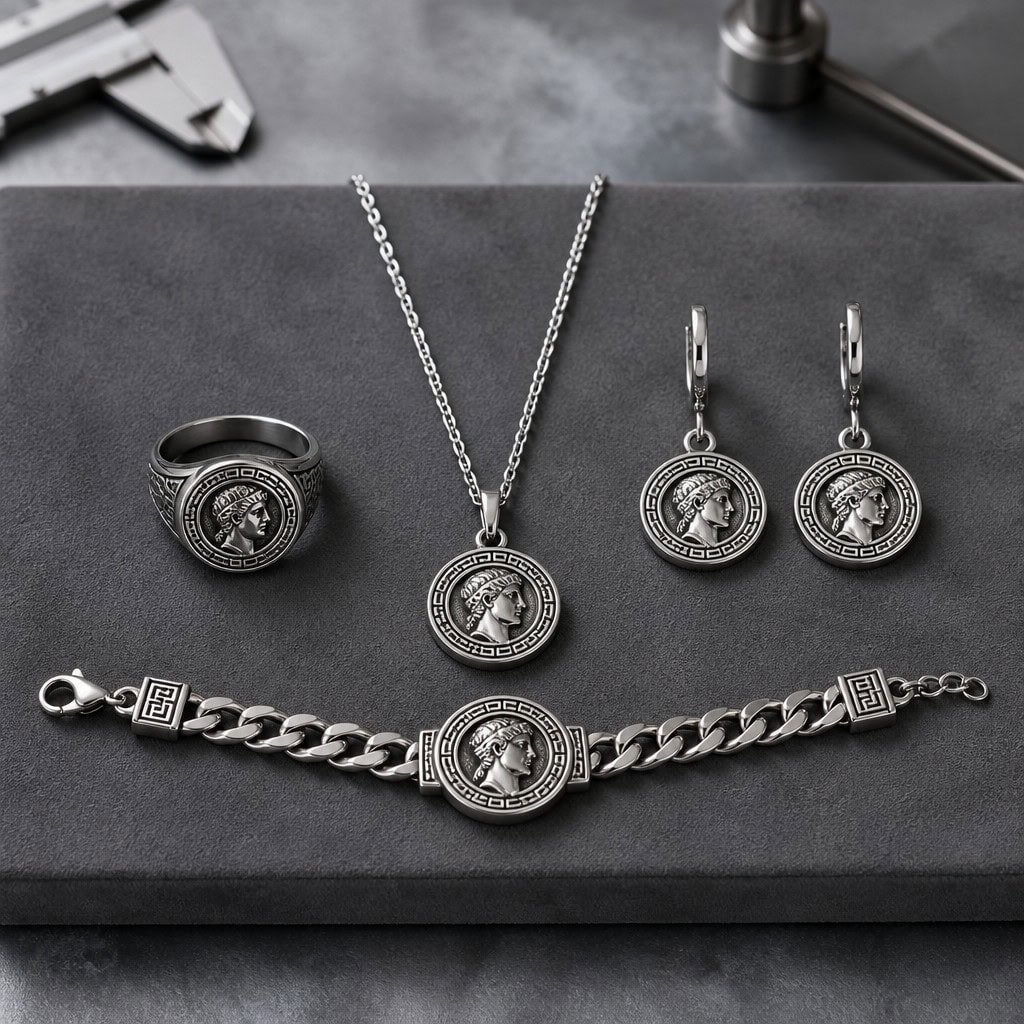
Build a Roman Design System for Your Brand
Chicolink develops Roman motifs as a coordinated design system rather than unrelated historical symbols. The system defines scale, relief, line weight, negative space, surface contrast, product role, and packaging language. Each direction creates different tooling, polishing, coating, readability, comfort, and inspection requirements. Chicolink confirms the route through artwork review, DFM, sampling, and buyer approval before bulk production.
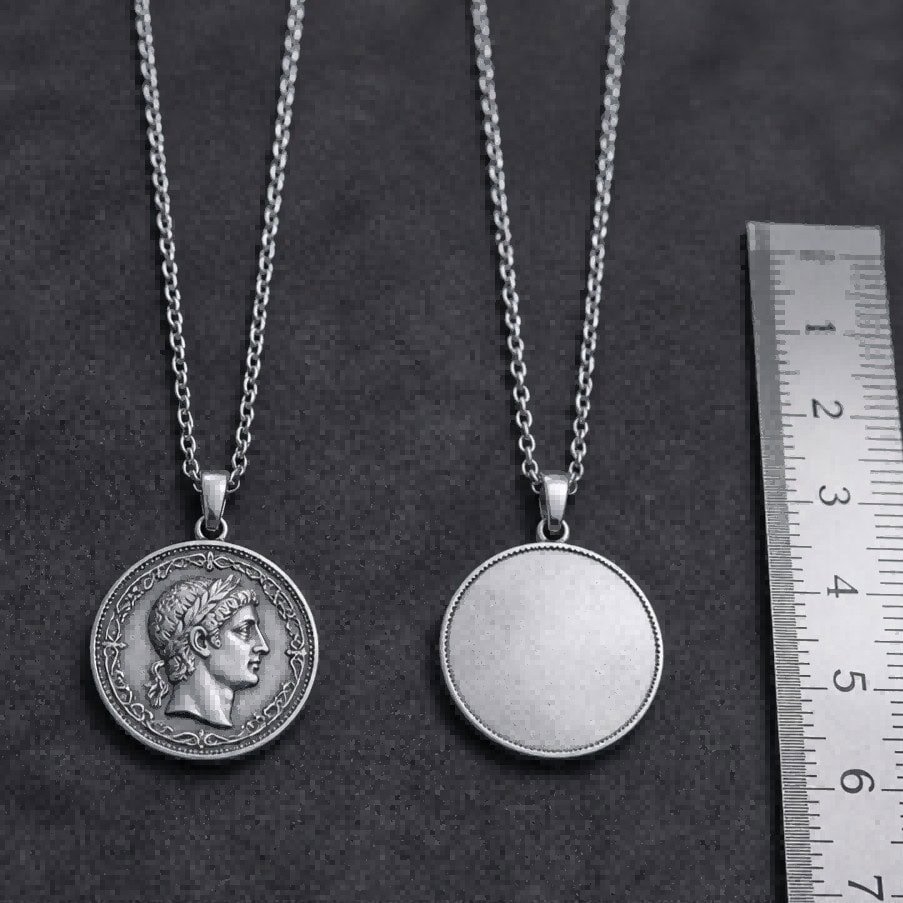
Coin Medallion Relief
Coin-inspired medallions can use a classical profile, border text, dates, stars, or buyer-owned insignia. Chicolink reviews relief height, portrait definition, border thickness, reverse-side construction, pendant balance, and polishing access. Casting, CNC, embossing, engraving, or combined routes are evaluated according to depth, quantity, cost, and the amount of detail that must remain visible after finishing. A retained sample defines how these features survive final surface treatment.

Roman Numeral Language
Roman numerals can identify dates, milestones, coordinates, collection numbers, or repeating geometric bands. Chicolink checks character height, line width, spacing, orientation, ring-size changes, engraving depth, and post-polish readability. Laser engraving, etching, stamping, CNC, or openwork may be used, but fine characters and narrow negative spaces require sample validation before they become bulk-production standards. A size-specific artwork rule prevents date layouts from drifting between variants.
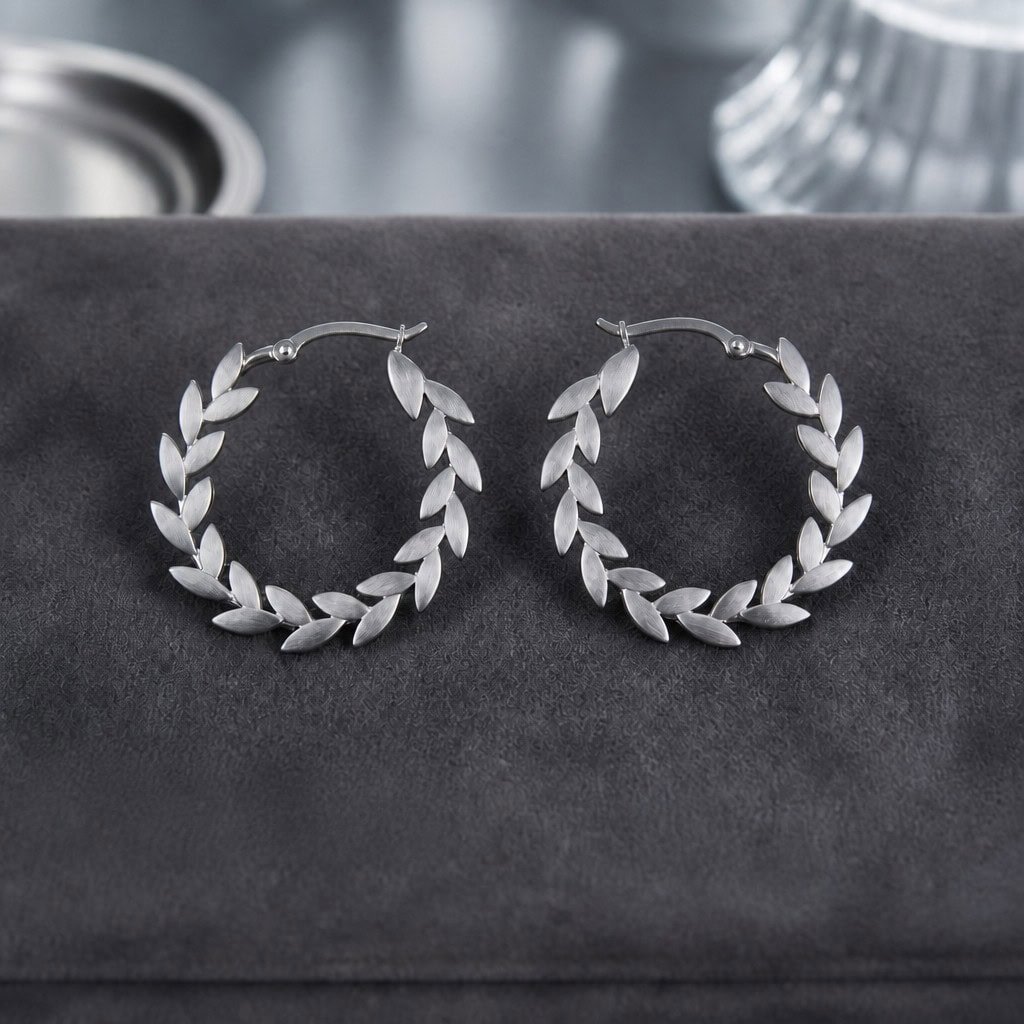
Laurel Wreath Geometry
Laurel leaves can form pendants, hoop details, ring shoulders, bracelet links, borders, or paired earrings. Chicolink evaluates leaf spacing, bridge strength, symmetry, edge comfort, snag risk, and the connection between decorative and load-bearing areas. Laser cutting, stamping, casting, engraving, or relief may be selected according to thickness, volume, surface requirement, and desired visual depth. Connection tests are assigned when the motif also carries product load.
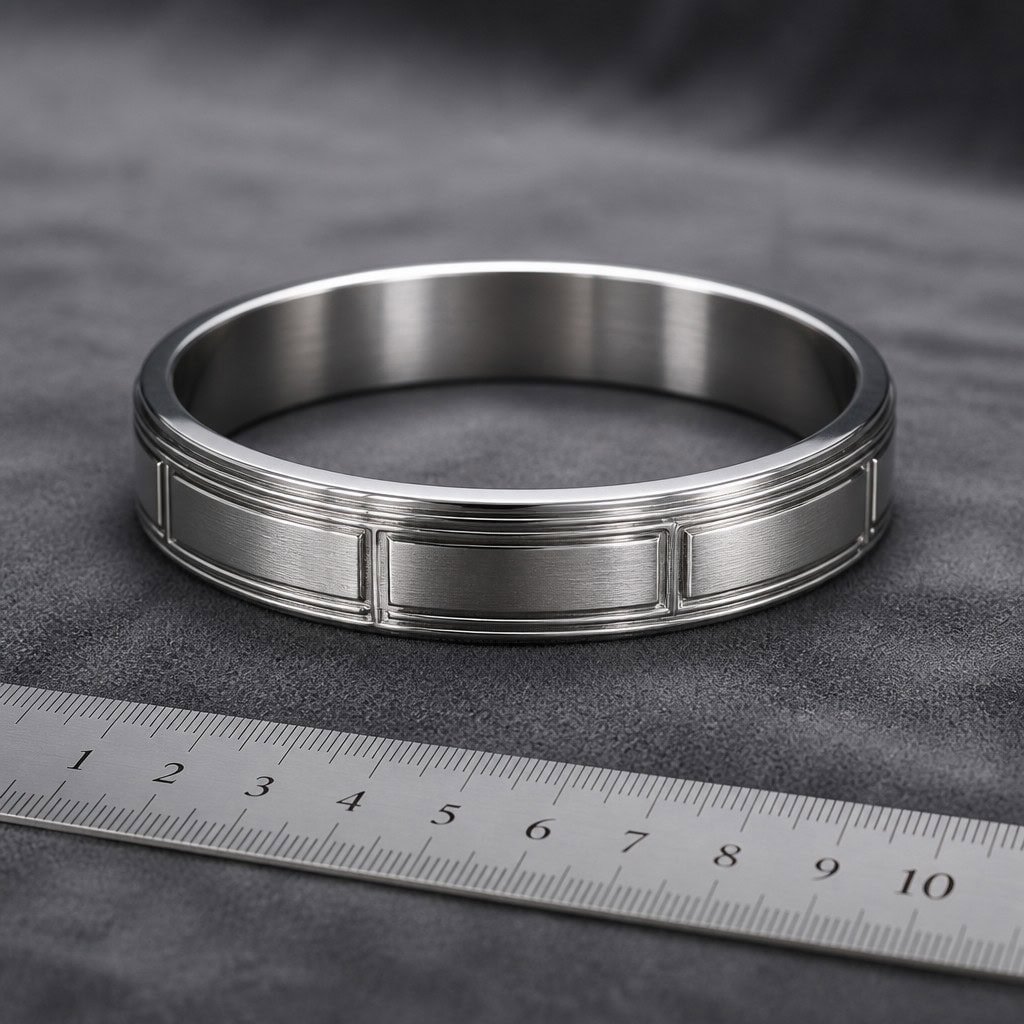
Architectural Classical Lines
Columns, arches, fluting, stepped borders, key patterns, and balanced classical proportions can create Roman character without relying on a literal coin. Chicolink reviews line repetition, symmetry, groove depth, internal corners, polish access, coating coverage, and scale across different products. CNC, etching, stamping, laser work, or controlled surface contrast can translate the direction into production-ready geometry. A reference sample fixes the intended visual contrast before production release.
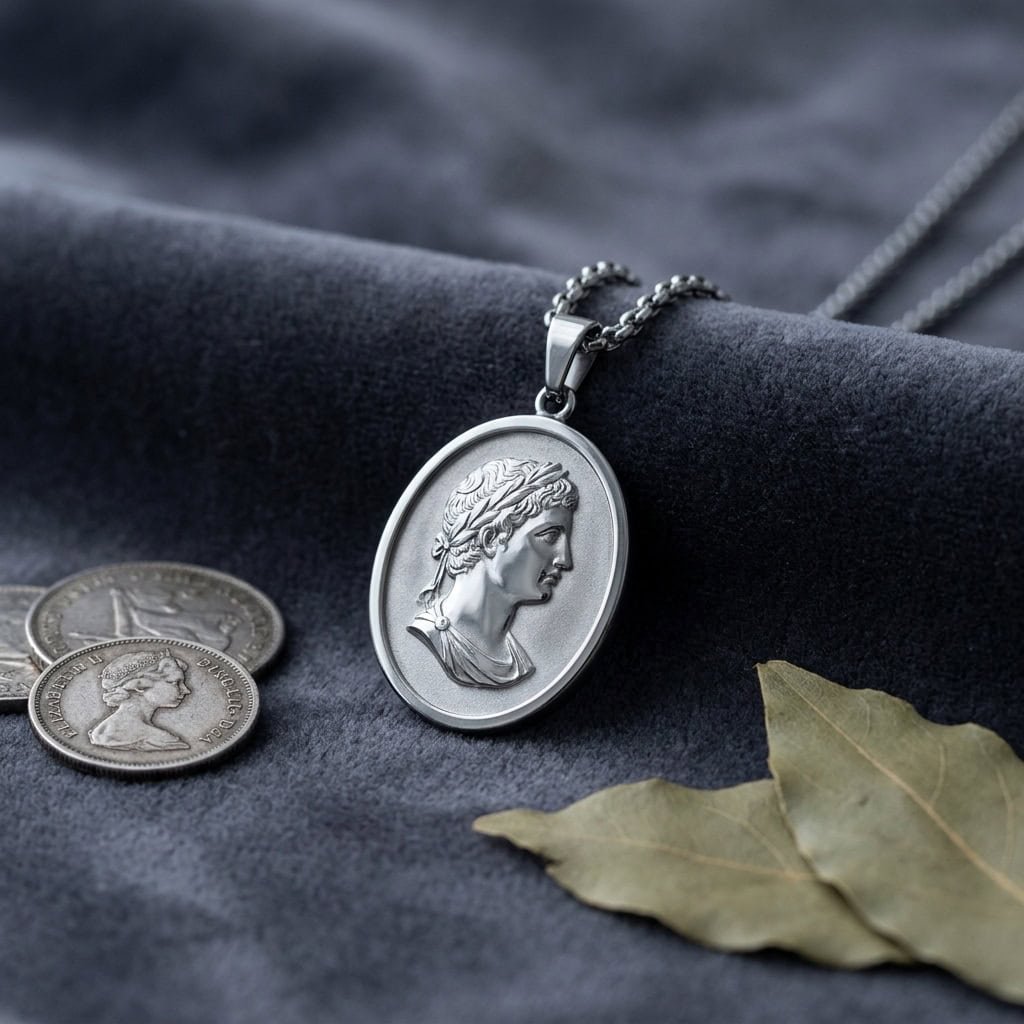
Classical Portrait Profiles
Portrait relief requires clear source rights and controlled simplification. Chicolink assesses facial silhouette, hair detail, relief transitions, minimum features, metal flow, polishing loss, and the difference between a large campaign piece and a smaller repeat-sale item. Drawings, prototypes, metal samples, and approved appearance references may be required before bulk manufacturing. The buyer approves the recognizable character and acceptable production simplification.
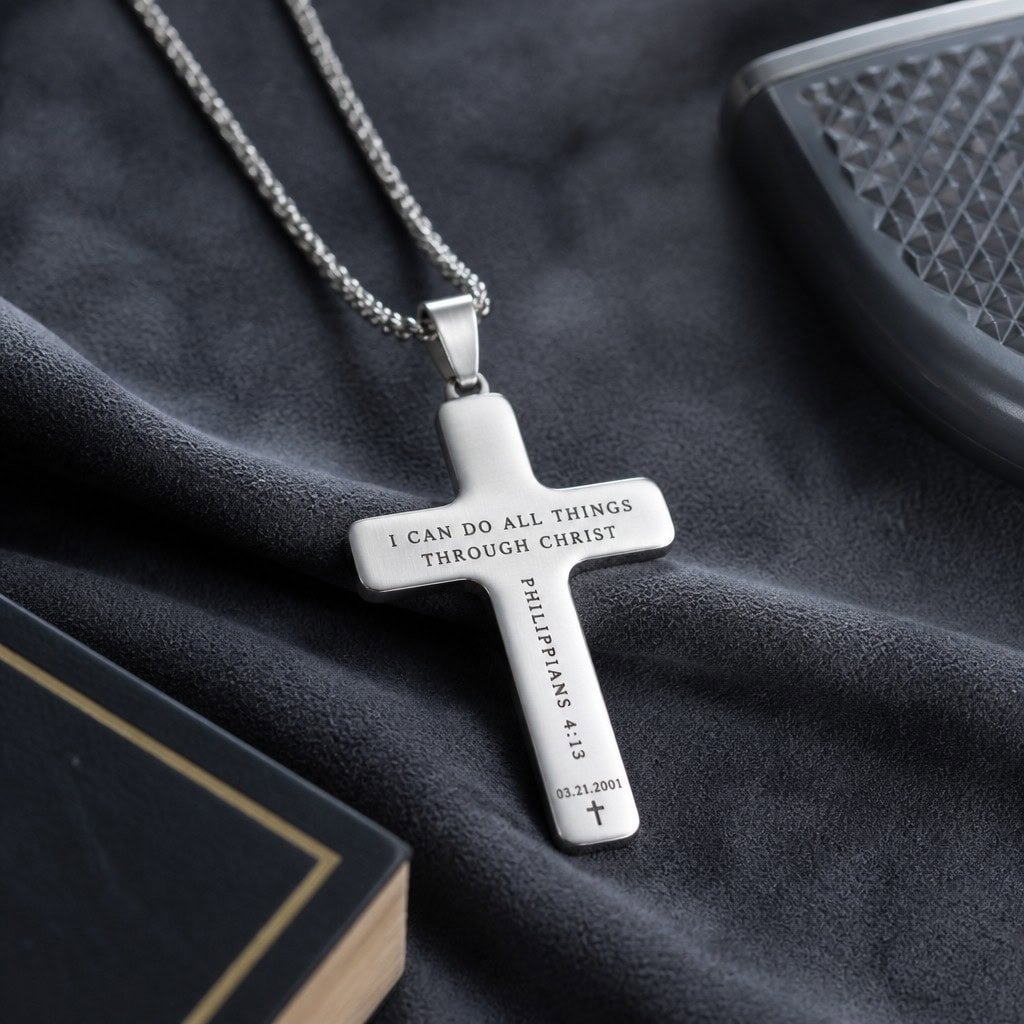
Crosses and Inscriptions
Crosses, Latin text, symbolic dates, and historical-style inscriptions require confirmation of meaning, spelling, font rights, orientation, and target-market sensitivity. Chicolink reviews sharp points, skin-contact edges, engraving depth, pendant direction, chain fit, and gift-packaging context. Submitted religious or institutional artwork must be buyer-owned, licensed, or otherwise approved for the intended commercial use. Packaging is reviewed to keep pointed or raised details from damaging surfaces.
Plan a Commercial Roman Jewelry Collection
Chicolink structures Roman-inspired collections around hero products, repeatable core items, accessible entry pieces, coordinated add-ons, and gift-ready sets. Each category receives a defined commercial role before sampling. Size range, weight, manufacturing route, shared components, color plan, packaging, target price, order quantity, and reorder potential are reviewed together so that the assortment works as a collection rather than unrelated historical motifs.
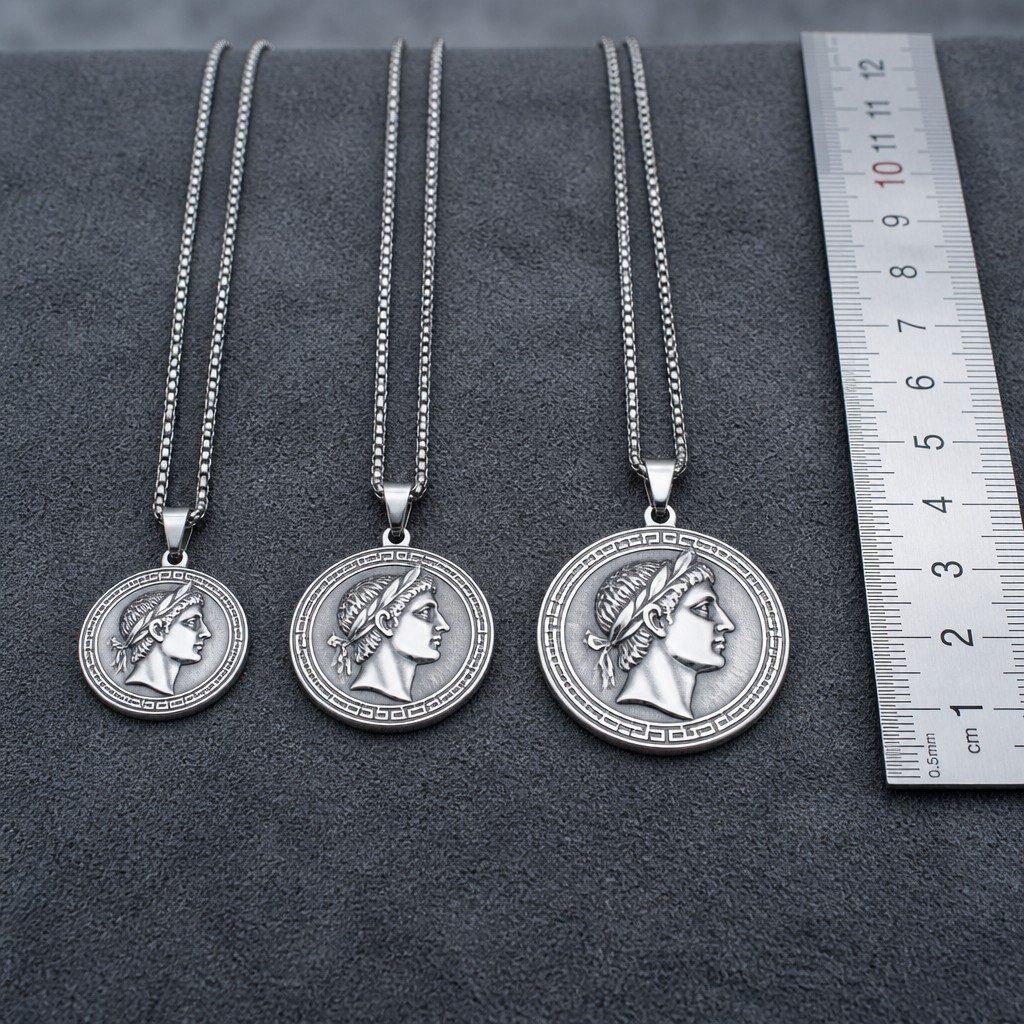
Coin Pendants
Chicolink can use coin pendants as the main visual anchor of a Roman collection. Development covers diameter, thickness, relief, reverse-side design, bail opening, chain proportion, weight, and orientation. Hero medallions may use deeper detail; smaller repeat-sale versions can simplify the same motif for comfort, production consistency, and price control. The bail and chain are approved together.
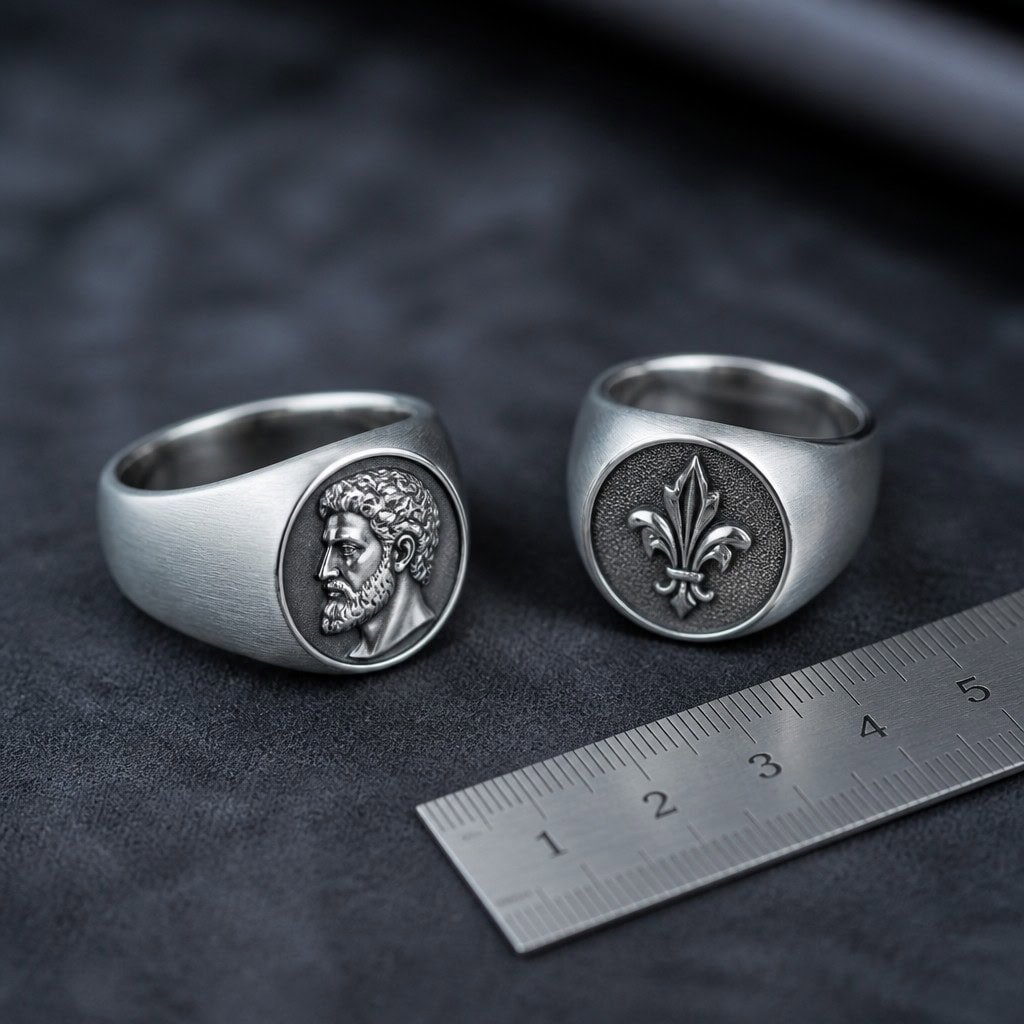
Classical Signet Rings
Signet rings can carry engraved numerals, profile relief, emblems, initials, or architectural borders. Chicolink reviews face dimensions, ring-shank strength, inner-profile comfort, size grading, relief protection, and polish access. Wide rings require sample fitting rather than automatic conversion from narrow-band sizing, especially across international size systems. Size-specific samples confirm fit and visual balance.
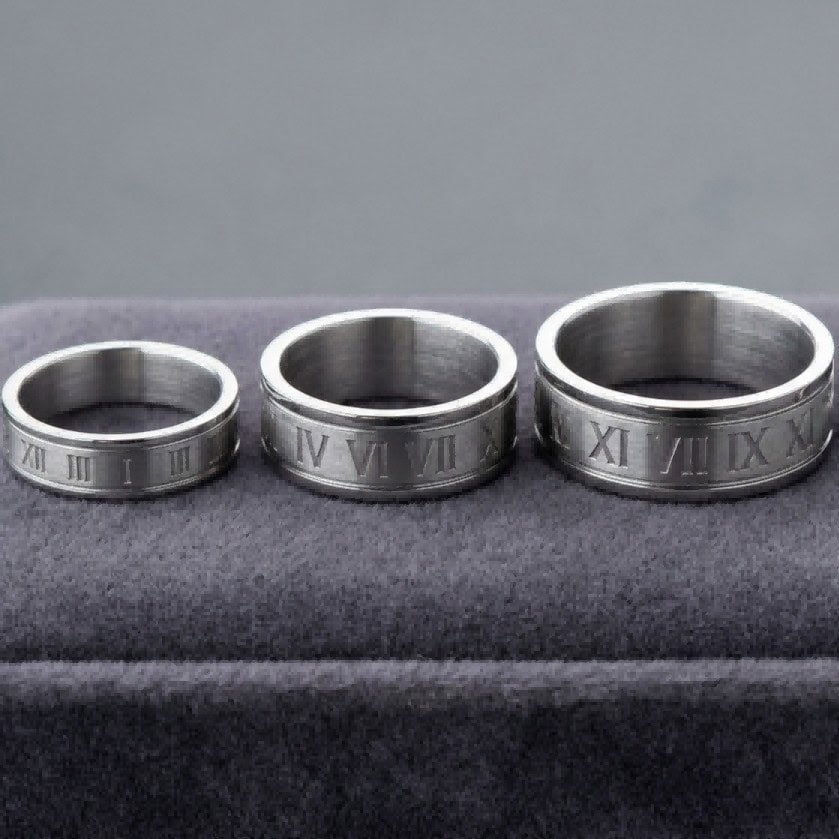
Numeral Band Rings
Roman numeral bands can represent dates or create a continuous graphic rhythm. Chicolink defines character sequence, spacing, seam position, ring-size adaptation, engraving depth, openwork strength, and inside marking. The approved drawing must show how the numeral layout changes by size so that small and large rings do not receive distorted or incomplete inscriptions.
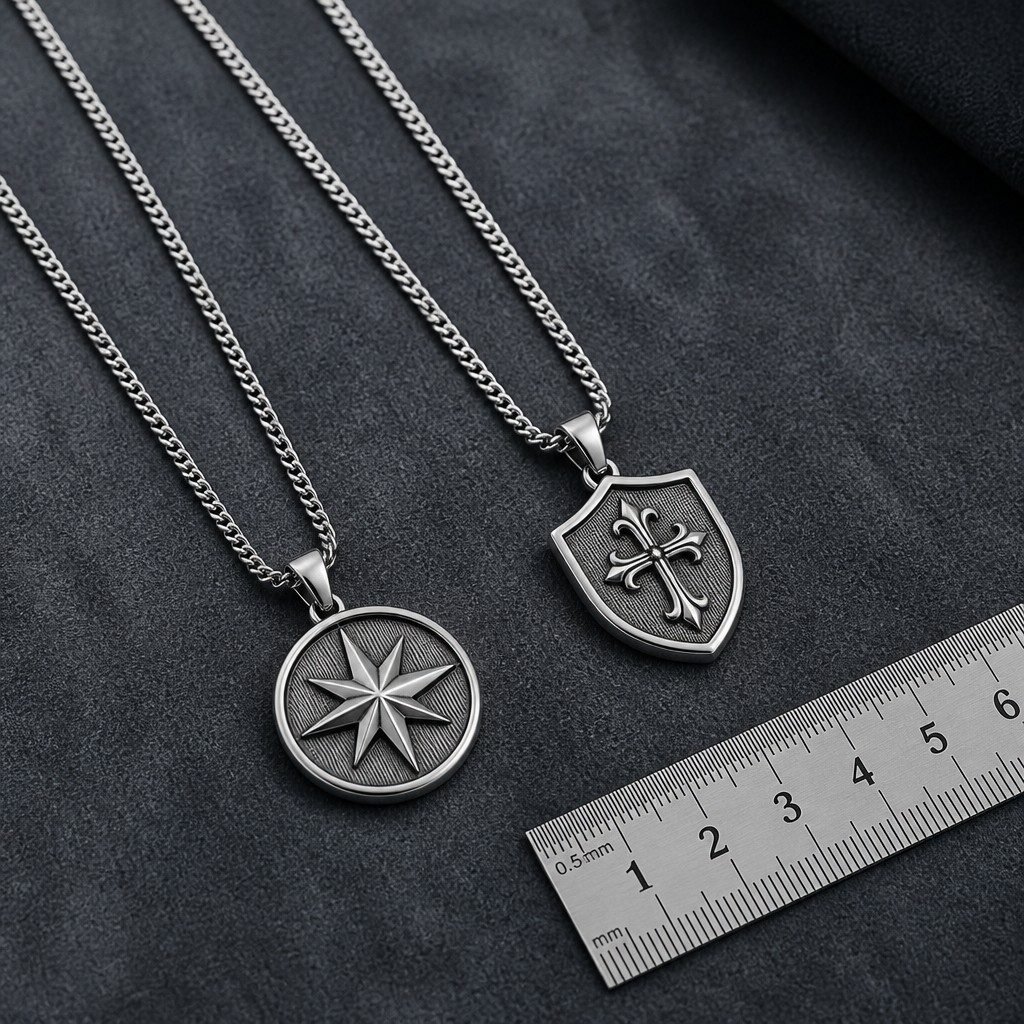
Medallion Necklaces
Medallion necklaces combine pendant engineering with chain, clasp, jump ring, extension, and packaging decisions. Chicolink checks chain clearance through the bail, pendant flipping, balance, overall length, layering compatibility, and anti-tangling presentation. Different chain options can place the same medallion at separate price levels without changing the core collection identity. Packing samples confirm the final hanging position.
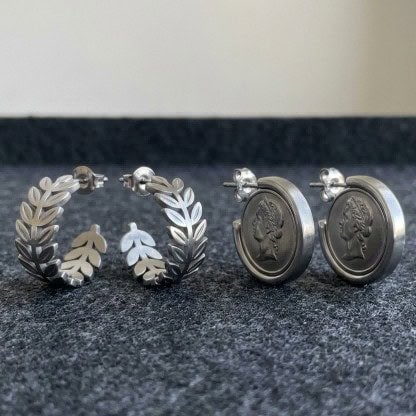
Roman Statement Earrings
Coin drops, laurel hoops, profile studs, and architectural earrings require weight and balance control. Chicolink reviews ear-post position, welding area, left-right orientation, drop movement, edge comfort, and transport protection. Heavier statement concepts may need reduced thickness, hollow construction, smaller decorative parts, or revised connections before they are suitable for repeated wear and bulk delivery.
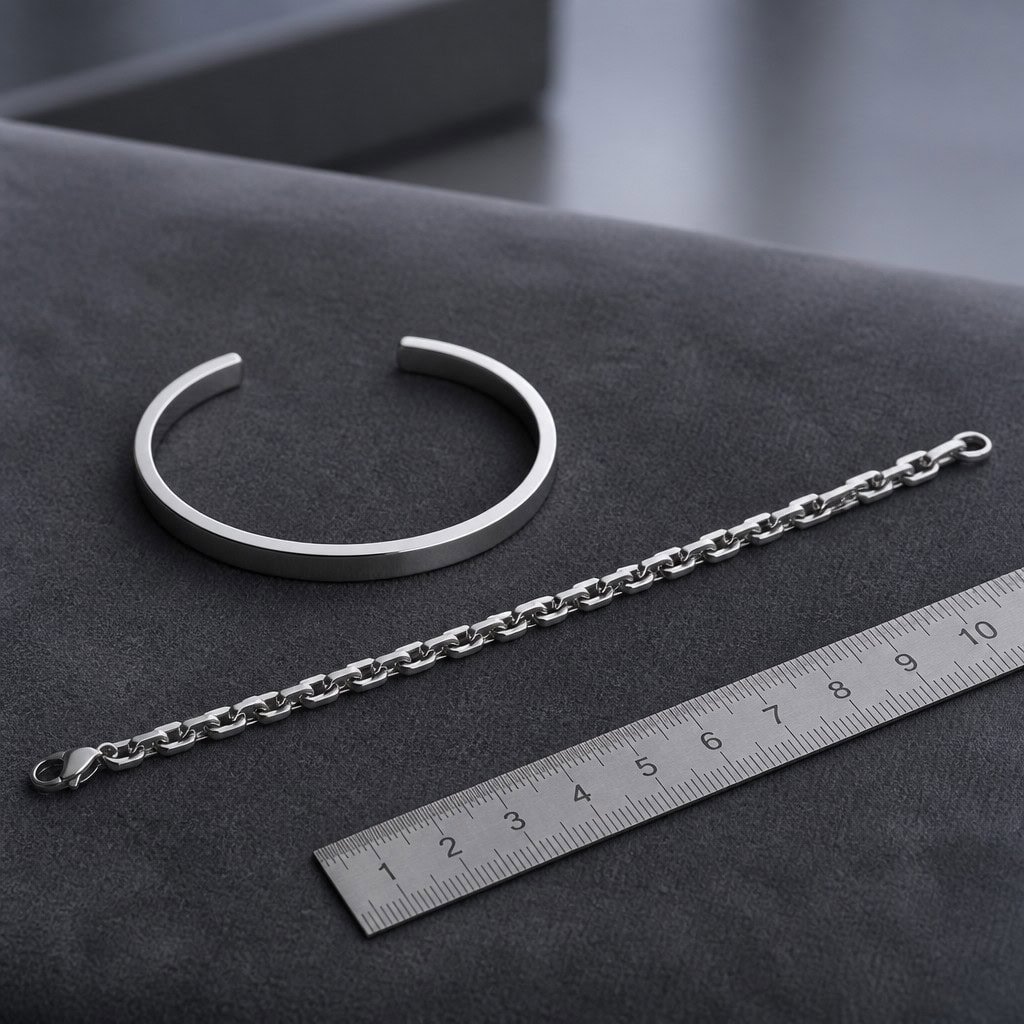
Cuffs and Bracelets
Roman numerals, laurel borders, key patterns, medallion stations, and identity plates can be developed for cuffs and bracelets. Chicolink evaluates wrist sizing, opening stress, clasp structure, chain strength, sharp-contact areas, surface wear zones, and logo placement. Repeated bending must not be treated as the normal adjustment method unless the structure is specifically designed and tested for it.

Charms and Tags
Small Roman charms create entry-price items and support cross-category assortment building. Chicolink checks minimum line width, hole position, jump-ring fit, edge finishing, front-back orientation, and legibility after coating. Charms can extend into necklaces, bracelets, earrings, zipper accessories, or gift items while sharing one approved visual and material specification. Shared findings can reduce unnecessary tooling across multiple SKUs.
Coordinated Gift Sets
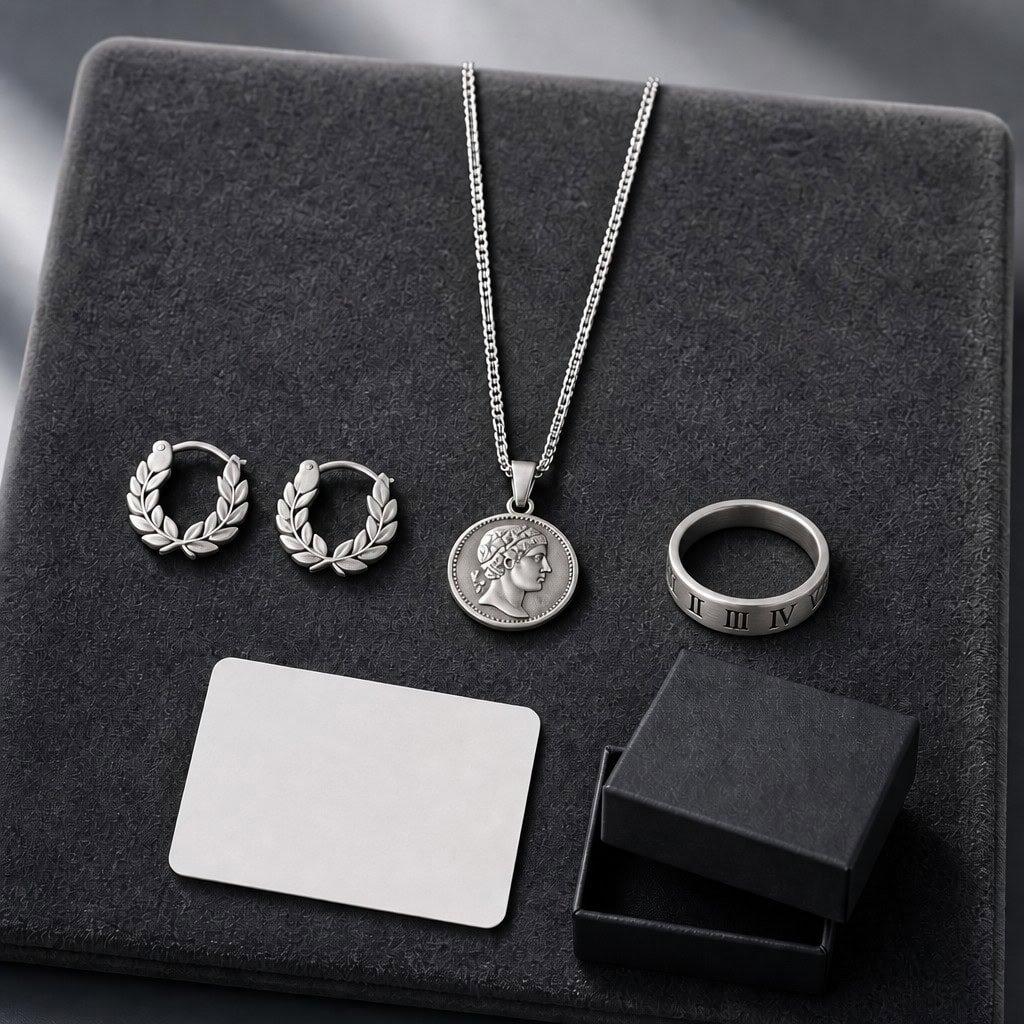
Chicolink coordinates pendant-and-earring, ring-and-bracelet, or multi-charm sets through one material, PVD reference, motif scale, logo, jewelry card, care card, gift box, SKU, and barcode system. Set approval covers component count, placement order, missing-part prevention, surface protection, and shipment packing. A packing sample confirms the intended retail presentation and complete set configuration.
Select Materials for Roman Jewelry Engineering
Chicolink selects materials from the product use, wearing environment, structure, production route, target market, testing plan, budget, and buyer specification. The body, ear post, spring, screw, clasp, jump ring, stone, adhesive, and decorative fill may require different materials recorded in the drawing and BOM. No single stainless steel grade or decorative material is treated as the automatic answer for every Roman-inspired design.
| Material Area | Chicolink Application | Project Conditions to Confirm |
|---|---|---|
| 304 stainless steel | Chicolink processes 304 plate, wire, bar, tube, and selected cast-product forms for approved pendants, earrings, necklaces, bracelets, rings, and components | Product structure, wearing environment, forming route, target market, surface finish, testing, quantity, and buyer requirements |
| 316L stainless steel | Contains molybdenum and generally offers better pitting-corrosion resistance; Chicolink evaluates it for frequent skin contact, higher corrosion requirements, and other defined project needs | Under Chicolink's current processing conditions, its higher hardness may increase forming, cutting, welding, polishing, and reshaping difficulty; feasibility is confirmed by product rather than category name |
| CZ and synthetic stones | Add controlled brilliance or color to numeral rings, medallions, crosses, laurel details, and gift sets | Shape, size, cut, color, backing, setting method, stone position, quantity, retention method, and approved appearance range |
| Natural stone, shell, and pearl | Create material contrast and a more collectible or gift-oriented direction | Natural variation, treatment, texture, cracks, color range, calibration, replacement allowance, setting method, and truthful material naming |
| Cold enamel and epoxy resin | Provide color fill for numerals, borders, inscriptions, and recessed motifs | Material type, color code, fill depth, boundary, bubbles, shrinkage, curing, adhesion, polish compatibility, and the confirmed order of coating and filling |
| High-temperature enamel | Evaluated as a separate process rather than being grouped with epoxy or ordinary color fill | Base-material heat resistance, thermal expansion, deformation, oxidation, color stability, process compatibility, stable supply, and sample validation |
| Functional components | Ear posts, springs, screws, magnets, clasps, jump rings, pins, and welding materials may differ from the product body | Material grade, dimensions, load direction, welding or assembly route, skin contact, corrosion requirement, function testing, and BOM identification |
Engineer Roman Surfaces and PVD Colors
Chicolink builds Roman surface contrast through raised relief, recessed lines, polished edges, textured fields, inscriptions, and color. Surface requirements are defined before coating because polishing, brushing, sandblasting, geometry, hanging position, and the approved color reference affect the result. Chicolink checks deep relief and narrow recesses on samples instead of assuming they will match open surfaces.
Build Contrast Without Losing Manufacturable Detail
- Steel-tone clarity: High polish, mirror finish, brushed, satin, sandblasted, and mixed surfaces can separate a profile, numeral, border, or laurel structure without adding another material. The drawing should identify primary A surfaces, secondary B surfaces, hidden C surfaces, texture direction, and acceptable tool marks.
- PVD color system: Chicolink's in-house plating workshop can provide approved color references named 24K Gold, 18K Gold, 14K Gold, Rose Gold, Black, Gun Metal, Coffee, Blue, Colorful, and other confirmed colors. These names describe color targets, not solid-gold content. A physical sample or approved reference is required.
- Reference PVD structures: E1 Standard is recorded as 0.4 μm TiN plus 0.05 μm Au/Gold. E2 Thicker Gold is recorded as 0.7 μm TiN plus 0.1 μm Au/Gold. The actual base layer, top layer, target thickness, product geometry, color, test requirement, cost, and feasibility must be confirmed for each order.
- Relief and recess control: Coin borders, portrait recesses, engraved numerals, deep grooves, hanging points, and contact areas are reviewed for polishing access, cleaning, coating coverage, visible marks, and inspection position. Samples establish the accepted appearance before bulk production.
- Performance language: Chicolink does not describe PVD jewelry as permanently fade-proof. Fade-resistant performance depends on the base material, preparation, coating structure, thickness requirement, product use, friction, chemicals, storage, packaging, and agreed testing conditions.
- Approval record: The approved sample, color reference, coating requirement, measurement method, allowed variation, test plan, packing protection, and batch number form the surface-control baseline for production and reorders.
Match Roman Motifs to Manufacturing Routes
Chicolink selects a manufacturing route from geometry, relief depth, material form, quantity, target weight, surface requirement, tooling budget, and repeat-order plan. One motif may use different routes at different sizes or volumes. The table shows typical evaluation directions, not automatic process promises. Final routing follows engineering review, drawing approval where required, sample validation, and production-capacity confirmation.
| Roman Design Requirement | Route Chicolink Can Evaluate | Main Manufacturing Risk | Required Approval Point |
|---|---|---|---|
| Three-dimensional coin or portrait relief | Casting, CNC master work, mold development, polishing, in-house plating, and optional engraving | Incomplete detail, shrinkage, porosity, excessive polishing loss, heavy weight, or uneven appearance in deep areas | Relief drawing or model, metal sample, weight, front/back appearance, edge, approved finish, and retained master sample |
| Flat coin outline or laurel silhouette | Laser cutting or stamping, drilling, forming where required, deburring, polishing, plating, and assembly | Burrs, sharp edges, warping, narrow bridge failure, hole distortion, or visible hanging marks | 2D cutting file, thickness, minimum bridge, hole size, edge condition, flatness, and hanging position |
| Recessed numerals and inscriptions | Laser engraving, etching, stamping, CNC engraving, or combined routes | Fine lines joining, broken strokes, inconsistent depth, poor readability after polishing, or incorrect orientation | Font authorization, converted artwork, character height, line width, spacing, depth, location, and post-finish sample |
| Repeating architectural borders | CNC, stamping, etching, laser work, or casting according to scale and depth | Pattern drift, asymmetric spacing, inaccessible corners, tool marks, polishing loss, or high machining time | Repeat unit, seam location, corner treatment, groove depth, visual standard, and cost review |
| Stone-set Roman focal piece | Casting or CNC, polishing, plating, prong/bezel/channel/glue setting, and retention inspection | Incorrect stone seat, loose or tilted stones, damaged stones, excess adhesive, or no tool access | Stone specification, setting structure, stone-position drawing, approved sample, and agreed retention method |
| Colored recessed numeral or crest | Engraving, etching, or formed recess plus confirmed cold enamel, epoxy, resin, paint, or separately evaluated high-temperature enamel | Fill shrinkage, bubbles, overflow, weak adhesion, color mismatch, surface contamination, or process incompatibility | Material name, color code, fill depth, boundary, cure, process order, adhesion requirement, and approved sample |
| Signet ring with relief face | Casting, CNC, stamping/pressing, or combined route followed by sizing, polishing, engraving, and plating | Ring-face distortion, weak shoulders, incorrect sizing, polish loss, or relief damage during finishing | Ring-size system, face dimensions, arm thickness, inner profile, relief, weight, and fit sample |
| Roman medallion necklace | Approved pendant route plus chain cutting, clasp and jump-ring assembly, polishing/plating coordination, function inspection, and anti-tangle packing | Bail-chain mismatch, pendant flipping, weak jump ring, shade mismatch, chain tangling, or transit scratching | Pendant orientation, bail opening, chain type/length, connection load, color reference, and packaging layout |
Complete DFM Before Roman Jewelry Sampling
Chicolink uses design-for-manufacturability review to identify structure, process, cost, quality, and lead-time risks before a Roman concept enters sampling. Buyers can submit DWG, DXF, PDF, JPG, CDR, STEP, IGES, STL, 3DM, hand sketches, reference images, or physical samples. Missing information is recorded for buyer confirmation instead of being converted silently into a bulk-production assumption.

Convert Visual Detail into Controlled Specifications
- Relief and wall structure: Solid cast parts can begin engineering review around a 0.8–1.2 mm conventional minimum wall-thickness reference, while local features require separate review. Portrait relief, coin rims, deep fields, and sudden thickness changes are checked for incomplete fill, shrinkage, deformation, weight, cost, and polishing loss.
- Openwork and fine bridges: For laser-cut or stamped parts, hole diameter and narrow bridge width generally should not be smaller than the material thickness without additional evaluation. Laurel leaves, numeral cutouts, and architectural grids are checked for strength, burr removal, distortion, and safe edges.
- Tool and finish access: Internal corners, deep narrow grooves, blind holes, closed cavities, hanging points, welds, and fixture-contact areas must allow machining, polishing, cleaning, plating, drainage, and inspection. Decorative detail that cannot be reached consistently is revised or assigned a sample-validation condition.
- Wearability: Ring interiors, pendant edges, ear-post welds, hoop closure paths, bracelet openings, chain clearances, and skin-contact surfaces are checked for sharp points, snagging, pressure, incorrect movement, and long-term comfort.
- Artwork control: Roman numerals, Latin text, fonts, logos, profiles, and border patterns receive minimum line, spacing, depth, orientation, safe-area, and rights checks. Drawings define what must remain readable after polishing and coating.
- DFM output: Chicolink records the result as producible, producible after modification, sample validation required, or temporarily not producible. The output identifies the proposed route, tooling, key dimensions, risks, buyer decisions, sample checks, document version, and conditions that must close before bulk release.
Choose the Right Roman Jewelry Development Model
Chicolink selects the working model from the buyer's design ownership, available files, required exclusivity, target quantity, budget, launch date, and packaging scope. OEM, ODM, private label, and custom mold are not interchangeable labels. Each route requires different buyer inputs, engineering work, approval stages, tooling, MOQ, timing, and responsibility for artwork and market claims.
| Development Model | Buyer Starting Point | Chicolink Scope | Best-Fit Roman Project | Main Conditions |
|---|---|---|---|---|
| Existing or regular style | Selected Chicolink style, confirmed color, quantity, and packaging | Availability confirmation, approved customization where feasible, production, QC, packing, and shipment | Fast assortment tests, wholesale additions, or a lower-development-risk opening order | Typical MOQ is 120 pieces per style; stock, color, customization, and dispatch timing are confirmed by SKU |
| OEM | Buyer-owned drawing, CAD, physical sample, artwork, or detailed specification | Engineering review, quotation, sample making, approved manufacturing route, in-house plating, bulk production, QC, packaging, and export coordination | Buyer-controlled coin medallion, numeral ring, signature pendant, or established collection transfer | Artwork rights, specification completeness, sample approval, typical 500-piece MOQ per style, and written change control |
| ODM | Target customer, channel, Roman direction, price range, product categories, and launch plan | Style analysis, product suggestions, structure and process proposals, collection planning, samples, packaging coordination, and production | A new Roman-inspired capsule or range without completed product drawings | Development is based on a defined commercial brief; it is not an unlimited free-design service |
| Private label | Selected product or approved custom product plus brand assets and packaging requirements | Product logo, logo tag, jewelry card, pouch, gift box, care card, SKU/barcode labels, FBA packing support, and set assembly | Retail-ready Roman collection using a consistent brand and unboxing system | Logo files, brand colors, packaging dimensions, quantity, channel rules, barcode data, and approvals must be supplied or confirmed |
| Custom mold | Original concept requiring proprietary geometry, relief, size, or structure | DFM, 2D/3D review, route selection, tooling, trial, correction, sampling, approval, and bulk execution | Original coin profile, exclusive crest, custom signet face, complex relief, or proprietary collection component | Higher tooling budget, longer development time, clearer volume plan, artwork rights, sample iterations, and mold-route confirmation |
Confirm MOQ, Cost Inputs, and Lead Time
Chicolink confirms commercial terms after reviewing the exact product version, size, material, manufacturing route, mold, PVD color and structure, stones, logo, packaging, quantity, target market, tests, inspection, delivery date, and trade term. Published ranges are planning references rather than shipment guarantees. Formal pricing follows engineering and cost review, and final delivery dates follow the approved specification and production schedule.
| Project Stage | Chicolink Planning Reference | Conditions That Can Change the Reference |
|---|---|---|
| Existing or regular product MOQ | Usually 120 pieces per style | SKU availability, color, size mix, packaging, plating batch, and approved customization |
| OEM/ODM MOQ | Usually 500 pieces per style | Mold, material, color, size, stone, production route, PVD batch, packaging version, and manufacturing difficulty |
| Existing-style sample | Usually 3–7 working days | Stock, color, modification, packaging, payment, and dispatch arrangement |
| OEM/ODM custom sample | Usually 25–30 working days | Drawing approval, tooling, process validation, revisions, PVD, stone, color fill, packaging, testing, and sample complexity |
| Existing-style bulk production | Usually 20–30 working days | Quantity, SKU mix, material, color, packaging, inspection, production schedule, and shipping plan |
| OEM/ODM bulk production | Usually 25–45 working days | Final sample approval, tooling readiness, quantity, process route, PVD, packaging, testing, inspection, and production loading |
| Initial inquiry response | Targeted within 6 working hours for regular inquiries | The first response may confirm receipt, request missing data, or explain evaluation status; it is not always a formal quotation |
| Complex-project assessment | Initial evaluation guidance targeted within 24 hours | Formal quotation follows engineering review, process confirmation, and cost calculation |
Control the Project from Brief to Bulk
Chicolink manages the Roman jewelry project through defined review and approval stages. The process connects artwork, engineering, quotation, sample, color, packaging, quality, and production records so that separate teams do not work from conflicting versions. The exact route depends on whether the project starts from an existing style, buyer specification, reference product, mood board, or original mold requirement.

Eight Controlled Stages from Input to Shipment
1. Brief intake: Chicolink records the market, product, Roman direction, artwork rights, quantity, target price, launch date, packaging, testing, inspection, and delivery needs.
2. Specification review: Dimensions, weight, material, relief, text, surface, PVD, stones, components, logo, and packaging are confirmed or listed as open decisions.
3. DFM proposal: Chicolink defines the manufacturing route, tooling, key risks, sample scope, cost inputs, and timing assumptions.
4. Quotation and authorization: The buyer confirms fees, revision limits, payment, artwork authorization, and required documents before development.
5. Drawing and sampling: Chicolink prepares the required drawings, prototypes, metal samples, color samples, functional samples, or packaging samples.
6. Controlled revision: Each sample is linked to its drawing, BOM, comments, change record, approval date, and production status.
7. Bulk release: Chicolink releases production after the required samples, colors, packaging files, inspection criteria, testing actions, and order conditions are approved. Obsolete files are withdrawn.
8. Production and shipment: PMC scheduling, process inspection, in-house plating, final inspection, packing, third-party inspection where required, documents, and logistics follow the approved order.
Use One Manufacturing Platform for Roman Jewelry
For Roman-inspired projects, Chicolink coordinates relief, cutting, engraving, welding, stones, PVD, assembly, packaging, and market-specific checks through one project brief. Controlled specifications, sample approvals, production planning, inspection records, and batch information keep design intent, manufacturing, final appearance, and reorder requirements aligned.
Design and Engineering
Designers and engineers translate the Roman direction into dimensions, relief, text, structure, weight, components, surface, logo, packaging, and production-ready files. DFM review identifies tooling, thin bridges, deep recesses, sharp edges, movement clearances, stone positions, and cost or lead-time risks before the sample route is approved.
Metal Formation
Chicolink can evaluate casting, stamping, pressing, laser cutting, CNC, turning, drilling, bending, and other confirmed routes according to the product geometry and volume. The selected route is connected to material form, mold or fixture needs, polishing access, dimensional control, and the appearance standard required for the approved Roman design.
Surface Preparation
Polishing, high polish, mirror finish, brushing, sandblasting, matte, satin, texturing, deburring, cleaning, and passivation are selected by surface zone and design purpose. Chicolink records the sample reference, A/B/C surface areas, texture direction, edge treatment, recess condition, and acceptable appearance before the product moves to coating or final assembly.
In-House Plating
Chicolink operates an in-house plating workshop with six PVD vacuum coating machines. PVD/IP, water plating, and other approved processes are connected to the confirmed base material, polish, color reference, layer requirement, target thickness, test plan, appearance zones, and batch record. This keeps coating decisions linked to the product specification rather than treated as a separate vendor instruction.
PMC and Production
Production planning coordinates materials, components, tooling, process sequence, plating capacity, assembly, packaging, inspection, and shipment milestones. The schedule is based on the approved sample, quantity by style and color, open decisions, testing, third-party inspection, and required delivery date. Complex Roman collections are planned by process and SKU rather than by a single headline capacity number.
Packing and Export
Chicolink can coordinate OPP bags, anti-scratch separation, jewelry cards, velvet pouches, gift boxes, logo boxes, care cards, barcode labels, SKU labels, Amazon FBA packing support, carton marks, packing lists, and export logistics. Packaging approval covers product position, set contents, label version, carton data, protection, and the destination market's handling requirements.
Control Roman Jewelry from Sample to Bulk
Chicolink treats the approved sample, drawing, BOM, color reference, packaging file, inspection plan, and test requirement as one controlled production standard. Quality control is distributed across incoming materials, process stages, plating, assembly, finished products, and packing. The numerical values below are internal default references where the customer or order does not specify another requirement; confirmed customer standards and written quality agreements take priority.
| Control Gate | What Chicolink Checks | Default or Project-Controlled Reference |
|---|---|---|
| Specification release | Material grade, components, dimensions, size, weight, relief, text, logo, surface, PVD, stone, packaging, and file version | Customer drawing, approved sample, BOM, quality agreement, and order specification control production |
| Approved sample | Appearance, relief definition, numeral readability, surface, color, size, weight, function, logo, and packing presentation | Sample number, revision, approval date, approver, photos, storage location, and whether it is the production standard must be recorded |
| First article | First production piece or defined first-article sample compared with the approved sample and current specification | Differences must be identified and resolved before the full batch proceeds where the project requires first-article approval |
| Incoming material inspection | Steel grade, raw-material appearance, components, stones, and packaging materials | IQC records material, supplier or batch information, specification, and disposition |
| Dimensions | Key rigid-product dimensions, ring inside diameter, ear-post diameter, chain or bracelet length, hole and assembly positions | Rigid dimensions up to 20 mm: +/-0.15 mm; 20–50 mm: +/-0.20 mm; above 50 mm: +/-0.30 mm; ring inside diameter +/-0.10 mm; ear-post diameter +/-0.05 mm; chain/bracelet length +/-5 mm; hole or assembly position +/-0.05 mm, unless the drawing states otherwise |
| Color | PVD color against the approved physical standard and visual appearance | Internal reference: Delta E00 <=1.5 for standard polished or mirror products and <=2.0 for brushed, sandblasted, or antique-style surfaces; visible shade jumps remain unacceptable even when an instrument reading appears within range |
| Coating thickness and defects | Coating thickness, shade, exposed base, peeling, pinholes, burning, scratches, uneven areas, and appearance zones | Internal reference: batch average +/-10%, single point +/-20%, main appearance surface not below 80% of nominal thickness; method, points, layer structure, and acceptance are confirmed by project |
| Process and assembly inspection | Mold/first piece, burrs, welding, water marks, polishing, stone position, stone retention, clasp, chain links, ear posts, and moving structures | IPQC and FQC records follow product-specific checkpoints and customer requirements |
| Functional checks | Pull, torque, drop, opening/closing, clasp, ear-post, chain, and stone-retention performance where required | Example internal references include 30 N for small decorative or ear-post connections, 40 N for pendant rings and clasps, and 60 N for main bracelet structures; each method, sample size, loading, hold time, and acceptance requires confirmation |
| Packing and shipment inspection | Quantity, SKU, barcode, set contents, product protection, labels, cartons, packing list, and visible defects | 100% inspection can be executed before packing, or buyer-defined/default AQL inspection can be used when agreed |
| AQL decision | Critical, major, and minor defect classification | Default reference when no customer standard is specified: normal inspection level II; Critical Ac 0/Re 1, Major AQL 1.0, Minor AQL 2.5; the approved order or quality agreement takes priority |
Define European and US Compliance Requirements
Chicolink defines testing and document support by target market, product, wearing position, material, color, coating, stones, age group, packaging, buyer protocol, and applicable standard. A report applies only to the sample, material, color, coating structure, and conditions identified in that report. Chicolink checks the original document, legal company name, sample scope, institution, issue date, and validity before using a report in a project.
| Requirement Area | Chicolink Support | Conditions to Confirm Before Testing or Shipment |
|---|---|---|
| EU market review | REACH-related testing support, EN 1811, EN 12472, nickel-related testing, lead, cadmium, and other agreed testing | Product, material, color, coating structure, standard version, sample quantity, laboratory, cost, report scope, and target country |
| US market review | California Proposition 65-related testing or document support according to the product and buyer requirement | Substance scope, product category, warning or documentation responsibility, laboratory, sample, and target distribution channel |
| Nickel release | SGS, HKPC, or another confirmed laboratory can be coordinated | Test standard, sample state, wearing contact, material, color, coating, number of colors, report owner, fee, and timing |
| Lead and cadmium | Lead Free and Cadmium Free testing support where required | The result is tied to the tested sample and identified material, color, coating, and test conditions; it is not blanket coverage for unrelated SKUs |
| Surface performance | Salt-spray and artificial-perspiration testing can be arranged according to agreed requirements | Internal planning references: bare stainless steel 24 hours, plated/PVD products 48 hours, and higher-corrosion requests 72 hours or buyer standard; method and acceptance must be confirmed |
| Functional performance | Pull, torque, drop, clasp, ear-post, stone-retention, and other product-relevant checks | Load, direction, duration, sample size, equipment, acceptance, and whether tested samples can be shipped must be defined |
| Third-party testing | SGS, HKPC, or buyer-appointed laboratory coordination | Institution, standard, samples, test fee, lead time, report scope, and document owner must be agreed before submission |
| Pre-shipment inspection | Buyer or third-party inspection can be coordinated by appointment | Inspection date, protocol, AQL, sample quantity, documents, reinspection, and impact on shipment timing must be planned in advance |
| RoHS and CE references | Used only when the product is within the applicable scope and the required assessment is completed | Ordinary non-electronic stainless steel jewelry must not be automatically described as CE compliant; RoHS is used only where applicable |
Protect Reorder Consistency with Batch Traceability
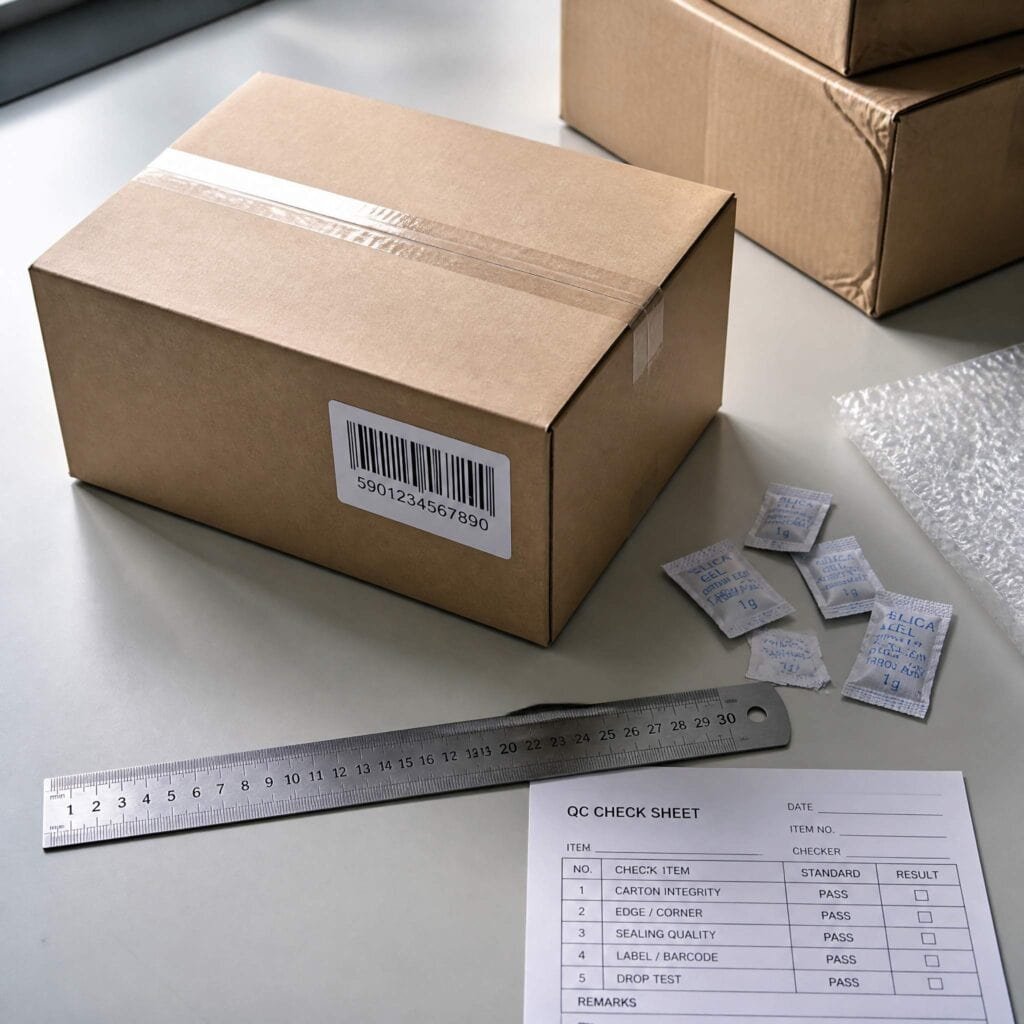
Chicolink records the information needed to connect a Roman jewelry shipment to its approved design, material, surface, production, inspection, packaging, and logistics history. This supports repeat orders, quality investigations, color review, and controlled changes. Traceability does not make different materials or newly revised products identical; it gives the buyer and Chicolink a documented basis for comparing, correcting, and approving the next production batch.
Link Every Reorder to the Correct Product Version
- Order and SKU: Customer, order number, style number, SKU, color, size, quantity, packaging version, and destination are recorded as the commercial identity of the batch.
- Design and BOM: The applicable drawing, 3D file, BOM, component material, stone list, logo file, surface reference, PVD requirement, sample number, and change record are linked to the production version.
- Material and process: Material grade, supplier or incoming batch, mold or tooling, production date, key process records, welding, polishing, setting, filling, plating equipment, PVD color, coating batch, and production quantity are recorded where required by the project.
- Quality and packing: IQC, IPQC, FQC, AQL or 100% inspection, nonconforming quantity, rework, retest, packing batch, carton number, packing list, and shipment date provide a path from the finished product back to the control points.
- Issue response: When a buyer reports a problem, Chicolink can use the order number, SKU, or batch number together with photos, videos, issue quantity, receipt date, packaging condition, and use or storage information to evaluate the affected scope.
- Reorder control: A repeat order is compared with the retained sample, approved color, current specification, packaging file, and prior batch record. Any new color, material, mold, size, or structural revision is treated as a new confirmation decision rather than silently added to the old standard.
Italian Roman Jewelry Manufacturing FAQ
These answers clarify manufacturing origin, Roman design scope, artwork rights, product development, material selection, commercial conditions, finish approval, market testing, and quotation inputs. Chicolink confirms product feasibility and final terms from the buyer's actual files, quantities, target market, packaging, quality requirements, and delivery plan.
Is this Italian Roman jewelry made in Italy?
No. Chicolink manufactures these products in Dongguan, China. “Italian Roman-inspired” describes the design direction, not origin. Chicolink-made products must not be marketed as Made in Italy.
What does Italian Roman-inspired jewelry mean here?
It describes approved or original classical directions using coin medallions, Roman numerals, laurel geometry, architectural lines, profiles, crosses, or inscriptions. Chicolink converts the direction into a manufacturable specification.
Can Chicolink reproduce a Roman coin or museum design?
Chicolink evaluates buyer-owned artwork, licensed assets, approved references, or original directions. Buyers must confirm rights for coin artwork, museum assets, fonts, logos, religious content, and protected designs.
Which files should we submit for Roman jewelry development?
Submit available drawings, CAD, editable artwork, sketches, reference images, or physical samples with dimensions, target weight, material, quantity, market, packaging, and delivery date. Chicolink identifies missing information before quotation or sampling.
Can Chicolink develop a complete Roman jewelry collection?
Yes. Chicolink can plan pendants, rings, necklaces, earrings, bracelets, charms, and sets around one approved design system, with defined product roles, sizes, materials, PVD colors, packaging, MOQ, launch timing, and reorder requirements.
What is the MOQ for custom Roman jewelry?
Typical MOQ is 120 pieces per style for existing or regular products and 500 pieces per style for OEM/ODM. Actual MOQ depends on style, color, size, material, coating batch, stones, mold, packaging, and process. The quotation confirms the basis.
How long do custom samples and bulk orders take?
OEM/ODM samples usually require 25–30 working days and custom bulk orders 25–45 working days. Existing-style samples usually require 3–7 working days and bulk orders 20–30 working days. Tooling, revisions, PVD, packaging, testing, inspection, quantity, and scheduling can change timing.
How are Roman relief and PVD colors approved?
Chicolink approves the relief, surface, color reference, PVD structure, target thickness, appearance zones, test plan, and packing protection against a retained sample. PVD performance is evaluated under agreed conditions, not described as permanently fade-proof.
Can buyers require European or US testing?
Chicolink supports confirmed order-specific testing and can coordinate SGS, HKPC, or a buyer-appointed institution. The product, material, color, coating, standard, samples, fee, timing, and report scope must be confirmed before testing.
What information is needed for a formal quotation?
Provide product files, dimensions, material, weight, motif, logo, finish, PVD color, stones, quantities, target price, packaging, market, testing, inspection, destination, trade term, and delivery date. Chicolink reviews missing inputs, process, sample plan, cost factors, and timing before formal quotation.