
Jewelry Manufacturer for Startup Brands
Launch your first stainless steel jewelry collection with factory-led development, transparent MOQ options, private labeling, and scalable production support.
- Start with existing styles when you need a lower-risk market test.
- Move into OEM or ODM development when your brand needs exclusive products.
- Add logos, jewelry cards, pouches, boxes, barcodes, and channel-ready packaging.
- Control specifications, samples, plating, quality checks, and repeat orders through one manufacturing partner in Dongguan, China.
- Confirm MOQ, development fees, lead time, testing, inspection, and delivery conditions before committing your launch budget.
- Scale proven products through documented specifications, approved samples, production planning, and batch records.
- Manufacturing since 2012
- 5,500+ m2 factory
- 400+ employees
- 200,000+ pieces monthly capacity
- In-house PVD/IP and water plating workshop
- Factory audits and third-party inspection supported

What We Set Up Before Your First Sample
At Chicolink, we turn an early product idea into a defined manufacturing project before sample work begins. We record the commercial goal, technical inputs, open decisions, ownership, approval method, and next action. This setup gives founders a clear path forward and gives established procurement teams a usable project record from the first exchange.
Commercial Brief
We record the product category, target customer, sales channel, retail positioning, planned quantity, destination market, launch window, and cost objective. These details determine whether we should start from a standard style, modify an existing structure, or open a full OEM or ODM development task.
Input File Review
We review the files already available: sketches, reference images, CAD, 3D models, physical-sample details, logos, packaging artwork, size charts, retailer manuals, or test protocols. We then list missing dimensions, material decisions, functional requirements, or commercial inputs instead of silently filling gaps with unapproved assumptions.
Project Route
We assign the appropriate route: standard-style sourcing, controlled modification, OEM development, or ODM development. The route defines what Chicolink will produce, what you need to approve, whether engineering or tooling is required, and which costs and timing can be confirmed immediately or only after technical review.
Decision Register
We separate confirmed requirements from open decisions. A typical register covers size, weight, material, plating color, stone or component, logo method, packaging level, target test, quantity allocation, sample revision, and required date. Each unresolved item receives an owner so the project can move without losing context.
Approval Basis
Before work is released, we define how approval will be given and what evidence will control production. Depending on the project, this may include a selected SKU, drawing, physical sample, finish reference, logo proof, packaging proof, written specification, or customer-approved combination of these records.
Next-Action Summary
After the first review, we return a practical next-action summary: files still needed, questions to answer, proposed sourcing route, feasibility items, quotation status, sample requirement, and the next approval point. Routine inquiries target an initial response within 6 working hours; complex projects may receive initial direction within 24 hours when possible.
Choose the Deliverable for Your Current Brand Stage
We support different meanings of “startup”: a founder launching a first range, an online seller formalizing proven products, a brand creating proprietary designs, or an established company opening a jewelry category. Tell us which deliverable you need now. We will structure the work around that outcome and leave later-stage services outside the immediate scope until they are commercially useful. This keeps the inquiry anchored to a concrete manufacturing result rather than a broad list of services.
Launchable First Range
For a first launch, we build a compact assortment around a defined customer, price position, visual direction, and selling channel. The deliverable is a quoted and approved product list with clear variants, product specifications, unit packing, and launch quantities. We keep original tooling and secondary packaging upgrades outside the scope unless they are essential to the offer. This keeps initial decisions focused and measurable.
Repeatable Best Sellers
When sales already identify winning SKUs, we convert those products into controlled reorder records. The deliverable includes the current product version, approved finish reference, size or color allocation, label version, packing instruction, inspection points, and forecast window. This creates a practical replenishment basis before the range expands into additional designs. You receive a repeat-order reference instead of relying on an old email thread.
Proprietary Product Series
For a more defensible product line, we translate your design language into production-ready styles with defined ownership and approval records. The deliverable is an engineered and sampled series with documented dimensions, materials, structures, finishes, logos, quality points, and tooling terms. Bulk conditions follow only after the product itself is approved. This separates creative development from the later production commitment and formal purchasing approval.
Corporate Launch Program
For an established company entering jewelry, we organize the launch as a vendor-managed program. The deliverable can include factory-audit access, responsibility mapping, product approval records, buyer inspection standards, laboratory requirements, SKU and label controls, shipment milestones, and reporting format. We align our project files with your vendor manual and internal approval process. This gives a sourcing team a defined handover from development to purchasing.
Lock Six Commercial Decisions Before We Quote
Our quotation becomes more useful when it reflects the actual launch plan rather than an isolated product image. Before we calculate the project, we clarify six commercial decisions that shape the range, development depth, unit cost, inventory exposure, and delivery plan. If a decision is still open, we mark it as an option instead of presenting an assumption as a fixed specification. We then quote only the scope that has a defined commercial purpose.
Target Customer
Tell us who will wear the collection, where they will buy it, and what problem or style need the product will answer. We use that context to review scale, weight, comfort, visual impact, materials, finish, assortment balance, and the level of presentation required for the intended customer. This prevents a technically feasible item from being mismatched to its selling context.
Retail Position
Share the intended retail range and, when available, the target landed or ex-factory cost. We can then prioritize the product features that create visible value and identify features that add cost without supporting the planned positioning. The target guides development; the final price follows the confirmed specification and quantity. This gives engineering a commercial boundary for material, weight, process, and finish decisions.
Launch Assortment
Define the number of styles, product categories, variants, and sets planned for launch. We use this assortment map to identify shared components, common finishes, size ratios, packaging versions, and opportunities to reduce avoidable complexity. A focused range also produces clearer sales data for the first reorder decision. The written assortment map becomes the basis for sample grouping and quotation scope.
Differentiation Level
Choose whether the first offer needs standard products, modified details, an exclusive structure, or a complete original series. We match the development route to that decision. This keeps tooling and sample work proportional to the brand objective while making clear which design elements remain shared and which belong to your project. It also prevents an informal modification from being treated as an exclusive design.
Sales Channel
State whether the products will sell through DTC, Amazon, boutiques, chain stores, wholesale distribution, gifting, or multiple channels. We use the channel to define unit presentation, product identification, scanning, carton sorting, inspection evidence, and shipping data. Channel-specific rules are treated as project inputs, not added after packing begins. One SKU may require different packing records when it serves different channels.
Launch Calendar
Give us the required selling date, destination, campaign milestones, internal approval time, and any third-party test or inspection window. We work backward to identify the latest practical dates for files, sample approval, materials, production release, packing, and shipment. If the calendar is not feasible, we propose a narrower launch scope or phased delivery. The schedule is then linked to explicit owner approvals.
Build a Focused Stainless Steel Jewelry Collection
A startup collection should be broad enough to test customer preferences but focused enough to control inventory, content creation, and packaging. Chicolink can develop coordinated stainless steel product families using shared materials, plating colors, logo details, stones, design language, and packaging so individual SKUs work as one commercial collection. Product selection should also consider target retail price, expected order quantity, size allocation, photography needs, shipping risk, replenishment potential, and which items can be combined into sets.
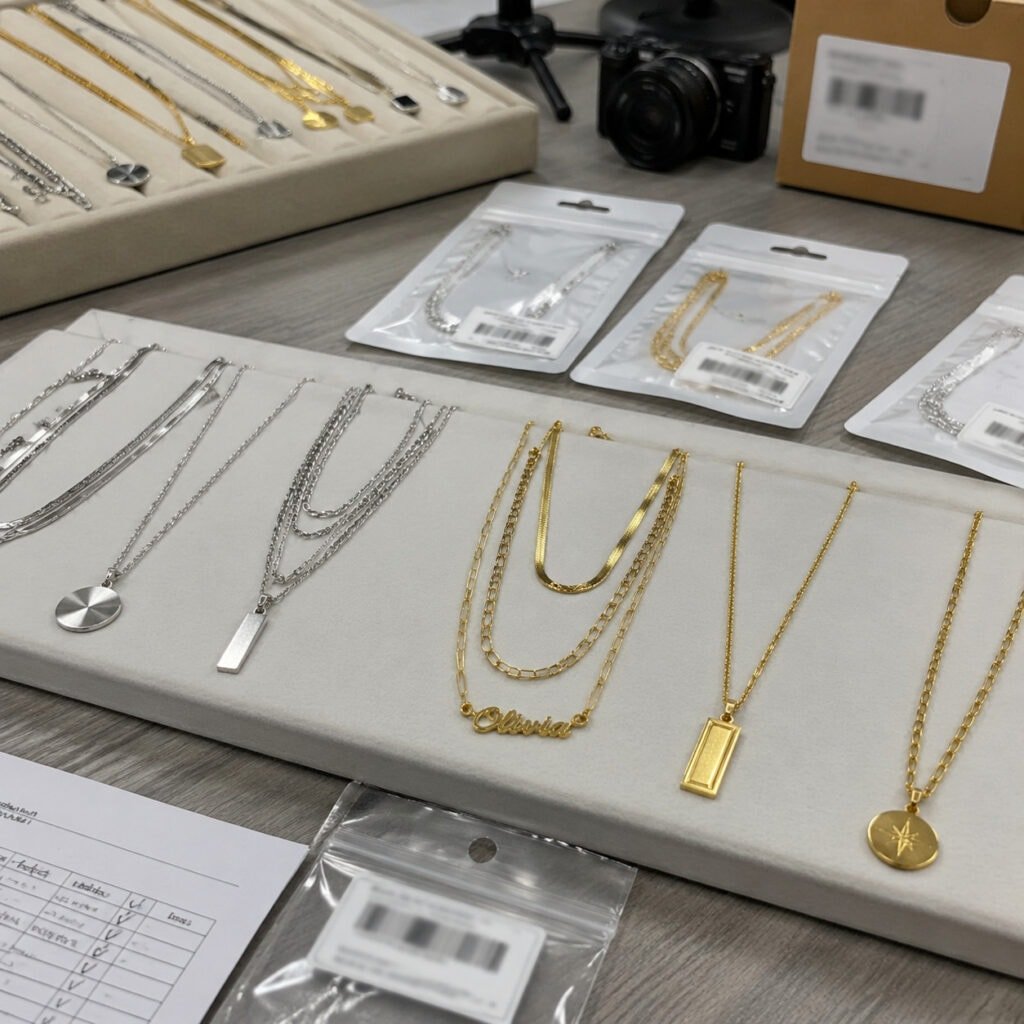
Necklaces
Develop pendant necklaces, plain chains, chokers, long necklaces, layered designs, name styles, and symbolic pieces. Confirm chain type, finished length, extension chain, pendant position, clasp, product weight, logo placement, plating color, and packaging before sampling or standard-style selection. Customer size charts take priority when a collection uses market-specific length conventions.
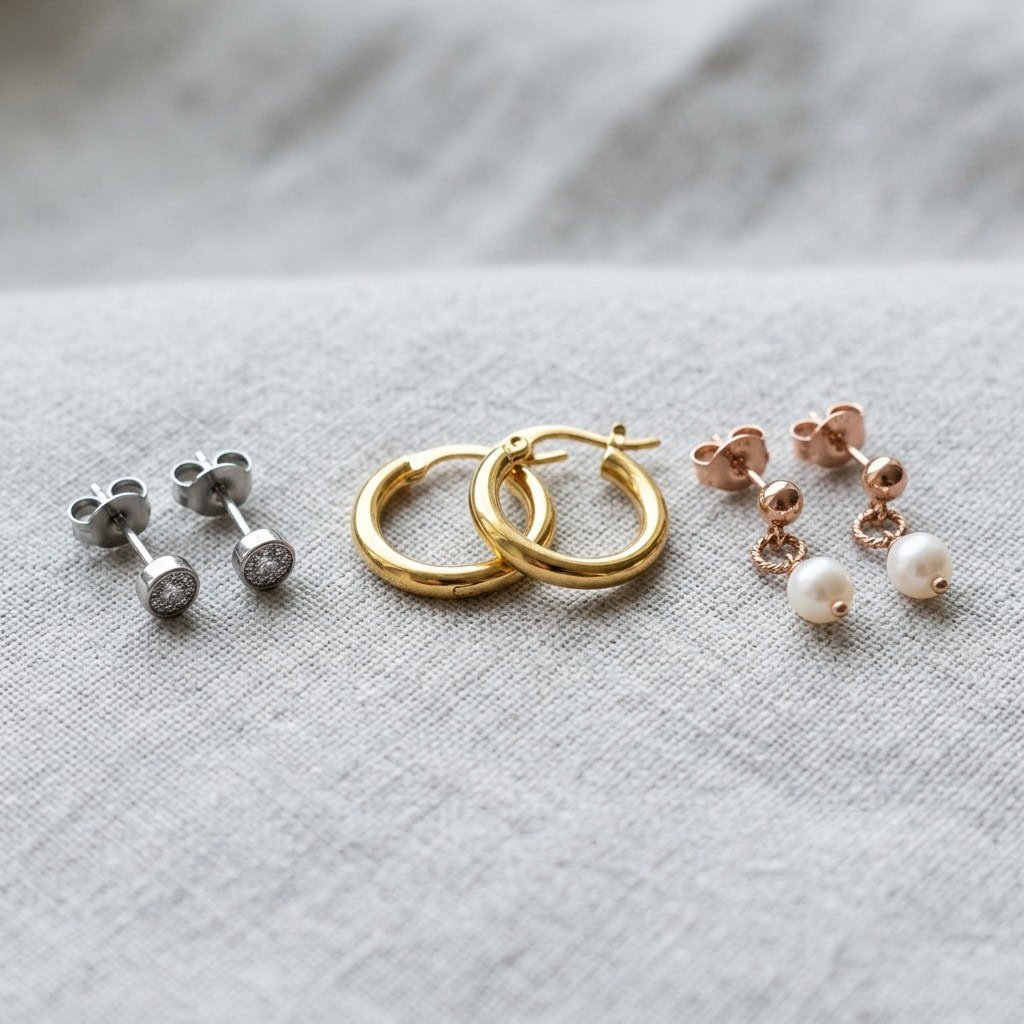
Earrings
Plan studs, hoops, drops, huggies, zircon styles, pearl styles, and coordinated pairs. Engineering review covers post position, verticality, connection strength, edge condition, weight balance, closure function, stone security, surface finish, and packaging protection against bending or scratching. Skin-contact and target-market testing requirements should be declared before any physical sampling begins.

Rings
Create fixed-size bands, open rings, signet styles, stacking rings, engraved rings, and stone-set designs. The technical specification should record the size system, actual inner diameter or circumference, width, thickness, edge profile, tolerance, engraving location, finish, and size allocation for production. Approved gauges or buyer size charts provide the production reference.
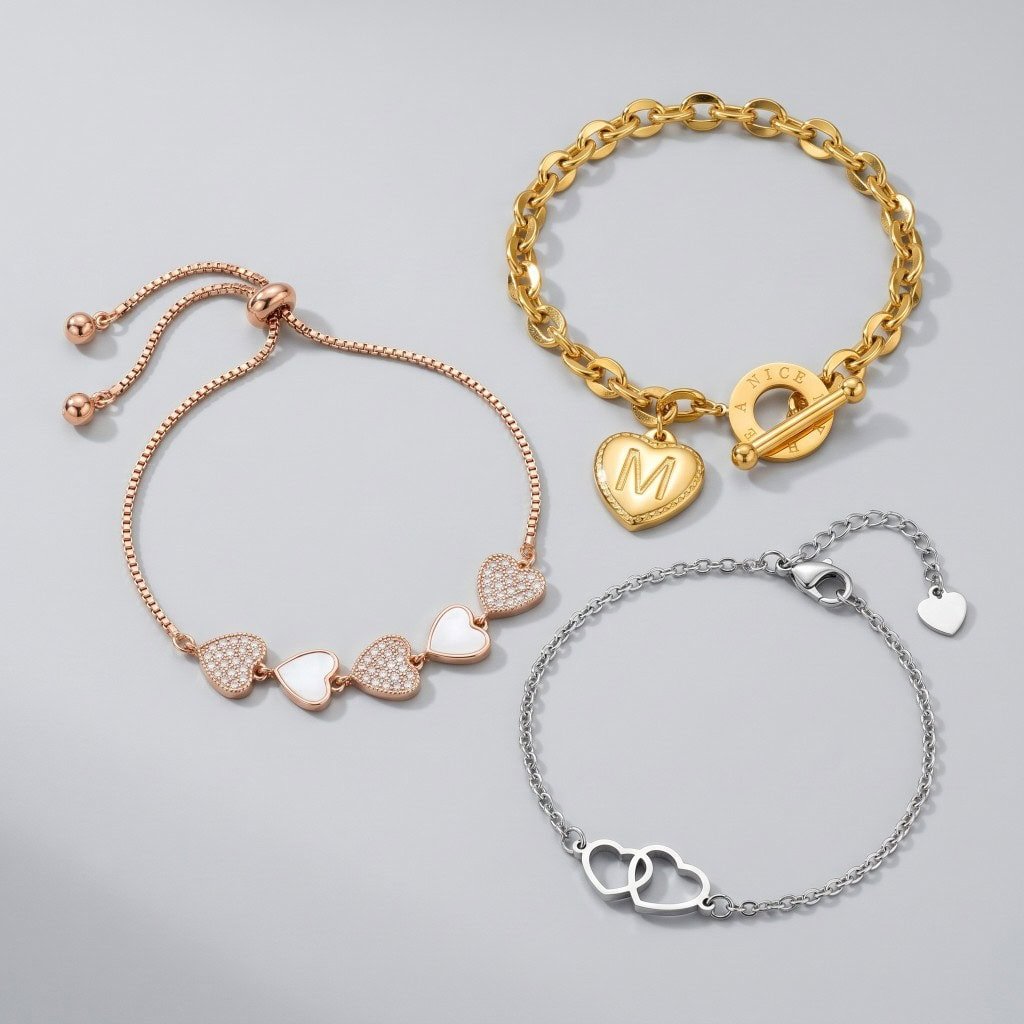
Bracelets
Build chain bracelets, tennis styles, ID bracelets, charm bracelets, and bead combinations. Confirm finished length, extension range, clasp type, connecting rings, pull requirements, stone or charm distribution, comfort, plating process, logo component, and packaging method for the target sales channel. Defined functional checks help reduce avoidable closure and connection complaints.
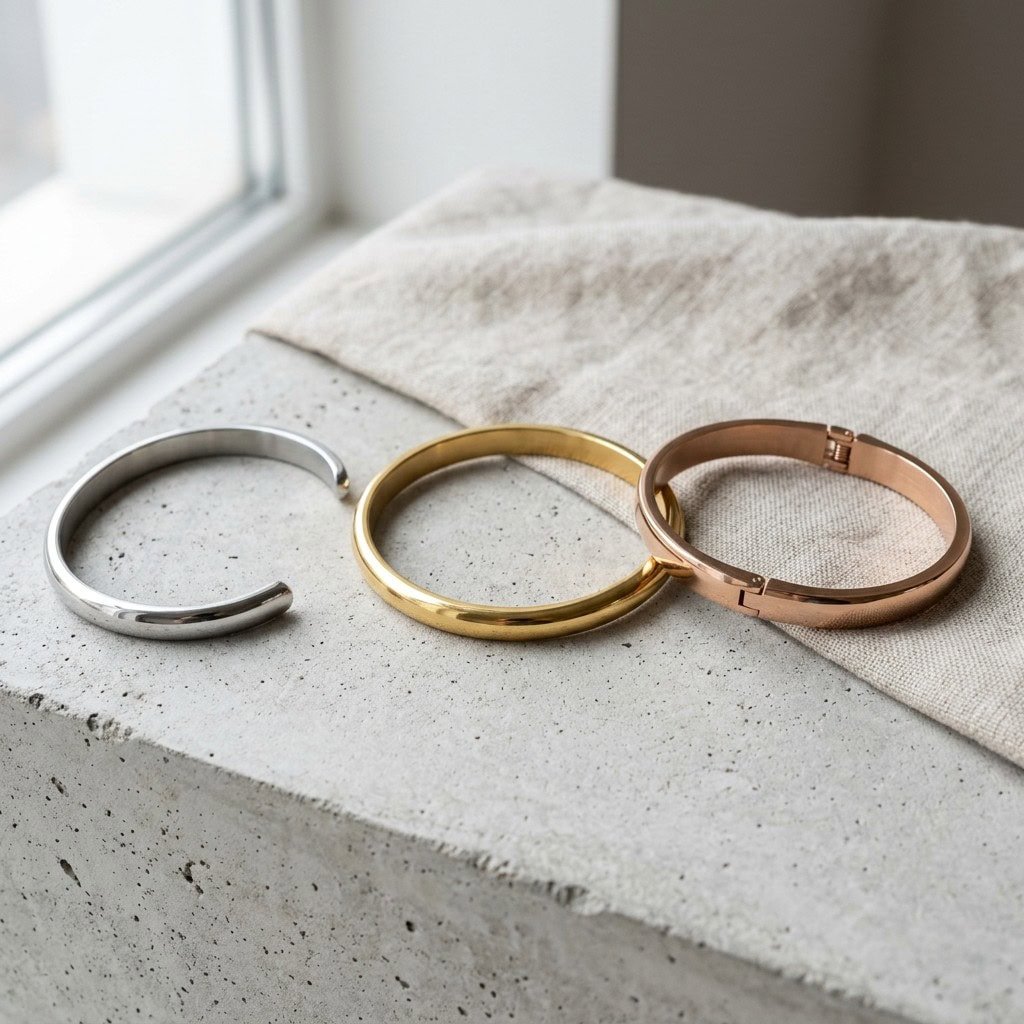
Bangles
Develop open cuffs, closed bangles, hinged bangles, screw-lock structures, and stacking combinations. Chicolink reviews wrist dimensions, opening clearance, hinge or lock function, roundness, thickness, deformation risk, polish level, PVD coverage, and the protective insert needed for shipment. Sample approval should include both appearance and repeated opening or closing functional checks.
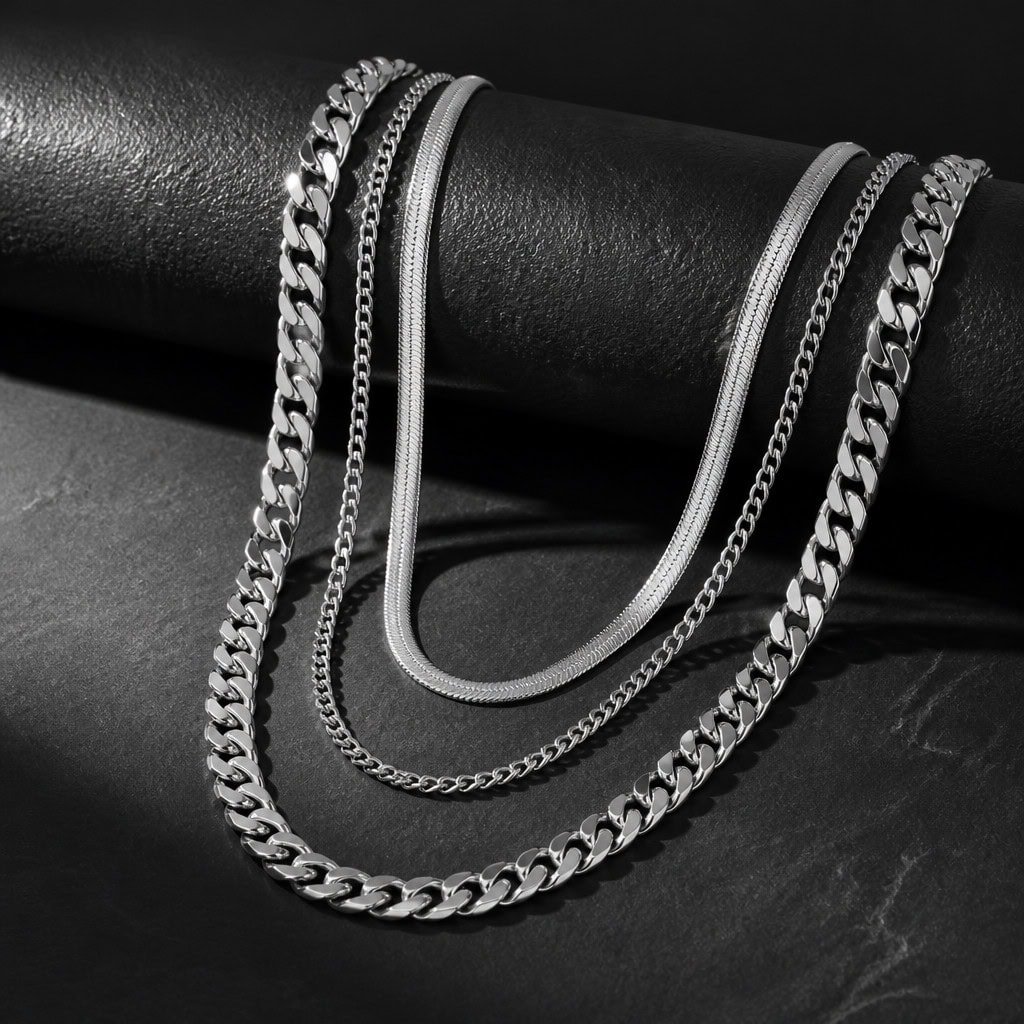
Chains
Source or develop box, Figaro, Cuban, cable, curb, snake, rolo, and other applicable chain structures. Specifications should define wire or link dimensions, finished length, welding or closure condition, clasp, extension chain, logo tag, pull performance, polish, color, and batch consistency requirements. Heavier structures require separate weight, cost, and packaging evaluation.
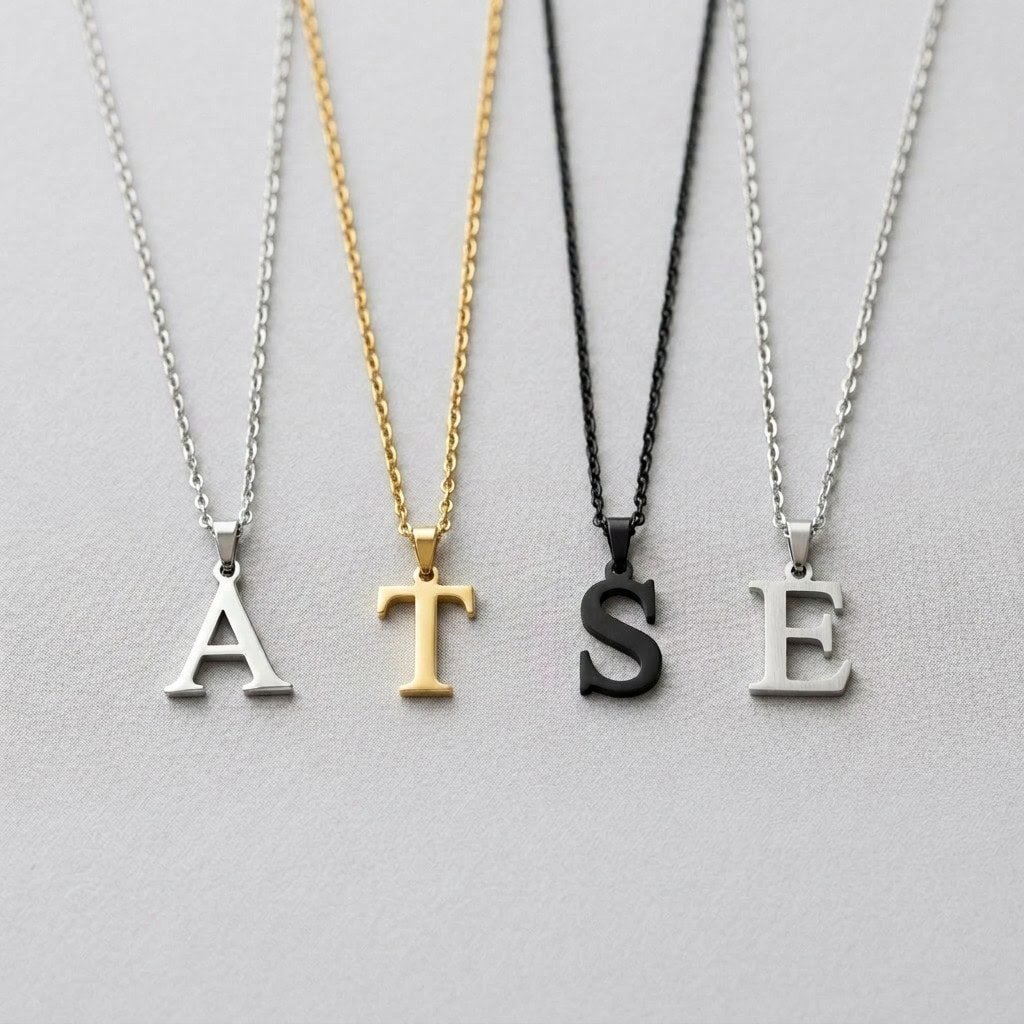
Pendants
Turn initials, symbols, logos, cultural graphics, text, geometric forms, and original concepts into pendants through applicable casting, stamping, CNC, laser cutting, engraving, enamel, stone setting, or combined processes. Intellectual-property authorization and artwork ownership must be confirmed before development. Bail dimensions and chain compatibility are reviewed as part of the product structure.
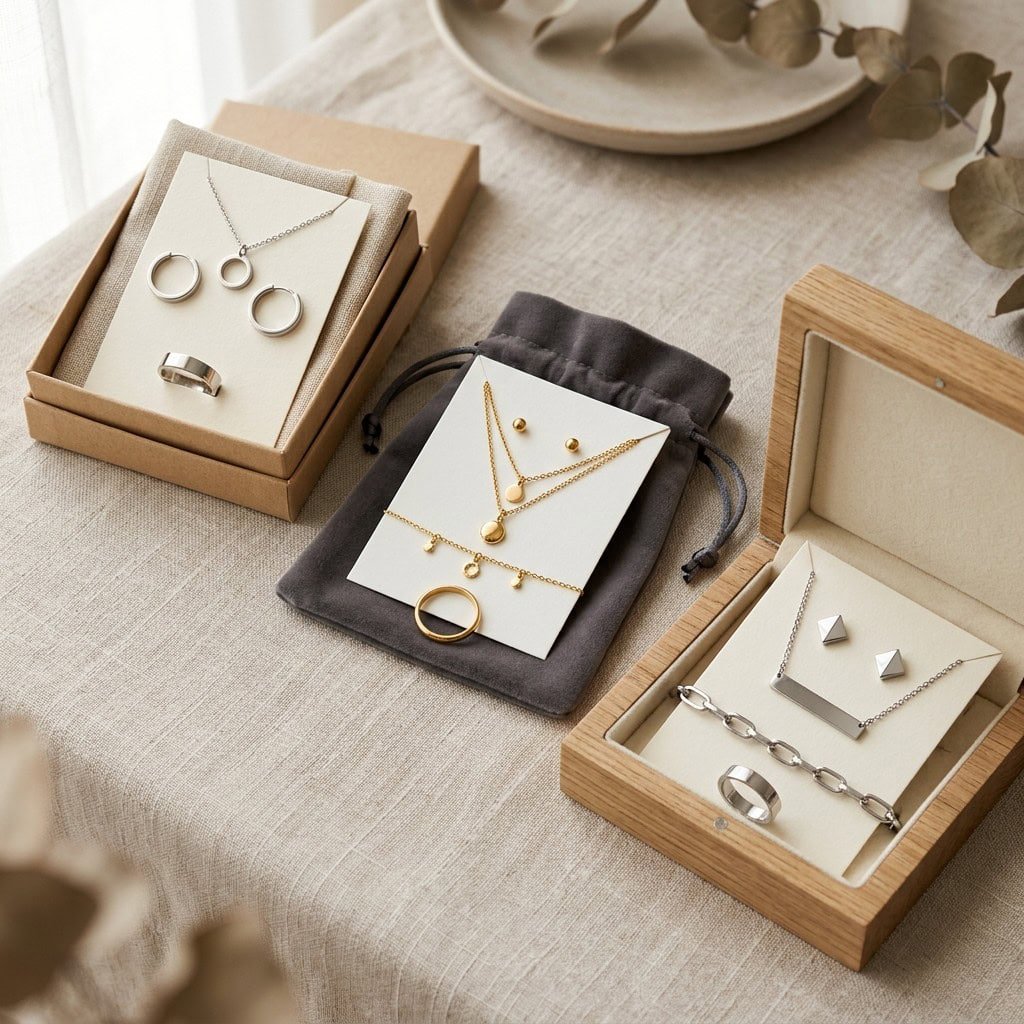
Jewelry Sets
Combine necklaces, earrings, rings, bracelets, or bangles into coordinated sets that share finish, stones, design motifs, and packaging. Sets can increase average order value, simplify campaign storytelling, and support gift programs, but every component still requires its own approved specification and quality points. The box insert and set barcode must match the final combination.
Choose the Right Manufacturing Route
We use four manufacturing routes, each with a different design starting point and approval responsibility. Selecting the route prevents a standard-style order from becoming uncontrolled custom development and prevents an original design from being treated like a catalog selection. Chicolink records the chosen route in the project scope before design, sample, tooling, or production work is released. The comparison below shows how your input, our output, and change control differ by route.
| Supply Route | Starting Point | What You Provide | Chicolink Deliverable | Change Control |
|---|---|---|---|---|
| Existing or Standard Styles | A Chicolink style selected for launch or replenishment | SKU or reference, variants, quantity, unit packing, destination | Availability result, confirmed product version, sample if requested, order specification | Changes to structure move the project into modified or custom review |
| Modified Standard Styles | An existing structure with controlled brand-specific changes | Base style plus requested finish, stone, size, logo, component, or presentation change | Feasibility result, revised specification, required proof or sample, production route | Only listed modifications are project-specific; the base design remains an existing structure |
| OEM Development | A buyer-owned design or physical reference | Authorized files, dimensions, materials, performance needs, finish, target market, and commercial brief | Engineering review, production drawing or technical record as applicable, sample, approved manufacturing specification | Revisions are logged against the buyer-controlled design and agreed tooling terms |
| ODM Development | A brand direction that is not yet a complete manufacturing design | Target customer, moodboard, category, price position, design language, functional needs, and launch objective | Concept-to-production proposal, structure and process development, sample, and approved product record | Chicolink and the buyer define design ownership and approval responsibilities before development |
What Changes After Your First Successful Order
The first order proves whether the product can sell; the next order tests whether the supply system can repeat it. Chicolink converts successful SKUs from one-time instructions into controlled replenishment records. We preserve the approved product basis, review changes separately, plan inputs against forecasts, and define the evidence needed to release each reorder without reopening every original decision. The goal is a repeatable operating record, not a promise that every batch is automatically identical.
Freeze the Sellable Version
- Record the version that generated the reorder: dimensions, material, finish, stones, logo, size or color allocation, and unit presentation.
- Separate approved production information from marketing references and earlier sample comments.
- Assign a project and SKU reference that both teams can use in forecasts, purchase orders, inspection, and issue review.
Control Every Change
- Treat a new color, size, stone, logo position, component, or packaging version as a defined change, not an informal note.
- Review its cost, sample need, material availability, test impact, and effect on existing stock.
- Release the revised version only after the designated buyer contact approves the updated record.
Plan Inputs From Forecasts
- Share the intended reorder date, quantity range, variant mix, campaign window, and any phased-delivery need.
- Chicolink reviews material, component, plating-batch, packaging-stock, inspection, and production-capacity requirements.
- Forecasts support planning; final production is released only against confirmed commercial terms.
Review Performance by Batch
- Link inspection findings, approved deviations, corrective actions, and delivery records to the relevant order or batch.
- Compare recurring issues by product and process instead of relying on isolated messages.
- Use the review to update the next order’s risk points, inspection focus, packing method, or production instruction.
Make Your Design Production-Ready Before Sampling
A visually attractive concept is not automatically ready for stable stainless steel production. Chicolink uses design-for-manufacturability review to identify structure, process, cost, quality, and timing risks before the project enters sampling. Final parameters are approved by engineering based on the actual design, material, process route, sample, and production capability. A complete review gives founders a clearer basis for approving sample fees and helps procurement teams document why a particular material, structure, mold, finish, or assembly route was selected.
Information Needed for an Effective Review
- Reference image, sketch, CAD, 3D file, or physical sample
- Product category, intended use, wearer, and target market
- Dimensions, size system, weight target, and key tolerances
- Preferred 304 or 316L stainless steel, stones, pearls, enamel, or other components
- Target plating color, polish level, texture, logo, and packaging
- Target quantity, price range, sample plan, launch date, and testing requirements
What Chicolink Reviews
- Manufacturing route: casting, stamping, CNC, laser cutting, turning, forming, or combined processes
- Wall thickness, openings, edges, connection points, hinges, threads, clasps, posts, and stone-setting structures
- Polishing access, plating coverage, color risk, assembly sequence, packaging protection, and inspection method
- Tooling needs, expected production difficulty, quality risks, cost drivers, and schedule dependencies
What You Receive Before Sampling
- Proposed manufacturing route and material/finish options
- Missing information and decisions requiring customer confirmation
- Identified quality, cost, or lead-time risks
- Sample, mold, and quotation basis after engineering and costing review
Follow a Controlled Path From Brief to Shipment
Every startup project needs defined decision points. Chicolink connects commercial confirmation, engineering, sampling, production, quality control, and packaging in one documented workflow. The process can be shortened for available standard styles or expanded for complex OEM/ODM development, but no bulk order should begin without an agreed specification and approval basis. At each step, we show you the required information, review scope, expected output, and approval that releases the next activity.
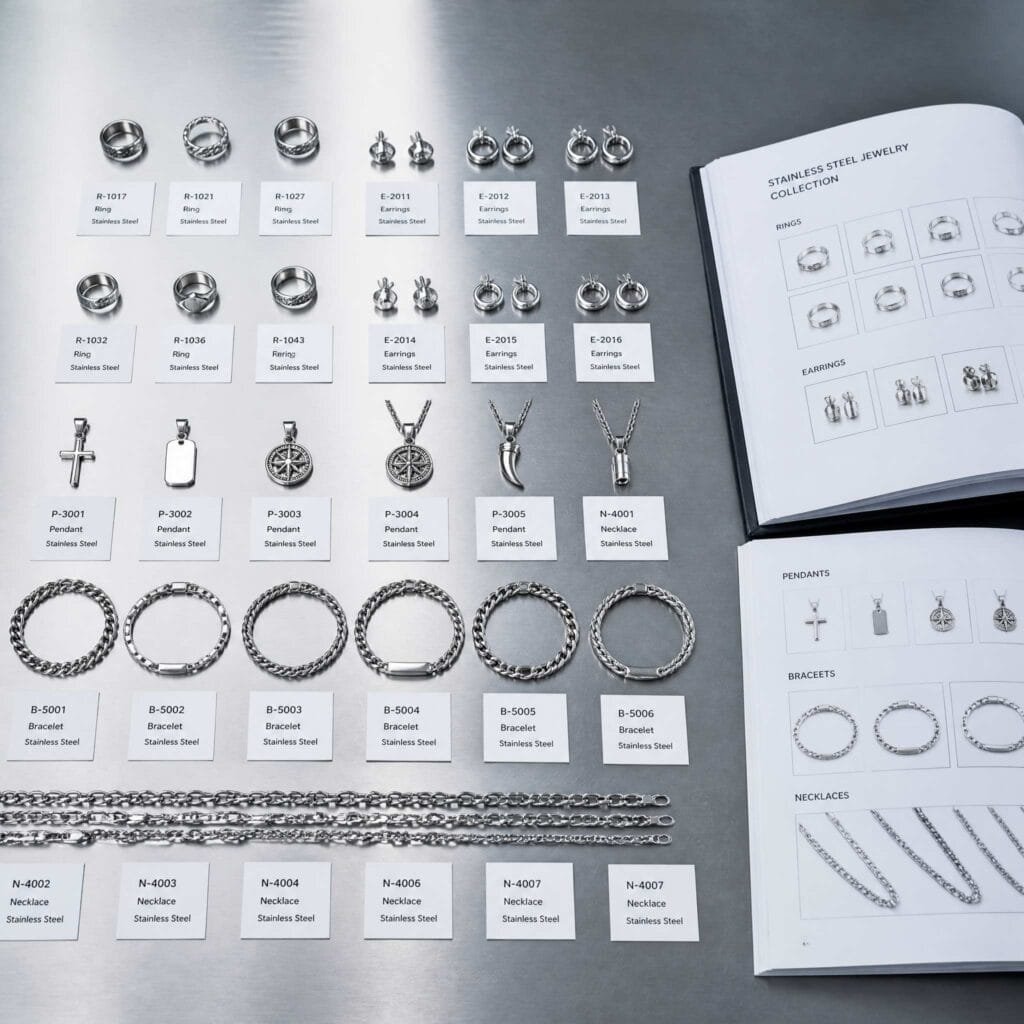
Eight-Step Project Workflow
1. Inquiry and Brief Confirmation: We review product type, quantity, material, finish, logo, packaging, target market, delivery destination, and required date. Our target is to acknowledge routine inquiries within 6 working hours.
2. Feasibility and Quotation Review: Standard products are quoted against SKU, availability, quantity, color, and packaging. Complex projects receive an initial assessment within 24 hours when possible, followed by formal engineering and cost review.
3. Drawing or Product Selection: You select existing styles or confirm drawings, dimensions, structure, materials, finishes, and required tooling for custom development.
4. Sample Development: Existing-style samples commonly require 3–7 working days. OEM/ODM samples commonly require 25–30 working days. Sample fees normally apply.
5. Sample Inspection and Approval: Chicolink checks the sample against the project specification. Customer comments, revisions, approved samples, and approved files become the bulk-production reference.
6. Bulk Production and Process QC: PMC coordinates materials and production stages. IQC, in-process inspection, first-piece confirmation, plating checks, and product-specific controls are applied as agreed.
7. Final Inspection and Packaging: Products are checked for appearance, dimensions, function, finish, logo, quantity, SKU, and packaging. Customer or third-party pre-shipment inspection can be coordinated in advance.
8. Shipment and Follow-Up: Logistics are arranged against destination, postcode, carton data, trade term, insurance, tax requirements, and requested delivery method. Records support issue review and repeat orders.
Specify Materials and Finishes for Your Market
Material and surface treatment affect appearance, manufacturing route, price, wear performance, testing, and customer expectations. Chicolink does not apply one material or plating claim to every product. We review the intended use, structure, target market, finish, budget, and test requirements before confirming the production specification. Tell us which sales claims you plan to use, because terms such as waterproof, hypoallergenic, nickel-free, or fade-proof require evidence and cannot be assumed from the base-metal name alone.
| Option | Typical Project Use | Chicolink Review Points | Important Condition |
|---|---|---|---|
| 304 Stainless Steel | Mainstream commercial jewelry and structures where cost and stable supply are important | Product structure, exposure conditions, polish, plating, target market, and customer specification | Suitability must be confirmed for the actual product and sales requirement |
| 316L Stainless Steel | Products requiring a different material specification, surface expectation, or closer-contact positioning | Structure, machining or forming route, finish, target market, cost, MOQ, and testing | Do not describe as automatically suitable for every design or as absolutely hypoallergenic |
| Bare Steel Finish | Silver-color products using polished, brushed, matte, sandblasted, or other approved surfaces | Cleaning, passivation if applicable, edge condition, scratch protection, and surface consistency | Final process depends on the selected material and surface system |
| PVD/IP Coating | Gold, rose gold, black, gunmetal, and other approved color programs | Pretreatment, target color, approved sample, process parameters, coverage, color consistency, and product geometry | Wear performance depends on material, process, design, thickness, care, and use conditions |
| Water Plating | Approved finishes or components requiring an applicable electroplating route | Material compatibility, pretreatment, layer system, target appearance, adhesion, and test requirements | Process must be confirmed by product; it is not interchangeable with PVD in every application |
| Decorative Components | Zircon, pearl, enamel, resin, shell, natural stone, or approved accessories | Size, color, setting or bonding, attachment strength, plating sequence, packaging, and replacement tolerance | Component appearance and natural-material variation require an agreed acceptance standard |
Make Your Product Recognizable as Your Brand
Product branding starts with the mark that remains attached to the jewelry, not with a box or shipping label. Chicolink helps convert your logo, initials, collection code, text, or symbol into a manufacturable product detail. We confirm artwork, marking area, scale, position, contrast, process sequence, ownership, and approval evidence so the product identity remains consistent across a collection.
Laser Logo
Laser marking can place an approved logo, text, symbol, size, or reference code on suitable product surfaces. Chicolink reviews available marking area, line width, contrast, orientation, surface curvature, plating sequence, readability, and customer artwork before confirming the method and sample requirement. A marked sample or visual reference should be approved before the logo is released for bulk production and final inspection.
Engraved Brand Details
Inside-ring text, names, dates, short messages, symbols, and applicable stamped or etched details can support personalization or brand identification. The final specification must define content, font artwork, depth or visual effect, position, direction, size, character limit, and intellectual-property authorization. Variable personalization also requires a controlled data file, naming rule, proofreading responsibility, approval process, production sequence, and final verification record for traceability.
Logo Tags
Small logo tags, plates, charms, or branded connectors can make a standard silhouette feel specific to a collection. Chicolink reviews available space, tag thickness, attachment method, edge condition, weight, logo scale, plating sequence, and connection strength. The tag becomes a separate component specification with its own sample and inspection points. Its attachment is checked as part of the finished product, not as packaging for every launch.
Collection Naming
Collection names, SKU codes, motif rules, and finish names help customers and internal teams understand a range. Chicolink can place approved names or short codes on suitable product areas, tags, or documents. The production file should distinguish permanent product text from changeable retail or channel information. This distinction prevents a marketing-name update from unnecessarily changing the manufactured item. We keep the approved naming rule linked to the relevant product version.
Personalized Text
Names, dates, initials, short messages, symbols, or size markings can be developed through applicable laser, stamped, etched, or engraved processes. Variable text requires a controlled data file, character limit, font, position, proofreading responsibility, production sequence, and final verification record. Personalization is confirmed by product type and process capability. We also define how errors or duplicate entries will be handled for final production.
Artwork Control
Chicolink works from buyer-supplied or approved vector artwork and keeps the approved file linked to the project version. Artwork control covers logo ownership, font outlines, color reference, scale, direction, mirror requirements, placement, and the person authorized to approve changes. Files that are not approved remain development references, not bulk-production instructions. The released file receives a clear version reference for production and inspection.
Understand MOQ, Samples, Fees, and Lead Times
We publish practical working references so you can estimate effort before committing time and budget. The figures below are common Chicolink references, not universal promises. Final MOQ, fee, and timing depend on the selected product, materials, tooling, plating batch, stones, size ratio, packaging, testing, approved sample, payment, and production schedule. Your quotation will state how MOQ is calculated, what starts the lead-time clock, which costs are separate, and which approvals are required before production can continue.
| Item | Common Reference | What Changes It | Confirmation Point |
|---|---|---|---|
| Existing or Standard-Style MOQ | 120 pieces per style | Inventory, color, size, mixed allocation, packaging, and product status | Written quotation and SKU availability confirmation |
| OEM/ODM MOQ | 500 pieces per style | Tooling, material, plating batch, size ratio, components, stones, and process difficulty | Engineering review and formal quotation |
| Existing-Style Sample | 3–7 working days commonly | Availability, color, logo, packaging, destination, and payment | Sample order confirmation |
| OEM/ODM Sample | 25–30 working days commonly | Design complexity, drawings, mold, process route, components, plating, and revision rounds | Starts after requirements, fees, and files are confirmed |
| OEM/ODM Bulk Production | 25–45 working days commonly | Quantity, material readiness, production complexity, plating, packaging, testing, and inspection | Starts from agreed approval and order conditions |
| First Inquiry Response | Target within 6 working hours for routine inquiries | Time zone, information completeness, file review, and technical complexity | Receipt confirmation or request for missing information |
| Complex Project Assessment | Initial direction within 24 hours when possible | Engineering review, costing, tooling, materials, and missing specifications | Initial feasibility feedback; not necessarily a final quotation |
| Sample Fee | Normally applicable | Product, process, quantity, development work, packaging, and delivery | Confirmed before sample work starts |
| Mold Fee | Applicable when new tooling is required | Mold type, product structure, revision, expected life, and ownership terms | Written tooling quotation and agreement |
| Fee Credit | Not automatic | Bulk order value and written commercial agreement | Must be confirmed in writing before the order |
Build Packaging You Can Afford to Reorder
A packaging system is only useful when the brand can reorder it without excessive unused stock. Chicolink separates required protection, visible presentation, customer information, and later upgrades so each item has a clear purpose. We review unit cost, component MOQ, sample work, assembly time, freight volume, remaining inventory, and compatibility with future product sizes before the first packaging order. The four layers below create a budget sequence rather than a fixed package bundle.
Essential Protection
We first define the least packaging needed to prevent scratching, tangling, bending, stone damage, or component contact. The solution may use a protective sleeve, individual bag, card attachment, separator, insert, or box depending on the product. Protection is tested against the actual jewelry orientation and shipment method, not selected from appearance alone. This establishes the minimum physical protection before presentation choices are added.
Visible Presentation
Next, we select the presentation element the customer will actually see: a jewelry card, pouch, simple box, or coordinated set box. Chicolink checks product fit, artwork area, material, color, print or foil process, assembly, and photography appearance. One versatile format can be more practical than several low-volume packaging versions. This is a packaging decision, separate from the logo applied to the jewelry itself.
Customer Information
Care instructions, material notes, brand messages, QR codes, and required consumer information should earn their place in the package. We confirm which content belongs on the card, insert, label, or digital destination. You supply and approve legal, claim, language, and channel text; Chicolink controls the approved artwork version used in packing. Separate language or market versions are logged as separate packaging records.
Upgrade Trigger
Premium boxes, custom inserts, seasonal sleeves, additional languages, and multiple colorways are added when sales volume or channel requirements justify them. Chicolink records the trigger, such as a reorder threshold, retailer launch, gift program, or higher price tier. Existing packaging stock and component lead time are reviewed before a new version replaces the current one. This prevents a premium upgrade from stranding usable first-order packaging.
Prepare Packaging for Your Actual Sales Channel
Packaging is part of the product specification, not a final decorative decision. Chicolink reviews protection, presentation, labels, assembly, carton sorting, and shipment requirements against the channel where the jewelry will be sold. Send the current platform, warehouse, or retailer rules because external requirements can change. Confirming the channel early also helps us estimate packaging MOQ, sample work, unit assembly, carton dimensions, freight impact, inspection points, and the risk of incorrect labels.
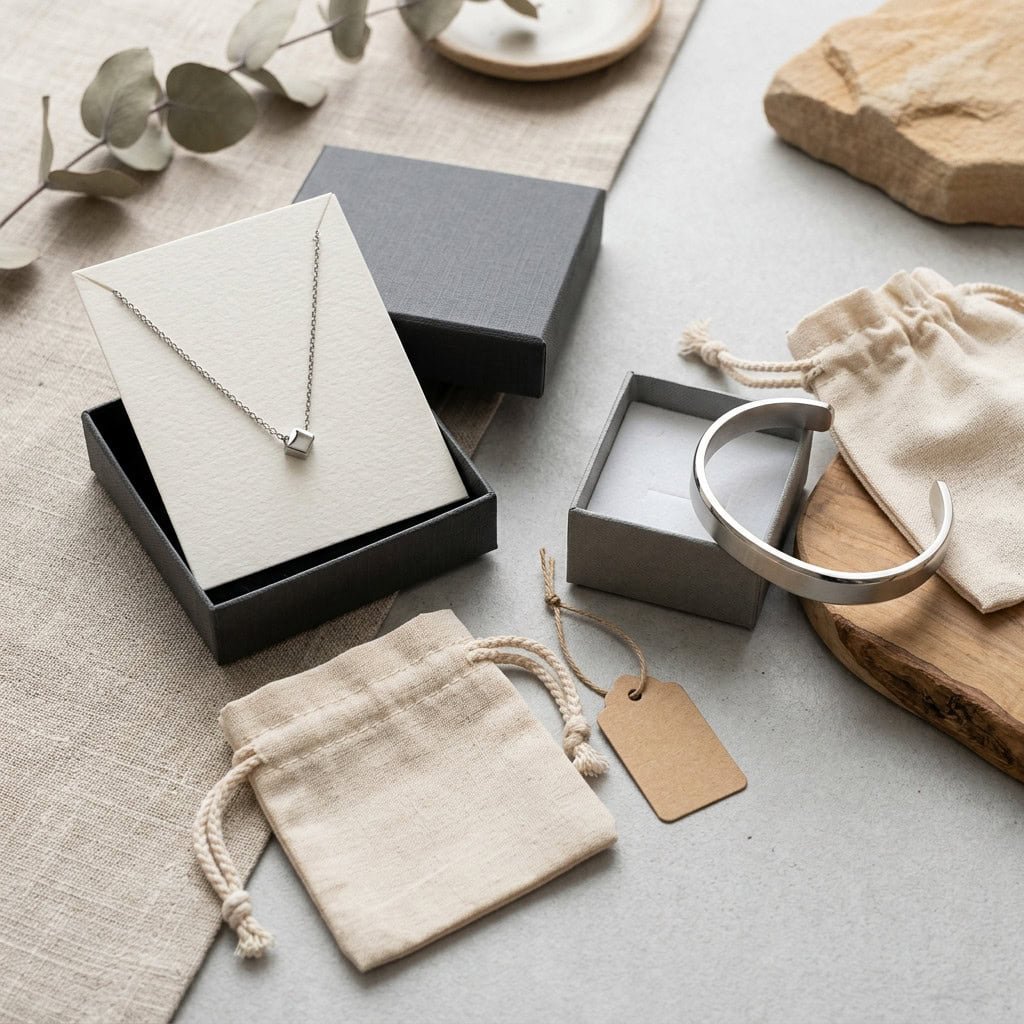
DTC and Shopify
For direct-to-consumer orders, combine product protection with a controlled unboxing sequence. Options may include jewelry cards, pouches, gift boxes, care cards, story cards, QR codes, and set packaging. Chicolink confirms component dimensions, product fit, logo files, packing order, barcode needs, and shipping protection before bulk packing. The chosen presentation should fit the brand price point without creating excessive parcel weight, volume, or assembly work.
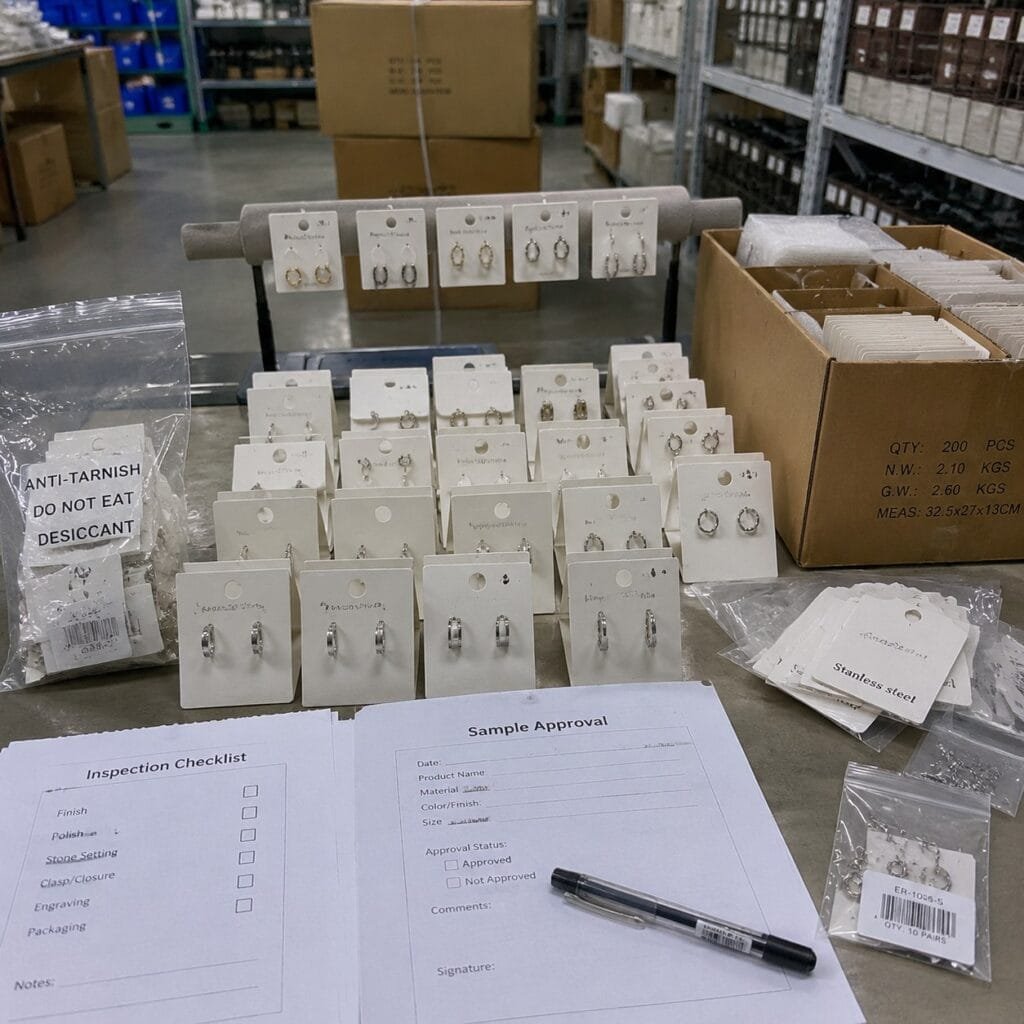
Retail and Boutiques
Retail packaging may need a hanging card, display-ready box, barcode, SKU sticker, security-label position, or store-specific assortment. Chicolink works from your display and receiving requirements, then checks product orientation, card strength, attachment, scanning, packing quantity, carton sorting, and pre-shipment inspection points. Send store manuals, approved planograms, label data, and carton rules before the packaging sample is approved. This module covers store execution rather than product branding.
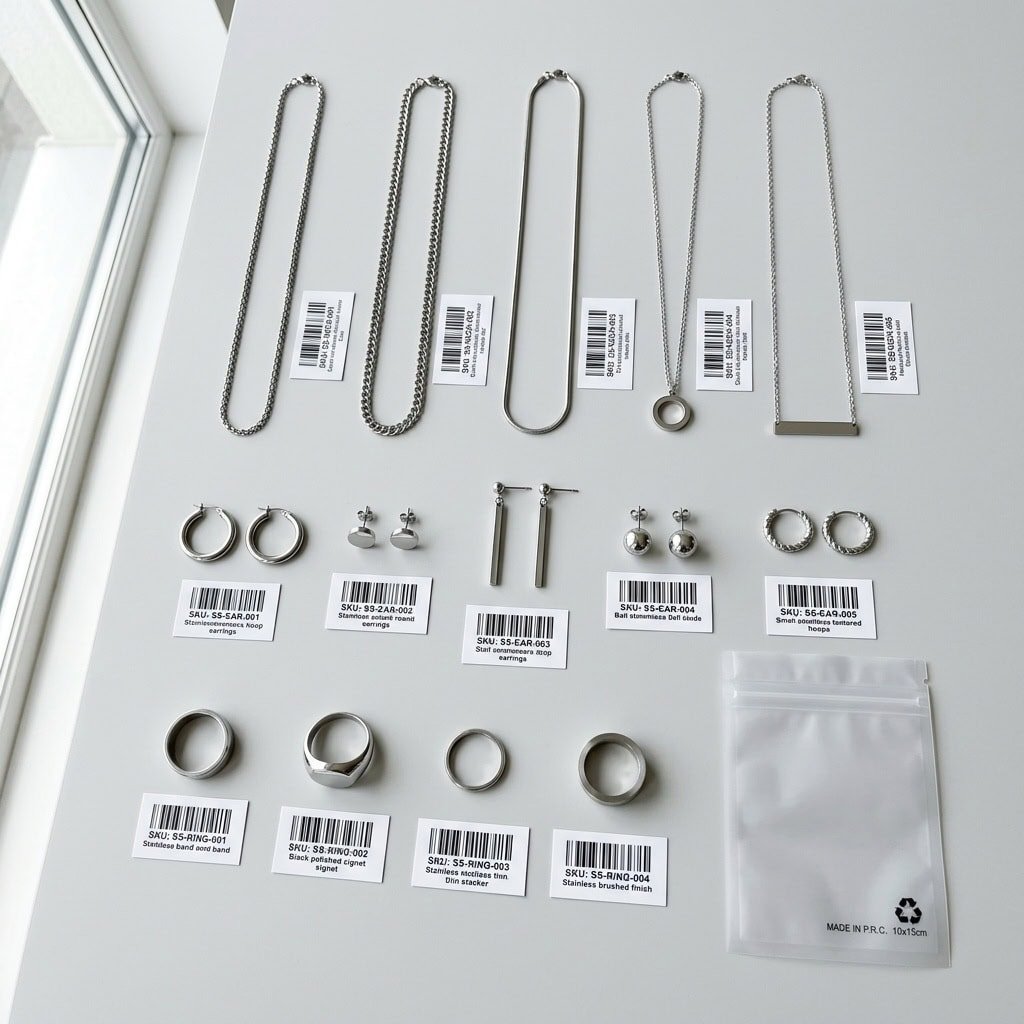
Amazon and FBA
Amazon-related packing may include individual bags, anti-scratch protection, FNSKU labels, set labels, bundle packing, carton labels, or warning text where required. Send the current Seller Central or warehouse specification. Chicolink applies approved files and placement instructions and can coordinate packing checks before shipment. You remain responsible for current platform data and listing-to-SKU accuracy. This keeps platform preparation distinct from general private-label design.
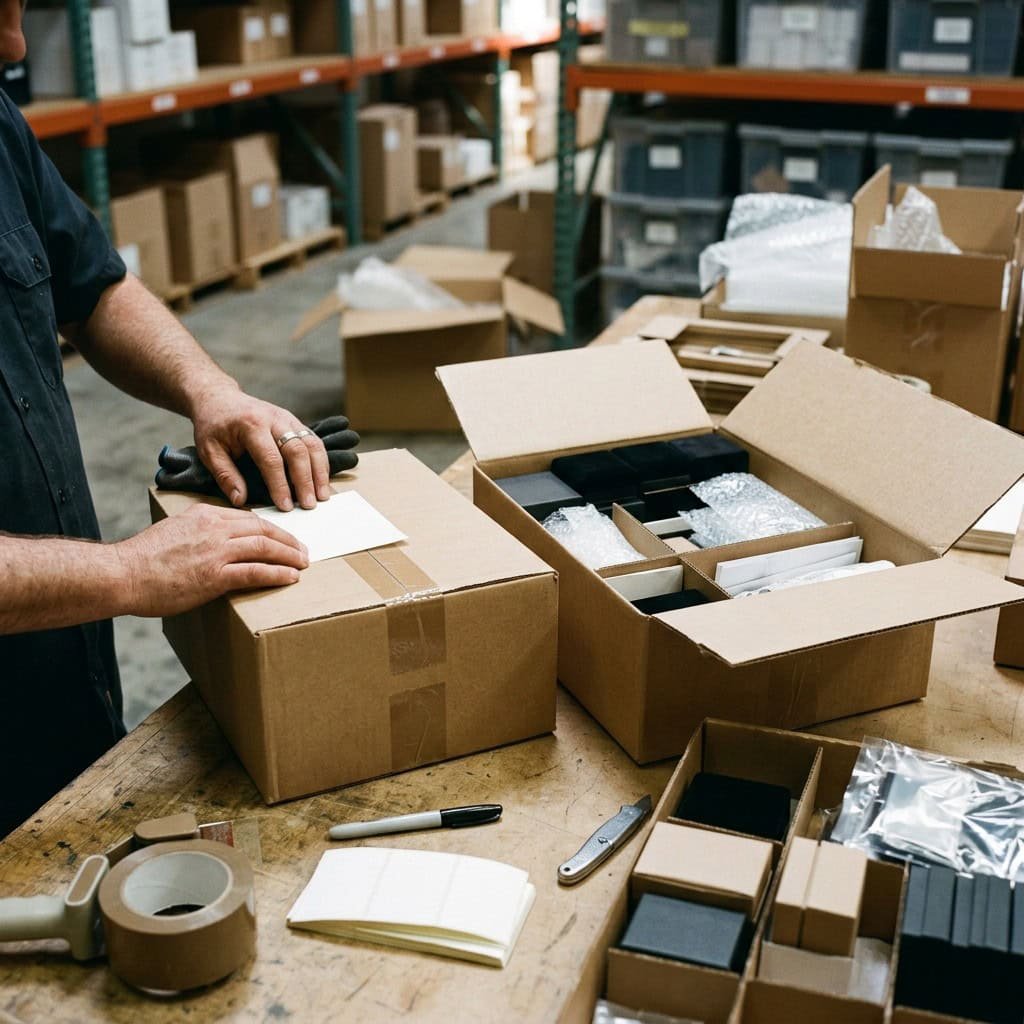
Wholesale Distribution
Wholesale packing prioritizes protection, fast counting, SKU separation, efficient storage, and economical redistribution. Options may include individual bags, master packs, SKU labels, color or size separation, inner-box quantities, carton marks, and packing lists. Chicolink confirms the hierarchy before production to reduce receiving and replenishment errors. Tell us whether products will be resold as packed, repacked locally, or divided among multiple destinations.
Control Quality From Incoming Material to Shipment
Quality is defined before production and checked throughout the process. Chicolink combines incoming inspection, first-piece confirmation, in-process control, final inspection, packaging verification, and traceability. The exact inspection level, tolerances, tests, sample plan, and acceptance criteria are agreed according to the product and buyer requirements. Customer or third-party inspection can be coordinated in advance.
Incoming Material Check
IQC checks applicable stainless steel, components, stones, packaging, and supplied materials against purchase and project requirements. Material grade, dimensions, surface state, color, quantity, documentation, or other agreed characteristics are reviewed before release into production. Nonconforming inputs are separated for review and disposition.
First-Piece Confirmation
The first production output is compared with the approved drawing, sample, specification, color reference, and critical quality points. Confirming the first piece helps identify setup, tooling, dimension, assembly, logo, or finish problems before they affect the full batch. Approval status is recorded before normal production continues.
In-Process Inspection
IPQC follows critical stages such as forming, machining, casting, welding, polishing, setting, assembly, and plating. Inspectors record applicable appearance, dimensions, function, process status, and exceptions so corrective work can occur before the next operation. Controls are selected according to product risk.
Dimension and Function
Checks may cover ring dimensions, chain or bracelet length, product thickness, opening size, post position, clasp operation, hinge movement, screw engagement, component fit, symmetry, and buyer-defined tolerances. The inspection method follows the confirmed specification. Measuring tools and reference points must match the drawing definition.
Surface and Plating
Chicolink checks applicable polish, texture, scratches, pits, burrs, sharp edges, plating coverage, color, brightness, contamination, and visible process defects. Approved samples and color references provide a more objective basis than descriptive color names alone. Agreed viewing conditions improve consistency when judging appearance.
Attachment Strength
Product-specific checks may cover clasps, connecting rings, chain links, ear posts, stones, glued components, pendants, hinges, or other risk points. Test method, force, sampling level, and acceptance criteria should be confirmed for the design and sales channel. Results are evaluated against the agreed requirement.
Packaging Verification
Before shipment, Chicolink verifies applicable product identity, quantity, logo, jewelry card, pouch, box, barcode, SKU, set combination, label position, packing sequence, and carton mark. This step helps prevent receiving errors that can be as disruptive as product defects. Approved packaging samples and files guide the check.
Final Check and Traceability
FQC and agreed pre-shipment checks review finished goods against the approved standard. Internal reports, photos, videos, retained samples, batch information, or third-party inspection can be arranged according to the order and agreed documentation requirements. Inspection scope and document format should be requested before production.
Plan Testing for Europe and North America
Compliance requirements vary by market, product category, material, coating, component, age group, retailer, and sales channel. Chicolink can support internal checks, sample preparation, document coordination, and testing or inspection through agreed third-party organizations. Testing scope, standard, fee, lead time, sample quantity, and report validity must be confirmed before production scheduling. Provide the intended countries, product claims, retailer manual, and required standard versions so the test plan covers the correct SKU, color, components, and contact surfaces.
| Requirement | Buyer Concern | Chicolink Support | Condition Before Confirmation |
|---|---|---|---|
| Nickel Release | Skin-contact products entering applicable European channels | Material and finish review; support for EN 1811 and EN 12472-related testing where applicable | Confirm product, contact surfaces, target market, standard version, sample quantity, and laboratory |
| Lead and Cadmium | Restricted-substance risk for Europe, North America, retailers, or platforms | Component review and third-party testing coordination based on buyer requirements | Define tested parts, limit, method, color, stones, solder, coating, and report requirements |
| REACH Support | European chemical-restriction requirements | Existing valid information may be reviewed; product-specific testing can be arranged when required | Do not assume one report covers every SKU, color, material, component, or production batch |
| California Proposition 65 | Exposure and warning assessment for products sold into California | Testing or document support can be evaluated against your compliance plan | Confirm legal and channel requirements; Chicolink does not provide legal advice |
| RoHS Support | Requested by certain channels, gift programs, or special product applications | Applicability review and testing support where the buyer requires it | RoHS is not presented as a universal jewelry requirement |
| Artificial Perspiration | Reference evaluation for surface and plating behavior | Internal or third-party test planning can be discussed; an internal reference condition may use 40 +/- 2 C, 24 hours, pH 4.7 +/- 0.2 | Final method and acceptance criteria must be agreed for the project |
| Salt Spray | Comparative corrosion or coating evaluation | Applicable internal or third-party test planning based on product and finish | Chicolink internal references distinguish bare steel and plated/PVD products; customer criteria take priority |
| Third-Party Inspection | Independent verification before shipment | Factory audit and inspection coordination with SGS, Intertek, BV, buyer-appointed inspectors, or other approved parties | Booking, protocol, AQL, fees, timing, access, and reinspection conditions must be agreed in advance |
Reserve Capacity for Repeat and Bulk Orders
After a successful launch, Chicolink combines manufacturing capacity with production planning, engineering, in-house plating, quality control, packaging, and export coordination. Capacity is allocated against the actual product mix and confirmed schedule rather than treated as an unlimited promise. Share promotion dates, retailer launches, seasonal drops, or recurring replenishment forecasts early so materials, tooling, plating batches, packaging, inspection, and shipment windows can be reviewed together. This section shows the production resources available for that planning.
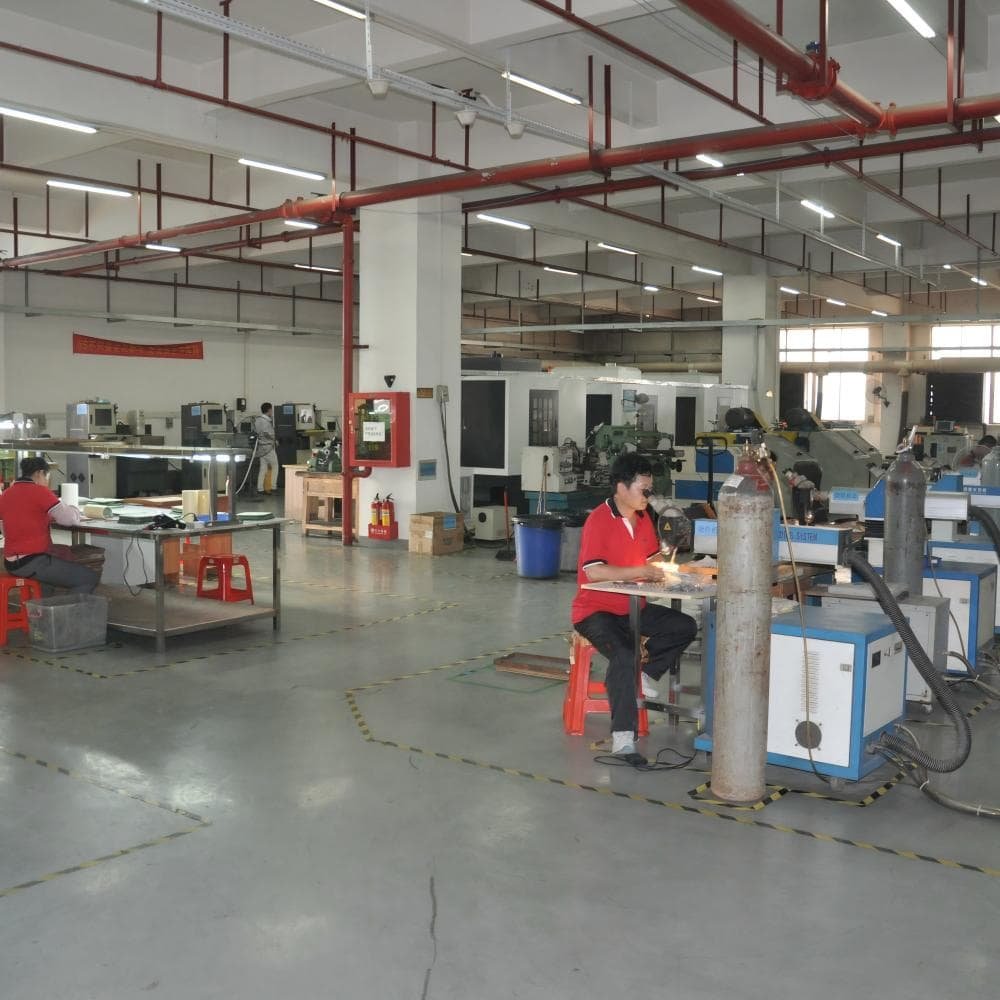
Production Resources for Scale-Up Programs
- Factory footprint: More than 5,500 square meters in Dongguan, China.
- Workforce: 400+ employees across production and supporting functions.
- Development team: 6 jewelry designers and 3 jewelry engineers.
- Monthly capacity: More than 200,000 pieces across applicable product and process combinations.
- Major equipment: 58 machines, including five CNC machines, four casting machines, three laser cutters, five laser welders, three laser logo machines, six stamping machines, four bending machines, seven drilling machines, eight polishing machines, four wax-injection machines, three lathes, and six PVD vacuum coating machines.
- In-house plating: PVD/IP, water plating, and other approved electroplating processes under unified sample, process, inspection, exception, and traceability controls.
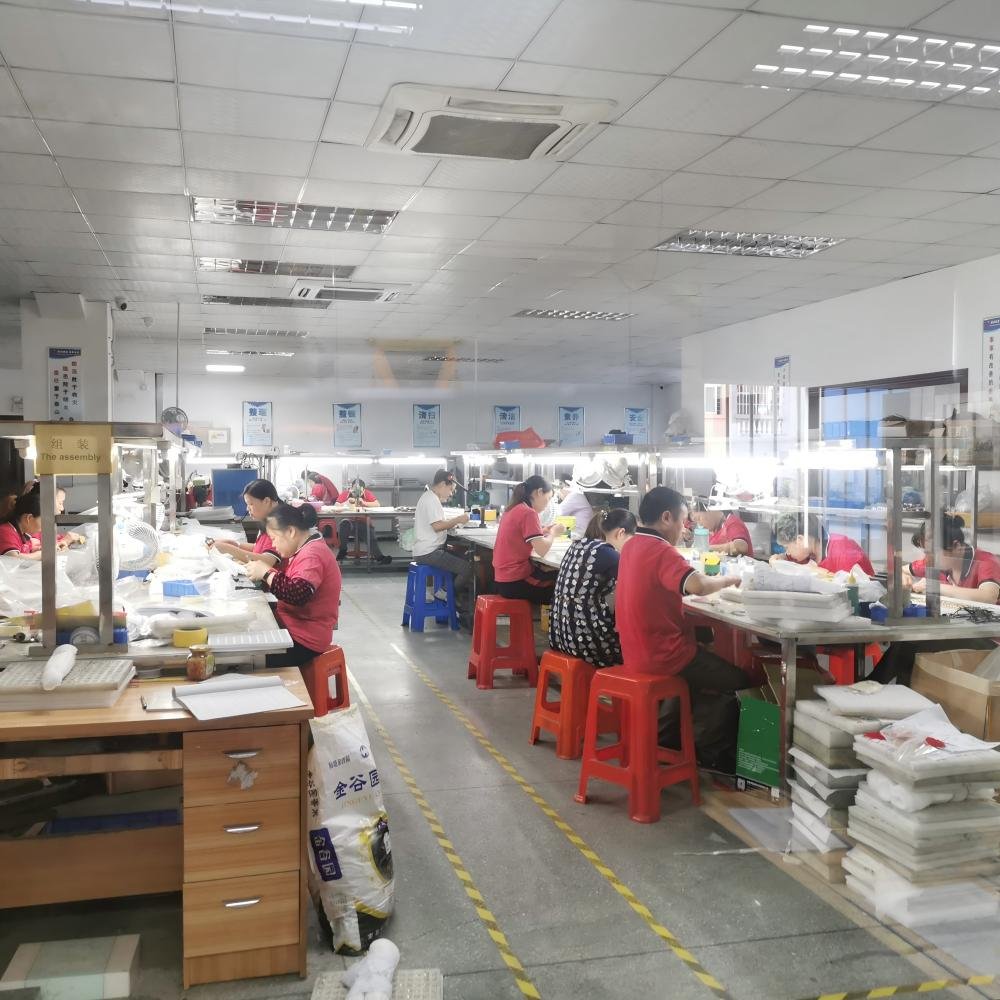
How Capacity Is Planned for Your Order
PMC reviews material readiness, tooling, manufacturing route, production stages, plating batch, packaging, inspection, and requested delivery date. Actual capacity depends on style complexity, order mix, color and size allocation, stone setting, quality standard, test requirements, and current production commitments. For repeat programs, forecasts and intended reorder windows should be shared early so materials, plating, packaging, inspection, and shipment can be planned together.
Representative Startup Sourcing Scenarios
The following scenarios show how Chicolink can structure common startup and new-category projects. They are representative project scopes, not claims about named customer sales results. Final quantity, cost, timeline, testing, packaging, and deliverables are confirmed only after Chicolink reviews your actual files and requirements. Use the closest scenario to describe your stage, primary constraint, intended supply route, expected deliverables, and the commercial data Chicolink needs to evaluate feasibility. No customer identity or commercial result is implied.
DTC Market Test
Use Scenario: A Shopify brand needs a focused first collection without original tooling.
Key Challenge: Control inventory while presenting a consistent brand identity.
chicolink Solution: Select four standard styles, confirm one plating color, add jewelry cards and protective unit packing, then record SKU and packaging instructions.
Result: A clearly specified test-order route ready for quotation and sample confirmation.
Original Signature Line
Use Scenario: A founder has sketches for three coordinated signature products.
Key Challenge: Convert visual ideas into manufacturable structures and controlled cost.
chicolink Solution: Review dimensions, weight, process route, material, PVD color, logo, tooling, sample plan, and packaging before formal quotation.
Result: A defined OEM development plan with approval checkpoints.
Fashion Brand Extension
Use Scenario: An established apparel brand opens a stainless steel jewelry category.
Key Challenge: Match the apparel moodboard while meeting structured vendor, packaging, and inspection requirements.
chicolink Solution: Translate the style direction into a coordinated six-SKU range, unified finish, logo system, retail packaging, barcode structure, QC plan, and third-party inspection option.
Result: A sourcing framework ready for your internal approval.
Scale-Up Reorder Program
Use Scenario: A growing online brand needs more consistent replenishment after identifying best sellers.
Key Challenge: Control plating color, product version, packaging inventory, and reorder timing.
chicolink Solution: Retain approved references, record specifications and packaging versions, plan production and plating batches, apply agreed QC, and confirm forecasts before each order.
Result: A repeat-order process with clearer responsibilities and checkpoints.
Startup Jewelry Manufacturing FAQ
These answers cover the commercial and technical questions startup brands usually ask before requesting samples or a quotation. Final terms are confirmed according to the product, design, quantity, finish, packaging, target market, testing, and delivery requirements. Send project-specific questions when your design or channel requires a different condition.
What is your minimum order quantity?
Existing or standard styles commonly start at 120 pieces per style. OEM/ODM projects commonly start at 500 pieces per style. MOQ can also depend on plating color, size allocation, mold, materials, stones, packaging version, and production batch. Chicolink confirms the calculation basis in the quotation.
Can I start without an original design?
Yes. You can begin by selecting existing or standard styles and adding approved private-label elements. This route can reduce tooling and development risk. If the market response supports further investment, Chicolink can assess modified styles, original OEM products, or ODM collection development.
What files should I send?
Send any available sketch, CAD, 3D file, reference image, physical-sample information, moodboard, logo artwork, dimensions, material preference, plating color, target quantity, price range, packaging needs, target market, and launch date. Missing information will be identified during review.
How long does sampling take?
Existing-style samples commonly require 3–7 working days. OEM/ODM custom samples commonly require 25–30 working days. Timing depends on files, engineering review, tooling, materials, components, plating, packaging, payment, and revision rounds. The project schedule is confirmed before sample work begins.
Do sample and mold fees apply?
Sample fees normally apply, and mold fees apply when new tooling is required. Whether these fees can be credited against a future bulk order depends on the order value and written agreement. Chicolink confirms applicable fees before development starts.
Do you manufacture 304 and 316L jewelry?
Chicolink works with 304 and 316L stainless steel for applicable products. Material selection depends on the design, manufacturing route, intended use, target market, finish, cost, MOQ, and testing requirements. We confirm the appropriate specification rather than presenting one grade as automatically best for every product.
Can you provide PVD gold plating?
Yes. Our in-house plating workshop includes six PVD vacuum coating machines and supports approved PVD/IP colors and water-plating processes. Target color, surface preparation, product geometry, approved sample, process requirements, inspection, use conditions, and care expectations must be confirmed for each project.
Can you make private label packaging?
Yes. Options include product logos, jewelry cards, pouches, boxes, care cards, barcodes, SKU labels, set labels, and channel-specific packing. Each packaging component can have a different MOQ, fee, sample process, and lead time, so Chicolink confirms the complete packaging bill of materials before production.
Can you support European and US testing?
Chicolink can support project-specific testing and third-party coordination for requirements such as nickel release, lead, cadmium, REACH, California Proposition 65, and other buyer-defined standards. Scope, standard, laboratory, fee, sample quantity, timing, and report requirements must be confirmed for the actual SKU and target market.
How do you manage repeat-order consistency?
Chicolink uses approved samples, specifications, color references, packaging files, inspection criteria, retained information, and batch records as repeat-order references. Exact matching can be affected by materials and processes, so each reorder is reviewed against the approved standard and current production conditions before confirmation.