
Stainless Steel Butterfly Jewelry Manufacturer
Develop coordinated butterfly jewelry collections through engineering, OEM/ODM sampling, in-house plating, bulk production, and private-label delivery.
Chicolink Jewelry manufactures stainless steel butterfly jewelry for global brands, wholesalers, retailers, and product development teams.
- Start with a sketch, vector file, CAD drawing, reference image, physical sample, or commercial collection brief.
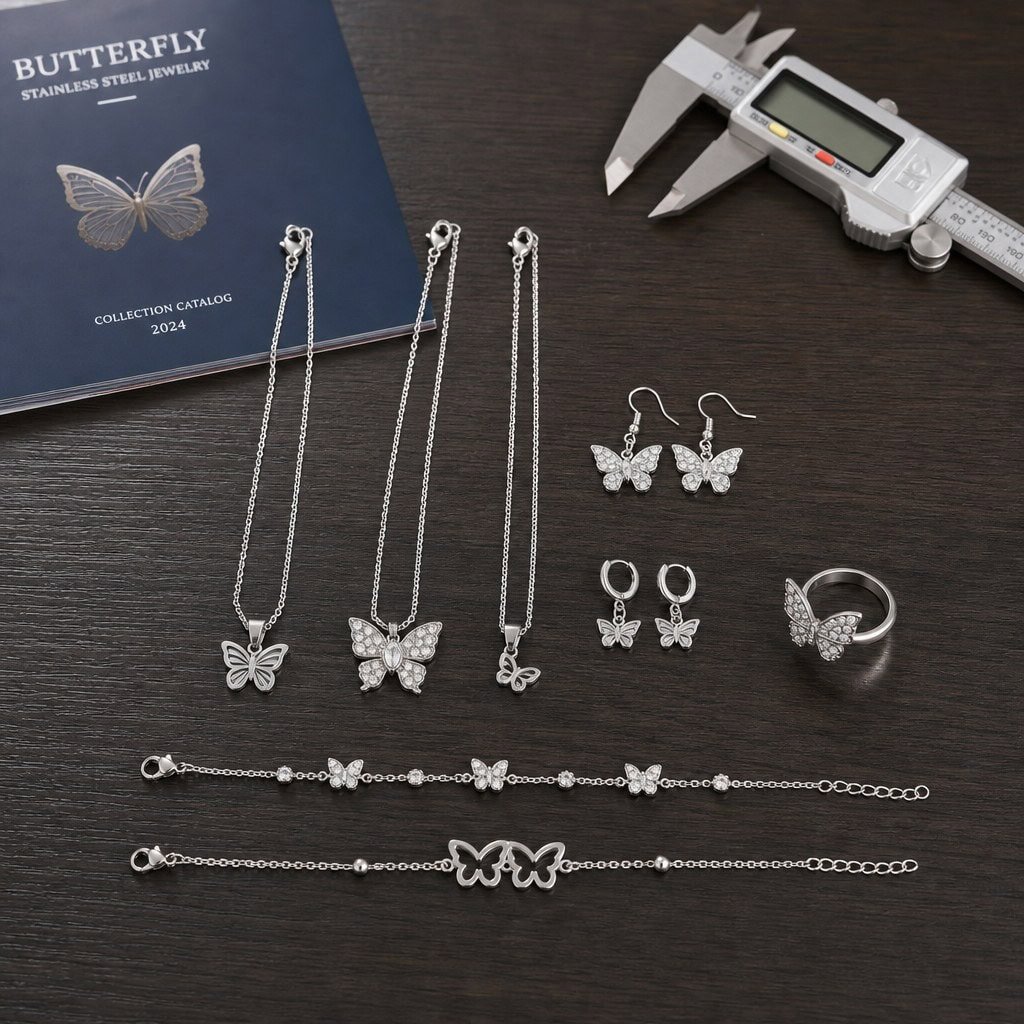
- Develop butterfly necklaces, earrings, rings, bracelets, charms, and coordinated gift sets under approved specifications.
- Confirm material, structure, dimensions, finish, quantity, tests, packaging, and delivery requirements before production.
- Control artwork versions, samples, color references, inspection records, packaging data, and repeat-order specifications by SKU.
Control Butterfly Jewelry Risks Before Bulk Production
Butterfly jewelry combines narrow wing details, directional shapes, open areas, decoration, and visible symmetry. We identify the failure points before sampling, convert approved appearance into measurable specifications, and assign controls to engineering, plating, assembly, inspection, packaging, and repeat-order records.
Lost Wing Detail
Fine veins, narrow cutouts, small text, and relief can merge after forming, casting, polishing, plating, or enamel filling. We review the artwork at finished size, identify vulnerable lines and negative spaces, and propose a production route or controlled geometry adjustment before the sample becomes the bulk-production reference.
Uneven Wing Balance
Asymmetrical weight, off-center suspension points, uneven forming, or uncontrolled polishing can make a pendant tilt or a pair of earrings look mismatched. We define front orientation, centerline, key dimensions, hanging point, left-right rules, and approved sample references before releasing the structure for production.
Sharp Edge Exposure
Wing tips, internal cutouts, stone seats, and laser-cut edges can remain uncomfortable or catch clothing when edge finishing is incomplete. Drawings identify skin-contact areas and visible boundaries. Semi-finished and final inspections check burrs, rough edges, polishing access, deformation, and surface damage against the approved requirement.
Decoration Failure
CZ settings, adhesive stones, pearls, resin, and enamel require different fixing and inspection methods. We confirm the decoration type, dimensions, position, process order, plating compatibility, curing or setting method, and product-specific attachment test before bulk production instead of applying one generic decoration standard.
Plating Color Variation
Butterfly collections often place necklaces, earrings, rings, and charms together, making color differences easy to see. We approve a physical color reference, record the plating structure and batch, inspect coverage and visible color, and link every finish to the correct product and packaging version.
Sample Bulk Mismatch
A visually approved sample is not enough when its drawing, BOM, finish, stone, chain, logo, or package remains undefined. We freeze the approved version, confirm the first production piece, perform in-process and final inspection, and retain batch records that support complaint investigation and future replenishment.
Build Butterfly Jewelry Across Six Product Families
We adapt one butterfly design language to each product structure instead of simply resizing the artwork. Every category has different requirements for balance, attachment, sizing, wear, assembly, and packaging. You can develop one hero product or coordinate several categories through shared wing geometry, finish, stones, enamel colors, branding, and retail presentation. Each category receives its own production specification.
Butterfly Pendant Necklaces
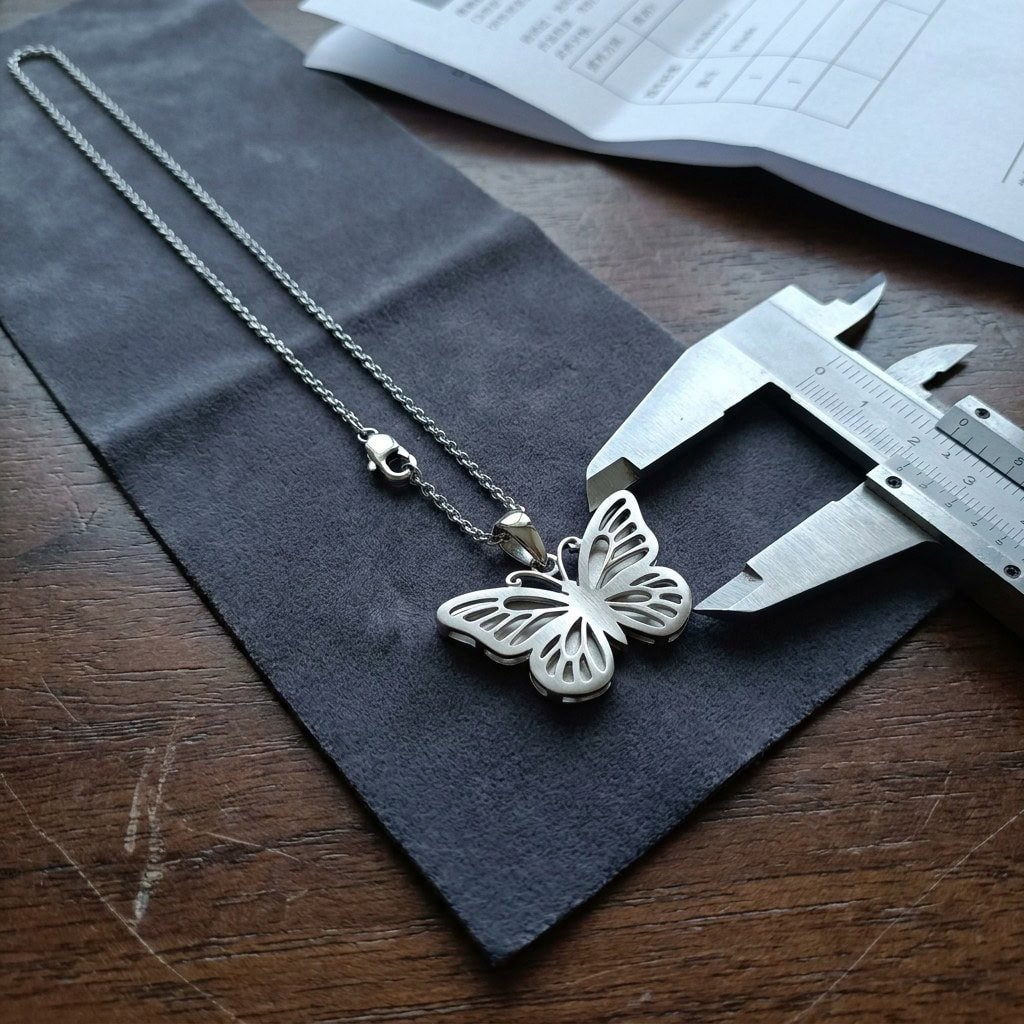
Pendant programs can use flat silhouettes, openwork wings, layered parts, relief, stones, enamel, engraving, or mixed finishes. We confirm pendant dimensions, thickness, target weight, bail or jump-ring interface, chain style, length, clasp, extension, logo tag, hanging direction, and anti-scratch packing. The pendant and chain are specified as one saleable product, not two unrelated components. Their approved BOM also records every connecting ring and finding.

Butterfly Earrings
Studs, drops, hoops with charms, and asymmetric pairs require category-specific engineering. We define left-right orientation, pair matching, post position, post diameter and length, welding location, ear-back fit, drop movement, single-piece weight, and packaging separation. Visual symmetry is checked together with structural security and wearing direction before a pair is approved. The finished pair receives one controlled assembly and packing reference.
Butterfly Rings
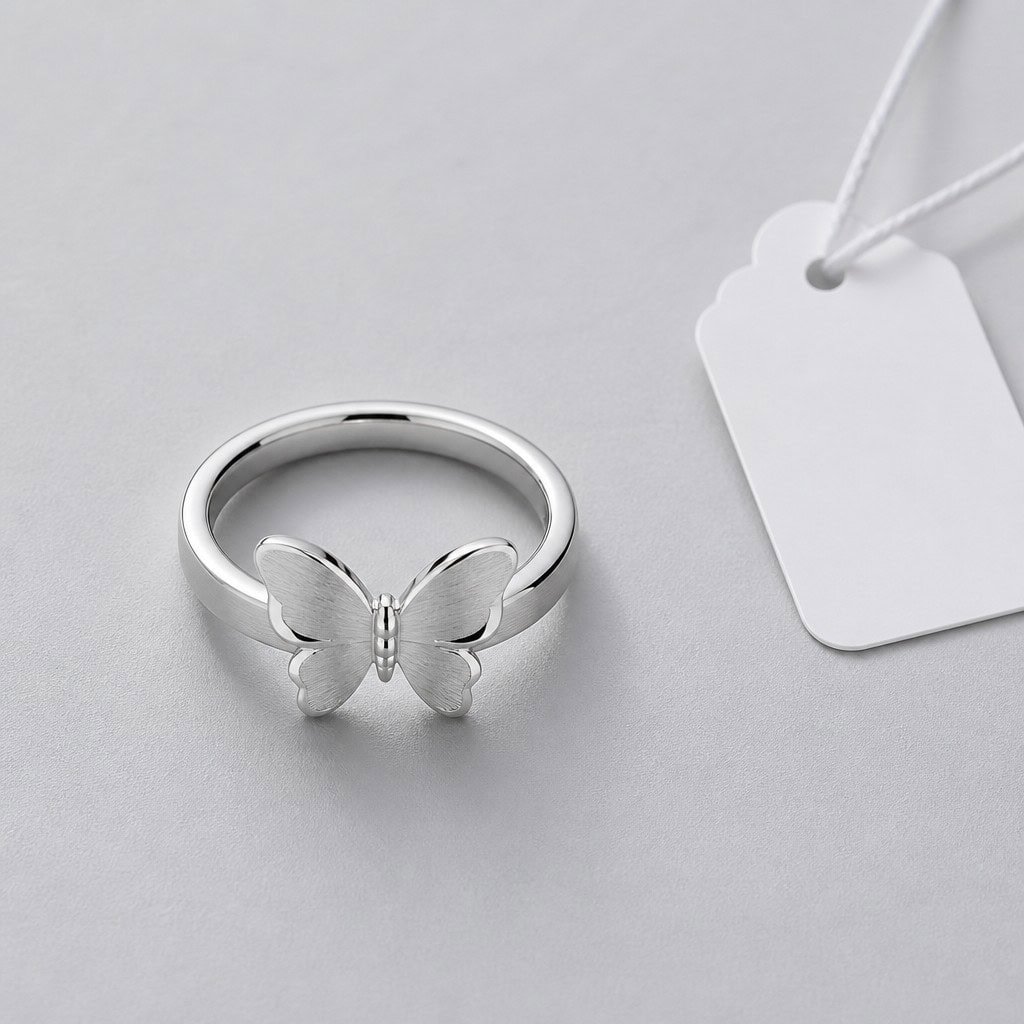
Butterfly rings may use an open band, centered motif, wraparound wings, stone setting, enamel, or inner engraving. We confirm the ring-size system, inner diameter or circumference, motif position, band width, adjustment range, symmetry, stone height, skin-contact edges, and finish. Open or projecting wing structures require physical wear and deformation review before bulk release. Each size or approved size range is identified in the order.
Butterfly Bracelets
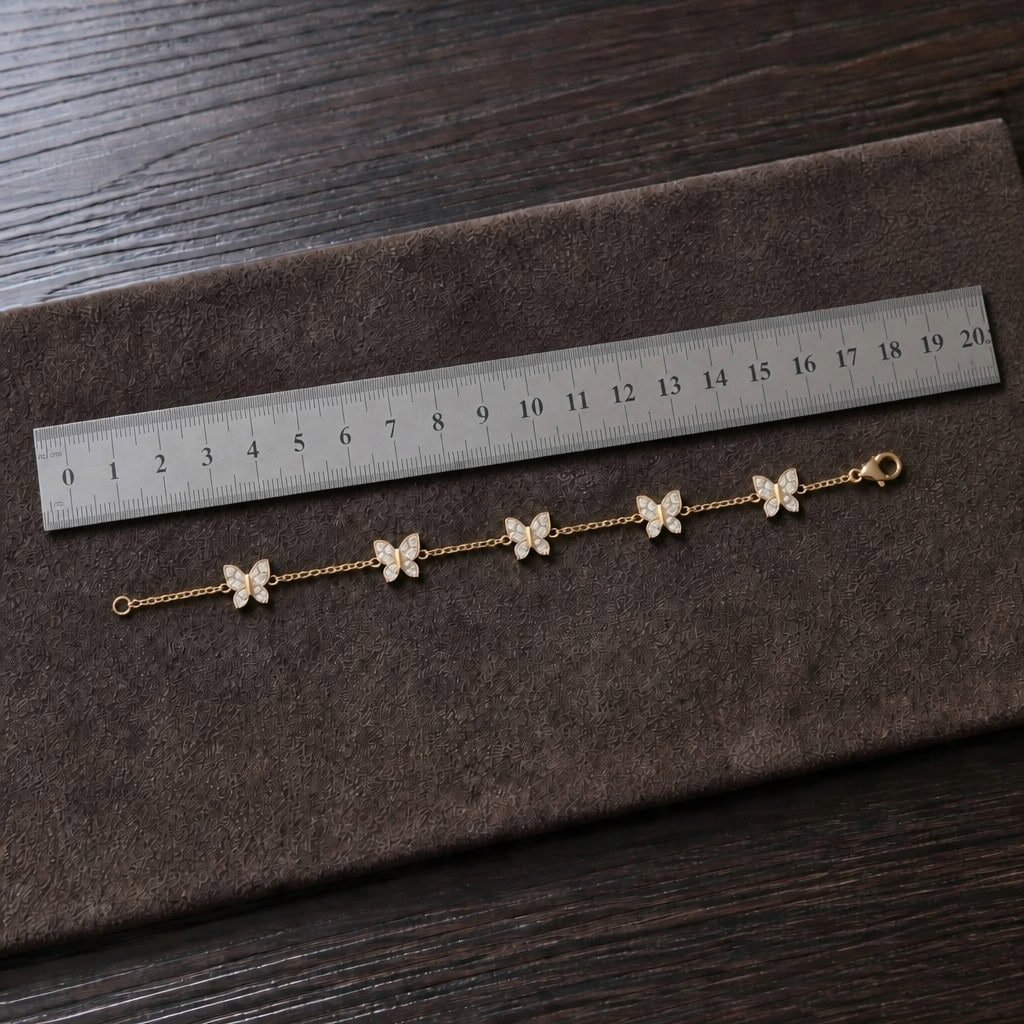
Chain bracelets, bangles, cuffs, ID structures, and charm bracelets place different loads on the butterfly component. Specifications cover bracelet length, extension, clasp, connection rings, charm spacing, movement, orientation, wrist contact, and pull requirements. Multi-charm products also require a controlled component count, assembly order, pair or set matching, and packaging method. Approved lengths and component ratios remain linked to each saleable SKU.
Butterfly Charm Systems
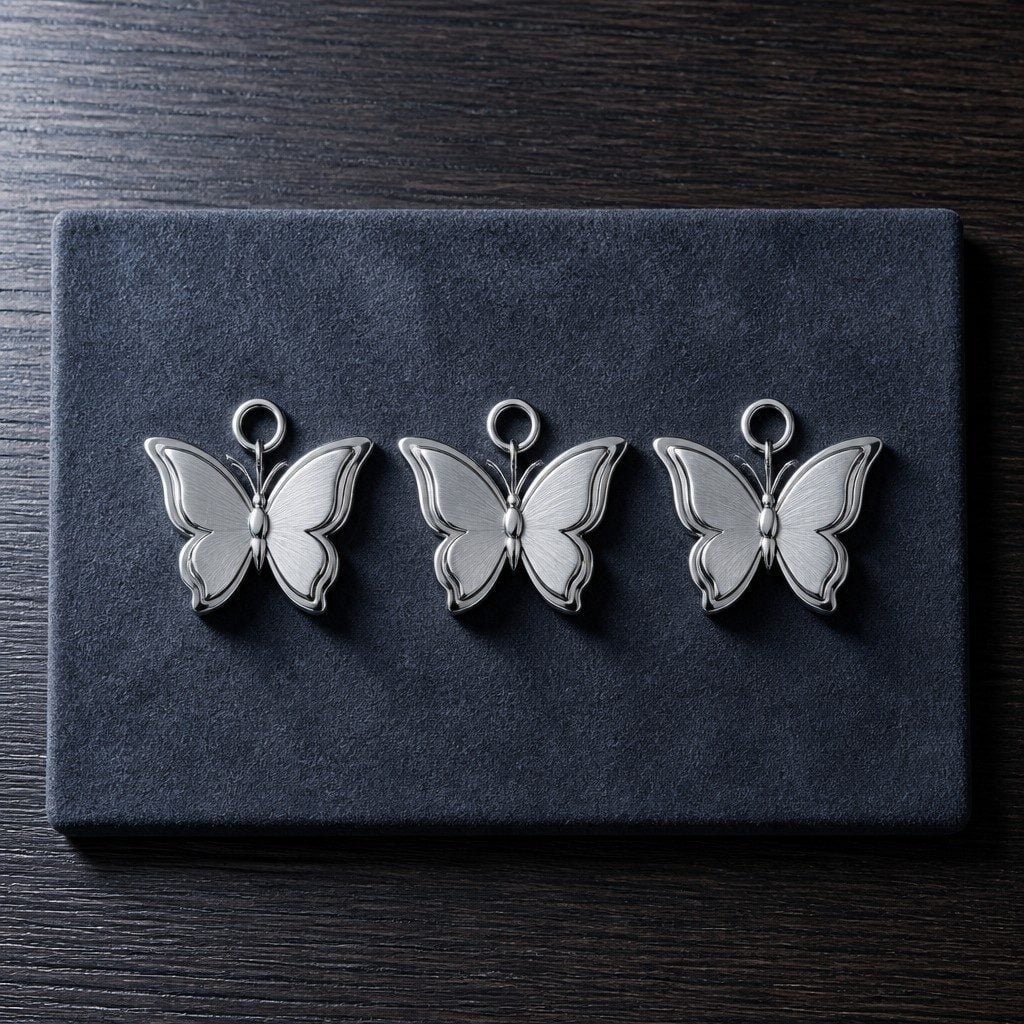
A controlled butterfly charm interface can support necklaces, bracelets, hoops, gift items, or modular collection programs. We define charm size, thickness, hole or loop geometry, jump-ring clearance, front direction, target weight, edge condition, and receiving component. Related sizes and finishes remain separate SKUs with their own approved specifications, inspection points, and packaging records. Shared attachments are verified against every compatible charm version before release.
Coordinated Butterfly Sets
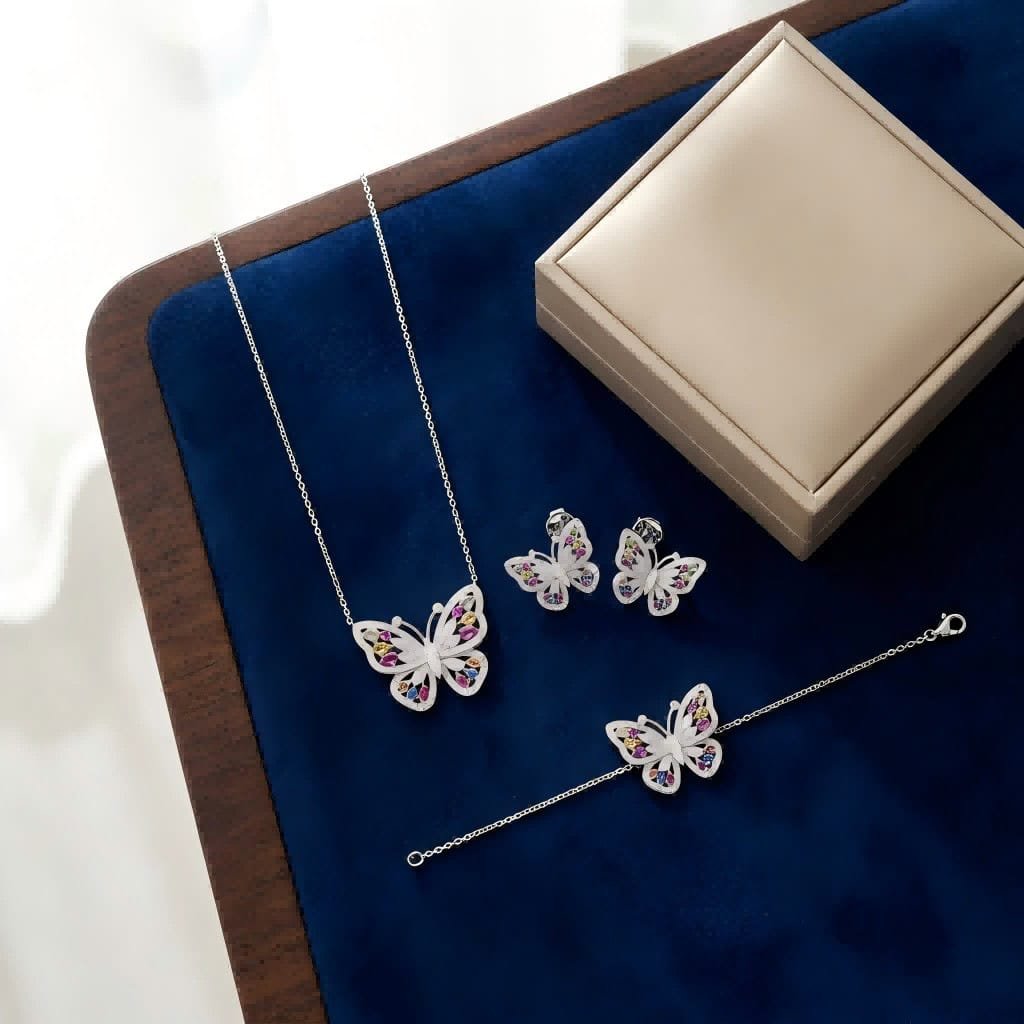
Matching necklace-and-earring sets, bracelet-and-charm sets, and gift-box programs require more than a shared motif. We coordinate scale, color, surface, stones, enamel, component count, placement direction, product card, package insert, barcode, and packing list. Each set is managed as a saleable SKU with a defined component and packaging version. Packing inspection verifies the complete set before the retail unit is sealed.
Plan a Commercial Butterfly Collection Architecture
Before sampling, we turn the creative direction into a product and SKU plan. This separates the visual theme from the variables that affect tooling, plating lots, packaging, stock, and replenishment. We plan around your channel, price position, launch date, quantity by variant, and reorder model.
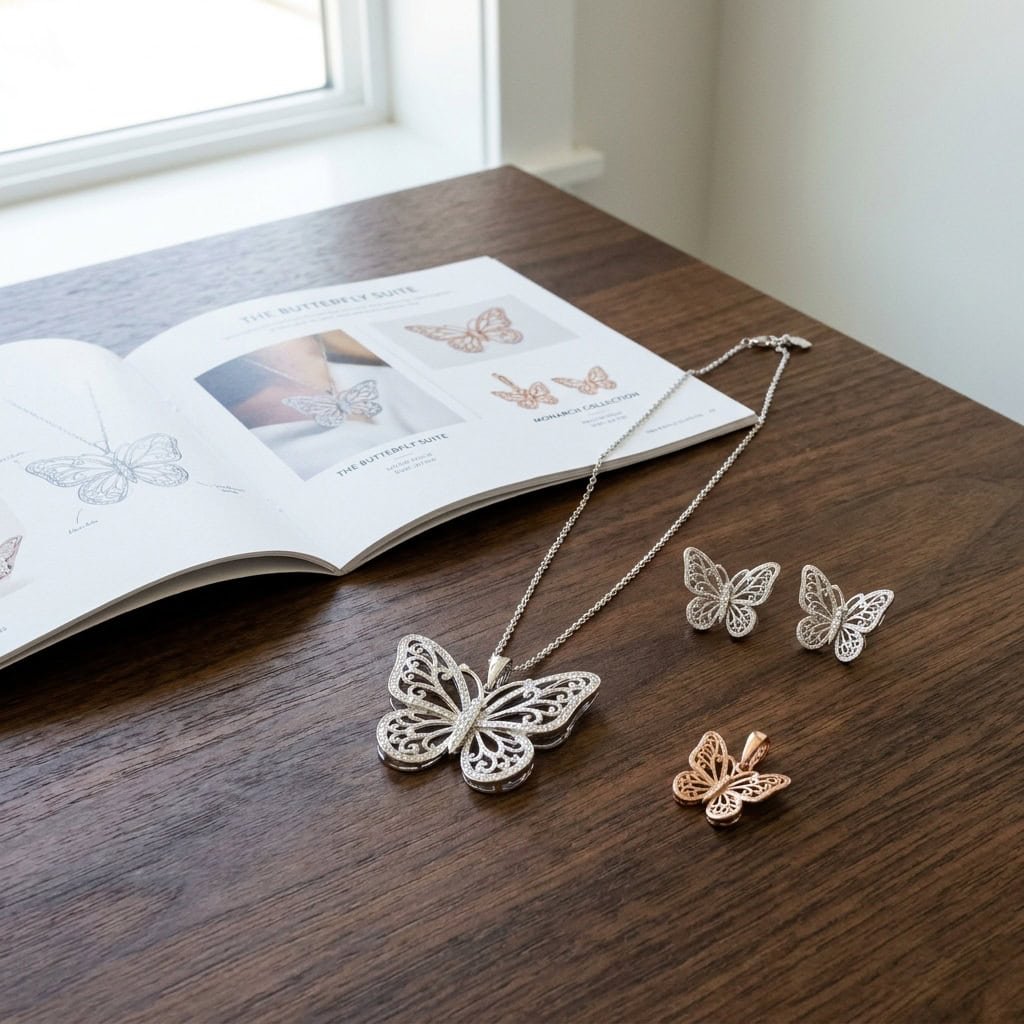
Control Collection Depth Before Creating Excessive Variants
- Hero SKU: Select the strongest butterfly expression for the launch, such as a recognizable pendant, dimensional earring, or stone-set ring. Its proportions and finish establish the collection language.
- Core SKUs: Adapt the wing geometry, center body, stone map, enamel palette, or surface treatment to permanent categories. Each category receives its own structure rather than an automatic scale change.
- Add-on SKUs: Use smaller charms, studs, bracelets, or gift-set components to support entry prices, sets, cross-selling, and seasonal extensions without redesigning the complete collection.
- Variant control: Count product, size, color, stone, enamel, chain, package, and market label as separate variables. We map these before quotation so hidden variants do not appear after tooling or sampling begins.
- Price architecture: We assess target price against material, dimensions, weight, process, decoration, PVD, chain, and packaging. This protects the most important visual features during cost optimization.
- Replenishment structure: Stable SKU codes, drawings, BOMs, approved samples, color references, and packaging versions support repeat orders. Send forecast quantities per SKU and color rather than only a collection-level total.
Engineer Butterfly Details for Repeatable Production
Butterfly artwork is usually viewed much larger than the finished jewelry. Narrow veins, sharp tips, open spaces, small stones, and a slender body may change during forming, casting, polishing, setting, and plating. Before sampling, our DFM work converts the design into measurable geometry, process allowances, assembly interfaces, and inspection points.
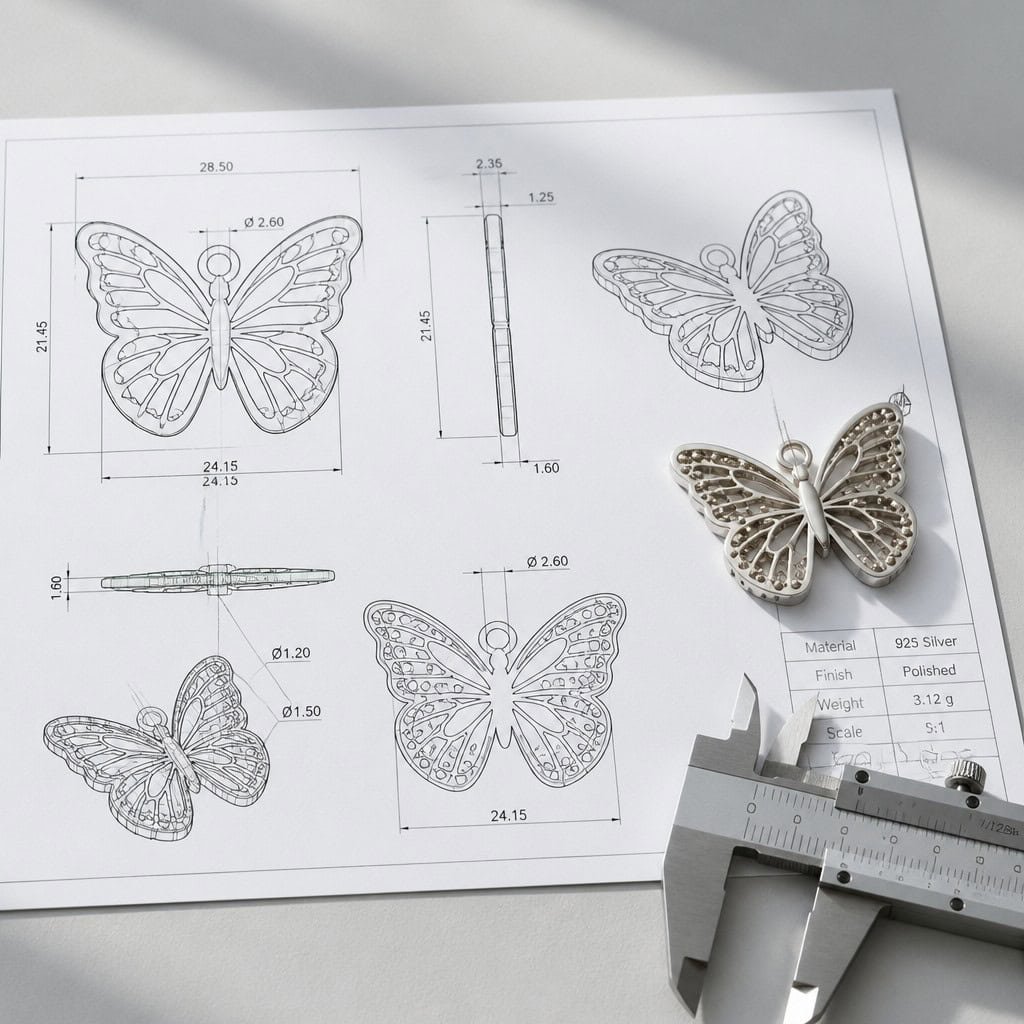
Convert Wing Geometry Into Measurable Manufacturing Controls
- Symmetry and direction: We define the centerline, intended symmetry or asymmetry, orientation, and left-right earring rules. Key wing points receive dimensions instead of relying only on overall width.
- Openwork and connections: We assess narrow bridges, cutouts, holes, loops, and stone seats for forming, polishing, plating coverage, and strength. Final values depend on material, thickness, process, and sample results.
- Weight and suspension: Pendant bails, jump rings, ear posts, and bracelet connections are positioned against the center of gravity. A physical sample confirms whether the product faces forward, tilts, rotates, or pulls on the receiving component.
- Edges and comfort: Wing tips, cutouts, recesses, ring interiors, and skin-contact surfaces are identified on the drawing. Edge finishing must remove burrs and roughness without erasing the intended outline or fine relief.
- Decoration allowance: We coordinate stone seats, adhesive areas, enamel cells, resin fills, pearl pins, engraving, polishing access, and plating sequence. Each fixing method receives an appropriate attachment check.
- Measurement and tolerance: Unless a customer drawing or quality agreement specifies otherwise, Chicolink's internal dimensional references are ±0.15 mm for dimensions up to 20 mm, ±0.20 mm from 20 to 50 mm, and ±0.30 mm above 50 mm. Measurement points, product state, tools, and acceptance criteria must still be defined for the actual design.
Select the Right Butterfly Manufacturing Route
The manufacturing route depends on whether the butterfly is flat, formed, openwork, dimensional, hollow, engraved, stone-set, or multi-part. We assess geometry, material, thickness, quantity, finish, tooling, polishing access, weight, and delivery plan. Samples then verify appearance and production repeatability.
| Route | Suitable Butterfly Structure | Main Engineering Review | Commercial Impact | Approval Evidence |
|---|---|---|---|---|
| Laser cutting | Flat silhouettes, openwork wings, controlled outlines, and sheet-based pendants or charms | Cut width, internal corners, heat effect, hole position, edge finishing, and deformation | May reduce complex tooling for suitable flat structures; polishing and edge work remain necessary | Approved drawing, cut sample, dimensions, edge condition, and finish sample |
| Stamping or hydraulic forming | Repeatable flat or formed wings, embossed details, bends, and higher-volume sheet structures | Die design, material thickness, forming direction, springback, burr direction, and distortion | Tooling and quantity must support the route; repeatability can improve after the process is stabilized | Tooling sample, first article, forming dimensions, and surface reference |
| Casting | Sculptural butterflies, relief, curved bodies, integrated settings, and complex three-dimensional shapes | Shrinkage, wall thickness, water-gate position, heavy sections, porosity, polishing access, and target weight | Requires evaluated tooling and sample confirmation; yield and finishing affect cost | Approved model, casting sample, finished weight, detail, and surface standard |
| CNC or turning | Selected geometric parts, precision features, molds, fixtures, and structures requiring controlled machining | Tool access, machining marks, tolerances, material removal, cycle time, and finishing allowance | Use where machining adds measurable value; not every organic wing shape requires CNC | CAD, machined sample, measurement report, and approved finish |
| Combined process | Layered wings, assembled bodies, mixed textures, moving parts, stone or enamel structures, and multi-finish products | Interface dimensions, welding, adhesive or setting order, masking, plating sequence, assembly, and repair access | More operations increase process control, sample work, cost, and lead-time risk | BOM, process flow, approved sample, first article, and inspection plan |
Match Materials and Decoration to Product Use
Materials and decorations affect geometry, tooling, process order, appearance, testing, cost, MOQ, and lead time. We select them for the butterfly structure and market brief rather than treating a material name as a complete specification. Each material, stone, fill, color, and finish is recorded by SKU.
| Decision | When We Evaluate It | Butterfly-Specific Considerations | Required Confirmation |
|---|---|---|---|
| 304 stainless steel | Many fashion jewelry structures where supply, processing, cost, and delivery flexibility fit the project | Wing thickness, forming, cutting, welding, polishing, plating, use environment, and market requirement | Grade, material form, dimensions, process, finish, tests, quantity, and approved sample |
| 316L stainless steel | Projects that specify 316L or benefit from its generally better pitting-corrosion resistance | Higher hardness may increase difficulty in forming, cutting, welding, polishing, and correcting complex wing geometry | Product use, structure, processing feasibility, target market, testing, cost, and written specification |
| PVD/IP finish | Gold, rose gold, black, gun metal, and other approved color programs | Color visibility across large wing surfaces, recess coverage, mixed components, stone or fill compatibility, and batch grouping | Physical color reference, coating structure, target thickness, quantity per color, tests, and care requirement |
| CZ and stones | Wing borders, center bodies, accent points, pavé-style areas, and premium visual programs | Stone size, seat geometry, spacing, surface height, fixing method, plating sequence, and pressure during packing | Type, shape, size, color, quantity, setting method, attachment criteria, and replacement allowance |
| Enamel or resin | Colored wings, seasonal palettes, graphic areas, and gift collections | Cell boundary, fill depth, bubbles, shrinkage, overflow, surface level, curing, polishing, and plating compatibility | Material system, color reference, area map, surface effect, process order, and appearance standard |
| Pearl or mixed parts | Butterfly-and-pearl drops, layered pendants, gift sets, and assembled statement designs | Pin structure, adhesive area, natural variation, movement, weight, plating order, and separate packaging protection | Material, size range, color range, fixing method, pairing rule, and attachment test |
Move Butterfly Concepts Through Product Development
For OEM, send an existing design, reference image, physical sample, or required specification. We turn it into a production-ready version for your approval. For ODM, send the target market, customer profile, channel, style, price position, and collection objective. Both paths use defined inputs, physical samples, written approvals, and production records.
Project Brief
Send the product categories, artwork or reference, target market, channel, quantity by SKU, material, color, decoration, packaging, tests, target price, and required date. We identify missing information and separate fixed requirements from adjustable items before engineering and quotation. This creates the initial project baseline.
Engineering Review
Our team assesses butterfly geometry, process route, material form, thickness, weight, connections, polishing access, finish, stone or enamel work, packaging protection, tests, and production feasibility. We then document proposed changes, open questions, risks, and the sample plan. This becomes the engineering action list.
Drawing Control
We prepare or assess the required 2D and 3D files. Drawings identify dimensions, datums, orientation, wing checkpoints, attachments, decoration areas, Logo, finish, and revision. You approve the production version before we begin tooling, prototyping, or sampling. The drawing also supports quotation and inspection.
Project Quotation
Our quotation covers material, size, weight, process, mold or fixture, PVD structure, stones, enamel, components, packaging, quantity, samples, tests, and delivery terms. It applies to the listed product version; later specification changes may alter price, MOQ, or timing. Authorized changes receive an updated quotation where required.
Sample Production
The sample checks scale, wing detail, structure, movement, comfort, color, decoration, branding, and packaging compatibility. We record its revision, findings, and requested changes. The commercial-terms module lists our normal timing; the quotation provides the project schedule. Sample comments remain linked to the correct revision.
Sample Approval
We record comments against the drawing, specification, photographs, and physical sample. Corrections and new design changes follow separate revisions. The signed-off sample and written requirements then guide first-article checks, bulk production, and final inspection. Superseded versions are removed from production use.
Bulk Production
PMC coordinates material, tooling, production, in-house plating, decoration, assembly, inspection, and packing. First-article and in-process checks reduce the risk of repeating a dimensional, color, Logo, assembly, or packaging error across the order. Production records identify the applicable order and SKU.
Release and Reorder
We complete final inspection, packing checks, carton data, agreed independent inspection, shipping documents, and logistics coordination. Order, SKU, drawing, sample, plating, inspection, and packaging records support issue investigation and future replenishment. They also support accurate specification comparison before future production orders.
Manufacturing Capacity for Butterfly Jewelry Programs
Chicolink Jewelry has manufactured jewelry in Dongguan since 2012. Our factory covers more than 5,500 m², employs 400+ people, and has monthly capacity above 200,000 pieces across all products. We manage butterfly projects from drawings and metal processing through plating, inspection, packaging, and repeat orders. We confirm capacity and scheduling for each product and order.
Design and Engineering
6 jewelry designers and 3 jewelry engineers support artwork interpretation, 2D/3D development, product structure, DFM, sample review, and production release. For butterfly projects, the team evaluates wing geometry, attachment, weight, surface access, decoration, and category adaptation before a design is treated as a repeatable manufacturing specification. Approved changes are carried into the controlled drawing and sample version used by production.
Metal Processing Equipment
The factory equipment list includes 5 CNC machines, 4 casting machines, 3 laser cutting machines, 6 stamping machines, 4 bending machines, 7 drilling machines, 4 wax injection machines, and 3 lathes. We select the route for the product structure; equipment count alone does not determine process suitability. Tooling, material form, geometry, quantity, finish, and sample performance remain part of the decision.
Joining and Finishing
Five laser welding machines, 8 polishing machines, and 3 laser Logo machines support joining, surface preparation, visible finishing, and controlled branding. Butterfly pieces are reviewed for weld location, distortion risk, polishing access, edge retention, Logo readability, and the process order required before plating, stone setting, enamel, assembly, or final inspection. Semi-finished checks prevent unsuitable parts from moving into higher-cost downstream processes.
Integrated Plating Workshop
Our in-house plating workshop completes PVD/IP, and other approved electroplating processes under confirmed project specifications. The workshop coordinates surface preparation, physical color approval, process settings, production lots, thickness checks, visible color inspection, defect handling, and batch records with the manufacturing and quality teams. Product geometry, stones, enamel, resin, welds, and mixed components are reviewed for process compatibility before processing.
Quality Control Functions
IQC, IPQC, FQC, plating inspection, and packaging checks cover incoming material, semi-finished parts, first pieces, dimensions, structure, surface, color, decoration, function, branding, and packing. Customer standards, approved drawings, approved samples, quality agreements, and confirmed test requirements take priority over internal defaults. Inspection records identify the order, SKU, production batch, result, nonconformity, agreed disposition, rework, and reinspection status for later reference.
Planning and Bulk Delivery
PMC manages production planning, material coordination, process scheduling, and delivery follow-up across multi-stage orders. It coordinates metal production, surface processing, decoration, assembly, inspection, packing, and shipment preparation against the approved project. Capacity allocation, lead time, color grouping, packaging work, inspection, and shipment timing are confirmed for the actual butterfly program. Schedule changes and material constraints are communicated through project follow-up.
Control PVD Color Across Butterfly Jewelry Categories
Large polished wings, recessed veins, chains, findings, posts, and decorated parts can show color differently. Our in-house plating workshop has 6 PVD vacuum-coating machines. For each butterfly program, we specify surface preparation, color reference, coating structure, thickness, process order, measurement points, visual standard, tests, and packaging protection.
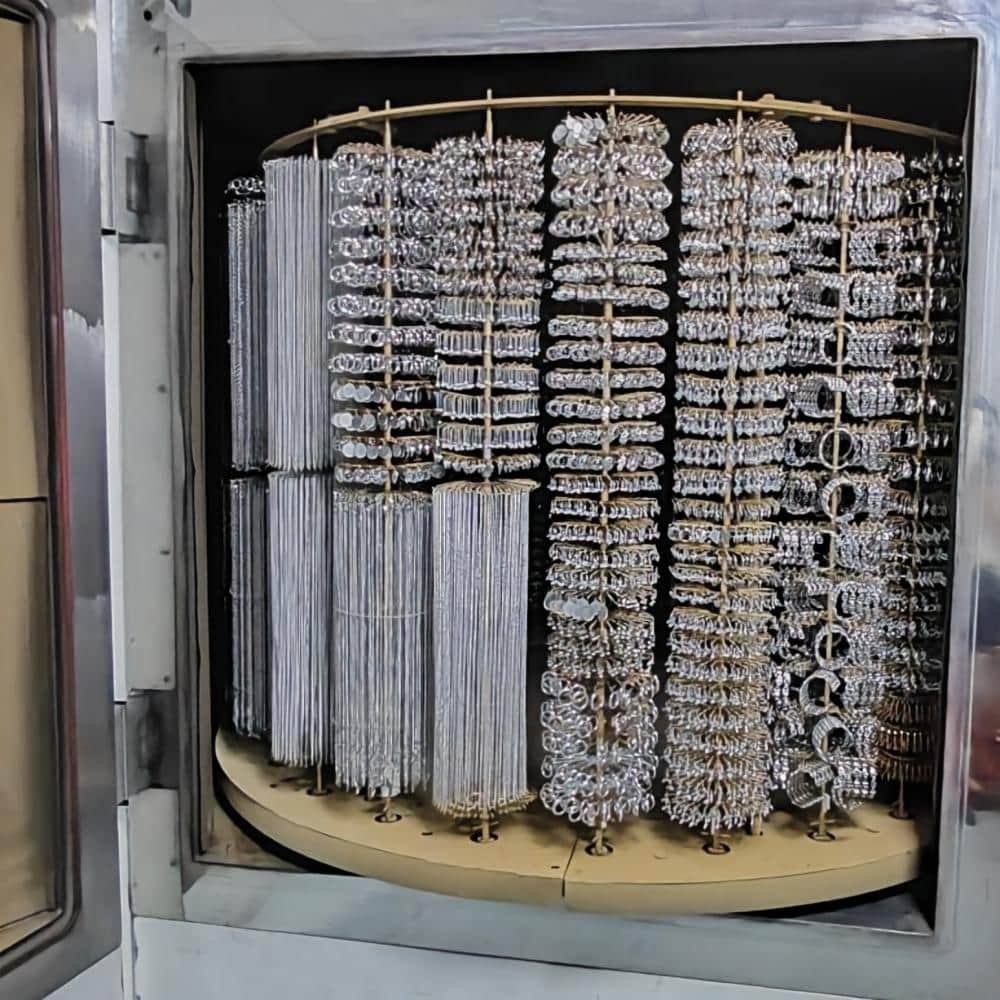
Define Color as a Production Specification
- PVD color directions: Project options can include 24K Gold, 18K Gold, 14K Gold, Rose Gold, White Gold or platinum color, Black, Gun Metal, Coffee, Blue, and multicolor finishes. Steel color is available without color plating where the specification calls for bare stainless steel. Silver and rhodium colors normally use a separately confirmed water-plating route.
- PVD structures: Our internal references include E1 at approximately 0.4 μm TiN plus 0.05 μm Au/Gold and E2 at approximately 0.7 μm TiN plus 0.1 μm Au/Gold. The quotation states the selected layer structure, thickness, color, cost, and test plan.
- Color standard: We use a customer-signed physical sample or standard plate. Unless your written requirement differs, our internal references are ΔE00≤1.5 for polished or mirror surfaces and ΔE00≤2.0 for brushed, sandblasted, or antique surfaces, together with visual inspection under defined conditions.
- Thickness control: Unless the project specifies otherwise, our internal reference allows batch-average thickness within ±10% of nominal, individual points within ±20%, and main visible surfaces at no less than 80% of nominal. The inspection plan defines the method, equipment, and measurement positions.
- Butterfly checkpoints: We inspect principal wing surfaces, recesses, edges, holes, welds, stone or fill boundaries, and matching components for coverage, spots, pinholes, scratches, burning, peeling, and visible color difference.
- Performance boundary: PVD performance depends on substrate, preparation, layer structure, thickness, geometry, use, care, sweat, chemicals, abrasion, and packaging. We report test performance under the stated conditions and do not claim permanent color retention.
Apply a Butterfly-Specific Quality Control Plan
Quality control starts before final inspection. Material, tooling, forming, edge finishing, joining, decoration, plating, assembly, pairing, and packaging create different risks. We place checks at the relevant stage, define the reference and measurement method, and record the result by product and order.
| Control Stage | Butterfly-Specific Checks | Primary Reference | Typical Record |
|---|---|---|---|
| IQC incoming inspection | Stainless steel grade and form, visible material condition, stones, enamel or resin materials, findings, chains, posts, and packaging components | Purchase specification, BOM, approved supplier or material requirement | Incoming inspection result and material or component batch |
| Tooling and first-piece review | Overall size, centerline, wing symmetry, openwork, holes, post or bail position, forming, relief, stone seats, and visible distortion | Controlled drawing, tooling file, approved change record, and sample requirement | First-piece dimensions, photographs, findings, and release decision |
| Semi-finished inspection | Burrs, sharp wing tips, cut edges, welds, deformation, drilling, polishing access, scratches, and detail loss | Drawing checkpoints, process card, defect limits, and approved semi-finished condition | IPQC result, nonconformity, rework, and reinspection record |
| Decoration inspection | Stone count, position, surface height, looseness, adhesive control, enamel boundary, fill level, bubbles, overflow, shrinkage, pearl attachment, and pairing | Stone or decoration map, physical sample, BOM, and product-specific method | Decoration inspection and applicable attachment-test result |
| Plating inspection | Physical color match, thickness, coverage, principal wing surfaces, recesses, holes, welds, pinholes, spots, scratches, peeling, and mixed-component consistency | Approved color reference, plating specification, measurement plan, and finish sample | Plating lot, equipment reference, color or thickness result, and disposition |
| FQC and packing | Final dimensions, appearance, pair direction, function, movement, clasp, chain, logo, SKU, component count, card, label, protective separation, and package version | Approved sample, order, specification, packaging instruction, and inspection plan | FQC, AQL or 100% inspection result, packing photos, and shipment record |
Protect Reorders With Version and Batch Traceability
A reorder should not rely only on a product name, photograph, or previous invoice. Small changes in wing shape, stones, color, chain, pair direction, Logo, or packaging become visible when old and new stock are sold together. We link each released version to production and shipment records for comparison and investigation.
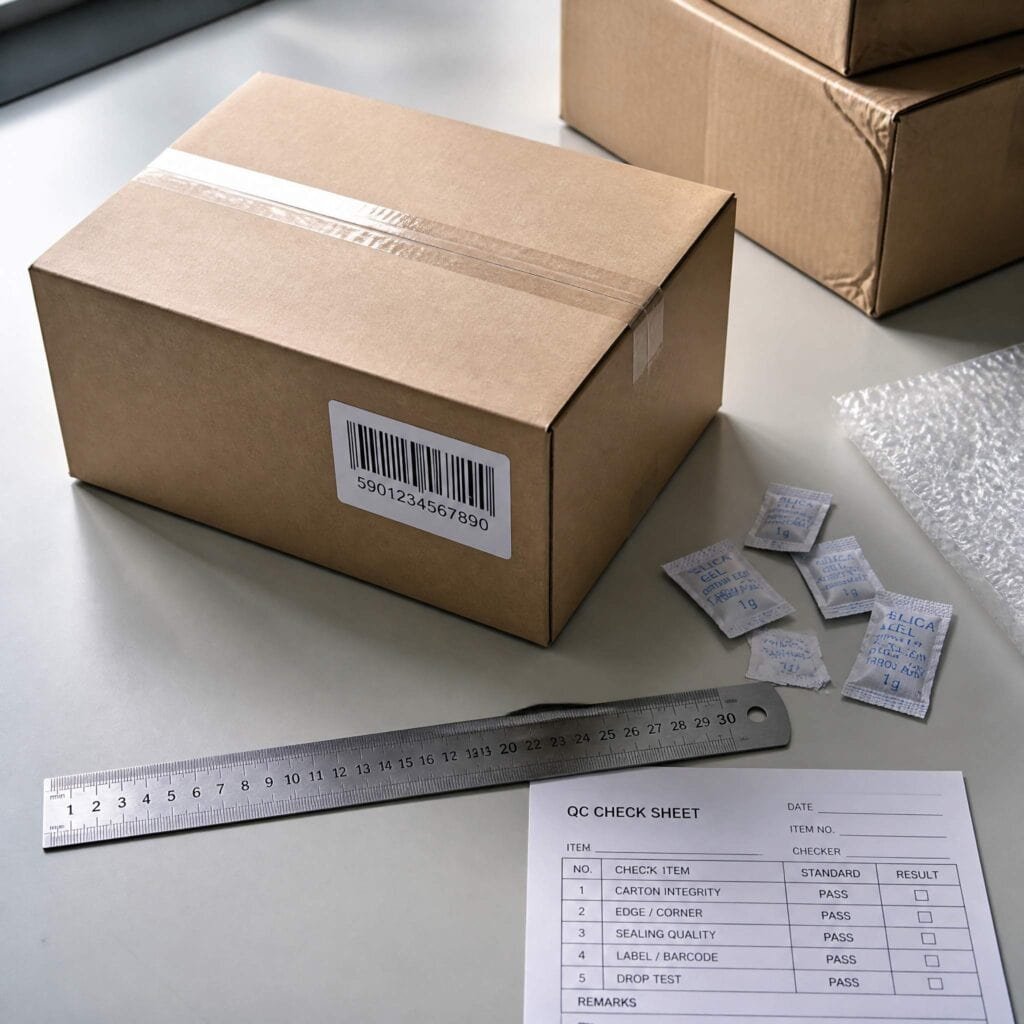
Link Every Reorder to the Approved Product Baseline
- Product identity: Customer, order, SKU, style number, drawing revision, BOM, approved sample, color, size, stone or enamel map, chain, findings, logo, and package version form the reorder baseline.
- Material and process history: Records can connect the finished batch to material grade and incoming batch, production work order, critical process dates, tooling, forming, welding, polishing, setting or filling, assembly, and responsible production area.
- Plating continuity: The plating record identifies the approved color, coating requirement, production lot, relevant equipment reference, quantity, inspection, and disposition. A retained physical color reference supports comparison when a later order is scheduled.
- Inspection and disposition: IQC, IPQC, FQC, AQL or agreed full-inspection records, nonconforming quantity, rework, and reinspection remain associated with the production batch. This creates a factual basis for complaint investigation rather than relying on memory.
- Packaging continuity: Product card, pouch, box, insert, label, barcode, carton mark, component count, placement, and packing instruction are version-controlled. A packaging artwork change is not applied to an earlier product version without confirmation.
- Reorder review: Before repeat production, we confirm the required version, quantity by SKU and color, target date, test requirement, packaging revision, and any approved engineering change. Changes receive a new revision and approval path.
Define Testing by Product and Target Market
We plan testing by butterfly SKU, material, finish, decoration, production batch, target market, and customer requirement. We support selected internal tests, independent laboratory testing, and customer-appointed inspection. Before using an existing report, we check its sample scope, standard version, laboratory, issue date, and validity. Reports apply only to their stated scope.
| Item | Approximate Reference Fee | Confirmation Required |
|---|---|---|
| Artificial perspiration test | USD 100 | Method, samples, conditions, and report format |
| Salt spray test | USD 2 per hour | Duration, samples, standard, and acceptance |
| Abrasion or friction test | USD 120 | Method, load, cycles, surface, and result criteria |
| SGS nickel release | USD 500 per color | Product, color, standard, preparation, laboratory quotation, and report scope |
| HKPC nickel release | USD 120 per color | Product, color, standard, preparation, laboratory quotation, and report scope |
| Requirement | When It May Apply | Chicolink Support and Internal Reference | Scope Boundary |
|---|---|---|---|
| Material identification | When the buyer specifies 304, 316L, or another approved grade | Material records and applicable composition or spectral analysis can be coordinated | Must match the ordered product, material form, supplier batch, and agreed evidence |
| Nickel release | EU programs, prolonged skin contact, or customer-specified projects | EN 1811, EN 12472, or other confirmed nickel-related testing through SGS, HKPC, or an approved laboratory | Confirm product, contact parts, material, color, coating, wear preparation, standard version, and sample batch |
| Lead and cadmium | EU, US, platform, retailer, or customer chemical-restriction requirements | Lead and cadmium testing can be arranged against the confirmed market or customer limits | Results apply to the tested sample, components, batch, and stated method |
| REACH and Prop 65 | When required by the target market, retailer, contract, or product specification | We can arrange relevant testing or document support for the project | Define restricted substances, limits, product, component, color, batch, report, and applicable market requirement |
| Salt spray | Corrosion-performance review for bare steel, PVD, plated, or specially exposed products | Internal defaults: 24 hours for bare stainless steel, 48 hours for plated or PVD products, and 72 hours for higher-resistance projects or as agreed | Standard, solution, pH, temperature, sample orientation, inspection, and acceptance criteria must be confirmed |
| Artificial perspiration | Sweat-like exposure review for PVD, plated, and skin-contact products | Internal default: 40±2°C for 24 hours at pH 4.7±0.2, unless the customer standard applies | Formula, preparation, contact method, sample state, color measurement, and acceptance criteria must be defined |
| Pull, torque, and drop | Pendants, jump rings, chains, posts, settings, adhesive parts, clasps, and assembled products | Product-specific methods can be selected; internal pull references include 40 N for pendant rings/connectors and 30 N for main necklace structures, held for 10 seconds | Load direction, fixture, sample quantity, rate, product damage, and written customer requirement determine the final method |
| Independent inspection | Brand, chain-store, distributor, or contract-controlled bulk shipments | We support factory audits and independent pre-shipment inspection, including agreed reports, photographs, packing data, and samples | Inspection company, standard, booking, sample plan, access, reinspection, and cost require order confirmation |
Confirm MOQ, Samples, Pricing, and Production Timing
Order conditions differ between existing styles and custom products. Tooling, material, size, color, stones, enamel, packaging, tests, and quantity by variant affect MOQ, cost, and timing. The table shows our normal references; the quotation confirms the terms for your project.
| Project Item | Chicolink Reference | What Can Change It | Buyer Input Required |
|---|---|---|---|
| Initial inquiry response | Target within 6 working hours | Time zone, attachment access, missing information, or technical complexity | Contact details, project summary, and accessible files |
| Existing or stock style MOQ | Commonly 120 pieces per style | Inventory, color, size, plating lot, packaging, component supply, and replenishment status | SKU, quantity, color, size, package, and required date |
| OEM/ODM MOQ | Commonly 500 pieces per style | Mold, material, color split, size split, stone, enamel, packaging, process difficulty, and yield | Design version, quantity by SKU/color/size, and forecast |
| Existing-style sample | Commonly 3–7 working days | Stock, color, assembly, packaging, sample modification, and shipment method | Style, sample quantity, color, package, and courier details |
| Custom OEM/ODM sample | Commonly 25–30 working days | Artwork approval, engineering, tooling, material, stone, enamel, plating, changes, and tests | Complete brief, approved drawing, sample plan, and payment conditions |
| Custom bulk production | Commonly 25–45 working days | Quantity, process route, color groups, components, packaging, inspection, tests, and production schedule | Final PO, deposit, approved sample, packaging files, and delivery terms |
| Formal quotation | Issued after the required engineering and cost review | Undefined dimensions, weight, materials, decoration, quantity, packaging, tests, or Incoterm | Product version, specifications, quantity breakdown, and commercial terms |
Prepare Butterfly Jewelry for Branded Retail Delivery
A finished butterfly product still needs branding, presentation, product data, protection, and export packing. We coordinate these private-label elements within the project scope. Each Logo, card, package, label, barcode, and carton instruction is linked to the correct SKU, color, size, and set version to prevent mixed or incorrectly labeled stock.
Product Branding
Branding may use laser engraving, etching, stamping, an inner-ring mark, a Logo tag, or another suitable method. Before sampling, we check vector artwork, size, location, reading direction, visibility, finish, and available area. The product drawing states the Logo version and placement; packaging artwork remains a separate file. For small butterfly parts, we also verify that the mark remains legible after polishing and plating.
Retail Presentation
Butterfly necklaces, earrings, rings, bracelets, charms, and sets can use custom cards, pouches, gift boxes, care cards, story cards, or inserts. We specify material, dimensions, color, print file, product position, fastening, protective contact areas, component count, and opening presentation. A packaging sample checks product fit, presentation, and transport protection before bulk packing. We also check that posts, wing tips, stones, and polished surfaces do not rub against the package.
SKU and Label Control
We coordinate SKU stickers, UPC, EAN, FNSKU, customer codes, color and size labels, care information, and package marks within the agreed scope. Data must link to the correct product and package version. Before shipment, we check barcode readability, label position, product match, and set component count. Revised data replaces the earlier packing file only after approval. Variable data is checked against the customer file before printing.
Packing and Export Data
We define individual protection, anti-scratch separation, inner boxes, cartons, carton marks, packing lists, dimensions, weights, and carton quantities for the order. We also support Amazon FBA or customer-specific packing against supplied requirements. Shipping documents and logistics follow the agreed trade term and destination. Packing records identify the SKU, package version, and carton content. Packing photographs can be supplied when included in the order requirements.
How We Structure Butterfly Jewelry Projects
The following representative scopes show how we organize common butterfly jewelry projects. For actual orders, we define dimensions, quantities, costs, tests, timing, and deliverables from the design, sample, purchase order, quality requirements, target market, and packaging instructions.
Multi-Category Butterfly Capsule for an Established Brand
Use Scenario
An established jewelry brand wants one butterfly design language across a pendant necklace, earrings, ring, bracelet, and gift set. The products must share recognizable wing geometry and finish while remaining structurally correct for each category.
Key Challenge
Directly resizing one artwork can create an overweight earring, a weak charm connection, an uncomfortable ring, or a pendant that tilts. Multiple categories also make color and packaging differences more visible.
Chicolink Solution
- Build the collection and SKU architecture before sampling.
- Define shared visual elements and category-specific structures.
- Check weight, suspension, ear-post position, ring contact, connections, and set components separately.
- Sign off physical color references and link each drawing, BOM, sample, Logo, and package to its SKU.
- Use first-article, in-process, final, and packing checks for bulk release.
Result
We create one coherent collection while giving every product its own measurable structure, approval record, inspection points, and packaging specification.
Project Data
Representative project scope. Final SKU count, quantities, dimensions, materials, colors, sample rounds, tests, packaging, cost, and schedule require project-specific written confirmation.
PVD and Enamel Butterfly Launch for a DTC Brand
Use Scenario
A DTC brand plans a colored butterfly range combining polished stainless steel, PVD gold, and enamel or resin-filled wing areas for online launch and gift presentation.
Key Challenge
Wing surfaces make scratches, uneven polish, color differences, fill overflow, bubbles, shrinkage, and poor boundaries easy to see. The fill material and process order must also remain compatible with cleaning, plating, curing, assembly, and packing.
Chicolink Solution
- Confirm the fill system, approved colors, area map, depth, surface level, and appearance limits.
- Review whether filling occurs before or after the confirmed plating route.
- Approve a physical PVD color reference and decorated sample.
- Inspect wing surfaces, recesses, boundaries, bubbles, overflow, adhesion, visible color, and packaging contact points.
- Use separate protective packing and a controlled card or box position to reduce rubbing and pressure.
Result
We connect the color concept to a defined process order, appearance standard, signed sample, bulk inspection plan, and retail package.
Project Data
Representative project scope. Material system, PVD structure, color references, test method, quantities, costs, sample timing, package construction, and acceptance criteria are confirmed for the actual order.
Butterfly Replenishment for a Distributor
Use Scenario
A distributor needs repeat supply of several butterfly jewelry SKUs in approved colors and packaging versions for regional retail customers.
Key Challenge
Reorders can drift when product names remain the same but the drawing, chain, stones, color, Logo, label, or card artwork has changed. Mixed old and new stock makes small differences commercially visible.
Chicolink Solution
- Confirm the required SKU, drawing revision, BOM, approved sample, physical color reference, and package version before production.
- Record quantity by style, color, size, and set instead of accepting only a total quantity.
- Link production, plating, inspection, packing, and shipment records to the reorder batch.
- Complete first-article review and compare visible color and construction against approved references.
- Record authorized changes as a new revision rather than silently replacing an earlier version.
Result
We establish a reorder baseline that identifies the product, color, package, and inspection requirements for each production batch.
Project Data
Representative project scope. Reorder frequency, quantities, inventory arrangement, forecast, price, color grouping, inspection plan, and delivery schedule require project-specific confirmation.
Access Manufacturing Records and Factory Audit Support
We support supplier qualification through factory visits, project records, approved samples, production records, quality documents, and independent inspection coordination. Procurement, product development, quality, and supply-chain teams can request the relevant information below. We protect customer designs, commercial information, and restricted documents through authorization and confidentiality controls.
| Review Area | What Chicolink Provides | Access or Project Conditions |
|---|---|---|
| Factory operation | Dongguan factory address, production areas, staff functions, equipment, work in process, packing, and shipment activity | Factory visits require agreed timing, access, photography, confidentiality, safety, and audit scope |
| Product development | Designer and engineer roles, drawings, DFM comments, samples, change records, and first-article records | Customer designs, samples, names, and commercial data require authorization before disclosure |
| In-house processes | Equipment list and records for applicable metal processing, polishing, laser welding, Logo work, plating, assembly, QC, and packing | The actual route depends on the product; any approved external process is identified and managed within the project |
| In-house plating | Plating workshop and equipment, color references, plating specifications, lot records, thickness or color checks, and defect records | Coating structure, color, thickness, tests, cost, and records are order-specific |
| Bulk quality control | IQC, IPQC, FQC, first-piece, AQL or agreed full-inspection records, photographs, nonconformity, rework, and reinspection | Customer drawings, samples, contracts, inspection plans, and quality agreements take priority |
| Batch traceability | Links between order, SKU, drawing revision, material, production, plating, inspection, packaging, carton, shipment, complaint, and corrective action | Record access, retention, customer confidentiality, and format follow our procedure and the customer agreement |
| Testing support | Applicable internal test records, SGS/HKPC or other laboratory coordination, external reports, and customer-appointed inspection | Standard, sample, material, color, batch, issue date, validity, cost, and report scope require confirmation |
| Capacity planning | Factory size, staffing, equipment, functions, PMC process, and monthly capacity records | We confirm capacity and delivery against product complexity, quantity, process load, packaging, tests, and current schedule |
| Retail delivery | Product Logo, cards, pouches, boxes, labels, barcodes, packing instructions, carton data, packing lists, and export coordination | The customer supplies or approves artwork, data, regulatory text, channel rules, and packaging versions |
| Factory and shipment inspection | Factory audit support and independent pre-shipment inspection support | Organization, booking, access, cost, standard, corrective action, and reinspection require agreement |
Butterfly Jewelry Manufacturing FAQ
These answers cover the main information needed before requesting a quotation or sample. Feasibility, price, MOQ, testing, and timing depend on the product, quantity, material, finish, decoration, packaging, target market, and delivery requirements.
What butterfly jewelry can Chicolink manufacture?
We manufacture butterfly necklaces, pendants, earrings, rings, bracelets, bangles, charms, and coordinated sets after feasibility review. Designs can be flat, openwork, formed, cast, layered, engraved, stone-set, enamel-filled, resin-filled, PVD-finished, or assembled. Artwork, dimensions, material, quantity, market, packaging, and quality requirements determine the final product and process route.
Can you develop from a sketch or reference?
Yes. Send a sketch, vector file, CAD drawing, reference image, physical sample, or collection brief. We assess artwork rights, dimensions, structure, process, material, finish, decoration, quantity, target price, tests, packaging, and date. You approve any required DFM change before we begin tooling or sampling.
What is the MOQ for butterfly jewelry?
Existing or stock styles commonly start at 120 pieces per style. OEM/ODM products commonly start at 500 pieces per style. MOQ can change with tooling, material, color and size splits, plating batches, stones, enamel, packaging, process difficulty, and yield. We confirm whether MOQ is counted by style, color, size, or package after reviewing the project.
How long does custom sampling take?
Existing-style samples commonly require 3–7 working days. Custom OEM/ODM samples commonly require 25–30 working days after design, engineering, commercial, and payment conditions are settled. Tooling, material, decoration, plating, customer changes, tests, and packaging samples can affect timing. The quotation provides the project schedule.
Should butterfly jewelry use 304 or 316L?
The choice depends on use, structure, processing, finish, market, tests, cost, and customer specification. 316L contains molybdenum and generally offers better pitting-corrosion resistance, but its higher hardness can make complex structures harder to form, cut, weld, polish, or correct. We record the selected grade in the product specification.
Which process suits detailed butterfly wings?
Flat openwork designs may suit laser cutting or stamping, while sculptural relief and integrated settings may require casting. CNC or combined processes can support selected precision or multi-part structures. We review line detail, thickness, weight, cutouts, forming, polishing access, decoration, quantity, tooling, and finish before recommending and sampling the route.
Can PVD colors be customized?
PVD options can include gold, rose gold, black, gun metal, and other confirmed colors. We need a physical color reference, coating requirement, quantity by color, target thickness, product structure, test requirements, and use information. We state color performance under the agreed test and use conditions rather than claiming permanent color retention.
How do you control symmetry and decoration?
Drawings identify centerline, wing checkpoints, intended symmetry or asymmetry, orientation, attachments, and stone or fill maps. First-piece, semi-finished, decoration, plating, pair-matching, and final checks cover the relevant production stage. The fixing method and product structure determine the test for stones, enamel, resin, or pearls.
Which EU and US tests can you support?
Depending on the product and market, we can support REACH, California Proposition 65, EN 1811, EN 12472, lead, cadmium, nickel-related testing, salt spray, artificial perspiration, and third-party inspection. The required standard, laboratory, sample, material, color, coating, batch, cost, report scope, issue date, and validity must be confirmed for each project.
Can you provide private-label packaging?
Yes. Options include a product Logo, Logo tag, jewelry card, pouch, gift box, care card, story card, SKU sticker, barcode, FNSKU, protective packing, and carton marks. You supply or approve the artwork, data, required text, package structure, product position, and channel rules. We link each package version to its SKU.