
Jewelry Plating, Stone, Bead, Cord & CZ Sample Cards
Approve metal finishes, natural materials, beads, cords, and CZ specifications before OEM sampling and bulk production.
Chicolink Jewelry manufactures stainless steel jewelry for global B2B buyers. We use physical sample cards and approved product samples to translate visual ideas into purchasing, production, inspection, and replenishment standards. This page covers six project references: plating color boards, electrophoretic coating samples, natural stone cards, bead cards, cord color boards, and CZ color cards. Each reference is connected to material identity, dimensions, finish, color range, assembly method, testing, MOQ, and an approved specification before bulk release.
- Six sample-card categories for coordinated jewelry development
- In-house plating workshop with 6 PVD vacuum coating machines
- Material, component, color, size, and batch records
- OEM, ODM, private-label, QC, packing, and replenishment support
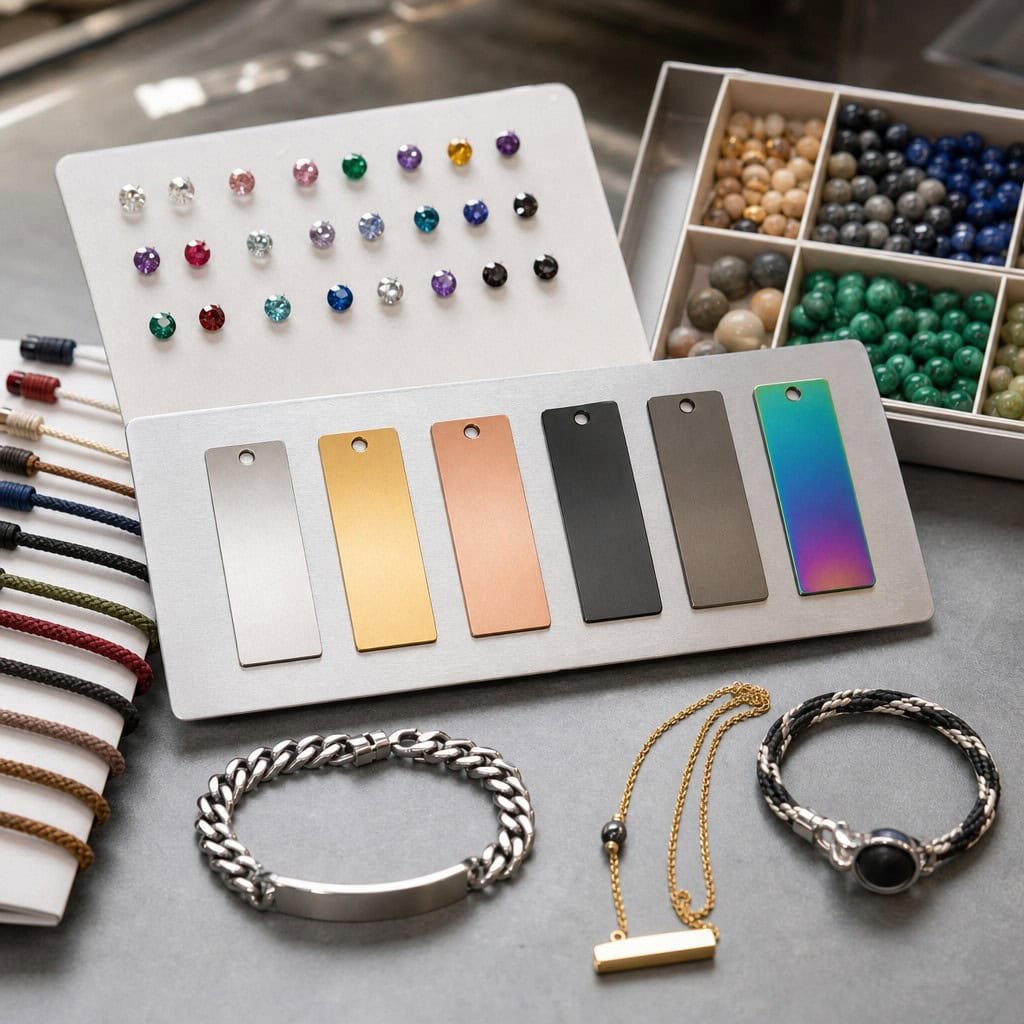
Use The Correct Sample Card For Each Material
Different materials require different approval rules. A plated metal color can use thickness and color-difference controls, while natural stone needs an accepted color-and-texture range. Beads add hole and diameter requirements; cords add weave and color-transfer checks; faceted CZ requires cut, size, transparency, and setting confirmation.
Plating Color Board
Defines the metal color direction, base material, surface finish, plating route, layer structure, target thickness, gloss, test plan, and approved reference. We use the signed board or approved product sample to inspect bulk color, coating coverage, visible defects, and later replenishment orders.
Electrophoretic Coating Card
Records a separately reviewed coating request, including color reference, transparency, gloss, film requirement, curing conditions, masked areas, substrate compatibility, and inspection method. We do not treat electrophoretic coating as interchangeable with PVD/IP or water plating; feasibility and execution route require project approval.
Natural Stone Card
We define material identity, color family, pattern range, inclusions, shape, cut, size, hole, thickness, treatment disclosure, and matching level on a stone specification card, establishing an acceptable range for natural variation, so each batch stays within the agreed boundaries without promising identical pieces.
Bead Sample Card
Separates bead material from appearance. The record identifies whether a bead is natural stone, glass, crystal, pearl, resin, metal, or another confirmed material, then controls shape, diameter, hole, finish, color code, luster, weight, quantity, and stringing compatibility. This prevents unapproved material substitution.
Cord Color Board
Connects cord color with material, diameter, cross-section, weave, texture, cut length, end treatment, clasp, crimp, connector, and packing. Available colors, supplier codes, MOQ, lead time, color transfer, abrasion, and pull requirements are confirmed against a physical card or submitted sample.
CZ Color Card
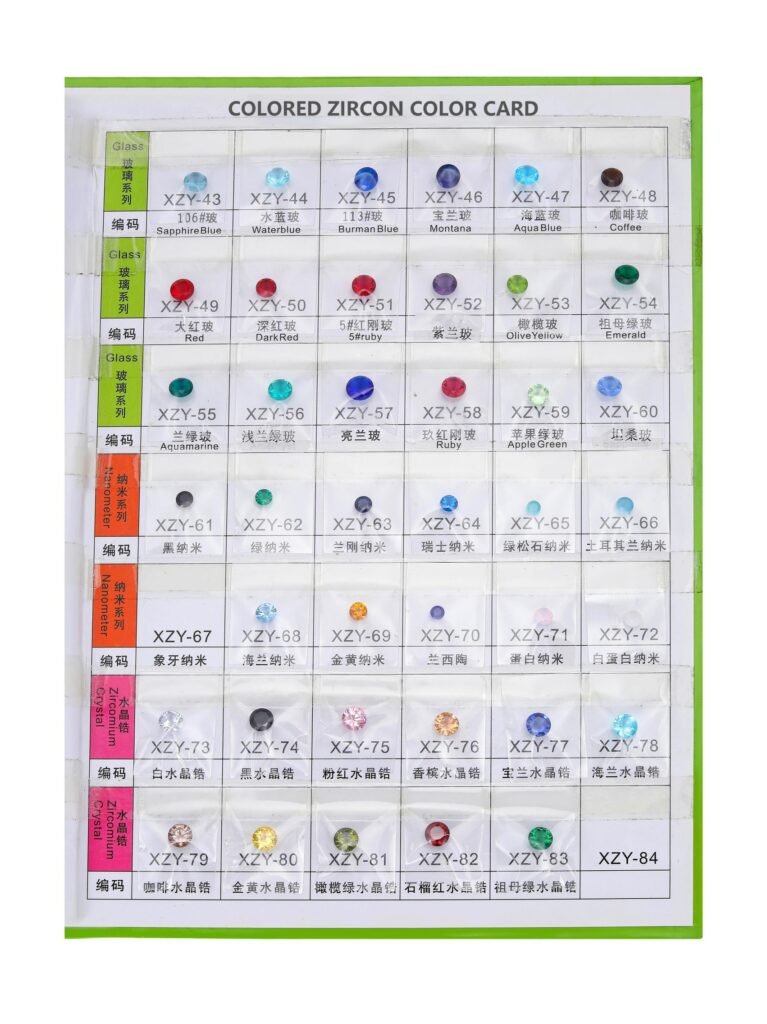
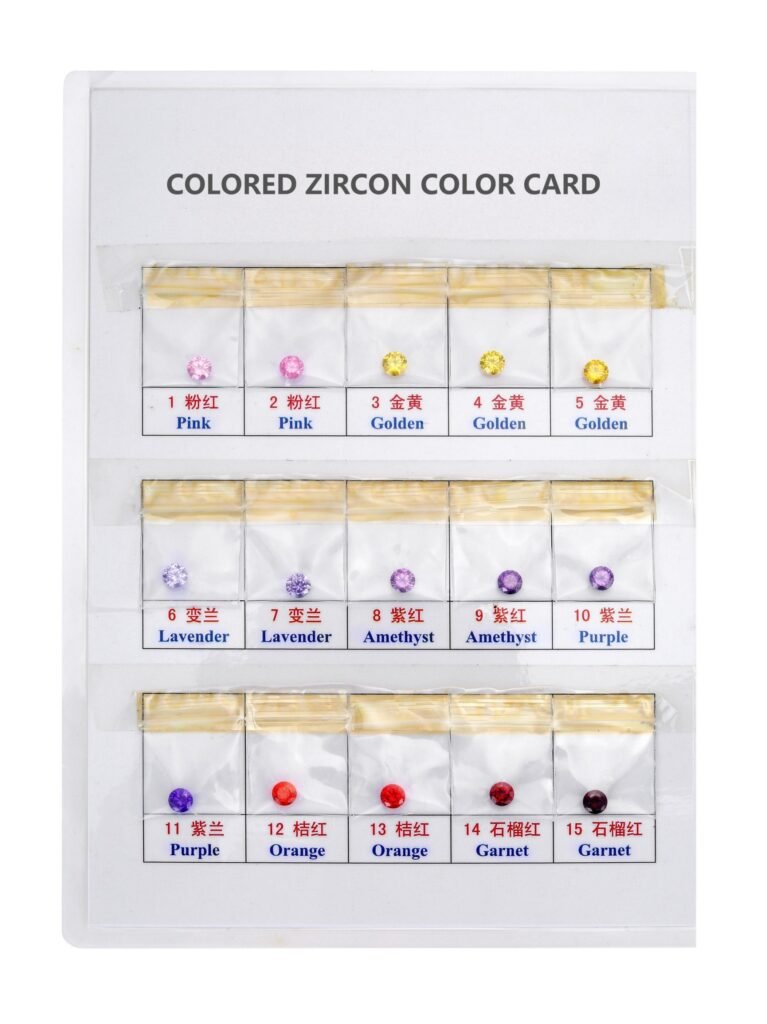
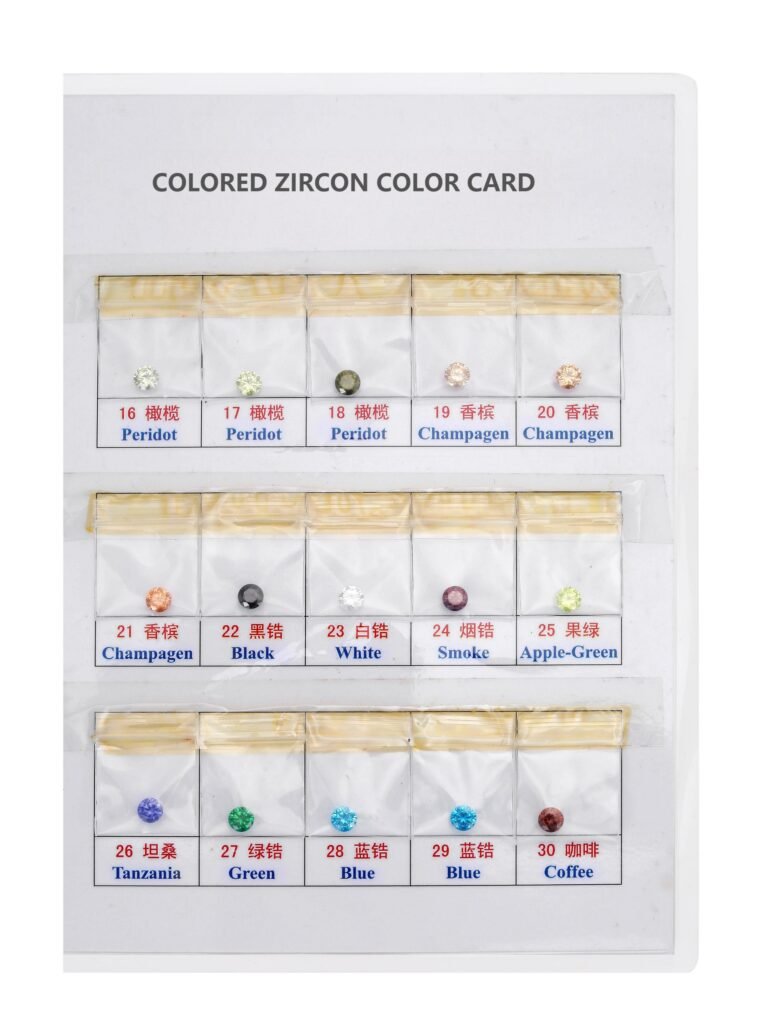
Defines cubic zirconia separately from natural zircon and other stones. The sample card records color code, transparency, shape, cut, millimeter or SS size, flat-back or pointed-back construction, coating, allowable variation, setting method, stone position, and bulk-lot reference.
Compare Stainless Steel Jewelry Plating Color Directions
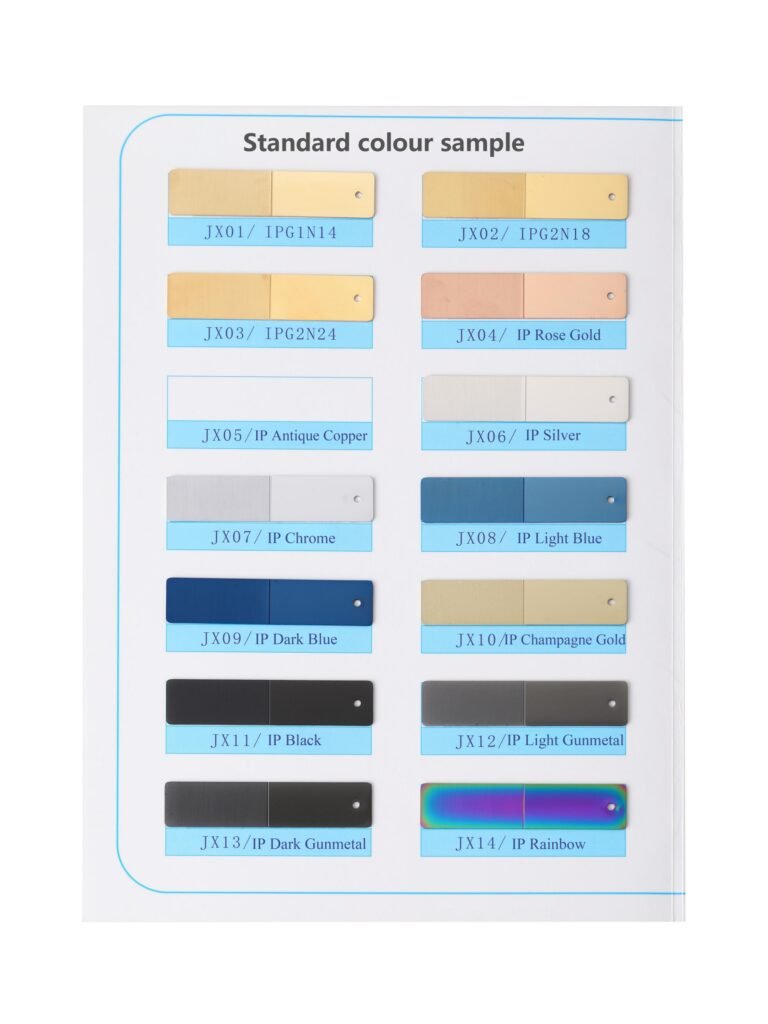
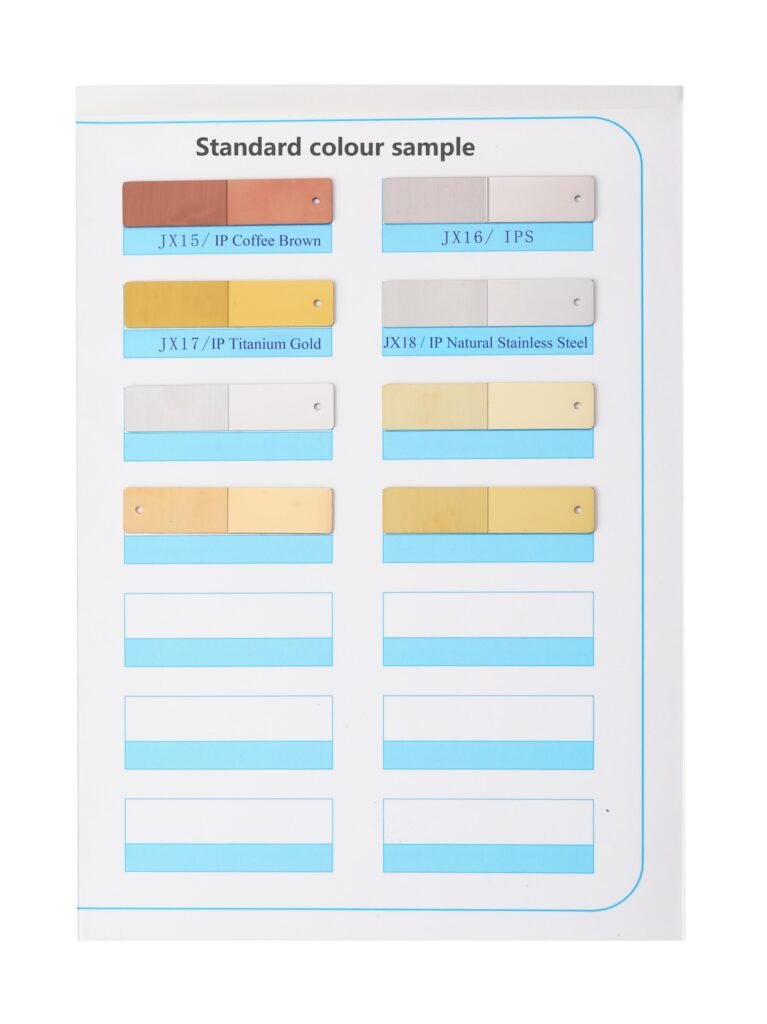
Chicolink offers the following metal color directions for stainless steel jewelry development. Color names support selection but do not define a complete production standard. Final appearance depends on the substrate, polish, texture, product geometry, plating route, layer structure, thickness, and approved physical reference. For OEM and replenishment orders, we record the selected color on a signed board or approved product sample and connect it to the applicable SKU and process version.
Gold Color Family
Compare 24K, 18K, and 14K Gold on the same stainless steel shape. These directions differ in warmth, yellow depth, and brightness, while polish and layer structure further change the result. We record the selected color, finish, coating route, target thickness, test plan, and approved physical sample for first production and replenishment inspection.
Rose Gold
Rose Gold is approved for its pink-to-gold balance, brightness, and relationship with pearls, CZ, natural stone, beads, cords, and packaging. High-polish and satin surfaces can produce visibly different results. We approve the color on the applicable product or representative sample and retain that reference for bridal, gift, women’s, and repeat-order collections.
White Metal Family
White Gold/Platinum, Silver Color, Rhodium Color, and natural Steel Color may look similar online but differ in warmth, brightness, reflectivity, and process route. We define the intended visual result, surface finish, layer structure, thickness, testing, and component matching. Applicable Rhodium or Silver Color projects may use water plating after project confirmation.
Black Finish
Black creates a deep, high-contrast appearance for men’s jewelry, streetwear, rings, bracelets, and chains. Mirror polish produces a brighter black, while brushed or sandblasted surfaces look softer. Approval covers gloss, main faces, edges, holes, recesses, welds, contact areas, coating coverage, and protective packing before the batch is released.
Gun Metal And Coffee
Gun Metal/Hematite provides a dark metallic gray, while Coffee creates a warmer brown-metal direction. Both require combination approval when used with clasps, findings, beads, natural stone, cord, or logo tags. We review brightness, texture, accessory matching, abrasion points, coating coverage, and the accepted sample before purchasing and bulk production.
Blue And Chromium
Blue and Chromium require a clear physical target because curvature, recesses, polish, and viewing angle can change their appearance. We review product geometry, surface finish, quantity, route, sample standard, component colors, and requested testing before confirming production. The approved product sample defines the result more accurately than a color name alone.
Colorful Effect
Colorful finishes can shift as the product or viewing angle changes. Chicolink uses the actual product sample to define the accepted visual range and record the active production version. Quotation and inspection planning consider product shape, polish, quantity, target market, testing, component pairing, and packing because each factor affects feasibility and visible consistency.
Natural Steel Color
Natural Steel Color still requires an appearance standard even when no decorative color coating is specified. Mirror, high-polish, brushed, satin, and sandblasted surfaces produce different brightness and texture. We define the required surface, accepted tool marks, edge condition, cleaning, passivation where applicable, component matching, inspection method, and packing protection before production.
Policy Notes
- PVD/IP is mainly used for stainless steel jewelry. Applicable Rhodium or Silver Color projects may use water plating.
- Applicable gold projects may use a TiN base layer with a Gold or Rose Gold top layer. E1 reference: 0.4 μm TiN + 0.05 μm Au/Gold. E2 reference: 0.7 μm TiN + 0.1 μm Au/Gold.
- We confirm the actual route, layers, thickness, color tolerance, testing, and packing protection per project.
- A screen image is an initial reference; the physical approved standard controls production.
Define Electrophoretic Coating Samples Before Production
Electrophoretic coating requests are reviewed as a separate surface-treatment project. We do not describe this process as PVD/IP or standard water plating. Before quotation, Chicolink confirms whether the product material, geometry, assembled components, stones, resin, adhesive, and intended use are compatible with the proposed coating and curing route. The process is released only after engineering review, physical sample validation, supply-route confirmation, and written approval of the color and performance requirements.
Separate Process Definition
We review electrophoretic coating separately from PVD/IP, water plating, paint, and resin. The project record identifies the confirmed coating type, execution route, responsible supply stage, and acceptance method before quotation. This prevents a color name or visual similarity from placing the wrong process in the BOM or production specification.
Substrate Compatibility
The review covers stainless steel grade, welds, springs, moving parts, stones, resin, adhesive, magnets, and other assembled components. Chemical exposure and curing temperature may affect these materials differently. We confirm whether parts should be coated before assembly, masked, protected, or excluded before sample production begins.
Color And Appearance
The physical card records color reference, transparency, opacity, gloss, texture, and the visible influence of the underlying metal finish. A supplier code or screen value can guide selection, but the approved coated sample defines production. Edge appearance, recesses, color uniformity, and the intended viewing condition are included.
Film And Curing
The specification records target film or another approved measurable requirement, curing temperature, curing time, fixture, and process limitations. These fields connect appearance with adhesion, function, cost, and repeatability. Heat-sensitive components, adhesive joints, resin, and stones are reviewed before the proposed route is accepted.
Masking And Function
Threads, electrical contacts, holes, hinges, stone seats, clasp areas, bonding surfaces, and dimensional fits may require masking or process exclusion. We identify these locations on drawings or samples, then check coating build, movement, assembly, and contact function before approving the sample for production release.
Tests And Commercials
Project requirements may include adhesion, color, film uniformity, corrosion, sweat, abrasion, or a customer-defined test. We also confirm the execution route, MOQ, sample cost, sample lead time, bulk lead time, and replenishment conditions. Unverified colors or processes are not released into purchasing, production, or sales specifications.
Policy Notes
Electrophoretic coating is not presented as a standard in-house color inventory. Chicolink confirms availability and the production route only after engineering assessment and sample validation. Unverified colors or processes are not released into purchasing, BOM, production, or sales specifications.
Approve Natural Stone Color And Texture Ranges
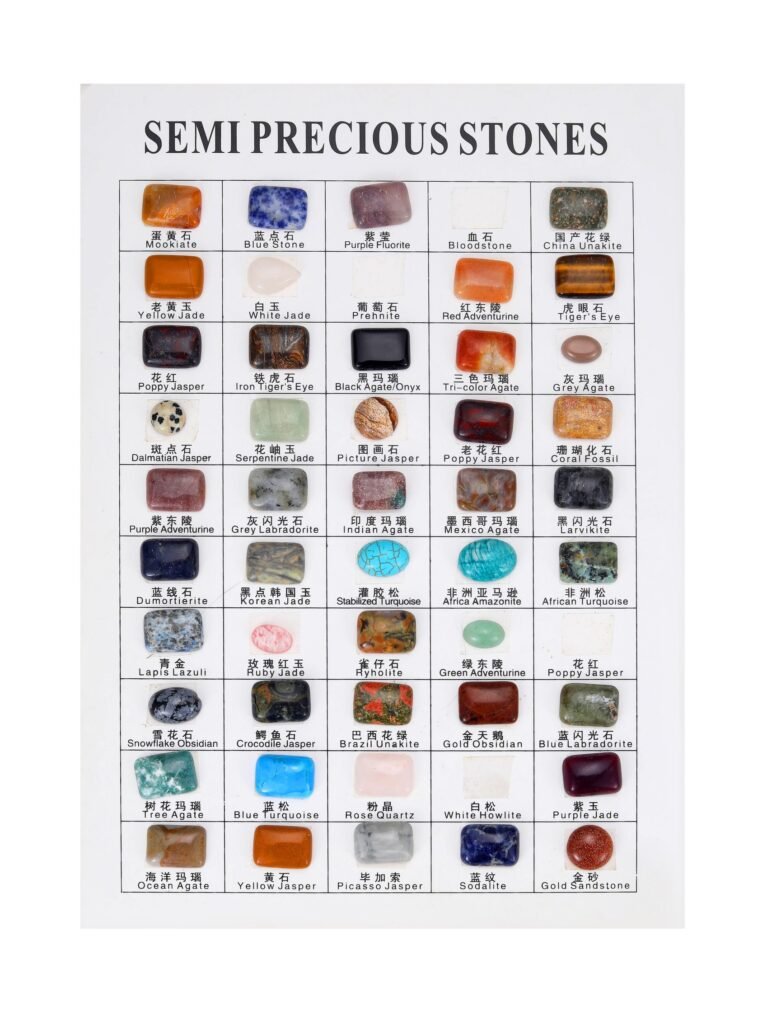
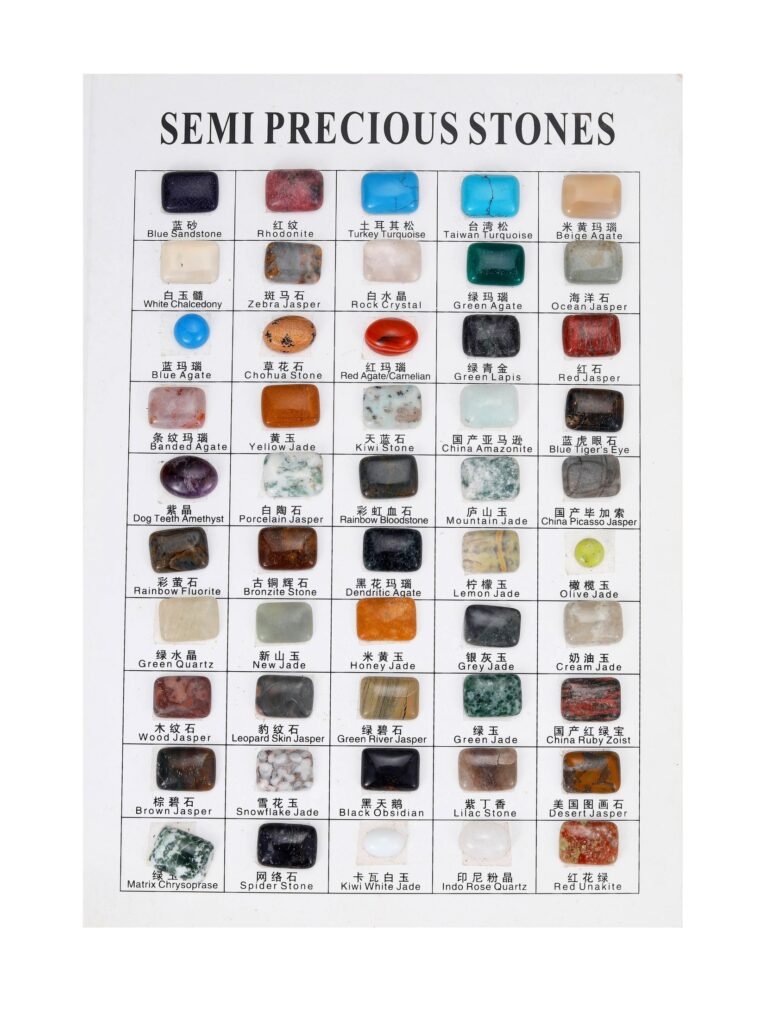
Natural stone cannot be controlled like plated metal or molded resin. Color, veining, inclusions, transparency, cracks, and pattern distribution can vary within one material and between supply lots. Chicolink uses a physical range board to define acceptable light, standard, and dark examples, plus unacceptable boundaries where required. The approved card is linked to the material name, supplier or batch reference, shape, size, hole, treatment, setting method, finished product, and packing standard.
Material And Lot Identity
The sample card records the confirmed trade name, material category, supplier or source reference, and supply lot. This prevents one stone name from covering visually similar but different materials. Any dyeing, stabilization, coating, backing, filling, heat treatment, or other confirmed treatment is also recorded before quotation, testing, labeling, and production approval.
The active material code follows the stone through purchasing and incoming inspection.
Color And Texture Range
Natural stone is approved through light, standard, and dark samples rather than one identical color target. The range can include veining, banding, matrix, spots, grain, transparency, orientation, and pattern density. We also define unacceptable boundaries for wrong material, excessive cracking, unstable cavities, unsuitable matching, or appearance outside the collection standard.
New supply lots are checked against the complete archived range before release.
Shape, Cut And Size
The specification links round, oval, square, heart, marquise, emerald, drop, cabochon, or another approved shape to exact millimeter dimensions, thickness, hole diameter, back construction, and tolerance. These fields protect stone seats, prongs, bezels, inlays, bead stringing, finished dimensions, product weight, and assembly efficiency during bulk production.
Incoming inspection records actual dimensions and rejects pieces outside the approved structural tolerance range.
Matching, Setting And Packing
We define random mix, controlled assortment, pair matching, set matching, or face-up matching according to the product. The card also records bezel, prong, glue, inlay, stringing, or another approved fixing method. Packing requirements cover separation, orientation, scratches, impact, moisture, chips, cracks, and protection of finished metal surfaces.
The approved product sample confirms both visual grouping and finished assembly security requirements.
Policy Notes
Natural variation is managed through an approved range, not an unrealistic single-color promise. Chicolink confirms the accepted range and unacceptable conditions before purchasing and production. Material or lot changes require review when they exceed the approved visual or dimensional range.
Specify Bead Material, Color, Size And Hole
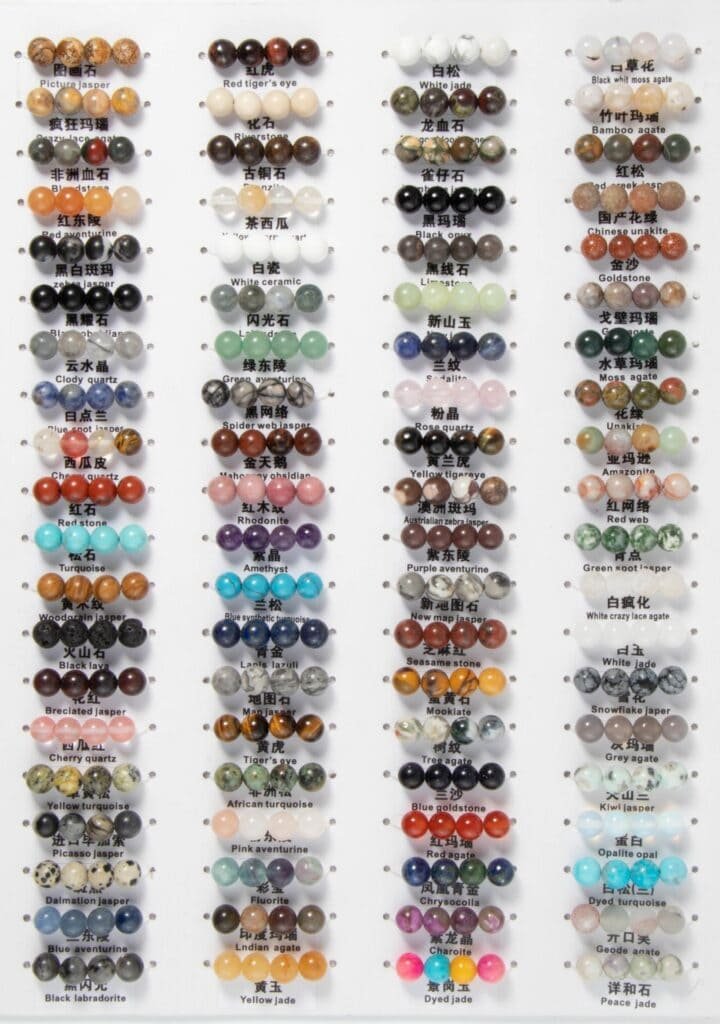
“Bead” describes a component form, not a material. Chicolink records whether the approved bead is natural stone, glass, crystal, pearl, resin, stainless steel, or another confirmed material. The sample card then defines color, finish, shape, diameter, hole, weight, luster, coating, quantity, and stringing direction. This prevents visually similar beads with different weight, durability, hole quality, or assembly behavior from being substituted without approval.
Material And Color Code
“Bead” describes a component form, not its material. We record natural stone, glass, crystal, pearl, resin, stainless steel, or another confirmed material with its trade name, supplier code, and batch. The physical sample defines color, transparency, accepted range, and any coating so visually similar substitutions cannot enter production without approval.
The approved code remains linked to purchasing, QC, and replenishment records.
Surface, Shape And Size
The card identifies polished, matte, frosted, faceted, metallic, pearlized, coated, or natural surfaces, then records round, oval, tube, disc, cube, rondelle, irregular, or custom shapes. Diameter, length, width, thickness, and tolerance determine bead count, spacing, finished dimensions, product weight, visual rhythm, and compatibility with neighboring components.
We inspect the representative strand before approving the finished collection layout and quantity plan.
Hole Quality And Weight
Hole diameter, direction, centering, chips, burrs, and blockage limits affect cord fit, stringing speed, breakage, and finished alignment. We compare the hole with the selected cord, wire, elastic, pin, or connector before approval. Single-bead, strand, and finished-product weight ranges are recorded where comfort, structure, or freight is important.
Incoming checks identify blocked, off-center, chipped, or undersized holes before final assembly.
Matching And Assembly
Beads may be randomly mixed, graded, pair matched, color grouped, or size sorted according to the collection standard. Assembly records identify cord, wire, elastic, pin, chain, spacer, knot, clasp, and end treatment. Packing can use strands, compartments, bags, trays, or product separation to control scratches, chips, tangling, count, and batch identity.
The approved arrangement controls sequence, spacing, orientation, and replacement during production.
Policy Notes
The approved bead code must identify both material and appearance. A generic description such as “black bead” is not sufficient for repeat production. Changes to material, coating, diameter, hole, supplier, or lot are reviewed before the approved sample is reused.
Match Cord Colors With Metal And Bead Components
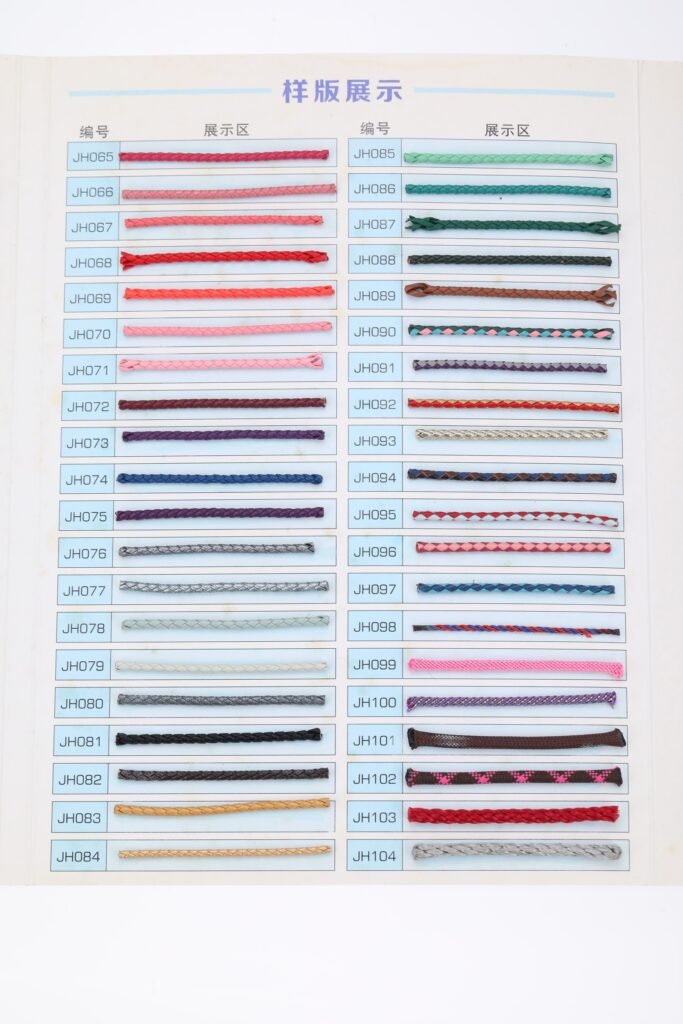
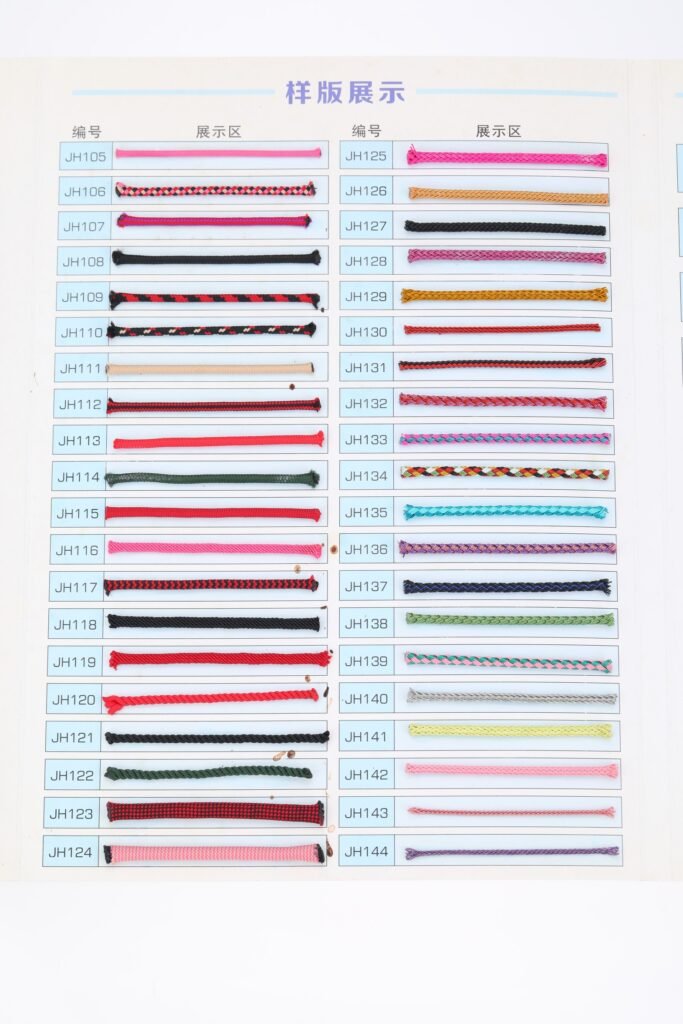
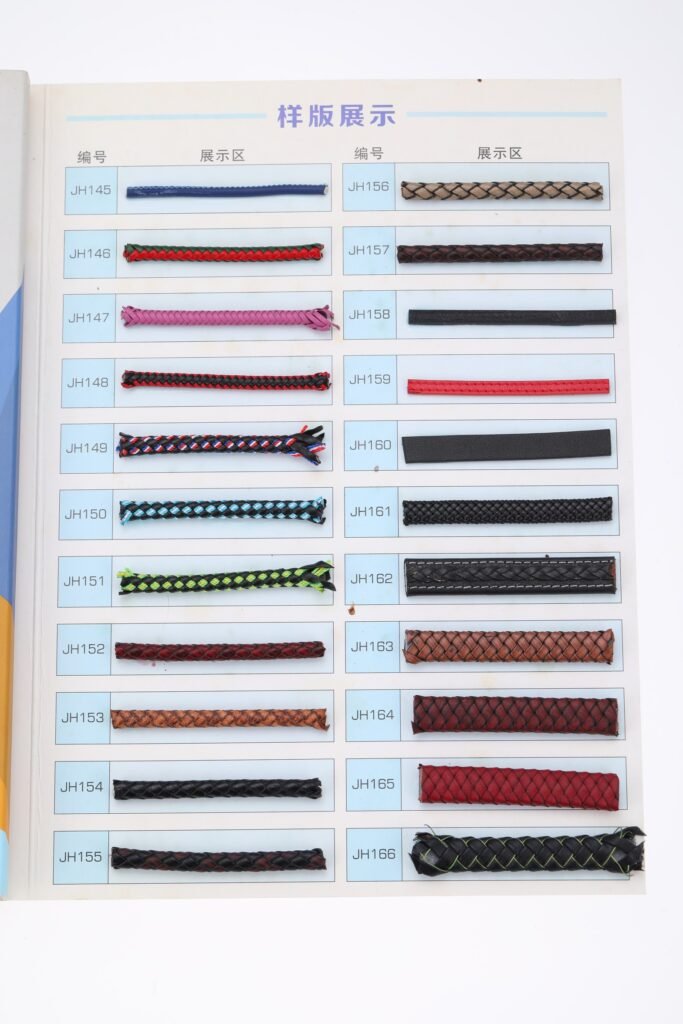
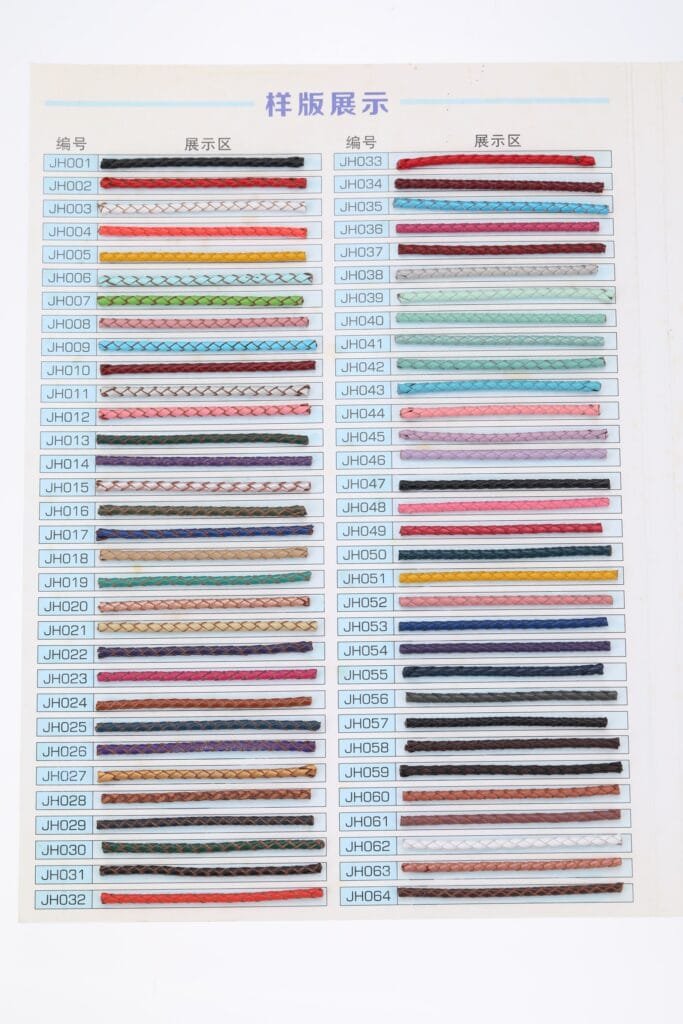
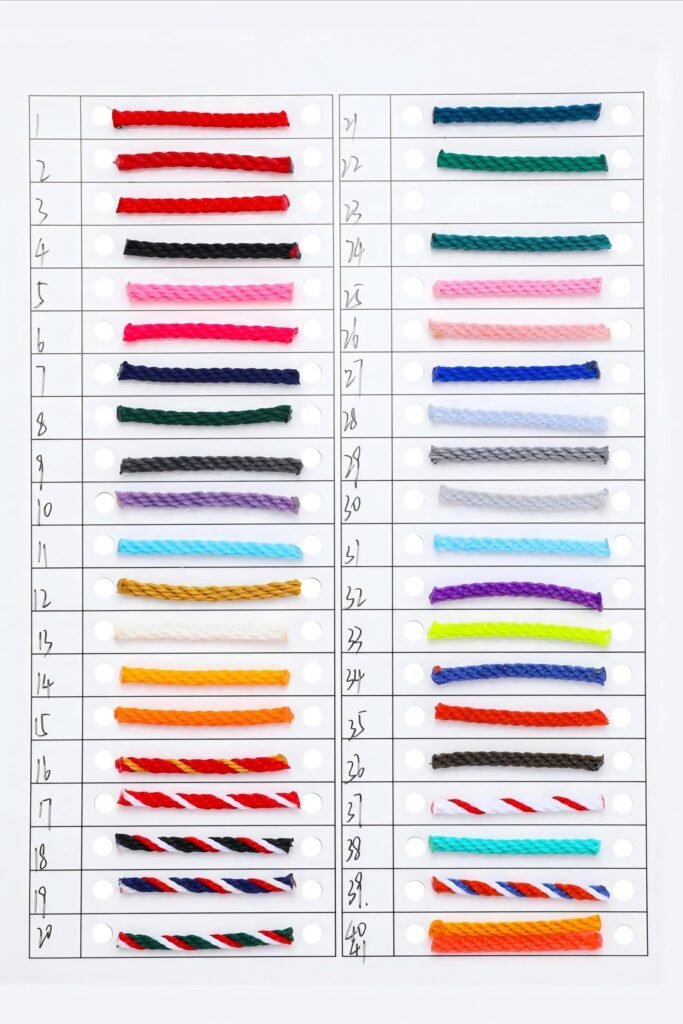
Cord color is approved together with material, diameter, cross-section, weave, texture, finished length, clasp construction, and supply conditions. After approval, Chicolink records the cord as a controlled BOM component. The matrix below provides matching directions rather than a fixed inventory promise. Available colors, supplier codes, MOQ, lead time, color transfer, abrasion, pull requirements, and bead-hole compatibility are confirmed against a physical cord card or submitted sample.
Material And Color Board
The cord board records material, supplier reference, physical color code, accepted shade, texture, and supply batch. Gold, Rose Gold, white metal, Black, Gun Metal, Coffee, natural stone, beads, and colored CZ are compared beside the actual cord. Digital values guide discussion, but the physical combination sample defines the approved production appearance.
The retained board supports incoming inspection and future replenishment comparison.
Diameter, Weave And Length
We record diameter, cross-section, weave, surface texture, cut length, finished length, and tolerance. These fields determine whether the cord passes through bead or pendant holes, holds knots, fits crimps, sits correctly against the body, and maintains the intended proportion. A color match alone cannot approve a cord with unsuitable construction.
The representative assembly confirms flexibility, drape, comfort, and finished-product dimensions.
Clasps And End Treatment
The representative assembly includes clasp, crimp, connector, end cap, knot, adhesive, pendant, bead, and visible plated components. We inspect fit, pull direction, abrasion points, adhesive area, metal-to-cord color relationship, and finished length. This prevents a loose component, oversized cord, exposed end, or color mismatch from appearing only during bulk assembly.
First-article approval confirms the final component sequence and attachment method.
Tests And Supply Conditions
Project requirements may include pull, abrasion, sweat, moisture, color transfer, knot security, or customer-defined checks. We also confirm available colors, MOQ, sample cost, sample lead time, bulk lead time, supplier route, and replenishment conditions. Packing is designed to reduce deformation, tangling, rubbing, and transfer onto plated metal or light-colored components.
Test methods and acceptance criteria are recorded before the sample is evaluated.
Policy Notes
We confirm cord availability only after reviewing material, color, supply conditions, MOQ, and sample results. A color name, RGB value, HEX value, or screen image is not a final production standard.
Planning Factors
- Material, supplier reference, and physical color code
- Diameter, cross-section, weave, texture, and finished length
- Bead-hole, pendant-hole, clasp, crimp, connector, and knot compatibility
- Pull, abrasion, sweat, color-transfer, and moisture requirements
- Quantity per style and color, MOQ, lead time, and replenishment plan
- Packing method to prevent deformation, tangling, or surface transfer
Approve CZ Color, Cut, Size And Setting
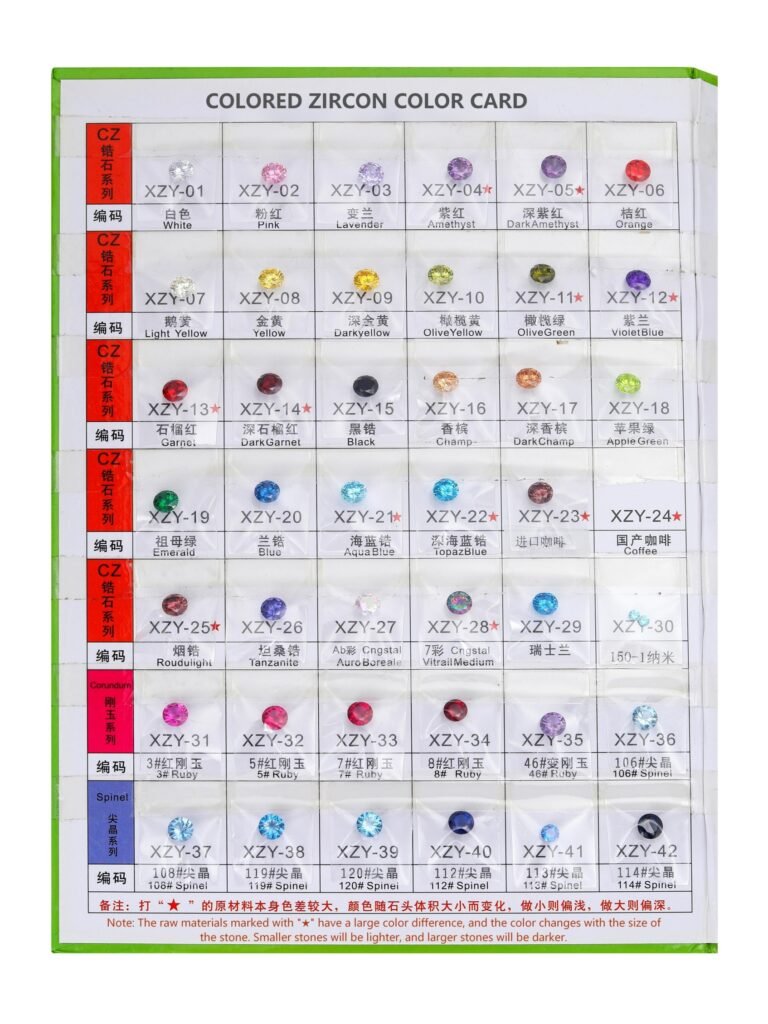
Chicolink records cubic zirconia as CZ and does not use the term as a substitute for natural zircon, glass, crystal, or another synthetic stone. Color is only one part of the stone specification. The approved card also defines transparency, shape, cut, dimensions, back construction, coating, surface effect, acceptable range, and setting method. The same stone code is linked to the stone-position drawing, BOM, approved sample, setting inspection, and packing method.
CZ Identity And Color
The sample card identifies CZ / cubic zirconia with a supplier or internal code and does not substitute the term for natural zircon, glass, or crystal. Colorless/white, black, champagne/golden, pink/red, blue/green, or another sampled direction remains subject to size, cut, availability, MOQ, cost, and physical approval before production.
The active code is linked to the BOM, stone map, and incoming lot.
Transparency And Coating
We record transparent, translucent, opaque, or coated visual effects together with any back coating, surface coating, foil, or special treatment. These details influence color depth, sparkle, adhesion, cleaning, process sequence, and packing. The approved card is reviewed under controlled lighting and against the selected plating, bead, cord, or natural stone combination.
Bulk stones are compared with the same visual reference and conditions.
Shape, Cut And Size
Round, square, oval, drop, heart, marquise, emerald, and approved custom shapes are linked to facet pattern, table, pavilion, brilliance direction, millimeter dimensions, SS size where applicable, thickness, tolerance, and flat-back or pointed-back construction. These fields protect stone seats, prongs, channels, glue areas, finished dimensions, and consistent visual spacing.
Incoming dimensional checks prevent setting damage, looseness, and visibly uneven stone rows.
Setting And Acceptance
The specification connects each CZ code to prong, bezel, pavé, flush, tension, glue, inlay, or another approved setting. Incoming and finished-product checks cover color range, chips, scratches, cloudiness, miscut, stone position, prong condition, glue overflow, movement, and retention. The applicable probe, push, pull, tape, or movement check follows the fixing structure.
Packing protects exposed facets, prongs, and finished plated surfaces.
Policy Notes
Named color families are development directions, not a fixed CZ inventory statement. Chicolink confirms the supplier code, size, cut, availability, MOQ, cost, and sample before quotation and bulk release.
Review Branded Crystal Colors And Effects
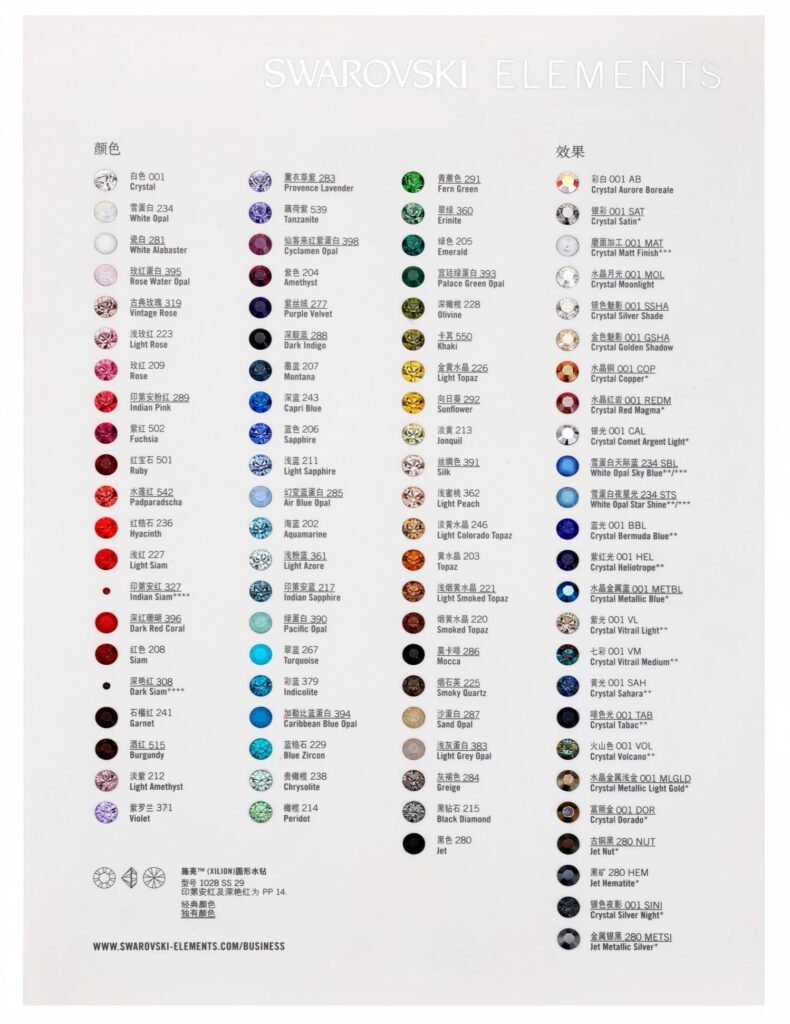
Branded crystal reference cards may be used when a project specifies a particular supplier, color code or optical effect. Brand, article number, color, effect, size, cut, availability and purchasing channel must be confirmed separately before sampling or production.
Brand And Article Verification
Confirm the crystal brand, article number, cut and supplier documentation before use.
Color And Effect Code
Specify the exact color or effect code, such as Crystal, AB, Golden Shadow or Metallic Light Gold. Visual appearance may vary with lighting, backing and setting.
Size, Foiling And Setting
Confirm stone size, foiled or unfoiled construction, flat back or pointed back, and the intended prong, bezel or adhesive setting.
Availability And Approval
Branded crystal colors are subject to supplier availability, MOQ and lead time. Bulk production begins only after the actual sample is approved.
Policy Notes
Historical Swarovski Elements color and effect reference card. Codes and availability must be reconfirmed for each project. Swarovski is a trademark of its respective owner. Chicolink does not claim affiliation or authorized distributor status unless separately stated in writing.
Understand How Material And Finish Change Color
The same named color can look different on reflective metal, translucent coating, natural stone, faceted CZ, glossy beads, or woven cord. Chicolink separates visual selection from production acceptance by defining the material, surface, lighting, viewing angle, background, and approved physical reference. This prevents a screen image or color name from becoming an incomplete bulk standard.
Reflective Metal Surface
Mirror, high-polish, brushed, satin, and sandblasted surfaces reflect light differently. The same plating direction can therefore appear brighter, darker, warmer, or softer. We approve color and finish together on the actual product or a representative sample, then inspect main faces, edges, recesses, welds, and contact areas under defined conditions. The approved viewing condition and background are recorded for repeat inspection.
Transparent Coating Layer
A transparent or translucent coating allows the substrate and underlying finish to influence the visible color. Film uniformity, gloss, thickness, curing, edges, masked areas, and assembled components can alter the result. We review electrophoretic coating requests on physical samples and define a separate acceptance method before any production route is approved. Heat-sensitive components and functional contact areas are evaluated separately.
Natural Material Range
Natural stone may contain veins, bands, matrix, inclusions, pits, color zones, and directional patterns. These features are not controlled by one digital color value. We use range samples to separate acceptable natural variation from structural defects, wrong material, excessive cracking, unsuitable matching, or appearance outside the approved collection standard. New supply lot changes are compared with the archived range before release.
Facets, Texture And Weave
CZ facets redirect light, bead surfaces change luster, and cord weave creates highlights and shadows. Hole size, orientation, diameter, adjacent metal color, and assembly tension also affect the finished product. We approve components in a representative combination so the decision reflects the assembled jewelry rather than isolated swatches only. Inspection uses the approved arrangement, background, and lighting where appearance is critical.
Approve Each Sample Card Through One Controlled Workflow
Chicolink connects visual references to an executable product specification. The same approval logic applies across metal finishes, coating samples, natural materials, beads, cords, and CZ, while each category keeps its own acceptance criteria. Customer contracts, approved drawings, samples, and written quality standards take priority over internal defaults.

Eight Steps From Reference To Bulk Release
- Collect references: Receive physical samples, signed boards, supplier cards, product photos, drawings, Pantone directions where relevant, and target-market requirements.
- Identify materials: Record the actual material category instead of relying on appearance names such as “stone,” “bead,” “zircon,” or “black cord.”
- Define specifications: Confirm dimensions, color or range, finish, structure, hole, coating, treatment, assembly, testing, packing, quantity, and commercial conditions.
- Review manufacturability: Evaluate plating access, heat and chemical compatibility, stone seats, bead holes, cord diameter, clasps, adhesives, moving parts, and packing risk.
- Prepare samples: Build a color board, material range, component strand, combined assembly, or finished product sample according to the approved review plan.
- Approve and archive: Link the signed sample to the customer, project, SKU, drawing, BOM, process version, approval date, photographs, and physical storage location.
- Release production: Remove unapproved versions from purchasing and production, then inspect incoming components, first articles, process output, finished products, and packing against the active version.
- Control changes: Material, supplier, batch, color, size, finish, treatment, process, cord, stone, bead, CZ, or packing changes trigger review before the old approval is reused.
Apply The Right Quality Standard To Each Sample
One inspection method cannot control every sample type. Chicolink uses measurable limits where they are technically relevant and approved range samples where natural or optical variation is expected. The matrix below prevents plating thickness, ΔE, stone texture, bead holes, cord transfer, and CZ setting checks from being mixed into an unsuitable universal standard. Order-specific requirements remain subject to the approved quality agreement.
| Sample Type | Primary Production Reference | Main Checks | Avoid This Error |
|---|---|---|---|
| Plating Color Board | Signed board or approved plated product | Color, brightness, coverage, thickness, exposed substrate, spots, scratches, peeling, and tests | Using a color name or screen image as the complete standard |
| Electrophoretic Coating Card | Approved coated sample and confirmed process specification | Color, transparency, gloss, film uniformity, adhesion, curing effect, masked areas, and requested performance | Treating the coating as automatically equivalent to PVD or water plating |
| Natural Stone Card | Approved light-to-dark and texture range | Material identity, color range, pattern, inclusions, cracks, dimensions, treatment, matching, and chips | Applying one ΔE limit to natural variation without an approved range |
| Bead Sample Card | Approved bead code, strand, and component sample | Material, color, finish, diameter, hole, weight, count, sorting, coating, and assembly | Approving by color while ignoring material or hole compatibility |
| Cord Color Board | Physical cord card and representative assembly | Material, code, diameter, weave, length, transfer, abrasion, pull, knots, crimps, and clasp fit | Assuming a screen color confirms cord supply and bulk behavior |
| CZ Color Card | Approved CZ code, lot sample, and setting sample | Identity, color, transparency, cut, dimensions, coating, chips, cloudiness, position, and retention | Calling all clear faceted stones “zircon” or using one retention test for every setting |
Policy Notes
Test reports apply only to the stated sample, material, color, coating, construction, method, and conditions. They are not extended automatically to all SKUs, batches, colors, materials, or future orders.
Testing References
- Plating color internal reference when no customer standard applies: ΔE00≤1.5 for standard polished or mirror products; ΔE00≤2.0 for brushed, sandblasted, or antique products.
- Plated or PVD salt-spray internal reference: 48 hours; higher-corrosion requests: 72 hours or customer requirement.
- Artificial sweat internal reference: 40±2°C for 24 hours at pH 4.7±0.2.
- Stone retention method follows the fixing structure. Small glued stones may use tape plus pick inspection as an auxiliary check; larger glued, prong-set, pearl-pin, or other structures require an applicable push, pull, torque, probe, or movement check.
- Cord, bead, natural stone, CZ, or coating tests are defined by material, construction, use, market, and written customer requirement rather than assumed for every order.
Trace Approved Materials Through Bulk And Replenishment
An approved sample is useful only when it can be traced to the material, process, order, and finished product. Chicolink uses order number, SKU, version, and production batch as the primary links between sample cards, purchasing, manufacturing, inspection, packing, shipment, and complaint records. This supports repeat orders and isolates changes before they affect a full collection.

Records That Protect Repeat-Order Consistency
- Approved reference: Sample-card code, physical sample location, photographs, approval date, approval method, customer, project, SKU, drawing, BOM, and process version.
- Material and component record: Stainless steel grade, plating specification, coating route, natural stone lot, bead code, cord code, CZ code, supplier reference, incoming quantity, and accepted range.
- Production record: Work order, manufacturing route, date, workshop, equipment where applicable, plating or coating batch, assembly, setting, rework, and completed quantity.
- Inspection record: IQC, first article, IPQC, plating or coating inspection, material range check, component dimensions, setting or assembly checks, FQC, AQL or 100% inspection, and nonconforming disposition.
- Packing and shipment record: Approved packing version, separation method, SKU label, barcode, packing batch, carton number, quantity, shipment date, and logistics documents.
- Replenishment review: Compare the new supply lot and production plan with the retained standard. A change outside the approved color, texture, dimensions, process, supplier, component, test, or packing range requires renewed approval.
Plan Your Custom Color And Material Sample Project
Chicolink operates a 5,500㎡+ factory with 400+ employees, 6 jewelry designers, 3 jewelry engineers, 58 listed major machines, and monthly capacity above 200,000 pieces. We support wholesale, OEM, ODM, private-label, QC, packing, and bulk production. For an accurate review, submit the jewelry design, quantity, material, required sample-card categories, physical references, target market, testing, packaging, and delivery date. We then identify missing data, feasibility, risks, samples, and cost inputs.
Project Workflow Table
| Step | Chicolink Action | Buyer Confirmation |
|---|---|---|
| 1. Requirement Review | Record product, material, six possible sample-card categories, quantity, market, testing, packing, and schedule | Submit drawings, CAD, photos, physical samples, color cards, and standards |
| 2. Engineering Review | Evaluate manufacturing route, compatibility, tolerances, supply conditions, assembly, and quality risks | Confirm proposed materials, processes, acceptable ranges, and open questions |
| 3. Quotation | Calculate product, tooling, plating, coating, stones, beads, cord, CZ, packing, samples, testing, and inspection | Approve scope, commercial terms, optional items, and exclusions |
| 4. Sampling | Prepare and inspect the agreed boards, components, assemblies, or finished samples | Approve each active sample code and revision in writing |
| 5. Production Release | Link samples to drawings, BOM, process, QC, and packing versions | Approve final production specification and quantity |
| 6. Bulk And QC | Manage purchasing, production, process inspection, FQC, AQL or 100% inspection, and packing | Confirm customer-appointed inspection, testing, reporting, and shipment requirements |
| 7. Replenishment | Retrieve approved standards and identify supply or process changes | Confirm whether color, material, component, test, packing, or market requirements changed |
Commercial Reference Table
| Item | Chicolink Reference | Conditions |
|---|---|---|
| Stock / Regular MOQ | Usually 120 pieces per style | Confirm by SKU, stock, color, size, component, and packing version |
| OEM / ODM MOQ | Usually 500 pieces per style | Affected by tooling, material, color, plating batch, components, packing, testing, and difficulty |
| Existing Style Sample | Usually 3–7 working days | Subject to stock, color, finish, components, and packing |
| OEM / ODM Sample | Usually 25–30 working days | Subject to drawings, tooling, materials, supply route, sample cards, testing, and revisions |
| Existing Style Bulk | Usually 20–30 working days | Confirm after stock, components, packing, inspection, and quantity review |
| OEM / ODM Bulk | Usually 25–45 working days | Starts from approved specifications and depends on complexity and supply conditions |
| Initial Response | Target within 6 hours | May confirm receipt or request data; it is not automatically a formal quotation |
| Complex Review | Preliminary assessment target within 24 hours | Formal quotation follows engineering and cost calculation |
| Sample / Tooling Fees | Usually applicable | Any deduction or refund follows the written order agreement |
| Quantity Tolerance | Common reference approximately ±5% | Overage, shortage, ownership, payment, and freight responsibility require agreement |
Jewelry Color And Material Sample Card FAQ
These answers summarize how Chicolink handles plating, coating, natural stone, bead, cord, and CZ sample cards. Final specifications follow the approved material, product construction, physical sample, quantity, market, test plan, and quality agreement.
Which sample cards can Chicolink prepare?
We can prepare or coordinate project references for plating colors, confirmed electrophoretic coating requests, natural stone ranges, beads, cords, and CZ. Availability depends on the material, supplier route, quantity, process, sample result, and approved project scope. Not every color, material, or process is maintained as fixed inventory.
Is electrophoretic coating the same as PVD?
No. We review electrophoretic coating separately from PVD/IP and water plating. The project must define the substrate, coating route, color, transparency, gloss, film requirement, curing, masked areas, compatibility, performance checks, MOQ, and sample. It is released only after engineering and sample approval.
Can natural stones have one fixed color standard?
Natural stones normally require an approved range rather than one identical color. We can define light, standard, and dark samples plus accepted patterns, inclusions, texture, dimensions, treatment, and rejected boundaries. The range is linked to the applicable material and lot.
What information belongs on a bead card?
We record material, supplier code, batch, color, transparency, surface, shape, dimensions, hole, weight, matching level, assembly, and packing on each bead card, so the approved bead specification is documented, and any substitution requires review and approval.
Can cord color match plating and stones?
Yes, subject to physical combination sampling and supply confirmation. We review cord material, code, diameter, weave, texture, clasp, bead or pendant holes, color transfer, abrasion, pull requirements, MOQ, and lead time. A screen color alone does not approve cord production.
Does CZ mean natural zircon?
No. CZ means cubic zirconia. We identify it separately from natural zircon, glass, crystal, and other synthetic stones. The approved CZ card records color, transparency, shape, cut, size, back structure, coating, tolerance, setting method, and supplier or internal code.
How are sample cards approved for bulk production?
We collect references, identify materials, define specifications, review manufacturability, prepare physical samples, record approval, archive the active version, and link it to purchasing, BOM, production, inspection, and packing. Unapproved or replaced versions are removed from active use.
Can one test standard cover all sample types?
No. Plating may use thickness, color-difference, sweat, or salt-spray requirements. Natural stone uses an approved visual and dimensional range. Beads require material, hole, and size checks; cords may need transfer, abrasion, or pull checks; CZ retention follows the setting structure.
Can approved samples support replenishment orders?
Yes. We retrieve the approved sample and records for material, supplier, batch, process, dimensions, QC, packing, and shipment. A new supply lot or process can be reused only when it remains within the approved range; material changes or out-of-range appearance require review.
What should I send for a sample quotation?
Send the product type, drawings or reference, dimensions, material, required sample-card categories, quantity by style and color, target market, test requirements, logo, packing, and delivery date. Upload CAD, photos, existing products, supplier cards, stone or bead samples, cord references, and quality standards when available.