
Stainless Steel Ocean & Nautical Jewelry Manufacturer
Develop market-ready nautical collections through controlled design engineering, in-house PVD plating, bulk quality management, private labels, and export delivery.
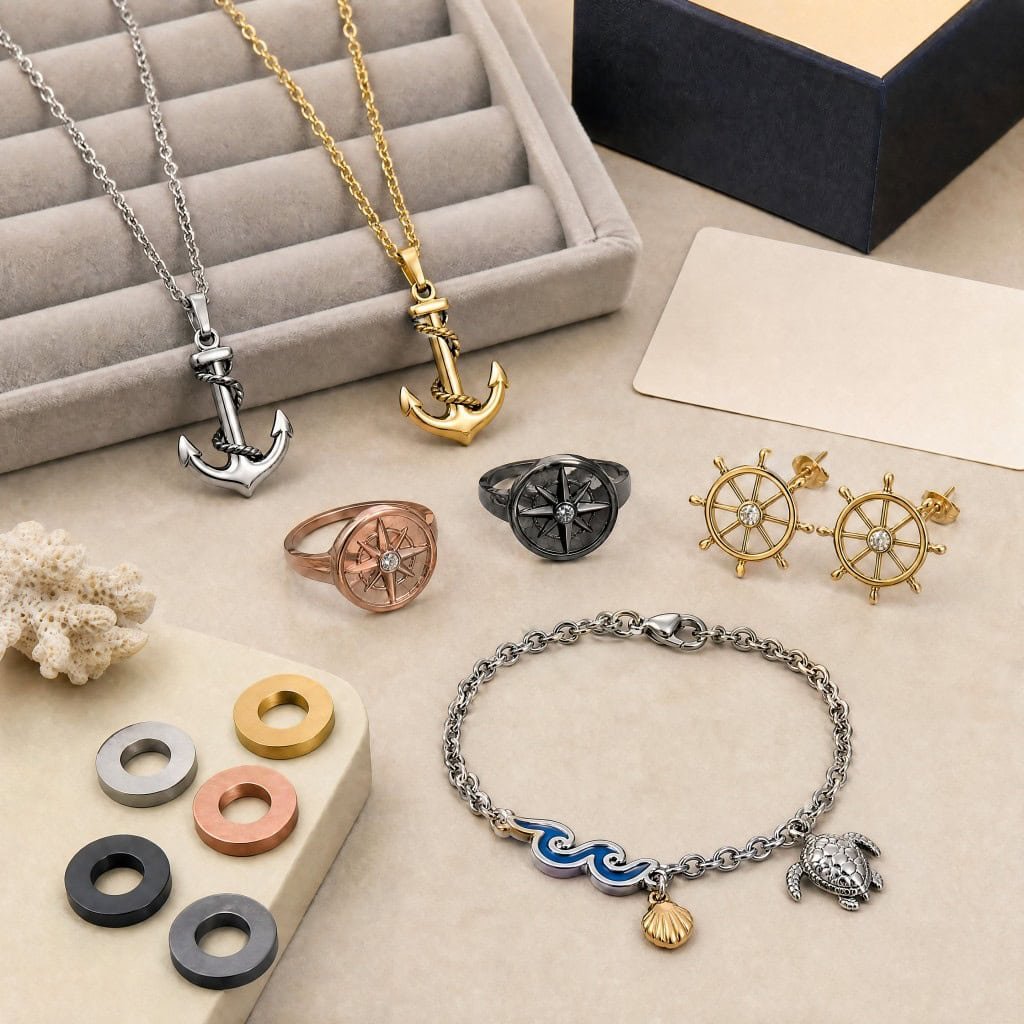
Chicolink Jewelry manufactures stainless steel anchor, compass, wave, shell, marine-animal, sailboat, rope, and coastal jewelry for global B2B programs. Start with an existing style, artwork, reference sample, CAD file, or collection brief. We define the product structure, steel grade, finish, logo, packaging, target market, testing, quantity, and delivery requirements before sampling. Approved specifications and samples then control bulk production, inspection, retail pack-out, replenishment, and shipment release.
Plan Nautical Jewelry Around the Actual Buying Program
Chicolink begins each ocean jewelry project by confirming the sales channel, price position, launch calendar, destination market, and compliance requirements. We then connect the assortment, specifications, packaging, tests, inspection, and replenishment controls to that program. This keeps the collection commercially focused and prevents unrelated SKUs from entering development.
Global Brand Collections
For established brands launching a proprietary ocean or nautical line, we work from authorized artwork, brand standards, target price, approved colors, size systems, packaging files, and market requirements. Each SKU receives controlled specifications and approvals so the collection can move from development into scheduled bulk production and later replenishment without relying on informal references.
Retail Chain Rollouts
Multi-store programs require consistent product versions, color lots, labels, barcodes, set contents, carton marks, inspection standards, and delivery milestones. We connect the approved jewelry and packaging evidence to every SKU, color, size, and pack version, then coordinate production and pre-shipment inspection against the buyer's written rollout requirements.
Distributor Assortments
For regional distributors, Chicolink can structure entry, core, trend, men's, gift, and premium nautical groups around the confirmed customer base and price levels. We define quantities, color ratios, packaging levels, catalog data, replenishment priorities, and target costs before the assortment enters quotation and sampling.
Resort Gift Programs
For resorts, cruise-related gift channels, aquariums, coastal attractions, and destination retailers, Chicolink assesses motif scale, souvenir price position, location text or coordinates, gift presentation, compact display, transport protection, and seasonal delivery. We use customer-supplied names, marks, maps, or artwork only after documented authorization.
DTC Brand Launches
For DTC programs, Chicolink aligns the visual language, photography-ready surfaces, consumer sizing, unboxing sequence, and SKU data with the physical product. We approve the jewelry, logo, care card, pouch or box, barcode, set configuration, and protective packing as one retail version instead of treating them as separate late-stage tasks.
Wholesale Replenishment
For wholesale programs, Chicolink identifies commercially usable designs, quantity breaks, repeatable components, packaging, and replenishment priorities. We separate styles that use existing production routes from those requiring new tooling or development. Repeat orders reference the approved SKU, material, color, packaging, and inspection records, and we review changes before release.
Build Complete Collections From Recognizable Nautical Design Codes
We develop nautical collections as coordinated product families, not isolated motifs placed on generic jewelry bodies. Each direction can be translated into pendants, necklaces, earrings, bracelets, rings, anklets, charms, men's pieces, or gift sets where the structure remains practical. Artwork, dimensions, finish, chain family, connection method, packaging, and inspection criteria are defined at SKU level even when multiple products share one visual concept.
Anchor Collections
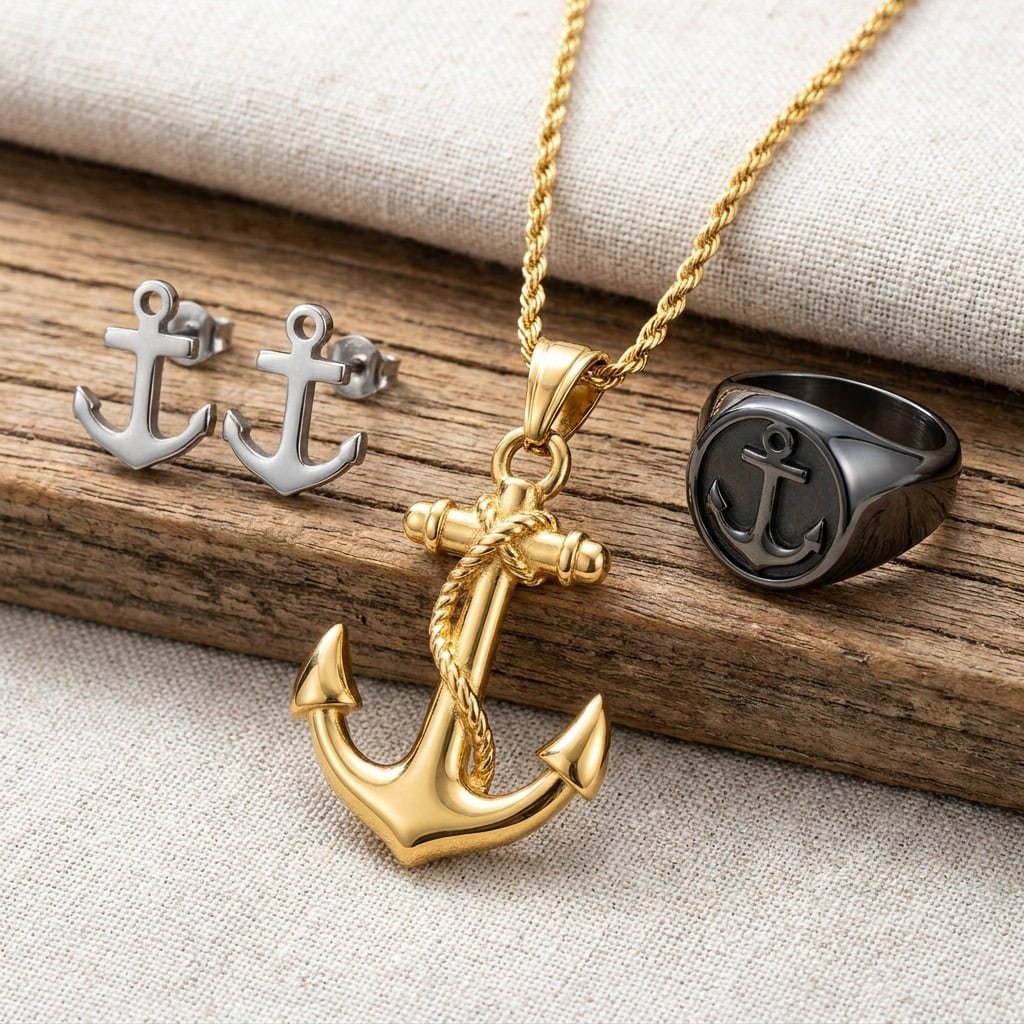
Minimal anchors, traditional naval anchors, rope-wrapped anchors, heart anchors, and geometric anchor outlines can support pendants, stud earrings, charms, signet rings, bracelets, and sets. We review point radius, crossbar proportion, recessed areas, bail or hole position, front-facing balance, engraving space, polishing access, and packaging so the recognizable silhouette does not create sharp or fragile details.

Compass Collections
Compass roses, north-star directions, coordinate concepts, rotating-inspired structures, and map-linked designs suit pendants, medallions, rings, bracelets, and gift pieces. We define line width, letter readability, relief or cut-through depth, orientation, stone position, logo location, and surface contrast. Functional rotating parts are treated as engineered mechanisms, not assumed from a visual reference.
Ship Wheel Collections
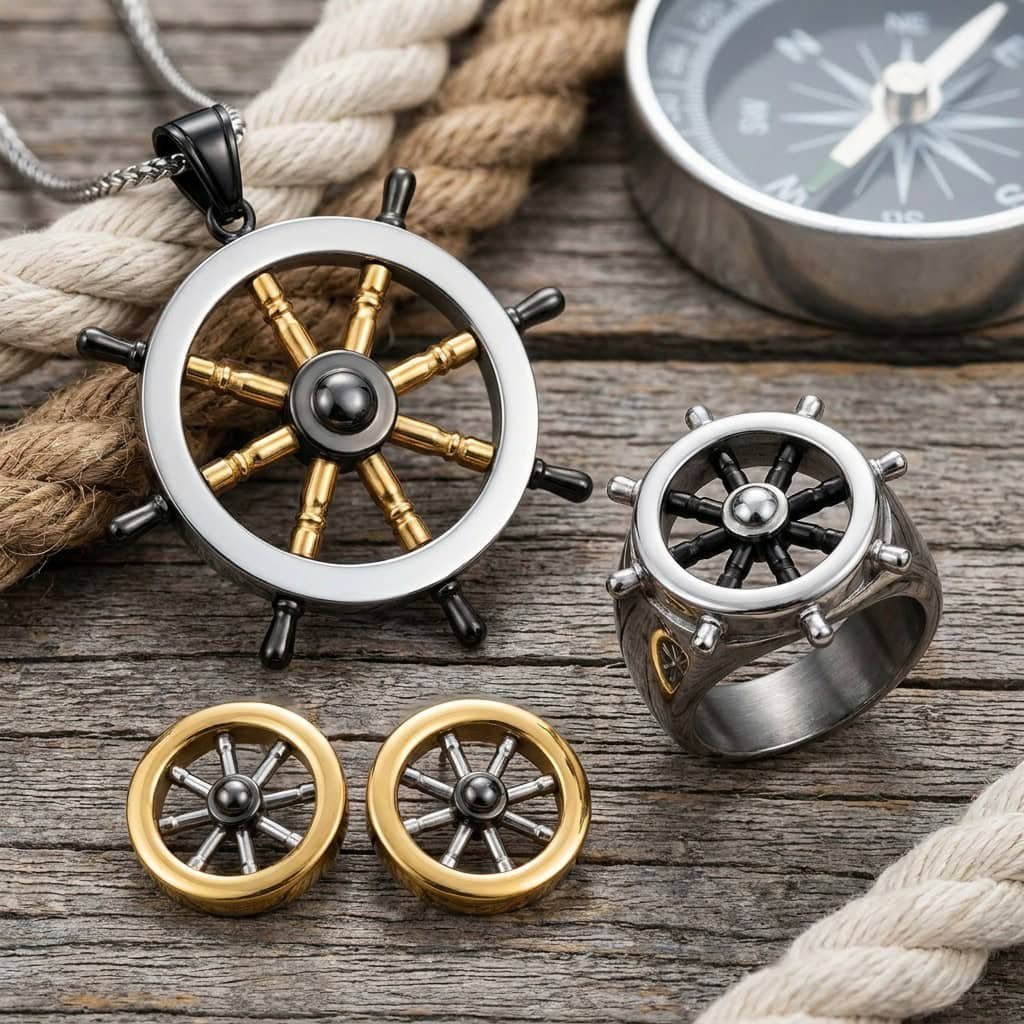
Ship wheels work as openwork pendants, compact charms, earrings, cuff details, ring faces, and layered necklace elements. Thin spokes, outer rims, center hubs, and connector points require a balanced structure. We assess minimum sections, roundness, flatness, casting or cutting access, polishing, PVD coverage, hanging direction, and protection from bending during assembly, packing, and transit.

Wave Collections
Single-line waves, layered ocean swells, circular wave medallions, abstract surf forms, and engraved wave patterns can create minimalist or statement collections. Development controls include curve continuity, cut-out spacing, edge comfort, metal thickness, reflection quality, enamel or resin boundaries, left-right earring direction, chain placement, and enough contrast for the wave to remain legible after polishing and plating.
Shell Starfish Collections
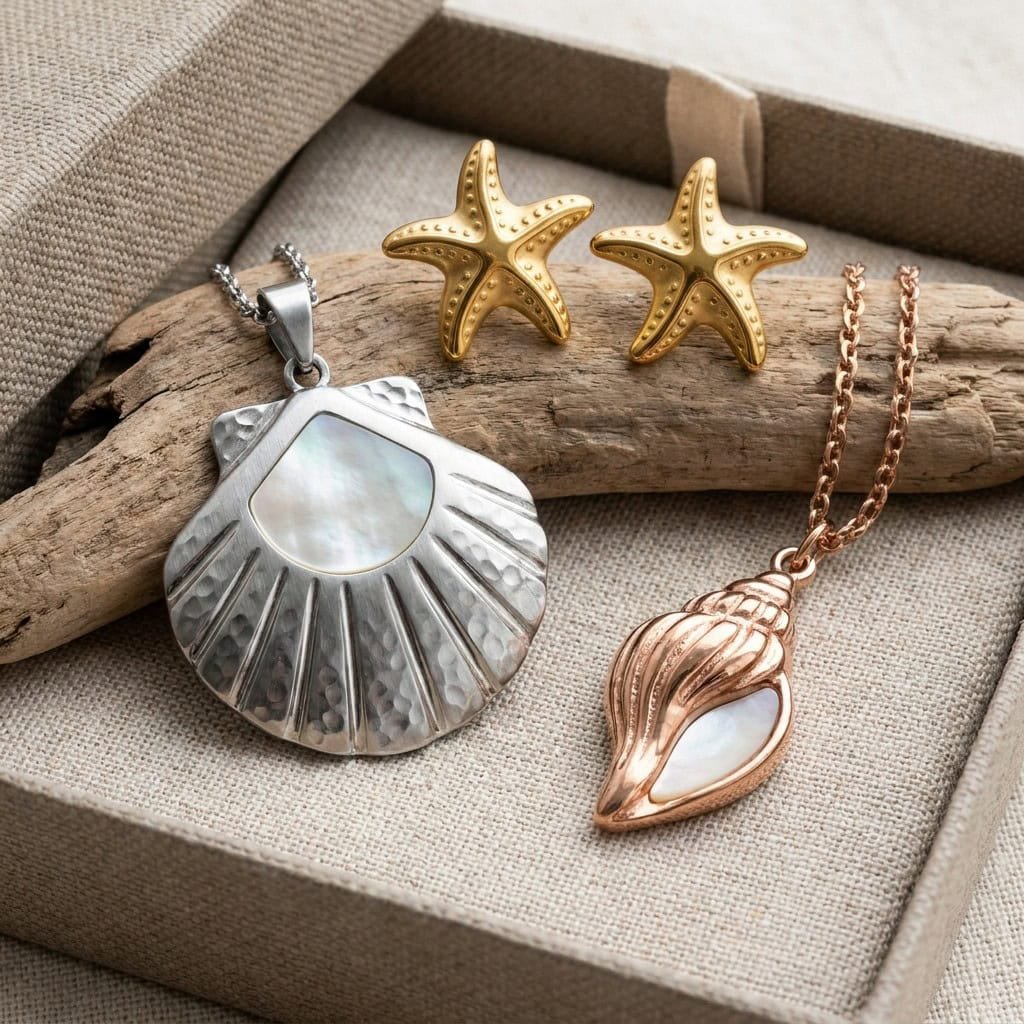
Scallop shells, conches, cowrie-inspired forms, sand dollars, and starfish can be developed as relief, outline, textured, stone-set, or color-filled jewelry. We define natural-surface interpretation, point and ridge strength, cavity cleaning, plating access, paired-item matching, decoration retention, and pressure-protective packaging. Actual shell components require project-specific sourcing and acceptable natural variation standards.

Sea Turtle Collections
Sea turtle outlines, shell-pattern medallions, openwork bodies, and stone or enamel details suit pendants, earrings, anklets, bracelets, charms, and souvenir sets. We control flipper thickness, body balance, shell pattern clarity, stone seats, hanging direction, smooth skin-contact surfaces, and pair consistency. Brand or conservation-related marks are used only with the customer's written authorization.
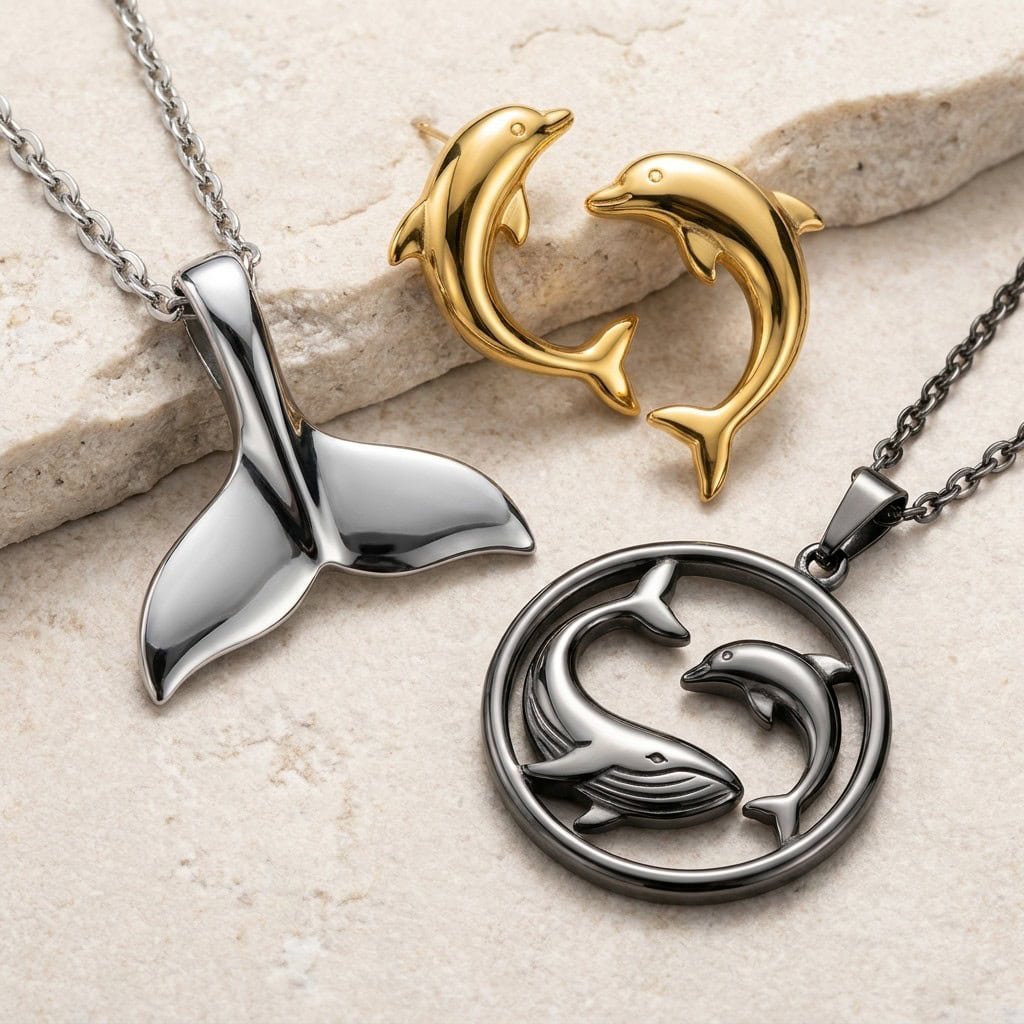
Whale Dolphin Collections
Whale tails, full whale silhouettes, dolphin arcs, paired marine animals, and ocean-circle compositions can serve coastal, gift, and lifestyle lines. We review narrow tail sections, curved-body distortion, attachment positions, high-polish reflections, two-piece alignment, left-right orientation, and chain movement. The chosen manufacturing route must preserve the silhouette without leaving weak connectors or inaccessible polishing areas.
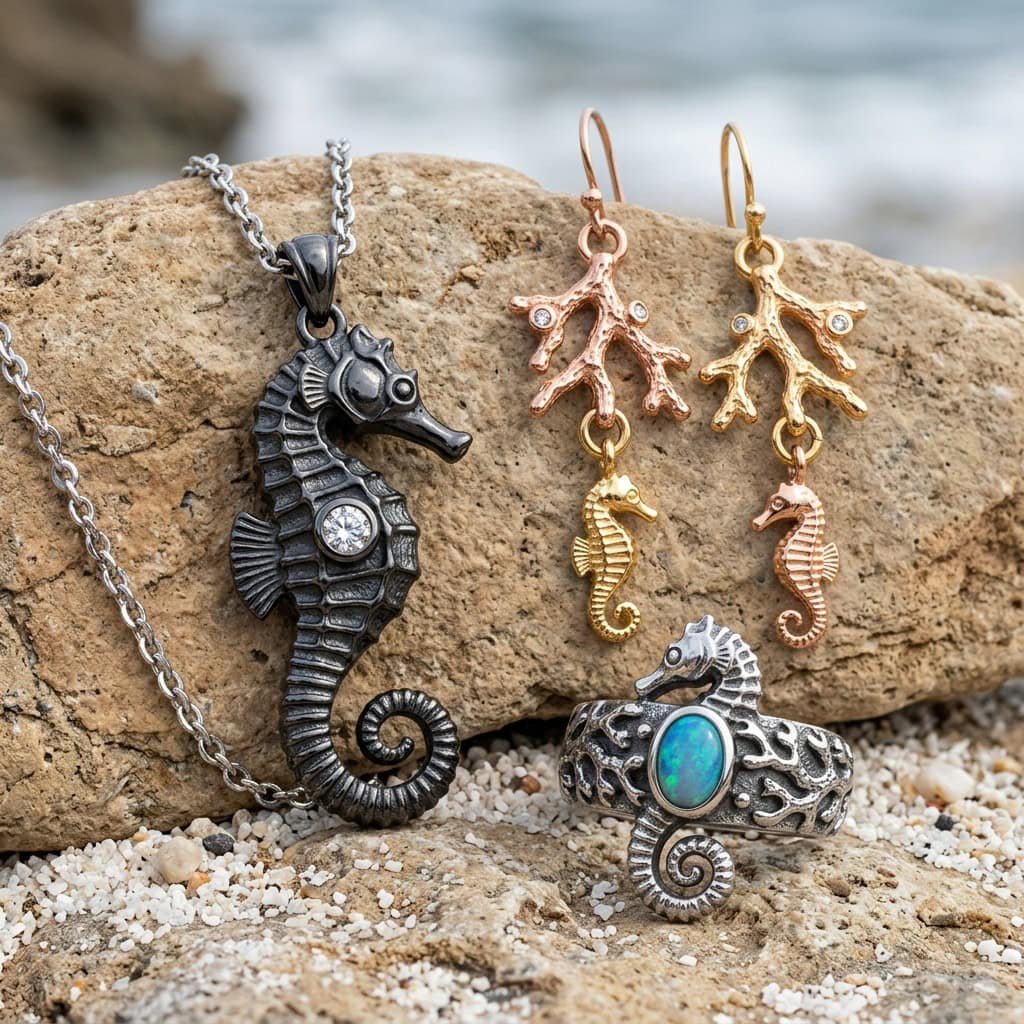
Seahorse Coral Collections
Seahorse profiles and coral-inspired branching forms create detailed, organic collections for earrings, pendants, rings, charms, and statement pieces. Fine tails, branches, recesses, stone positions, and textured surfaces require clear artwork and controlled minimum sections. We simplify or reinforce details where needed for casting, cutting, polishing, plating, inspection, packing, and repeated bulk handling.

Sailboat Collections
Sailboats, yachts, hull-and-sail outlines, horizon scenes, and regatta-inspired emblems can be converted into medallions, cut-out pendants, cuff details, charms, and branded gifts. We check mast thickness, sail openings, hull proportion, horizon alignment, engraving visibility, logo authorization, hanging balance, and suitable surface contrast. Location names and event marks must be supplied or approved by the buyer.

Rope Knot Collections
Rope textures, sailor knots, cable forms, braided patterns, and chain-linked nautical concepts can support men's bracelets, rings, pendants, cuffs, and mixed-material programs. We define whether the form is rigid or flexible, the actual load path, texture depth, joint location, closure, edge comfort, plating access, and inspection method. Decorative rope appearance is separated from functional cord construction.
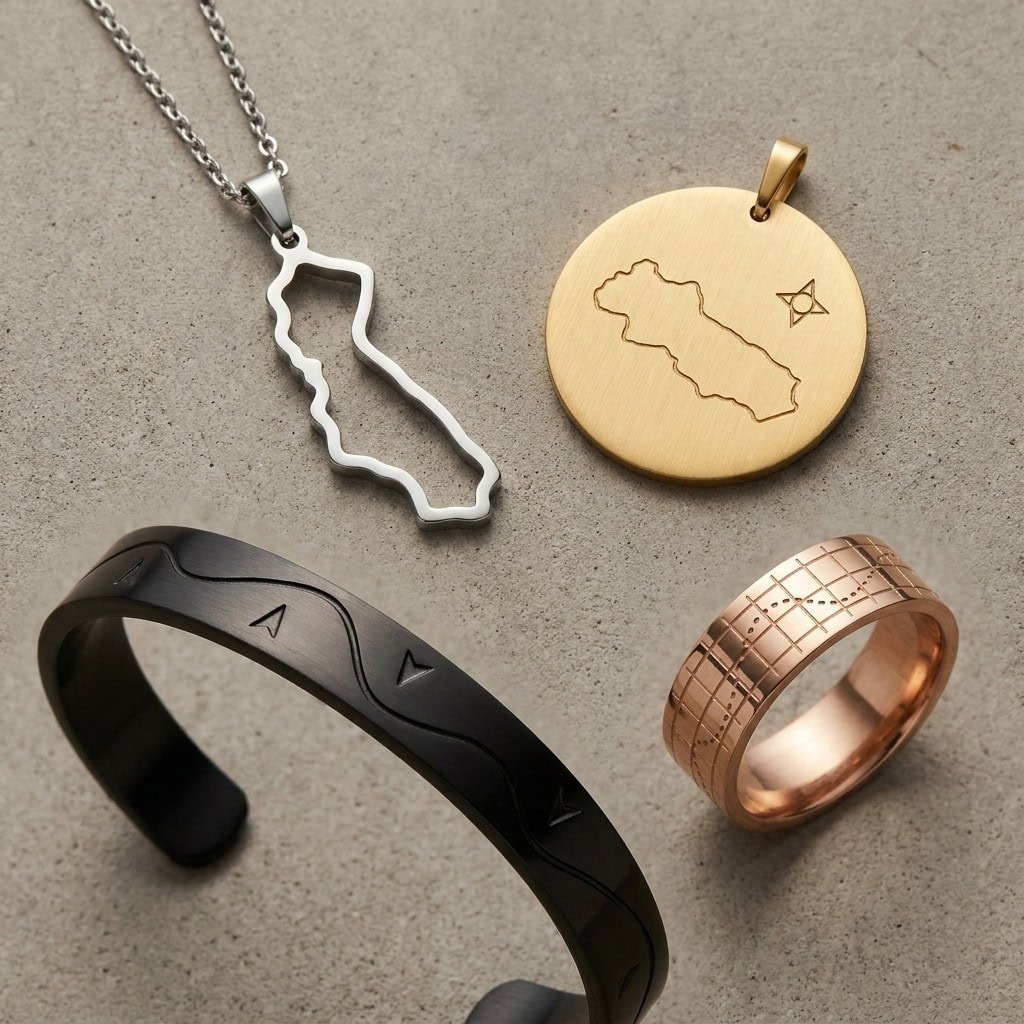
Coordinates Map Collections
Coordinates, coastlines, island outlines, navigation marks, place names, and route lines can create personalized destination jewelry. We verify the authorized artwork, exact text, coordinate format, map simplification, minimum line width, engraving area, font conversion, reading direction, and contrast after finishing. Fixed bulk artwork and variable personalization require different data, production, inspection, and pricing controls.
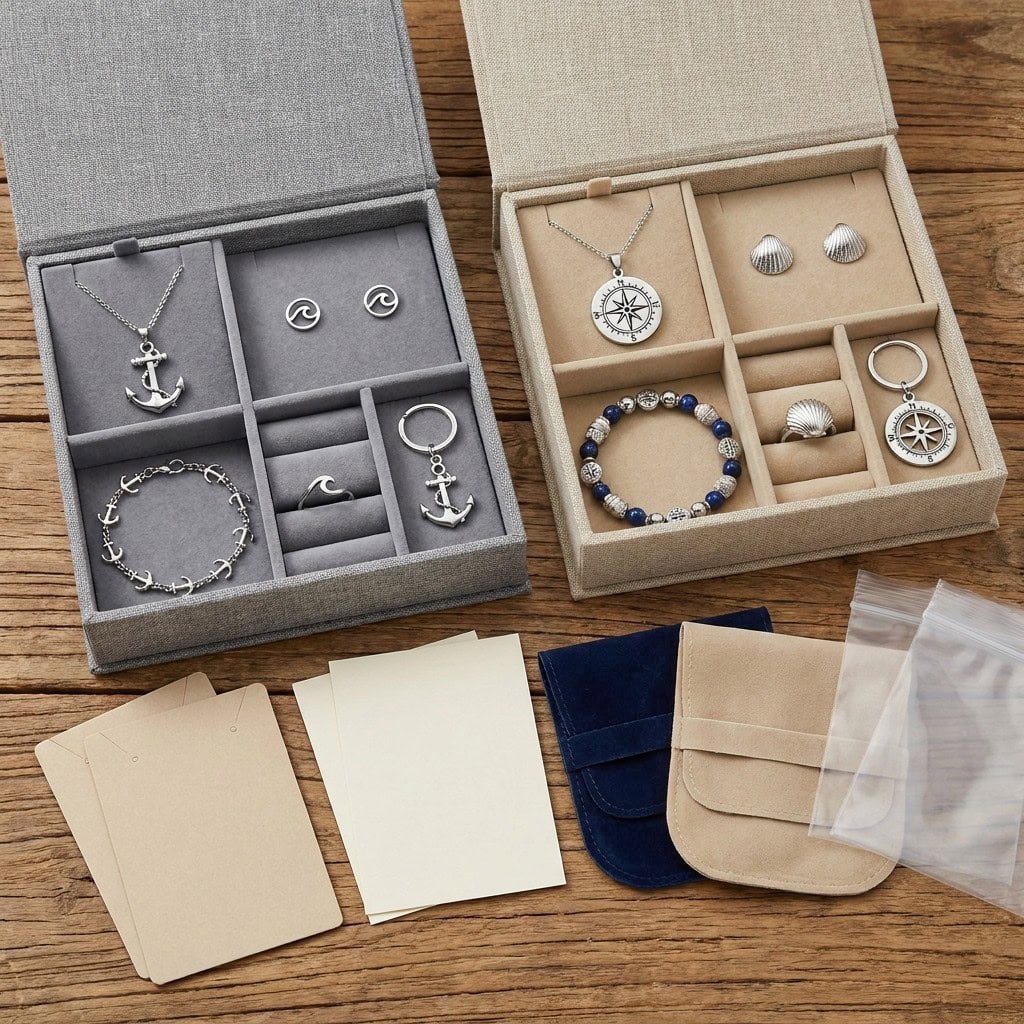
Nautical Gift Sets
A shared motif can extend across a necklace, earrings, bracelet, ring, charm, key accessory, or coordinated gift set. We retain separate drawings, dimensions, findings, tests, and inspections for each product while controlling common color and brand references. Set planning covers component ratios, missing-part prevention, display order, insert structure, logo placement, barcode data, and export-carton configuration.
Convert the Nautical Theme Into a Sellable Assortment
Chicolink builds each collection around the confirmed channel, consumer profile, target retail price, launch period, visual language, packaging level, and replenishment plan. We adjust the product architecture by material, finish, weight, complexity, SKU count, color ratio, and order quantity. Before engineering and sampling, we record the buyer's market requirements, regulatory scope, preferred product mix, target margin, packaging position, and expected replenishment model.
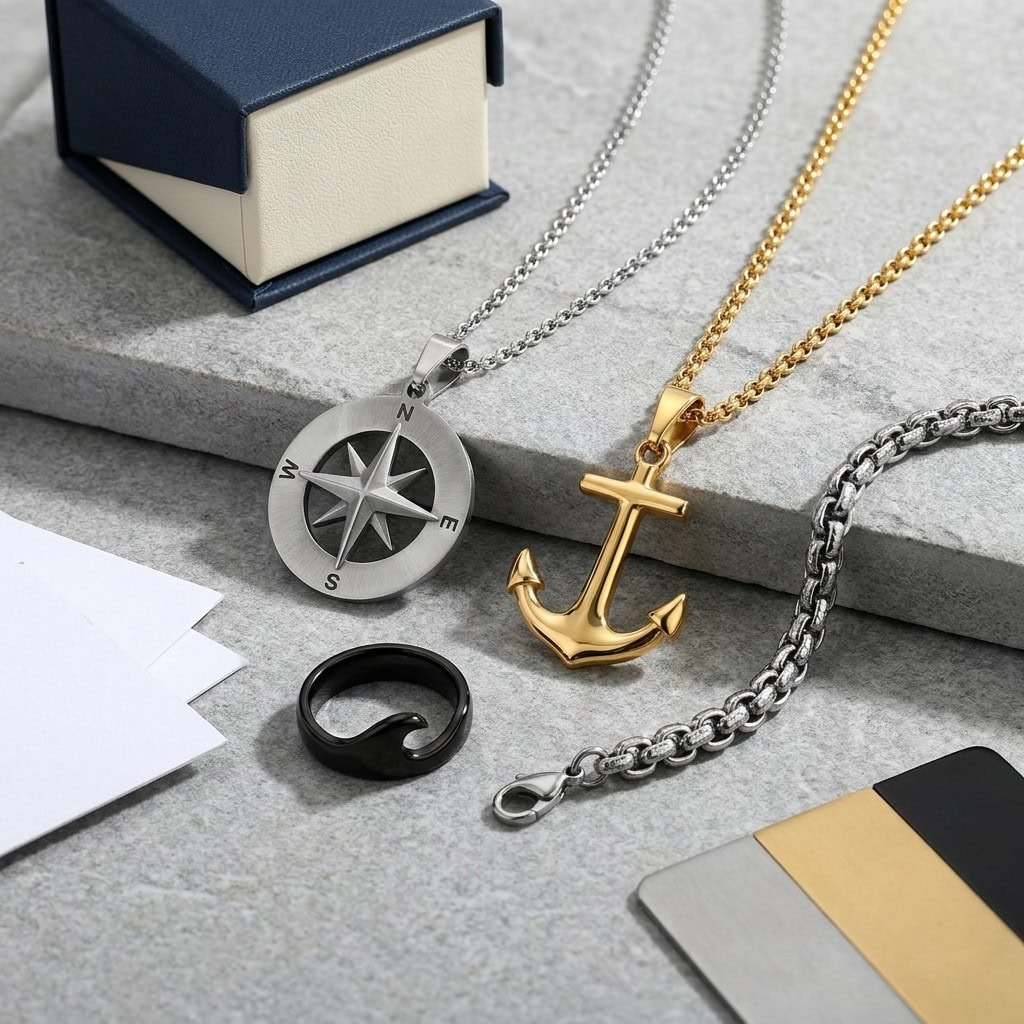
Premium Nautical Brand
Chicolink combines refined compass medallions, sculpted anchors, controlled wave forms, coordinated chains, polished or mixed surfaces, selected PVD structures, discreet branding, and structured gift packaging. We control weight balance, clean backs, edge comfort, readable detail, color references, and collection scale for brands requiring nautical meaning without souvenir styling. Each SKU retains repeatable specifications for multi-market production, inspection, and replenishment across ordering cycles.
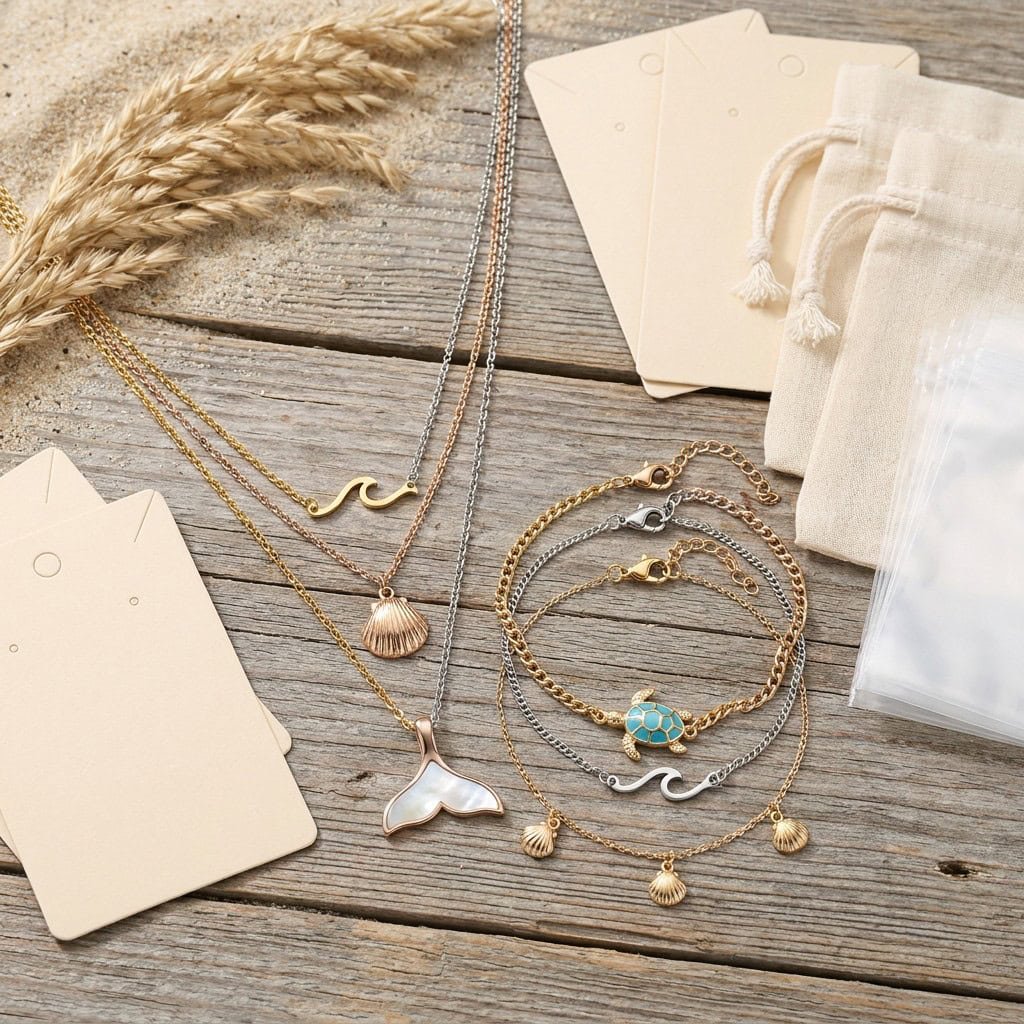
Coastal Lifestyle Line
Minimal waves, shells, starfish, turtles, whale tails, and small charms can form easy-to-layer necklaces, hoops, studs, bracelets, anklets, and sets. We plan shared chains, findings, sizes, and finishes to control assortment complexity while keeping each SKU identifiable. Product cards, pouches, care information, and photography-ready surfaces can be aligned with a relaxed coastal brand identity and seasonal launch calendar across channels.
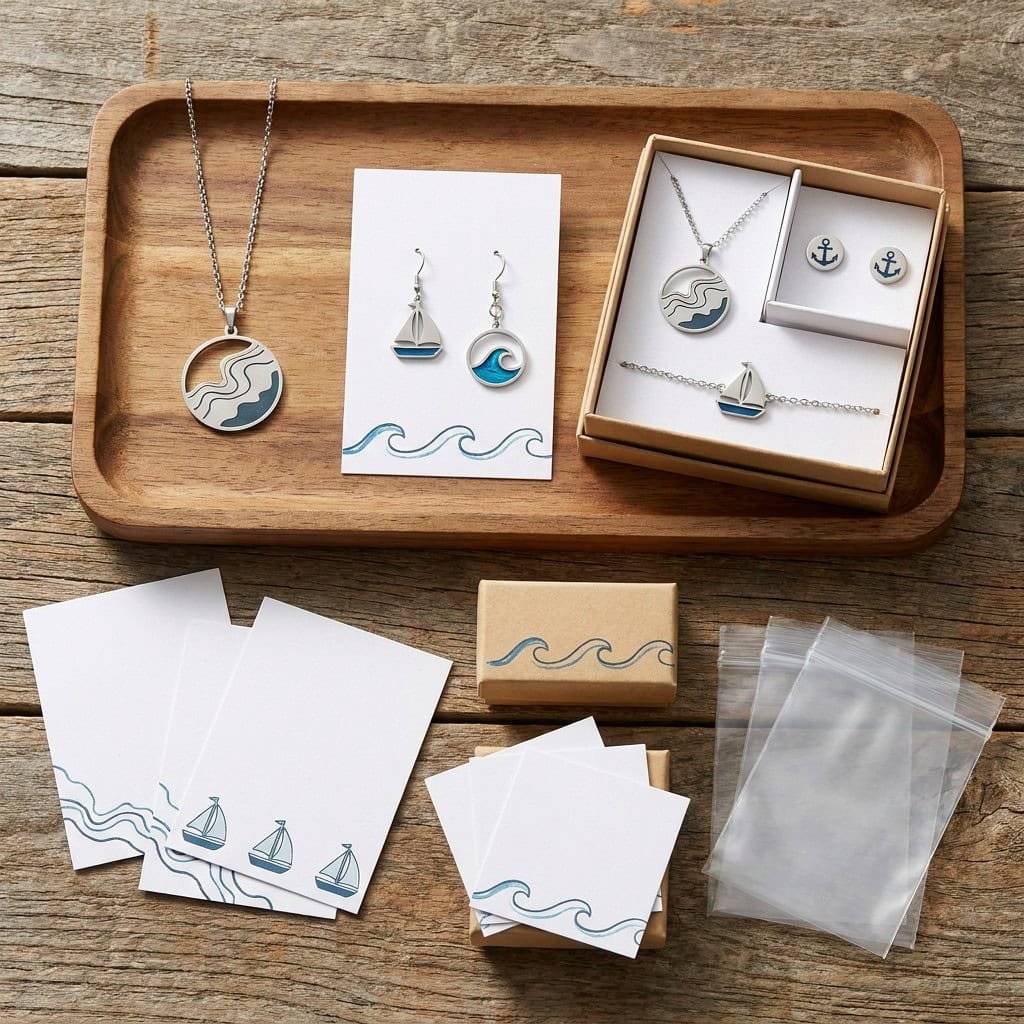
Resort Gift Assortment
Destination programs can combine local coordinates, coastlines, sailboats, marine animals, compact pendants, charms, and boxed sets at defined price tiers. We separate authorized location artwork from standard nautical elements, then control text accuracy, SKU labels, display format, set contents, and carton packing. We plan high-season delivery, multi-location versions, and later replenishment without mixing destination-specific files, labels, or cartons across locations.
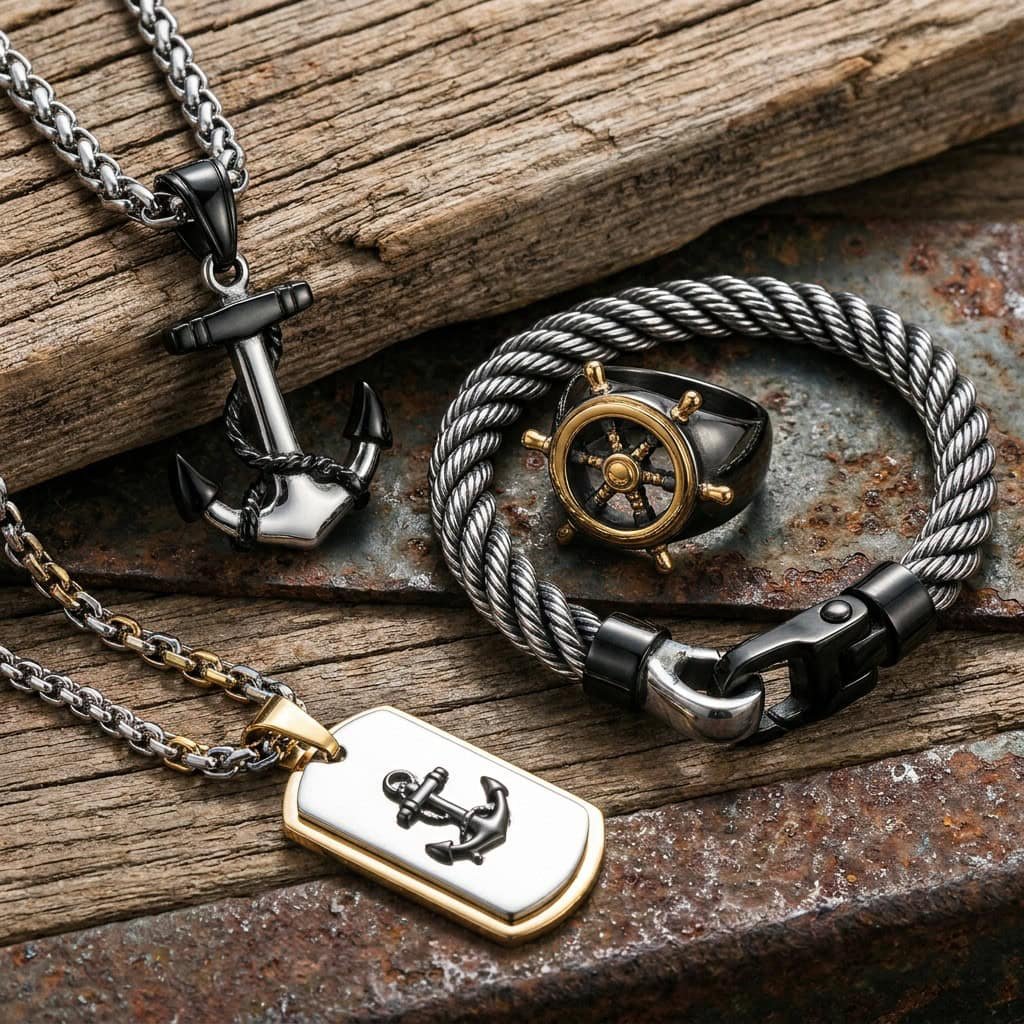
Men's Marine Collection
Heavier anchors, ship wheels, compass faces, rope textures, ID plates, black or gunmetal surfaces, steel chains, bracelets, rings, and pendants can create a stronger marine line. We assess weight, chain and clasp load, connector strength, ring comfort, matte-versus-polished contrast, PVD access, scratch exposure, and protective packing. Dimensions and material use are set around the buyer's target customer and cost position.
Specify Materials Against Structure, Market, and Exposure
Chicolink does not treat an ocean motif as evidence of unrestricted seawater or pool use. For each SKU, we confirm the stainless steel, components, surface system, assembly method, test references, and care information against its geometry, processing difficulty, skin-contact area, PVD requirements, target cost, destination market, buyer policy, and intended claim.
| Decision Area | Chicolink Evaluation | Project Confirmation Required |
|---|---|---|
| 304 stainless steel | Commonly considered where relatively flexible procurement, practical processing, lead-time planning, and target cost are important | Product structure, material form, skin-contact area, destination, finish, test plan, and buyer specification |
| 316L stainless steel | Contains molybdenum and generally offers better resistance to pitting, while its higher hardness can increase difficulty in forming, cutting, welding, polishing, and correction | Whether the expected benefit justifies processing, cost, MOQ, tooling, and schedule effects for the exact design |
| Other steel grades | Enabled only after engineering review, supply-chain confirmation, sample verification, and written approval | Grade, standard, source, verification route, permitted substitution, and batch identification |
| Saltwater exposure | Chlorides can challenge exposed metal, plated areas, edges, recesses, joints, findings, stones, adhesives, and trapped residues differently | Intended exposure, rinse and care guidance, selected test method, duration, sample condition, and acceptance rule |
| Chlorinated water | Pool chemicals, temperature, contact time, cleaning products, and drying conditions may affect surface and assembled components | Intended use claim, components included, test scope, care statement, and buyer acceptance criteria |
| Sweat and skin contact | Sweat chemistry, friction, cosmetics, wear location, cleaning, and individual use affect surface performance and nickel-related requirements | Contact surfaces, market standard, pre-treatment if required, test laboratory, color, and report scope |
| Sunscreen and cosmetics | Oils, solvents, pigments, acids, alkalis, sprays, and residues can interact with plating, resin, enamel, stones, adhesives, and packaging | Buyer-specific chemical test or care instruction where the exposure is important to the sales claim |
| PVD or plated surfaces | Performance depends on substrate preparation, layer structure, thickness, geometry, rack contact, friction, and batch control | Approved color, layer specification, thickness, surface preparation, reference sample, test, and acceptable variation |
| Shell and natural materials | Natural appearance, porosity, coating, drilling, assembly, chemicals, and batch variation require separate standards from steel | Material category, size, color, surface range, matching, treatment, fixation, inspection, and care instructions |
| Product claim | Terms such as waterproof, ocean-proof, tarnish-free, or hypoallergenic require evidence appropriate to the SKU and target market | Exact wording, supporting test scope, product version, market, legal review, and validity period |
Engineer the Finish as Part of the Product
Color and decoration change how nautical details are seen, produced, inspected, protected, and repeated. We establish the surface system together with the substrate, geometry, polishing level, recessed areas, stones or fillings, logo, wear surfaces, test requirements, target cost, and packaging. A color name alone is not a production specification; the approved sample and written layer, finish, and acceptance requirements control the released product.
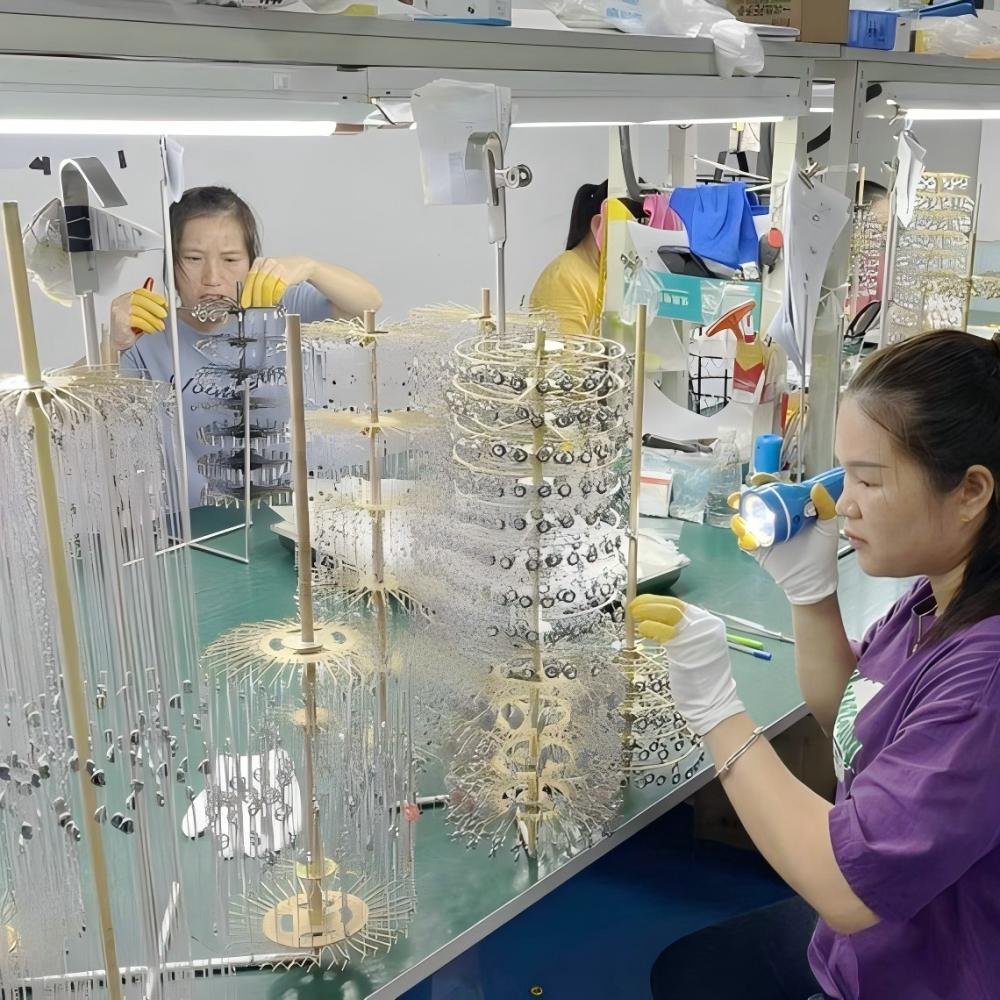
Control PVD Color Through an In-House Plating Workflow
Chicolink operates an in-house plating workshop with 6 PVD vacuum coating machines. We can complete PVD/IP, water plating, and other approved electroplating processes under unified specification, sample approval, process control, inspection, and batch traceability procedures.
- Color direction: Gold, rose gold, black, gunmetal, steel or silver appearance, and other approved colors are matched to a confirmed project reference.
- Reference PVD structures: E1 uses approximately 0.4 micrometers of TiN plus a 0.05-micrometer gold top layer; E2 uses approximately 0.7 micrometers of TiN plus a 0.1-micrometer gold top layer. Final color, cost, thickness, and test requirements are confirmed by project.
- Pre-treatment: Polishing compound, oil, oxidation, fingerprints, dust, and processing residue must be removed before plating. Recesses, holes, welds, chains, and textured surfaces require particular cleaning attention.
- Approval: We define the color reference, brightness, texture, main appearance surfaces, rack-contact considerations, visible recesses, permitted variation, and test request before bulk release.
- Batch control: The order, SKU, equipment, color batch, input quantity, output quantity, layer requirement, inspection, and disposition records support repeat-order review.
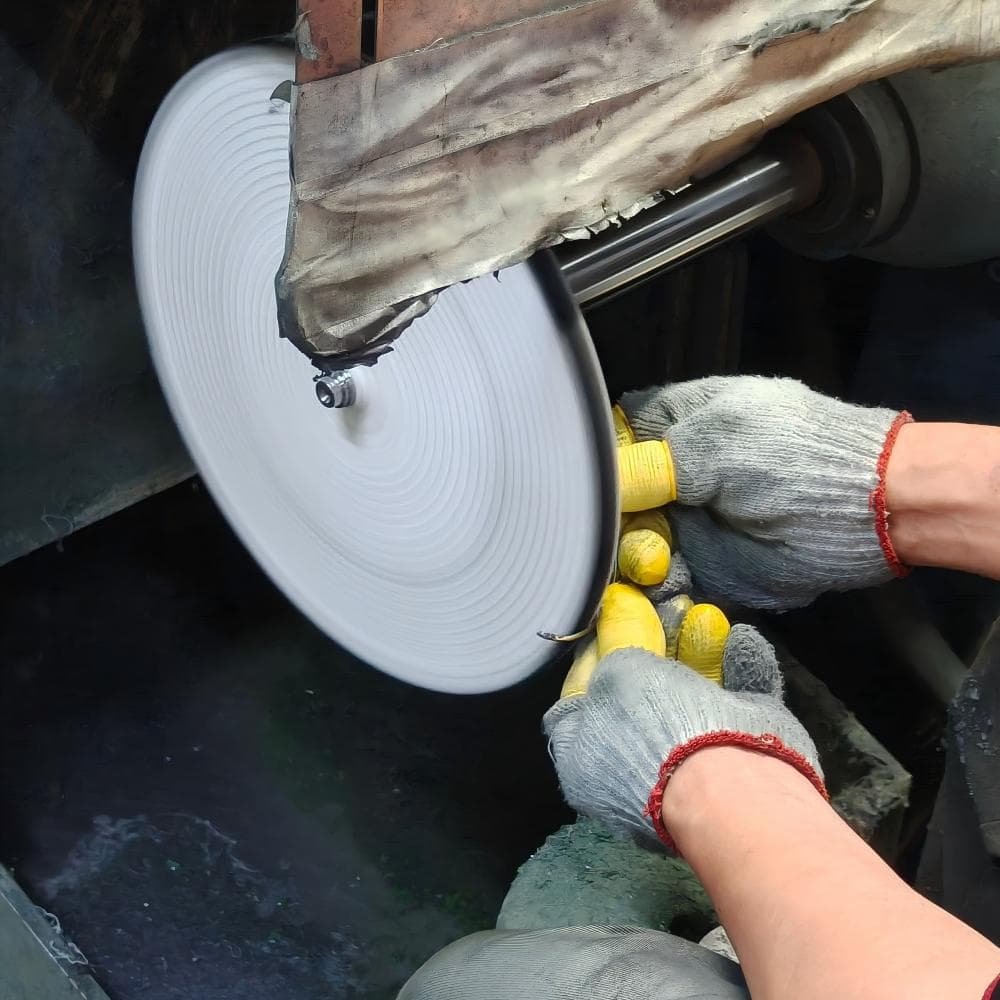
Combine Surface and Decoration Without Hiding Process Risk
Nautical jewelry often combines reflective steel, recessed details, organic forms, and colored elements. We select each decoration by visual goal and production compatibility rather than treating every effect as interchangeable.
- Mirror or high polish: Supports clean waves, compass medallions, and premium anchors, but makes scratches, distortion, pits, weld marks, and handling damage more visible.
- Brushed or sandblasted surfaces: Create controlled contrast for men's marine pieces and relief designs. Directional brushing and non-directional sandblasting require separate visual standards.
- Shell and natural stone: Add coastal material character but need approved variation ranges, drilling or setting specifications, chemical compatibility, and pressure-protective packing.
- CZ or approved stones: Require defined size, color, quantity, seat geometry, setting or adhesive route, retention inspection, and transport protection.
- Resin, paint, or enamel-related effects: These are not one process. Material, fill depth, cure, surface level, adhesion, plating sequence, chemical exposure, and defect standards must be confirmed separately.
- Mixed finishes: Polished edges with matte recesses, steel with gold PVD, or engraved details with color fill require clear A/B surface drawings and a feasible process sequence.
Choose the Production Route From the Actual Geometry
Two similar nautical designs may require different production routes because thickness, relief, openwork, order quantity, surface priority, connection structure, tooling investment, and target cost differ. We review the drawing and intended volume before selecting a route. The approved route records required tooling, intermediate operations, finishing sequence, assembly, dimensional controls, and any limitations that the buyer must approve before sampling.
| Manufacturing Route | Suitable Nautical Applications | Key Controls and Commercial Effect |
|---|---|---|
| Casting | Three-dimensional anchors, sculpted shells, relief compasses, marine animals, textured rings, and complex pendants | Fill, shrinkage, porosity, water-gate removal, distortion, detail cleanup, weight, polishing access, tooling, and sample approval |
| Stamping or hydraulic forming | Flat or formed pendants, medallions, tags, repeatable outlines, sheet-based earrings, and larger-volume programs | Die investment, sheet thickness, forming direction, springback, burrs, holes, bending, flatness, edge finishing, and quantity needed to distribute tooling cost |
| Laser cutting | Wave outlines, coastlines, sailboats, compass openings, letters, coordinates, thin graphic pendants, and logo plates | File accuracy, minimum web, heat effect, edge condition, hole diameter, distortion, cutting layout, post-cut deburring, polishing, and no assumption that every design avoids tooling |
| CNC or lathe work | Compass cases, rings, geometric medallions, precision grooves, threaded or rotating parts, and machined men's pieces | Tool access, cycle time, tolerance, wall thickness, surface marks, fixtures, weight, assembly fit, and cost at the planned quantity |
| Laser welding | Bails, ear posts, chain connections, formed components, repairs, and structures requiring localized joining | Joint area, penetration, heat distortion, weld position, appearance surface, fixture, cleanup, pull direction, and compatibility with later polishing and plating |
| Chain assembly | Anchor pendants, layered waves, charm bracelets, anklets, rope-inspired chains, and necklace sets | Chain width and thickness, link closure, connector size, clasp, extension chain, length, pendant passage, orientation, tangling, pull requirement, and pack-out |
| Stone or decoration assembly | Shell, starfish, turtle, compass, and wave jewelry with CZ, pearl, shell, resin, or approved decoration | Seat geometry, adhesive or setting method, cure, exposed height, retention method, plating sequence, chemical compatibility, replacement allowance, and pressure protection |
| Combined route | Collections using cast relief, laser-cut tags, engraving, PVD, stones, chain assembly, and private-label packaging | Operation sequence, intermediate inspection, cross-process tolerance, approved subcontracted inputs where applicable, schedule, yield risk, and one released BOM and routing record |
Resolve Nautical Design Risks Before Tooling and Sampling
Chicolink reviews each ocean symbol as a wearable and repeatable structure. We examine the load path, visible surfaces, tool and polishing access, plating coverage in recesses, hanging balance, and packing method. Open questions are recorded for buyer confirmation instead of being converted into production assumptions.
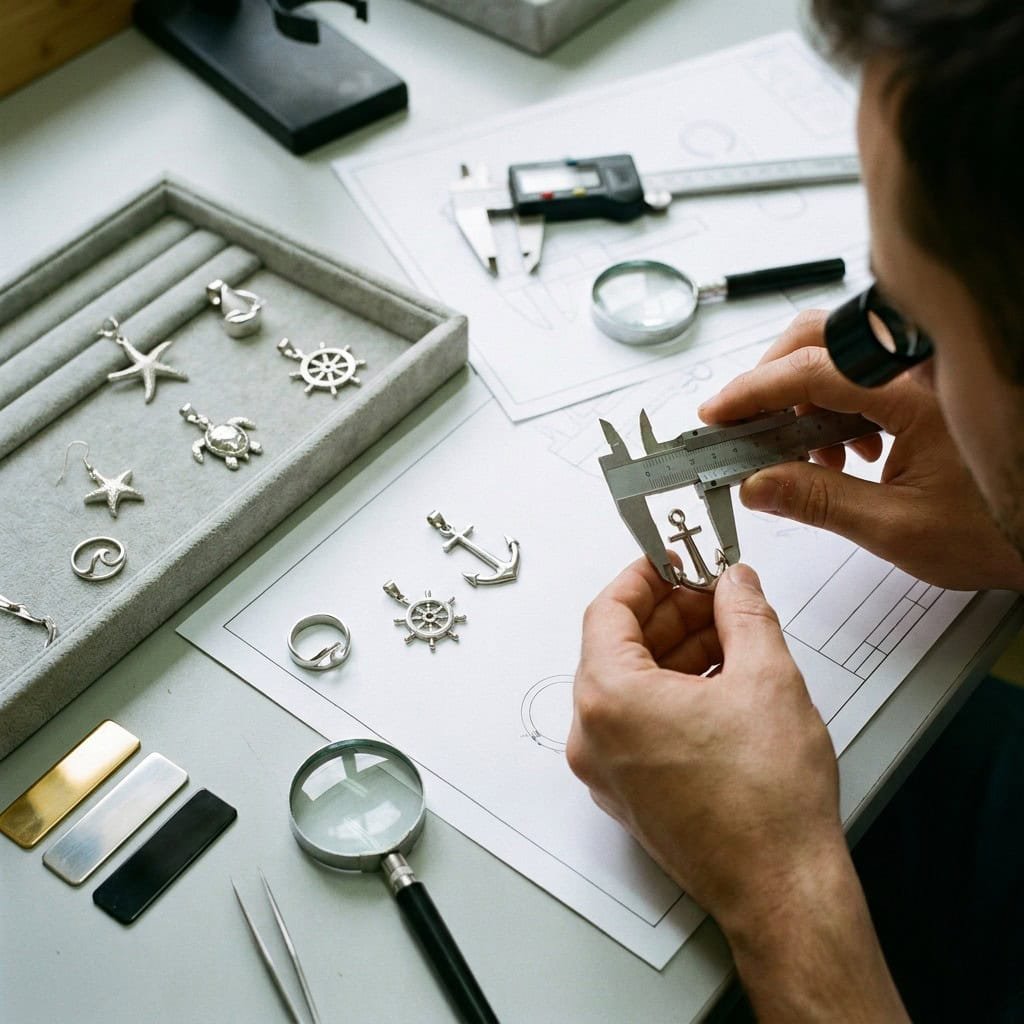
Protect Fine Details Without Losing the Nautical Identity
Ocean designs frequently combine narrow sections, sharp points, deep recesses, and open spaces. We convert the intended visual detail into measurable geometry before production files are released.
- Anchor points and starfish tips: We evaluate radius, thickness, edge comfort, impact exposure, and whether polishing will materially change the silhouette.
- Compass letters and coordinates: We confirm spelling, direction, font conversion, minimum readable size, line spacing, engraving depth, surface contrast, and the approved artwork version.
- Ship-wheel spokes and sailboat masts: We check minimum section, outer-rim support, flatness, distortion, casting or cutting route, and the likelihood of bending during handling.
- Wave and coastline openings: We review internal gaps, thin bridges, smooth transitions, trapped polishing compound, cut-edge access, and whether the finished outline remains clear after deburring and plating.
- Shell, turtle, and marine-animal texture: We set relief depth, recess definition, cleaning access, stone or color-fill boundaries, and acceptable detail loss after polishing.
- Rope and coral-inspired textures: We separate decorative texture from structural load and reinforce branches, joints, or high-contact areas where needed.
The DFM output identifies approved dimensions, unresolved risks, proposed modifications, likely manufacturing route, inspection points, and any cost or timing effect. A visual improvement is not introduced into the customer's authorized artwork without approval.

Engineer the Product Interface, Not Only the Visible Motif
The motif must connect safely to a chain, ear fitting, ring body, bracelet, clasp, stone, or package. We review those interfaces before the sample is treated as complete.
- Bails and pendant holes: Opening size must accommodate the maximum chain or connector profile after finishing while controlling unwanted rotation and front-to-back flipping.
- Jump rings and connectors: Wire diameter, opening direction, closure, welding or assembly method, plating access, and load direction are specified for the actual product.
- Chains and clasps: Length, width, unit weight, extension chain, clasp type, pendant movement, and main load path must match the pendant and target market.
- Earrings: Ear-post position, verticality, pair direction, unit weight, edge contact, backs, hoop closure, and packing protection are checked independently from the artwork.
- Rings and bracelets: Size system, inner comfort, opening, hinge or clasp, pressure points, wall thickness, and surface exposure affect wear and inspection.
- Stones and organic materials: Seat, pin, cup, prong, adhesive area, exposed height, cure or setting route, chemical compatibility, and transport pressure define the retention plan.
- Packaging: High-polish faces, long chains, pointed shapes, posts, and projecting stones require individual separation, anti-tangle control, or rigid support as appropriate.
Choose a Controlled Development Path for Your Collection
We select the development path from the information and ownership already established by the buyer. Existing-style private label, OEM, and ODM projects require different inputs, engineering work, tooling, sample evidence, and schedules. In every path, assumptions are listed for confirmation, revisions update the controlled files, and bulk production starts only from the approved product and commercial scope.
| Development Path | What You Provide | What Chicolink Controls | Approval Output |
|---|---|---|---|
| Existing-style private label | Selected SKU, quantity, color, logo, packaging, market, testing, and delivery request | Availability, permitted modifications, finish, logo feasibility, packaging compatibility, quotation, sample condition, and production schedule | Confirmed SKU version, branded sample or visual approval as agreed, packaging file, quotation, and order specification |
| OEM from drawing or CAD | Authorized 2D/3D files, dimensions, material, components, finish, logo, tolerance, packaging, test, and quantity | DFM, process route, tooling, BOM, sample manufacture, inspection method, change control, plating, packing, and bulk execution | Released drawing, BOM, color and finish reference, approved sample, packaging version, and quality plan |
| OEM from physical sample | Authorized reference sample, required changes, target material, quantity, finish, branding, market, and acceptance priorities | Measurement, structure review, material and process assessment, difference list, reproduction limits, sampling, and approval evidence | Reconstructed specification, recorded deviations, approved sample, and released production version |
| ODM from collection brief | Target customer, market, channel, theme, price position, product categories, launch calendar, quantity, and brand direction | Style board, assortment logic, material and process suggestions, CAD or artwork development, DFM, sampling, costing, packaging, and scale-up | Approved collection plan, SKU specifications, samples, brand assets, packaging versions, and production schedule |
Control the Brand Version From Jewelry to Carton
Private label delivery links the approved nautical product to the correct logo, packaging artwork, SKU data, barcode, set configuration, and shipping carton. We register each version and confirm where it applies. Late artwork, label, or pack-out changes can affect samples, packaging MOQ, labor, inspection, schedule, and inventory; those effects are reviewed before a new version is released.
Product Logo
Logo options can include laser engraving, etching, stamping, embossed or recessed tooling, an attached logo tag, or another approved route. We confirm the editable artwork, font conversion, authorization, position, direction, minimum line and character size, depth, contrast, finish sequence, and inspection method. A logo on a pendant, clasp, ring interior, and earring back requires separate feasibility, durability, and visibility review.
Jewelry Cards
Cards can organize necklaces, earrings, bracelets, anklets, charms, or sets for retail display and DTC delivery. We define card dimensions, material, thickness, color reference, print files, holes or slots, product orientation, chain control, earring-post protection, logo, care text, legal information, and barcode position. The packed sample confirms presentation, product retention, surface protection, barcode placement, and physical compatibility before quantity production.
Pouches and Boxes
Velvet pouches, folding boxes, rigid gift boxes, sleeves, inserts, trays, and other approved formats are selected around product size, price position, scratch risk, stone pressure, chain tangling, and shipment method. We confirm artwork, color, surface effect, insert geometry, product fixing, accessory placement, unit packing, and carton efficiency. Packaging materials may carry different MOQ, sampling, and production schedules from the jewelry.
Care and Story Cards
Care cards, product stories, destination information, collection cards, instructions, or other buyer-approved inserts can support the consumer experience. You provide or approve the final claims, translations, artwork, QR destination, legal text, and market version. We verify the file, print orientation, size, pack position, SKU applicability, language version, print consistency, and set completeness without creating unsupported waterproof, hypoallergenic, durability, or compliance claims.
SKU and Barcodes
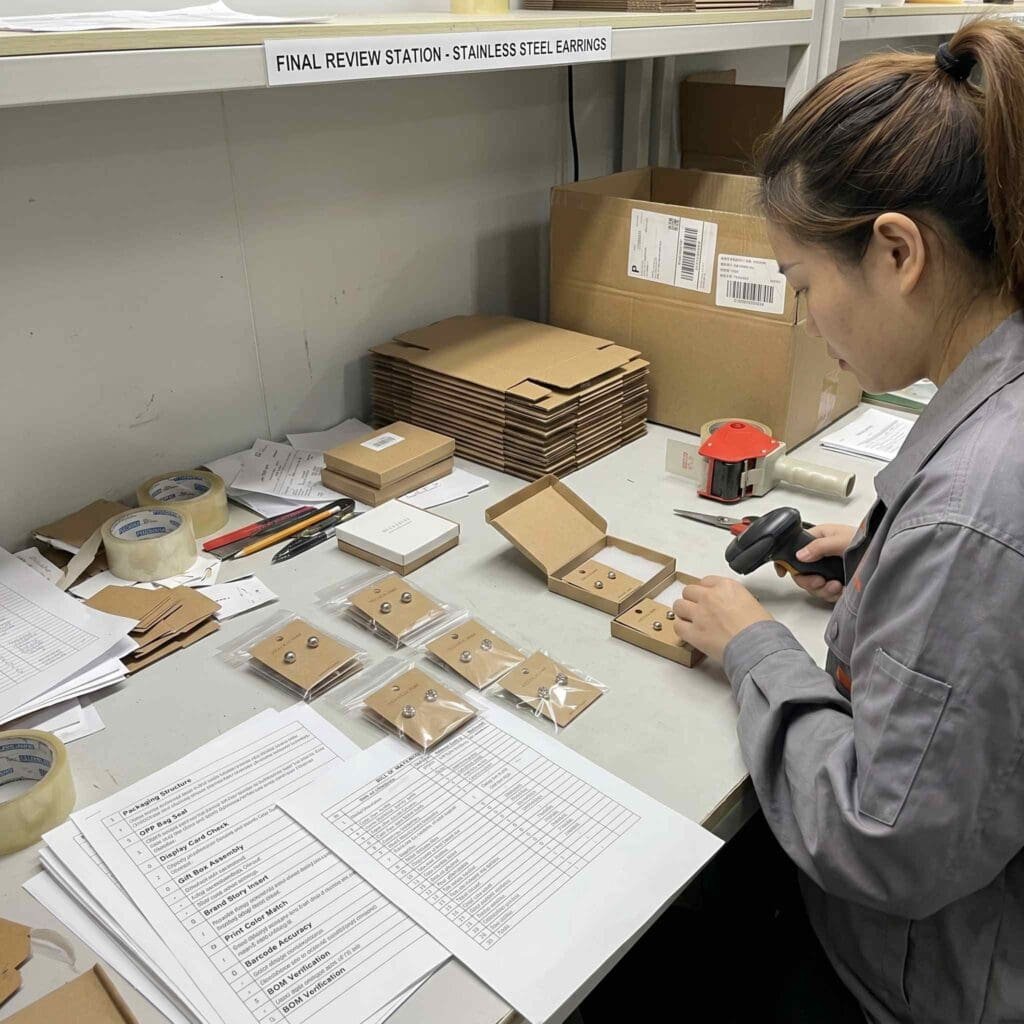
We can apply buyer-supplied SKU, UPC, EAN, FNSKU, color, size, set, origin, and carton labels according to the current approved file. The control plan links each code to the correct product and packaging version, verifies placement and readability, and checks inner and outer carton data. A confirmed data freeze date reduces relabeling, rework, packing delays, and mixed-version risk before shipment.
Protected Pack-Out
Nautical jewelry may include long chains, sharp-looking silhouettes, high-polish faces, posts, stones, shells, and multi-piece sets. We define individual bags, separators, anti-tangle winding, tissue, sleeves, pouches, trays, boxes, inner-carton quantities, mixed-SKU rules, and inspection access around the actual risk. A packed sample can be reviewed for surface protection, product retention, presentation, labor, inspection access, storage, carton use, and transit handling.
Plan Quantity and Timing Before the Launch Calendar
Nautical jewelry MOQ, price, sample work, and lead time are affected by structure, steel grade, material form, tooling, PVD color, decoration, components, packaging, testing, quantity by variant, and production difficulty. We confirm whether quantity is calculated by style, color, size, plating batch, or packaging version. Final terms follow the approved quotation, sample, order, and written agreement.
| Commercial Item | Common Chicolink Reference | Conditions to Confirm |
|---|---|---|
| Stock or regular-style MOQ | Usually 120 pieces per style | SKU availability, color, size, permitted mix, packaging, stock condition, and shipment timing |
| OEM/ODM MOQ | Usually 500 pieces per style | Tooling, material, structure, color, plating batch, components, stones, packaging, test, and production route |
| Existing-style sample | Usually 3-7 working days | Availability, requested color, branding, packaging, sample status, payment, and dispatch conditions |
| OEM/ODM custom sample | Usually 25-30 working days | Complete brief, DFM, artwork, tooling, material, process sequence, revisions, decoration, plating, and inspection |
| Existing-style bulk order | Usually 20-30 working days | Quantity, availability, color, packaging, production schedule, inspection, and shipment plan |
| OEM/ODM bulk order | Usually 25-45 working days | Approved Golden Sample, released files, material, tooling, plating, decoration, packaging, tests, inspection, and quantity |
| Normal inquiry response | Initial response targeted within 6 working hours | May confirm receipt, request missing information, or explain evaluation status; it is not automatically a formal quotation |
| Complex-project assessment | Preliminary assessment targeted within 24 hours | Identifies missing data, feasibility questions, major risks, and review steps; formal pricing follows engineering and cost calculation |
| Sample and tooling fees | Sample fees normally apply; tooling or fixture fees may apply | Whether any fee is credited depends on order value and a written commercial agreement |
| Quantity tolerance | A common internal reference is approximately +/-5% | Acceptable overage or shortage, payment, excess stock, and freight responsibility must be agreed for the order |
Verify the Factory Resources Behind the Production Plan
Chicolink Jewelry manufactures and exports stainless steel jewelry from Dongguan, China. Our factory integrates product development, production planning, manufacturing, plating control, inspection, packaging, and export coordination for B2B orders. Factory reviews can cover the relevant teams, equipment, process controls, quality records, packing operations, and approved production scope.
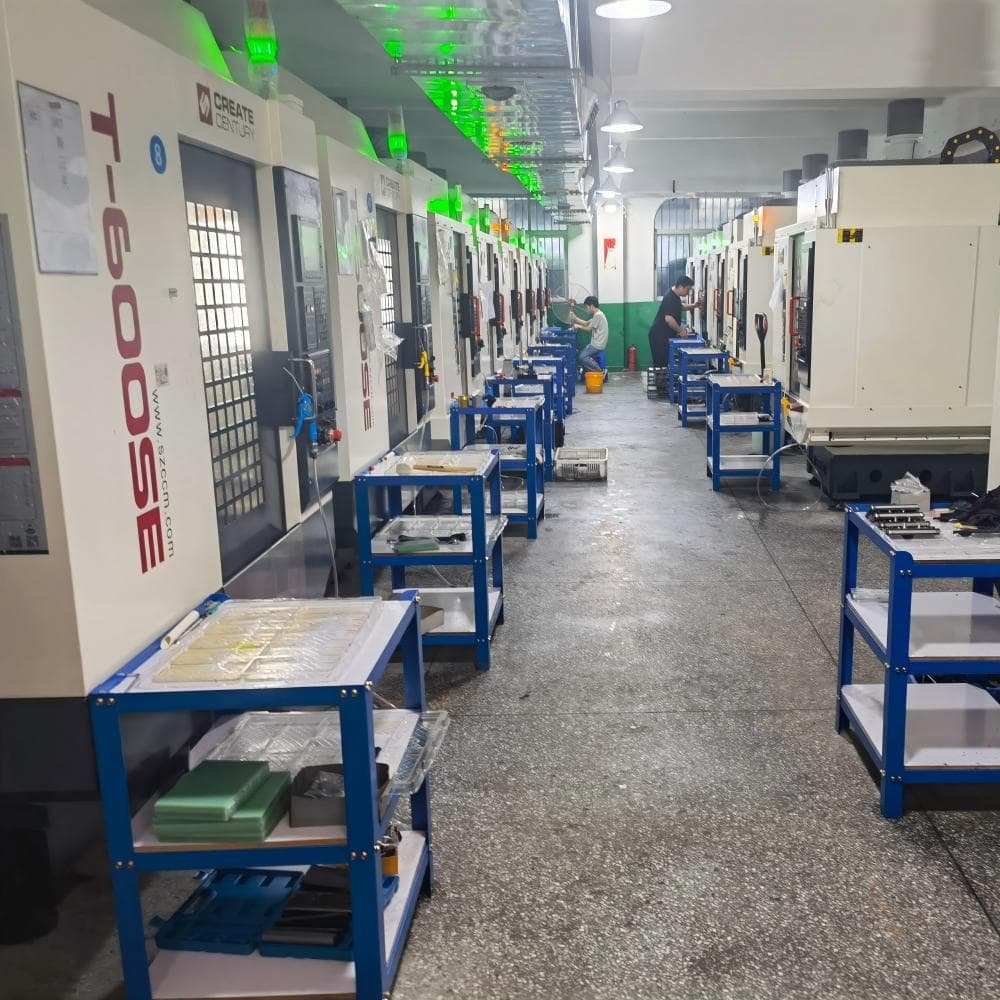
Factory Scale and Technical Resources
Chicolink was established in June 2012 and operates a factory of more than 5,500 square meters with 400+ employees. The factory-wide monthly capacity is more than 200,000 pieces, subject to product mix, process complexity, color batches, packaging, testing, inspection, and the confirmed production schedule.
- Product development: 6 jewelry designers and 3 jewelry engineers support style development, CAD and drawing review, structural evaluation, process planning, sample development, and production transfer.
- Manufacturing equipment: Our factory records 58 production and plating devices, including casting, laser cutting, laser welding, laser marking, stamping, bending, drilling, polishing, wax injection, lathe, and PVD equipment.
- Plating control: An in-house plating workshop manages approved PVD/IP, water plating, and other confirmed electroplating routes within the production control system.
- Quality resources: Incoming, in-process, final, and packaging inspection records are linked to the applicable order, SKU, version, and batch.
Equipment count does not by itself guarantee capacity for a particular order. We confirm tooling, route, machine allocation, labor, material, yield risk, inspection, packing, and calendar before committing the schedule.
Project Ownership From Brief Through Shipment
Large and repeat programs require named responsibilities and controlled handovers. We coordinate commercial, engineering, production planning, manufacturing, plating, quality, packaging, and shipment information through the approved project records.
- Sales and project communication register the brief, quotation scope, approvals, commercial changes, target dates, and customer decisions.
- R&D and engineering review artwork, CAD, dimensions, components, DFM, tooling, process route, sample issues, and released product files.
- PMC coordinates materials, work orders, process scheduling, capacity, color batches, packaging readiness, inspection windows, and delivery progress.
- Production and plating teams execute against approved routing, work instructions, samples, color references, and process requirements.
- Quality teams inspect incoming material, first articles, in-process work, plating, assembly, finished jewelry, labels, packaging, and shipment readiness according to the released plan.
- Packaging and export coordination verify pack versions, SKU separation, cartons, packing lists, labels, inspection access, and agreed shipment documents.
Chicolink supports customer factory audits and buyer-appointed quality inspections. We confirm the audit scope, visitor or agency requirements, confidentiality, schedule, document access, and photography permissions in advance.
Keep the Approved Nautical Design Aligned With Bulk
The Golden Sample is useful only when it remains connected to the released drawing, BOM, material, artwork, color reference, component list, packaging file, and acceptance criteria. We use those records to prevent a visually similar but technically different version from entering purchasing, production, inspection, or packing. Buyer-written standards and approved deviations take priority over internal defaults.

Create One Released Authority for Every SKU Version
Before bulk release, we identify which evidence controls each feature and who can approve a change.
- Artwork authority: Nautical symbol, text, coordinates, map, logo, relief, engraving, orientation, and authorized version.
- Product specification: Steel grade, material form, dimensions, weight, size system, chain, clasp, findings, stones, organic materials, and assembly.
- Surface authority: Polishing level, texture, main appearance surfaces, PVD color, reference sample, permitted shade or gloss variation, and protected areas.
- Functional authority: Bail and chain fit, connector closure, clasp operation, post position, ring or bracelet function, stone fixation, smooth edges, and load path.
- Packaging authority: Product card, pouch or box, insert, care card, barcode, SKU, set contents, product orientation, inner pack, and carton version.
- Revision authority: File number, revision, change description, cost or schedule effect, approval date, approver, and removal of obsolete versions.
A sample photo alone does not define hidden dimensions, materials, components, layer structure, test method, or packaging data. Physical samples and files are used together. If the buyer changes artwork, material, color, structure, packaging, quantity, or test requirements after approval, we review whether resampling, repricing, or schedule adjustment is required.
Inspect the Risk at the Earliest Effective Production Gate
Quality control begins before finished-product inspection and follows the way the specific nautical design can fail.
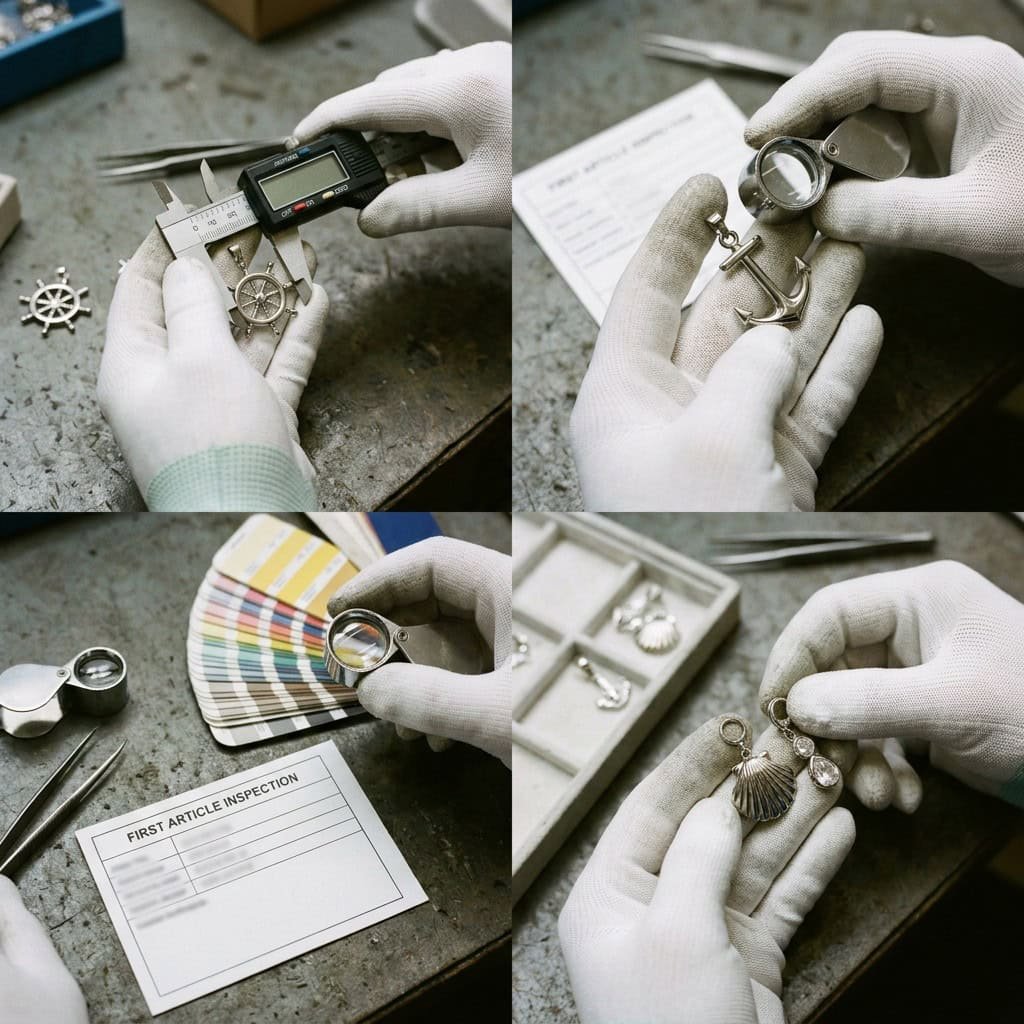
- Incoming control: Confirm assigned steel, thickness, surface condition, chains, findings, stones, shell or natural components, and packaging inputs before use.
- First article: Compare symbol direction, critical dimensions, weight, relief, openings, chain passage, edge condition, logo, finish, color, assembly, and packaging with the released authority.
- In-process control: Check casting fill, flatness, burrs, cut edges, holes, welds, forming, polishing loss, trapped compound, distortion, stone seats, and pre-plating cleanliness before later processes conceal defects.
- Plating control: Inspect color, brightness, coverage, exposed substrate, rack areas, recesses, scratches, pits, peeling, burns, and alignment with the approved reference.
- Assembly and final control: Verify connectors, clasp, chain length, earring pair direction, posts and backs, ring size, stone or decoration security, surface cleanliness, and set completeness.
- Packaging control: Match product, logo, card, inserts, labels, barcode, SKU, quantity, protection, inner carton, outer carton, and packing list before shipment release.
Nonconforming material or product is identified and separated. Disposition can include rework, reinspection, replacement, concession with written authorization, or rejection, depending on the defect and buyer agreement. Corrective records support cause review and later replenishment control.
Define Test Evidence for Each Product and Market
We do not apply one test result or compliance statement to every nautical jewelry SKU. Requirements depend on destination, age group, skin contact, steel, components, PVD structure, color, stones, organic materials, packaging, sales channel, and the buyer's written standard. Before booking a test, we confirm the method, pre-treatment, laboratory, sample quantity, fee, timing, acceptance rule, applicant, and report scope.
| Test or Requirement | Chicolink Reference or Support | Scope to Confirm Before Testing |
|---|---|---|
| Salt spray | Internal default reference: 24 hours for applicable bare stainless steel, 48 hours for electroplated or PVD products, and 72 hours for higher-corrosion requirements or as requested | Test standard, solution, sample condition, exposed components, duration, suspension, evaluation, failure criteria, and whether the result supports the intended claim |
| Artificial perspiration | Internal default: 40+/-2 degrees C for 24 hours at pH 4.7+/-0.2 | Formula, preparation date, sample state, contact method, color, component coverage, evaluation, and buyer or laboratory standard |
| Abrasion or wear | Can be arranged where surface wear is a defined project concern | Equipment, contact material, force, stroke, cycle count, measurement area, conditioning, and acceptance rule |
| Pull and connection | Default references: 30 N for small decorations and ear-post connections, 40 N for pendant or connecting rings and clasps, 30 N for main necklace structures, and 60 N for main bracelet structures | Five test pieces, 10-second hold, fixture, direction, actual structure, customer standard, and whether another load is technically appropriate |
| Nickel-related testing | EN 1811, EN 12472 pre-treatment, or another confirmed route can be coordinated where applicable | Skin-contact surfaces, product type, steel and components, color and layer system, number of colors, destination, laboratory, limits, and report format |
| Lead and cadmium | Third-party testing support is available according to the order and target-market requirement | Product and component scope, limit, method, sample count, laboratory, color, supplier input, and report applicability |
| REACH | Relevant testing or applicable report support can be evaluated for EU programs | Current requirement, substance scope, legal company name, sample, material, color, layer structure, report number, date, issuing body, and validity |
| California Proposition 65 | Testing or documentation support can be evaluated for products intended for California | Buyer policy, substances, exposure assumptions, product and component scope, warnings or legal review, laboratory, and report conditions |
| RoHS or CE questions | RoHS is evaluated only where the product is within its applicable scope; CE is not presented as a general certification for ordinary non-electronic jewelry | Actual product function, governing legislation, buyer channel, required conformity route, and supporting documents |
| Independent verification | SGS, HKPC, or another buyer-approved laboratory or inspection agency can be coordinated | Agency, booking party, standards, fees, timing, samples, inspection readiness, document access, report recipient, and shipment release authority |
Manage Bulk Release and Replenishment With Traceable Evidence
Large programs need a release system that connects inspection results to the correct lot, product version, color, packaging, and shipment. We define the inspection authority before production, make cartons and records available for the agreed inspection, isolate nonconforming output, and retain the information needed to investigate a complaint or compare a later replenishment batch.

Define AQL and Shipment Release Before Inspection Day
The buyer's written sampling standard, inspection level, AQL, defect definitions, Ac/Re values, and release authority take priority. When the buyer or order does not specify another plan, Chicolink's default is normal inspection at General Inspection Level II, with Critical Ac 0/Re 1, Major AQL 1.0, and Minor AQL 2.5. The actual sample size and acceptance or rejection numbers follow the approved sampling table for the lot size.
- Critical defects: Safety or regulatory risks such as sharp burrs, detached components, incorrect material, or failed restricted-substance requirements.
- Major defects: Conditions that materially affect appearance, function, saleability, specification, logo, color, dimensions, set contents, labeling, or packaging.
- Minor defects: Limited appearance deviations that do not prevent normal function but exceed the agreed visual standard.
- Inspection scope: Product identity, dimensions, finish, color, function, assembly, accessories, logo, packaging, labels, barcode, quantities, cartons, and documents are selected according to the project.
- Third-party inspection: Chicolink supports buyer-appointed inspection. The agency, booking party, AQL, defect list, report format, carton-ready date, inspection access, and release authority are confirmed in advance.
- Destructive samples: Products used for pull, torque, drop, salt-spray, perspiration, abrasion, or other destructive or appearance-changing tests are not released as conforming saleable units.

Trace Each Replenishment Order Back to Its Production Evidence
Each batch uses the order number, SKU, and production batch as the basic traceability identifiers. Depending on the project, records can include the evidence listed below.
- Customer, purchase order, SKU, style, drawing, sample, artwork, and revision
- Raw material description, grade, supplier, incoming batch, and inspection
- Work order, production date, workshop, tooling, and key manufacturing operations
- Welding, polishing, stone or decoration assembly, and intermediate inspection
- In-house plating equipment, color, batch, input quantity, output quantity, and layer requirement
- IQC, IPQC, FQC, AQL, enhanced inspection, rework, and reinspection records
- Packaging artwork, barcode and label version, packing batch, carton number, packing list, shipment date, and logistics record
- Complaint, affected quantity, evidence, containment, rework or replacement, root-cause review, and corrective or preventive action
Before replenishment, Chicolink reviews the released version, material availability, natural decoration range, color reference, component source, process, packaging, and buyer changes. We assess any proposed change for sample approval, cost, timing, testing, labeling, and inventory impact before production.
See How Different Nautical Programs Are Structured
Chicolink uses the following representative scopes to show how we organize ocean and nautical jewelry requirements, engineering, sampling, production control, packaging, and inspection. Each scope begins with a defined commercial program and ends with controlled product, branding, quality, and delivery records. We identify the required approvals, likely production risks, SKU dependencies, and release evidence at the planning stage. Quantities, costs, materials, artwork, tests, timing, and release conditions remain specific to the approved project.
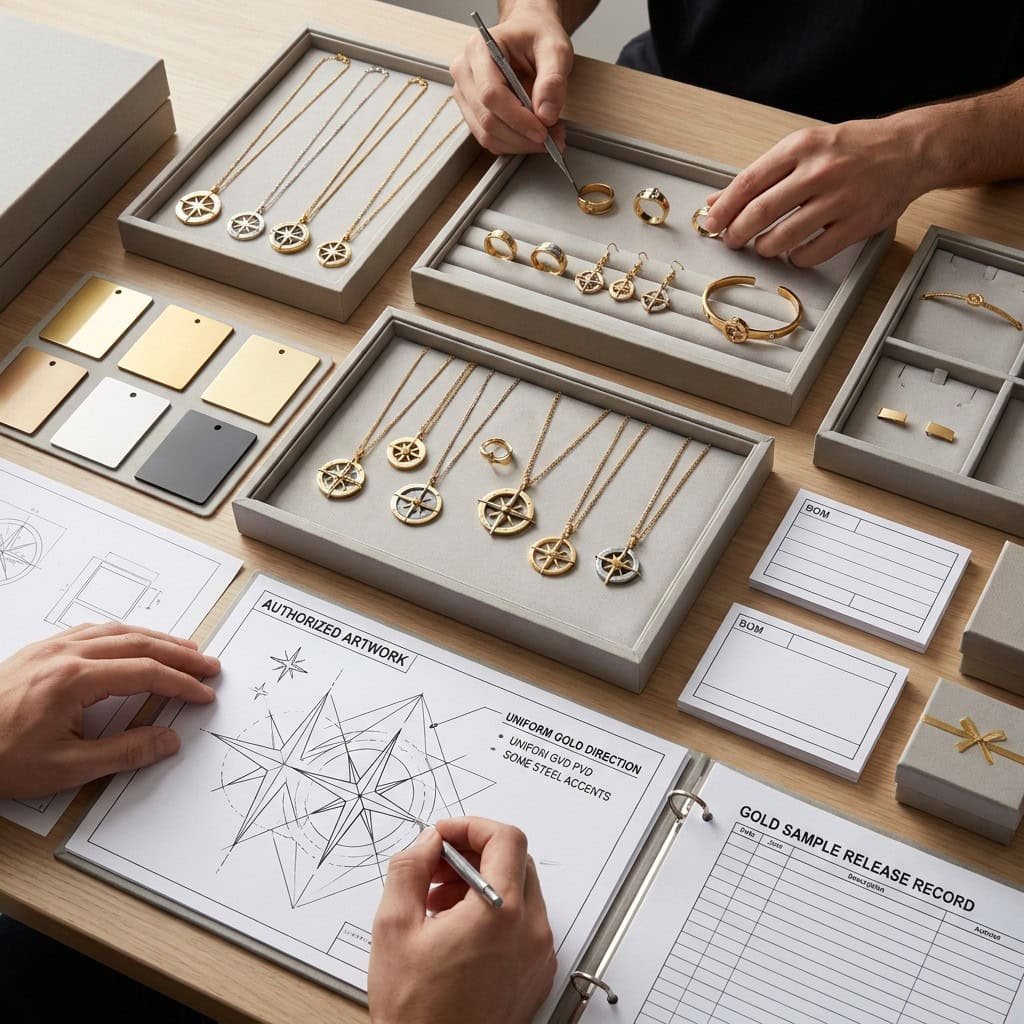
Premium Compass Collection
Use Scenario
An established brand plans compass necklaces, bracelets, rings, and earrings for multiple markets with one approved gold direction and discreet private labeling.
Key Challenge
Compass letters, north orientation, relief, chain fit, ring proportions, earring weight, color, and logo placement must remain coherent across different structures.
Chicolink Solution
Chicolink registers the authorized artwork, develops SKU-level CAD and BOM files, completes DFM, defines material and PVD requirements, prepares samples, and links Golden Samples to color, packaging, and inspection references.
Result
Chicolink would release one multi-SKU production package controlling shared visual standards and product-specific engineering evidence.
Project Data
Representative scope: 4 product categories; SKU count, steel, PVD, samples, MOQ, tests, packaging, price, and schedule require confirmation.

Destination Gift Program
Use Scenario
A coastal resort or gift supplier requires location-specific wave, sailboat, coastline, or coordinate jewelry in compact packaging for seasonal delivery.
Key Challenge
Location artwork, text, card versions, barcodes, display dimensions, carton rules, and high-season timing create substantial version-control risk.
Chicolink Solution
Chicolink separates standard product structures from destination artwork, confirms authorization and text, controls engraving or cutting files, and links each SKU to its packaging, labels, cartons, and inspection record.
Result
Chicolink would release identifiable destination and packaging versions for accurate product, card, label, and carton matching.
Project Data
Representative scope: multiple locations using approved common product bodies; quantities, personalization, packaging MOQ, tests, delivery, and replenishment require confirmation.
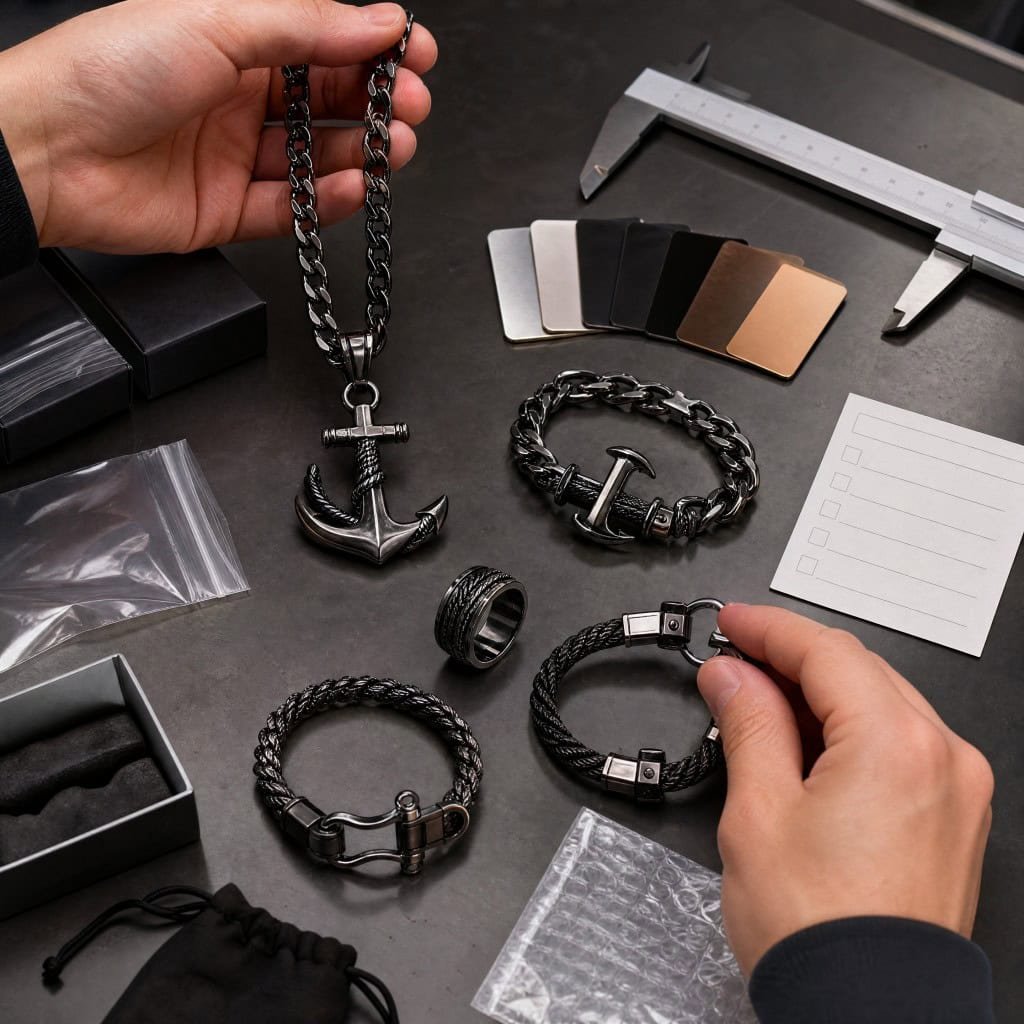
Men's Anchor Program
Use Scenario
A men's accessories brand develops heavier anchor pendants, rope-textured bracelets, rings, and chains in steel, black, or gunmetal directions.
Key Challenge
Weight, chain load, ring closure, clasp function, anchor-point comfort, surface appearance, size, and transport protection require structure-specific controls.
Chicolink Solution
Chicolink reviews load paths and wearing dimensions, selects the production route, defines connectors and finishes, makes structure-specific samples, assigns functional checks, and plans individual protection.
Result
Chicolink would release the collection with specified connections, wearing dimensions, surface standards, inspections, and protective packaging.
Project Data
Representative scope: pendant, bracelet, ring, and chain structures; sizes, weights, loads, colors, quantities, tests, packaging, and terms require approval.
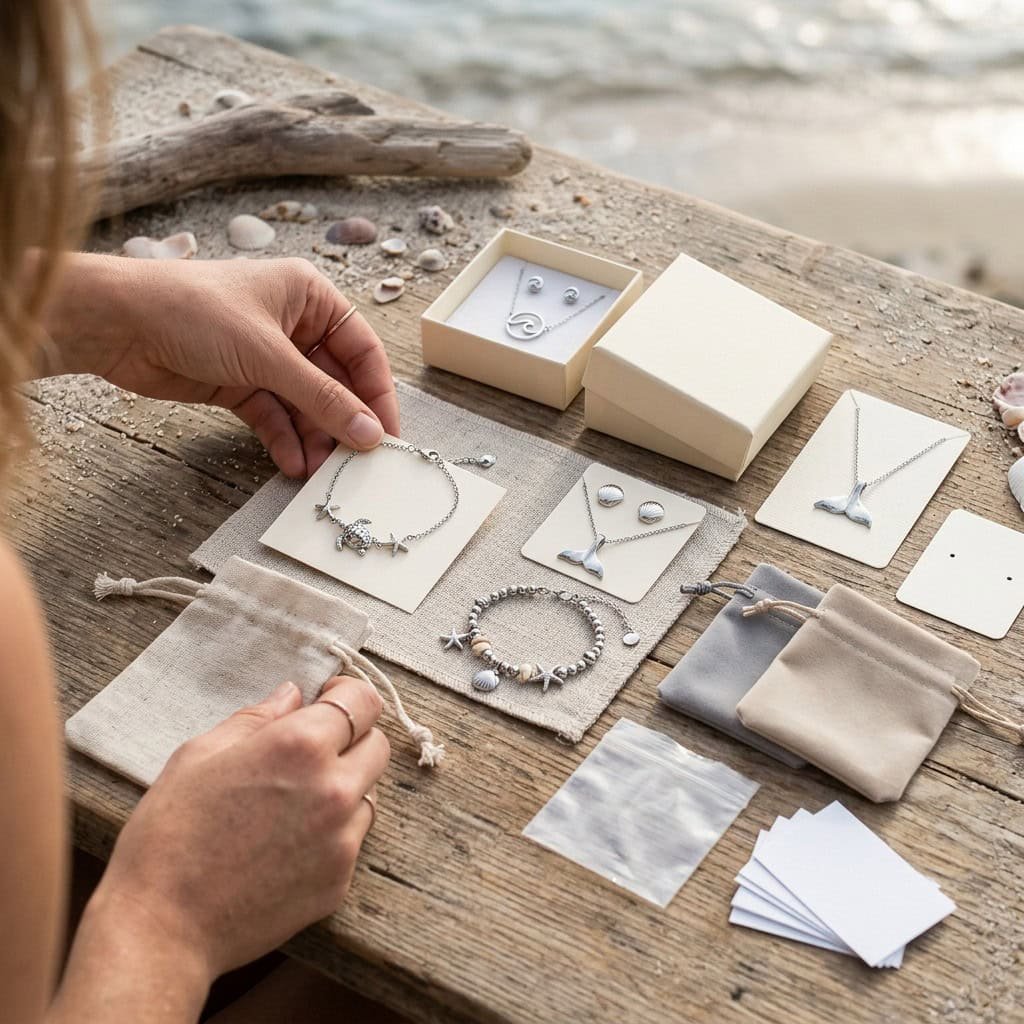
Coastal DTC Assortment
Use Scenario
A DTC brand plans wave, shell, starfish, turtle, and whale-tail jewelry with coordinated cards, pouches, care information, and fulfillment labels.
Key Challenge
The assortment creates many chain, finding, color, size, packaging, and barcode combinations, while natural decoration requires an approved variation range.
Chicolink Solution
Chicolink rationalizes shared components, controls variants and decoration ranges, approves product and packaging samples, links barcodes to retail versions, and checks finish, labels, sets, and pack completeness.
Result
Chicolink would release a varied assortment with controlled component, packaging, barcode, and inventory complexity.
Project Data
Representative scope: multi-category coastal collection; SKUs, shared components, colors, decoration standards, MOQ, packing, tests, and schedule require confirmation.
Send a Complete Brief for a Faster Technical Review
You can begin with a sketch, image, sample, CAD file, or collection brief, but a production quotation requires a defined scope. The checklist below helps Chicolink separate confirmed requirements from open assumptions, identify design and compliance risks, compare manufacturing routes, prepare the sample plan, and connect the correct packaging and inspection version to every nautical jewelry SKU.
| RFQ Area | Information to Send or Confirm |
|---|---|
| Project type | Existing-style private label, OEM from drawing, OEM from sample, ODM collection development, or replenishment |
| Product range | Pendants, necklaces, earrings, bracelets, bangles, rings, anklets, charms, men's jewelry, or gift sets |
| Nautical direction | Anchor, compass, wheel, wave, shell, starfish, turtle, whale, dolphin, seahorse, sailboat, rope, coordinates, coastline, or another authorized theme |
| Design files | AI, EPS, SVG, CDR, editable PDF, DWG, DXF, CAD, 3D file, dimensioned drawing, reference image, or physical sample |
| Authorization | Ownership or permission for trademarks, logos, maps, destination names, coordinates, event marks, fonts, and protected artwork |
| Dimensions | Length, width, thickness, openings, bail, chain, ring size, bracelet size, earring post, stone, weight, and tolerances |
| Materials | Requested steel grade, material form, chains, findings, stones, shell, natural materials, resin, enamel-related effect, or other components |
| Finish | Steel, gold, rose gold, black, gunmetal, PVD structure, thickness, polish, brush, sandblast, mixed surface, or approved color reference |
| Structure | Chain and pendant fit, connectors, clasp, left-right pair, hinge, thread, moving part, stone or decoration fixation, and load path |
| Quantity | Quantity by style, color, size, set, plating batch, packaging version, delivery batch, and expected replenishment volume |
| Branding | Product logo method, position, artwork version, jewelry card, pouch, box, insert, care card, and claim wording |
| Product data | SKU, UPC, EAN, FNSKU, size and color code, origin data, set contents, inner-pack, carton marks, and data-freeze date |
| Target market | Destination countries, consumer group, sales channel, retailer policy, skin-contact position, and intended product claims |
| Tests and inspection | Salt spray, perspiration, abrasion, pull, nickel, lead, cadmium, REACH, Prop 65, AQL, third-party testing, or third-party inspection |
| Commercial target | Target FOB cost or retail position, MOQ, sample deadline, launch date, delivery date, Incoterm, and delivery destination |
Ocean and Nautical Jewelry Manufacturing FAQ
These answers summarize how Chicolink handles custom nautical jewelry development, material selection, marine-exposure questions, PVD, MOQ, samples, private labels, testing, bulk consistency, and quotation preparation. Final requirements remain specific to the approved SKU, market, order, and written agreement.
Do you manufacture custom ocean and nautical jewelry?
Yes. Chicolink manufactures stainless steel anchor, compass, wheel, wave, shell, starfish, marine-animal, sailboat, rope, coordinate, and coastal jewelry. We support existing-style private label, OEM from drawings or samples, and ODM collection development. We confirm feasibility, artwork authorization, specifications, packaging, testing, and delivery before production.
Is your nautical jewelry safe for seawater use?
No single seawater or waterproof claim applies to every product. Steel, PVD, findings, stones, adhesives, chlorine, cosmetics, friction, contact time, rinsing, and storage affect performance. Chicolink defines the material, construction, care guidance, and requested tests for the exact SKU and intended claim.
Should we specify 304 or 316L stainless steel?
Chicolink selects the grade against structure, processing route, finish, skin contact, market, exposure, cost, MOQ, and buyer requirements. 316L generally offers better pitting resistance but can complicate forming, cutting, welding, polishing, or correction. We record the approved grade and verification route in the specification.
What is the MOQ for custom nautical jewelry?
OEM/ODM projects commonly start at 500 pieces per style; stock or regular styles commonly start at 120 pieces. Final MOQ depends on style, color, size, plating batch, components, packaging, tooling, material, decoration, testing, and production difficulty. Chicolink confirms any mixed-variant arrangement in writing.
How long does nautical jewelry sampling take?
Existing-style samples usually take 3-7 working days; OEM/ODM custom samples usually take 25-30 working days. File completeness, DFM, tooling, materials, decoration, PVD, packaging, tests, revisions, payment, and scheduling affect timing. Chicolink confirms the starting point, sample scope, and project schedule.
Can you produce PVD gold nautical jewelry?
Yes. Chicolink operates an in-house plating workshop with 6 PVD vacuum coating machines. We confirm the color reference, PVD structure, thickness, surface texture, sample, test request, batch controls, inspection, and packaging for gold, rose gold, black, gunmetal, and other approved directions.
Can you provide private-label retail packaging?
Yes. Chicolink supports product logos, jewelry cards, pouches, boxes, inserts, care cards, SKU labels, barcodes, inner packs, and export cartons. Packaging materials may have separate MOQ and schedules. We approve artwork, claims, codes, product placement, protection, and pack versions before bulk execution.
Can you support EU and US testing requirements?
Yes. Chicolink can coordinate applicable nickel, lead, cadmium, REACH, California Proposition 65, corrosion, perspiration, abrasion, functional, and independent testing. We confirm the standard, sample, material, color, PVD structure, laboratory, fee, acceptance rule, and report scope. One report does not cover unlisted SKUs or colors.
How do you keep samples and bulk orders aligned?
Chicolink links the approved sample to the released drawing, BOM, material, artwork, color, components, packaging, test plan, and revision. Incoming, first-article, in-process, plating, final, and packaging controls verify the released requirements. We review changes for approval, resampling, repricing, testing, and schedule effects before use.
What should we send for a quotation?
Send design files or a reference sample, categories, dimensions, materials, variant quantities, finish, logo, packaging, market, tests, inspection standard, target cost, timing, Incoterm, and destination. Include authorization for protected logos, maps, place names, fonts, or artwork. Chicolink will identify missing information and open assumptions.