
Stainless Steel Pearl Jewelry Manufacturer for Global Brands
Develop pearl earrings, necklaces, bracelets, rings, and coordinated collections through one documented OEM/ODM manufacturing program.
- Engineer pearl pin, cup, setting, adhesive, and metal interfaces around the selected pearl, product structure, and intended use.
- Confirm freshwater, shell, glass, or imitation pearl options by project, including size, shape, color, luster, drilling, matching, and availability.
- Produce stainless steel components, approved PVD/IP finishes, pearl assembly, inspection, private-label packaging, and bulk orders under linked specifications.
- Support brand launches with samples, testing plans, batch records, third-party inspection, export packing, and SKU-level documentation.
- Receive an initial response targeted within 6 working hours for normal inquiries.
- Manufacturing since 2012
- 5,500+ m2 factory in Dongguan, China
- 200,000+ pieces monthly capacity
- In-house plating workshop with six PVD vacuum coating machines
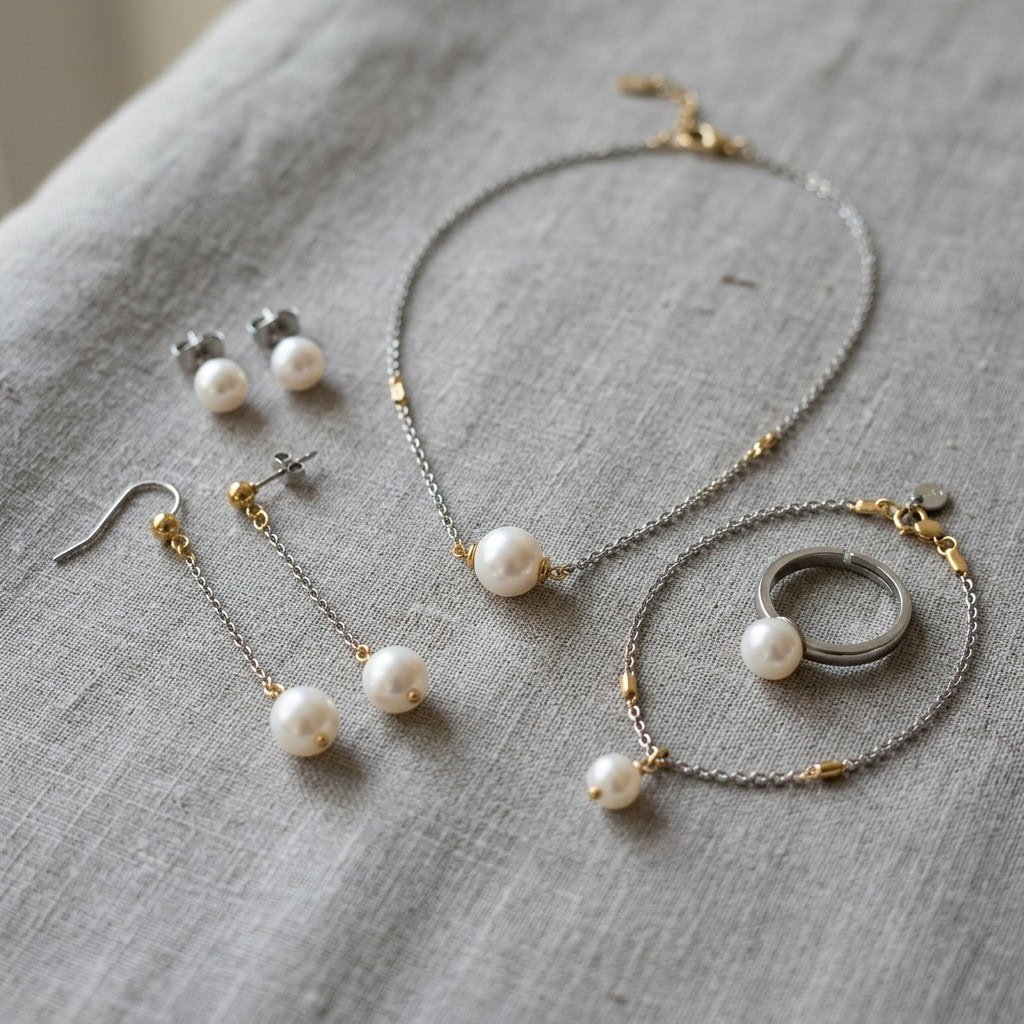
Define Your Pearl Jewelry Program Before Development
Chicolink converts a brand brief into a quotable, sample-ready, and traceable manufacturing program. These six inputs determine pearl sourcing, steel grade, fixing structure, surface finish, inspection scope, packaging, MOQ, and timeline before tooling or sample work begins. They also expose missing decisions early, when cost, feasibility, and launch scope can still be adjusted efficiently.
Customer and Positioning
- Define the wearer, use occasion, retail price position, design language, and expected service environment.
- State whether the collection is fashion-led, gift-led, bridal, everyday, or premium.
- Chicolink uses this context to balance visual scale, pearl consistency, metal weight, comfort, finish, construction, packaging, and target ex-factory cost.
Pearl Requirement
- Provide the preferred pearl category, diameter range, shape, color, luster, surface tolerance, hole condition, and matching level.
- Freshwater, shell, glass, and imitation pearl options remain subject to project confirmation.
- Chicolink identifies measurable acceptance criteria and requests reference samples when visual language cannot be controlled by names alone.
Assortment and SKUs
- List earrings, necklaces, bracelets, rings, anklets, sets, colorways, sizes, and paired products.
- Mark hero SKUs, carryover basics, test styles, and planned replenishment items.
- Chicolink maps shared components and independent specifications so one change does not silently alter another SKU, pearl batch, plating color, or packaging version.
Quantity and Cost
- Share quantity by style, color, size, and packaging version, plus target cost or retail architecture when available.
- Stock or common styles commonly start at 120 pieces per style; OEM/ODM commonly starts at 500 pieces per style.
- Final MOQ and pricing depend on pearl sourcing, tooling, plating batches, structure, packaging, and production difficulty.
Market and Testing
- Identify destination countries, sales channels, retailer manuals, restricted-substance requirements, inspection rules, and requested reports.
- Chicolink defines the applicable sample, material, color, plating, contact-surface, and batch scope before testing.
- Reports are linked only to the covered product conditions and are not generalized to unrelated SKUs or future production.
Launch and Reorders
- Provide sample review dates, campaign photography, testing, inspection, shipment, and required in-market arrival dates.
- Include expected reorder frequency and volume when known.
- Chicolink works backward through engineering, pearl confirmation, metal production, plating, assembly, inspection, packing, and logistics, then flags calendar conflicts or proposes a phased launch scope.
Build a Commercial Stainless Steel Pearl Assortment
Chicolink develops pearl jewelry as a coordinated product system rather than a collection of unrelated decorative styles. A program can share pearl scale, PVD color, logo language, packaging, and target price while retaining SKU-specific dimensions, structures, and controls. Select product categories according to sales channel, customer profile, display plan, gifting use, average order value, and replenishment strategy. Each chosen category receives its own approved bill of materials, pearl standard, metal specification, fixing method, inspection points, and packing orientation.
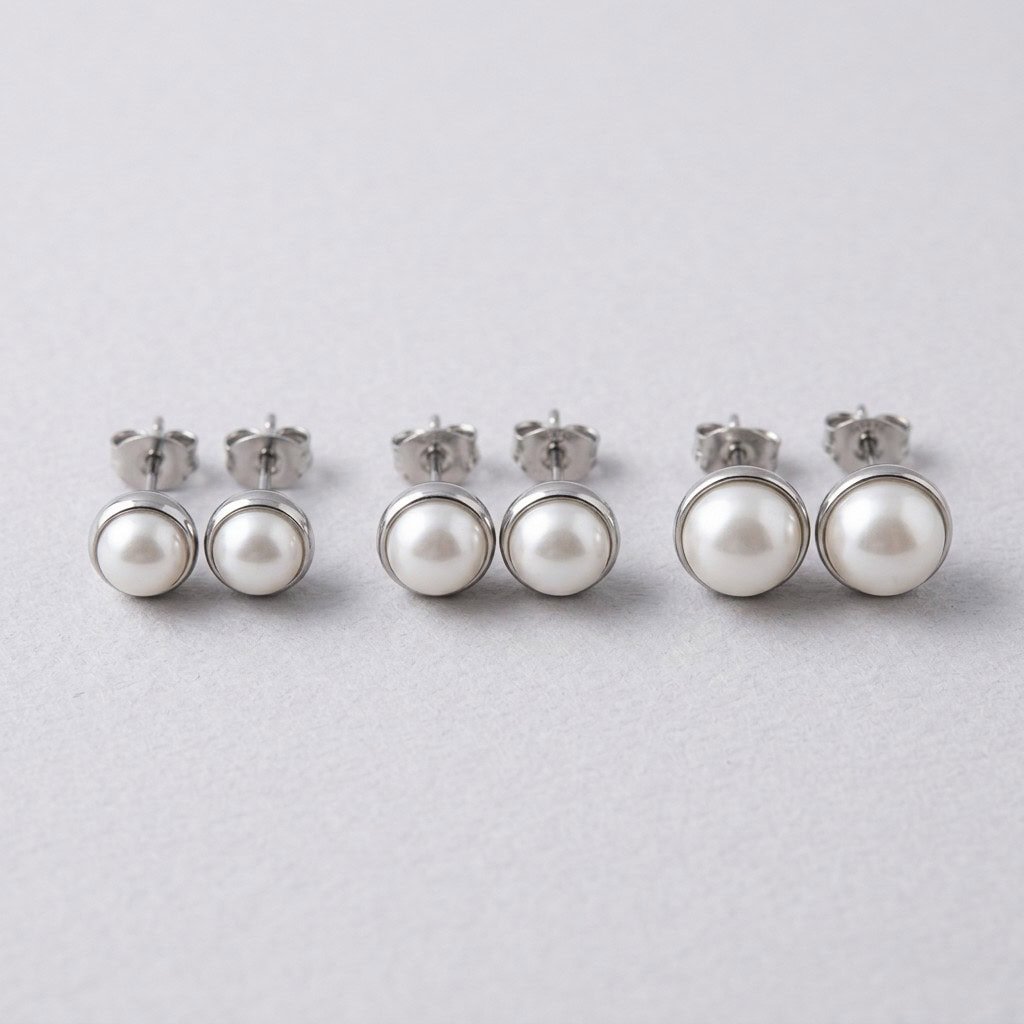
Pearl Stud Earrings
- Develop single-pearl, framed, halo, geometric, or jacket-style studs using project-confirmed pearl options.
- Record pearl diameter, pair matching, post diameter and effective length, post position, cup or pin geometry, adhesive route, backing type, single and pair weight, and front-facing orientation.
- Inspection focuses on left-right consistency, post alignment, visible adhesive, pearl movement, sharp edges, and protective packing around posts and pearl surfaces.
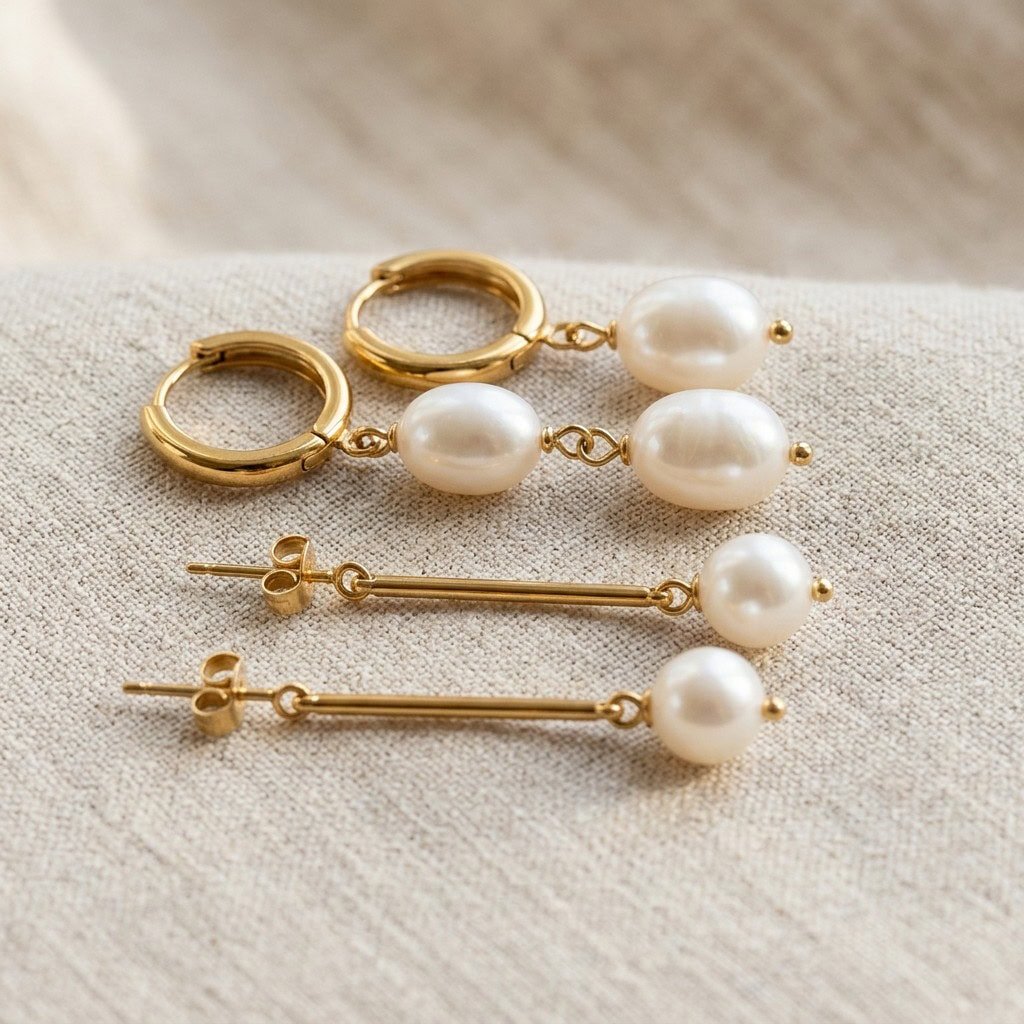
Pearl Drop Earrings
- Create drops, hoops with pearl charms, linear earrings, chain drops, or asymmetric pairs.
- Define total length, movement range, left-right direction, jump-ring closure, pearl drilling, cap or pin connection, center of gravity, and acceptable rotation.
- Chicolink reviews contact between pearl and steel during movement, closure function, component pull direction, pair balance, tangling risk, and transit protection before bulk release.
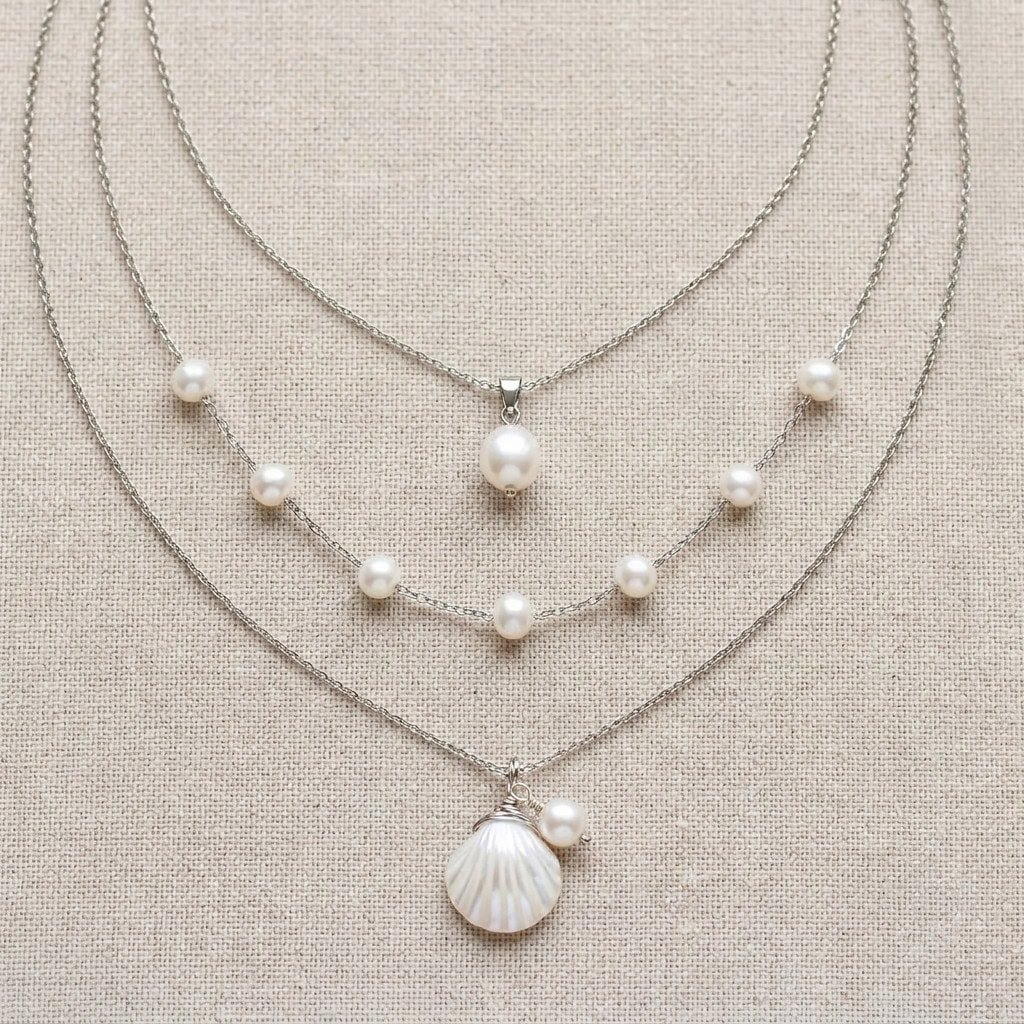
Pearl Necklaces
- Develop pendant, station, lariat, layered, charm, collar, or mixed-chain pearl necklaces.
- Specifications identify main-chain length, extension, clasp, pearl count and spacing, pendant position, drill direction, metal connector, logo tag, total weight, and measurement method.
- Product review covers hanging balance, pearl orientation, chain twisting, pendant flipping, fixing security, skin-contact edges, and anti-tangling packaging for wholesale and e-commerce channels.
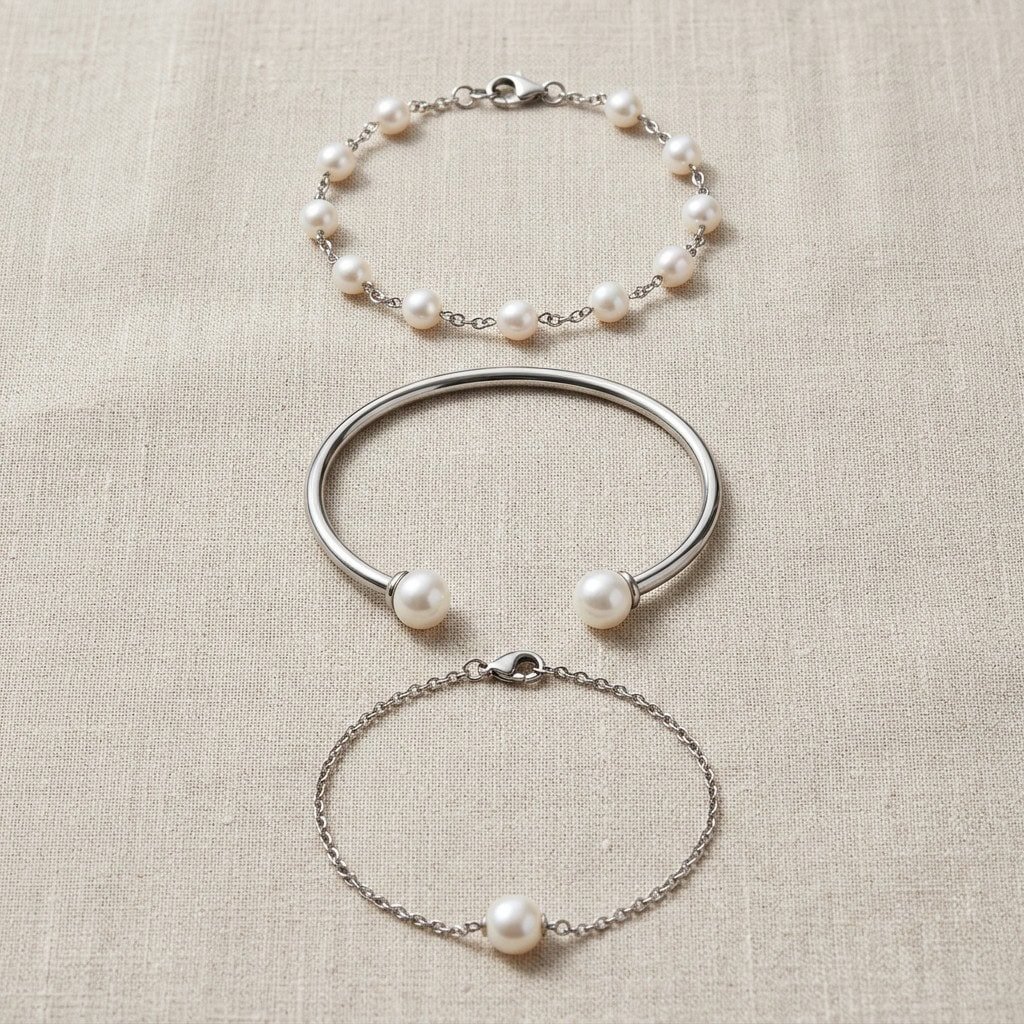
Pearl Bracelets
- Build chain bracelets, station bracelets, bangles with pearl terminals, hinged forms, or mixed pearl-and-steel designs.
- Confirm wrist fit, finished length, extension, internal dimensions, pearl exposure, opening or clasp route, connector strength, and range of movement.
- Chicolink checks whether the pearl may strike hard metal surfaces during wear and adjusts cups, spacing, stops, orientation, or packing where the structure creates avoidable impact risk.
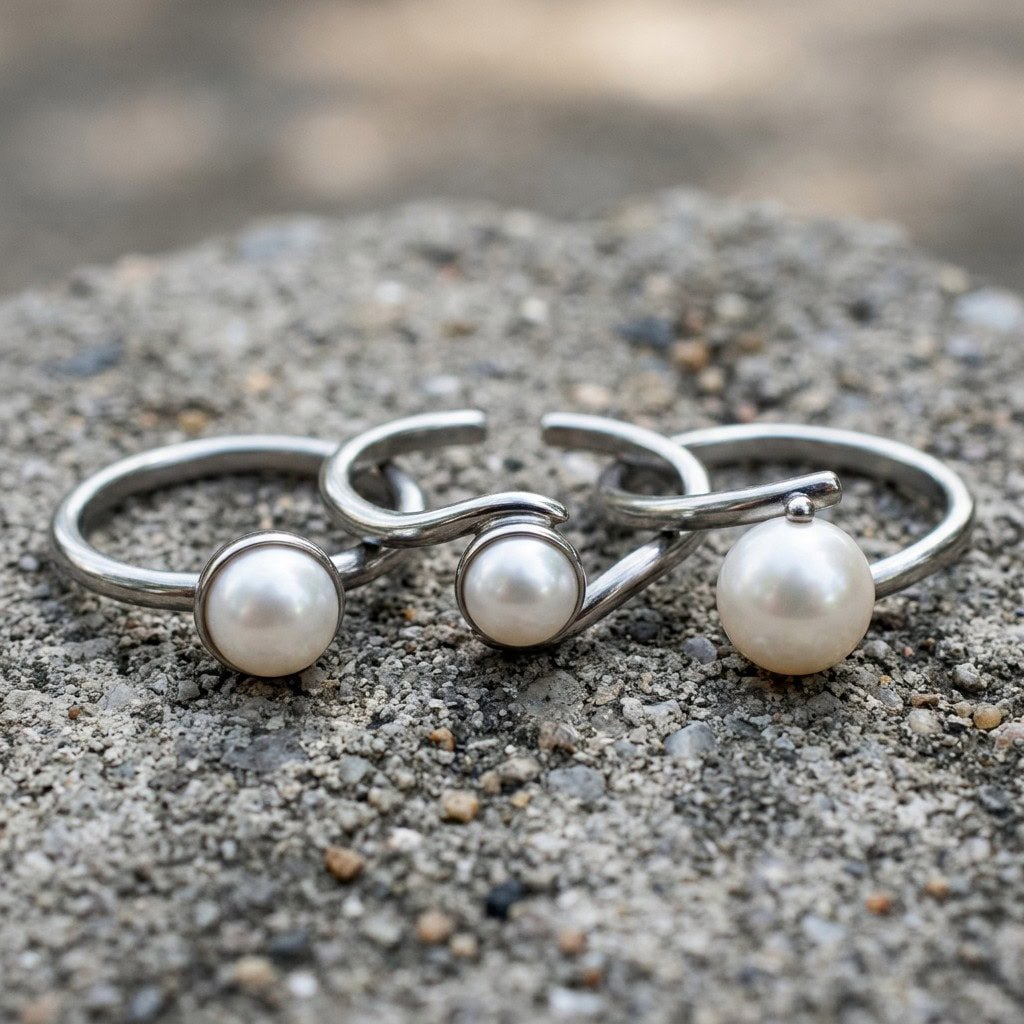
Pearl Rings
- Develop fixed-size, open, adjustable, signet-inspired, bypass, cluster, or pearl-accent rings.
- Record size system, internal diameter, shank dimensions, opening range, pearl height, setting position, pin or cup support, and finger-contact clearance.
- Engineering review considers leverage on raised pearls, snagging, adhesive area, deformation during adjustment, polishing access, plating coverage, and whether the design needs physical wear and fitting evaluation.
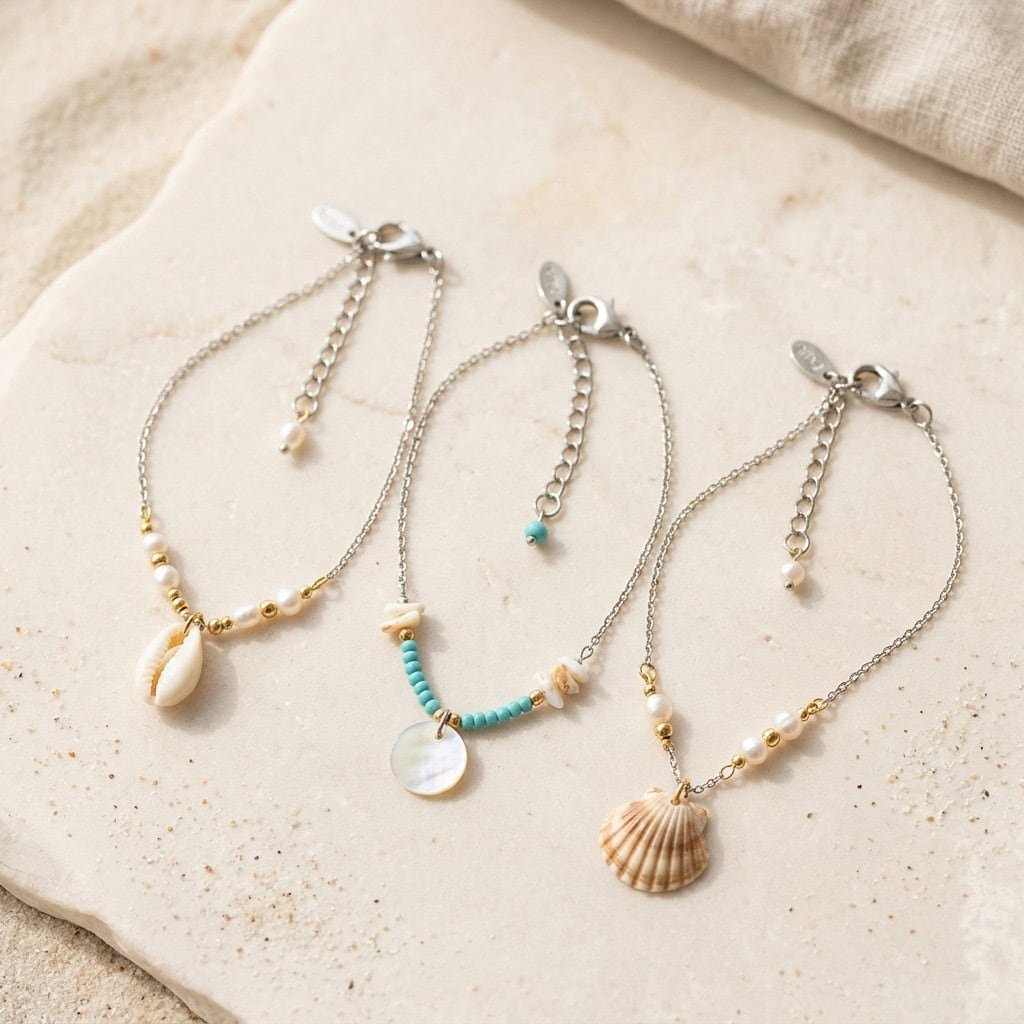
Pearl Anklets
- Create fine-chain, station, charm, layered, or adjustable stainless steel pearl anklets for seasonal and resort collections.
- Define finished length, extension, pearl spacing, connector direction, clasp, chain flexibility, and intended fit.
- Because anklets encounter movement and impact, Chicolink reviews exposed pearl positions, link closure, pull direction, surface contact, and packaging so the approved construction is appropriate for the intended product use.

Pearl Jewelry Sets
- Coordinate earrings, necklaces, bracelets, and rings through shared pearl appearance, metal color, geometry, logo, and packaging.
- Each item remains an independent SKU with its own specification and inspection record; the set also receives a packing list and placement standard.
- Chicolink controls pair and set matching, component completeness, display order, barcode logic, replacement handling, and protection between products inside the retail package.

Convertible Pearl Designs
- Evaluate removable drops, reversible pendants, detachable charms, interchangeable hoops, or multi-wear necklace structures.
- Define every configuration, assembly direction, locking feature, loose component, user contact point, and packaging position.
- Chicolink checks misuse risks, repeated operation, thread or clasp function, pearl clearance, part retention, and instruction requirements before confirming whether the concept is suitable for sampling and scalable production.
Specify Pearls and Steel With Measurable Standards
Pearl names alone do not create an inspectable production standard. Chicolink records visual, dimensional, structural, and material requirements in the quotation, approved sample, bill of materials, drawing, or inspection plan. Natural variation is handled through agreed ranges and reference samples rather than unrealistic identical-piece promises. Available freshwater, shell, glass, imitation, or other pearl options are confirmed for each project according to design, quantity, target cost, sourcing stability, processing compatibility, and buyer requirements.
| Specification Area | Buyer Input | Chicolink Control Method | Approval Evidence |
|---|---|---|---|
| Pearl category | Preferred freshwater, shell, glass, imitation, or other option | Confirm availability, suitability, source condition, processing limits, MOQ, and cost for the project | Quotation and approved BOM |
| Size | Nominal diameter or length and width | Define measuring points, unit, acceptable range, and pair or set relationship | Dimension record and approved sample |
| Shape | Round, near-round, oval, drop, baroque, button, or custom visual direction | Use named shape plus photos or physical reference; define permitted variation | Reference sample or image standard |
| Color and overtone | White, cream, pink, grey, black, or custom direction | Approve under agreed lighting and background; link the standard to the pearl batch and metal color | Signed sample or controlled color reference |
| Luster and surface | Desired reflection, skin quality, and visible-mark tolerance | Separate acceptable natural or process variation from rejectable chips, cracks, coating defects, or stains | Defect board and inspection plan |
| Matching | Pair, set, necklace sequence, or intentional variation | Define matching priority for size, color, shape, luster, and orientation by SKU | Pairing or layout standard |
| Hole and drilling | Full drill, half drill, cross drill, hole diameter, depth, and direction | Check against pin diameter, adhesive gap, cap, cup, and final orientation | Drawing and incoming inspection record |
| Steel grade | 304, 316L, or buyer-specified material | Select according to structure, forming, machining, skin-contact needs, target market, and written requirement | Material specification and available verification |
| Metal dimensions | Thickness, wire diameter, pin size, cup, chain, clasp, and fitting dimensions | Set drawing-based tolerances according to size, process, function, and measuring method | Approved drawing and dimensional report |
| Finish | Polished, brushed, sandblasted, PVD/IP, water plated, or combined finish | Confirm process route, color standard, layer requirement, protected areas, and defect criteria | Finish sample and process specification |
| Priority rule | Contract, retailer manual, drawing, sample, or Chicolink default | Customer contracts, approved drawings or samples, and written standards override internal defaults | Order-specific quality plan |
Engineer the Pearl-to-Steel Connection Before Sampling
A pearl can loosen because of an undersized pin, shallow drilling, poor adhesive gap, insufficient bonding area, contamination, incompatible curing, leverage, impact, or a metal structure that transfers force directly into the pearl. Chicolink reviews the complete interface before choosing a fixing route. The decision is based on pearl construction, hole condition, product movement, exposed height, expected force direction, cleaning and plating sequence, temperature and chemical compatibility, appearance, and the buyer's written test requirement.
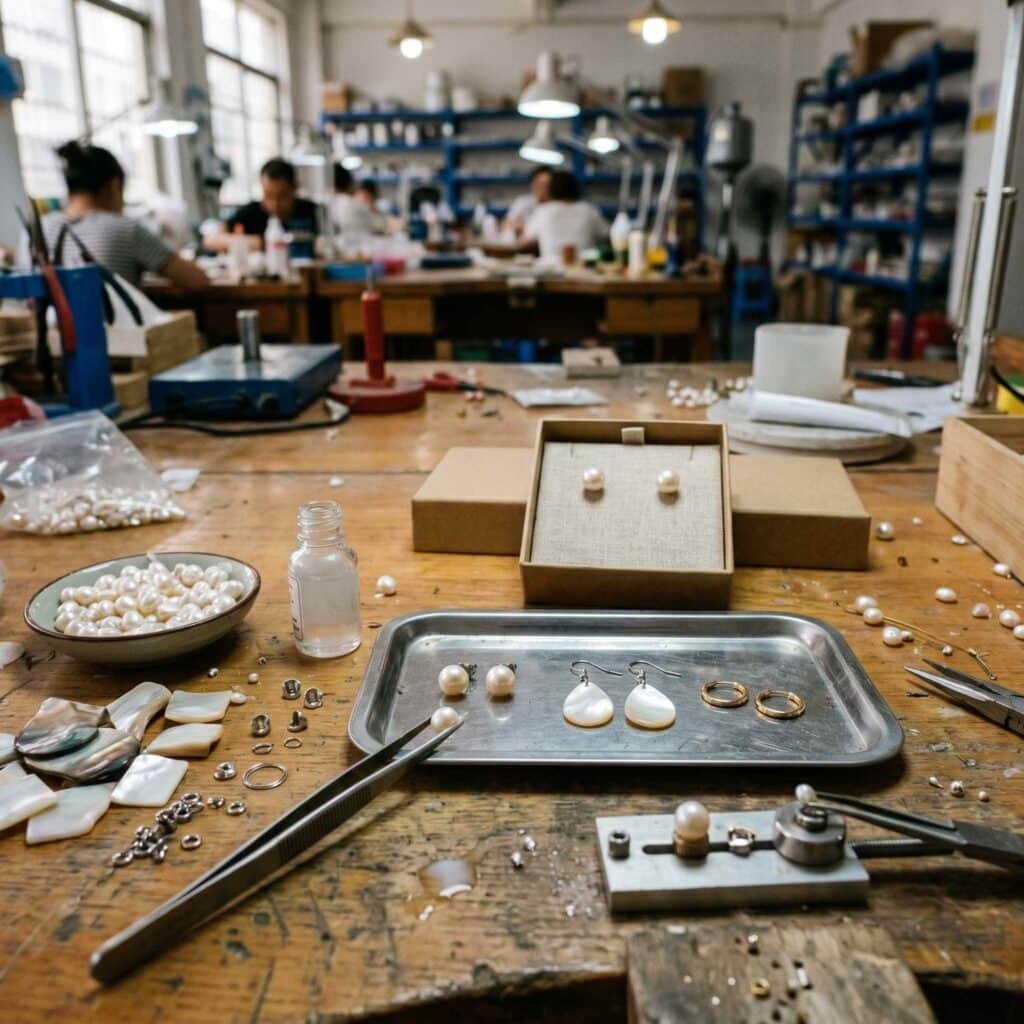
Select a Structure That Can Be Produced and Verified
- Buyer input: Provide the design file or reference, target pearl category and dimensions, product category, wear scenario, intended metal grade and finish, quantity, and any required retention load or test method. If these details are incomplete, Chicolink issues a list of open points rather than treating engineering assumptions as bulk specifications.
- Connection decision: A pearl pin may suit a half-drilled pearl when pin diameter, insertion depth, surface preparation, adhesive gap, and load direction can be controlled. Cups, caps, bezels, cages, wire structures, cross-drilled connections, or combined mechanical-and-adhesive routes are evaluated when they provide better support or appearance. No single route is promised for every pearl type or design.
- Process sequence: Metal components are machined, cast, stamped, cut, welded, polished, cleaned, and plated as required before heat-sensitive or chemically sensitive pearls are assembled. Bonding surfaces must be free from oil, water, polishing compound, dust, and uncontrolled hand contact. Adhesive type, mixing, application, cure condition, fixture position, and cure time are recorded for the approved route.
- Risk control: Chicolink checks lever arm, impact exposure, pin fit, hole cracking, visible adhesive, pearl-to-metal contact, trapped cleaning liquid, plating access, assembly direction, and repairability. Natural or coated materials are not assumed to tolerate acid, alkali, ultrasonic cleaning, heat, or every adhesive; compatibility is assessed before the final sequence is released.
- Evidence and output: The approved sample, drawing, BOM, pearl specification, assembly instruction, controlled adhesive route, and project-specific retention method become the manufacturing basis. Pearl-pin structures may use pull or torque testing with the load, direction, hold time, sample quantity, and acceptance criteria defined in the test matrix or buyer standard.
Move From Brand Brief to Approved OEM Sample
Chicolink accepts sketches, CAD files, technical drawings, reference samples, mood boards, target prices, or assortment briefs. OEM projects begin from buyer-controlled designs; ODM projects add Chicolink design and engineering participation. 6 jewelry designers and 3 jewelry engineers convert the approved direction into a manufacturable pearl-and-steel product. Each stage closes defined questions before the next commitment, so visual approval, engineering feasibility, cost, schedule, and quality requirements remain connected.
| Stage | Buyer Input | Chicolink Work | Decision or Output |
|---|---|---|---|
| 1. Project intake | Product concept, target market, categories, quantity, cost position, calendar, pearl direction, finish, and packaging | Check file completeness, identify missing specifications, classify OEM or ODM scope, and assign commercial and technical review | Project brief and open-point list |
| 2. Feasibility review | Reference dimensions, intended function, test or retailer requirements | Assess steel process, pearl sourcing, fixing method, plating sequence, polishing access, tolerances, assembly, inspection, MOQ, and likely risks | Preliminary feasibility assessment; complex projects targeted within 24 hours |
| 3. Commercial definition | Quantity by SKU and variant, required Incoterm, sample quantity, packaging, and destination | Calculate material, pearl, process, tooling, plating, assembly, inspection, packing, and applicable sample or test costs | Version-specific quotation and assumptions |
| 4. Design development | Approved direction and revision comments | Prepare or review 2D/3D files, dimensions, component relationships, pearl orientation, logo, surface zones, and key visual details | Review file for buyer confirmation |
| 5. DFM and specification | Buyer-approved design file | Define process route, steel form, pearl interface, tolerances, measuring method, BOM, finish, assembly, inspection, and risk controls | Sample manufacturing specification |
| 6. Sample production | Sample order and confirmed requirements | Make metal components, finish or plate them, source approved pearl options, assemble, inspect, and record deviations or needed changes | Physical sample and review notes |
| 7. Revision | Consolidated buyer feedback | Separate cosmetic, dimensional, structural, material, pearl, finish, and packaging changes; evaluate cost and schedule impact | Revised drawing, quotation, or sample plan |
| 8. Sample approval | Written approval against identified sample or file | Freeze approved appearance, structure, BOM, color, pearl standard, logo, packaging direction, and unresolved conditions | Approved sample basis for version control |
Keep Approved Samples and Bulk Production Aligned
Approving a physical sample is only useful when the approved details can be identified, measured, communicated, and reproduced. Chicolink links the sample to its SKU, drawing, bill of materials, pearl standard, plating reference, logo file, packaging version, and written comments. This prevents an informal image, an obsolete file, or an unrecorded sample adjustment from becoming the production standard. Changes after approval are evaluated for cost, tooling, schedule, material, testing, and existing work-in-process impact before implementation.
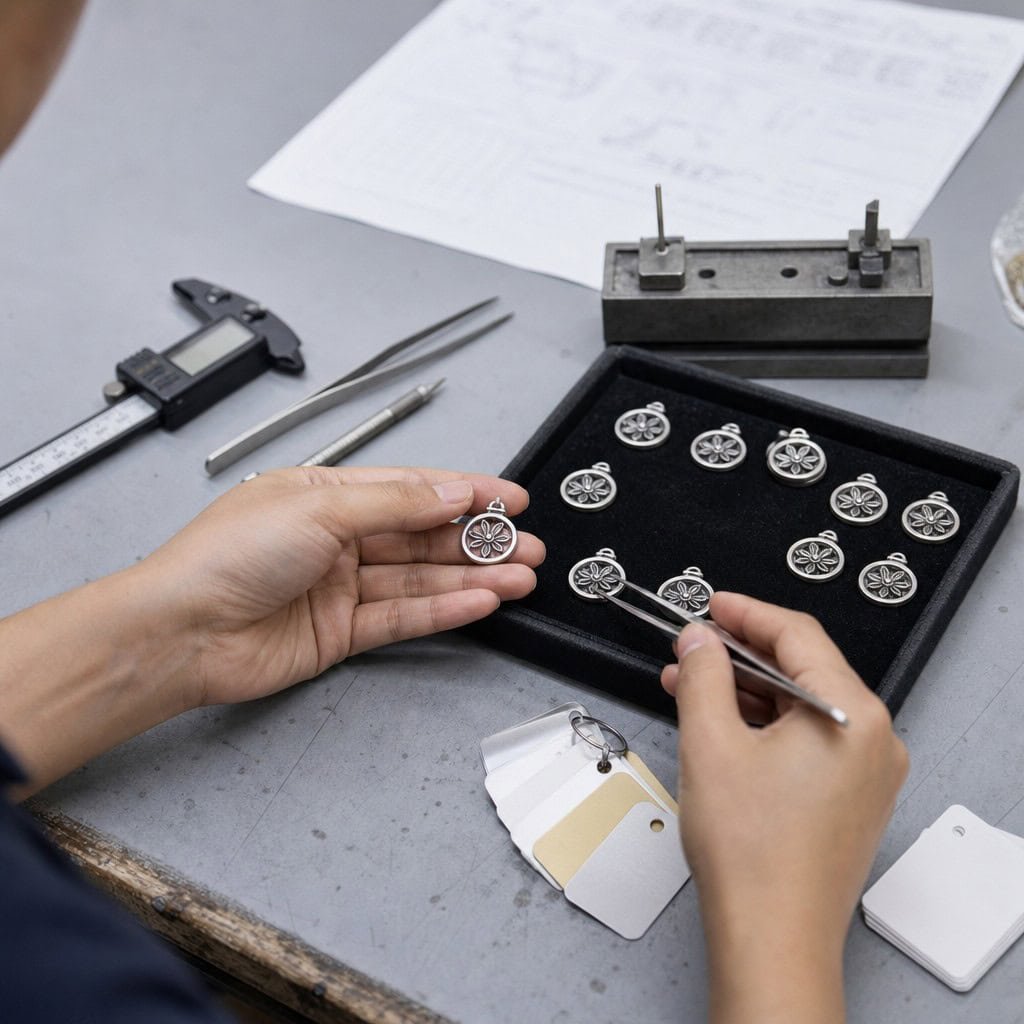
Create One Controlled Basis for Every Bulk SKU
- Approval package: Chicolink records the sample identifier and approval date together with product dimensions, steel grade, weight reference where required, pearl category and measurable range, pair or set matching, fixing structure, chain and clasp data, logo, surface finish, PVD color reference, packaging, and inspection points.
- Golden Sample control: Buyer-approved samples and Chicolink retained samples are labeled by SKU and version. Natural pearl appearance is controlled by an approved range or reference board where exact duplication is not realistic. Photos are used for identification, but final decisions on color, luster, relief, fit, and hand feel are based on physical samples or measurable standards.
- Pre-production release: Production uses the current drawing, BOM, process card, approved sample, and order requirements. First-piece or pre-production review checks critical dimensions, pearl orientation, assembly, surface appearance, logo position, and function before the full quantity proceeds through irreversible stages.
- Change management: Any proposed substitution or revision is documented. Chicolink does not silently replace the pearl category, steel grade, finding, adhesive route, finish, packaging, or approved component. Buyer approval is obtained when the change affects appearance, function, cost, delivery, testing scope, or contractual requirements.
- Evidence: Version history, signed or written approvals, retained samples, first-piece records, controlled color references, production instructions, and deviation approvals provide the link between development and bulk. These records also support repeat-order review when a pearl source, plating batch, component, or buyer specification changes.
Choose the Manufacturing Route by Product Structure
The correct process is determined by geometry, volume, tolerance, finish, tooling economics, component movement, and pearl assembly needs. Chicolink does not force every pearl design through one manufacturing route. Cast forms can support sculptural cups and frames; stamping or laser cutting can suit flatter repeatable parts; CNC and lathe work can control precision features; chain routes manage links, lengths, and clasps. The route is documented before sampling and updated only through controlled engineering review.
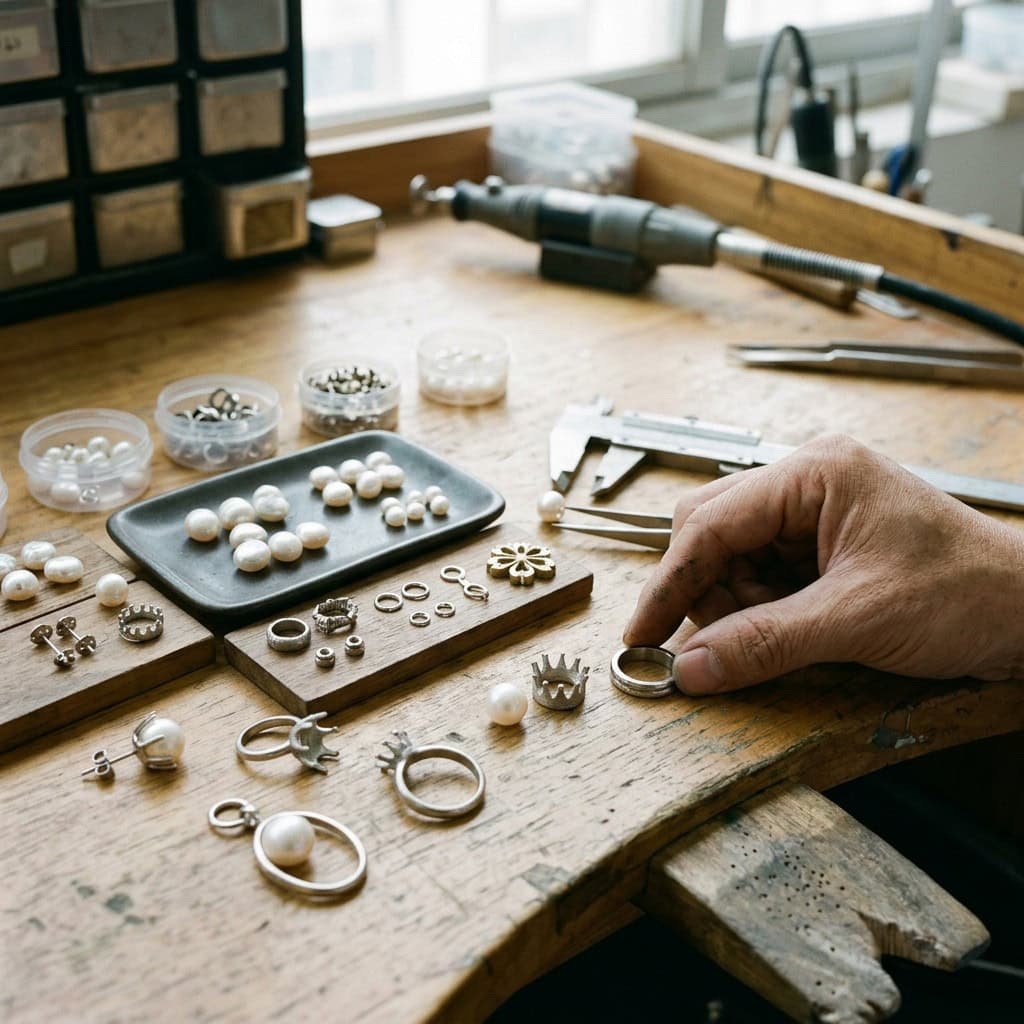
Sequence Metal Production Before Sensitive Pearl Assembly
- Cast structures: Design, master and mold preparation, wax work, casting, gate removal, welding where needed, polishing, in-house plating, plating inspection, pearl assembly, retention check, final inspection, and packing. This route is evaluated for dimensional shrinkage, porosity, heavy sections, polish loss, cup accuracy, and access around decorative details.
- Stamped or laser-cut structures: Prepare sheet, tool or cutting file, form, bend, drill, weld or assemble, deburr, polish, plate, inspect, then add pearls and final components. Chicolink checks edge quality, flatness, springback, hole position, deformation, visual direction, and whether the design offers enough bonding or mechanical support area.
- CNC or lathe structures: Machine steel from approved material, deburr, drill, form or weld as required, polish, apply the confirmed finish, inspect precision features, and assemble pearls. This route may suit controlled pins, cups, threaded features, repeatable circular parts, or geometric components, subject to cost and cycle-time review.
- Chain-based structures: Form or prepare chain, close or weld links, cut to length, attach clasps, extensions and pearl stations, remove burrs, polish, clean, plate, inspect, complete final pearl assembly where required, then check length, flatness, twist, connection security, and hanging behavior.
- Process protection: Pearls, shell, resin, coatings, magnets, springs, and adhesives may be sensitive to heat, acids, alkalis, ultrasonic cleaning, or vacuum-coating conditions. Chicolink normally completes incompatible metal processing first and confirms the final assembly sequence through material and structure evaluation.
Control PVD Color Inside the Manufacturing Program
Pearl appearance changes beside yellow gold, rose gold, silver, black, polished steel, and matte surfaces. Chicolink operates an in-house plating workshop with six PVD vacuum coating machines, allowing metal preparation, approved PVD/IP or water-plating processes, color comparison, process inspection, exception handling, and batch traceability to remain connected. The exact process, layer structure, target thickness, color tolerance, and durability requirement are confirmed by SKU and are not inferred from a color name alone.
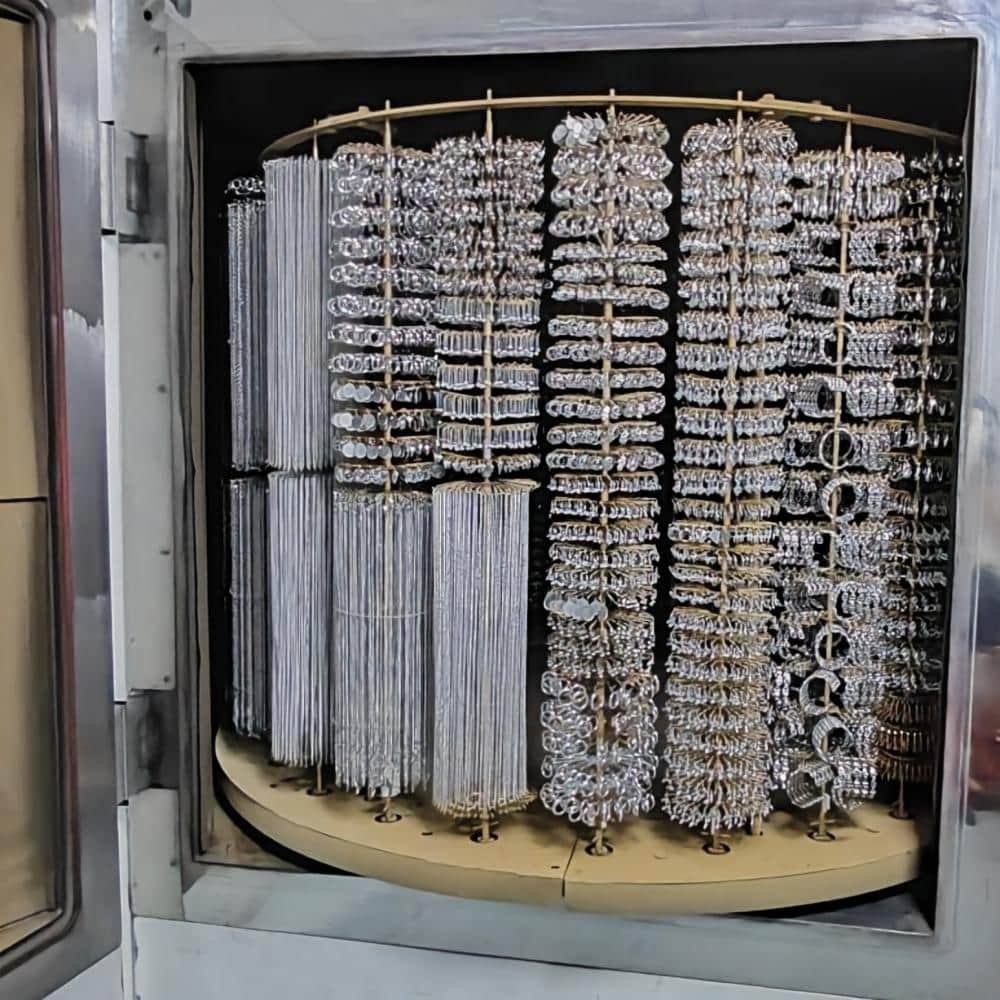
Approve the Metal Finish Beside the Actual Pearl Standard
- Color input: Supply the target color, physical reference where available, pearl standard, base steel grade, surface texture, target market, expected use, and any retailer or durability requirement. Chicolink assesses whether polished, brushed, sandblasted, PVD/IP, water plating, or a combined finish is suitable for the structure.
- PVD/IP options: Gold, rose gold, black, and other project-confirmed colors can be evaluated. Internal reference structures include E1 Standard at 0.4 micrometer TiN plus 0.05 micrometer gold, and E2 Thicker Gold at 0.7 micrometer TiN plus 0.1 micrometer gold. These are reference structures, not automatic specifications for every order; final layers and thickness are confirmed in writing.
- Water-plating options: Rhodium and silver-color routes can be evaluated. Historical internal references include 3-5 micrometers, with actual layer structure and thickness set by the product, appearance, target performance, and approved quotation.
- Process control: The program records preprocessing, cleaning, protected areas, hanging points, color reference, equipment and plating batch, target thickness, inspection points, and pearl assembly sequence. Heat- or chemical-sensitive pearls are not assumed to pass through the metal plating process.
- Verification: Chicolink checks coating thickness by the confirmed method, compares color with the approved reference, and inspects missed areas, spots, burning, pinholes, scratches, peeling, and other specified defects. Salt spray, perspiration, or wear testing is scheduled only under the project-specific plan described for the covered sample and finish.
Build Quality Controls Around Pearl Jewelry Risks
Chicolink creates an order-specific quality plan from the approved sample, drawing, BOM, pearl standard, finish, packaging, and buyer requirements. Controls are placed where defects can still be prevented or contained: incoming pearl and component inspection, first-piece and in-process checks, plating inspection, assembly control, finished-product inspection, and packing verification. Buyers may request 100% inspection or an agreed sampling plan. Written customer standards override Chicolink's internal default inspection rules.
| Risk Area | Chicolink Control Point | Typical Check | Record or Evidence |
|---|---|---|---|
| Pearl mismatch | IQC and pairing station | Category, dimensions, color range, shape, luster, surface tolerance, hole condition, pair or set relationship | Incoming record and matching standard |
| Incorrect steel or component | IQC | Material specification, component dimensions, chain, clasp, post, pin, cup, finding, and packaging material | BOM-linked incoming record |
| Dimensional drift | First piece and IPQC | Drawing dimensions, pearl position, pin fit, hole, length, size, symmetry, and measuring method | First-piece and dimensional report |
| Weak pearl interface | Assembly process | Surface cleanliness, fit, adhesive control, fixture, cure conditions, orientation, and project-specific retention method | Assembly and test records |
| Surface defects | Polishing, plating, and FQC | Scratches, pits, burrs, weld marks, residue, coating defects, color difference, and protected surfaces | Process inspection and finish record |
| Functional failure | IPQC and FQC | Clasps, hinges, posts, backs, threads, jump rings, chain links, movement, hanging balance, and sharp edges | Functional inspection record |
| Pair or set error | FQC and packing | Left-right direction, color and size matching, complete components, SKU, set combination, and placement | Pairing and packing checklist |
| Transit damage | Packaging verification | Pearl-to-metal contact, post protection, anti-tangling, abrasion separation, product fixation, and carton packing | Approved packing sample and packing record |
| Sampling decision | Final inspection | If no buyer rule applies: normal inspection, General Inspection Level II; Critical Ac 0/Re 1, Major AQL 1.0, Minor AQL 2.5 | AQL report with lot and sample size |
| Nonconformity | Any stage | Isolate affected material or lot, document defect, review cause, rework or disposition, and reinspect before release | Nonconformity and corrective-action record |
Plan Tests for Product Structure and Destination Market
Testing is defined by the exact SKU, pearl construction, steel grade, finish, color, contact surface, sales market, buyer manual, and production batch. Customer contracts, approved drawings or samples, and written test standards take priority over Chicolink's internal defaults. Destructive test samples are not shipped as saleable goods. A report applies only to the samples, materials, colors, layer structures, and conditions stated in that report; it is not automatically evidence for every product or future order.
| Test or Requirement | Chicolink Planning Basis | Internal Default When Buyer Has No Written Standard | Key Boundary or Output |
|---|---|---|---|
| Pearl retention | Fixing structure, force direction, pearl pin, adhesive, cup, cap, setting, or mechanical connection | Method, load, sample quantity, and acceptance are defined by structure; pearl pins may use pull or torque testing | No universal tape test or one load for all pearl products |
| Dimensions | Product size, drawing, function, measuring points, and process capability | Tolerances depend on the approved drawing, size, structure, and method | Actual values and measuring method recorded |
| Salt spray | Bare steel or PVD/electroplated finish, target use, retailer requirement, color, and layer structure | PVD/electroplated products: 48 hours; high-corrosion projects: 72 hours or customer requirement | Test conditions, appearance, and function recorded for covered samples |
| Artificial perspiration | Skin contact, finish, color, component, and customer standard | 40+/-2 degrees C, 24 hours, pH 4.7+/-0.2 | Inspect discoloration, corrosion, blistering, peeling, substrate exposure, gloss, welds, and clasps |
| Pull testing | Product category, connection, actual force direction, and written requirement | Chicolink SOP values may be proposed after structure review; buyer standards take priority | Load, direction, hold time, samples, and post-test condition documented |
| Torque testing | Pin, thread, pearl connection, and expected twisting direction | Project-defined after reviewing diameter and structure | Torque, direction, hold time, and failure criteria documented |
| Drop or function | Raised pearl exposure, moving parts, packaging, and normal use | Project test matrix may include repeated operation or one-meter drop checks where appropriate | Sample state and defects documented; method confirmed before test |
| Restricted substances | Destination market, product category, retailer manual, material, finish, and contact type | Support may include EN 1811, EN 12472, nickel-related, lead-free, cadmium-free, REACH, or California Proposition 65 review as applicable | Test scope must match SKU, material, color, and report conditions |
| RoHS or CE | Legal product scope and applicable regulation | Used only when the product falls within the relevant legal scope and required assessment is completed | Ordinary non-electronic jewelry is not automatically CE applicable |
| Third-party testing | Buyer-nominated laboratory, sample scope, standard version, quantity, and timeline | SGS or HKPC testing can be coordinated by project | Indicative references: perspiration about USD 100; salt spray about USD 2/hour; SGS nickel release about USD 500/color; HKPC about USD 120/color, subject to current quotation |
Protect Pearl Jewelry Through Private-Label Packaging
Packaging is part of the product specification because pearl surfaces, raised settings, polished steel, posts, chains, and plated components can damage one another during storage and transit. Chicolink defines packaging after the product structure and sales channel are known. Options can include individual bags, jewelry cards, velvet pouches, gift boxes, logo boxes, care cards, tags, barcodes, e-commerce labels, set packing, and export cartons. Materials, dimensions, artwork, placement, protection, quantities, and platform rules are approved by version.
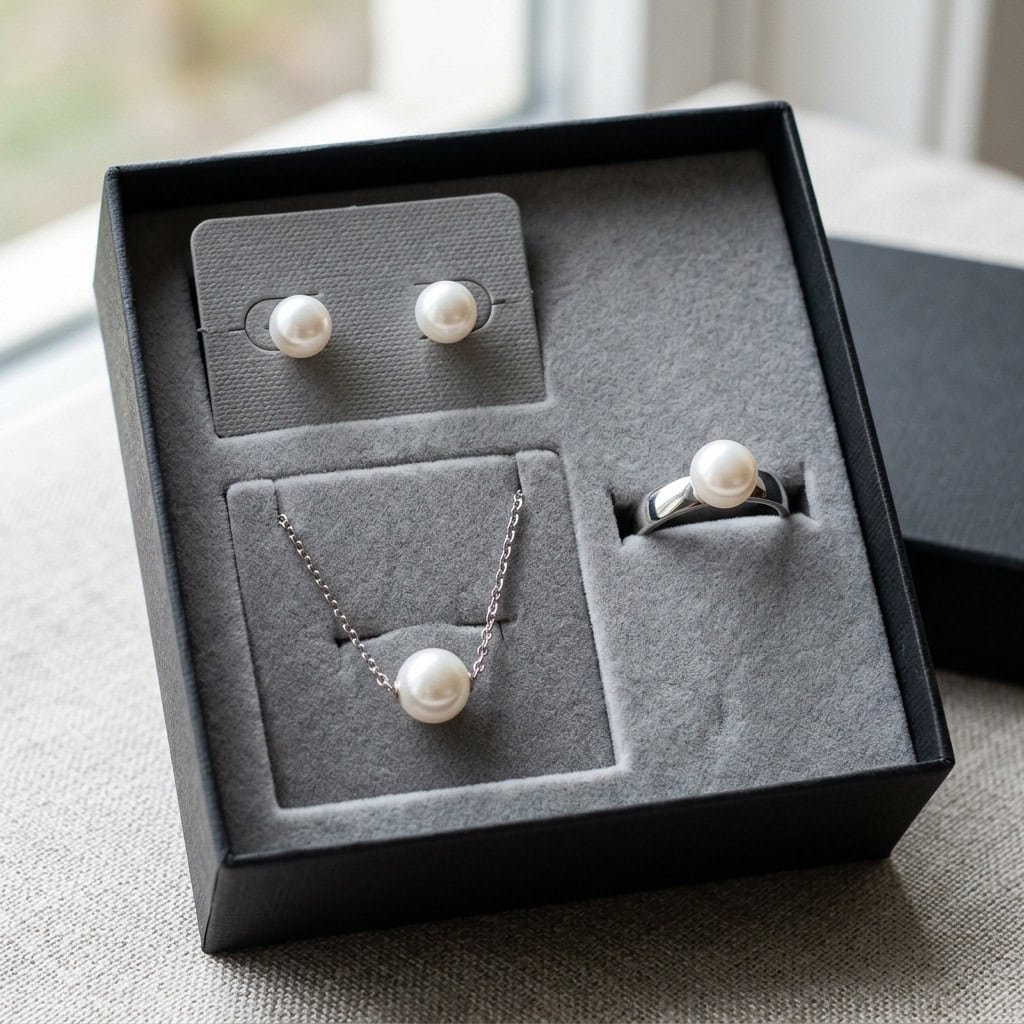
Product Fixation
- Define how earrings, necklaces, bracelets, rings, and sets are held inside the package.
- Chicolink checks whether pearls can strike steel, posts can touch pearl surfaces, necklaces can move around raised settings, or products can leave their intended presentation position.
- Inserts, cards, ties, slots, protective film, separators, or fitted boxes are evaluated according to product structure, channel, unpacking method, and approved presentation standard.
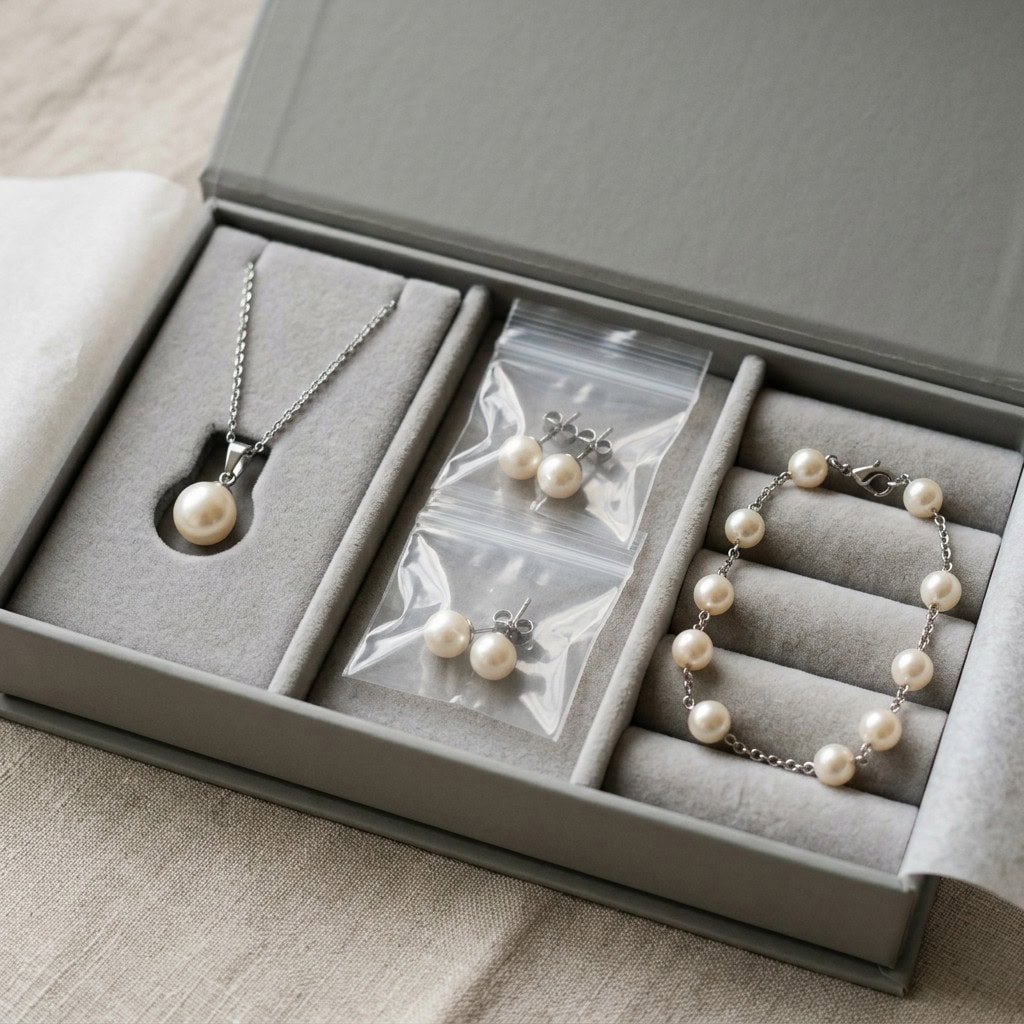
Scratch Separation
- High-polish steel, PVD surfaces, pearl coatings, natural pearl surfaces, chains, and clasps may require physical separation.
- Chicolink specifies individual bags, sleeves, tissue, films, compartments, or soft contact materials where appropriate.
- The packing sample is reviewed for rubbing points, pressure, trapped parts, adhesive contact, chemical compatibility, moisture concerns, opening damage, and presentation after transport rather than appearance at packing time alone.
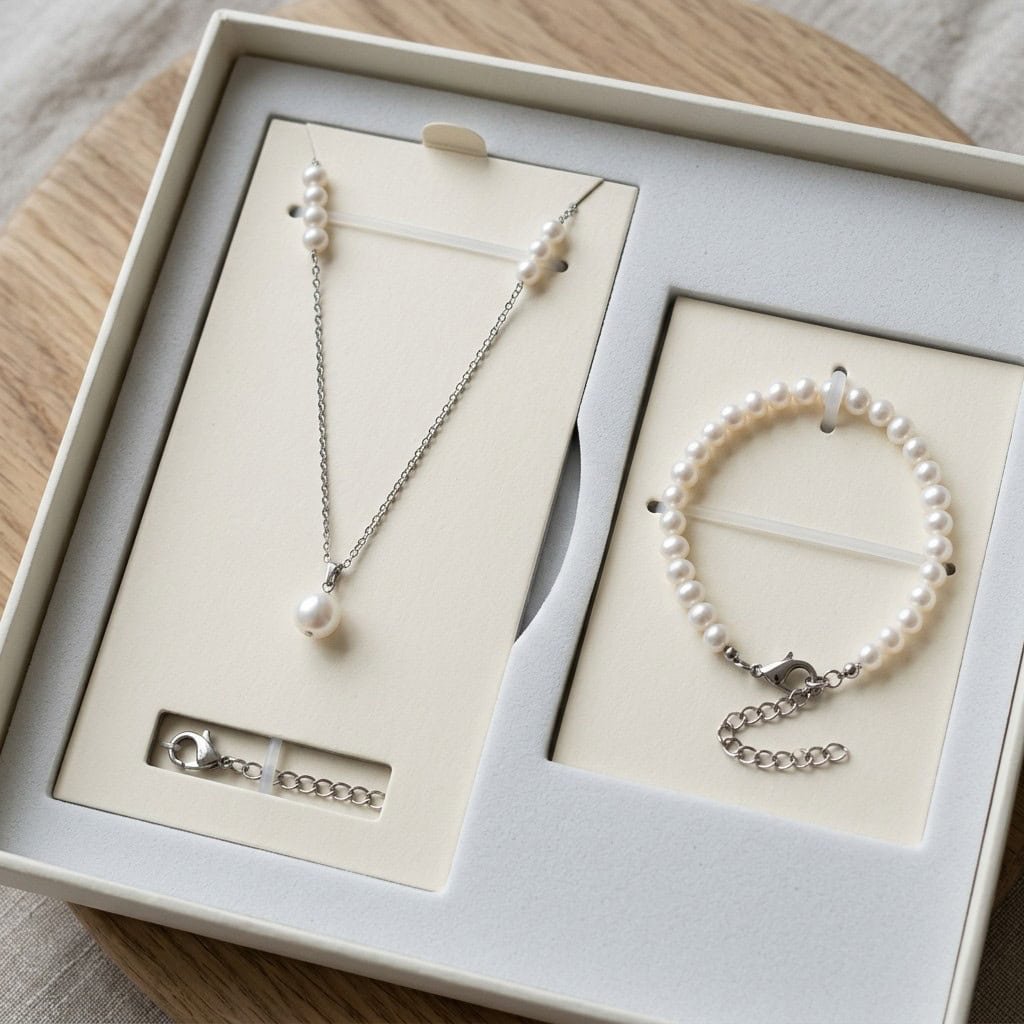
Anti-Tangling Layout
- Necklaces, anklets, fine chains, extensions, station pearls, and multi-piece sets need a defined routing and closure position.
- Chicolink records product direction, clasp position, card slots, ties, wrapping, and loose-chain allowance.
- The layout is checked for knots, chain marks on pearls, pendant flipping, clasp contact, difficult unpacking, packing consistency, repacking needs, and the daily labor required for retail or fulfillment teams.
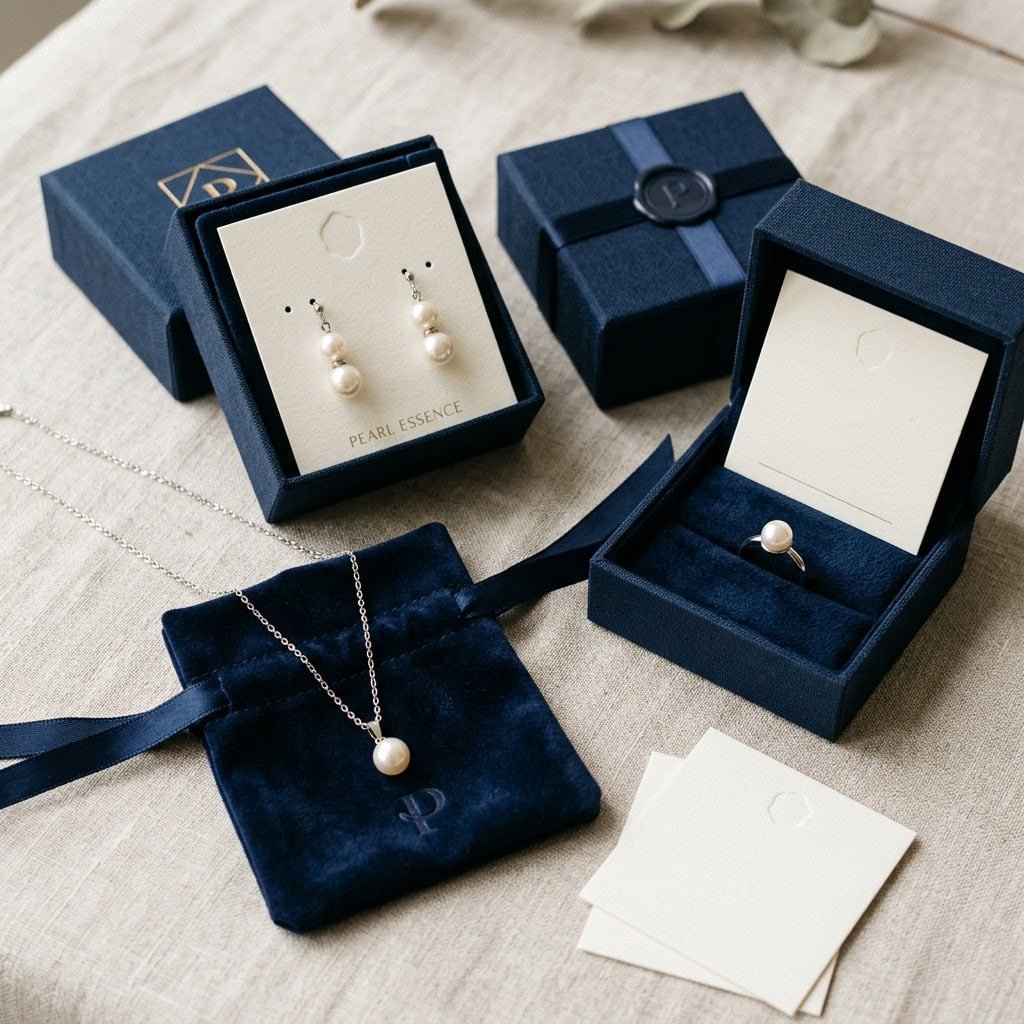
Brand Presentation
- Apply project-confirmed logos to products, jewelry cards, pouches, gift boxes, tags, care cards, or instructions.
- Chicolink controls the approved artwork, dimensions, color, print or marking method, position, orientation, and packaging version.
- Branding is reviewed beside the actual product so pearl scale, metal color, whitespace, card openings, care information, and set presentation support the intended retail position, merchandising plan, and customer experience.
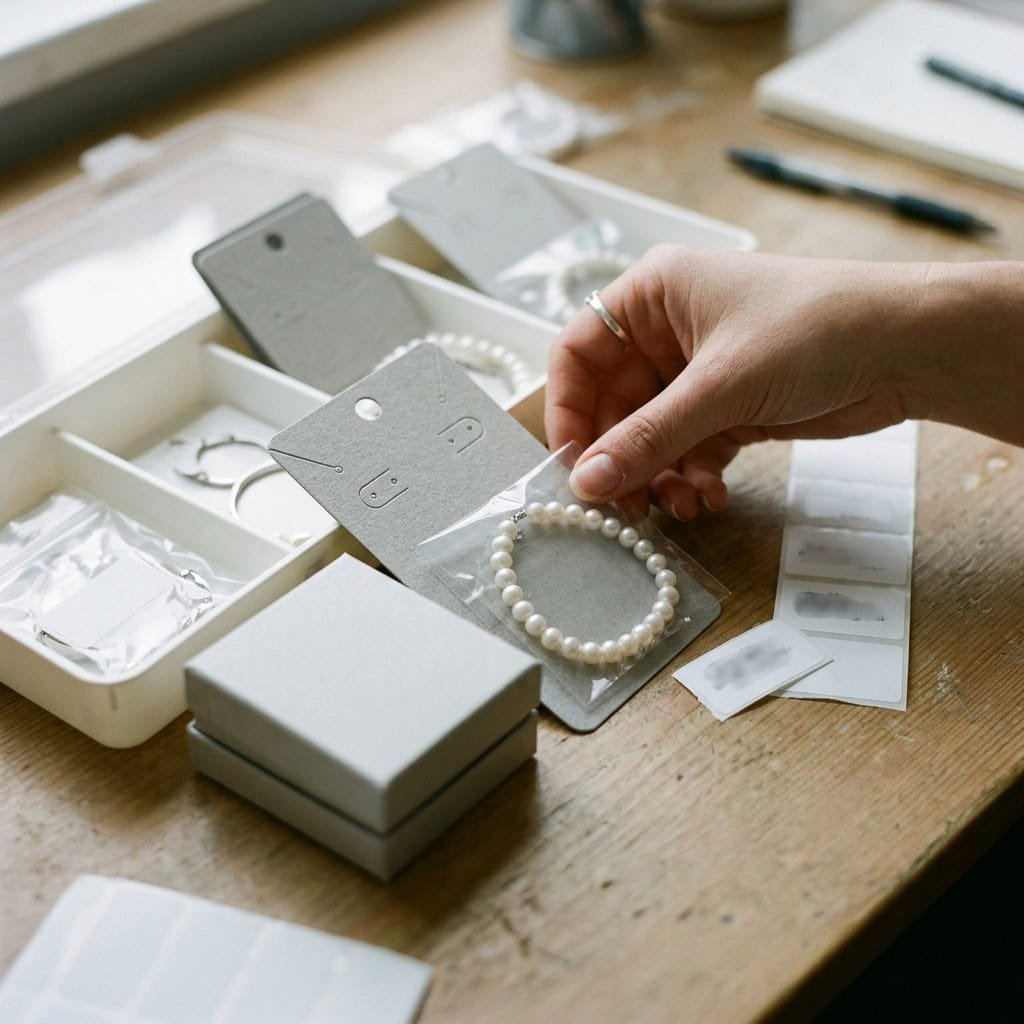
SKU and Platform Labels
- Add barcodes, SKU labels, UPC, EAN, FNSKU, carton marks, or buyer codes when supplied and confirmed.
- Parent-child variations, pair or set quantities, colors, sizes, and packaging versions must map to the correct label data.
- Amazon FBA and other platform work follows the buyer's current documents; Chicolink does not assume that older label, carton, preparation, or inbound warehouse rules remain valid.
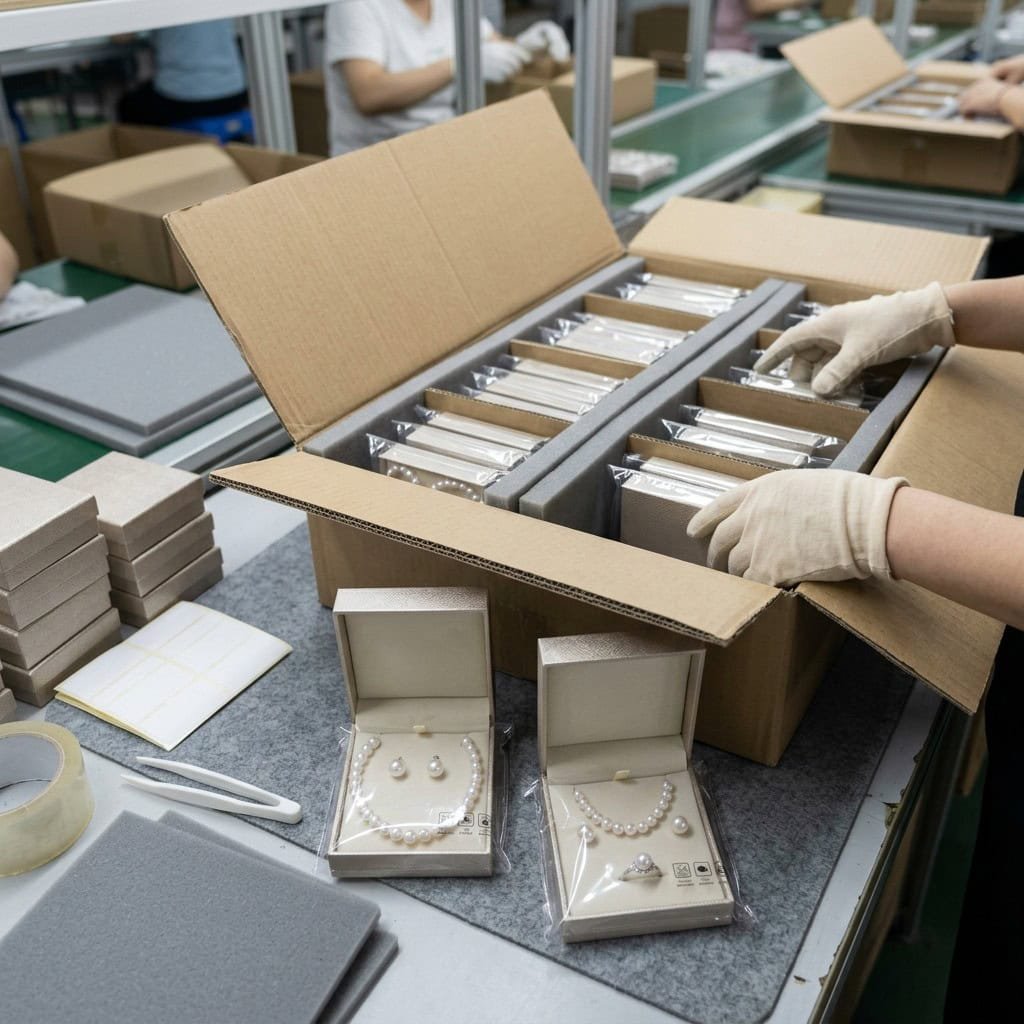
Set and Carton Control
- Define pieces per set, display order, replacement units, inner-pack quantity, carton quantity, mixed-SKU rules, carton number, gross and net weight, and destination marks.
- Chicolink verifies the packing list against the order and label version before shipment.
- Carton size and weight are confirmed according to product protection, carrier rules, destination, warehouse handling, shipping method, and agreed mixed-packing rules rather than one universal carton configuration.
Set Commercial Terms Before the Production Calendar
Chicolink quotes against a defined product version, quantity, pearl requirement, steel grade, finish, structure, packaging, test scope, Incoterm, and destination. Initial response to a normal inquiry is targeted within 6 working hours and may confirm receipt or request missing information; it is not always a final quotation. Complex projects are targeted for a preliminary assessment within 24 hours. Formal pricing and dates follow engineering and cost review, material availability, approval status, and production planning.
| Commercial Item | Chicolink Reference | Conditions to Confirm |
|---|---|---|
| Stock or common-style MOQ | Commonly 120 pieces per style | SKU availability, color, size mix, packaging, and replenishment status |
| OEM/ODM MOQ | Commonly 500 pieces per style | Tooling, pearl source, material, plating batch, color, size, packaging version, and production difficulty |
| Existing sample timing | Commonly 3-7 working days | Available SKU, finish, quantity, packaging, payment, and shipping arrangement |
| Custom sample timing | Commonly 25-30 working days | Starts from complete specification, design confirmation, required tooling, material and pearl availability, and sample payment |
| Existing bulk timing | Commonly 20-30 working days | Stock or production status, quantity, finish, packaging, inspection, and order confirmation |
| Custom bulk timing | Commonly 25-45 working days | Starts after sample and specification approval, deposit, materials, production slot, testing, inspection, and packaging readiness |
| Sample and tooling fees | Normally quoted where applicable | Refund or credit treatment depends on order value and written agreement; historical prices are not automatic quotations |
| Quantity tolerance | Historical reference approximately +/-5% | Acceptable overage or shortage, payment, leftover ownership, and extra freight must be agreed for custom orders |
| Payment | T/T, L/C, or PayPal may be supported | Reference term is 50% deposit and 50% before shipment; actual method and ratio depend on contract, credit, and order value |
| Trade terms | EXW, FOB, CIF, DAP, or DDP may be supported | Named place, tax and duty responsibility, insurance, documentation, and current logistics feasibility |
| Shipping | DHL, FedEx, UPS, air, sea, offline forwarder, or online logistics platform | Destination country and postal code, cartons, size, weight, declaration, Incoterm, insurance, and required arrival date |
| Schedule changes | Reassessed by the production team | Late approvals, revised files, pearl or packaging changes, test failures, quantity changes, and buyer holds can change cost and delivery |
Verify Factory Capacity and Batch Traceability
Chicolink Jewelry was established in June 2012 in Dongguan, Guangdong, China. The 5,500+ m2 factory has 400+ employees, 6 jewelry designers, 3 jewelry engineers, and monthly capacity above 200,000 pieces. Buyers may request factory-audit support and third-party quality inspection. Capacity is planned by process, product complexity, approval status, plating, pearl assembly, packaging, and delivery requirement; the headline capacity is not treated as a guaranteed allocation for every order without production confirmation.

Connect Production Resources to Order-Level Records
- Manufacturing resources: Chicolink lists 58 principal machines: five CNC machines, four casting machines, three laser cutting machines, five laser welding machines, three laser logo machines, six stamping machines, four bending machines, seven drilling machines, eight polishing machines, four wax injection machines, three lathes, and six PVD vacuum coating machines.
- Functional control: PMC coordinates materials, process routing, production slots, and delivery follow-up. Manufacturing covers relevant CNC, stamping, lathe, casting, cutting, welding, polishing, logo, plating, assembly, and packing operations. IQC, IPQC, FQC, plating inspection, and final packing checks operate against the approved project requirements.
- Batch identity: Each batch is linked through customer, purchase order, SKU, style number, drawing or sample version, raw-material or component lot, production work order, manufacturing dates, critical processes, pearl or setting records, plating equipment and batch, inspection status, packaging batch, carton number, and shipping documentation as applicable.
- Issue response: When a complaint identifies an order, SKU, or batch, Chicolink can use retained production and inspection records to review the relevant material, metal processing, pearl assembly, plating, packing, and shipment history. Nonconforming quantities, disposition, rework, reinspection, corrective action, and replacement handling are documented according to the case and contract.
- Buyer verification: Audit scope, requested documents, inspection stage, access, sample selection, confidentiality, and third-party arrangements should be agreed before the visit or inspection. Certificates, test reports, and social-compliance documents are checked for legal entity, scope, issuer, date, and validity before external use.
Representative Stainless Steel Pearl Jewelry Project Scopes
The following examples are representative project scopes, not named customer case studies or claims about completed orders. They show how Chicolink would structure information, decisions, controls, approval evidence, and deliverables for common stainless steel pearl jewelry sourcing situations. Each scope isolates a different procurement problem instead of repeating a general capability list. Final feasibility, cost, timing, MOQ, pearl options, testing, and results depend on the buyer's design, approved specifications, materials, quantity, destination market, and written agreement.

Coordinated Brand Collection
Use Scenario
A European or North American brand needs coordinated pearl earrings, necklaces, and bracelets in one approved gold-tone metal finish, with consistent design language and private-label presentation.
Key Challenge
The pearl appearance, metal color, scale, logo, product measurements, pair matching, and packaging must read as one collection, while every SKU still requires its own structure, BOM, inspection points, and anti-damage packing.
Chicolink Solution
Chicolink maps the assortment, identifies shared and unique components, confirms project-available pearl options, develops measurable matching ranges, approves the pearl beside the PVD color, and creates SKU-level drawings, samples, BOMs, packing layouts, and version records.
Result
Planned deliverables are an approval-ready collection package and a production basis that separates shared visual standards from SKU-specific engineering and inspection requirements.
Project Data
Representative project scope: 3 product categories; OEM/ODM MOQ commonly 500 pieces per style; custom sample timing commonly 25-30 working days after complete confirmation.
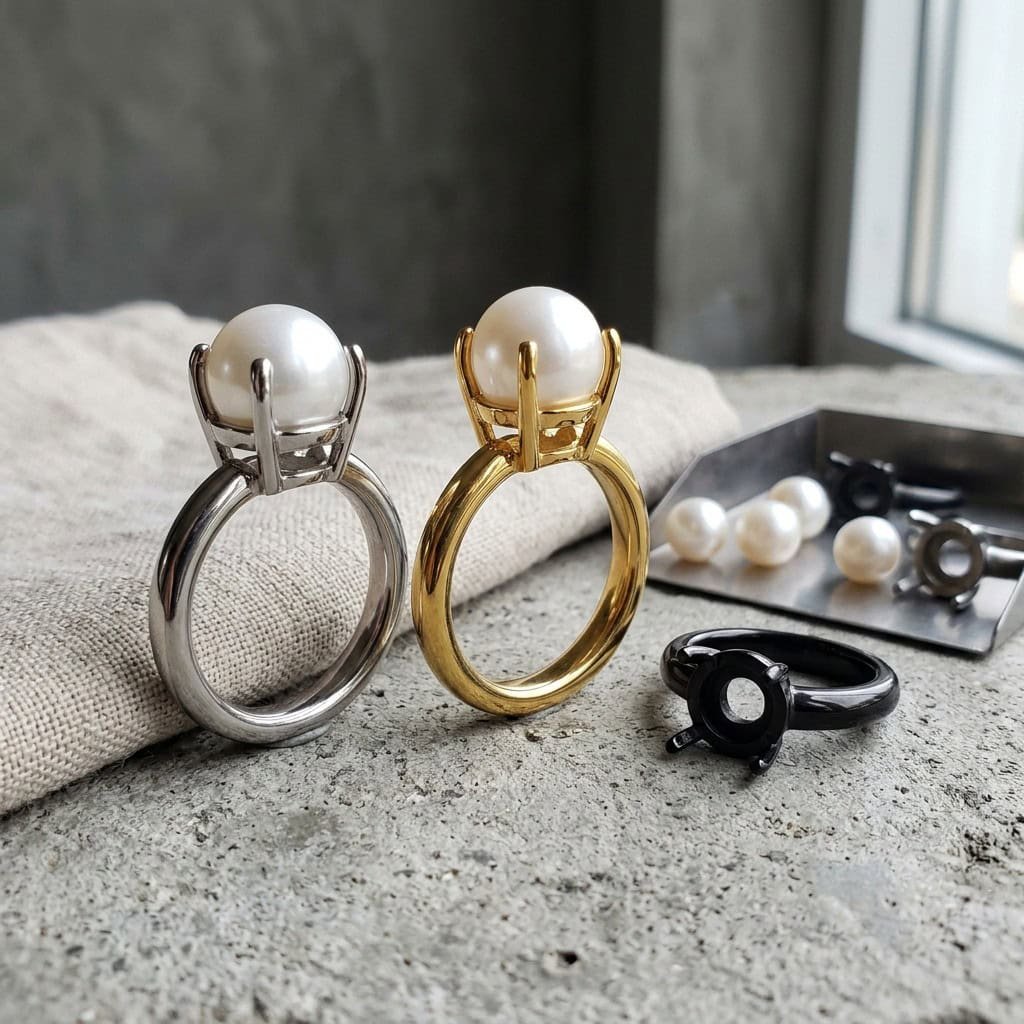
Raised Pearl Ring
Use Scenario
A design-led brand proposes an adjustable stainless steel ring with a raised pearl focal point and a polished or PVD finish.
Key Challenge
The raised pearl creates leverage and snagging risk, while ring adjustment can deform the shank or transfer force into the pearl connection. Polishing, plating, adhesive, finger clearance, and intended adjustment range must work together.
Chicolink Solution
Chicolink reviews pearl height, pin or cup support, bonding area, shank thickness, opening geometry, force path, polishing access, plating sequence, assembly order, and project-specific pull or torque validation before freezing the sample specification.
Result
Planned deliverables are a manufacturability decision, identified risk points, an approved structural route, controlled adjustment guidance where required, and a defined retention test method for the exact sample construction.
Project Data
Representative project scope: one adjustable ring structure; tolerance and retention values set by approved drawing and test matrix; final pearl type and finish confirmed by project.
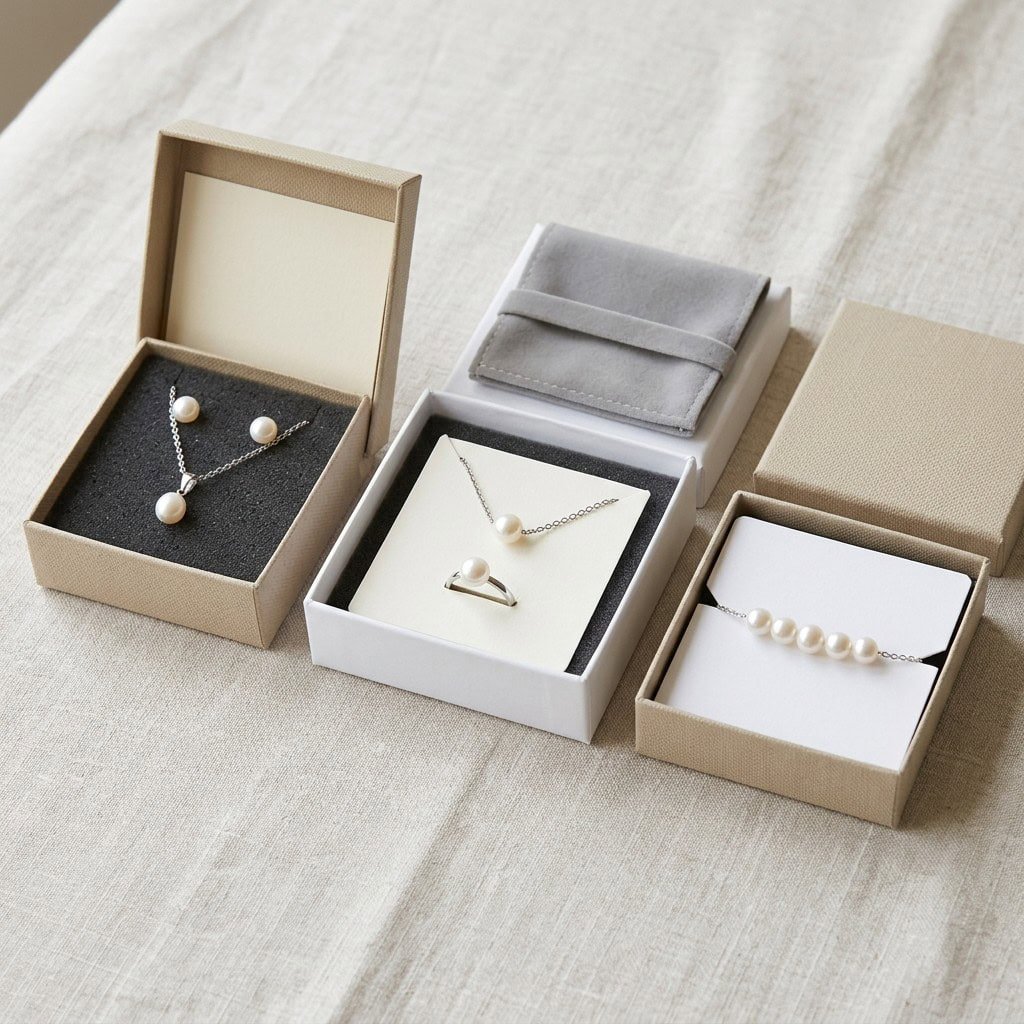
E-Commerce Gift Set
Use Scenario
An e-commerce buyer needs a pearl necklace and earring gift set with branded card or box, barcode labels, protective packing, and shipment-ready carton data.
Key Challenge
The set must arrive complete and presentable without necklace tangling, post damage, pearl-to-metal abrasion, wrong labels, reversed product direction, or missing components across SKU and packaging variants.
Chicolink Solution
Chicolink defines set contents, product fixation, anti-tangling route, scratch separation, post protection, artwork version, barcode mapping, packing order, inner quantity, carton information, and inspection checkpoints against an approved packing sample.
Result
Planned deliverables are a retail-ready packing specification, set-completeness checklist, label map, packing sample, and carton record linked to the correct product and packaging versions.
Project Data
Representative project scope: two jewelry products per set; platform labels follow the buyer's current files; final pack size, carton quantity, weight, and logistics terms confirmed after product and packaging approval.
Stainless Steel Pearl Jewelry Manufacturing FAQ
These answers clarify the commercial and technical conditions buyers usually need before requesting a quotation or approving a supplier. Product-specific commitments are confirmed through the approved quotation, drawing, sample, quality plan, test scope, purchase order, and contract. Send the exact design and destination requirements when a general answer is not sufficient for a sourcing decision.
Which pearl types can Chicolink source?
Freshwater, shell, glass, imitation, and other pearl directions can be evaluated, but none is presented as universally or continuously available. Chicolink confirms each option by required size, shape, color, luster, surface tolerance, drilling, matching, quantity, target cost, processing compatibility, and sourcing condition. The approved quotation and BOM identify the project-specific pearl category and standard.
Is stainless steel pearl jewelry waterproof?
Chicolink does not use an unconditional waterproof claim for every design. Water, sweat, chemicals, cosmetics, impact, pearl coating, adhesive, plating, and construction affect performance differently. We define the metal finish, pearl type, assembly route, care guidance, and requested test conditions for the exact SKU.
How do you reduce pearl detachment risk?
We review hole condition, pin or cup geometry, bonding area, adhesive gap, surface cleanliness, cure control, force direction, exposed height, impact, and assembly sequence. The fixing method is selected for the exact product, then linked to an approved sample and project-specific pull, torque, or other retention method. Chicolink does not claim that pearls can never loosen under every use condition.
Do you use 304 or 316L steel?
We select 304, 316L, or a buyer-specified stainless steel grade based on product geometry, forming or machining route, welding, surface finish, skin-contact position, target market, cost, and written buyer requirement. We record the selected grade in the approved specification and verify it through the agreed material-control route.
What is the OEM pearl jewelry MOQ?
The common OEM/ODM reference is 500 pieces per style. Stock or common styles commonly start at 120 pieces per style. Actual MOQ may be calculated by style, color, size, pearl batch, plating batch, or packaging version and is affected by tooling, material, sourcing, process, and production difficulty. Mixed sizes or colors require written confirmation.
Are sample and tooling fees refundable?
Sample fees normally apply, and tooling or fixture fees may apply to custom structures. Whether any fee is credited against a bulk order depends on order value and the written commercial agreement. Chicolink quotes the identified sample version and required work; historical internal prices or previous projects are not automatic prices for a new design.
How do you manage natural pearl variation?
We convert the intended look into an agreed range for size, shape, color, luster, surface characteristics, hole condition, and pair or set matching. Physical samples, controlled photos, or reference boards may support approval. Natural variation is not hidden behind an impossible identical-piece promise; acceptable variation and rejectable defects are defined for the selected pearl category and price position.
Does one test report cover every SKU?
No. A report normally applies only to the sample, material, pearl or component condition, plating color and structure, test method, and other scope stated in that report. A change in SKU, steel grade, color, coating, contact surface, supplier, or production condition may require technical review or additional testing. Chicolink verifies report scope before it is used for compliance support.
Can repeat orders match the first batch?
Chicolink uses retained approvals, drawings, BOMs, color references, pearl ranges, process records, and packaging versions to support repeat-order consistency. Exact visual identity across natural pearl or separate plating batches cannot be assumed. We review material availability, pearl source, color reference, components, and buyer changes before each reorder and request reapproval when a meaningful condition has changed.
What should I send for a quotation?
Send drawings, CAD files, sketches, reference images or samples; required categories and quantities; pearl direction; steel grade if specified; dimensions; finish and color; logo; packaging; destination market; test or retailer requirements; target schedule; Incoterm; and delivery country or postal code. Chicolink will identify missing information and separate assumptions from confirmed production requirements.