
Stainless Steel Sea Life Jewelry Manufacturer
Develop sea life jewelry collections with controlled materials, marine-inspired structures, OEM/ODM engineering, and private-label delivery.
Chicolink Jewelry develops and manufactures stainless steel sea life jewelry for global brands, wholesalers, retailers, DTC businesses, and gift programs. Start with a sea turtle, shell, starfish, whale, dolphin, fish, seahorse, octopus, or coral concept. We document the product structure, material, finish, branding, packaging, target market, quantity, and quality requirements before sampling. Approved files and samples then control production, inspection, pack-out, and replenishment.
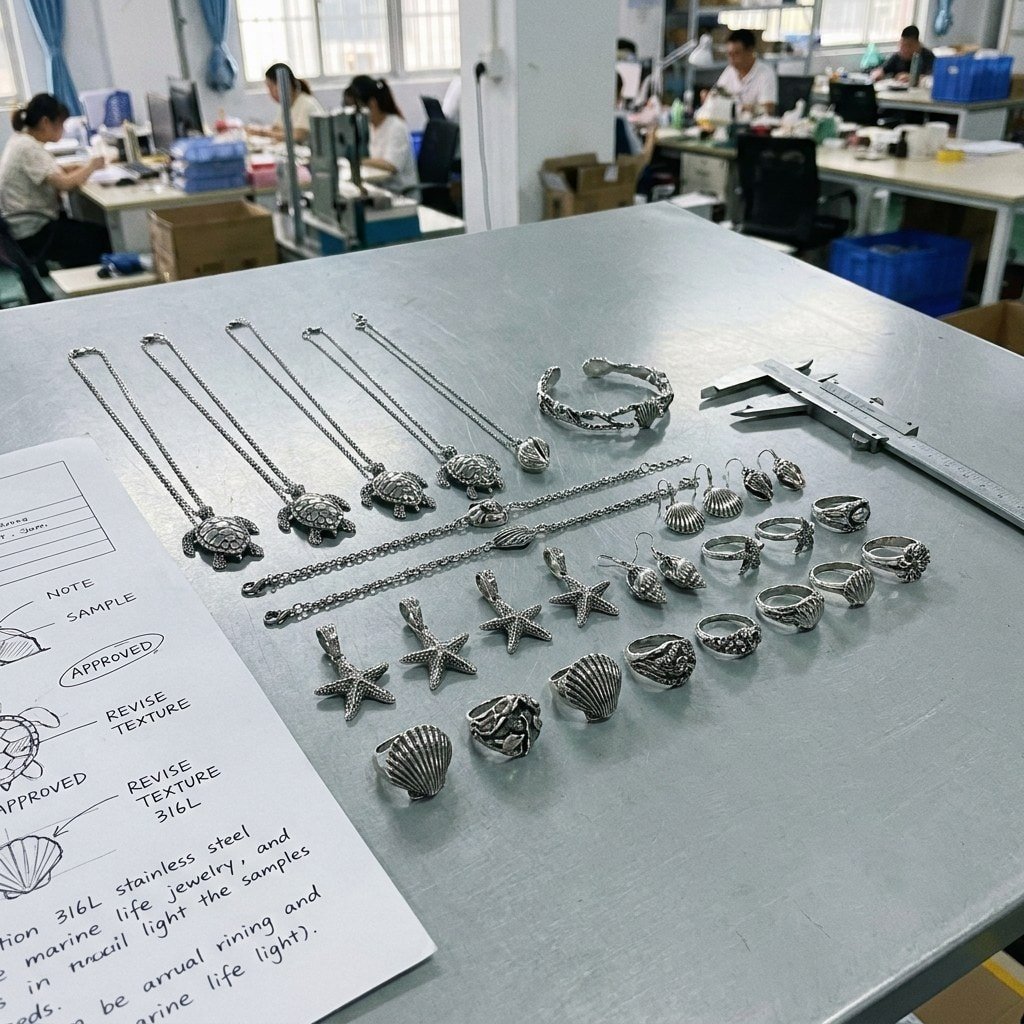
Match Sea Life Jewelry With the Buying Program
The same sea life motif can serve a fashion brand, resort gift line, distributor assortment, or DTC launch. We define the channel, price position, assortment, packaging, quantity, quality requirements, and delivery calendar before selecting a manufacturing route. This gives every SKU a clear commercial and production role.
Global Brand Collections
For an established brand, we work from an authorized brief, artwork, brand standard, target price, color references, size system, packaging files, and market requirements. Each sea life SKU receives a controlled drawing, BOM, sample approval, finish reference, inspection plan, and retail version before scheduled production.
Retail Chain Programs
Retail rollouts require consistency across product versions, color lots, labels, barcodes, set contents, cartons, and delivery milestones. We connect the approved jewelry specification with the packaging and inspection records for each SKU, color, size, and pack version, then coordinate production and pre-shipment checks against the buyer's written requirements.
Wholesale Assortments
Wholesalers and distributors often need a balanced range rather than one statement design. We organize sea turtle, shell, whale, dolphin, fish, seahorse, charm, gift, and seasonal directions around the buyer's channels. Quantity by style, color ratio, packaging level, target cost, and replenishment priority are set before quotation.
Coastal Gift Programs
Resorts, aquariums, cruise-related channels, coastal attractions, and destination retailers may need place-specific jewelry and compact gift presentation. We review motif scale, location text, coordinates, logo authorization, display format, protective packing, seasonal timing, and version control for each destination rather than mixing local artwork with standard designs.
DTC Brand Launches
DTC collections need a consistent visual language, comfortable sizing, photography-ready surfaces, product data, and a deliberate unboxing sequence. We coordinate the jewelry, logo, care card, pouch or box, barcode, set configuration, and protective packing as one approved retail version so late packaging changes do not create SKU or content errors.
Private Label Projects
Private-label buyers can combine an existing sea life style with a new logo, finish, chain, card, pouch, box, barcode, and retail label. We confirm artwork ownership, logo method, packaging files, quantity, color, testing, and delivery requirements before production. New artwork or a custom mold is evaluated separately from a standard-style order.
Control the Details Behind Marine-Inspired Jewelry
Sea life jewelry often combines thin outlines, openwork, organic curves, small connectors, textured surfaces, natural decorations, and color-filled recesses. These details influence the drawing, production route, polishing access, plating coverage, assembly strength, test plan, and retail packing. We review the risk before sampling so a visually attractive reference does not become an unstable bulk specification.
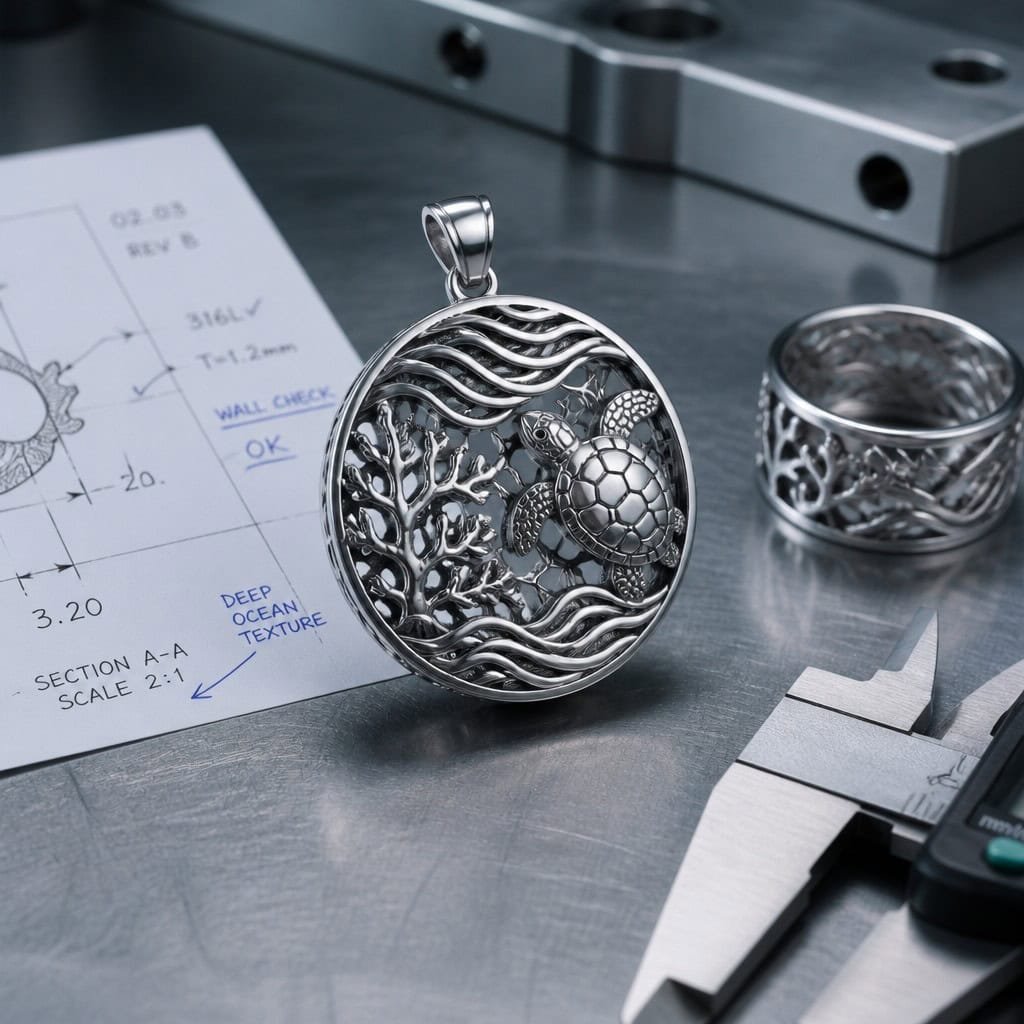
Marine-Specific Production Controls
- Fine fins, tentacles, branches, and openwork: We review narrow bridges, thin sections, edge comfort, casting or cutting access, deformation risk, and polishing loss. If a detail is too fragile or difficult to inspect, engineering can propose a reinforced or simplified version before tooling.
- Shells, pearls, natural stones, and irregular textures: We confirm material type, size, color, texture, acceptable natural variation, fixing method, cleaning route, temperature exposure, and compatibility with plating, resin, adhesive, or ultrasonic cleaning. Natural decoration is not treated as a uniform industrial component.
- Pendant holes, bails, jump rings, and chain connections: We control hole diameter, edge distance, alignment, connector direction, weld condition, clasp connection, and the actual load path. Pendant rings and necklace structures may require different pull-test points and acceptance criteria.
- Marine texture and plated color: Shell ridges, wave lines, coral recesses, and engraved coordinates must remain readable after polishing and PVD/IP or water plating. We use approved color samples, surface definitions, thickness requirements, and inspection records instead of relying on a product name such as gold or black.
- Retail and replenishment risk: A sea life collection may use multiple colors, chains, sizes, packaging versions, or destination marks. We keep these variations in the SKU, BOM, sample, barcode, batch, inspection, and shipment records so repeat orders do not depend on memory or an unapproved photograph.
Develop Sea Life Jewelry Across the Core Product Families
Chicolink develops sea life designs as individual components, complete jewelry, coordinated sets, or private-label collections. The released scope records the artwork, material, dimensions, structure, decoration, finish, quantity, and production route for each SKU.
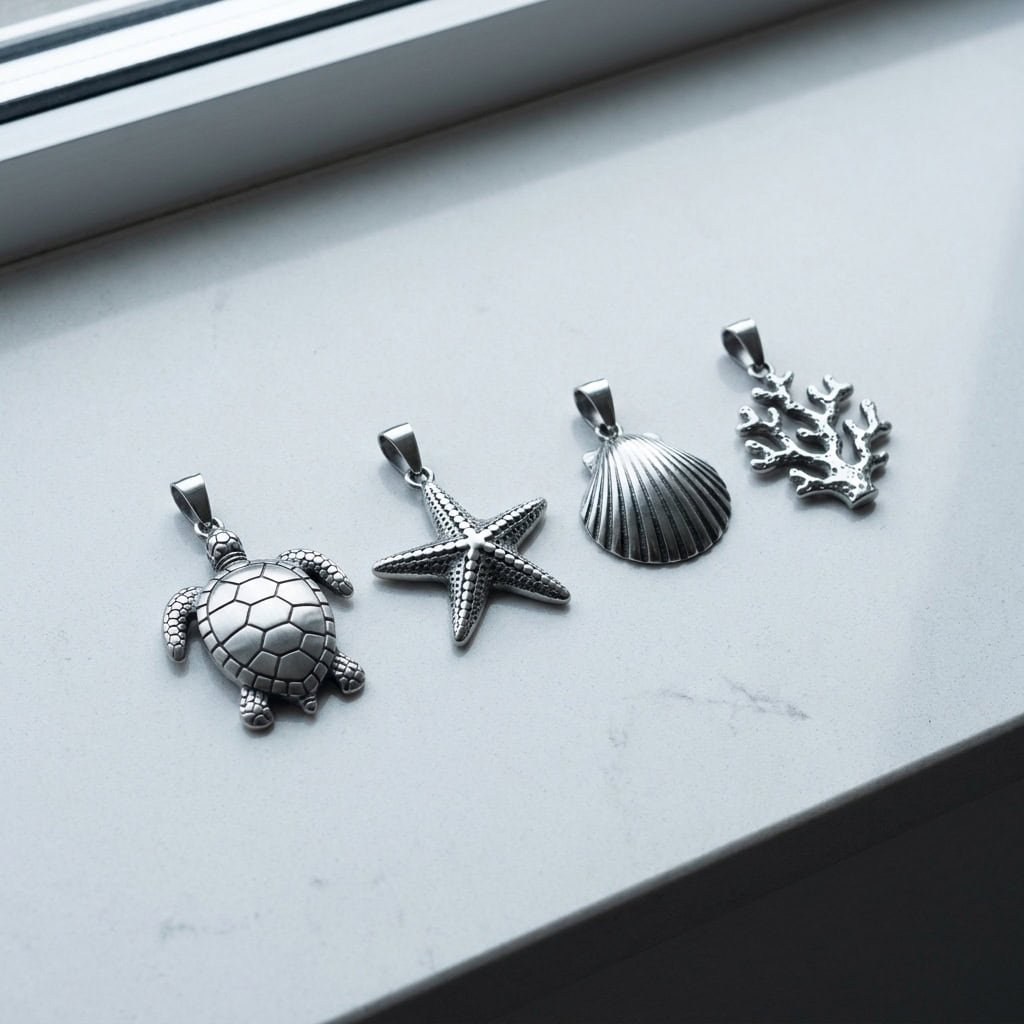
Marine Pendants and Charms
Sea turtles, shells, starfish, whales, dolphins, sharks, fish, seahorses, jellyfish, octopuses, and coral can be developed as pendants or charms. We document thickness, bail or hole position, hanging direction, connector size, engraving area, edge condition, weight, texture, and chain compatibility before selecting casting, cutting, stamping, or CNC processing.
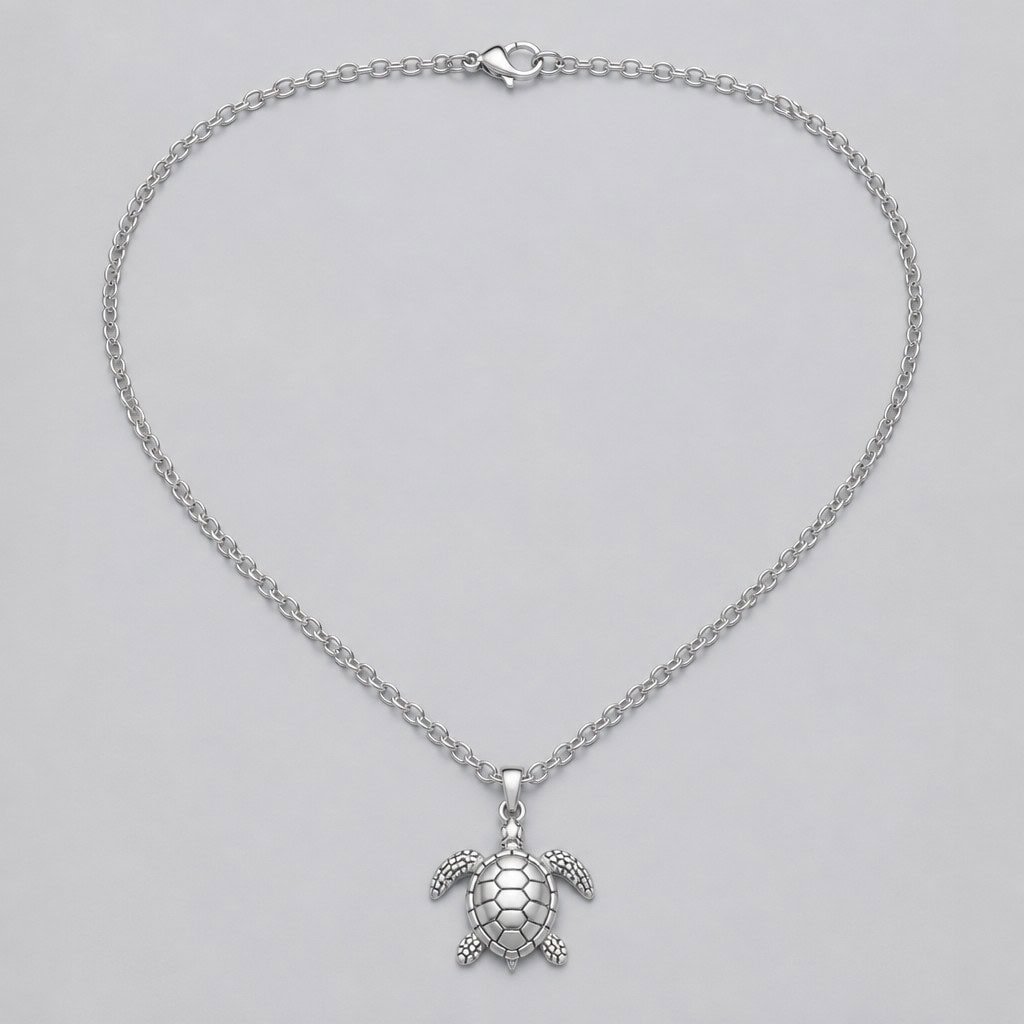
Sea Life Necklaces
Necklace development combines the pendant with chain type, length, extension chain, clasp, logo tag, connector, and retail packaging. We record chain width, wire diameter, length, pendant movement, flip behavior, orientation, and total weight. The necklace and pendant may require separate inspection points even when they are sold as one SKU.
Marine Earrings
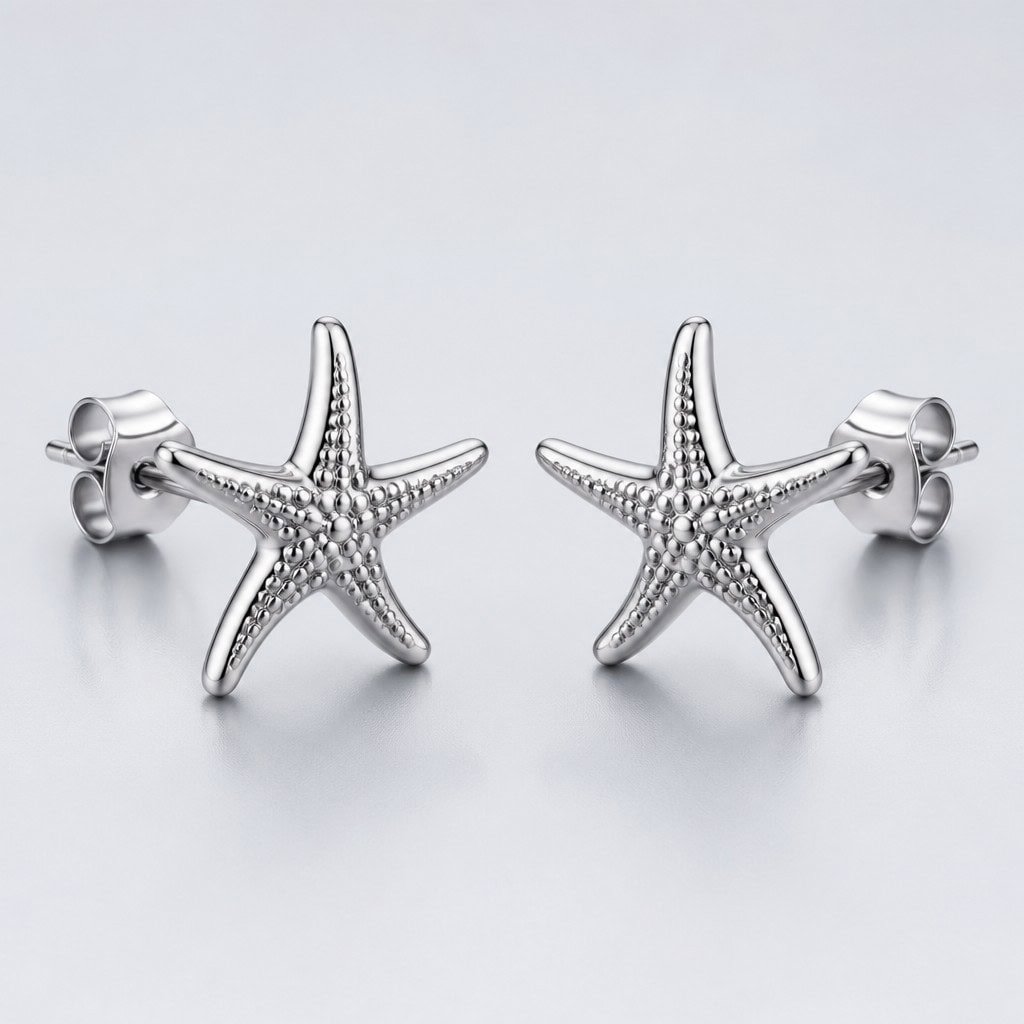
Shell, starfish, pearl, sea turtle, jellyfish, seahorse, and marine animal concepts can become studs, hoops, huggies, drops, or ear cuffs. We document dimensions, ear-post diameter and effective length, left-right orientation, closure, pair weight, decoration attachment, and skin-contact surfaces before approval.

Ocean Bracelets
Bracelets can combine marine charms, chains, ID plates, beads, shells, pearls, or nautical textures. We define wrist size, finished length, extension chain, clasp, charm distribution, link closure, pull direction, surface finish, and packaging protection. A bracelet's main structure may require a different pull reference from a pendant or necklace.
Sea Life Anklets
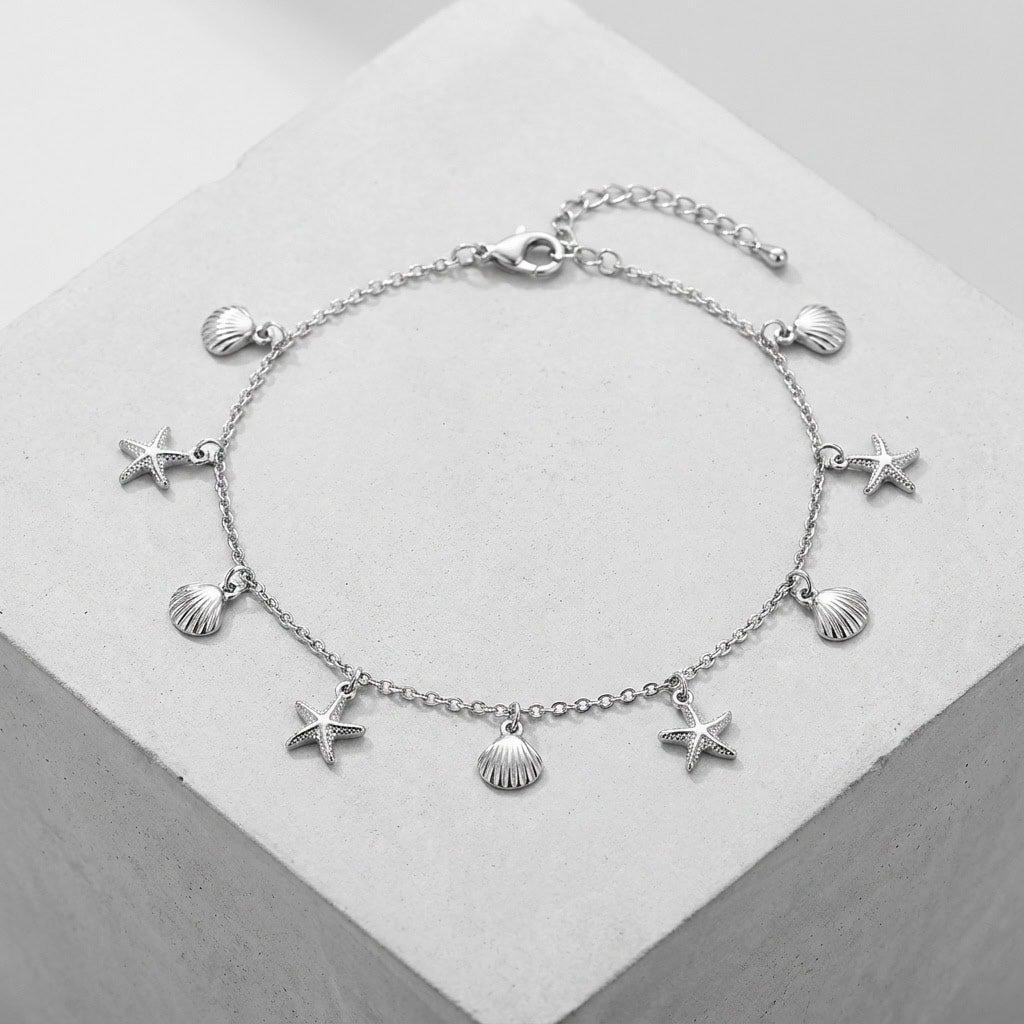
Anklets need practical length control, extension range, lightweight decoration, smooth edges, and reliable connectors for repeated movement. We can evaluate shell, wave, turtle, starfish, pearl, and small charm directions with chain, clasp, logo tag, and pack-out requirements. Final size and decoration quantity are confirmed against the target market and customer size table.

Marine Rings and Cuffs
Shell, coral, octopus, fish-scale, whale-tail, and sea animal elements can become plain, open, adjustable, signet, or cuff structures. We document the sizing system, inner diameter, inner circumference, band thickness, opening range, roundness, edge comfort, decoration position, and any required wear or adjustment evaluation.
Men's Marine Jewelry
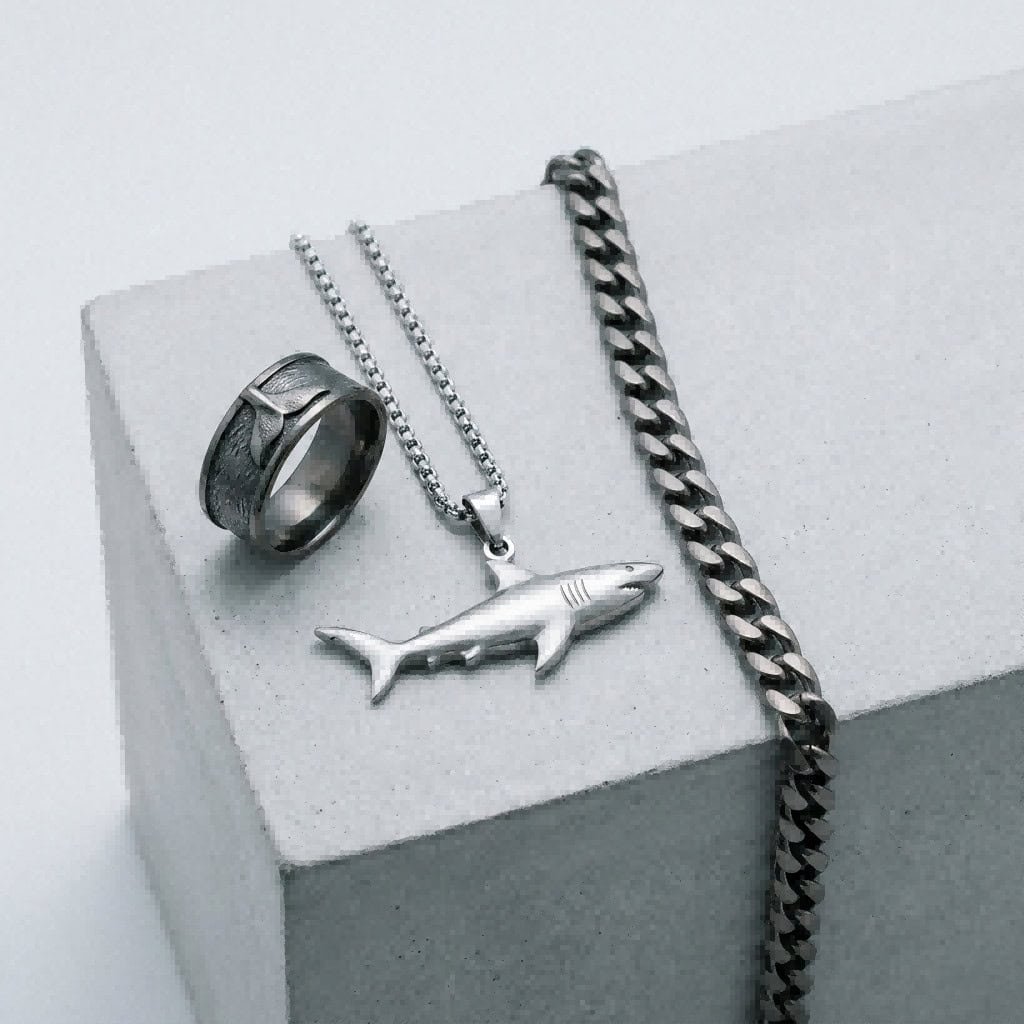
Sharks, whale tails, manta rays, octopuses, fish-scale textures, ID plates, black or gunmetal finishes, chains, bracelets, rings, and pendants can form a men's sea life line. We assess weight, clasp load, connector strength, surface contrast, scratch exposure, PVD access, edge comfort, and protective packing against the target cost and customer profile.
Sea Life Jewelry Sets
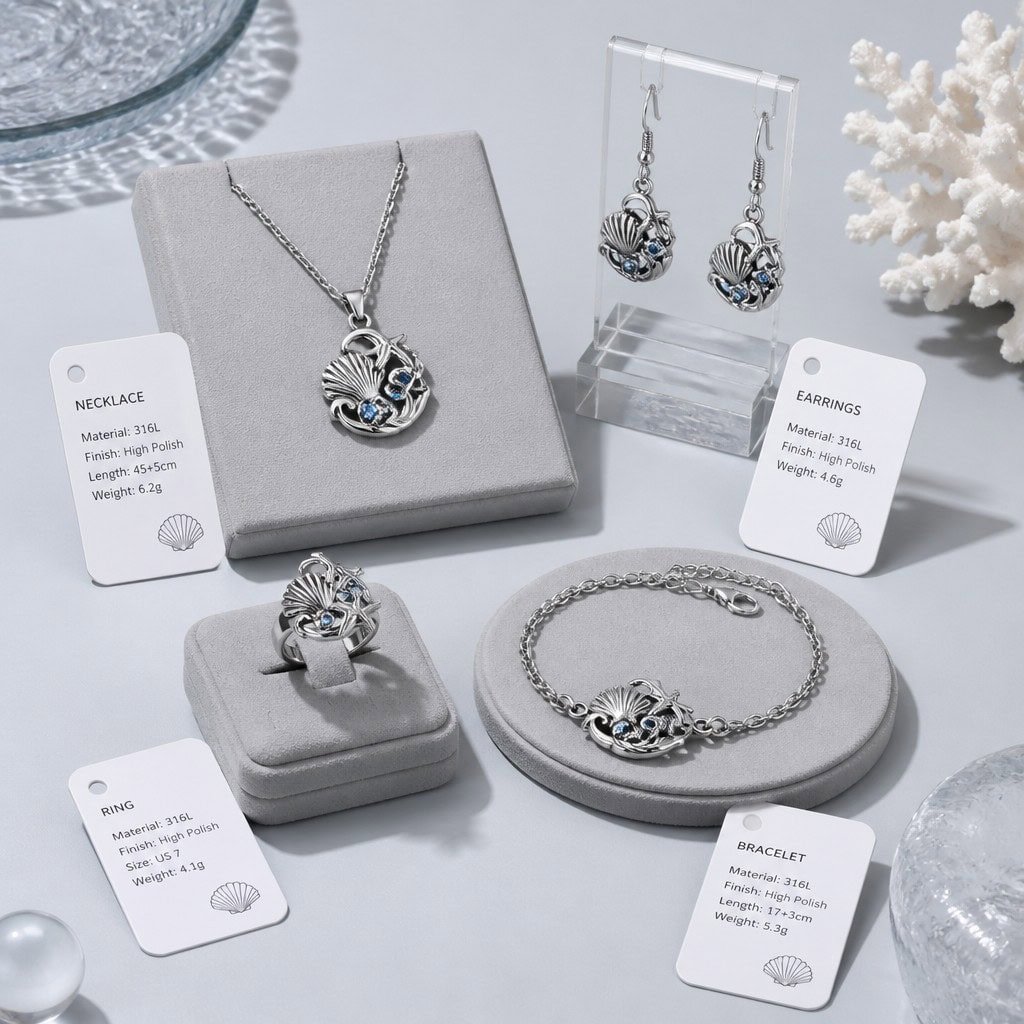
A shared marine motif can extend into a necklace, earrings, bracelet, ring, charm, or gift set. Each component keeps its own drawing, BOM, dimension, and inspection record while the set controls color, quantity, arrangement, inserts, logo, barcode, and carton configuration. This supports coordinated launches without hiding component-level quality requirements.
Turn One Marine Motif Into a Controlled Collection
Chicolink can help a buyer evaluate whether a sea life idea should become one hero SKU, a coordinated capsule, a seasonal drop, a gift set, or a replenishable core range. We do not treat every design variation as a separate creative decision without checking cost, production route, packaging, and inspection impact.

Five Steps From Motif to Collection
- Define the design code: Select the central motif, such as a sea turtle shell pattern, scallop shell relief, starfish outline, whale tail, wave line, coral texture, or coastal coordinate. Confirm the authorized artwork, meaning, text, and brand use.
- Create the SKU ladder: Separate hero pieces, entry-price charms, core necklaces, matching earrings, bracelets or anklets, men's versions, and gift sets. Keep shared chains, findings, colors, and packaging where this reduces unnecessary variation.
- Set the commercial controls: Confirm target market, retail price position, quantity per style and color, size range, launch date, packaging level, target weight, testing, and inspection. These inputs affect tooling, material, labor, plating, packing, and quotation.
- Review manufacturability: Convert the artwork into dimensions, sections, holes, connectors, edges, weight, surface areas, and process routes. Fine details can be reinforced, simplified, engraved, textured, or changed to a more controllable structure before sampling.
- Release the collection: Approve drawings, BOM, finish samples, packaging files, Golden Samples, inspection points, and version records. A collection is ready for bulk production only after the commercial and technical requirements are confirmed.
Choose Materials Around Structure and Intended Use
The sea life theme determines the visual language, but the exact material and decoration must follow the product structure, processing route, target market, skin-contact area, finish, cost, and test plan. We record the main body and component materials separately where needed. The final specification is confirmed for each SKU rather than applied to the entire collection without evaluation.
| Material or Decoration | Chicolink Evaluation Direction | Buyer Confirmation Required |
|---|---|---|
| 304 stainless steel | Often considered where supply flexibility, practical processing, stable production planning, and target cost are important | Product structure, material form, use environment, finish, destination, and testing |
| 316L stainless steel | Contains molybdenum and generally offers better pitting resistance; higher hardness may increase forming, cutting, welding, polishing, and correction difficulty | Exact SKU, expected use, processing route, cost effect, MOQ, tooling, and test plan |
| Main body and components | Ear posts, springs, screws, magnets, clasps, jump rings, chains, and welding materials may use different materials | Material and grade for each BOM component, not only the product name |
| Shell | Suitable for shell-inspired or natural-shell programs after sourcing, texture, color, edge, fixing, cleaning, and variation requirements are confirmed | Natural variation, thickness, size, allowable marks, adhesive or setting method, and packing protection |
| Pearl | Can be used in pearl and marine gift directions with a defined pearl type, size, luster, surface, hole, and fixing method | Pearl variation, pearl pin or adhesive method, pull or torque test, and cleaning compatibility |
| CZ and man-made stones | Suitable for eyes, bubbles, wave highlights, shell details, and selected color accents | Stone size, shape, color, setting method, stone position, attachment test, and replacement policy |
| Cold enamel, epoxy, and resin | May create colored marine motifs or filled recesses; these are not automatically interchangeable with high-temperature enamel | Material name, color, cure condition, surface, compatibility with cleaning and plating, and adhesion check |
| Natural stones | Can add coastal color or texture, but each stone type needs its own acceptance range and process compatibility review | Stone identity, texture, cracks, color range, size, fixing method, and customer acceptance standard |
Supporting Note
Chicolink makes seawater, pool-water, sunscreen, or perspiration-resistance claims only when the exact SKU, care instructions, test conditions, and supporting evidence have been approved. Material selection and testing apply to the defined project; they do not create a universal claim for every Chicolink product.
Control Color and Surface Detail Across Marine Collections
Wave lines, shell ridges, coral recesses, fish scales, and openwork edges react differently to polishing and plating. Before production, we document the base surface, finish route, color reference, layer structure, decoration compatibility, protection method, and inspection standard. Final color and thickness follow the approved specification.
PVD Gold Finishes
Our in-house plating workshop processes approved PVD/IP gold sea life jewelry. Internal reference structures include E1 with 0.4 micrometers TiN plus 0.05 micrometers gold and E2 with 0.7 micrometers TiN plus 0.1 micrometers gold. Each project records its substrate, surface, color, thickness, test conditions, and finish standard.
Rose Gold Finishes
Rose gold suits shell, starfish, pearl, and gift-oriented collections. We use an approved color reference and inspect polished areas, brushed areas, recesses, edges, and attachments. The released specification records the target tone, surface standard, layer structure, thickness, allowable color difference, and decoration sequence.
Black and Gunmetal
Black, gunmetal, and hematite directions can create a stronger men's sea life range or high-contrast shark, whale-tail, and octopus designs. We inspect recessed detail, engraving readability, edge coverage, scratches, exposed base material, clasp function, and packing separation. The approved sample controls the visual standard; Chicolink does not describe the finish as permanently scratch-proof.
Selected Color PVD
Blue, coffee, colorful, steel, silver, rhodium, and other approved colors support selected marine collections. Color names alone are insufficient. We record the physical sample or color reference, substrate, polishing level, layer structure, target thickness, test requirements, and color tolerance for each SKU and batch.
Water Plating
Our in-house workshop provides approved rhodium, silver-color, and other confirmed water-plated finishes. Internal reference thickness is 3-5 micrometers or the project-specific value. We set the layer structure and thickness from the base material, product geometry, color target, decoration, test plan, and destination requirements.
Polished and Textured Surfaces
High polish, mirror, brushed, sandblasted, matte, satin, and combined surfaces change how marine textures are read. We define A, B, and C surfaces, texture direction, ridge visibility, edge treatment, acceptable tool marks, color reference, and packing protection. Mixed finishes are approved as a sample system, not only by written names.
Review Marine Motifs Before Tooling and Sampling
A sea turtle, shell, fish, whale, coral, or wave can look simple in a reference image but contain difficult thin sections, blind recesses, sharp points, uneven weight, or inaccessible polishing areas. Our engineering review translates the visual idea into measurable geometry and an approved production route before the project is released.
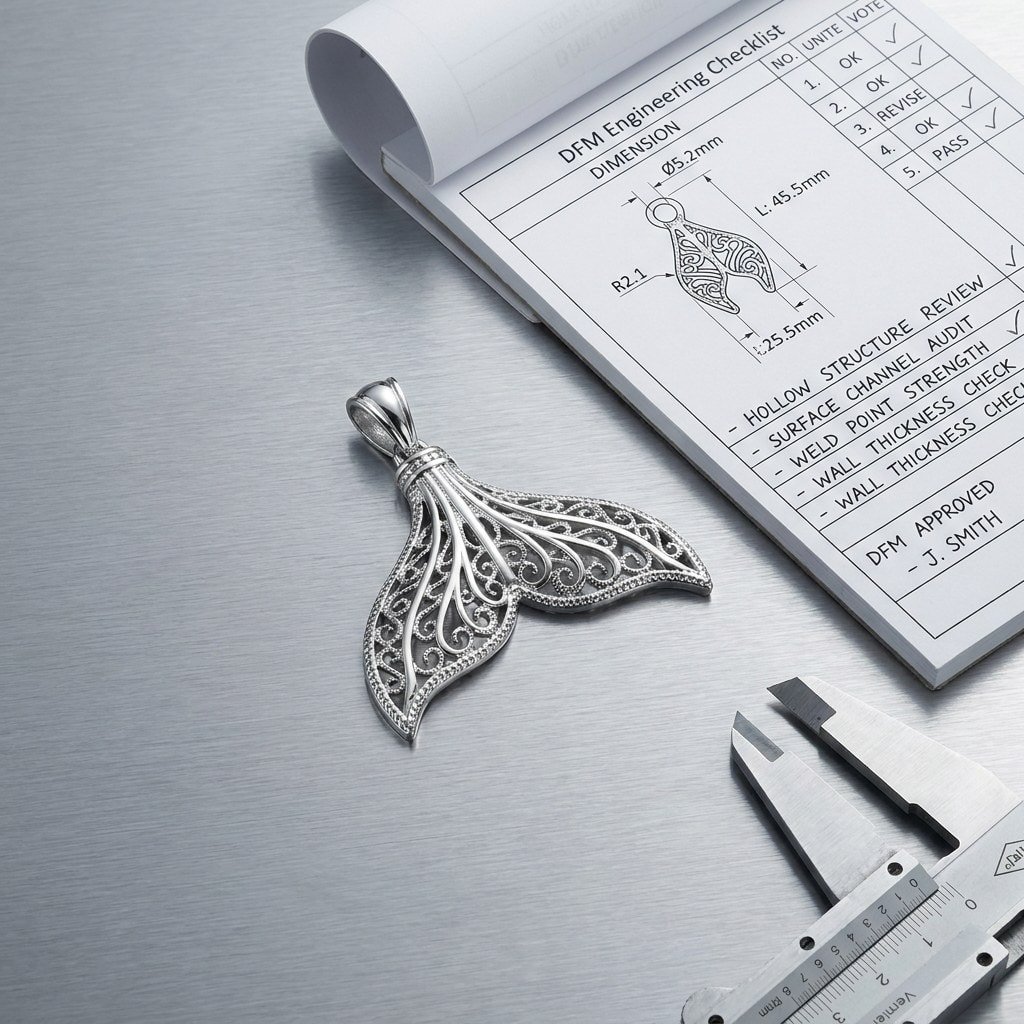
Sea Life Jewelry DFM Checklist
- Reference input: 2D drawing, 3D file, sketch, physical sample, target dimensions, intended use, target market, material, finish, decoration, quantity, and packaging.
- Thin and openwork features: Fins, tentacles, coral branches, shell openings, spokes, and wave cut-outs are checked for section strength, cutting access, casting fill, edge condition, deformation, and inspection visibility.
- Connection geometry: Pendant holes, bails, jump rings, chain links, clasps, ear posts, and bracelet connectors are checked for clearance, alignment, direction, assembly, and load transfer.
- Surface access: Deep grooves, small holes, blind cavities, textured shell ridges, and recessed enamel areas are reviewed for cleaning, polishing, plating, drying, decoration, and final inspection access.
- Comfort and safety: Skin-contact edges, ear posts, ring interiors, bracelet undersides, and adjustable openings are reviewed for burrs, sharp projections, rough welds, excessive weight, and movement-related discomfort.
- Version control: The released drawing, BOM, artwork, color sample, packaging file, and approved sample receive a controlled version. Unapproved assumptions do not become bulk requirements.
Select the Production Route Around the Marine Structure
Chicolink selects the route after reviewing the drawing, 3D model, material, quantity, surface, decoration, tooling, delivery schedule, and inspection requirements. The following routes are evaluation directions. The final route is confirmed through engineering review and sampling because the same sea life motif may need different processes at different sizes, weights, or order quantities.
| Product Structure | Route to Evaluate | Main Process Direction | Risks to Close Before Bulk |
|---|---|---|---|
| Flat shell, fish, starfish, or wave outline | Laser cutting or wire cutting | 2D file, sheet preparation, cutting, drilling or bending, deburring, polishing, in-house plating, inspection | Burrs, narrow bridges, heat effect, deformation, hole position, and polish loss |
| Repeated flat or formed motif | Stamping or hydraulic forming | Tooling, sheet preparation, forming, drilling, bending, assembly, polishing, plating, inspection | Tooling cost, springback, edge cracking, press marks, and dimensional drift |
| Sculptural sea turtle, shell, whale, coral, or relief | Casting | Master or copper pattern, mold, wax, casting, sprue removal, correction, welding as needed, polishing, plating, assembly, inspection | Shrinkage, porosity, incomplete fill, heavy sections, thin projections, and correction loss |
| Precision shell, fish-scale, connector, or textured component | CNC or lathe | Engineering file, material preparation, machining, deburring, drilling, welding or assembly, polishing, plating, inspection | Tool access, deep narrow grooves, machining time, burrs, and dimensional stability |
| Chain, bracelet, anklet, or necklace structure | Chain making and assembly | Wire or link preparation, forming, weaving, link closure or welding, cutting, clasp and extension assembly, polishing, plating, pull and function checks | Open links, twisted chain, clasp failure, length error, connector load, and tangling |
| Enamel, resin, pearl, shell, or stone detail | Combined metal and decoration route | Metal processing, polishing, plating where compatible, cleaning, decoration, curing or setting, attachment inspection, packing | Heat, chemicals, ultrasonic cleaning, adhesive failure, color fill, stone security, and scratches |
Move From Marine Concept to Approved Bulk Production
Chicolink supports customer-supplied designs and factory-assisted collection development. We separate design, engineering, commercial, quality, and shipment decisions so each sea life project is approved at the correct stage. The workflow is adjusted to the released product scope.
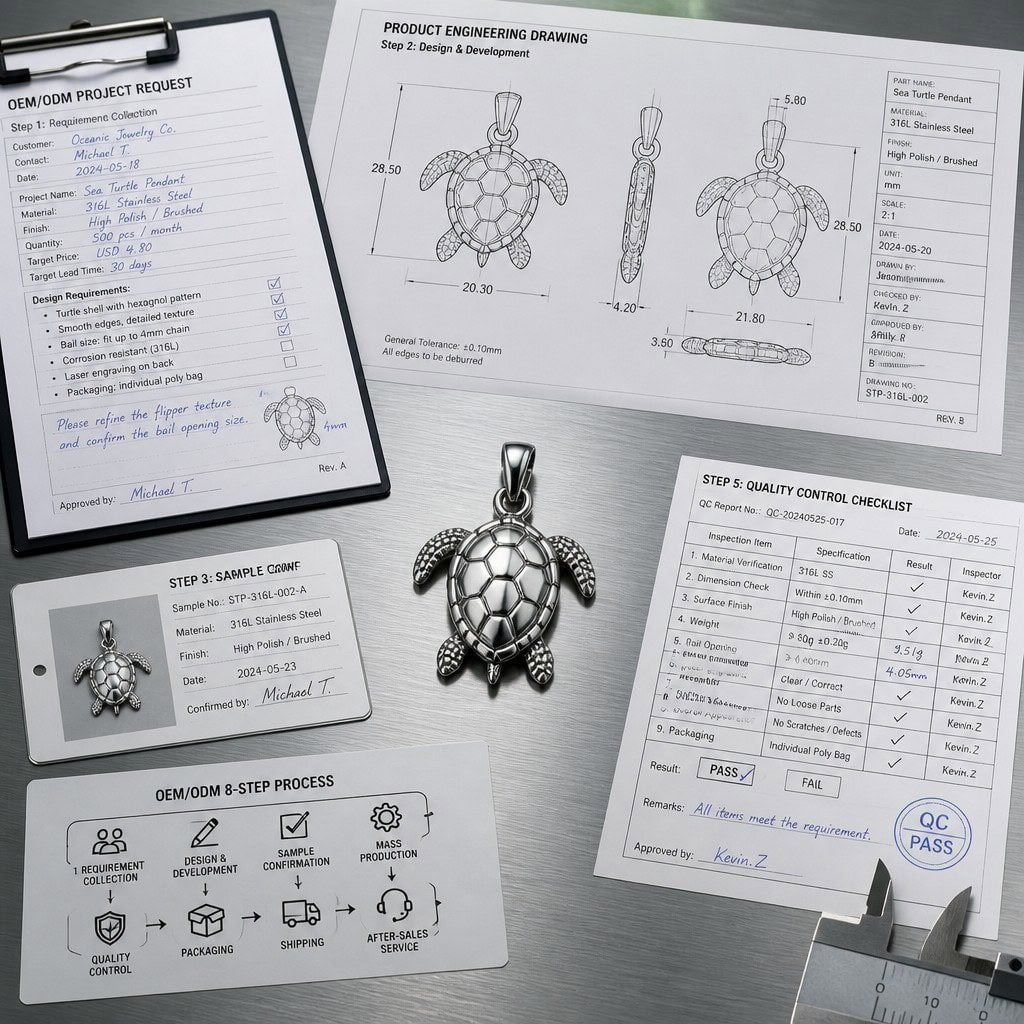
Eight-Step OEM and ODM Workflow
1. Requirement collection: Confirm product type, marine motif, reference file, material direction, dimensions, color, decoration, logo, packaging, target market, quantity, testing, inspection, and delivery requirements.
2. Process confirmation: Review structure, DFM risk, tooling, equipment, finishing, chain or clasp requirements, decoration compatibility, and the information still needed before quotation.
3. Quotation review: Evaluate material, dimensions, weight, process, mold, plating, stones or decorations, packaging, quantity, sample cost, testing cost, and delivery basis.
4. 2D/3D development: Create or revise drawings and files, confirm measurement references, prepare BOM fields, and record customer comments by version.
5. Sampling: Develop the agreed sample type, which may include a concept sample, structural prototype, white metal sample, plated color sample, functional sample, packaging sample, or pre-production sample.
6. Sample inspection and approval: Compare dimensions, structure, surface, color, logo, decoration, function, packaging, and required tests. Approved samples and files become the control basis for bulk production.
7. Bulk production and QC: Coordinate production planning, material, machining, welding, polishing, in-house plating, assembly, IQC, IPQC, FQC, packaging inspection, AQL or 100% inspection, and third-party inspection when required.
8. Pack, ship, and support replenishment: Confirm packaging, barcode, carton, shipment files, inspection release, and logistics information. Future orders are reviewed against the current SKU, version, color, packaging, and batch records.
Keep Marine Jewelry Development Close to Production Control
Chicolink Jewelry is located in Dongguan, Guangdong, China. The factory combines design, engineering, manufacturing, in-house plating, quality inspection, packaging, and export coordination within one B2B production system. Capacity figures below describe the factory's recorded operating scope and do not replace a project-specific production schedule.
Factory Scale
The facility covers more than 5,500 square meters and has 400+ employees. This structure supports separate coordination for product development, material and supplier planning, manufacturing, plating, quality control, packaging, and export work for wholesale and custom jewelry programs.
Design and Engineering
The team includes 6 jewelry designers and 3 jewelry engineers. They can review sea life artwork, structure, dimensions, weight, decoration, logo, chain and clasp requirements, process routes, sampling changes, BOM information, and production feasibility before a project is released.
Manufacturing Equipment
The recorded equipment scope includes CNC, casting, laser cutting, laser welding, logo laser machines, stamping, bending, drilling, polishing, wax injection, lathes, and related production equipment. The project route is selected according to the actual marine structure, material, quantity, and surface requirement.
In-House Plating
Chicolink has an in-house plating workshop with 6 PVD vacuum coating machines. The workshop manages process parameters, pre-treatment transfer, color and sample approval, process monitoring, plating inspection, exception handling, and batch traceability for approved PVD/IP, water plating, and other confirmed routes.
Production Capacity
Recorded factory-wide capacity is more than 200,000 pieces per month. Actual capacity for a sea life project depends on structure, tooling, material, colors, decoration, packaging, order allocation, testing, inspection, and the production schedule confirmed after engineering and quotation.
Quality and Export
Chicolink supports IQC, IPQC, FQC, packaging inspection, AQL or 100% inspection, customer-appointed third-party inspection, export packing, product data, labels, shipping documents, and logistics coordination. Factory audit arrangements can be confirmed during supplier qualification.
Deliver Sea Life Jewelry in the Brand's Retail Format
Private-label delivery forms part of the released product specification. Chicolink links the jewelry, logo, card, pouch, box, insert, barcode, label, set configuration, and carton requirements to the correct SKU. Brand artwork, colors, dimensions, data, and packaging standards must be supplied or approved before production.
Product Logo
Logo options include laser engraving, etching, stamping, embossed detail, logo tags, and approved local plating effects. We record the authorized file, converted fonts, position, direction, size, depth, line width, and negative space. Product and packaging logo standards remain separate when their specifications differ.
Jewelry Cards
Jewelry cards can carry the brand mark, product name, material or care information, barcode, SKU, size, and channel-specific content. We record card size, hole position, print color, paper, finish, fold, product orientation, and artwork version. Packing begins only after the card matches the released jewelry SKU.
Velvet Pouches
Pouches provide separation and compact presentation for necklaces, charms, earrings, bracelets, anklets, and small sets. We document the fabric, color, logo method, closure, dimensions, internal protection, product placement, and quantity per pack. Sample review checks rubbing, scratching, and product movement during transport.
Gift Boxes
Gift boxes support sea life pendants, destination collections, matched sets, and seasonal launches. We document box dimensions, insert shape, jewelry position, logo, opening method, quantity, carton configuration, and anti-scratch protection. The approved packaging sample controls the retail presentation and product fit.
Barcode and SKU Labels
We coordinate barcode, SKU, FNSKU, price, size, color, set, and carton labels from customer-approved data. Every label version is linked to the product, packaging, and shipment records. Product, color, pack, or barcode changes trigger a version review before release.
Retail and FBA Packing
We prepare retail-display, eCommerce, and Amazon FBA pack-outs to the customer's current channel rules. The released pack specification covers the bag or box, barcode position, product protection, anti-tangle method, carton marks, inner-carton quantity, and shipment documents. Customer requirements govern the final format.
Confirm the Commercial Basis Before Sampling
Sea life jewelry pricing and scheduling depend on structure, material, weight, tooling, color, plating, decoration, chain, packaging, testing, inspection, and quantity. The references below are Chicolink's usual internal guidance, not a quotation for an unreviewed design. We confirm the final basis after reviewing the actual SKU and project allocation.
| Commercial Item | Chicolink Reference | Conditions to Confirm |
|---|---|---|
| Ready-made or regular style MOQ | Usually 120 pieces per style | Stock, SKU, color, packaging, available quantity, and replenishment requirement |
| OEM/ODM MOQ | Usually 500 pieces per style | Style, color, size, plating batch, decoration, packaging version, and production difficulty |
| Existing-style sample | Usually 3-7 working days | SKU, stock status, finish, packaging, sample fee, and shipping arrangement |
| Custom OEM/ODM sample | Usually 25-30 working days | Drawing, material, tooling, color, decoration, revisions, and approval timing |
| Existing-style bulk order | Usually 20-30 working days | Quantity, stock, color, packaging, inspection, and production schedule |
| Custom OEM/ODM bulk order | Usually 25-45 working days | Approved sample, material, tooling, quantity, plating, packaging, testing, and schedule |
| Quote basis | Usually priced by piece | Product version, dimensions, weight, material, components, packaging, testing, and quantity |
| Additional project costs | May include sample, mold, fixture, artwork, packaging, and testing costs | Cost ownership, sample fee, mold fee, deduction policy, laboratory, and written agreement |
Control the Product Before It Reaches the Packing Line
Sea life jewelry can fail through a material mismatch, weak connector, blocked recess, rough edge, incorrect color, loose decoration, wrong label, or incomplete set. Chicolink uses staged quality control so problems can be identified closer to the process that created them. Customer drawings, approved samples, quality agreements, and written order standards take priority over general internal guidance.
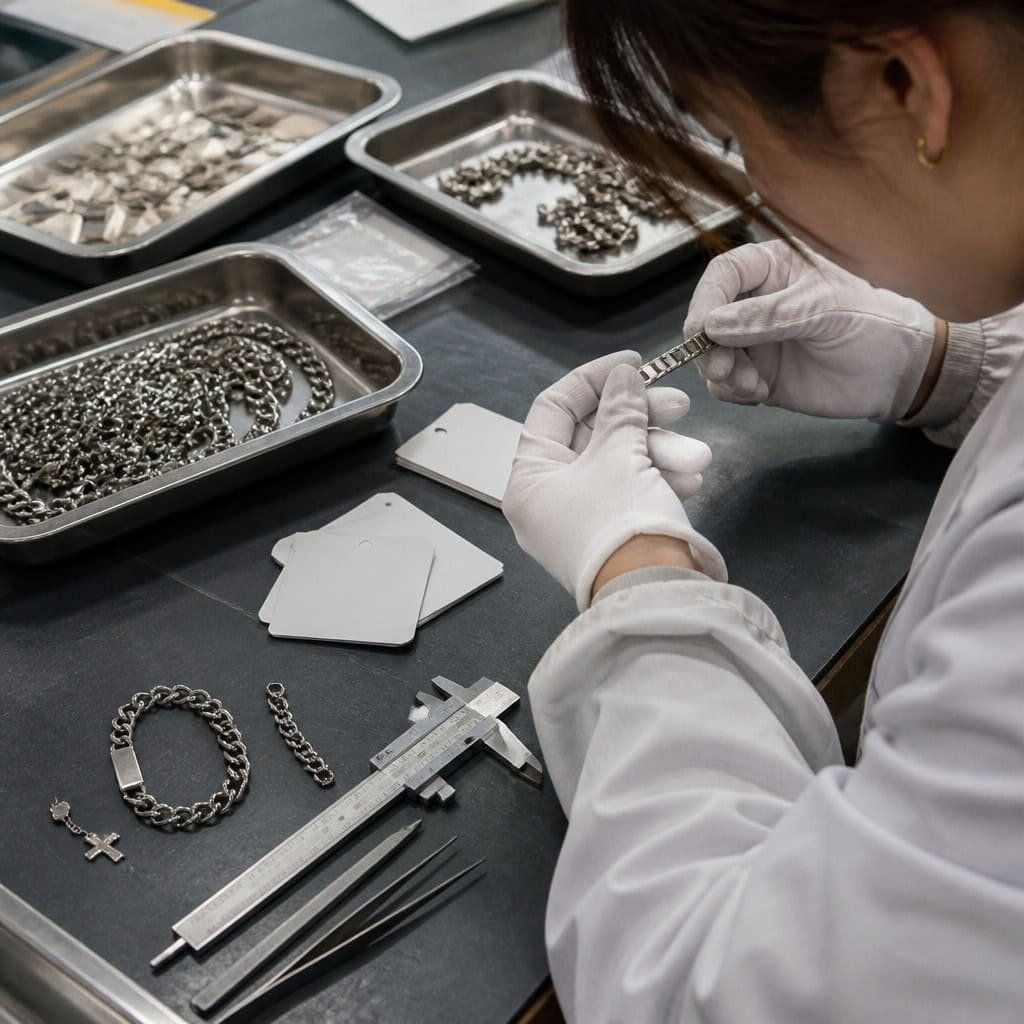
Four Quality Control Stages
- IQC – incoming quality control: Check raw material appearance and specification, steel grade, chains, clasps, ear posts, springs, stones, pearls, shells, decoration, and packaging materials before use.
- IPQC – in-process quality control: Check tooling and first article, dimensions, structure, welding, sprues, burrs, polishing, texture, plating color, plating thickness, stone or pearl fixing, enamel or resin filling, and assembly.
- FQC – finished product quality control: Check appearance, color, dimensions, function, chain and clasp, pendant alignment, left-right pairing, decoration quantity and position, logo, accessories, and approved packaging version.
- Pre-packing inspection: Confirm product cleanliness, scratch protection, chain and clasp position, ear backs, set contents, jewelry card, barcode, label, box or pouch, quantity per inner carton, and carton information before final packing.
Match Each Marine Structure to the Right Check
Not every sea life SKU needs every test. A necklace pendant, shell earring, pearl bracelet, adjustable ring, and chain anklet have different failure points. We select the test and inspection plan according to structure, material, finish, decoration, intended use, destination, and customer requirement. The references below apply when no different written requirement has been confirmed.
| Product Risk | Chicolink Check | Internal Reference or Acceptance Direction |
|---|---|---|
| Thin turtle flippers, starfish points, coral branches, or openwork | DFM, visual, edge, and structural inspection | No hazardous burr, sharp projection, broken section, or obvious permanent deformation |
| Pendant ring, bail, or jump ring opening | Pull and connection inspection | Default 40 N, 5 pieces per style, hold 10 seconds; no break, detachment, open joint, or failed weld |
| Main necklace structure | Chain, clasp, connection, and pull inspection | Default 30 N, approximately 3 kgf, 5 pieces per style, hold 10 seconds |
| Main bracelet structure | Link, clasp, extension chain, and pull inspection | Default 60 N, approximately 6 kgf, 5 pieces per style, hold 10 seconds |
| Anklet structure | Link, clasp, extension chain, and connection inspection | Test load follows the approved drawing, product structure, order, or customer standard |
| Shell, pearl, stone, or marine decoration | Fixing method and attachment inspection | Method selected by structure: pull, torque, probe, push, tape auxiliary check, or approved customer test |
| Engraved coordinates, wave lines, and shell texture | Dimension, artwork, surface, and readability inspection | Position, direction, size, line continuity, contrast, and approved sample comparison |
| PVD or plated color on ridges and recesses | Color and thickness inspection | Standard polished or mirror products default Delta E00 <= 1.5; brushed, sandblasted, or antique products default Delta E00 <= 2.0 |
| Plating coverage and layer variation | Plating thickness and visual inspection | Batch average nominal +/-10%; single point nominal +/-20%; main appearance surface not below 80% of nominal |
| Bare stainless steel corrosion exposure | Salt spray when applicable | Default 24 hours; no red rust, pitting, blistering, peeling, exposure, or unacceptable color change |
| PVD or plated corrosion exposure | Salt spray when applicable | Default 48 hours; higher-corrosion programs may use 72 hours or customer requirements |
| Skin-contact finish | Artificial perspiration when applicable | Default 40+/-2 degrees C, 24 hours, pH 4.7+/-0.2; no blackening, corrosion, blistering, peeling, exposure, or major loss of finish |
| Product dimensions | Caliper, gauge, ring gauge, or suitable measuring tool | Up to 20 mm: +/-0.15 mm; 20-50 mm: +/-0.20 mm; above 50 mm: +/-0.30 mm; drawing requirements take priority |
Supporting Note
Testing starts only after the sample, standard, sample quantity, method, equipment, environment, loading direction, and acceptance rule are confirmed. Test samples used for destructive or appearance-affecting tests are not released as normal shipment goods.
Connect Market Requirements to the Exact SKU
Compliance evidence depends on the destination, product construction, material, components, plating layers, skin contact, sales channel, and current standard. Chicolink can coordinate applicable testing and documentation, but a report for one material, color, coating, sample, or batch cannot automatically be extended to every product. We review the evidence against the released SKU.
| Compliance or Record Area | Chicolink Support Direction | Important Boundary |
|---|---|---|
| REACH | Can be included in the project compliance review | Confirm product, material, tested sample, standard, report scope, and destination |
| Nickel-related testing | Can coordinate testing according to the requested market or customer standard | Report scope, material, finish, color, sample, and test method must match the product |
| Lead and cadmium | Can coordinate applicable testing or customer-required evidence | Do not convert one report into a universal lead-free or cadmium-free claim |
| California Proposition 65 | Evaluate when relevant to the US market and product scope | Confirm applicable substance, product, warning, and customer responsibility |
| EN 1811 and EN 12472 | Can be reviewed when required for the target market or buyer standard | Confirm the current standard version and applicable product condition |
| SGS or HKPC testing | Third-party testing can be coordinated when required | Fee, sample count, lead time, laboratory scope, and report ownership are confirmed in advance |
| RoHS | Use only when the product or channel falls within its applicable scope | Ordinary non-electronic jewelry is not automatically presented as RoHS-regulated |
| CE | Evaluate only where the product is subject to a relevant regulation and assessment | Ordinary non-electronic stainless steel jewelry is not automatically presented as CE-certified |
| Batch traceability | Link order, SKU, drawing, material, process, plating, QC, packing, and shipment records | Records support a defined order or batch and do not replace product testing |
Choose an Inspection Level That Fits the Buying Risk
Inspection is planned around the product risk, sales channel, lot size, customer standard, and cost. A high-volume basic charm, a plated gift set, a pearl bracelet, and a retail-chain rollout may need different inspection emphasis. We confirm the inspection plan before shipment instead of treating “quality checked” as a complete acceptance standard.

Inspection and Acceptance Options
- 100% inspection: Suitable for selected high-risk, high-value, sensitive, or private-label programs when the buyer requires every unit to be checked. The scope, labor, timing, defects, and cost are confirmed before production.
- AQL sampling: When no customer standard is specified, Chicolink's default reference is normal inspection at General Inspection Level II. Critical defects use Ac 0/Re 1, Major defects use AQL 1.0, and Minor defects use AQL 2.5. Sample size and Ac/Re values follow the controlled sampling table according to lot size.
- Customer inspection: The buyer may provide a written inspection standard covering dimensions, surface, color, clasp, stone, logo, packaging, barcode, carton, and quantity. The approved standard takes priority over a general website reference.
- Third-party inspection: Chicolink coordinates customer-appointed third-party inspection when required. We confirm the agency, booking procedure, sampling plan, report format, corrective-action process, and shipment-release authority before inspection. SGS or HKPC laboratory testing remains a separate service from shipment inspection.
- Pre-shipment review: Before release, we can review quantity, product version, surface, finish, structure, accessories, packaging, barcode, carton, packing list, test report, and shipment documents. Corrections or reinspection require time before the planned shipment date.
How a Multi-SKU Sea Life Collection Can Be Controlled
This representative scope explains Chicolink's control method from design files to bulk release. It is an operating example, not a customer testimonial or completed-order claim. We set actual prices, quantities, materials, finishes, tests, and delivery dates after reviewing the buyer's project.


Representative Multi-SKU Collection Scope
Use Scenario
A North American or European jewelry brand plans a sea life capsule with sea turtle, shell, starfish, wave, and whale-tail pendants. The program includes necklaces, charms, matched earrings, two approved finishes, branded jewelry cards, barcode labels, and future replenishment. The buyer supplies reference artwork and wants one manufacturing partner to coordinate development, sampling, quality, packaging, and export preparation.
Key Challenge
The collection shares a visual language but uses different structures. Thin animal features, shell recesses, pendant holes, chain movement, left-right earring pairing, color consistency, logo placement, barcode matching, set contents, and packaging protection must be controlled separately. A single attractive sample would not define the measurable requirements for every SKU.
Chicolink Solution
For this representative scope, we create a controlled project sheet for each SKU, review the artwork, define the material and dimensions, select the manufacturing route, close DFM risks, approve chain and component specifications, authorize the finish sample, build the BOM, record revisions, confirm the Golden Sample, prepare the inspection plan, and link the retail pack to the correct product version.
Result
The resulting project structure connects every sellable SKU with its drawing, BOM, material, finish, decoration, chain, logo, packaging, inspection points, test requirements, and shipment identity. It provides a controlled basis for quotation, sampling, pre-production approval, bulk inspection, barcode verification, and replenishment.
Project Data
- Representative project scope; not a disclosed customer order or testimonial
- Example scope includes 5 marine motif directions and multiple product forms
- Custom OEM/ODM MOQ normally starts at 500 pieces per style, subject to final allocation
- Custom sample timing normally 25-30 working days after required approvals
- Custom bulk timing normally 25-45 working days after approval
- Testing, inspection, packaging, and export documents confirmed before formal release
Keep Product, Packaging, and Shipment Data Aligned
Sea life jewelry programs may contain several motifs, finishes, sizes, chains, set combinations, destination labels, and packaging versions. We coordinate the physical product and its retail and export information so the shipment can be checked as a controlled order rather than a group of unconnected cartons.
SKU and Variant Control
We record the style, product type, material, color, size, chain, set contents, packaging version, barcode, and customer code for each SKU. A change in design, finish, component, quantity, or pack-out triggers a version review so current data never relies on an obsolete sample.
Protective Packing
Necklaces, chains, charms, earrings, anklets, and sets face different risks of tangling, rubbing, bending, missing parts, and box movement. We specify bags, cards, inserts, separators, anti-scratch materials, product orientation, inner cartons, and carton quantities for the product and distribution route.
Barcode and Carton Review
Before packing and shipment, product labels, jewelry cards, barcodes, SKU versions, set contents, inner-carton quantities, outer-carton marks, and packing lists are checked against the released order. This is particularly important for retail chains, marketplaces, multi-location assortments, and destination-specific sea life collections.
Export Documents
Chicolink prepares export packing, packing lists, commercial invoices, product data, labels, carton information, and logistics coordination for the confirmed order. We record the agreed trade terms, consignee information, destination requirements, customs information, and platform-specific documents before shipment release.
Pre-Shipment Release
We release shipment against the approved quantity, appearance, finish, structure, accessories, packaging, barcode, carton, test reports, inspection reports, and required documents. Customer or third-party inspections are booked early enough for correction, rework, reinspection, and final document preparation.
Replenishment Review
Before a repeat order, we review the current drawing, BOM, Golden Sample, color reference, chain and clasp, packaging file, barcode, previous batch record, and any approved change. Replenishment is planned against the latest released version, while new material, color, decoration, and market requirements remain subject to confirmation.
Sea Life Jewelry Manufacturer FAQ
These answers cover the final questions before engineering, quotation, sampling, or production. The buyer's files, approved sample, quality agreement, target market, order quantity, and written project confirmation govern the final requirements.
Can you develop sea life jewelry from a sketch or photo?
Yes. We develop from a sketch, reference photo, physical sample, 2D drawing, 3D file, or editable artwork. Before quotation, our team identifies missing specifications and flags fragile or difficult-to-inspect details. Engineering then defines the drawing, production route, sample scope, and information still required from the buyer.
Which sea life jewelry products can you manufacture?
We manufacture approved marine pendants, charms, necklaces, earrings, bracelets, anklets, rings, cuffs, men's sea life jewelry, and coordinated sets. Each SKU proceeds only after its artwork, structure, material, decoration, production route, sample, and stable supply path have passed project review.
Should the project use 304 or 316L stainless steel?
Chicolink selects the grade from the product structure, use environment, destination, appearance, processing difficulty, test plan, and target cost. 316L generally offers better pitting resistance, but its higher hardness may increase forming, cutting, welding, polishing, and correction difficulty. The released specification identifies the grade for every applicable component.
What is your sea life jewelry MOQ?
Ready-made or regular styles commonly start at 120 pieces per style. OEM/ODM projects commonly start at 500 pieces per style. MOQ may be calculated by style, color, size, plating batch, packaging version, or production condition. Mixed colors, sizes, and packaging versions require written confirmation.
How long do custom samples and bulk orders take?
Custom OEM/ODM samples commonly require 25-30 working days, and custom bulk orders commonly require 25-45 working days after the required approvals. Existing-style samples commonly require 3-7 working days and existing-style bulk orders commonly require 20-30 working days. Actual timing depends on the confirmed project scope and schedule.
Can you add shells, pearls, enamel, or natural stones?
We use approved shells, pearls, CZ, natural stones, cold enamel, epoxy, resin, paint, and other confirmed decorations. Each material receives a defined size, color, texture, fixing method, cleaning route, temperature condition, attachment check, and acceptable variation standard. Natural materials remain subject to the approved variation range.
Can you provide PVD gold or colored sea life jewelry?
Yes. Our in-house plating workshop provides approved PVD/IP gold, rose gold, black, gunmetal, blue, coffee, colorful, steel, silver, rhodium, and other confirmed colors. Each SKU records its base surface, color sample, layer structure, thickness, tolerance, test conditions, and packing protection. Chicolink does not claim permanently fade-proof plating.
Can you support European and US testing requirements?
We coordinate applicable REACH, California Proposition 65, EN 1811, EN 12472, nickel-related, lead, cadmium, salt-spray, artificial-perspiration, abrasion, and customer-specific testing. Before testing, we document the product, material, finish, sample, standard, laboratory, fee, timing, and report scope.
Can you provide private-label packaging and barcodes?
Yes. Options may include product logos, logo tags, jewelry cards, velvet pouches, gift boxes, care cards, barcodes, SKU labels, FNSKU, retail displays, and eCommerce pack-out. The buyer provides authorized artwork, brand colors, dimensions, SKU data, channel rules, quantity, and delivery requirements.
Can we arrange AQL or third-party inspection?
Yes. We can support customer-appointed or authorized third-party inspection and can work with 100% inspection or AQL sampling. When no customer standard is specified, our default reference is General Inspection Level II with Critical Ac 0/Re 1, Major AQL 1.0, and Minor AQL 2.5. Written customer standards take priority.