Stainless Steel Zodiac Jewelry Manufacturer
Build coordinated twelve-sign jewelry collections for wholesale, OEM, ODM, and private-label programs with one manufacturing partner.
Chicolink Jewelry develops stainless steel zodiac jewelry for global B2B buyers from our factory in Dongguan, China.
- Develop Western Zodiac symbols, constellation graphics, engraving, birthstone accents, chains, finishes, and branded packaging.
- Coordinate engineering review, sampling, in-house plating, bulk production, quality control, and shipment preparation.
- Plan every project around the product structure, quantity per sign, target market, test requirements, packaging, and delivery date.
- Keep artwork, specifications, samples, color references, and packaging versions aligned across every approved zodiac SKU.
Plan a Complete Twelve-Sign Zodiac Collection
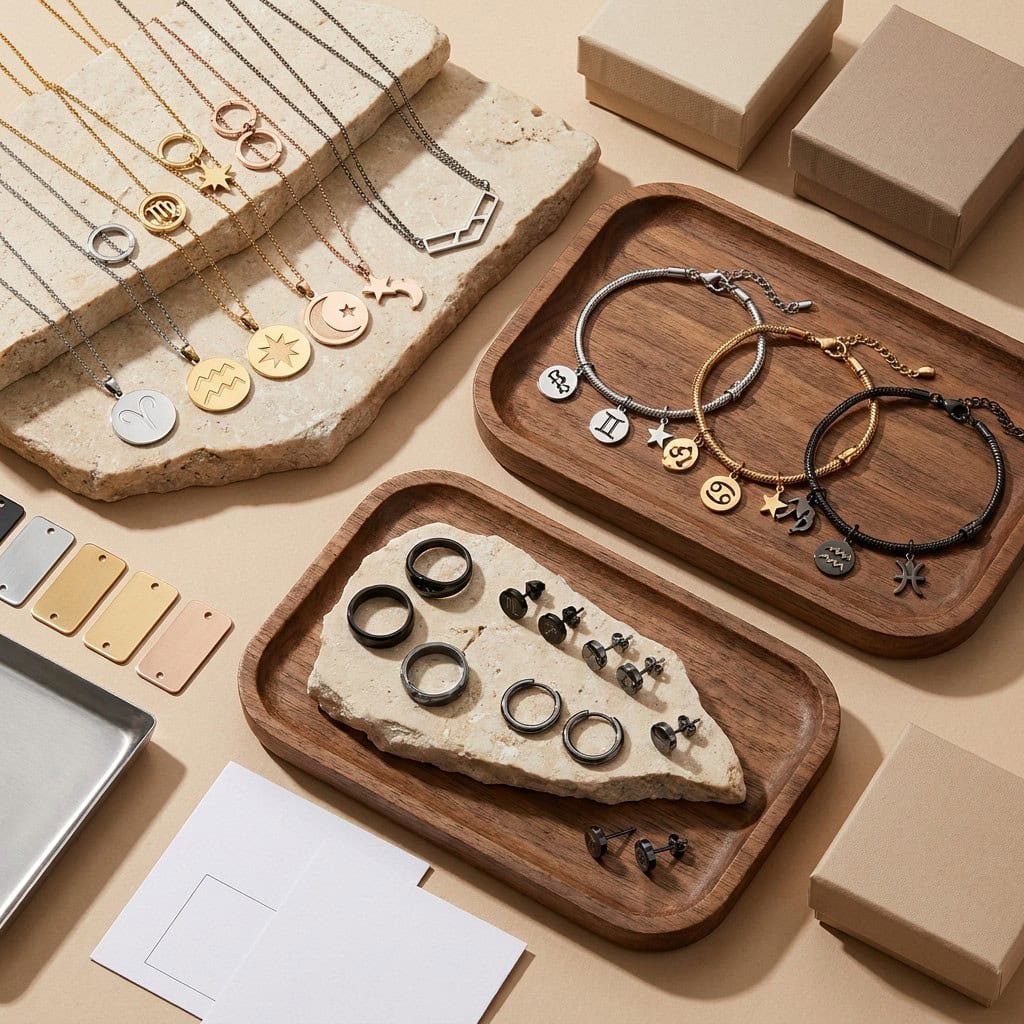
We develop Aries through Pisces as one controlled collection, not twelve unrelated products. Shared rules for artwork, structure, size, color, and SKU naming keep the range consistent and easier to replenish. We finalize the assortment around your sales channel, price position, quantity plan, and launch schedule. The table shows how we control each collection layer.
| Collection Layer | Planning Scope | Our Control Point | Project Outcome |
|---|---|---|---|
| Twelve-sign set | One approved symbol or constellation treatment for every sign | Review line weight, negative space, scale, orientation, and engraving readability | Consistent details across all twelve signs |
| Product formats | Pendants, necklaces, bracelets, rings, earrings, charms, or sets | Confirm structure, dimensions, attachment, and production route by category | One theme adapted to several product types |
| Design language | Symbol, constellation, text, date, birthstone, or layered motif | Freeze rules for font, stroke, edge, stone, bail, chain, and logo | A recognizable collection across categories |
| Color system | Steel, gold, rose gold, black, or project-approved finishes | Approve physical color references and define whether every sign uses every color | Controls SKU count and reduces avoidable plating splits |
| Size system | Shared pendant scale or category-specific dimensions | Check small details after polishing and plating, not only in enlarged artwork | Protects readability and appearance at wearable size |
| Optional Chinese Zodiac | A separate twelve-animal development program | Confirm artwork, structure, SKU plan, and tooling separately | Clear specifications for two different systems |
Build a Commercial Zodiac Product Architecture
Before sampling, we convert your concept into a clear SKU structure. Product, sign, color, size, stone, and packaging are counted as separate variables. This shows the true collection size early and keeps sampling, stock, and reorder plans manageable. We then align development work with the intended launch model.

Control Variety Before Sampling
- Capsule launch: Combine one hero product, all twelve signs, and one approved finish. A shared chain with twelve pendant designs keeps the first range focused.
- Core brand range: Add a second finish, engraving, or another product after the base design is fixed. We separate standard elements from optional variants in the quotation.
- Multi-channel program: We map each product, sign, finish, size, and regional package before quantities are confirmed. This prevents hidden variants from appearing late in development.
- Quantity planning: Send units per sign, not only the total order quantity. We can review equal or sales-weighted quantities before planning materials, plating, and packing.
- Price architecture: Your target price affects material, dimensions, weight, chain, stones, plating, and packaging. We review these variables together before proposing changes.
- Replenishment model: We assign stable product codes and retain approved specifications, sample references, and packaging versions for future orders.
Send us the channel, categories, signs, colors, quantity per sign, target price, and reorder cycle. We use this brief as the commercial baseline for development.
Define Customization and Its Commercial Impact
Customization can change tooling, weight, plating batches, inspection, packaging, MOQ, and lead time. We review these effects before confirming feasibility or price, then record each approved option by SKU. Send the information below so we can quote the intended product rather than an undefined visual concept. We flag any option that needs separate sampling or tooling.
| Custom Element | Options | Production Impact | Send Us |
|---|---|---|---|
| Zodiac artwork | Symbol, constellation, text, openwork, relief, or cutout | Sets line limits, edge finishing, tooling, and process route | Artwork or reference, dimensions, orientation, and permitted changes |
| Personalization | Name, initials, date, coordinates, or message | Adds engraving-data control and inspection | Character set, font, position, maximum length, and data format |
| Birthstones | One stone per sign or month-color system | Adds sourcing, settings, color mapping, and security checks | Type, size, cut, color, setting method, and quantity per sign |
| Dimensions | Size, thickness, length, and weight | Changes readability, strength, polishing allowance, and cost | Millimeter dimensions, size system, tolerance, and target weight |
| Chain and findings | Chain, clasp, extension, rings, and logo tag | Affects movement, strength, length, cost, and packing | Style, width, length, clasp, connection, and logo-tag details |
| Surface finish | Mirror, brushed, matte, sandblasted, or textured | Changes preparation, visible color, and inspection | Reference sample or finish specification |
| PVD color | Steel, gold, rose gold, black, or approved color | May split plating lots, samples, tests, and quantities | Color reference, quantity per color, target use, and market |
| Branding | Product logo, tag, card, pouch, box, label, or barcode | Adds artwork and packaging versions | Vector logo, placement, print data, barcode data, and dielines |
| Exclusive structure | New mold, component, clasp, or assembly | Adds engineering, tooling, samples, and volume requirements | Drawings, performance target, forecast, ownership, and exclusivity request |
Choose 304 or 316L Stainless Steel
We work with 304 and 316L stainless steel and select the grade for the actual project. Our review covers structure, process, finish, use environment, target market, tests, and cost. We record the approved grade in the product specification; we do not present 316L as the automatic choice for every zodiac design.
| Decision Point | 304 Stainless Steel | 316L Stainless Steel | Project Confirmation Needed |
|---|---|---|---|
| Typical use | Suitable for many fashion jewelry structures after review | Often selected when specified or when its material characteristics fit the project | Product, wear position, market, and use environment |
| Processing | Stamping, cutting, machining, forming, or assembly as approved | Process and machinability reviewed for the design | Thickness, details, bends, holes, welding, settings, and polish access |
| Cost | Different material-cost position for suitable projects | Material and processing may change the quotation | Quantity, weight, yield, process time, and finish |
| Finishing | Bare steel, polish, brushing, PVD/IP, water plating, or approved treatment | Same finish range, subject to process review | Preparation, color, coating, thickness, and tests |
| Evidence | Order-specific material and product documents | Order-specific material and product documents | Sample, material, color, batch, market, and report scope |
| Approval | Specification, engineering review, sample, and written order | Specification, engineering review, sample, and written order | The product name alone does not define the grade |
Engineer Fine Zodiac Details for Production
Zodiac artwork changes at jewelry scale. Fine constellation lines, small text, narrow bridges, cutouts, and stone positions must remain clear after production and finishing. We review these details before sampling and match each design to a practical process instead of forcing all twelve signs through one route. Our review also covers polishing and assembly access.

Match Detail to Process
- Finished-size readability: We check font, line width, spacing, negative space, engraving depth, and orientation at the actual jewelry size.
- Laser cutting or stamping: Flat silhouettes and openwork may suit sheet production. We check holes, narrow bridges, burrs, edge rounding, distortion, and polish loss.
- Casting: Reliefs, dimensional forms, and stone seats may use casting. We review wall thickness, shrinkage, porosity, deformation, gate position, and polishing access.
- CNC or turning: Machining can produce controlled geometry, grooves, and recesses. Tool access, internal radii, fixturing, cycle time, and quantity determine suitability.
- Laser engraving: We confirm font, spacing, depth, position, and finish for constellation lines, names, dates, coordinates, and logos.
- Stone and assembly: We define stone size, seat, fixing method, clearance, and inspection. Bails, rings, chains, posts, and clasps must suit the weight and wearing direction.
We list unresolved points for your confirmation. Final limits come from the design, material, process, sample, and volume, not a generic minimum-size claim.
Approve PVD Color and Durability Requirements
Our in-house plating workshop has six PVD vacuum coating machines. We control each zodiac color through the substrate, preparation, finish, coating system, approved sample, test conditions, and batch record. A color name alone is not a specification; we also confirm quantity per color and the intended use. This creates a measurable basis for color approval.
| Requirement | Our Approach | Your Approval |
|---|---|---|
| Color family | Evaluate steel, gold, rose gold, black, or another approved finish | Physical reference or target and quantity per color |
| Surface preparation | Account for polish, brushing, sandblasting, texture, and geometry | Color on the intended product surface, not a digital swatch alone |
| E1 reference | 0.4 μm TiN + 0.05 μm Au/Gold | Suitability, use, and test plan |
| E2 reference | 0.7 μm TiN + 0.1 μm Au/Gold | Need for the thicker reference system |
| Batch control | Compare with the approved sample under defined conditions | Visual and instrumental limits |
| Durability tests | Plan salt spray, perspiration, rubbing, or thickness checks as required | Standard, duration, samples, and acceptance criteria |
| Claim limits | Tie performance to material, coating, wear, chemicals, and test method | No unconditional fade or waterproof claims |
Move From Design Brief to Golden Sample
A twelve-sign project may contain many artwork, color, size, and packaging versions. Before bulk production, we link each approved sample to its drawing, BOM, finish, logo, and packaging files. This keeps a change to one sign or color from affecting another SKU. The process below closes technical and commercial decisions in sequence.

Seven Controlled Development Steps
1. Submit the brief: Send the zodiac system, products, artwork, dimensions, material, quantity per sign, colors, market, tests, packaging, target price, and deadline.
2. Close open points: Our sales, design, and engineering teams list missing dimensions, unclear artwork, structural conflicts, and finish questions for confirmation.
3. Review engineering: We evaluate material, process, assembly, polish access, coating, stone setting, tolerances, tooling, yield, and volume.
4. Confirm quotation basis: We record the SKU, specification, quantity, MOQ basis, charges, packaging, tests, and quotation conditions. Our six-hour target is for an initial response, not a guaranteed formal quote.
5. Produce the sample: We make the concept, structural, metal, color, functional, packaging, or pre-production samples required by the project.
6. Record revisions: We link every change to the current artwork, drawing, BOM, color, logo, packaging, and sample version, then retire superseded files.
7. Approve the golden sample: The approved sample and specification become the bulk standard. We review any later change before implementation.
Confirm MOQ, Sign Mix, Cost, and Timing
A total order quantity does not show how a zodiac order is split. We confirm units by style, sign, color, size, plating batch, and package before setting MOQ, price, or timing. The figures below support early planning; our written quotation defines the actual terms. We update it when the approved scope changes.
| Item | Common Reference | Conditions That Can Change It |
|---|---|---|
| Regular stock MOQ | 120 pieces per style | Stock, color, size, and packaging |
| Common OEM/ODM MOQ | 500 pieces per style | Tooling, material, sign/color split, process, plating, packaging, and tests |
| Existing-style sample | 3–7 working days | Stock, finish, changes, packaging, and sample quantity |
| Custom sample | 25–30 working days | Artwork, engineering, tooling, sourcing, revisions, plating, and tests |
| Existing-style bulk | 20–30 working days | Stock, quantity, color, packaging, schedule, and inspection |
| Custom bulk | 25–45 working days | Starts after specification, approvals, materials, and production conditions are ready |
| Mixed zodiac signs | Reviewed by project | Quantity per sign, process, plating, labeling, and packing |
| Sample/tooling fees | Applied when required | Amount and any deduction require written agreement |
Plan Capacity for Multi-SKU Zodiac Programs
We schedule a twelve-sign collection as one program across design, engineering, PMC, manufacturing, plating, QC, and packing. Before confirming delivery, we check the actual SKU mix, process routes, plating lots, packaging versions, and current factory load. This review connects factory resources to the requested launch date instead of quoting capacity alone.
Factory Resources Behind the Program
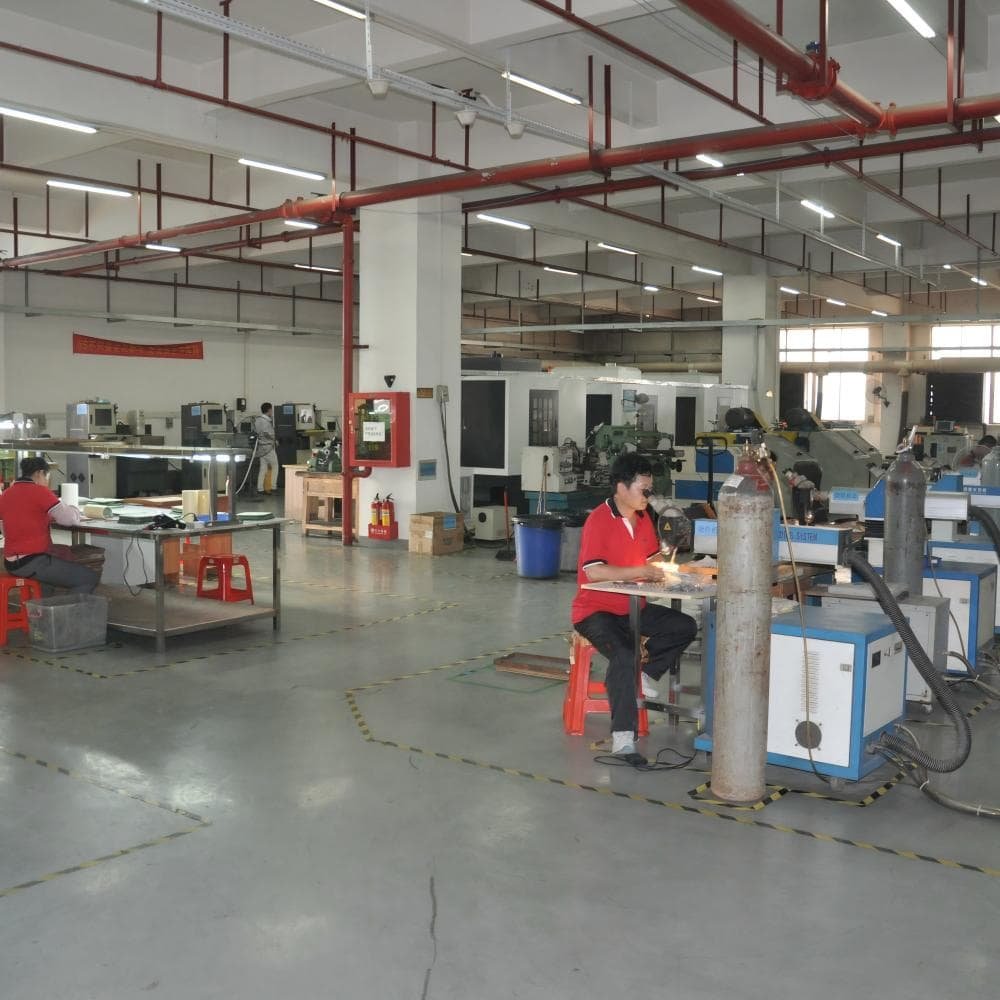
- Manufacturing base: Founded in June 2012, we operate a factory of more than 5,500 square meters in Dongguan, China.
- Production team: 400+ employees support our operations, including 6 jewelry designers and 3 jewelry engineers.
- Capacity: Factory output exceeds 200,000 pieces per month. Project capacity still depends on route, SKU count, finish, timing, packaging, and inspection.
- Equipment: Our 58 major machines include five CNC, four casting, three laser-cutting, five laser-welding, three laser-logo, six stamping, four bending, seven drilling, eight polishing, four wax-injection, three lathe, and six PVD units.
- In-house plating: We manage polishing, coating, color approval, inspection, and plating records under the same project specification.
- Schedule confirmation: We review quantities, materials, tooling, sample status, plating, tests, packaging readiness, factory load, and shipment plan before accepting a deadline.
For phased launches, we can review split shipments and SKU priorities before production starts. We support factory audits and agreed third-party inspections.
Control Quality Across Zodiac Bulk Production
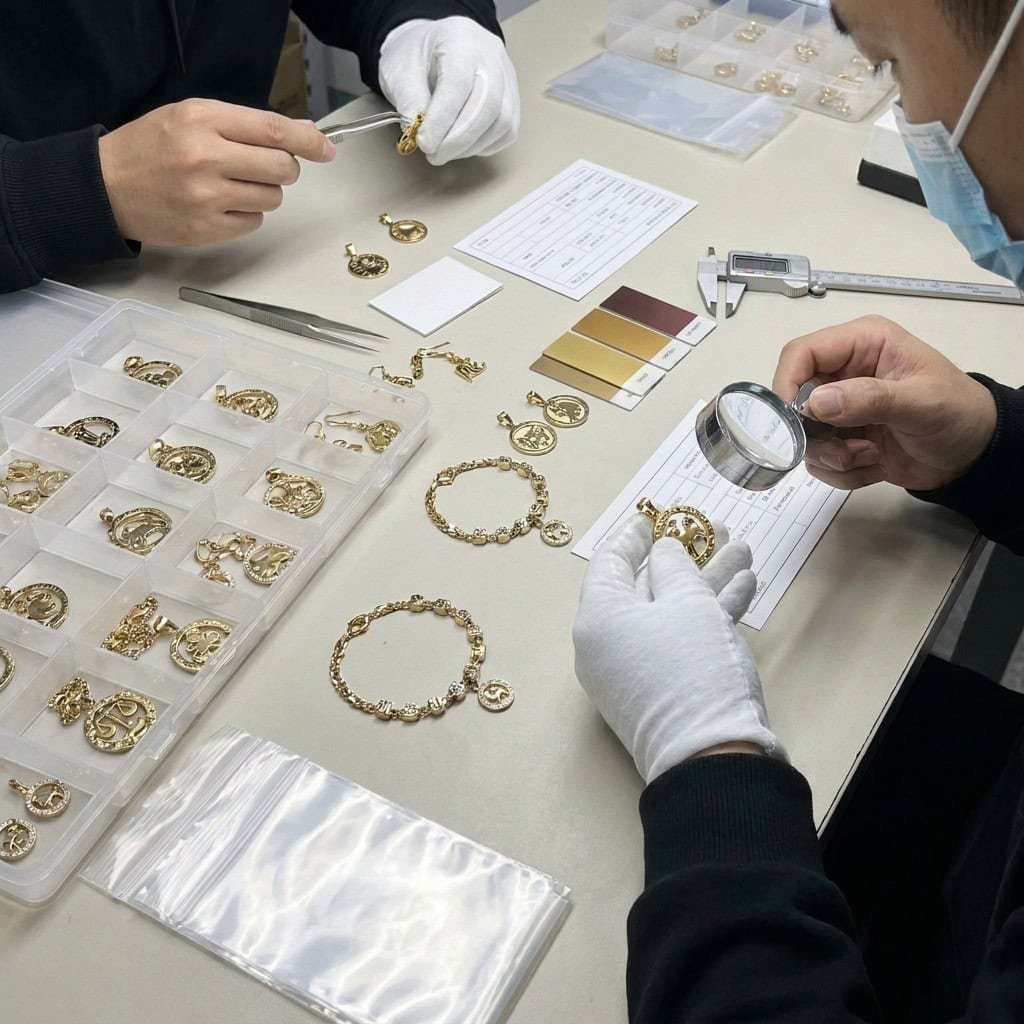
We inspect each bulk batch against the approved golden sample and specification. Zodiac-specific checks cover fine lines, symbol direction, sign mixing, stone mapping, engraving, and SKU packaging. The inspection plan defines the stage, frequency, tools, sample size, defect class, and acceptance rule. We record results against the applicable order and batch.
Inspection by Production Stage
- Incoming control: Verify stainless steel, components, chains, clasps, stones, findings, and packaging against the specification.
- First article: Check the first units against the drawing, BOM, sample, dimensions, sign direction, finish, assembly, function, and marking.
- In-process control: Monitor the applicable cutting, forming, machining, welding, polishing, setting, engraving, coating, and assembly steps.
- Zodiac appearance: Confirm the sign, line continuity, text, stone position, edge finish, cutouts, direction, balance, and collection consistency.
- Final control: Inspect dimensions, appearance, coating, function, connections, stones, labels, quantities, and packing.
- Sampling plan: Unless agreed otherwise, we use normal inspection, General Inspection Level II: Critical Ac 0/Re 1, Major AQL 1.0, and Minor AQL 2.5. Sample size follows the lot and approved table.
- Alternative inspection: We can use 100% inspection or an agreed customer plan. We segregate, handle, and recheck nonconforming units.
Inspection records identify the order, SKU, batch, quantity, findings, disposition, and recheck result for the applicable lot.
Protect Reorder Consistency With Traceability
A reorder must match the approved collection even when the batch, color, or package changes. We identify each product and batch through controlled specifications and records, not a product photo alone. The same records support investigation when you report a shipment issue. They also show which version was used for production and packing.
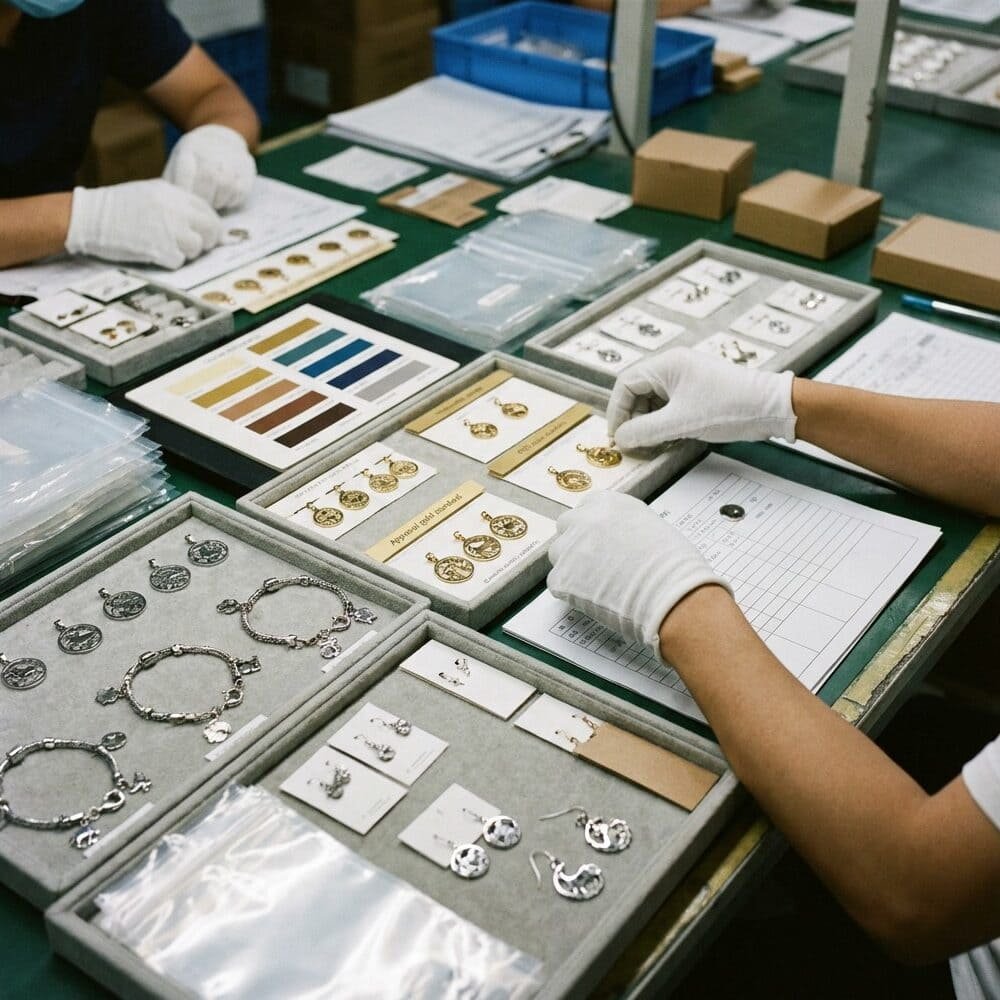
Link Every Batch to Its Baseline
- Product identity: Customer, project, order, SKU, style, zodiac sign, size, and active drawing or sample.
- Technical baseline: Artwork, 2D/3D files, BOM, material, dimensions, tolerances, chain, stones, finish, logo, and golden sample.
- Production history: Material batch, work order, dates, tooling, process route, polishing, setting, assembly, and key records.
- Plating identity: Equipment reference, color, coating batch, approved sample, quantity, requirement, and inspection result.
- Quality evidence: IQC, IPQC, first article, final inspection, AQL or 100% records, nonconformity, rework, and reinspection.
- Packaging and shipment: Package version, labels, barcodes, packing batch, cartons, packing list, shipment date, and logistics records.
For each reorder, we verify the active specification and package, review changes, and decide whether a new color sample, pre-production sample, or test is required. We do not replace a specified material, component, or process without written approval. We document approved substitutions or process changes before use. An order, SKU, or batch number lets us retrieve the related records.
Plan EU and US Testing by Market
We plan testing around the destination market, product, material, plating color, and your written requirements. We can prepare samples, review documents, and coordinate third-party testing or inspection. Each report covers only its stated samples and scope. Before testing, we confirm sample selection, cost approval, report delivery, and the response to a failed result.
| Topic | When It May Apply | What Must Be Confirmed |
|---|---|---|
| Nickel release | Skin-contact jewelry where nickel-release limits apply | Contact parts, color, wear treatment, method such as EN 1811/EN 12472, samples, and laboratory |
| Lead and cadmium | Market or customer substance restrictions | Limit, method, tested components, sample selection, and report scope |
| REACH review | EU projects with relevant substance restrictions | Current requirement, product/material scope, test plan, and documents |
| California Proposition 65 | California projects requiring exposure review | Product, substance concern, assessment, testing, and labeling decision |
| RoHS or CE | Only when the product is legally in scope | Ordinary non-electronic jewelry is not automatically a CE product |
| Artificial perspiration | Coating or skin-contact durability evaluation | Solution, pH, temperature, duration, contact method, and acceptance |
| Salt spray | Specified corrosion-resistance evaluation | Standard, duration, sample position, cleaning, and acceptance |
| Rubbing or wear | Coating, engraving, print, or color-fill evaluation | Equipment, load, cycles, direction, and acceptable change |
| Third-party inspection | Agreed pre-shipment inspection | Agency, timing, sampling, scope, acceptance, and reinspection |
| Reference Item | Internal Default or Cost Reference | Important Condition |
|---|---|---|
| Bare steel salt spray | 24 hours | Customer method and acceptance criteria take priority |
| Plated/PVD salt spray | 48 hours | Higher-corrosion projects may use 72 hours or another agreed duration |
| Artificial perspiration | 40 ± 2°C, 24 hours, pH 4.7 ± 0.2 | Confirm formula, exposure, cleaning, and color evaluation |
| Artificial perspiration fee | About USD 100 | Confirm the current laboratory quote and method |
| Salt spray fee | About USD 2 per hour | Confirm duration, samples, laboratory, and report |
| Rubbing test fee | About USD 120 | Confirm method and current quote |
| SGS nickel-release fee | About USD 500 per color | Confirm report scope and current quote |
| HKPC nickel-release fee | About USD 120 per color | Confirm report scope and current quote |
Prepare Private-Label Packaging for Twelve SKUs
We develop private-label packaging that presents the brand and keeps twelve signs, colors, and variants identifiable. Each SKU links to an approved artwork, material, label, barcode, and packing method. This control reduces mixing errors when artwork changes or a market requires a different package. We also match protection to the actual product and fulfillment route.
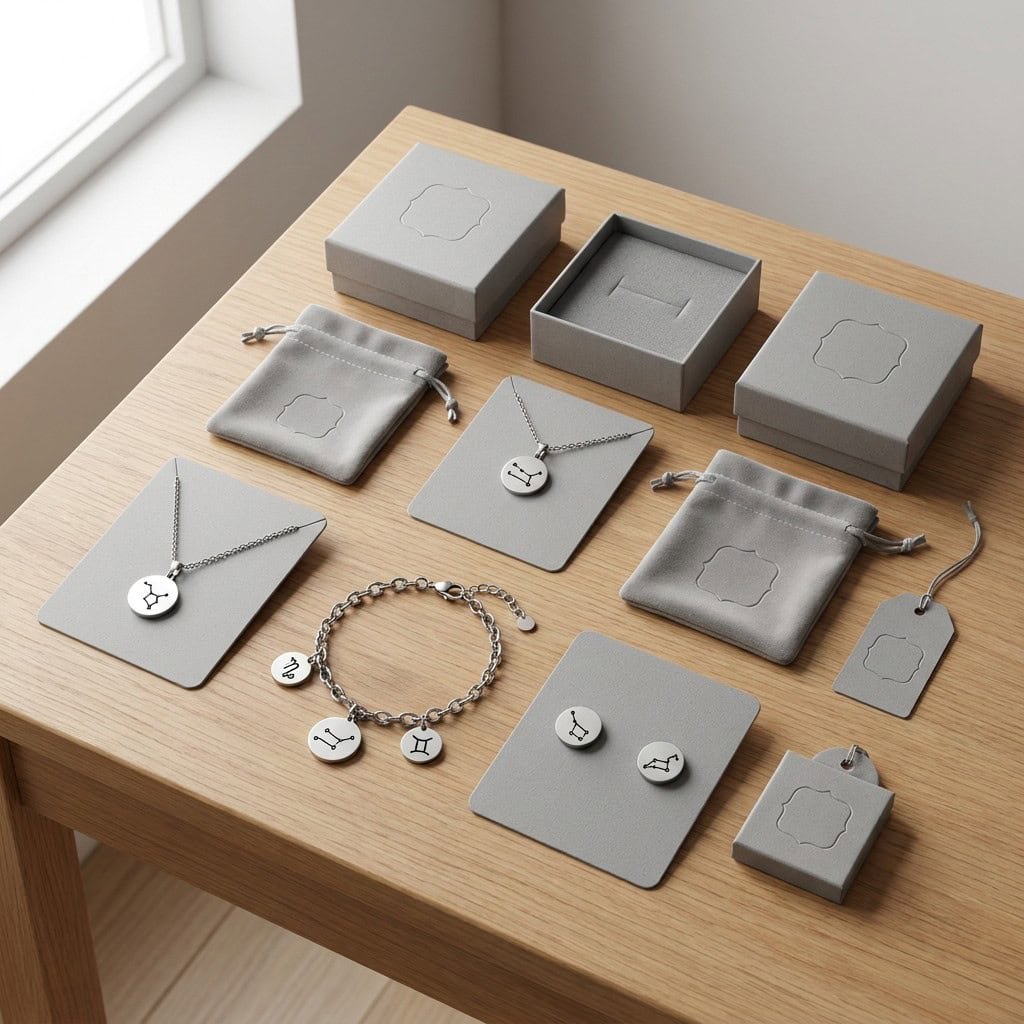
Brand Presentation
We coordinate product logos, jewelry cards, pouches, boxes, inserts, and sets under one approved brand system. Before production, we check the logo file, size, placement, print or engraving method, color reference, legal text, and artwork version. We approve product marking and packaging artwork separately because their materials and readable limits differ. The signed version controls what our production and packing teams use.
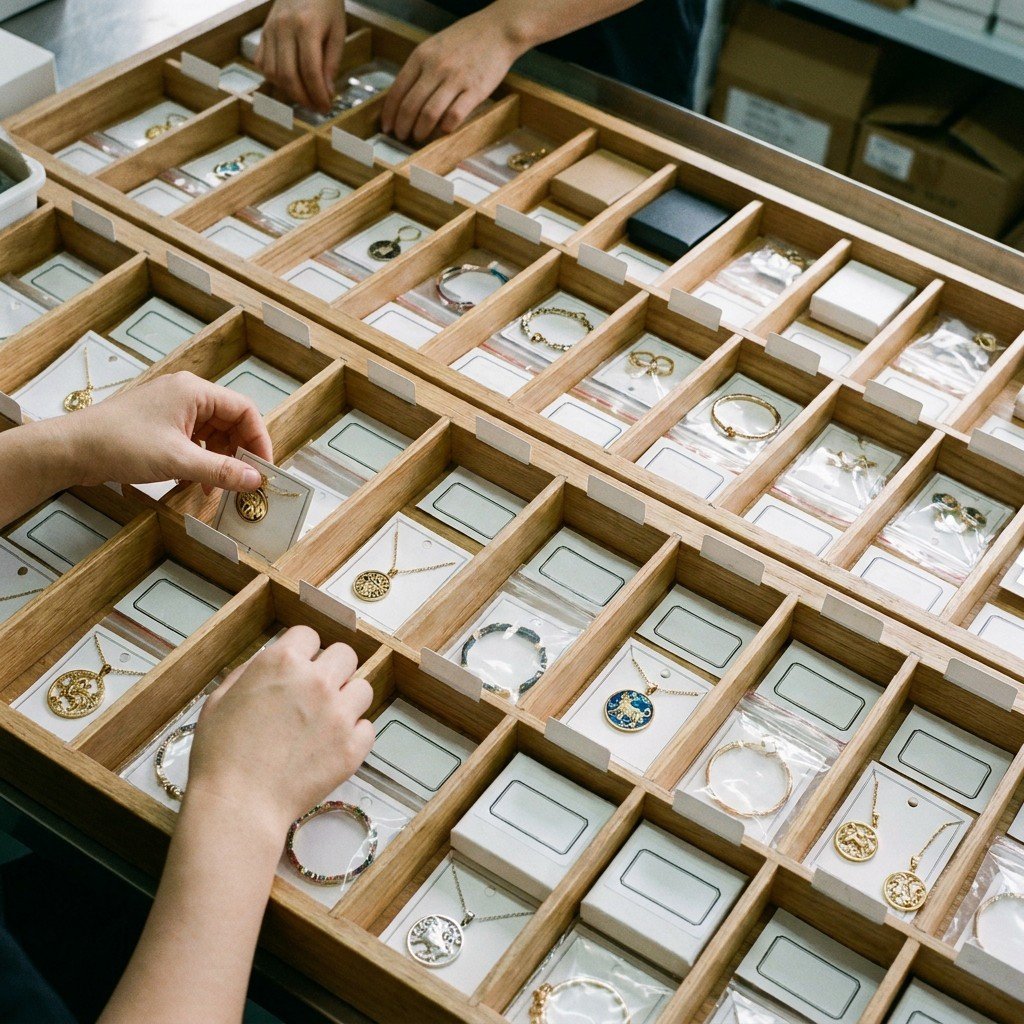
Zodiac SKU Identification
We assign a unique SKU to each approved combination of sign, product, size, finish, stone, and package. The same code appears in product names, labels, barcodes, and packing lists. This helps prevent an Aries item from entering a Taurus package or one color shipping under another SKU. During packing, we check both barcode data and the readable sign name against the approved specification.

Product Protection
We select fixing points, films, pouches, separators, cards, and inner packing for the actual product. Fine chains need anti-tangling control, polished pendants need scratch protection, earrings need correct pairing, and stone-set items need secure clearance. We review protection with the product inside the proposed package, then account for pack quantity, handling, carton movement, and the intended fulfillment route before approval.
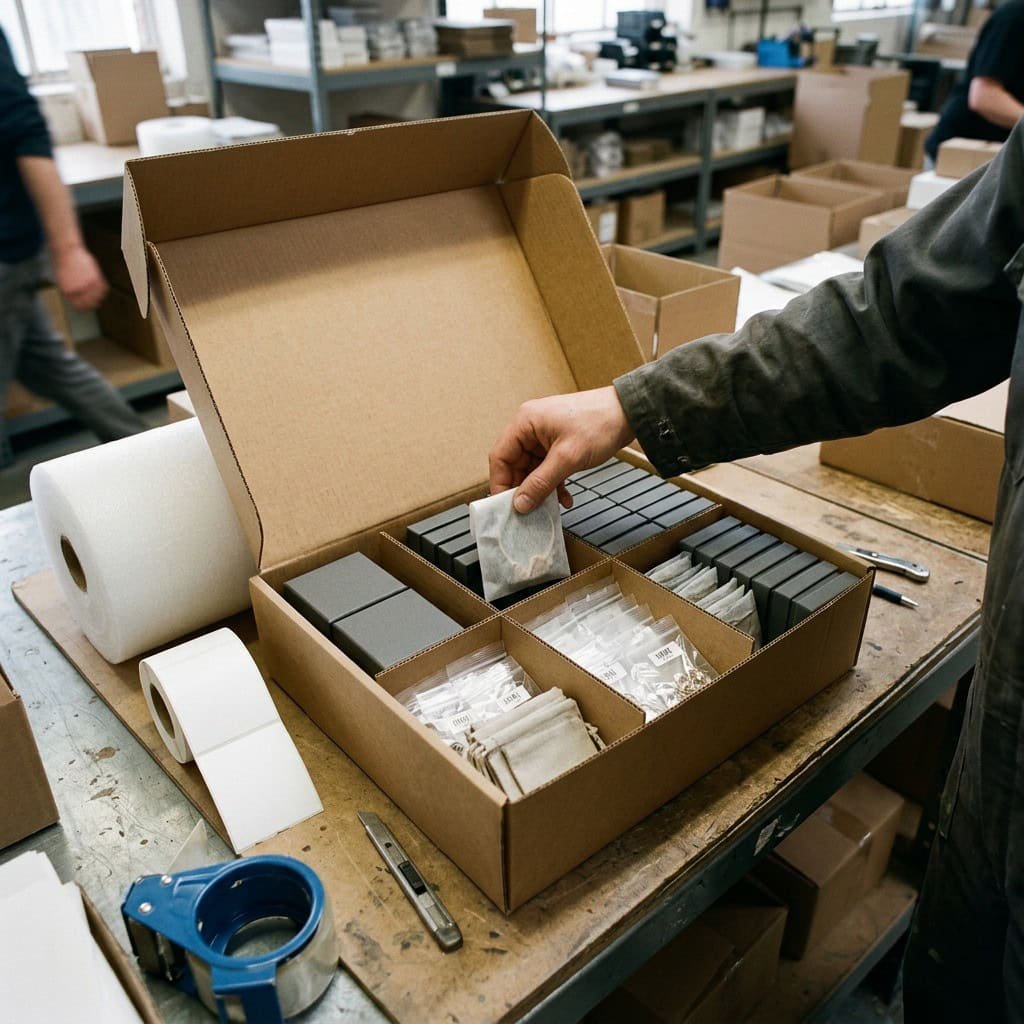
Fulfillment Readiness
We support barcode and label application, set assembly, export packing, and Amazon FBA packaging after requirements are confirmed. Send the current platform or retailer specification, label data, carton rules, inspection points, and routing. Because platform requirements can change, we use the version approved for the order. We can prepare a trial pack when product placement, barcode scanning, or transit protection needs validation before bulk packing begins.
Zodiac Jewelry Procurement FAQ
These answers cover the conditions that can change a twelve-sign project, including sign allocation, material, PVD color, files, inspections, and compliance evidence. We confirm final feasibility, MOQ, price, timing, testing, and packaging from your design and written specification. Send us any project-specific question that is not covered below.
Can you develop all twelve Western Zodiac signs?
Yes. We develop Aries through Pisces as one coordinated collection. Send the design language, products, dimensions, quantity per sign, material, colors, market, packaging, and timing. We review every sign for detail, text, cutouts, stones, and orientation.
Do you also make Chinese Zodiac jewelry?
Yes, as a separate custom program. We do not mix the twelve animals with Western Zodiac specifications. We confirm their artwork, structures, tooling, SKUs, quantities, finishes, and packaging independently.
Can order quantities vary by zodiac sign?
Yes, subject to project review. Send units by sign, product, color, size, and package. Uneven quantities can affect production, plating, labels, MOQ, price, and timing. We state the accepted mix in the quotation.
Should we use 304 or 316L steel?
We work with both grades. We select the material from your specification, product structure, use, market, process, coating, tests, and cost target, then record it in the approved specification.
Can you add birthstones to each sign?
Yes, after design and sourcing review. Send the stone type, size, cut, color map, fixing method, and quantity per sign. Before sampling, we review the stone seat, clearance, polishing, plating sequence, and inspection method.
How do you approve gold PVD color?
We confirm the substrate, preparation, coating system, physical color reference, viewing conditions, and tests. We approve color on the intended product or a representative sample because a digital color alone cannot control the final finish.
What files are needed for a quotation?
Send artwork or references, dimensions, product, material, quantity per sign, colors, findings, stones, logo, market, tests, packaging, target price, and deadline. We can review AI, EPS, SVG, editable PDF, DWG, DXF, STEP, IGES, STL, 3DM, JPG, PNG, or a clear sketch.
How is sample-to-bulk consistency controlled?
We link the golden sample to the active drawing, BOM, material, dimensions, finish, logo, packaging, and inspection plan. First-article and in-process checks follow this baseline. We document approved changes and retire old versions.
Can you support third-party inspection?
Yes. We support factory audits and third-party quality inspection. Send the inspection company, booking window, sampling plan, scope, report recipient, acceptance criteria, and reinspection rule. We confirm cost and scheduling responsibilities before inspection.
Are all zodiac products automatically REACH compliant?
No. We confirm requirements and evidence by product, material, component, plating color, batch, market, method, and report scope. We can coordinate document review and third-party testing for the specified project.